From Curbside Trash to Cabin Treasure

I have always been attracted to broken things. I think it’s because I enjoy looking beyond the actualities in something tossed aside to consider the possibilities. Giving broken and discarded items a second chance can yield some pretty cool results.

A couple of weeks ago I drove a friend home from a meeting and noticed a large trash pile in front of his neighbor’s home. Among the bulging bags of garbage was a yellow bench that looked to be in pretty good shape — at least it did from a distance.

I walked over, picked up the bench, and put it in the bed of my truck. When I got it home and did a closer inspection, I discovered all of the reasons why the bench had been tossed to the curb.

All of the joints were wobbly and weak. The mortise and tenons on one of the cross-braces had rotted away. The paint job was a globby-bad mess and there was considerable dry-rot on one of the armrests.

No worries!

I could not wait to get the bench to the cabin to start the repair and restoration process. I made a list of things I would need and only had to buy some wood dowels and plastic wood filler for this project. I had everything else in my shop. This project would cost me about $15.00 total.

The first thing I did was to address all of the loose joints. I cleaned and sanded these areas and then drilled holes and glued in reinforcing poplar dowels. I then reattached the horizontal cross-brace using poplar dowels. I clamped everything together to give the glue time to dry.

The next step was to address the dry rot in the armrest. I applied layers of pliable plastic wood and built the area up. Once it dried I sanded the area down, following the shape of the armrest. With this final step complete it was time to paint the bench.

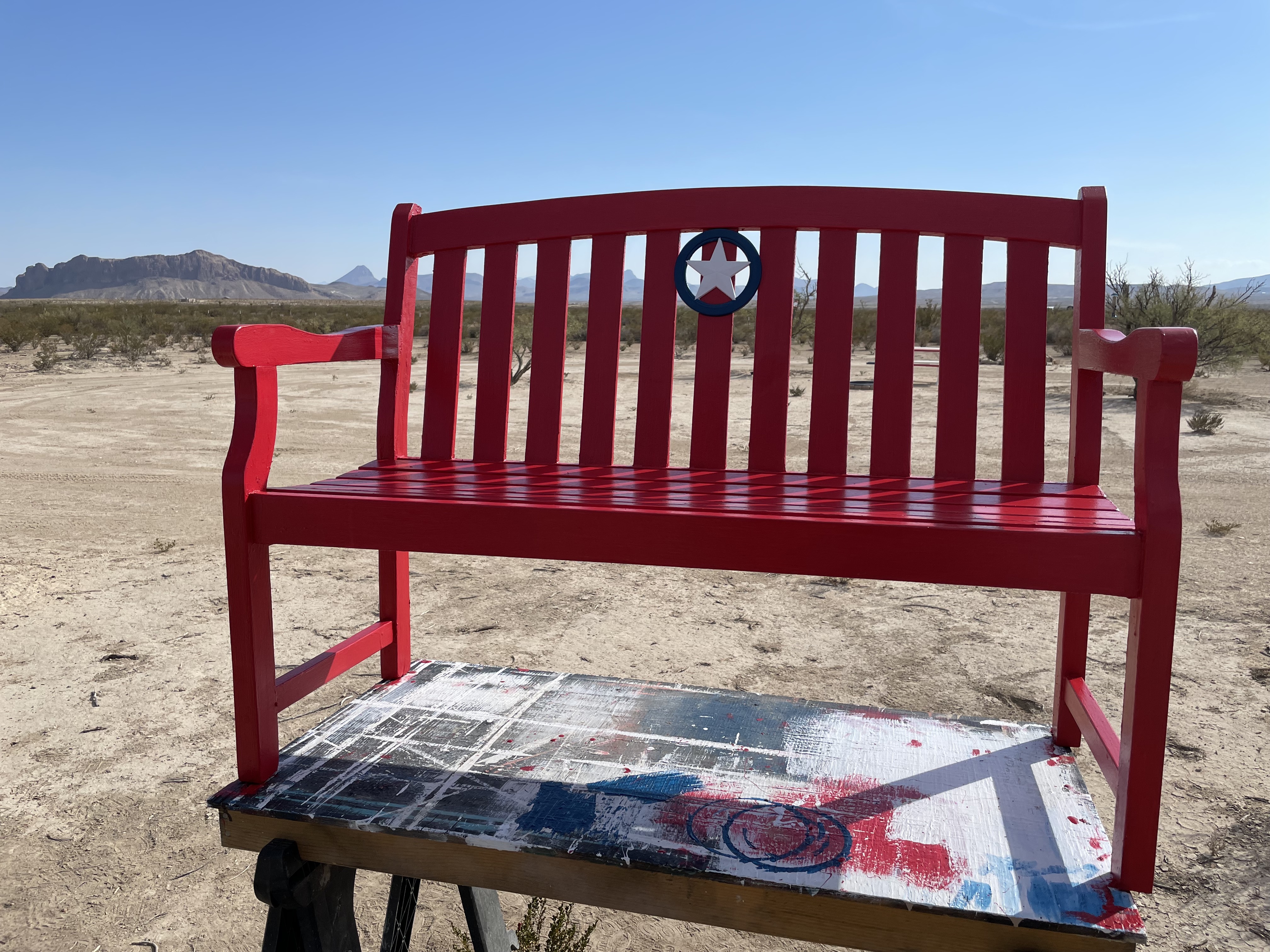
I wanted to keep with the Texas-themed outdoor furniture at the cabin, so I painted the bench red and then added a small lone star medallion in the center of the backrest. I used the official Texas flag shades of red, white, and blue.
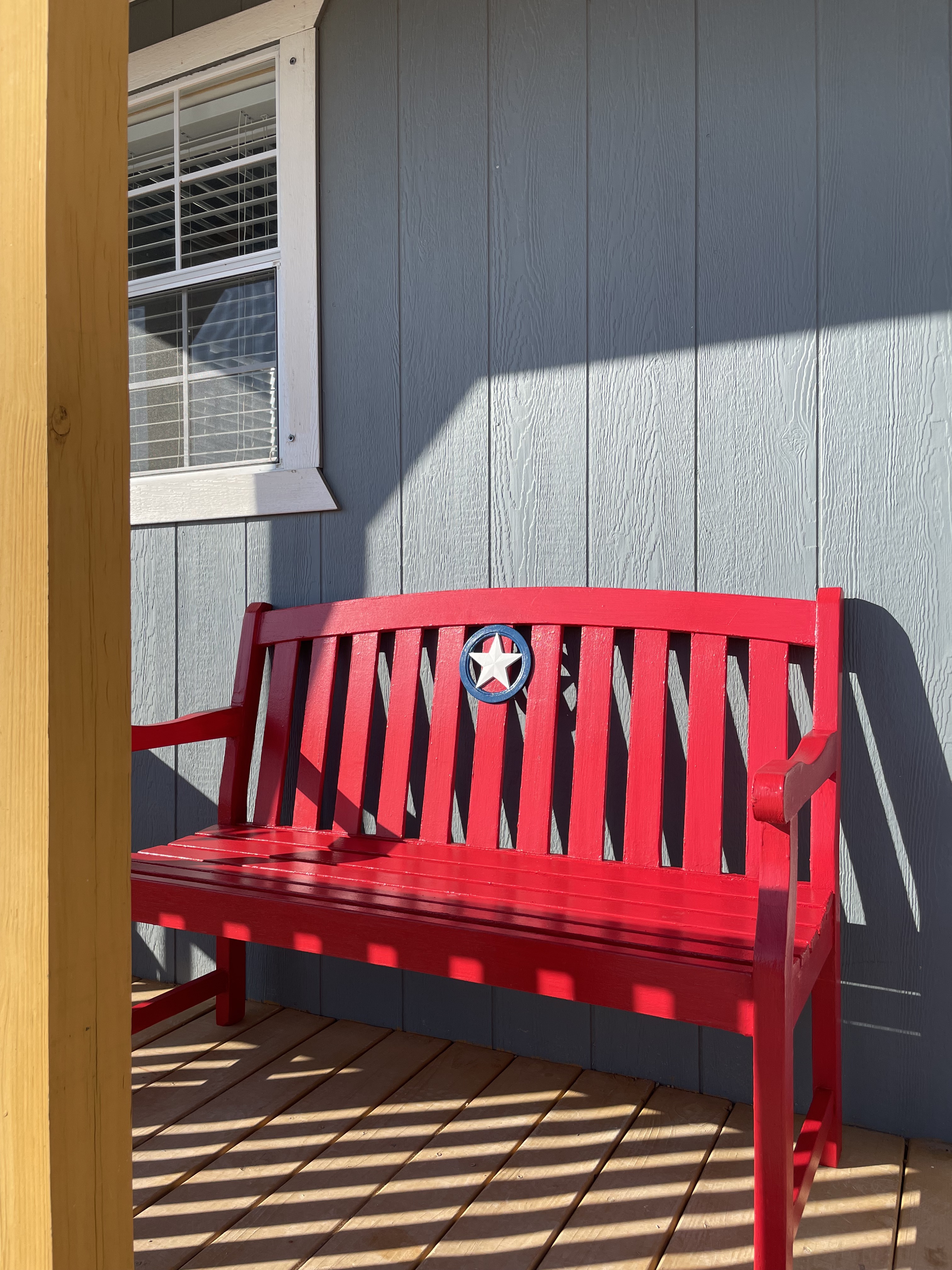
I love the finished product. We will keep this bench on the small front porch of the cabin where it fits perfectly. Cheryl and I enjoy sitting on the porch in the evenings, waiting for the stars to populate the Big Bend night sky. We will enjoy sitting on our salvaged bench that only took a few dollars and a few hours to be transformed from curbside trash into another little cabin treasure.
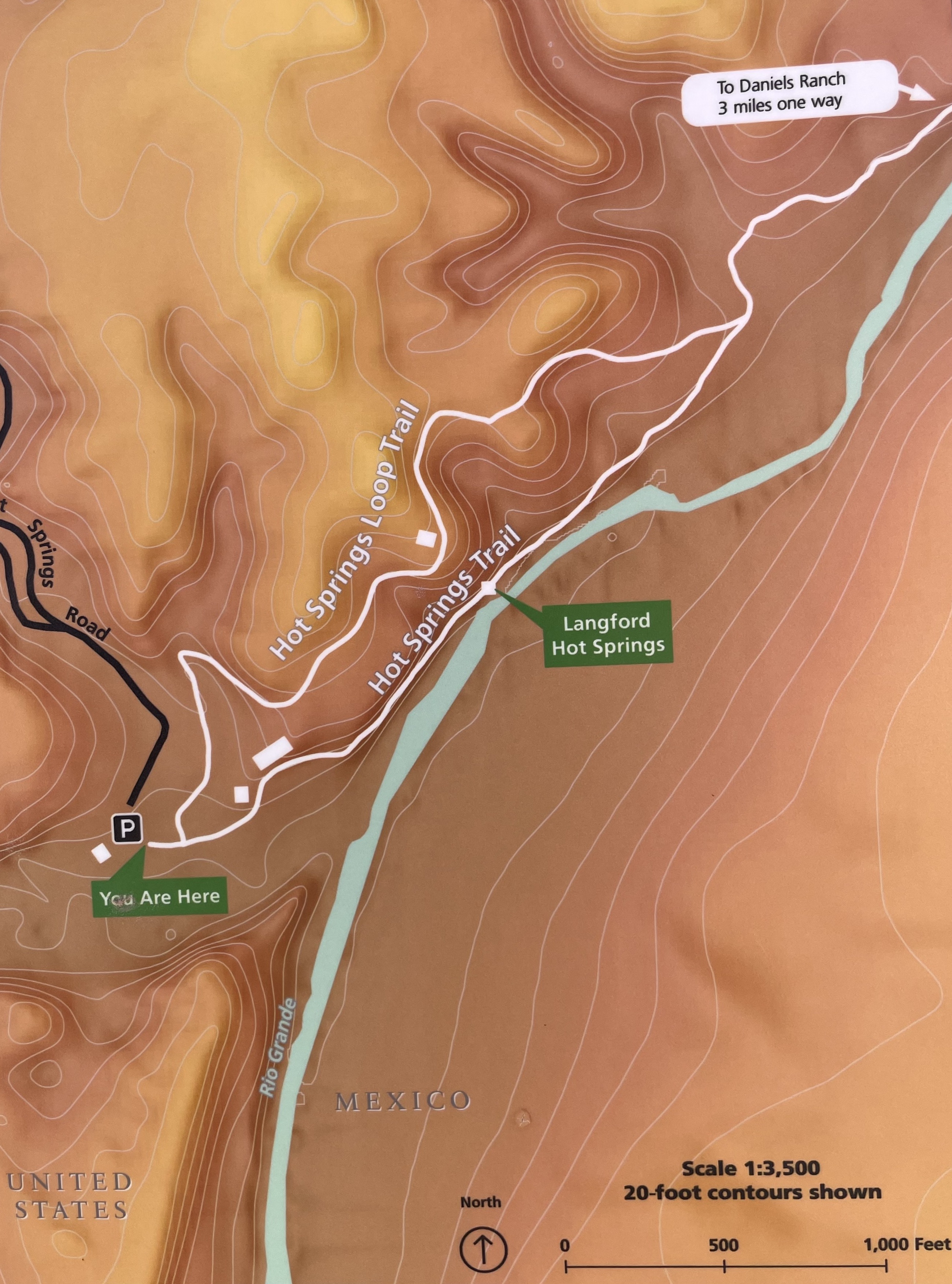
Hot Springs Loop Trail in Big Bend

Big Bend National Park is one of the absolutely must-see places in the Lone Star State. Bordered by a 118-mile stretch of the Rio Grande River to the South, the park encompasses more than 800,000 acres of magnificent Chihuahuan Desert landscapes.

In 2012, Big Bend National Park was awarded International Dark Sky Park status by the International Dark-Sky Association. The park boasts the darkest skies of any national park in the lower 48 states. There are no words to describe the breathtaking nights in this wide part of Texas.

Big Bend National Park also has a variety of hiking trails for every skill level — all of which offer their respective spectacular vistas. Whether you are interested in a tough multi-day thru-hike or a short and easy stroll, Big Bend does not disappoint.

The Big Bend Hot Springs Trail is a 1.2 mile loop trail with a modest 144-feet of elevation gain. The trailhead is located at the end of a two-mile gravel road that descends down a rough, narrow wash to the Hot Springs Historic District. There is ample parking there.

The Hot Springs Historic District preserves the history of this popular location in the park. In the early 1900s, a man from Mississippi named J.O. Langford was suffering from malaria-related health concerns. He traveled to Alpine, Texas with his pregnant wife and young daughter in hopes that the desert climate would improve his health.

While in Alpine, Langford heard about hot springs along the Rio Grande that would cure anything. Without having seen the place, Langford headed to the county surveyor’s office and filed a claim under the homestead act to secure the hot springs and adjacent land. He then loaded up his wagon and traveled eleven days from Alpine to his newly-acquired tract.

After Langford regained his health by taking a three-week treatment of bathing and drinking the spring water, he opened the springs to others seeking to improve their health. He built a bath house over the springs and charged 10 cents per day or $2.00 for a three-week treatment.

A country store, restaurant, post office, and lodging followed, making the area a popular tourist destination. The remnants of these buildings still stand as mute testimony to the attraction of the hot springs.

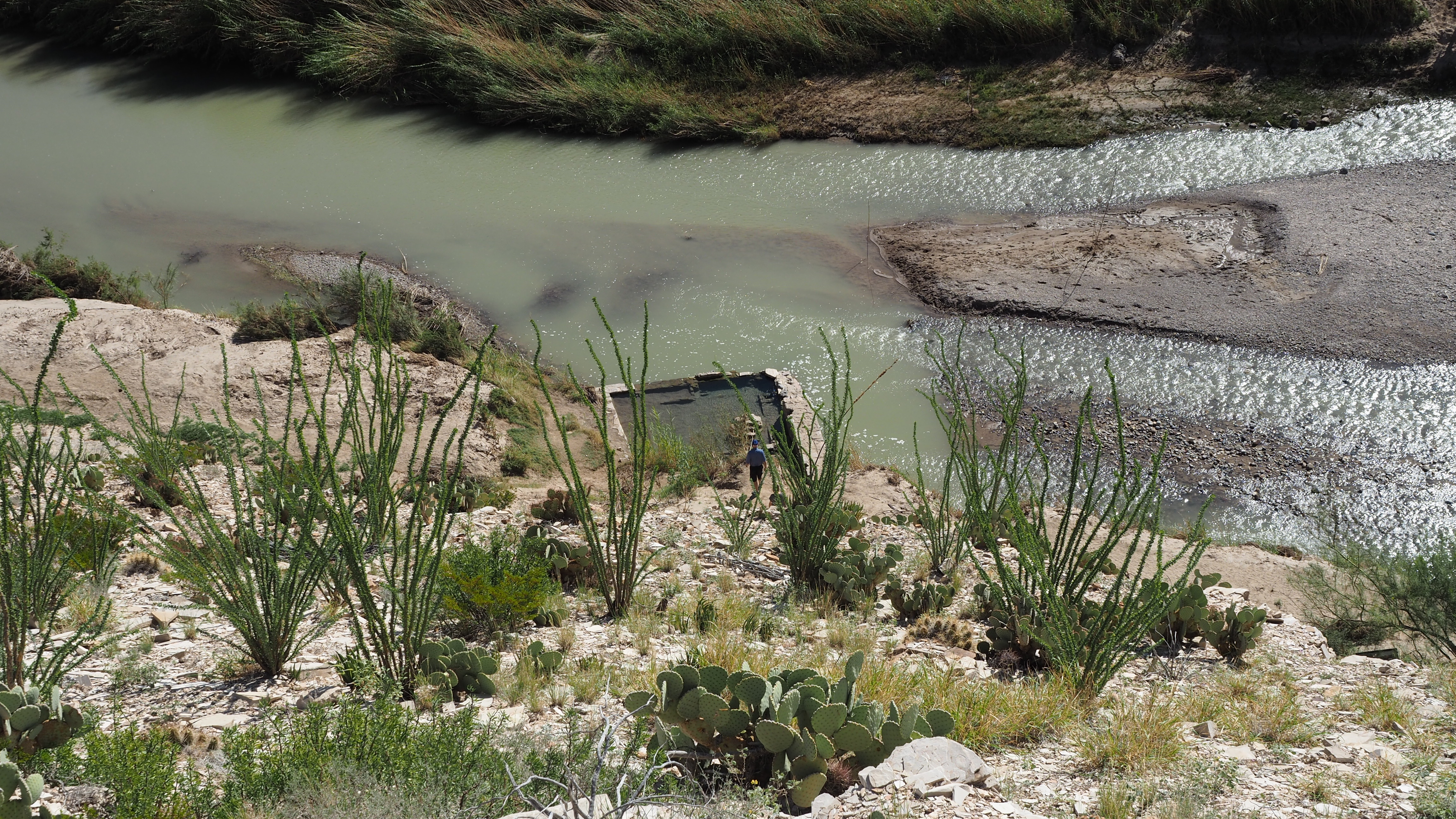
The Hot Spring Loop Trail leads to what remains of Langford’s bathhouse. The hot 105-degree spring water is retained in the perimeter of the old foundation, forming a large square bathtub. Soakers can sit and gaze at the Rio Grande and across to Mexico.

The Hot Spring Loop Trail continues for a bit beyond the hot springs and then takes a turn up the bluff. The views from this section of the trail are magnificent. Distant purple-hued mountains draw your eyes upward past the sagebrush and ocotillo that look like something transplanted from a Martian landscape.

The trail eventually loops back toward the trailhead and parking area, descending behind the remnants of the old general store. The hike is relatively easy and the views are better than spectacular. If you visit Big Bend and are limited on time, then this is a must-do hike that will reward you with great views.

Fort Davis Drug Store Restaurant

Fort Davis, now a National Historic Site, was established in 1854 in the heart of the Davis Mountains. The site is one of the best surviving examples of a frontier military post built to protect mail carriers and travelers along the San Antonio Road.

After the Civil War, several regiments of Buffalo Soldiers were assigned to Fort Davis and served under the command of Second Lieutenant Henry O. Flipper, the first African American graduate of West Point. These soldiers served admirably and played a key role in keeping travelers safe.

The present-day town of Fort Davis surrounds the well preserved ruins of the old fort and is the county seat of Jeff Davis County. Situated on Limpia Creek at the intersection of State Highways 17 and 118, the town boasts beautiful views of the surrounding Davis Mountains.

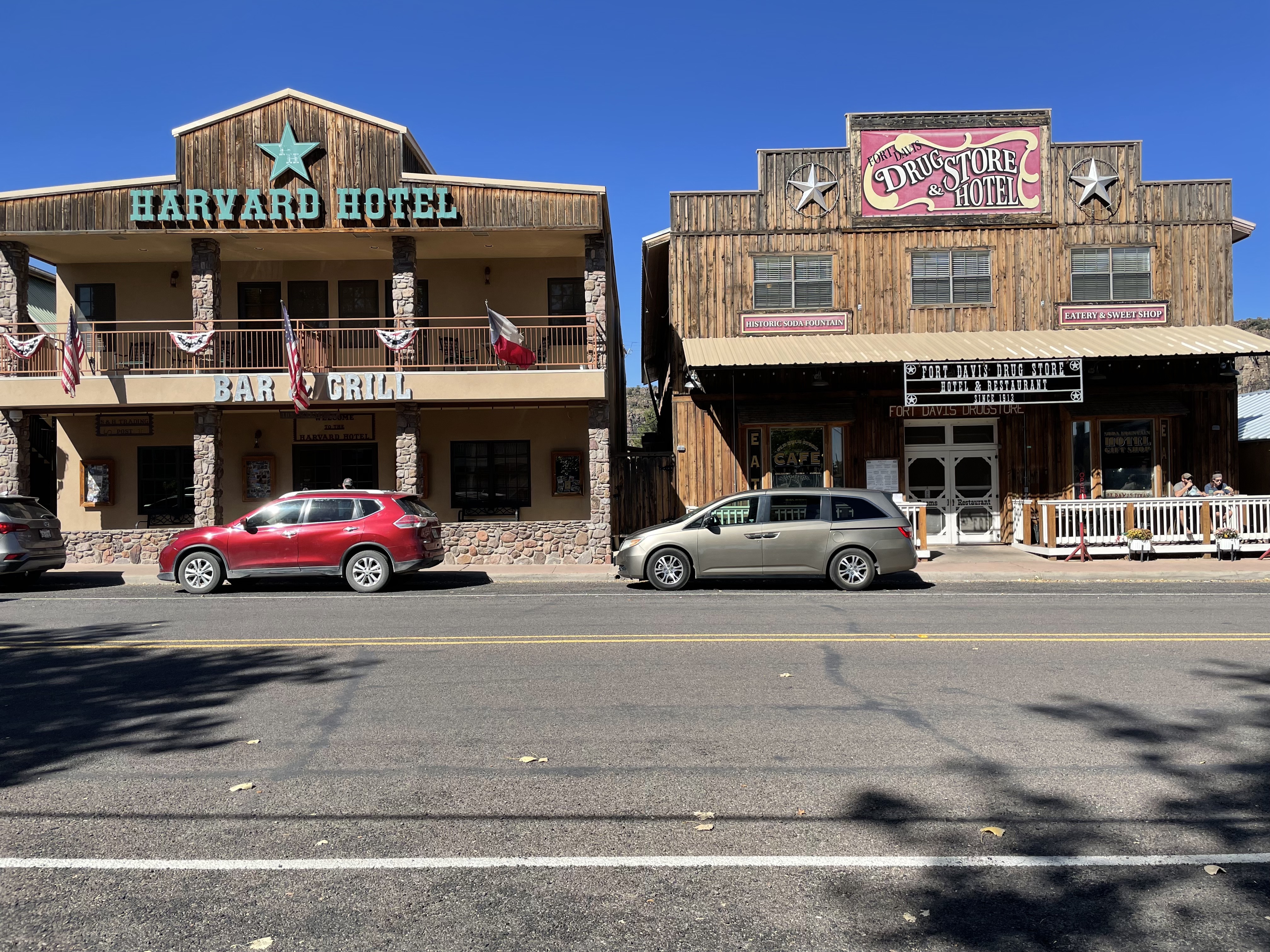
The main drag is lined with quaint shops and a variety of eateries to satisfy every appetite. Flanked by the historic Hotel Limpia on one end and Stone Village Market on the opposite end, everything in between is stroll worthy. Shop owners are welcoming and super friendly.

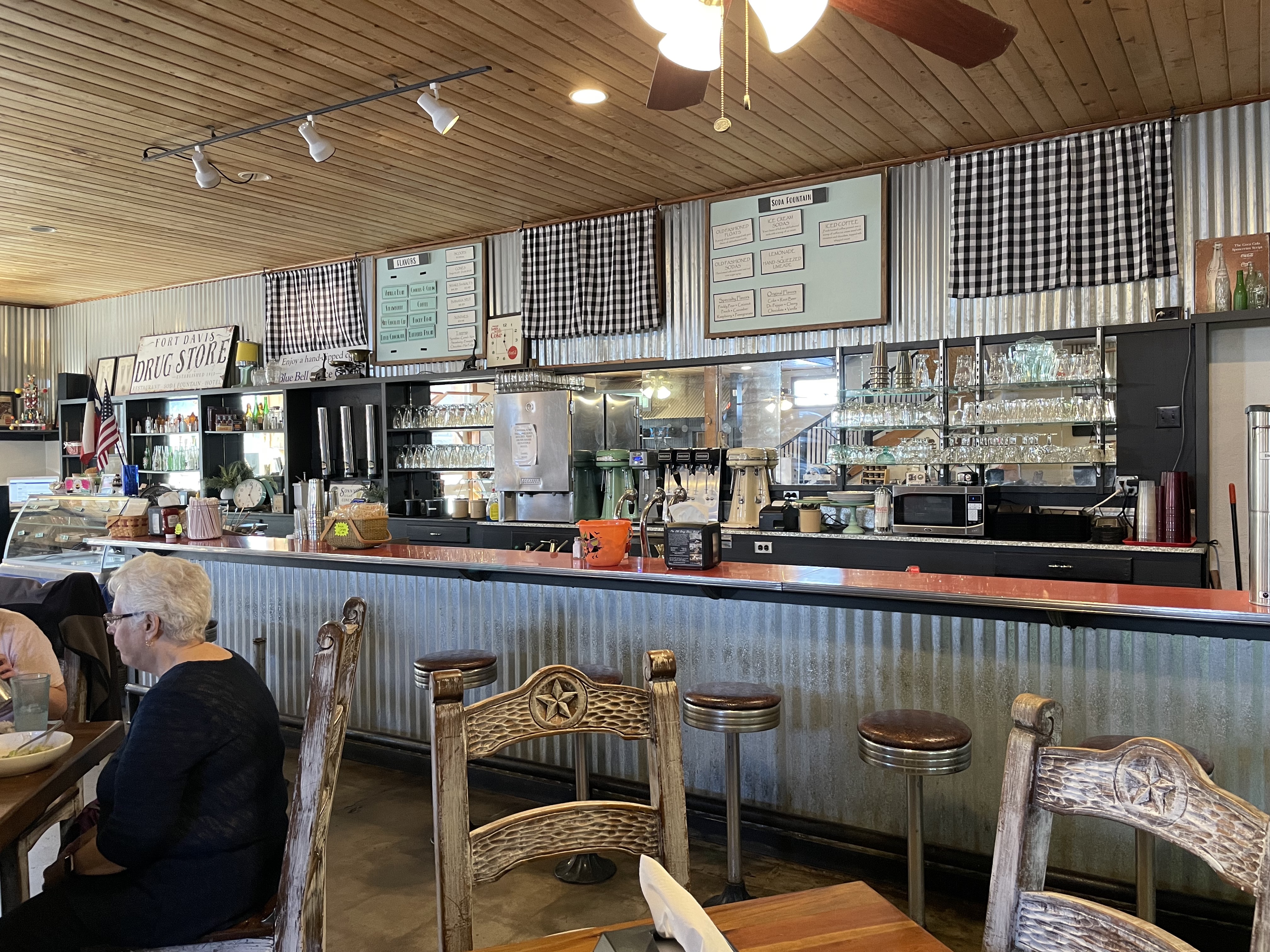
After several days of hiking at Big Bend National Park and Davis Mountains State Park, my friend Doyle and I headed to the historic Fort Davis Drug Store for lunch. This cool restaurant features delicious made-from-scratch meals — including amazing desserts and a vintage 1950’s style ice cream soda fountain.

I ordered the Mile High Hamburger and added Pepper Jack cheese, bacon, lettuce, tomato, pickles and a side order of homemade onion rings. This burger features a one-third pound all-beef patty and is served on toasted Kaiser buns.

The patty was cooked to perfection, the bacon was more on the crispier side like I prefer, and the buns were slightly toasted and very fresh. From the first to the last bite, this burger was delicious. And the onion rings were the perfect compliment. So glad I ordered this burger. It was more than enough to fill me up and energize me for a final afternoon hike.

Fort Davis is off the beaten interstate path but definitely worth a visit, not just for the food, but for the shops and a look at the historic old fort. I look forward to returning on a future day trip from our place in Big Bend. I hope you will add Fort Davis to your future Texas road trip bucket list. You’ll be glad you did.