
The steeple of St. Mary’s Catholic Church towers like the tall mast of a ship above the vast pastures surrounding the historic community of High Hill. Founded by German and Austrian-Moravian settlers in the 1840s, High Hill is home to the beautiful St. Mary’s Catholic Church, known as the Queen of the Painted Churches. The painted churches of Texas are indeed a treasure.
 St. Mary’s was designed and built in 1906 by Leo Dielmann, a young architect from Germany. At a time when churches were built in the more practical Mission style that was better suited to the hot Texas climate, Dielmann championed the classic gothic revival architectural style. Many of the wood churches of the period were destroyed by fire and storms, thus influencing German and Czech immigrants to build their churches of brick or stone.
 In its early years, High Hill was a stop along a transcontinental stage-coach route. However, when the Galveston, Harrisburg, and San Antonio Railway wanted to lay tracks through their community, the residents refused to give the railroad any right of way. They feared that doing so would destroy the tranquility of the town. Instead, the railroad built its line south of town and Schulenburg was founded as a result. As for High Hill, it remained a quiet and tranquil little town.
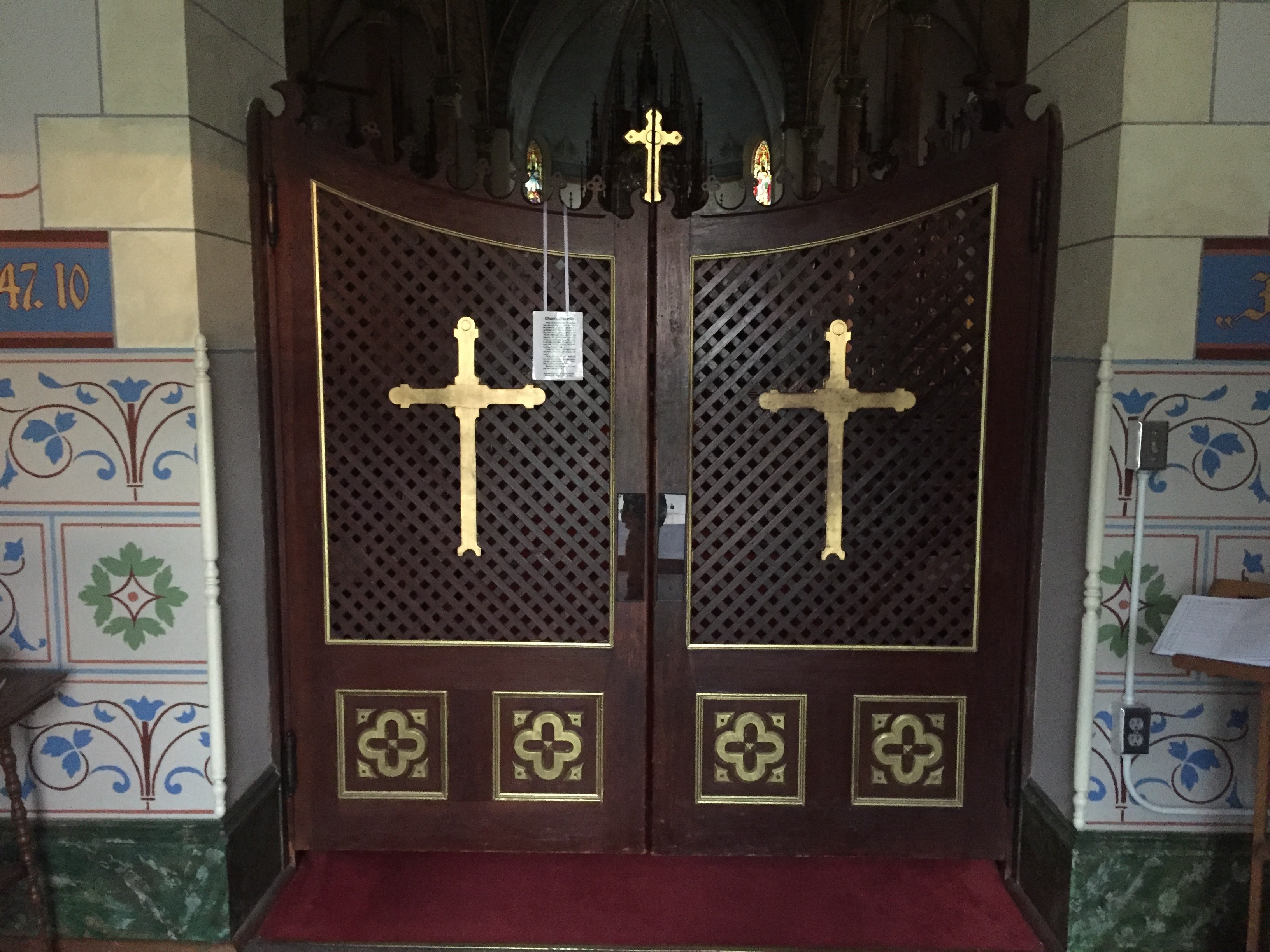 Today, St. Mary’s Catholic Church remains as an enduring and endearing monument to the faith of the early settlers of High Hill. The interior of the church is absolutely beautiful. Every ornate detail testifies to the remarkable craftsmanship and talent of the artists and builders. The interior is a symmetrical feast for the eyes. The stained glass windows allow just enough light to seep in to enhance the worshipful atmosphere. You can easily sense that the church’s builders labored for the glory of God.
 Visiting the Queen of the Painted Churches is certainly worth taking the short three-mile detour north of Schulenburg on Interstate 10. The doors are open and guests are requested to show proper etiquette when visiting the church. Be sure to take your camera. Once you stop by for a visit, you’ll understand why St. Mary’s is on the National Register of Historic Places and has earned the title Queen of the Painted Churches.
Churches and Missions
Church of Saints Cyril and Methodius
The painted churches of Texas are one of the Lone Star State’s best historical treasures. The legacy of German and Czech immigrants, these churches are a testimony to the faith of those who settled frontier towns from the Gulf Coast to the Texas Hill Country. There are about twenty painted churches in Texas — so called because their sanctuaries are beautifully adorned with hand-painted murals and other colorful decorative elements.
 The Catholic Church of Saints Cyril and Methodius in Shiner, Texas is one of the most beautiful of the painted churches. Shiner was founded by German and Czech immigrants in 1887. While the early citizens of Shiner were busy building their homes and businesses, they did not neglect the spiritual welfare of their new community. The first Catholic church building was completed in 1891 and served the people of the community for many years.
 Rapid growth of the parish in subsequent years led to the construction of the larger church building that is still in use today. Completed in 1921, this beautiful building is regarded as one of the most magnificent Gothic structures between San Antonio and Houston. The church is named after Saints Cyril and Methodius, two brothers who were honored missionaries to the Slavic peoples during the ninth century.
 Both the exterior and interior of the church building are a feast for the eyes. The exterior is patterned after the Romanesque architectural style. The interior boasts a beautiful hand-painted mural behind the ornate altar depicting Christ in the Garden of Gethsemane. Other painted features include clouds on the ceiling of the dome above the altar and angels on the panel above the arch as you face the altar. These beautiful murals are the work of Edmond Fatjo, the artist. Fatjo was trained in Berlin and specialized in painting church interiors.
 The six large stained glass windows depicting Biblical scenes were made in Munich, Germany and imported to Shiner when the church was built. Stand glass windows, it seems, have become a forgotten element in modern church architecture. However, the stained glass windows in the sanctuary of the church in Shiner not only add a worshipful ambiance to the interior, they serve as a passive form of education — like illustrated pages from the Scriptures.
 The dramatic murals and other decorative elements make the Catholic Church of Saints Cyril and Methodius one of the most beautiful churches in the Lone Star State. It’s no wonder that this church has been on the National Register of Historic Places since 1983. Other painted churches are located in the towns of Ammansville, Dubina, High Hill, Praha, Schulenberg, West, and Fredericksburg — all towns whose historic painted churches are a testimony to the spiritual and cultural legacy of early German and Czech immigrants to Texas.
 As you consider daytrips near you or roadtrips farther away from you, consider visiting the painted churches of Texas. They are indeed a Texas treasure. The church in Sculenburg keeps its doors open throughout the week and welcomes visitors. You can check the internet for the best times to visit some of the other painted churches or sign up for a tour of the painted churches through the Schulenburg Chamber of Commerce.
The Church Near Muldoon
There is something about old and abandoned buildings that stirs my imagination and ignites my curiosity. Whenever I venture down Texas backroads, I always look for old houses and buildings — the ones that have been long abandoned and are slowly being reclaimed by the elements. One structure in particular beckoned me to pull off the road just outside of Muldoon, a tiny community with a population of a little more than a hundred residents. It was an old church building with only the vertical section of a cross remaining on the steeple.

 As I made my way through the dry overgrowth, I noticed that the front door of the building was open. I grew up in a small town in the days when church buildings remained open all day and, in some cases, all night. In fact, I never recall the door to my childhood home ever being locked when I was growing up. In all of the years I lived at home I never had a house key. At any rate, I was glad to find an open door when I approached the old church building.
 Once inside the building, I noticed the few remaining pews on either side of the red-carpeted aisle. Everything in the building was covered with the dandruff of decay. I paused for a moment and tried to imagine what things must have looked like when the building was new and wondered how many brides had walked down the short distance to the altar. I had to remind myself that this old building was not the church, only the building where the church had once met for a season.
 The signs that this had once been a place where people studied the Scriptures were evident. Old Sunday School quarterlies littered the floor, some with the fading names of the members written on the covers. Once again, I could not help but wonder about those who had studied those lessons and perhaps made some life-changing decisions in this old country church building. In a way it did not matter so much that these old lesson books were strewn on the floor because what really matters is what the folks who studied here carried away in their hearts.
 Standing in the pulpit and looking toward the pews, I wondered about those who had stood in that same spot over the years. How many sermons and weddings and funerals had taken place there? What about special seasonal observances or musical presentations? The history of what happened in that building is lost to all but those who worshiped there. But, without question, so much must have happened in this humble little building throughout the years.
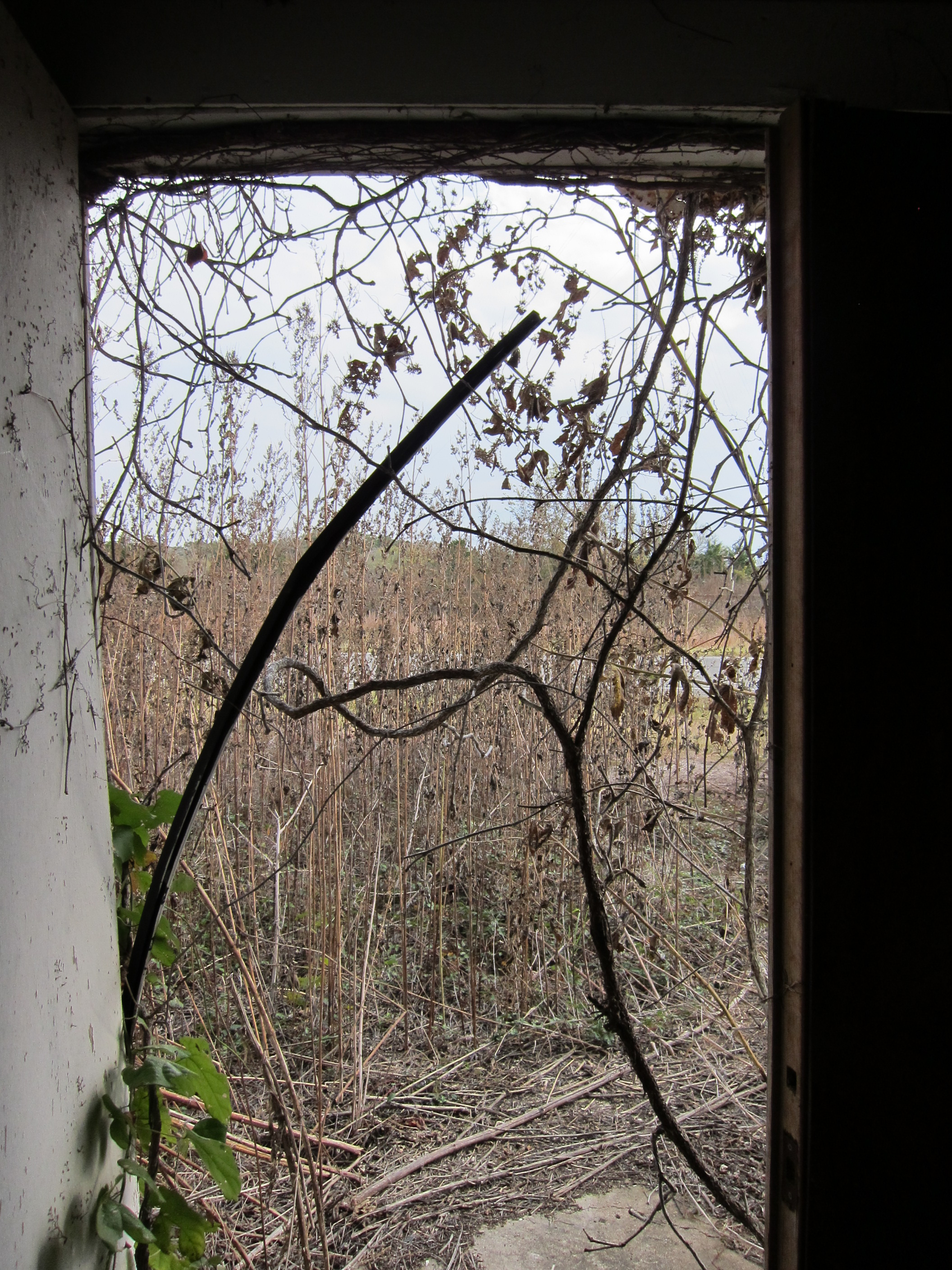 After lingering for a while I made my way slowly down the aisle toward the exit. Once again the open door beckoned me out toward the world at large, the place where we are to live out our faith. And again I wondered about how many people might have left this place a little different than when they walked in, perhaps more determined to love God and love people. That’s really the way we should always leave our places of worship — changed for the better, a little more in love with God, and ready and willing to serve others.
 Explore Texas