From Cotton to College

I am deeply grateful that my grandfather, Felipe Garcia, took the time in his later years to journal his personal story. And what an amazing story that is. Reading the words he hammered onto the pages using two index fingers on the lettered stems of his Royal typewriter bring back a flood of pleasant memories.

I spent a lot of my childhood with my grandfather and have the fondest memories of our daily stop at the post office in Mission on our way to his real estate office that he shared with Justice of the Peace Leo Gonzalez. I would play around the office while he met with people and did lots of notary work for poor people, some of whom paid for his services with produce.

My Papa Felipe was born on January 23, 1891 in northeastern Duval County where his family had their ranch. When I was a kid, I loved to listen to his stories about growing up on the ranch and longed to visit the place that meant so much to him.

As a young teenager, he arranged for me to visit my country cousins at the ranch. He bought me a bus ticket from Mission to San Diego and then set me off on a great adventure — all by myself with a small suitcase in hand.

The only thing I remember about the bus ride was that I sat next to an older lady who had doused herself with an overpowering amount of perfume. I could hardly breathe and pressed my face against the window in hopes of getting a whiff of fresh air. Toxic fumes aside, I made it to my destination where my Uncle Florentino picked me up.

Florentino was a towering man. When I got off the bus there he was — wearing khaki pants, a long-sleeved shirt, black boots, and a straw cowboy hat. He looked down at me with welcoming eyes, shook my hand, took my bag, and led me to his pick-up truck for the almost twenty-mile ride to the ranch. That was the start of a lifelong friendship with Florentino.


Which all brings me back to my grandfather’s journal — page 28. My grandfather was 18 years-old and wanted desperately to go to college. The challenge was finding the money. With such a large family to care for, his family did not have the discretionary income to help him with tuition. But, they did have land.

The solution was for my grandfather to plant cotton on a 60-acre tract and then use the proceeds from the sale of the cotton to go to school. So, he put his hand to the plow and got to work. The 60-acres yielded 27 bales of cotton which he had ginned at Alfred, located west of Corpus Christi. In his words, he made “the fantastic sum of $1,195.00 in cash.”


His earnings became the seed money for him to attend the San Antonio Business College in 1910. The business skills he learned helped him to eventually work as a realtor and notary public and one of the longest serving city commissioners in the State of Texas. He, along with my dad, taught me the value of hard work and helped me to develop a good work ethic.

I miss my Papa Felipe but consider myself fortunate to have spent so much time with him. As a little boy always in tow and always watching him, I treasure every memory. He was always kind, ever encouraging, and set an example worthy of imitation. I’m glad that his hard work growing cotton paid off and paved the way for him to go to college. That chapter of his life laid the foundation for a lifetime of selfless service.

Better Than Medicine

My travels this year have taken me from one end of the planet to the other. So many flights and airports and delays and rushing to gates and waiting for luggage — all part of the adventure of travel. But no matter where I happen to be, at some point my thoughts turn to the wide open spaces of Big Bend and our little off-grid cabin where I am so often refreshed.

I find, however, that I come by this feeling honestly. My grandfather had the same longings to return to his family’s ranch in Duval County. Throughout his life, he looked for opportunities to go back to the place where his heart could breathe and his soul was refreshed. One entry in his journal reads as follows:

Trips of this kind were better than medicine. Your feelings are better served and the next day a desire to work vigorously. And so time was consumed in these routines of ranch life. What a wonderful method of passing your time.

I am so happy to have had a few days to return to our cabin with Cheryl before I return home to prepare for my upcoming trip to Pakistan. I agree with my grandfather that trips of this kind are better than medicine. My plan for this trip was to enjoy time with Cheryl, to lose myself in projects, and to spend the waning hours of the day reading while waiting for the stars to compete for space in the night sky.

The project for Day 1 was to start the process of extending the pavers under our shade structure to make room for a grill that I recently refurbished. This will give us yet one more cooking option when we are here and when guests visit. I only brought as many pavers as I needed to make the pad for the grill but will eventually add more to widen the area around the east side of the shade structure.

We set aside Day 2, Sunday, to relax. We started the day by worshipping online with our church family in Katy — Kingsland Baptist Church. We then drove the twenty miles or so to Terlingua Ranch Church. We have been engaged with this little church since we bought our place out here in 2018. I ended the day reading in the shade, doing a little writing, and then welcoming the stars with Cheryl.

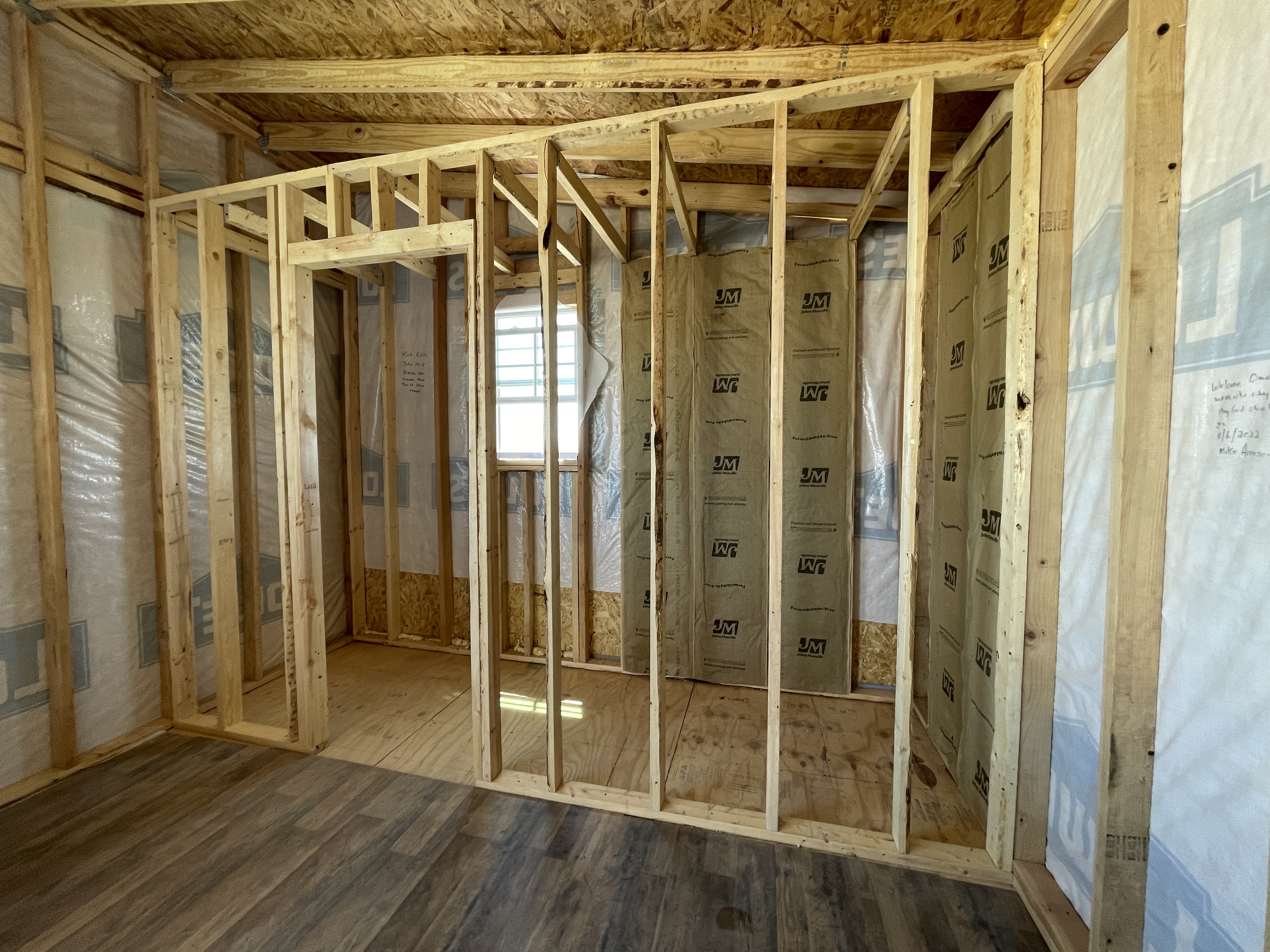
On Day 3 I was happy to complete a project I have had on my list for some time — framing the bathroom walls in our guest cabin. My plan for the door is to take a very old door I received from my uncle’s estate, keep the old patina, add a Texas-themed stained glass feature, and hang it on barn door hardware. Later I will add a shower stall, a composting toilet, and a sink. I will also build a small closet at one end in which to house our solar batteries and inverter.

The project for Day 4 was to build a pad on the North side of the guest cabin for our water catchment tank. The shed roof of the cabin slopes from south to north. I will add a twenty-foot gutter that will collect and direct rainwater to the storage tank. One-inch of rain on the guest cabin roof should yield 150-gallons of rainwater. At present we have more than 2,000 gallons in our other rain tanks.

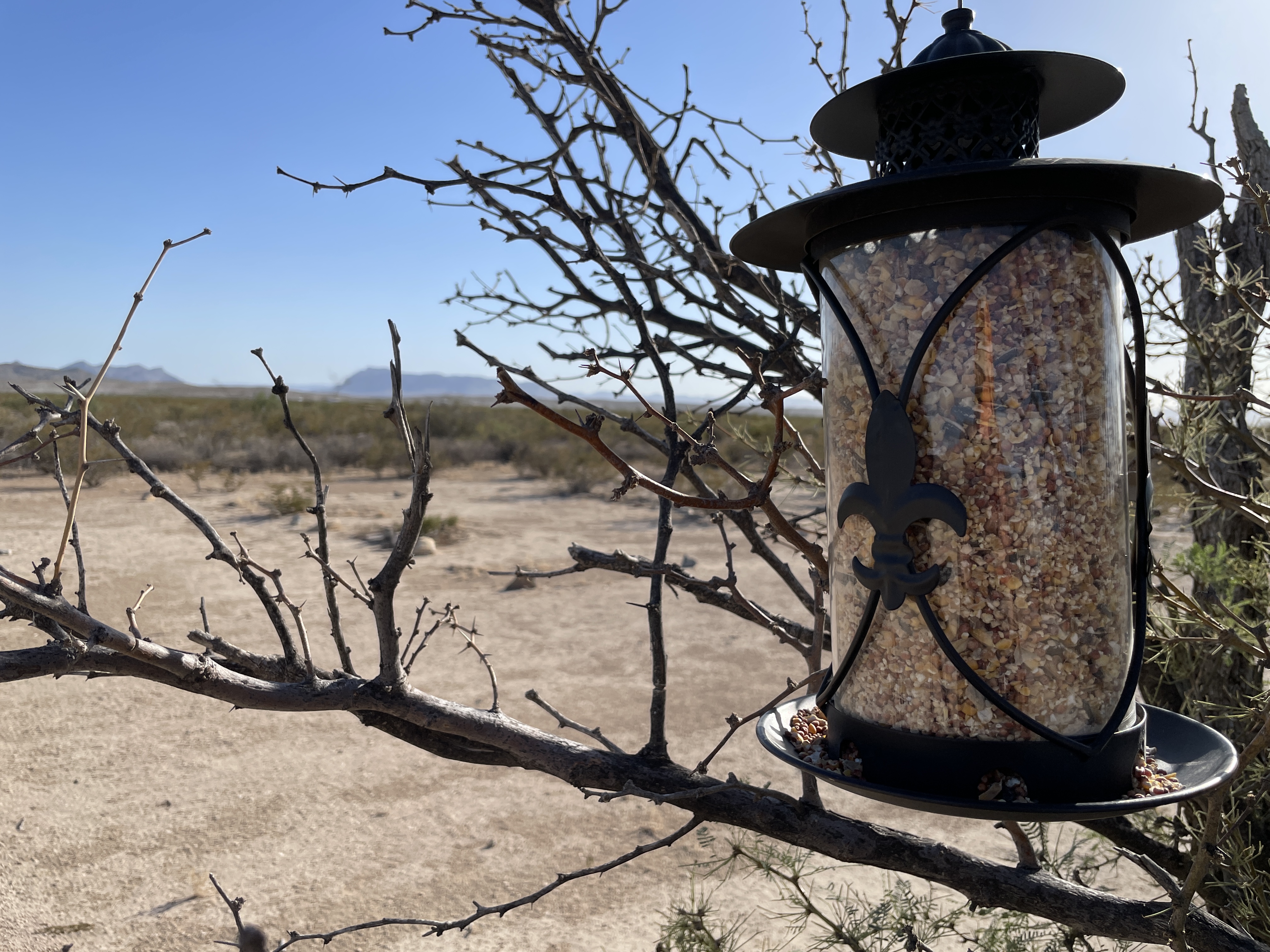
Day 5 was set aside for miscellaneous projects. These included making improvements to our burn barrel, moving a third picnic table from our tent sites to the shade structure area, and placing rocks painted by our granddaughters at the grave of our little Biscuit who died last year. We also added more water to our birdbaths and birdseed to our feeders around the property. And I cleaned up the area around the guest cabin in preparation for a future deck build.

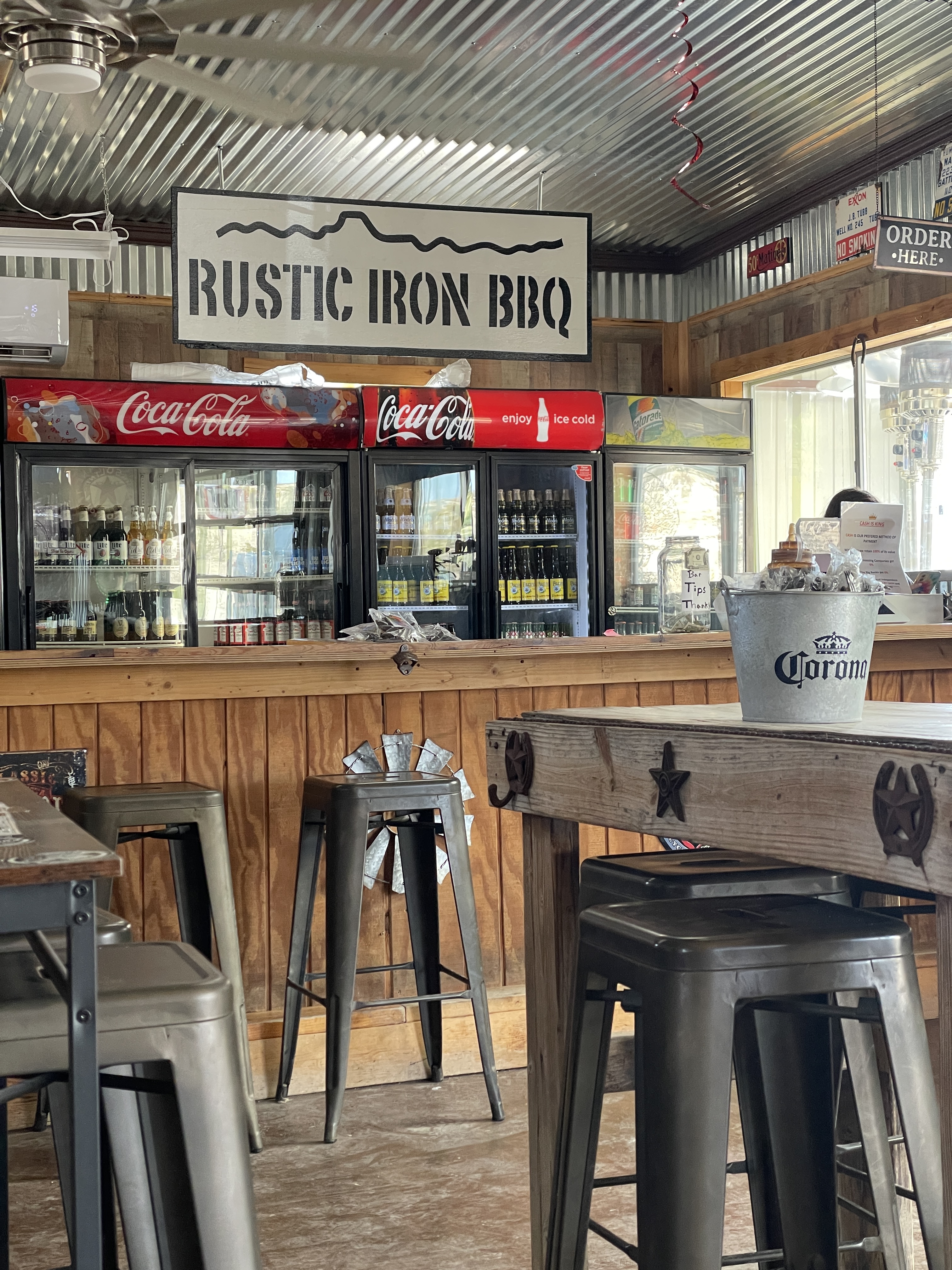
And finally, we devoted Day 6 to a road trip into Big Bend National Park — one of the most beautiful places on the planet. Our lifetime senior passes allow us free entry. We enjoyed driving to the Chisos Basin and then Panther Junction before returning to Terlingua ghost town to eat at DB’s Rustic Iron BBQ.

Cheryl and I continue to enjoy our off-grid adventure. I personally like learning how to do things that I have never done before and then making them happen. Even though I wish we had started this adventure as much younger people, I like discovering what I am capable of doing while I am capable of doing.

Cheryl and I are much refreshed. This getaway did us much good — better than medicine indeed.

Thanks for following our adventure.

Halley’s Comet and The End of the World

My grandfather was 66 years-old when I was born. I was at his bedside when he died 30 years later. The years between my birth and his death were magical years for me. His influence in my life was significant, to be sure.

My grandfather and I spent a lot of time together. And he told me stories, lots of them. He loved to read and he understood how to use stories to whip up bowls full of childhood curiosity. I couldn’t get enough.

As I got older he gave me books, lots of them. Books bulging with stories that begged to be read at a time when television was beginning to bewitch children. Books that introduced me to wonderful characters like Androcles and the Lion, Alice in Wonderland, Gulliver, and others who lived in times and worlds beyond my own.

Perhaps best of all were the stories he shared from his own childhood. By the time I came along he had already lived an amazing life.

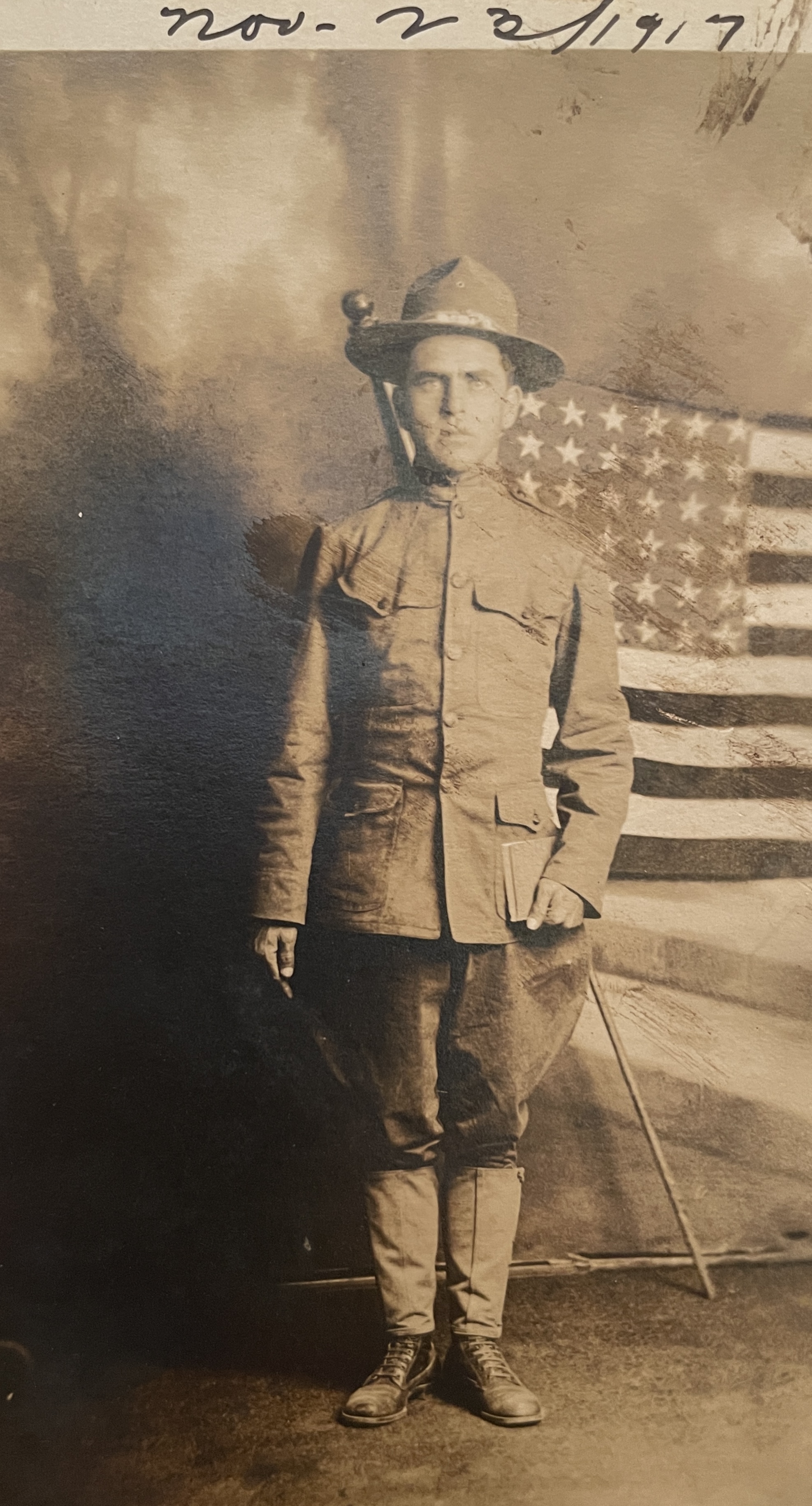
Felipe Garcia was born in 1893 on a ranch in Duval County. He worked as a cowhand on the George West Ranch, attended business college in San Antonio, and became a real estate developer.

He sold a car to Pancho Villa, played a key role in recruiting Hispanics to serve in the First World War, and started the first Hispanic Boy Scout Troop in Duval and Hidalgo counties. He served on the Mission city council and in his later years was recognized as the longest and oldest serving city commissioner in Texas.

There is so much more to tell, but I will do that a bit at a time as I begin a journey to blog about his story.

I recently started reading through his personal journal, two notebooks bulging with single-spaced lines hammered on to the pages in uneven Courier font using two index fingers on the lettered stems of his Royal typewriter.

I was delighted to read one of the stories he had shared with me more than once when I was a kid — the 1910 appearance of Halley’s Comet. This is the story in his own words:

Ranch after ranch, men, women and children were very much upset about Halley’s Comet being so clearly visible for several nights in a row. The fantastic stories about what was going to happen when its tail would hit the earth. All these scenes took place, and one could observe how many of these simple folk would re-act. To think about the earth being destroyed was no fun at all.

I remember that the night the comet was supposed to strike the earth several of us boys made our beds in a wagon that we may be able to see what was going to happen. That early morning was supposed to be the time that the comet would hit the ground. We were a disappointed group, we did see its tail probably bigger than before but this lasted only a short time, as the sky began to darken with gulf clouds which obliterated the scene. So this year of 1910 was not the end of the world.

It was also the general conversation among old pioneer residents that there would be a time that the earth would be destroyed because people were beginning to fly contrary to the wishes of Almighty God.

Whatever the anguish, anxiety and suspense Halley’s Comet bought to this area’s inhabitants, the news of its failure to destroy the earth was accepted calmly and reverently. I was glad that the suspense had ended to our favor.

Halley’s Comet makes its rounds about every 75 years or so. When my grandfather was a teenager, the comet streaked across the night skies in April 1910. This was also the first time in human history that the comet was photographed.

Interestingly, a French astronomer named Camille Flammarion claimed that gas from the tail of the comet “would impregnate the atmosphere and possibly snuff out all life on the planet.” That claim went viral and so, even in rural Duval County, folks believed that the appearance of the comet spelled the end of the world.

Like my grandfather and his friends, I am glad that the world is still here. And like the pioneer residents of Duval County, it would be wise to not behave in ways contrary to the wishes of God.

More stories from my grandfather’s journal to come. Stay tuned.