Enchanted Rock State Natural Area

Enchanted Rock, located about twenty miles north of Fredericksburg, is a Texas Hill Country treasure. This massive 500-foot-high dome of pink granite is surrounded by a sea of deep green cedar and piñon pines. Enchanted Rock is the nation’s second largest granite dome, next to Georgia’s Stone Mountain.
Enchanted Rock Entrance
Road to Enchanted RockThe Tonkawa and other Native American tribes believed that the rock talked — a belief rooted in the strange sounds they heard coming from the granite dome at night. Scientists explain that these sounds are created by the expansion and contraction of fissures in the rock as temperatures change. This and other myths and legends gave rise to the name Enchanted Rock.
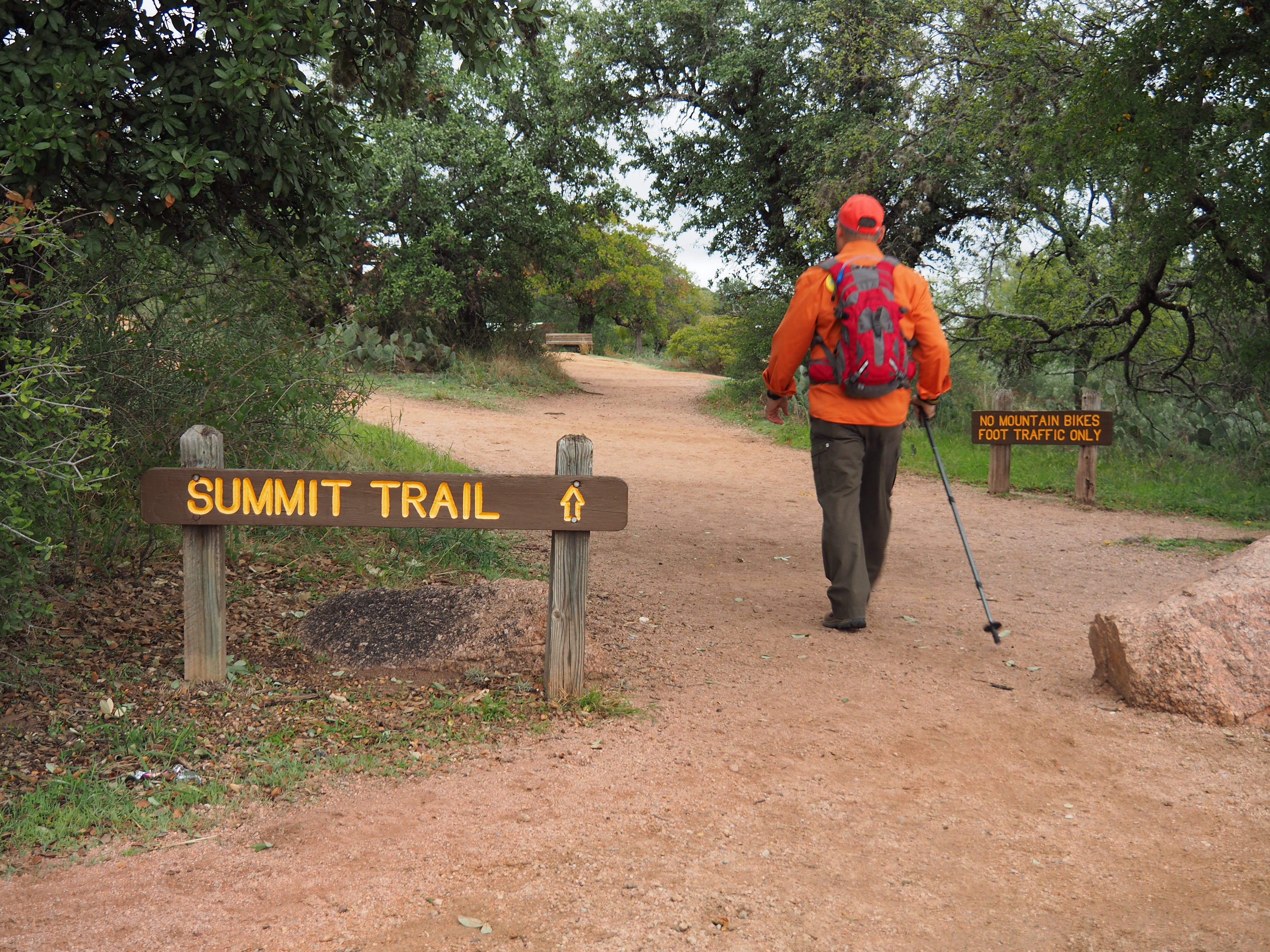
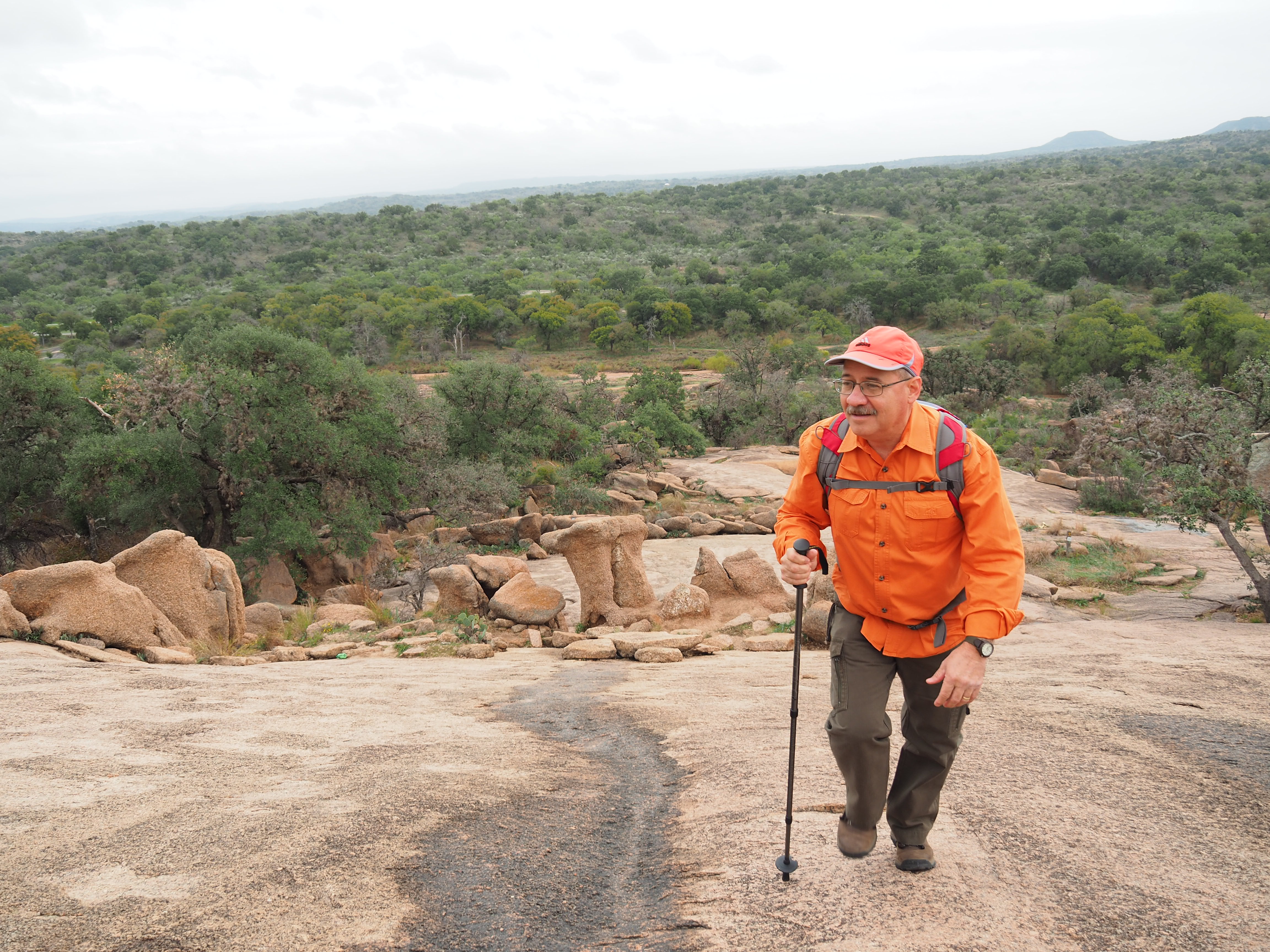
Enchanted Rock Summit TrailEnchanted Rock State Natural Area offers seven miles of hiking trails. The four-mile Loop Trail winds around the base of Enchanted Rock and gives hikers opportunities to see lots of wildlife. The Summit Trail is the most popular hike in the park. Even though the trail has a 425-foot elevation gain from the trailhead to the summit, it is a relatively easy hike. The summit offers fantastic views of the surrounding countryside.

Enchanted Rock SunflowersMany people prefer to visit Enchanted Rock between late April and early June when the park is awash with the vibrant colors of Texas wildflowers — bluebonnets, Indian paintbrush, yellow coreopsis, and basin bellflowers. But, regardless of what time of the year you visit the park, you won’t be disappointed by the views from the summit.
Enchanted Rock Vernal Pools
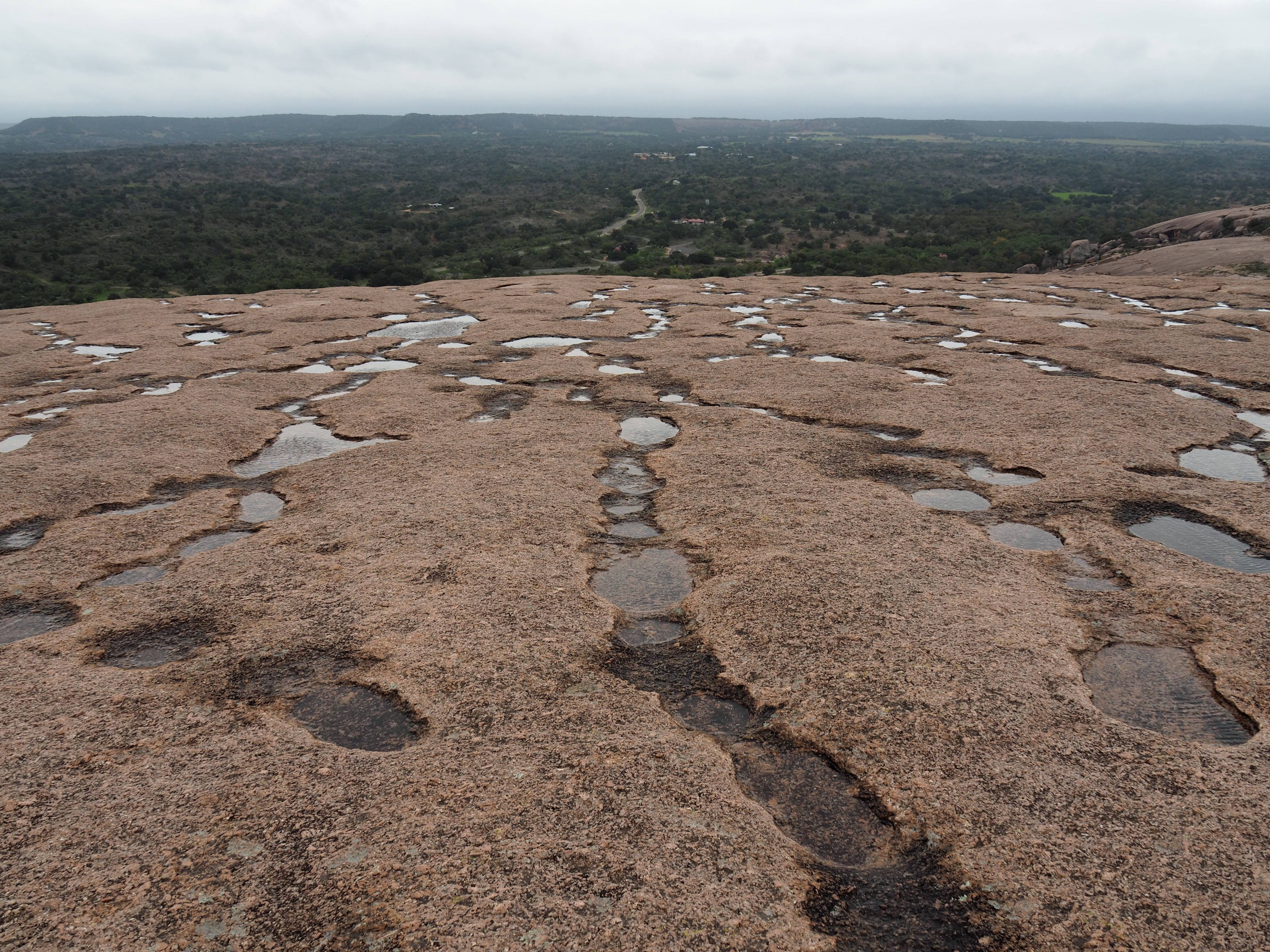
Vernal Pool w TreeOn the summit you will notice shallow depressions in the granite. One Indian tale tells of the spirit of an Indian chief who sacrificed his daughter and was consequently doomed to walk the summit forever. The indentations in the rock, the legend says, are the chief’s footprints. In reality, these indentations are called vernal pools that collect water and eventually accumulate soil and become a small oasis of plant life on the face of the rock.
Omar Doyle Enchanted Rock
Omar Hike Up Enchanted FallsEnchanted Rock is not on a direct route to anywhere else, so if you want to visit the park you have to plan to go there. And, once you visit, you’ll understand why Enchanted Rock is one of the most popular places in the Lone Star State. When you visit, definitely plan on hiking the Summit Trail.
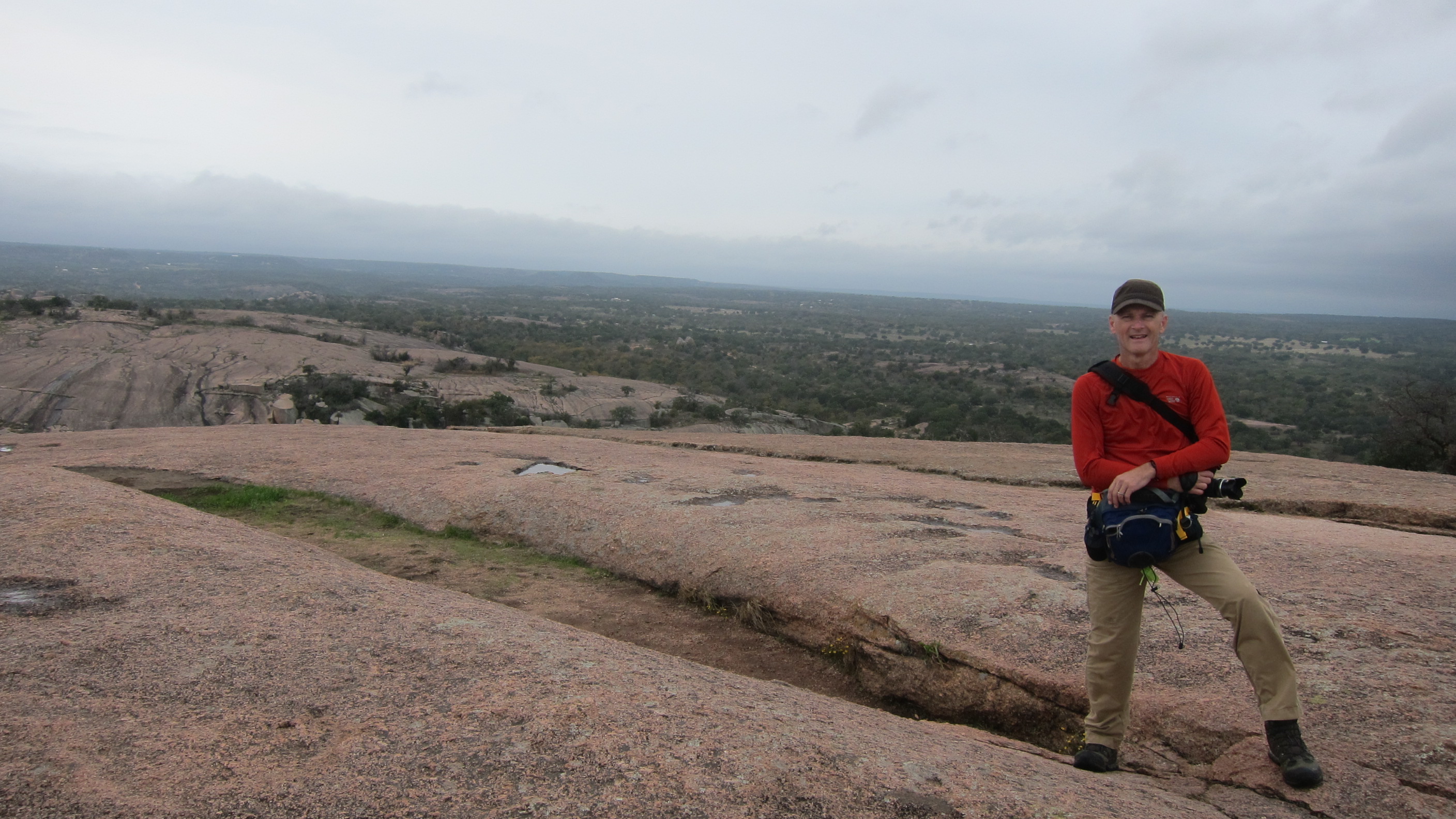
Doyle Enchanted Rock Summit
Omar Pushing Rock Enchanted RockBe sure to wear shoes with good soles that will grip the rock, take a water bottle or hydration pack, and don’t forget your camera. And, if you happen to be on the summit in the evening, listen carefully and you just might hear what the Tonkawa Indians heard years ago — the enchanting sounds of the talking rock.

Caprock Canyons Trailway

On my short list of affordable adventures in the Lone Star State is to bike the Caprock Canyons Trailway. This 64-mile hiking, biking, and equestrian trail stretches from South Plains to Estelline along an abandoned spur of the Fort Worth and Denver Railroad. The trailway is a part of the Rails to Trails Conservancy, an organization that is creating a network of trails around the country from former rail lines.
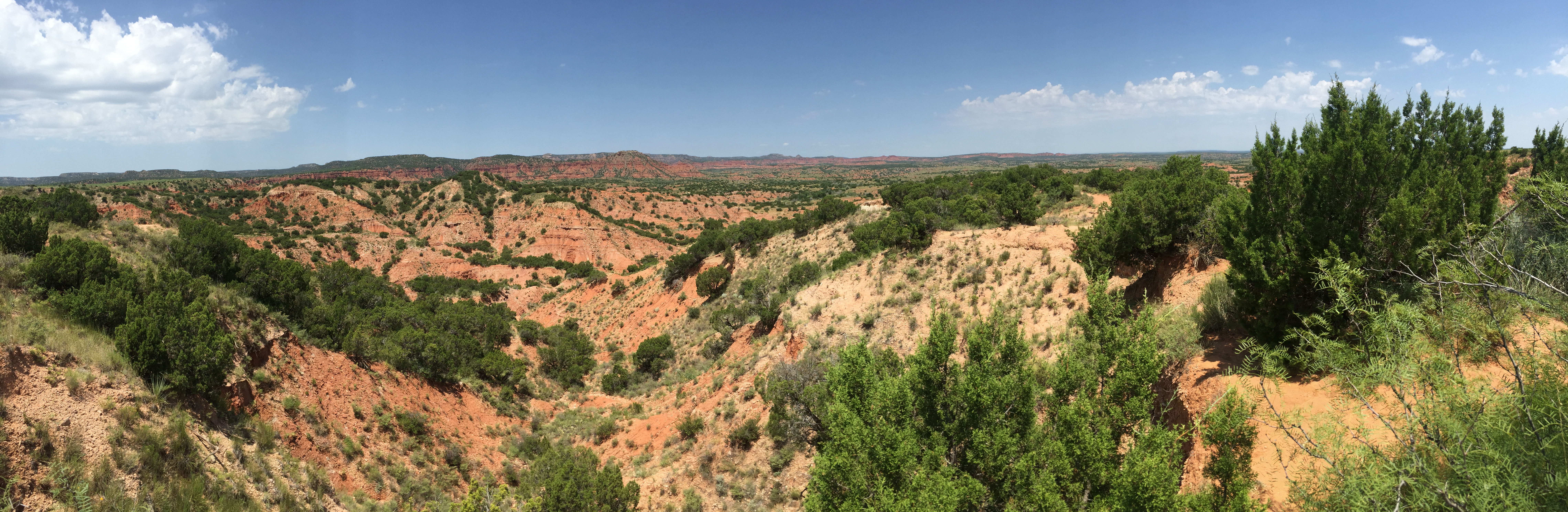
Caprock Canyons TrailwayThe Caprock Canyons Trailway runs through one of the most scenic areas of Texas and skirts Caprock Canyons State Park, home to the State’s bison herd. The bison herd is the legacy of Charles Goodnight. This famous cattle rancher rescued several plains bison in 1876 at the urging of his wife at a time when bison were being slaughtered by the thousands.
Caprock Canyons TrioThe vistas at this park are absolutely beautiful. And, the presence of bison lends an Old West charm to the views. There are several locations in the park where you can take short hikes to scenic overlooks. There is indeed something therapeutic about sitting in silence while looking at scenery that just makes you take a deep breath and smile.
IMG_5139

While visiting the park, I asked the rangers for advice on how to prepare to bike the trailway. They emphasized the importance of caching water along the way and carrying lots of spare bike tubes. These guys know their stuff. They have seen the best and the worst that has happened to those who come here to bike the trailway.
Caprock Canyons PicsAfter visiting the park, my wife Cheryl and I drove to three of the trailheads to get a feel for the terrain. Gazing at the long stretches of trail got me more excited than ever about carving out some vacation time to make this adventure a reality.
IMG_5129After checking out the trailway, we stopped for lunch at Galvan’s Restaurant in Turkey, located a short distance from one of the trailheads. Good choice! We enjoyed a delicious homemade burger in a small restaurant that was so clean you could eat off the floor. The walls are decorated with autographed pics of famous TV western stars. Pretty cool. I recommend Galvan’s if you are ever in this you-got-to-be-going-there part of the Lone Star State.

Looking forward to actually biking the trailway in the near future. Stay tuned.

Biking Stephen F. Austin

Nestled on the banks of the Brazos River, Stephen F. Austin State Park is an easy drive from Houston. This beautiful 663-acre park offers visitors a variety of camping options and 6 miles of hiking and biking trails. As a Texas State Parks Pass holder, I visit this park as often as I can throughout the year.
SFA Bike Ride w FlowersAny visitor to the park should set aside some time to visit the nearby Washington-on-the-Brazos State Historic Site — the birthplace of Texas. It was at this location in 1836 that representatives of Texas settlements met to make a formal Declaration of Independence from Mexico and where the government of the Republic of Texas was created.
SFA Bike Ride w LogAs someone who enjoys mountain biking, the trails at Stephen F. Austin State Park are among my favorite. Although there are only 6 miles of trails at the park, these single track trails are a lot of fun to ride. They are perfect for beginner and intermediate level riders. I generally try to do at least two loops on these winding trails.
SFA Whitetail DeerOne of the things I enjoy most is the opportunity to see wildlife along the trails. There is no shortage of whitetail deer, rabbits, armadillos, barred owls, and a variety of birds. The Brazos Bottom Trail leads to and follows the bluff along the banks of the wide and slow-moving Brazos, the longest river in the Lone Star State. There are a couple of spurs along this trail where you can park your bike and hike down to the river.
SFA Ride Scenic OverlookAlthough these trails are fun to ride, I do have to remind myself to slow down and stop occasionally to enjoy the scenic overlooks along the banks of the Brazos or to just listen to the sounds of nature. There is something unquestionably therapeutic about spending time outdoors. The trails at Stephen F. Austin State Park are visitor friendly and just what the doctor ordered for anyone needing to relieve a little stress.

So, whether you enjoy mountain biking, trail running, or just a slow walk through the woods, I encourage you to check out the trails at the park. The park office will provide you with a good and easy-to-read trail map. Honestly, you would have to work really hard to get lost at this park. But I do guarantee that you will get lost in thought as you wander the shaded trails at Stephen F. Austin State Park.

One final note. Remember to stay hydrated as you enjoy the trails at the park. Always carry a water bottle or hydration pack and, if you plan to be out long, a few nutrition bars.

Huntsville State Park Trails

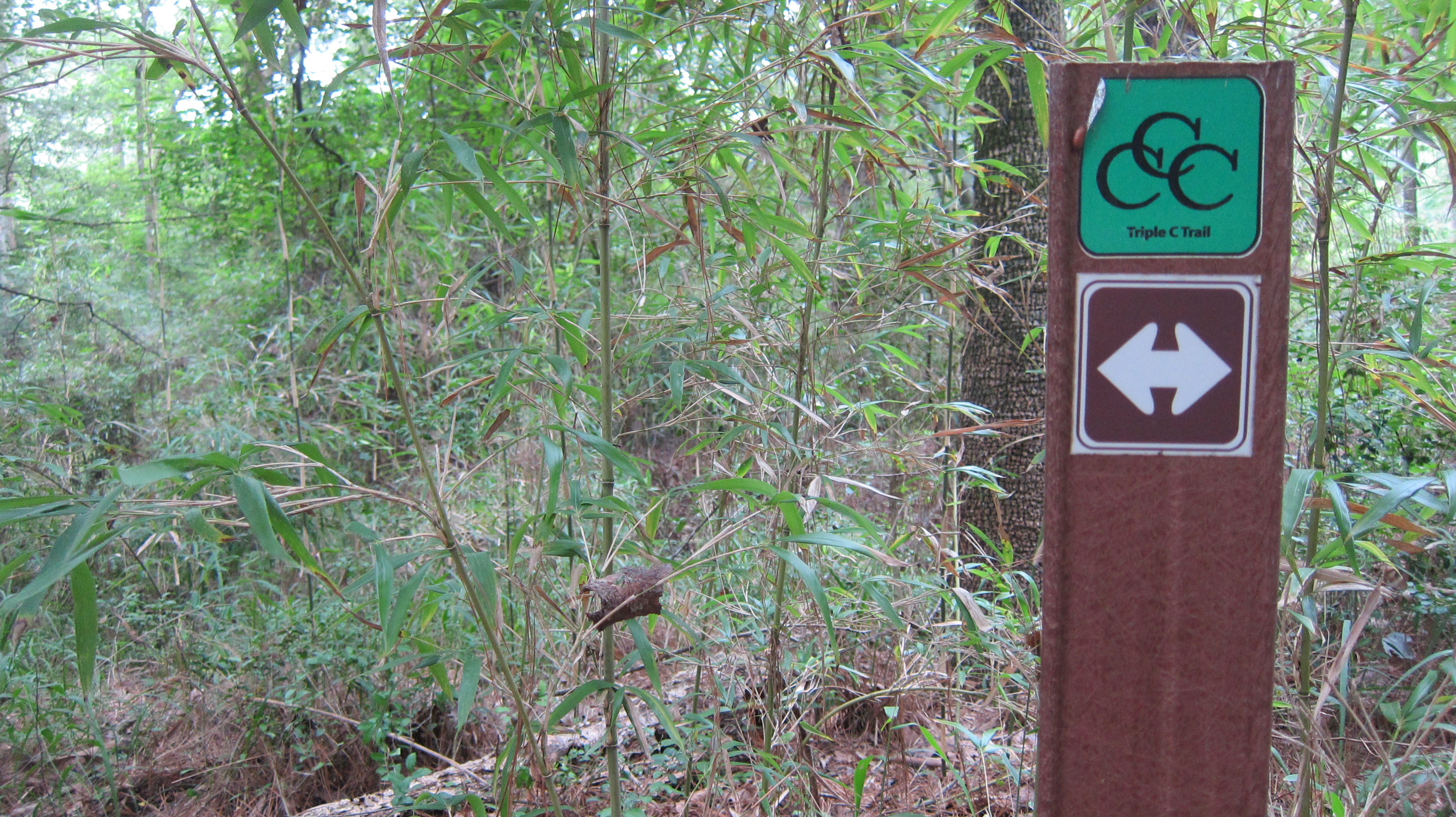
Huntsville State Park offers 21 miles of trails through the natural beauty of the East Texas Pineywoods. Two of my favorite trails at the park are the Triple C and the Chinquapin Trails. These two trails wind their way through one of the most beautiful forested sections of the park. I was especially excited to hike the Triple C Trail — named in honor of the work of the Civilian Conservation Corps.
Triple C TrailThe Civilian Conservation Corps (CCC) was formed in March 1933 when our nation was in the grip of the Great Depression. With more than twenty-five percent of the population unemployed, President Franklin Delano Roosevelt took decisive action to help the unemployed. The CCC was one of Roosevelt’s first New Deal programs and harnessed the strength of our nation’s youth to help conserve our natural resources.
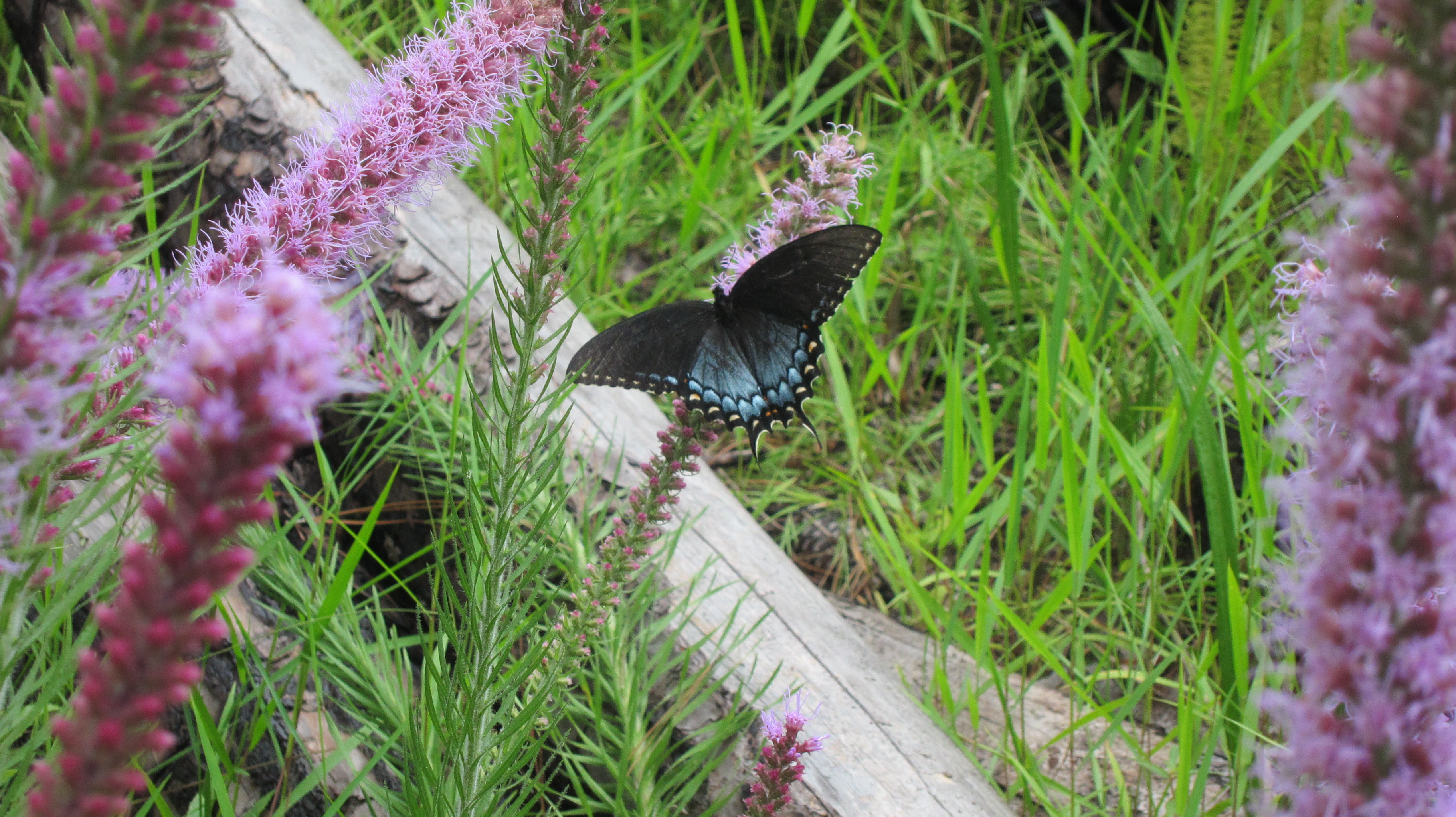
Butterfly at HSPOperating from 1933 to 1942, the CCC engaged in conservation initiatives in national and state parks around the nation. Today, the CCC is recognized as the single greatest conservation program in our history. The conservation initiatives of the program not only developed young men through disciplined outdoor labor, they also fueled concern for our natural resources and laid the foundation for the tenets of modern conservation.
Huntsville SP MapAs I hiked the Triple C Trail, I thought about the young men who labored during the Great Depression in the area near the trail. Their boot prints are no longer visible in the East Texas soil. Their names are not recorded on any plaque. The only thing that remains are remnants of their labor along a trail through the woods — one that has given countless numbers of people across the years access to one of the most beautiful places in the Lone Star State.
Log at HSPWhen you think about it, we are all the beneficiaries of the labor of those who came before us or those who worked hard to make something that we enjoy today. Whether a hiking trail or a home or even the car that we drive, our lives are made better in many ways because of the labor of others.
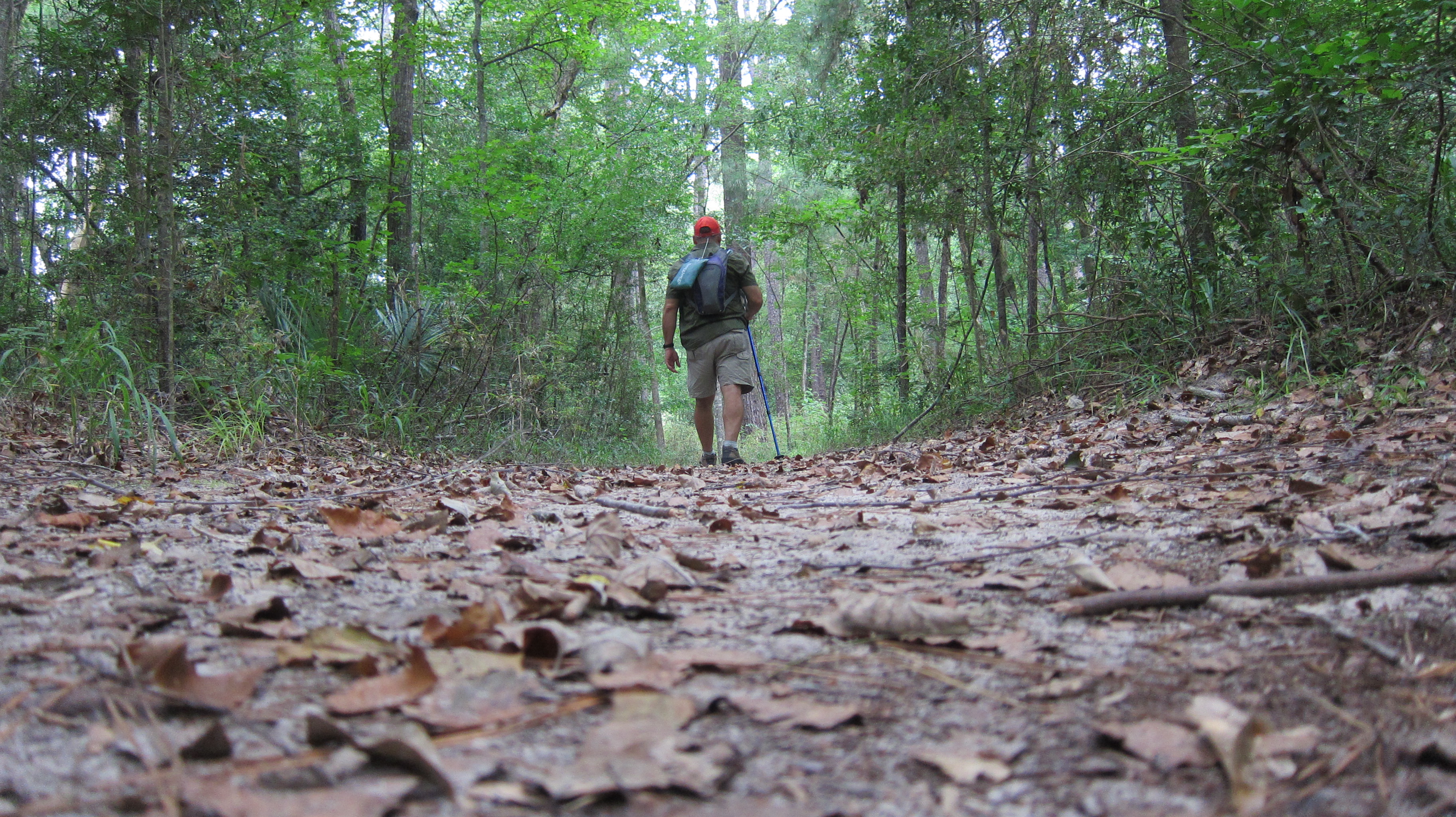
Omar Hiking at HSPThe next time you are in East Texas, swing by Hunstville State Park, lace up your hiking boots, and hit the trail. And, as you walk among the tall trees, make it a point to think about the young men who lived during the Great Depression and were a part of a program that inspired the preservation of our natural resources for the enjoyment of generations to come. May their example inspire us to leave a legacy that can be enjoyed by future generations.

The Oaks of Brazos Bend

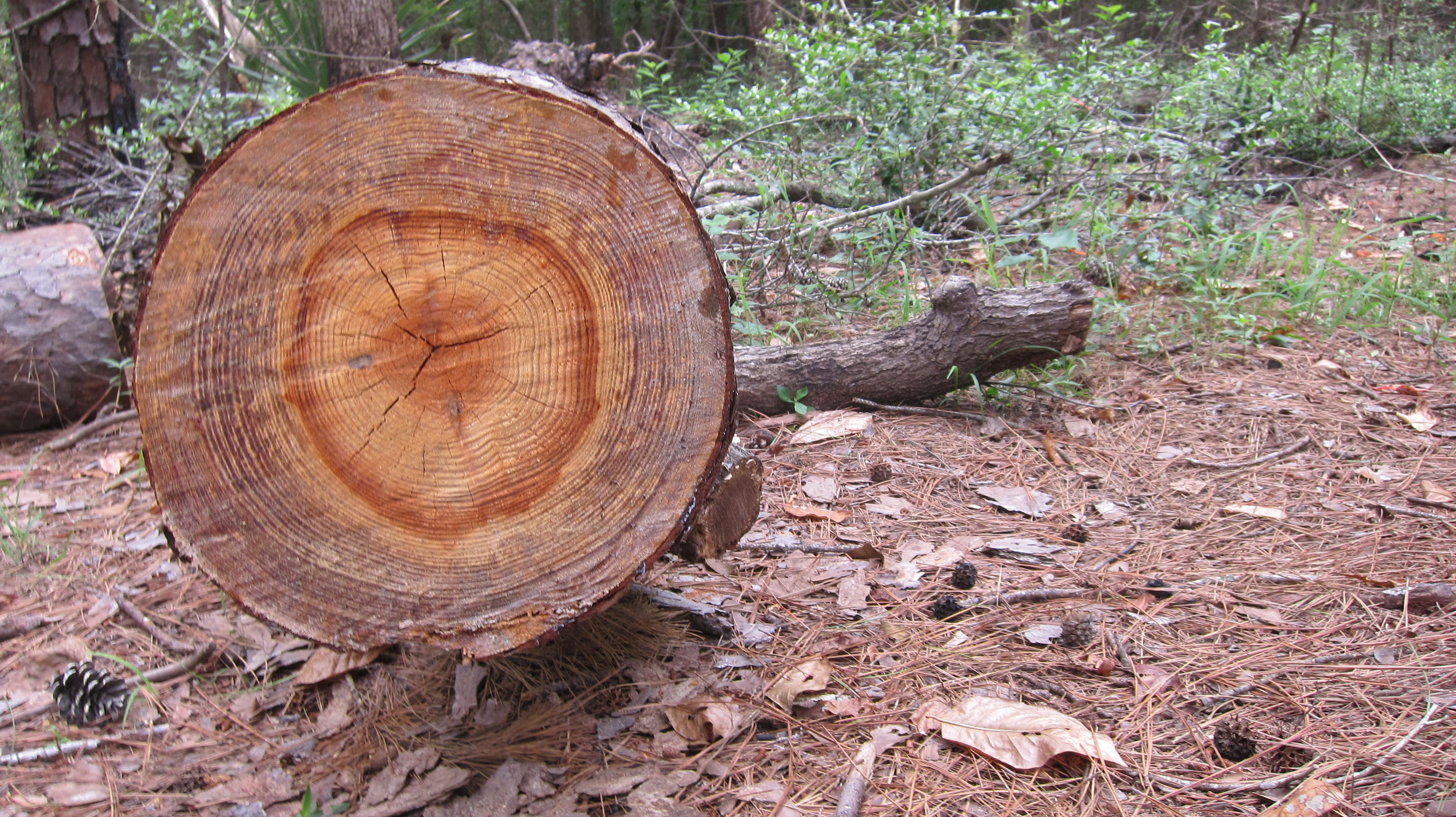
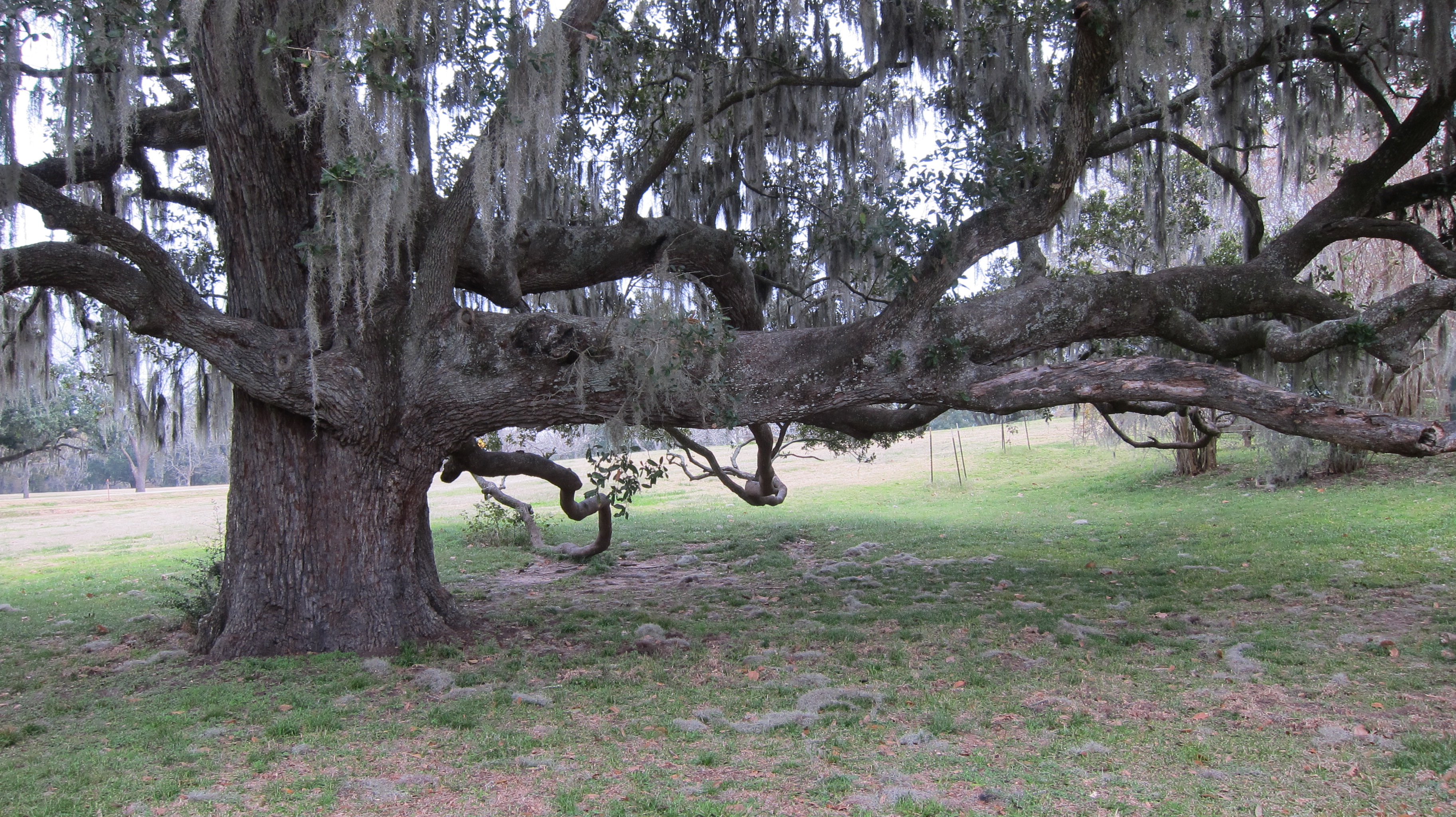
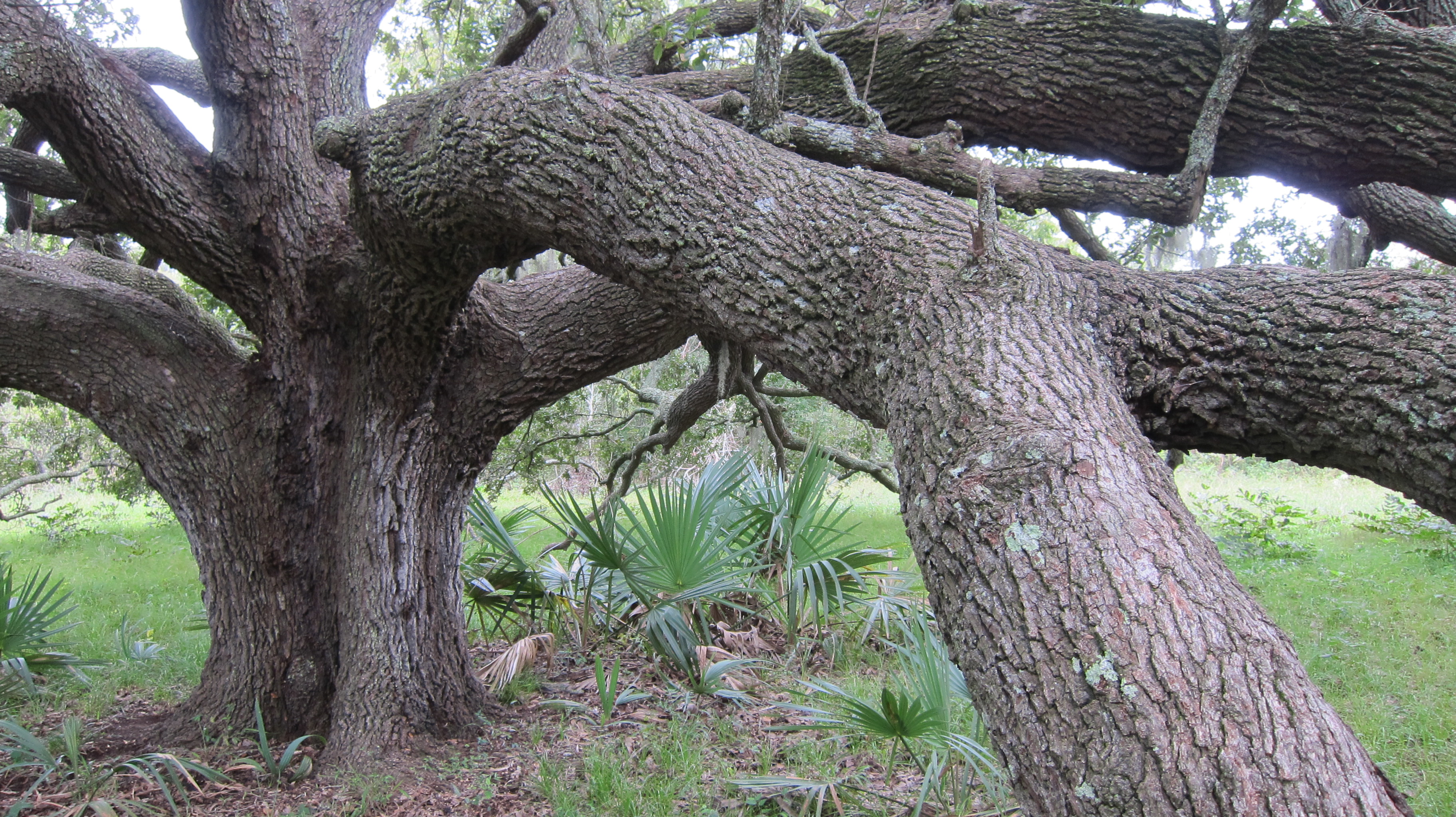
Magnificent — that’s the word that best describes the huge live oak trees at Brazos Bend State Park. These stately giants elegantly dressed in Spanish moss have lived through lots of years of Texas history. As a kid I learned that scientists can determine the age of a tree by counting the rings in the trunk of the tree. The term for the study and dating of annual growth rings in trees is dendrochronology, from dendro (tree), chronos (time or events in past time), and ology (the study of).
Big OakI know very little about the science of dendrochronology. But, that has never stopped me from admiring and enjoying the old, stately trees of Brazos Bend. Every time I hike or bike the trails at the park, I can’t help but wonder about the ages of these moss-draped giants. The oaks of Brazos Bend have survived lots of stuff through years of growth on the coastal plains of Texas, including hurricanes and droughts and other threats.
DendrochronologyI recently read  “Forty Chances: Finding Hope in a Hungry World,” a book authored by billionaire Warren Buffet’s son, Howard. The older Buffet is quoted in the book as saying,“We do sit in the shade of trees planted by others.” He continued, “While enjoying the benefits dealt us, we should do a little planting ourselves.” What a great thought and reminder that there is wisdom in planting trees.
Big TreeLike John Chapman, the American pioneer nurseryman also known as Johnny Appleseed, those who plant trees have a vision that extends beyond their lifetime. Tree planters invest in the next generation and have faith in a future they may never see. They are not afraid to take on big projects or to start things for which they may never see an end result. And yet they plant anyway because they believe that someone in the future will one day enjoy sitting under the shade of the trees they planted.
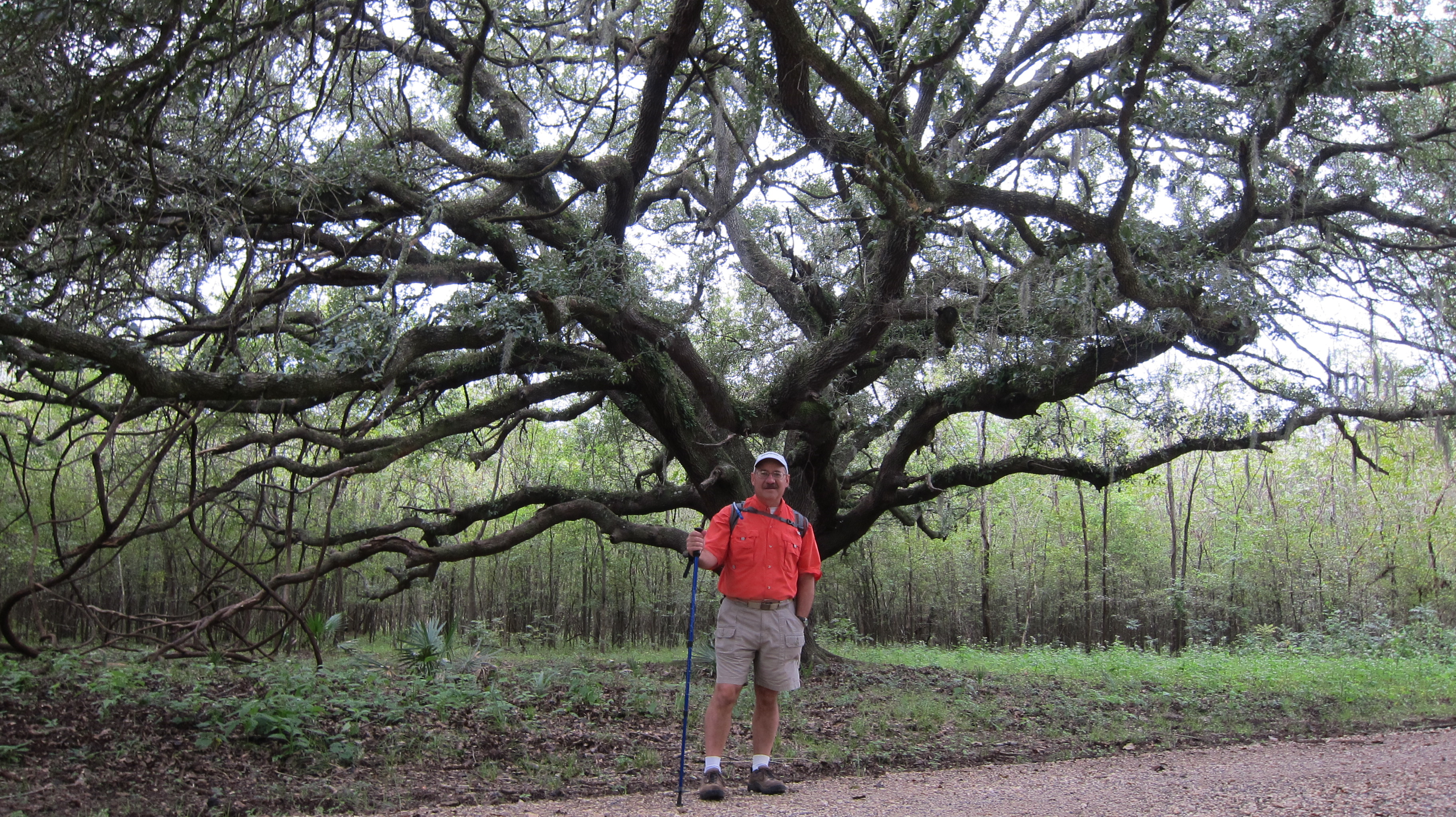
Omat TreeThe huge trees at Brazos Bend did not get huge overnight. And the trees that we plant will not get big overnight. Good things, including growth and maturity, take time. It’s amazing to think that every majestic oak at Brazos Bend started as a seed. Big things often have small beginnings. Not every seed that randomly falls into the ground or that we plant will grow or survive the ravages of time, but some will. And those that do will provide shade for people we may never meet.
Tree up CloseThe next time you visit the Coastal Plains of Texas, make it a point to visit Brazos Bend State Park, if for no other reason than to enjoy the trees and to sit under their shade. These trees are a Texas treasure and will continue to provide enjoyment to park visitors for years to come. And, if you are so inspired, go home and plant a tree that will grow to provide shade for people you may never meet.