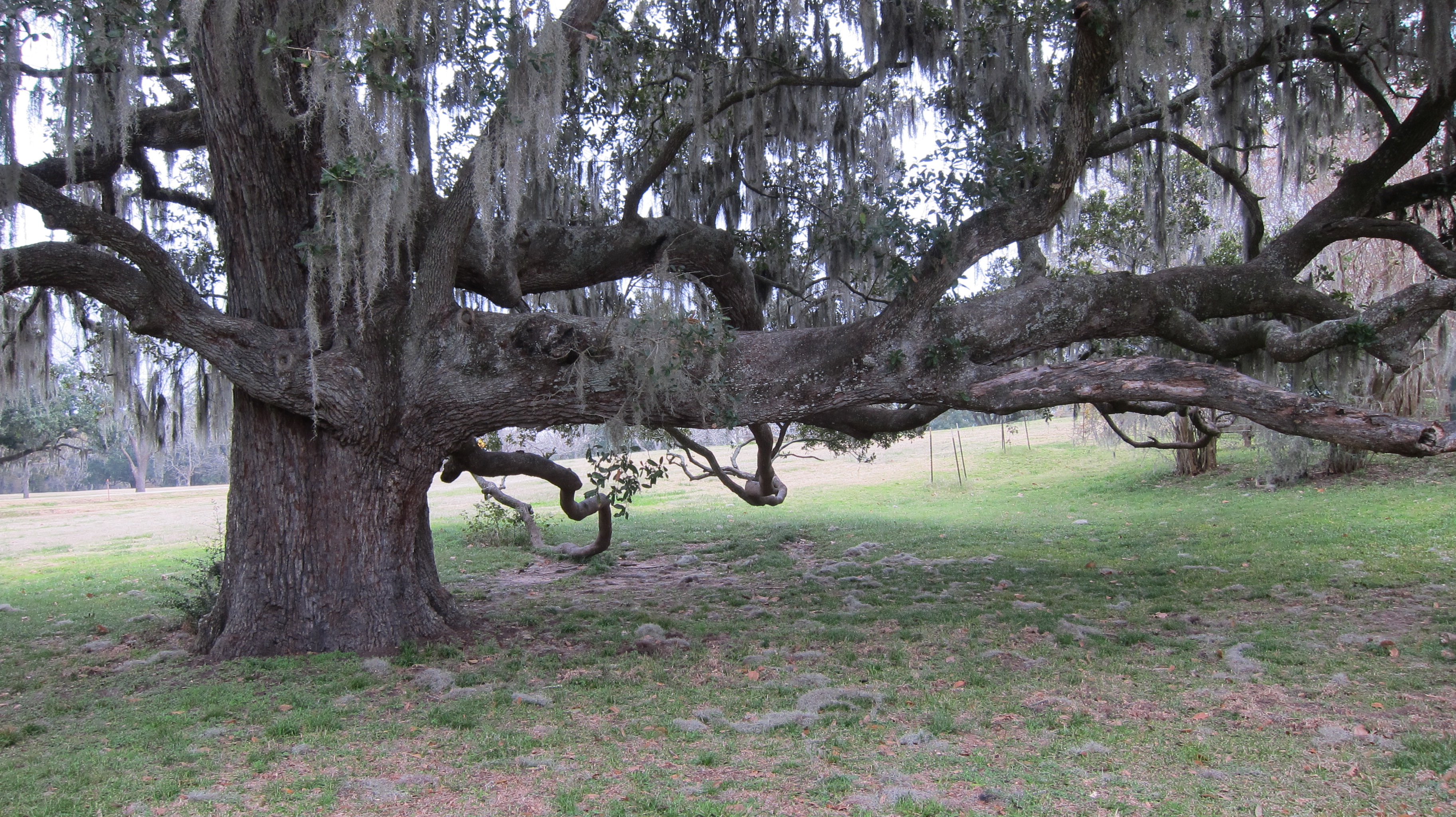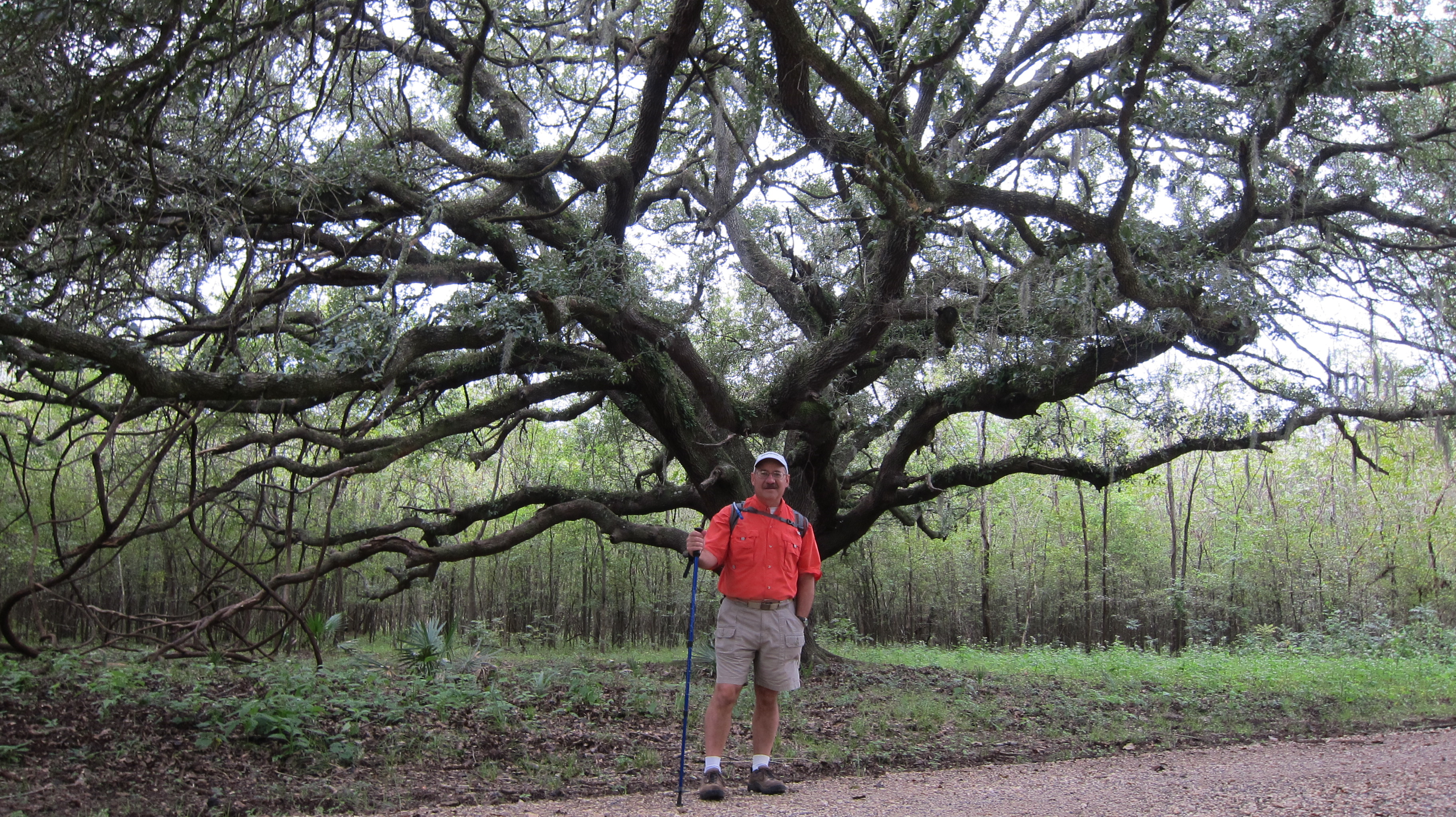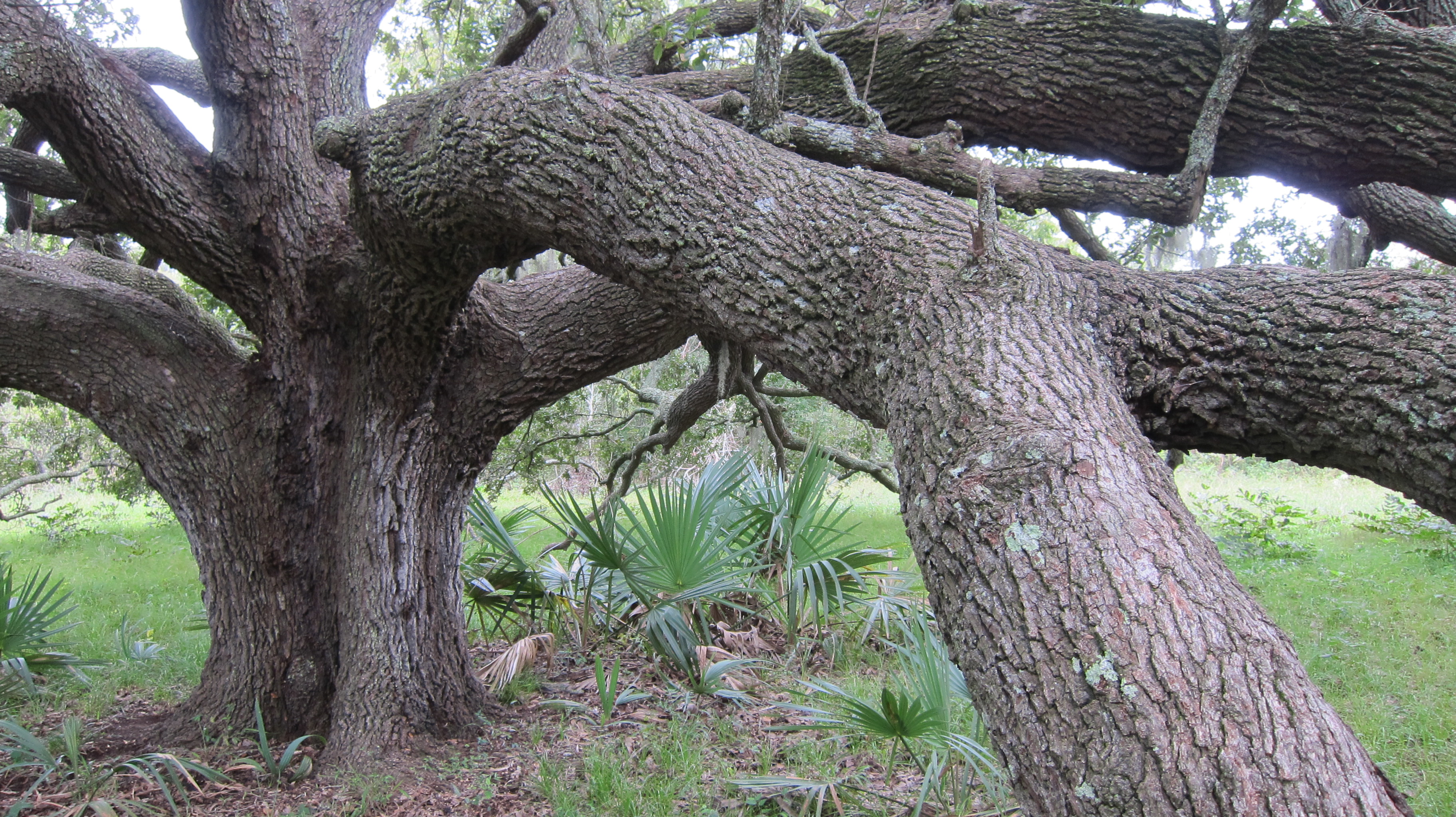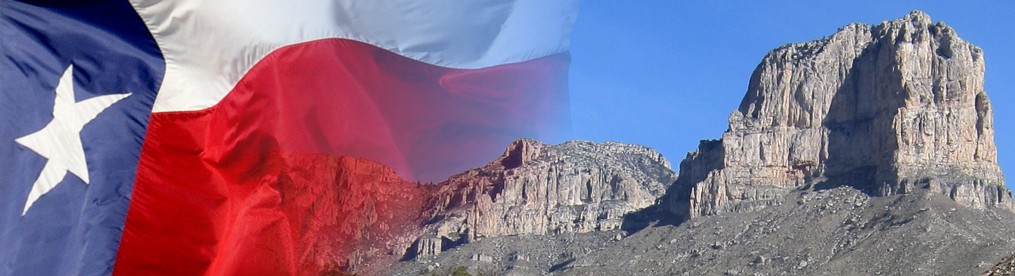
Magnificent — that’s the word that best describes the huge live oak trees at Brazos Bend State Park. These stately giants elegantly dressed in Spanish moss have lived through lots of years of Texas history. As a kid I learned that scientists can determine the age of a tree by counting the rings in the trunk of the tree. The term for the study and dating of annual growth rings in trees is dendrochronology, from dendro (tree), chronos (time or events in past time), and ology (the study of).
I know very little about the science of dendrochronology. But, that has never stopped me from admiring and enjoying the old, stately trees of Brazos Bend. Every time I hike or bike the trails at the park, I can’t help but wonder about the ages of these moss-draped giants. The oaks of Brazos Bend have survived lots of stuff through years of growth on the coastal plains of Texas, including hurricanes and droughts and other threats.
I recently read “Forty Chances: Finding Hope in a Hungry World,” a book authored by billionaire Warren Buffet’s son, Howard. The older Buffet is quoted in the book as saying,“We do sit in the shade of trees planted by others.” He continued, “While enjoying the benefits dealt us, we should do a little planting ourselves.” What a great thought and reminder that there is wisdom in planting trees.
Like John Chapman, the American pioneer nurseryman also known as Johnny Appleseed, those who plant trees have a vision that extends beyond their lifetime. Tree planters invest in the next generation and have faith in a future they may never see. They are not afraid to take on big projects or to start things for which they may never see an end result. And yet they plant anyway because they believe that someone in the future will one day enjoy sitting under the shade of the trees they planted.
The huge trees at Brazos Bend did not get huge overnight. And the trees that we plant will not get big overnight. Good things, including growth and maturity, take time. It’s amazing to think that every majestic oak at Brazos Bend started as a seed. Big things often have small beginnings. Not every seed that randomly falls into the ground or that we plant will grow or survive the ravages of time, but some will. And those that do will provide shade for people we may never meet.
The next time you visit the Coastal Plains of Texas, make it a point to visit Brazos Bend State Park, if for no other reason than to enjoy the trees and to sit under their shade. These trees are a Texas treasure and will continue to provide enjoyment to park visitors for years to come. And, if you are so inspired, go home and plant a tree that will grow to provide shade for people you may never meet.
Mission Hike and Bike Trails
I grew up in the small town of Mission, located just a few miles north of the Rio Grande River. In the 1950’s, Mission was the South Texas version of Mayberry and was the setting for my childhood of fun adventures and misadventures — everything from climbing mesquite trees to playing Cowboys and Indians and unintentionally starting a one-alarm fire.
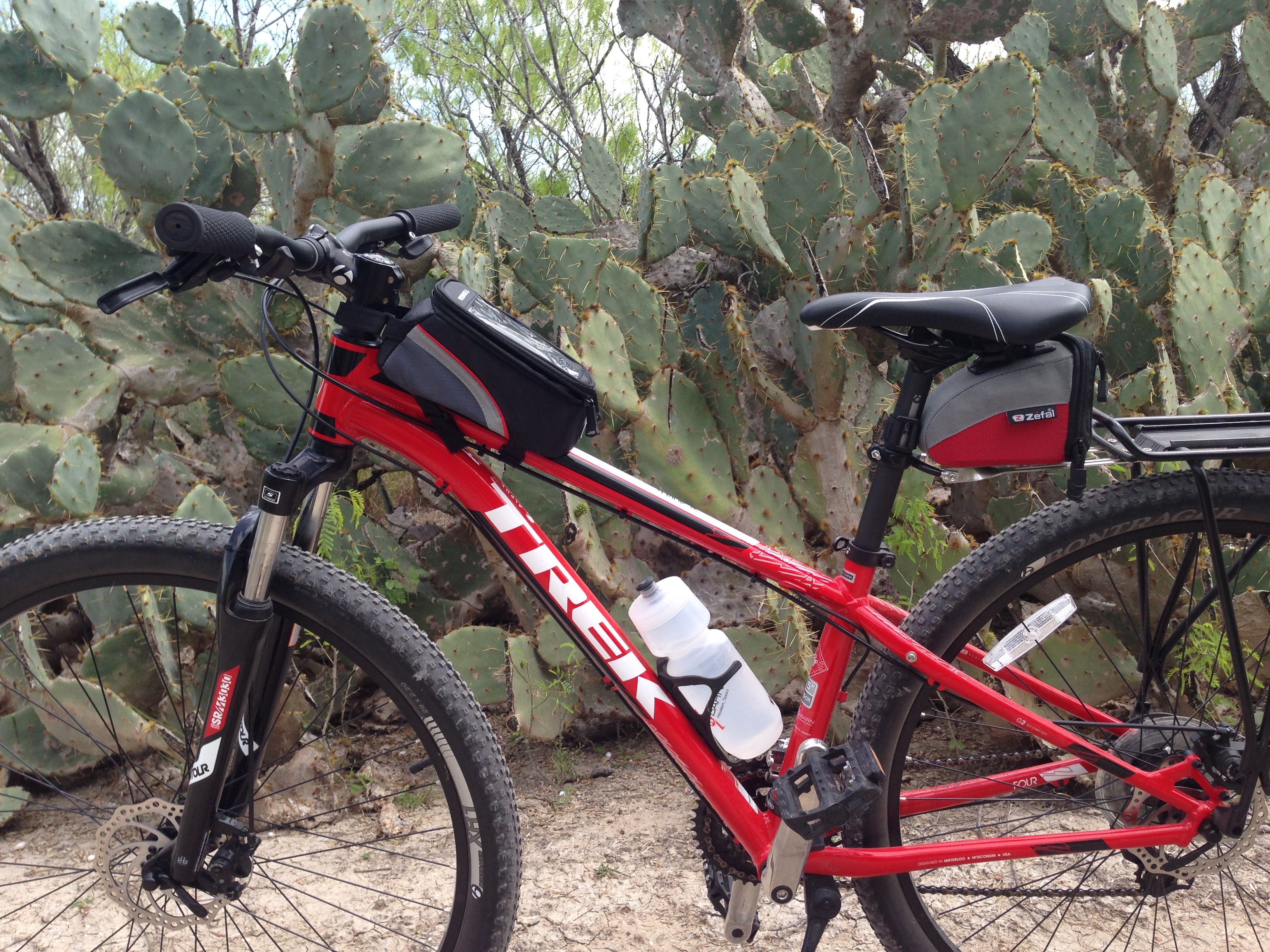
Mission has some great mountain bike trails not far from where I grew up. The Mission Hike and Bike Trails offer 5 miles of paved trails and 6 miles of single track trails. These trails are easily accessed from the trailhead parking lot located on Conway Avenue just south of Highway 183.
The paved trail winds its way through the brush and along an irrigation canal all the way to the terminus at the World Birding Center at Bentson State Park. This is a nice trail for road cyclists, walkers, and runners. Bentson State Park is certainly worth a visit. I spent many nights hiking and camping at Bentson as a Boy Scout.
The single track trails are fantastic. Kudos to the Mission Trails Club for maintaining these trails. These winding and narrow hard-packed trails are great for trail runners and all levels of mountain bikers, from beginners to expert riders. All of the trails are clearly marked, indicate the level of expertise needed to enjoy the trail, and wind their way through cactus and mesquite — great motivators for not losing your balance.
I logged 17 miles on the morning of my first ride and enjoyed every minute. I had so much fun that I headed back to the trails after lunch to ride a bit more. I’m glad I did. I tried out some of the more difficult trails and had an absolute blast. I also rode down the paved trail to the World Birding Center and enjoyed a pleasant ride through Bentson State Park.
If you enjoy mountain biking and are headed to South Texas, I encourage you to visit the Mission Hike and Bike Trails. You won’t be disappointed. I will never head south again without my mountain bike. I have enjoyed riding the trails near my hometown more than once and look forward to riding them again.
Cowboy Proverbs
Cowboys — the very mention of the word stirs the imagination. From the earliest days of film, cowboys have been the subject of many a Hollywood movie. As a kid, I loved cowboy movies and made it a goal to watch every movie that featured John Wayne. I still enjoy watching the Duke’s movies.
My grandfather was born and raised on a cattle ranch near San Diego, Texas. He told me stories of working as a cowhand on a ranch owned by George Washington West — the cattle rancher who developed the town that bears his name. Today, George West is the county seat of Live Oak County and regarded as the storytelling capital of Texas.
Over the years I have collected Cowboy Proverbs — practical no-nonsense wisdom gleaned by men who lived life in the saddle in rough and tough places. While on a trip to Big Bend, my wife and I discussed what the Old Testament Book of Proverbs might have looked like if it had been written by cowboys instead of guys like Solomon.
Here is a sampling of some my favorite Cowboy Proverbs and companion wisdom from the Old Testament Book of Proverbs. Striking similarities.
• Never miss a good chance to shut up. | “Even a fool who keeps silent is considered wise; when he closes his lips, he is deemed intelligent.” Proverbs 17:28
• The best way to keep your word is not to give it foolishly. | “It is a snare to say rashly, “It is holy,” and to reflect only after making vows.” Proverbs 20:25
• Nobody ever drowned himself in his own sweat. | “In all toil there is profit, but mere talk tends only to poverty.” Proverbs 14:23
• If you work for a man, ride for his brand. Treat his cattle as if they were your own. | “Whoever tends a fig tree will eat its fruit, and he who guards his master will be honored.” Proverbs 27:18
• Honesty is not something you should flirt with. You should be married to it. | “Whoever speaks the truth gives honest evidence, but a false witness utters deceit.” Proverbs 12:17
• Most folks are like a bob-wire fence. They have their good points. | “Even a child makes himself known by his acts, by whether his conduct is pure and upright.” Proverbs 20:11
• The quickest way to double your money is to fold it over and put it back in your pocket. | “Be not one of those who give pledges, who put up security for debts.” Proverbs 22:26
• Too much debt doubles the weight on your horse and puts another in control of the reins. | “The rich rules over the poor, and the borrower is the slave of the lender.” Proverbs 22:7
• A person who agrees with all your palaver is either a fool or he’s gettin’ ready to skin ya. | “A lying tongue hates its victims, and a flattering mouth works ruin.” Proverbs 26:28
• Don’t get mad at somebody who knows more’n you do. It ain’t their fault. | “Give instruction to a wise man, and he will be still wiser; teach a righteous man, and he will increase in learning.” Proverbs 9:9
• Good judgment comes from experience, and a lot of that comes from bad judgment. | “Let the wise hear and increase in learning, and the one who understands obtain guidance.” Proverbs 1:5
And, here is one final nugget of cowboy wisdom — Don’t squat with your spurs on!
The Garden of Thorns
I have a very short list of must-watch television programs. At the top of that list is Texas Country Reporter. I have been a big fan of this program for years. I think that Bob Phillips, the host, is one of the best storytellers around. Phillips and his film crew travel the Lone Star State to film stories of interesting places and fascinating people.
One of my favorite TCR segments is an interview that Phillips did with Texas artist and sculptor Bill Worrell who makes his home near Mason, Texas. Bill is well-known to those who appreciate southwest and Native American inspired art.
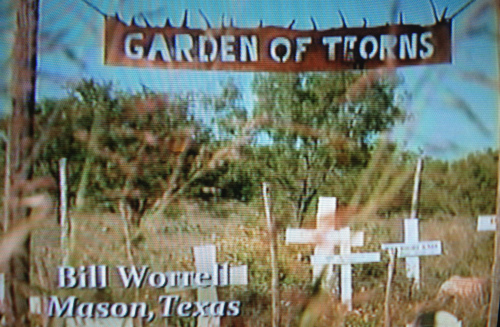
What I found especially interesting about Worrell is what he refers to as “his greatest work and latest creation.” It’s not what you might think — one of his expensive and much-sought-after works of art. Instead it is what he calls his Garden of Thorns.
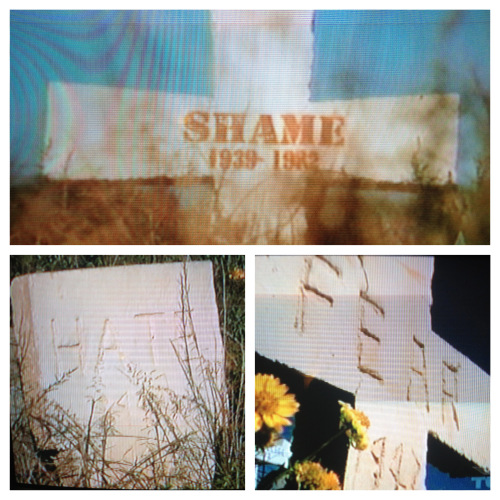
Worrell set aside a small tract of land on his property, a place, he explained, where he “decided to bury a lot of garbage and junk from my past.” As Worrell and Phillips approached the Garden of Thorns, it looked like a “Boothill for Bad Habits” complete with weeds, thorns, and thistles among the headstones.
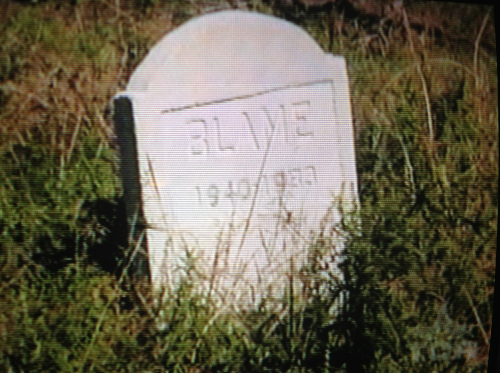
As Worrell walked into the barbed-wire enclosure, he approached a headstone with the word “Blame” chiseled into the stone. “Let’s take blame here, for example,” he told Phillips. “Probably somewhere around 1940 is when I started blaming everybody else for the bad things that happened to me. Somewhere around 1983 I realized that I’m the person to blame for things going wrong in my life. So, I changed.”
Worrell pointed out that he had also buried Hate and Fear and Shame, among other things. “So, Bill,” asked Phillips, “what you’re telling me is that you buried all your bad habits, your bad thoughts, all that?” Worrell replied, “Uh, not all of them but many of them. Still have some to go.” Worrell knows that he still has, what he calls, “thorns in the flesh” to deal with. But the good thing is that he is taking intentional steps to deal with those things.
I like Worrell’s Garden of Thorns and agree with his reason for burying the garbage and junk from his past there. “I decided,” said Worrell, “symbolically we ought to bury this stuff.” He’s right. It might do us all some good to have our own Garden of Thorns, a place where we can toss aside the kind of stuff that can wreck and ruin our lives.
As Worrell and Phillips walked away from the Garden of Thorns, Worrell remarked, “You know, Bob, I think that burying all this stuff has made me an even better artist than I was before.” Just imagine how much better we might be if we symbolically buried the garbage and junk of our own lives and left it there to rot and decay.
The Front Porch
The front porch, once an essential architectural feature of homes, has become a thing of the past. In the days before the twin sirens of air-conditioned comfort and television lured families into their homes, the front porch was the gathering place — the spot where families cooled off on hot summer nights and actually conversed with one another before going to bed.
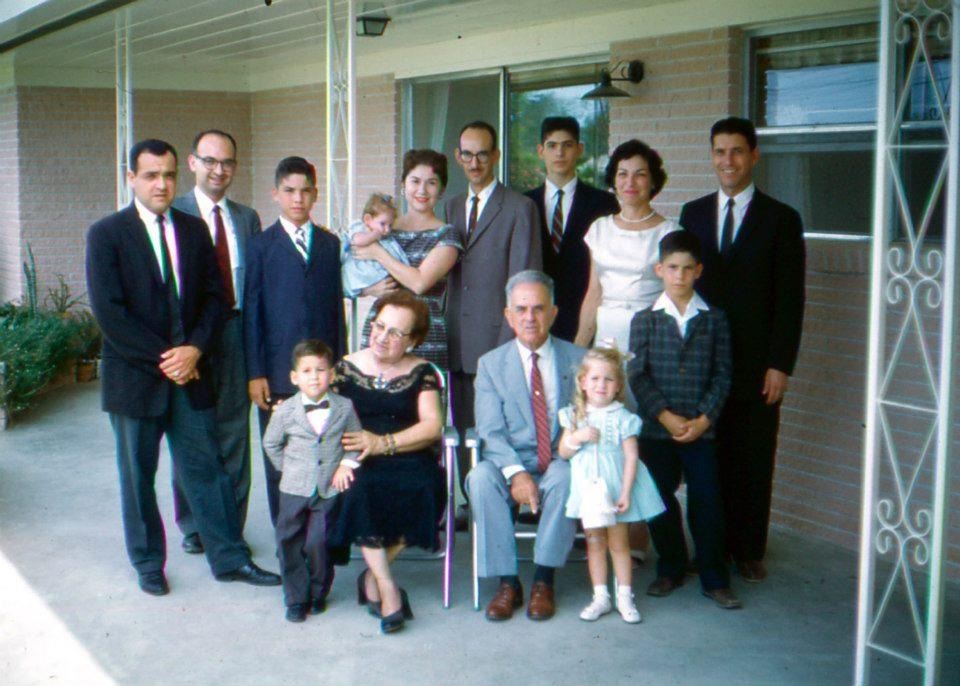
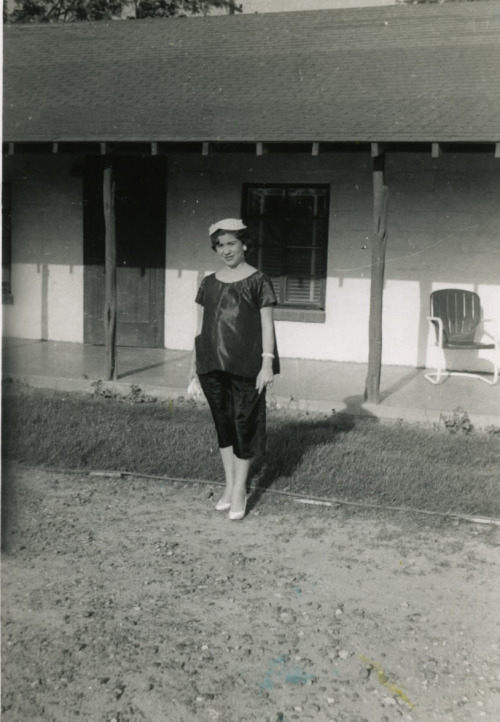
The first home I lived in when I was growing up in South Texas had a porch that spanned the length of our home. And when my grandparents built their new home, they included spacious porches on both the front and back sides of the house, each suited for different parts of the day. I have more memories than I can count of sitting on the front and back porches with my grandparents. I learned a lot about a lot of things from them on those porches.
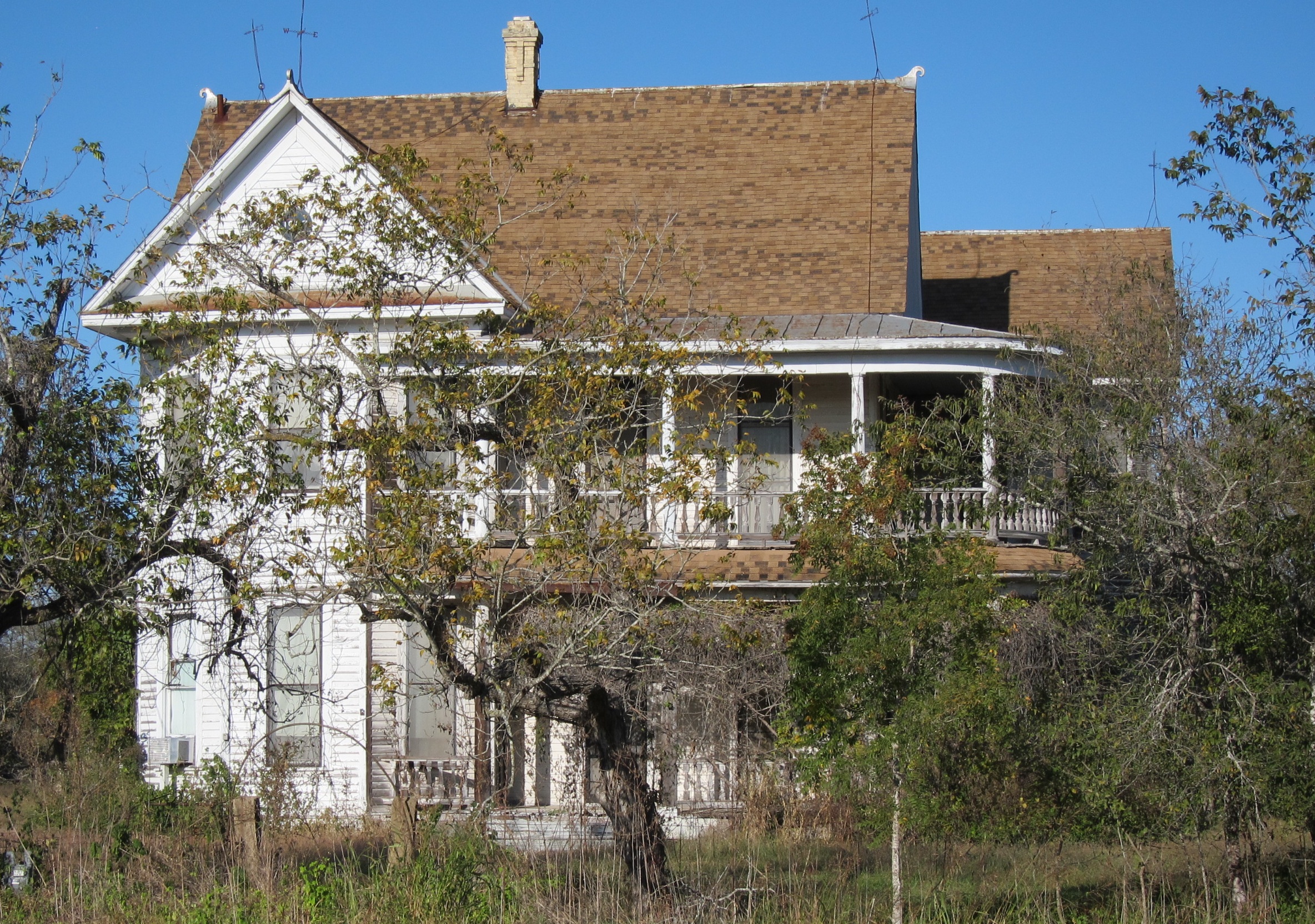
I love exploring old abandoned houses on Texas backroads. A common feature of many of these old homes is the front porch. Whenever I see one of these homes, it’s not hard for me to imagine what life must have been like for those who lived there — hard-working folks chatting at the end of long days, watching the sun set from their front porches.
I think that we lost something special when we abandoned our front porches and opted to do all of life inside of our comfortable homes. The conversation and interaction of years gone by has been replaced by high-definition television and smart phones. These devises easily distract us from the people who share the same living space with us.
Please understand that I am not anti television and telephone. It’s just that reflecting on the role that the front porch once played in my life makes me wonder about what I have given up in exchange for these devices. Or maybe it’s just that I am becoming more nostalgic the older I get.
I do however, believe that we need to somehow recapture the essence of front porch living as modern families. Perhaps that means turning off the stuff more often and actually conversing with others, the old-fashioned way of doing face time!
I am grateful for the years I spent with my grandparents on their front porch. When I close my eyes I can hear their voices, smell the cool grass, feel the summer breeze, and envision the beautiful Texas night sky. It didn’t matter that we didn’t have air-conditioning in those days or that there was not much to watch on television. We had something far better — a meaningful connection with one another because of the time we spent together on the front porch.
The Backroads Adventurer
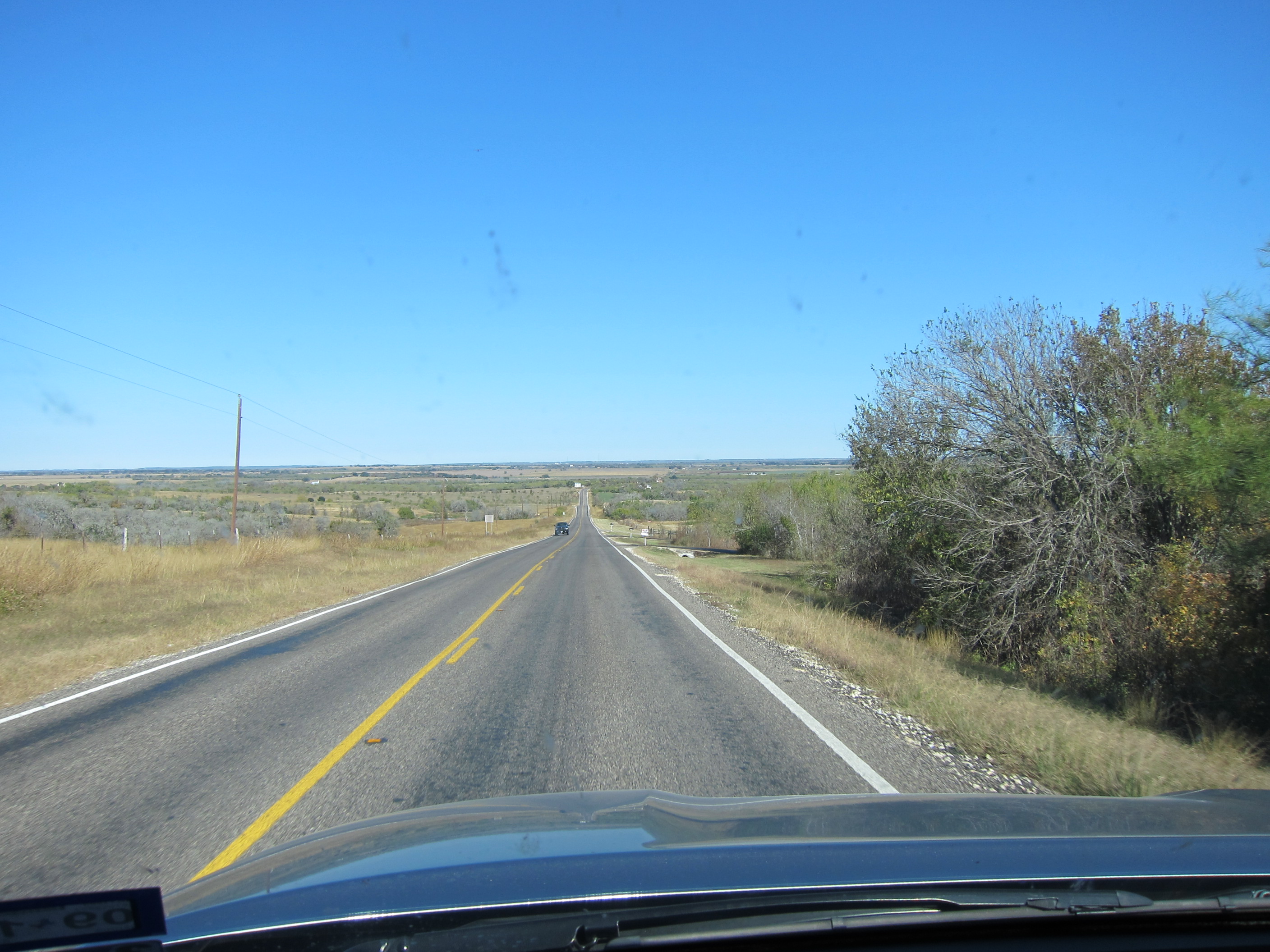
Texas leads the nation with 675,580 miles of highways and byways, enabling you to get to anyplace you want to visit at whatever pace you want to travel. While I enjoy the 85-mile per hour speed limit on Interstate-10 once you head west of San Antonio, I still prefer to travel the Lone Star State at a much slower pace.
Traveling Texas backroads yields treasures that are easily missed when you travel by faster routes. Not the least of these treasures are the many small towns, farms, and ranches along two-lane arteries off the beaten paths. I have made a list of some of my favorite things about traveling at a slower pace along Texas backroads.
10. Interesting old houses and buildings. | Every small town has interesting old houses and buildings, some in a permanent state of disrepair, melting away in the heat of the passing years. These places stir my imagination. I also enjoy seeing how entrepreneurs have restored or repurposed old houses and buildings and turned them into craft shops, specialty boutiques, restaurants, and more. It’s nice to see new life breathed into old buildings.
9. Historic hotels. | Many of the smaller destinations in Texas have some of bigger and better historic hotels. I especially like the old Gage Hotel in Marathon and Hotel Limpia in Ft. Davis. These old hotels are beautifully appointed with antiques and offer comfortable common areas where you can actually enjoy relaxed conversations around the hearth with other guests.
8. Steering wheel salutes. | When driving Texas backroads, especially in a pick-up truck, you can expect the person in the approaching vehicle to give you a quick salute with the hand on top of his steering wheel. Or, if you make way for the guy behind you to pass you on some two-lane backroad, he will generally give you a courtesy thank-you wave. The good thing about all this is that folks in Texas wave at you with all of their fingers!
7. Incredible hospitality. | You can expect to meet some really friendly folks when you travel Texas backroads. Once, when my wife and I were running late, we phoned ahead to tell the small town hotel of our late arrival. The lady told us not to worry. “If you get here late,” she said, “we’ll leave the key in an envelope with your name on it on the front porch. It will unlock the front door to the hotel and also the door to your room.”
6. The Texas Stop Sign. | You will not see many Golden Arches when traveling Texas backroads, but you will see the Texas Stop Sign in almost every small town you come to — Dairy Queen. Enjoying a cone dipped in chocolate at a Dairy Queen in a small town is the equivalent of ordering one of those fancy coffee drinks at a big city Starbucks.
5. Home-style cooking and generous portions. | When traveling the backroads, you should always take time to ask the locals about the best places to eat. Or, just pick a place that looks interesting and stop in for a meal. That’s how I have discovered some really good places to eat that offer home-style-made-from-scratch cooking offered in generous portions complete with a tall glass of sweet tea. Oh my!
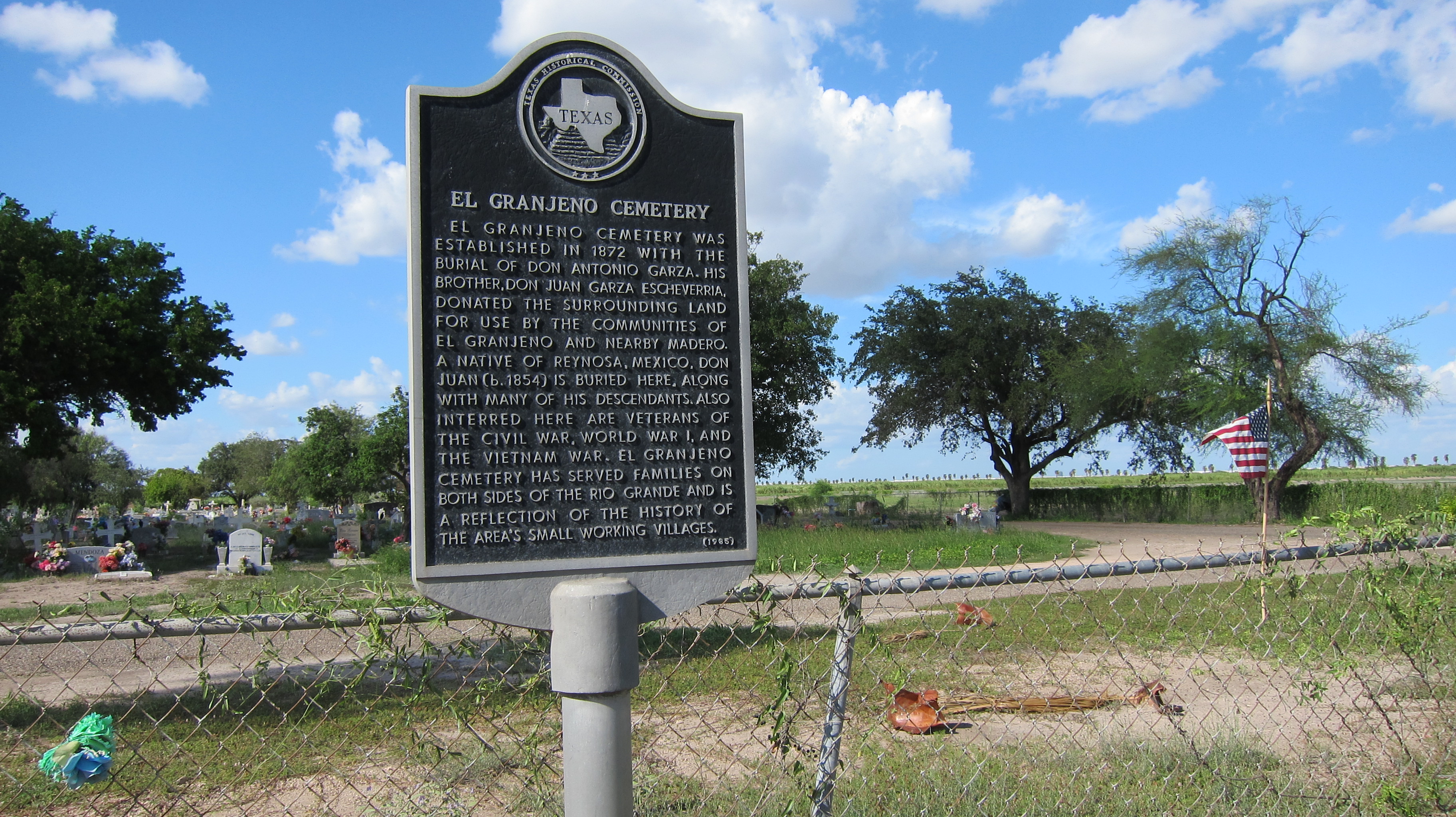
4. Historical markers. | Texas has a great Historical Marker system in place throughout the State. One advantage to not being in a hurry is that you can take the time to stop and read some really interesting things about what happened at or near wherever you happen to be.
3. County courthouses and town squares. | County seats in Texas boast some of the best-looking courthouses in the nation. These prominent courthouses are generally centrally located and adjacent to inviting town squares where people actually sit on park benches and have conversations.
2. New friends. | One thing I enjoy most about slower travel along Texas backroads is meeting interesting people along the way. On one road trip, my wife Cheryl and I met a young lady from New York who had left the corporate world to seek new employment and adventure in small town Texas. She was excited about making a new start in really small town. This New Yorker turned Texan is one of many interesting people we have met over the years because we travel at a slower pace.
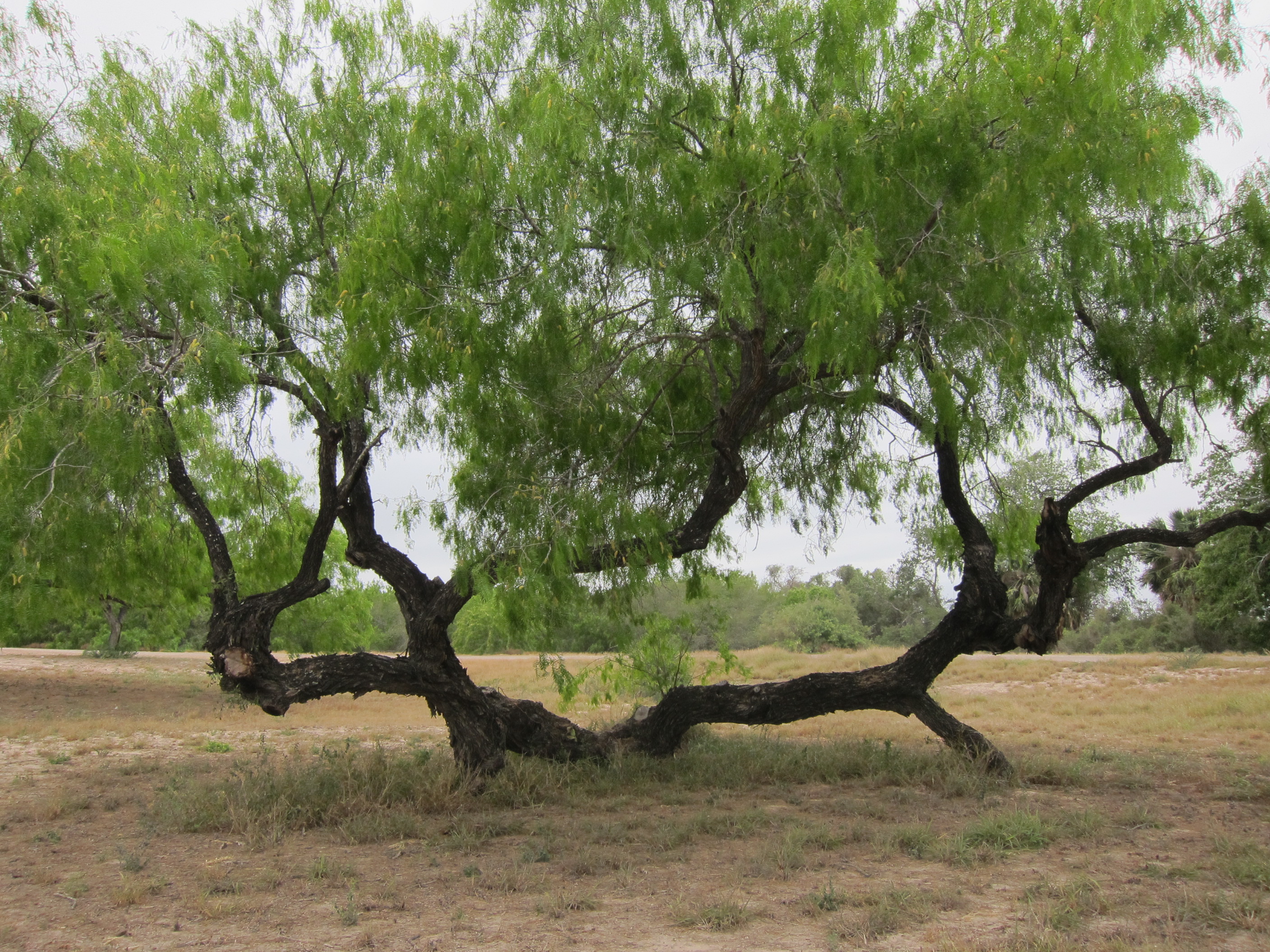
1. Sharing the adventure. | I have traveled many backroad miles all by myself in my pick-up truck. But, I prefer to travel with my wife or a friend in the passenger seat. I believe that the beauty of the Lone Star State is made even more enjoyable when you share the experience with a loved one or a friend. So, the next time you venture out, take someone along and enjoy Texas.
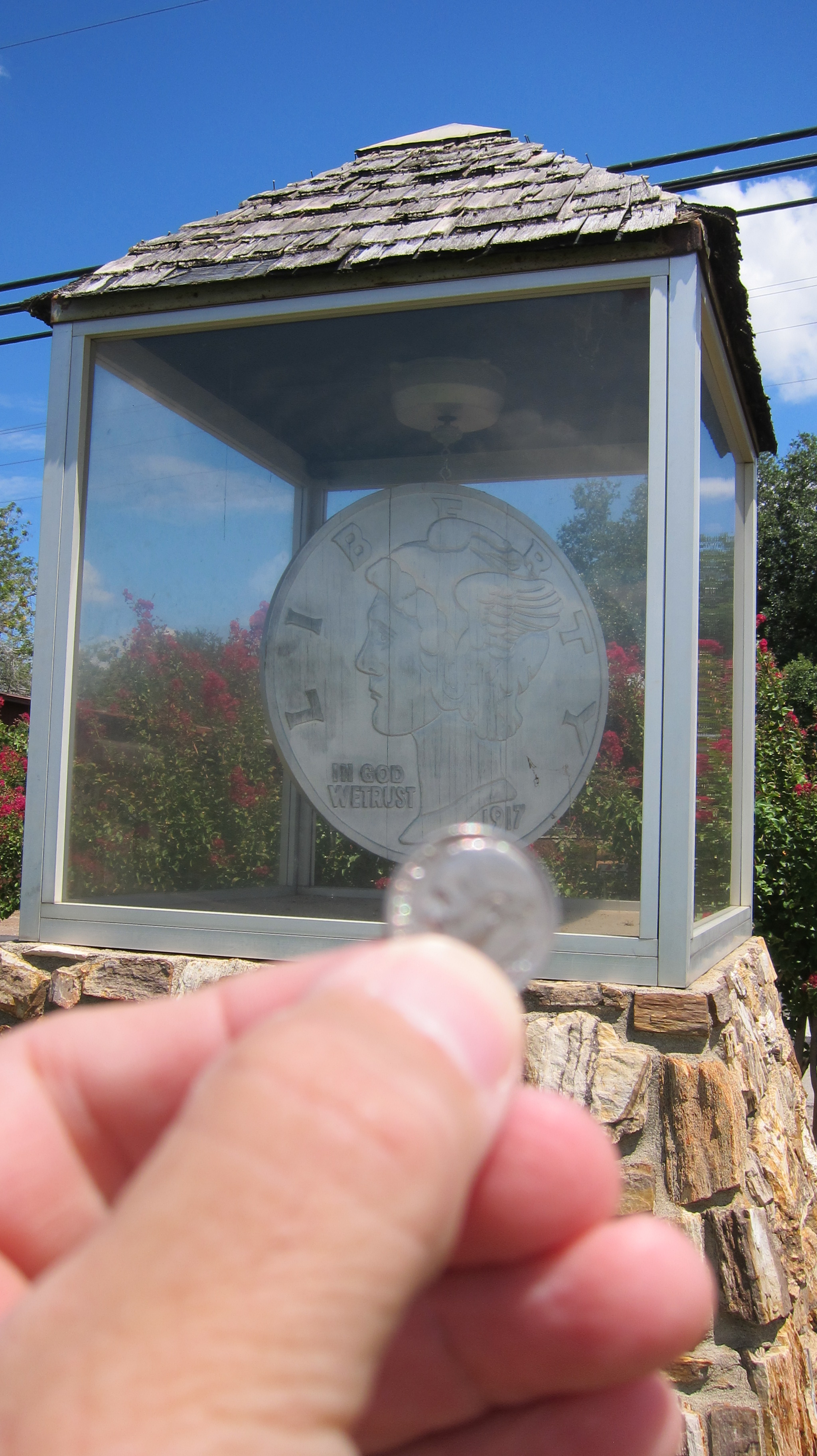
Dime Box, Texas
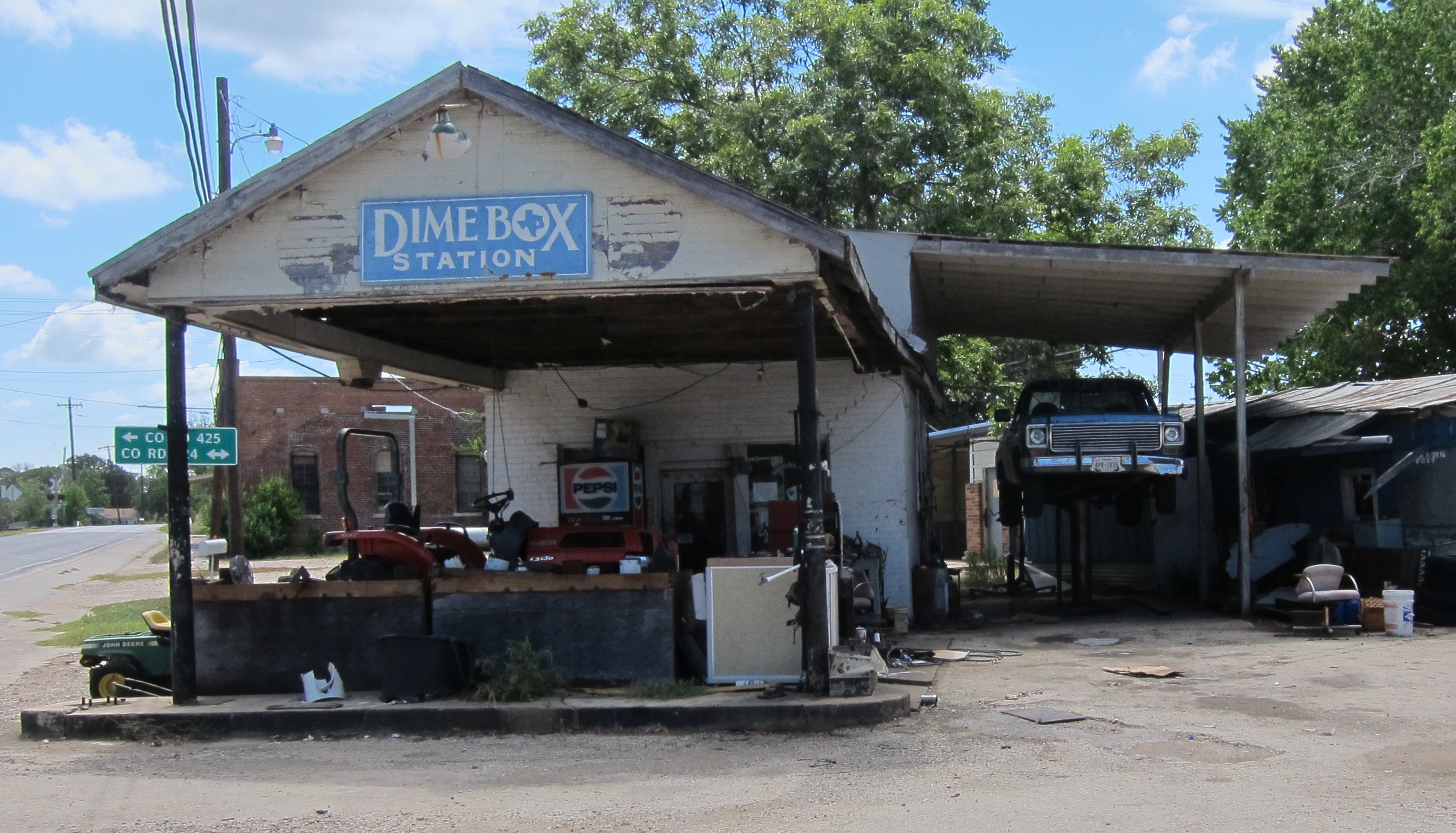
One of the best resources for planning a Texas road trip is a map with lots of detail. That’s how I discovered Dime Box, Texas — a small town located 12-miles northeast of Giddings. When I saw the name of this little town on my map, I knew that I had to go there by way of the most meandering route available.
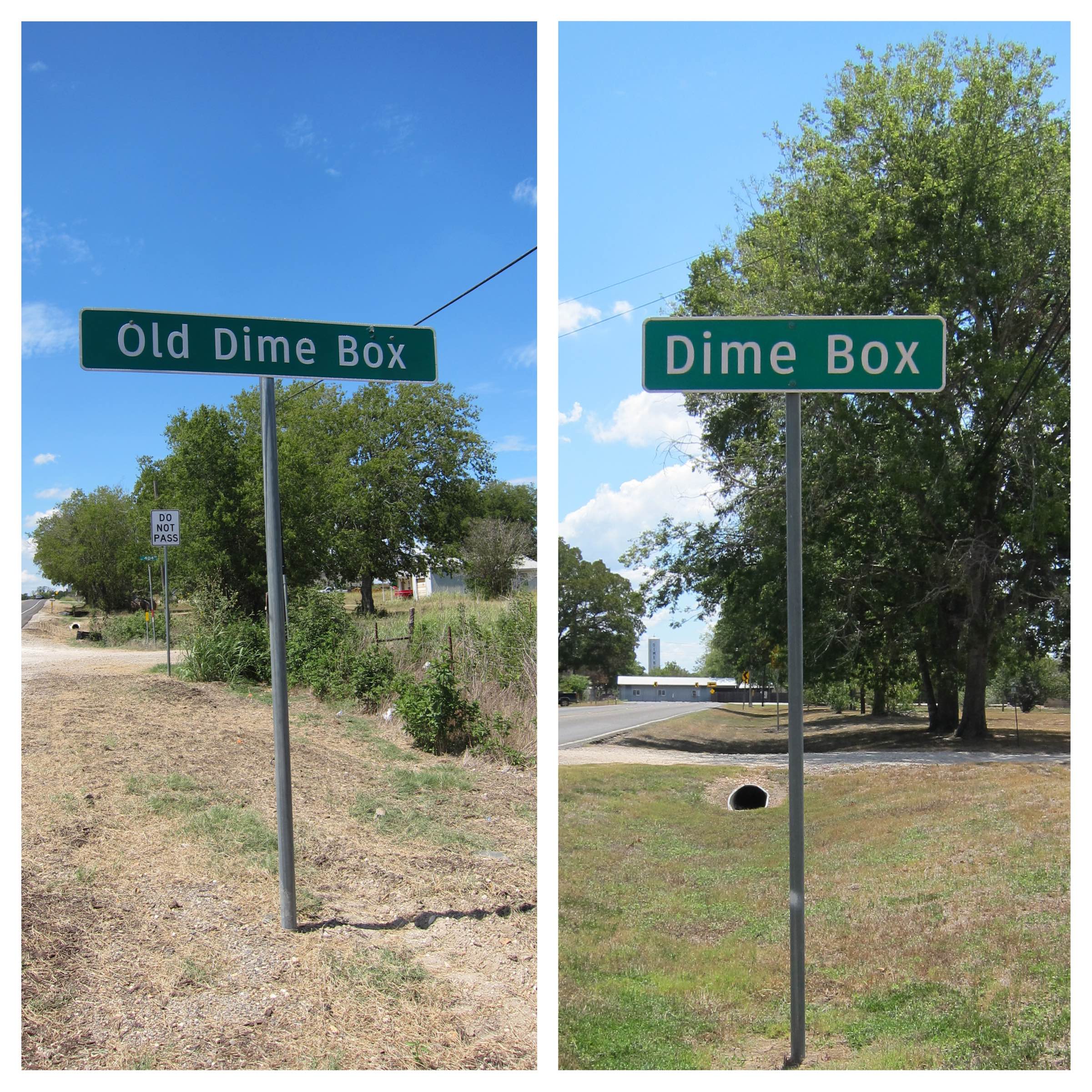
Dime Box was founded sometime between 1869 and 1877 by a man named Joseph S. Brown who built a sawmill about three miles northwest of the present community. Within a short period, other settlers came to the area and the community became known as Brown’s Mill.
Brown’s Mill had no post office in its early days, so settlers placed their outgoing mail and a dime in a box in Brown’s office for weekly delivery to Giddings. However, when the postal service officially opened a post office in Brown’s Mill in 1884, they asked that the community be renamed to avoid confusion between Brown’s Mill and Brownsville. So, the community was renamed Dime Box.
In 1913, when the Southern Pacific Railroad built a line three miles from Dime Box, the folks there moved closer to the railroad. The original settlement became known as Old Dime Box and the new town became known as Dime Box. The railroad brought in new settlers and, at its peak, the population of Dime Box grew to five-hundred. The population has since declined to a little more than three-hundred people.
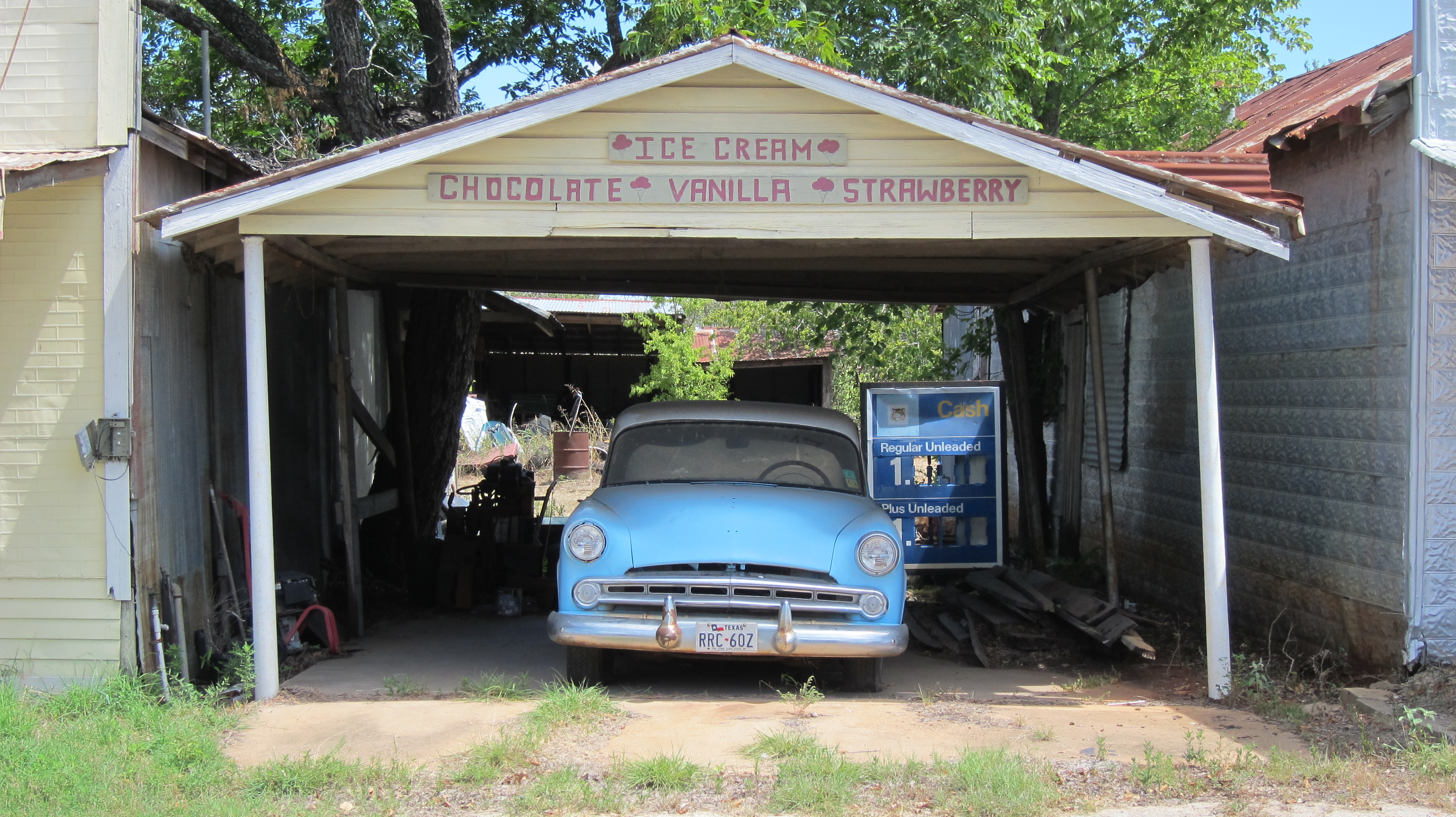
Dime Box had its fifteen-minutes of fame in the 1940’s when a CBS broadcast kicked off the national March of Dimes drive from Dime Box. Today, Dime Box is a quiet little community. I enjoyed driving around the few streets and had a pleasant chat with a local who was out for a walk.
Dime Box is certainly not on any destination list you will ever find in the glossy pages of Condé Nast Traveler. But for any backroads adventurer, it is a place worth visiting, if for no other reason than its interesting name and history. The next time you look at a Texas map, pay particular attention to those small out-of-the-way places with interesting names. And the next time you go from here to wherever, take a detour to see those places for yourself.
The Tree of My Youth
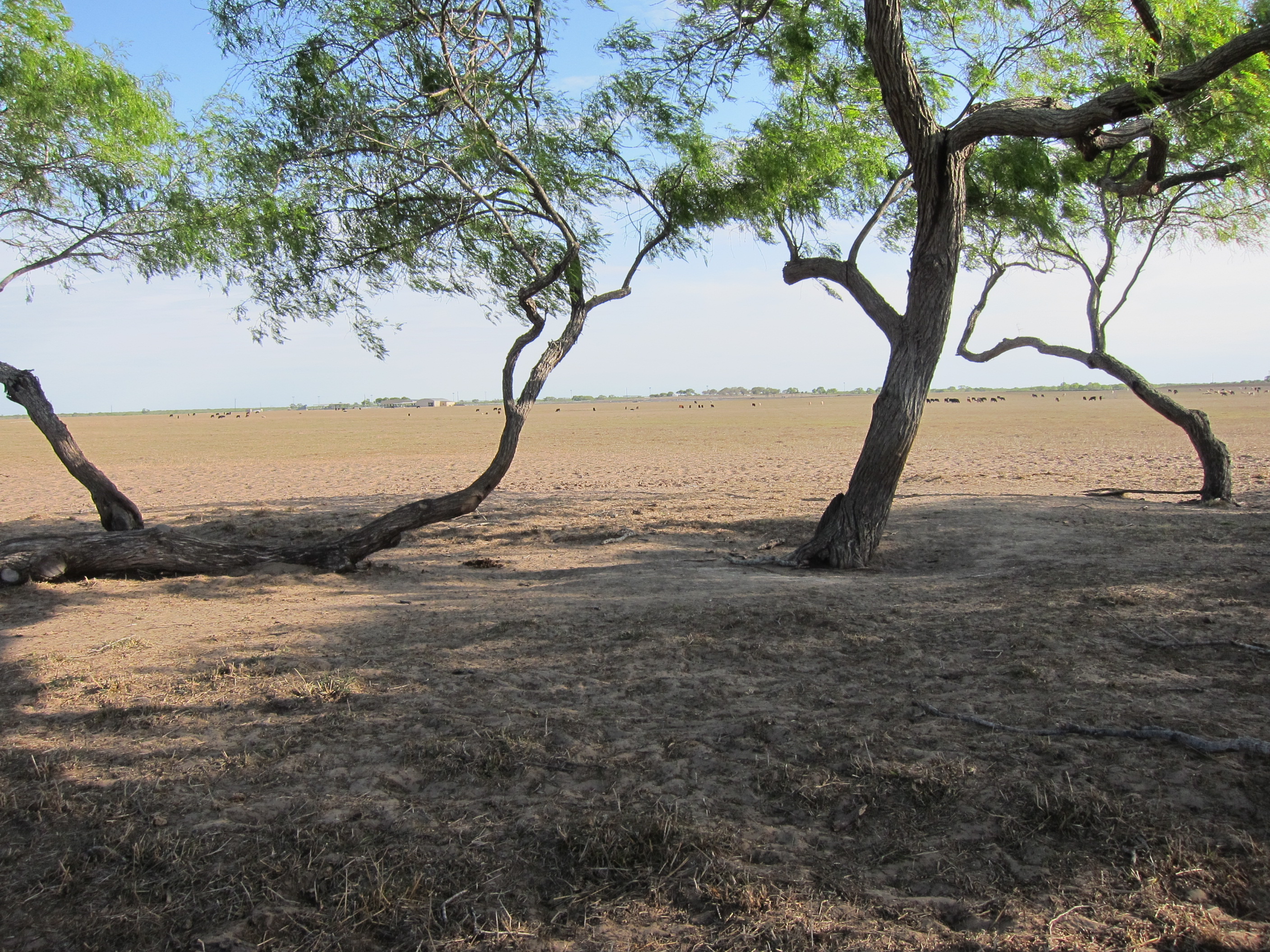
I enjoy windshield time on Texas highways. On a recent drive, I turned West off of US Route 77 onto Texas State Highway 285. The range on either side of this desolate 22-mile stretch between Riviera and Falfurrias is riddled with gnarled mesquite trees.
Call me crazy, but I like mesquite trees. The mesquite is the tree of my youth — the first tree I learned to identify and the first tree I climbed as a kid. We had little grass on the lawn of our home in the small town of Mission, but we had plenty of mesquite trees. I had many an adventure in and around these trees and many fond memories as a result.
The name of the tree is an Hispanicized version of the Aztec word mizquiti. This hardy tree refuses to grow straight and has a disposition as defiant as the rugged environment where it thrives. And, its gnarled wood is as hard as the vaqueros, the cowboys, that settled South Texas. The mesquite is one tough tree — certainly harder to kill than any weed.
The mesquite tree is a survivor that laughs in the face of drought. It has a tap root that can reach depths in excess of a hundred feet and lateral roots that spread in all directions, each designed to drink in the life-giving moisture that enables it to survive in harsh environments. South Texas ranchers either love them or hate them, but there is no middle ground.
Texas writer J. Frank Dobie loved mesquite trees. He wrote, “I could ask for no better monument over my grave than a good mesquite tree, its roots down deep like those of people who belong to the soil, its hardy branches, leaves and fruit holding memories of the soil.” However, pioneer Texas rancher W.T. Waggoner called the mesquite “the devil with roots,” adding “It scabs my cows, spooks my horses, and gives little shade.”
I like the ubiquitous mesquite tree. I always know that I am a little closer to home when I catch sight of their gnarled trunks in the distance and see them waving to me with their feathery leaves when I turn on to Highway 285 to begin the final leg of my journey home. It is the tree of my youth — a tough tree that reminds me to always persevere.