Kendalia General Store

There are still places in Texas where the past has not yet completely surrendered to the present. You will find them along two-lane roads that lead to little communities nestled off the beaten path. No longer fed by the nourishing streams of progress, weathered old buildings stand as quiet witnesses to another time. The old general stores are among the most interesting of these remaining fragments of the past.

The general store was once the heart of rural life. These were the places where neighbors bought what they needed, caught up on local news, collected their mail, and lingered for conversation. Life moved at a slower pace, and folks were not always in a hurry to leave. A visit to the general store broke the rhythm of hard work and the monotony of endless chores.

Most of these old places are gone. That is why the few that remain deserve more than a passing glance. They deserve a stop, walking through a tattered screen door, and spending a few unhurried minutes inside, smelling the unmistakable fragrance of the past. The undeniable reality is that someday, perhaps sooner than we imagine, these remaining pieces of old Texas will disappear.
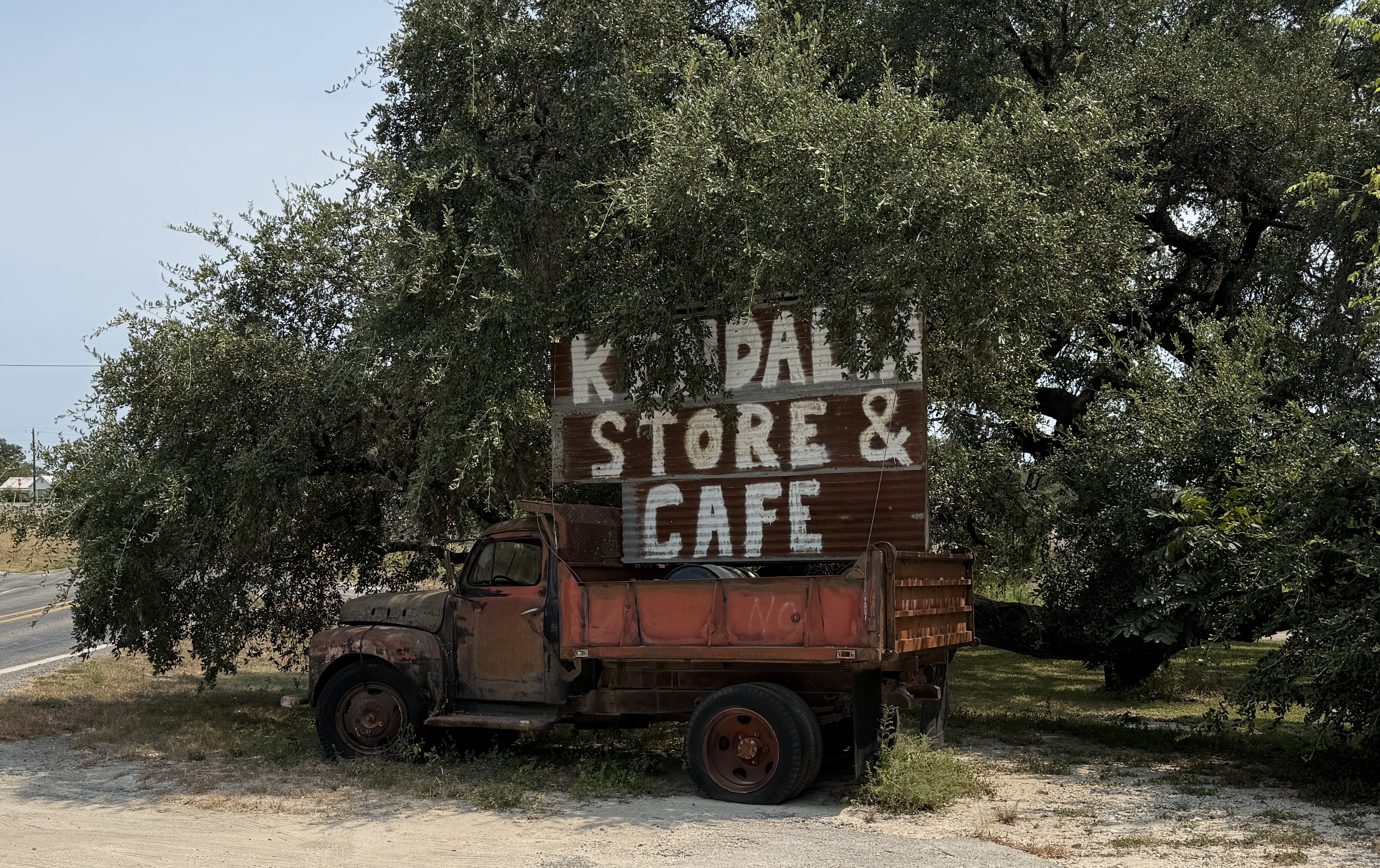

Kendalia represents a piece of Texas that has largely disappeared. This tiny unincorporated community grew around mills, ranches, churches, a school, a post office, and a country store. Located in eastern Kendall County in the Texas Hill Country, roughly 25 miles northeast of Boerne and about 40 miles north of San Antonio, Kendalia has remained small, rural, and peaceful.
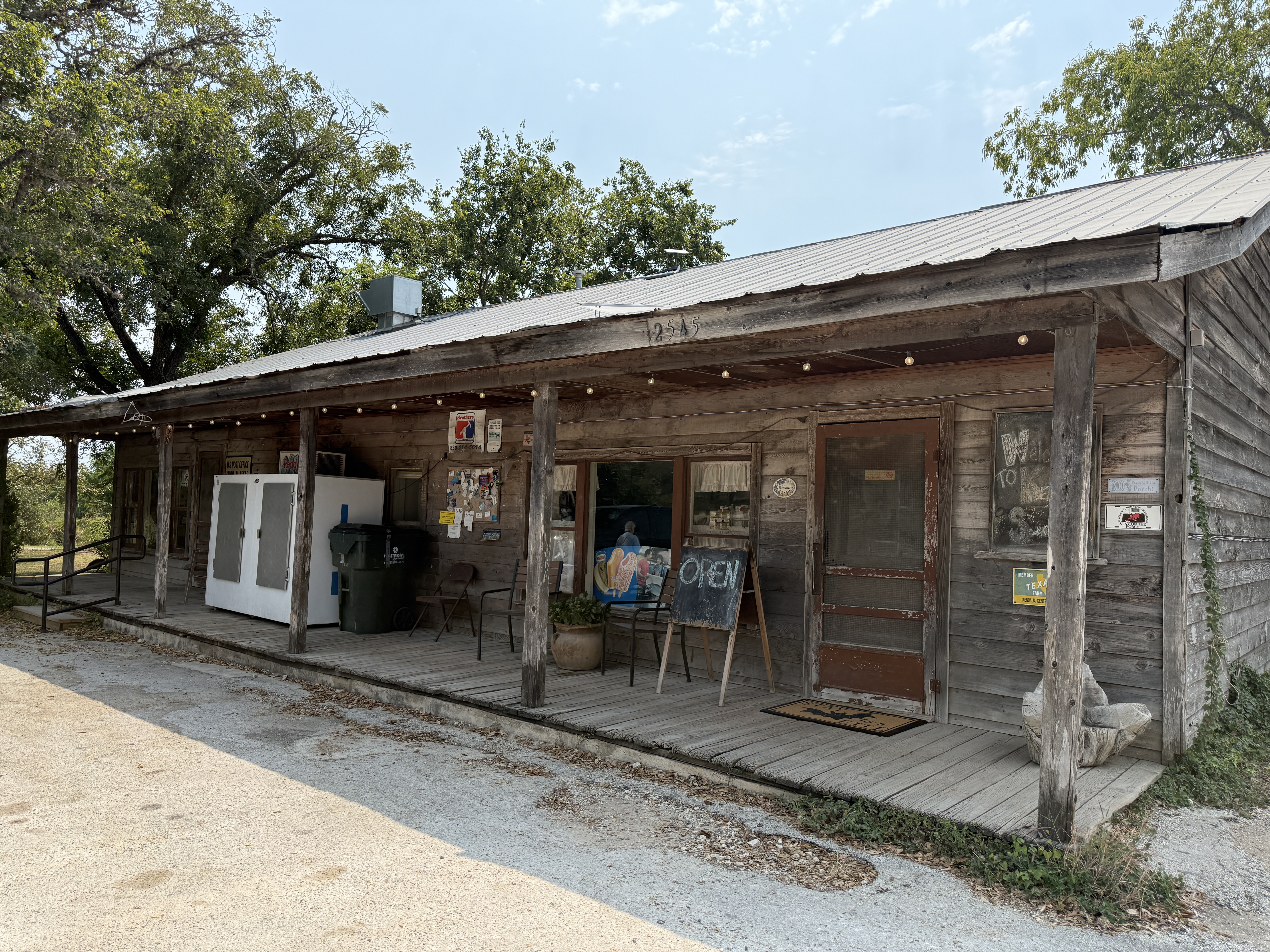

One of the best reminders of its small-town heritage is the Kendalia General Store on FM 473. The store continues the old Texas tradition of the general store. The years have changed the inventory of the little store but have not erased its charm. If its walls and worn wooden plank floors could talk, what stories they might tell.
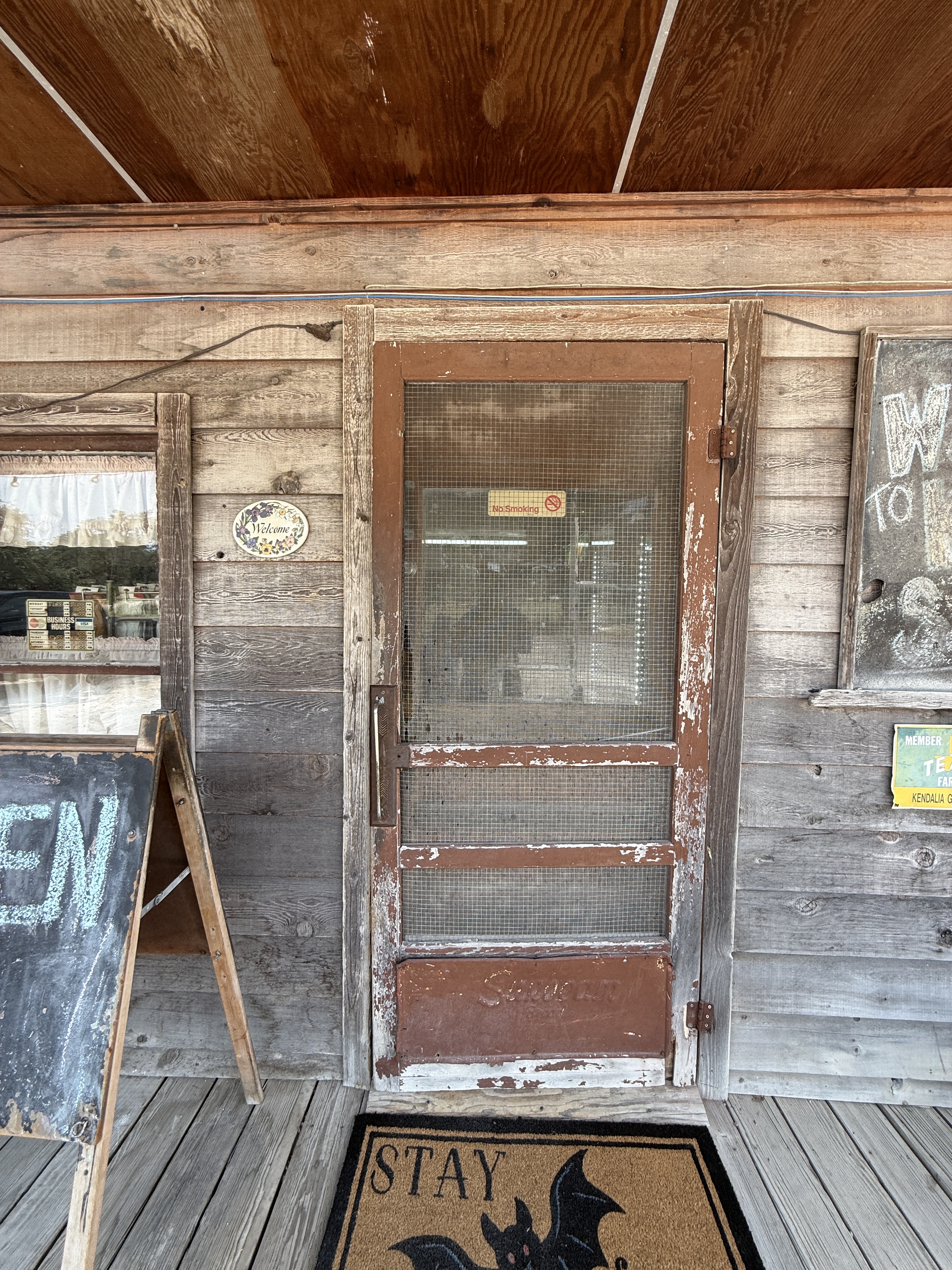

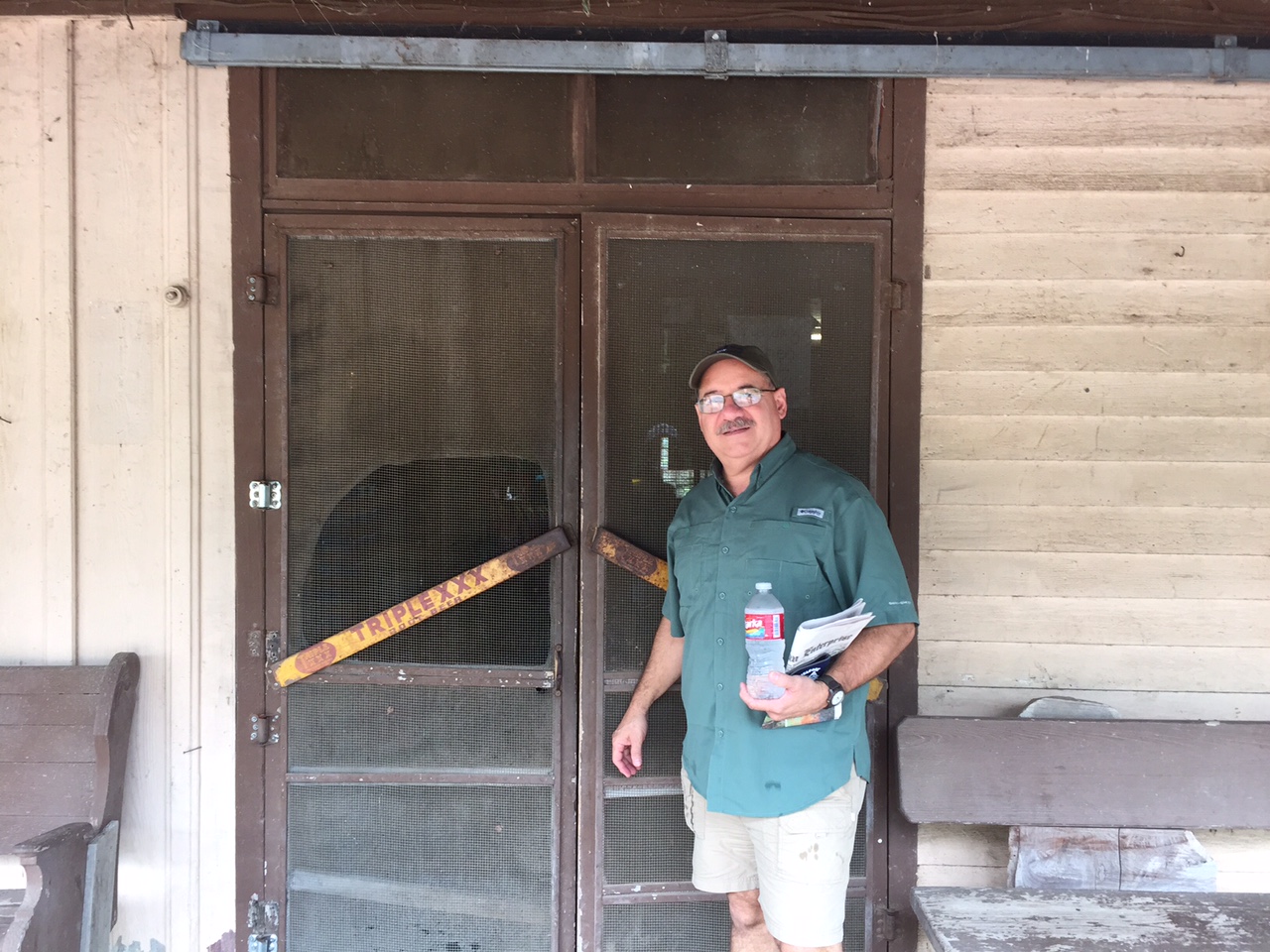
Cheryl and I stopped by the Kendalia General Store while traveling the winding and scenic back roads of the Texas Hill Country. The weathered old screen door invited us to step into the past. Inside, we met a young man who shared a little about the store’s history with us. Apart from a couple of new full-glass coolers filled with soft drinks and bottled water, it was not hard to imagine what this place must have been like a hundred years ago.
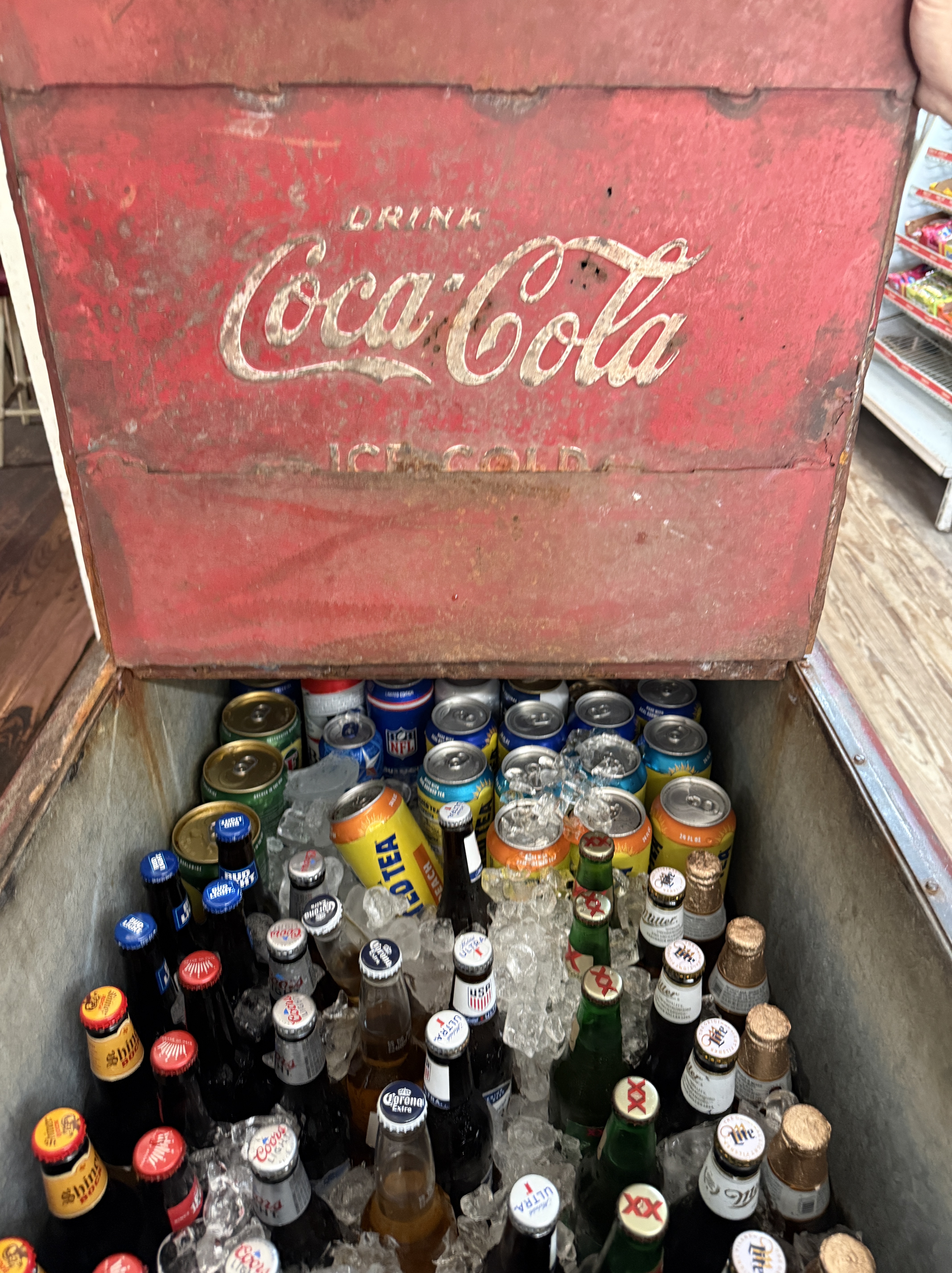

Today, you can order a burger, select your drink from an old Coca-Cola ice chest, grab a bag of chips off the shelves, and enjoy your meal in a time capsule of Texas history. And if you are a local, you can check your mailbox in the adjacent post office that shares the same front porch.
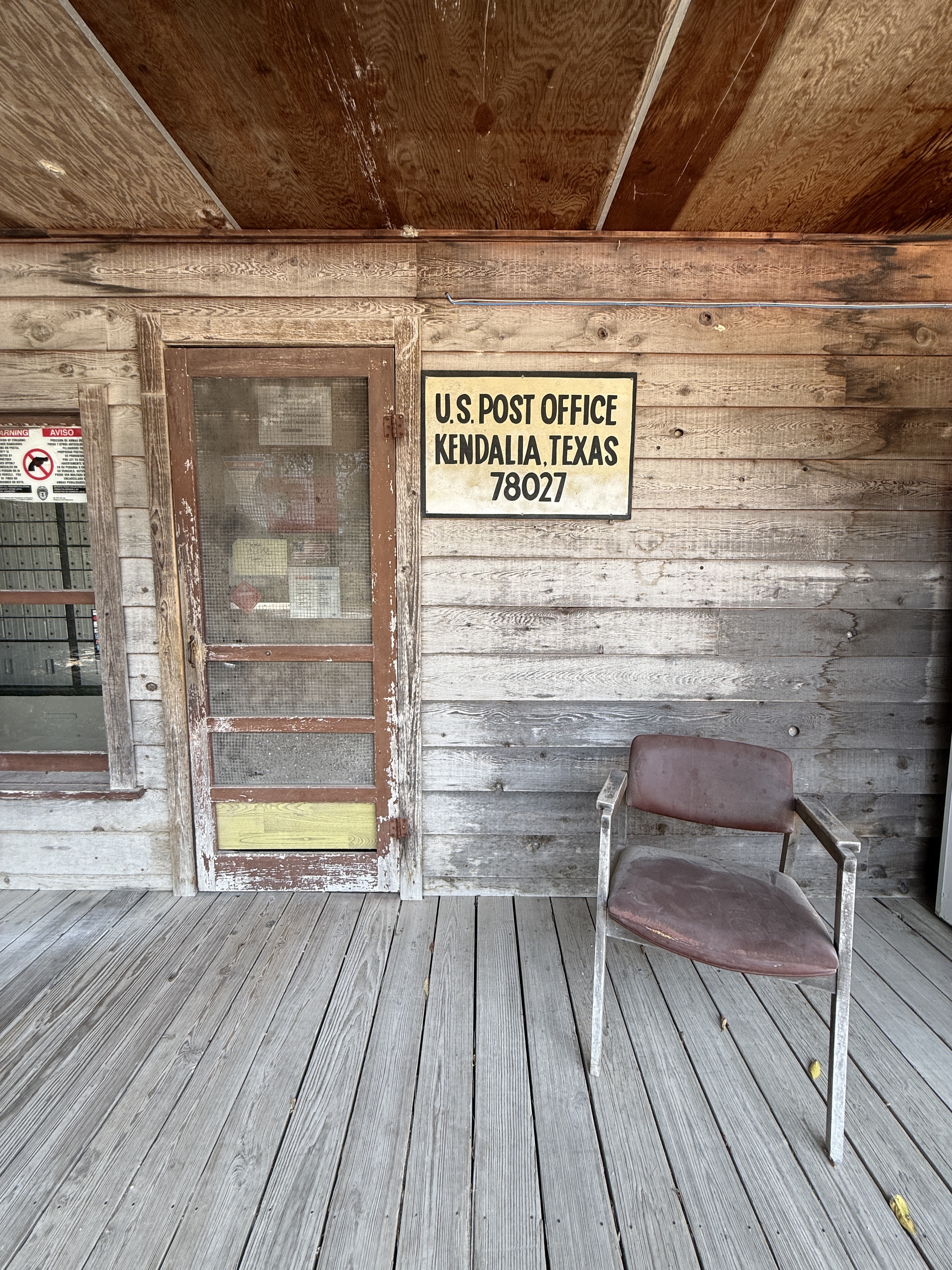

I hope the old store and post office in Kendalia will be around for another generation and retain its yesteryear charm. And I hope travelers who hurriedly drive down the Farm to Market road that passes in front of the store will slow down enough to stop and visit, have an unhurried conversation, and enjoy a Coca-Cola and a Moon Pie.
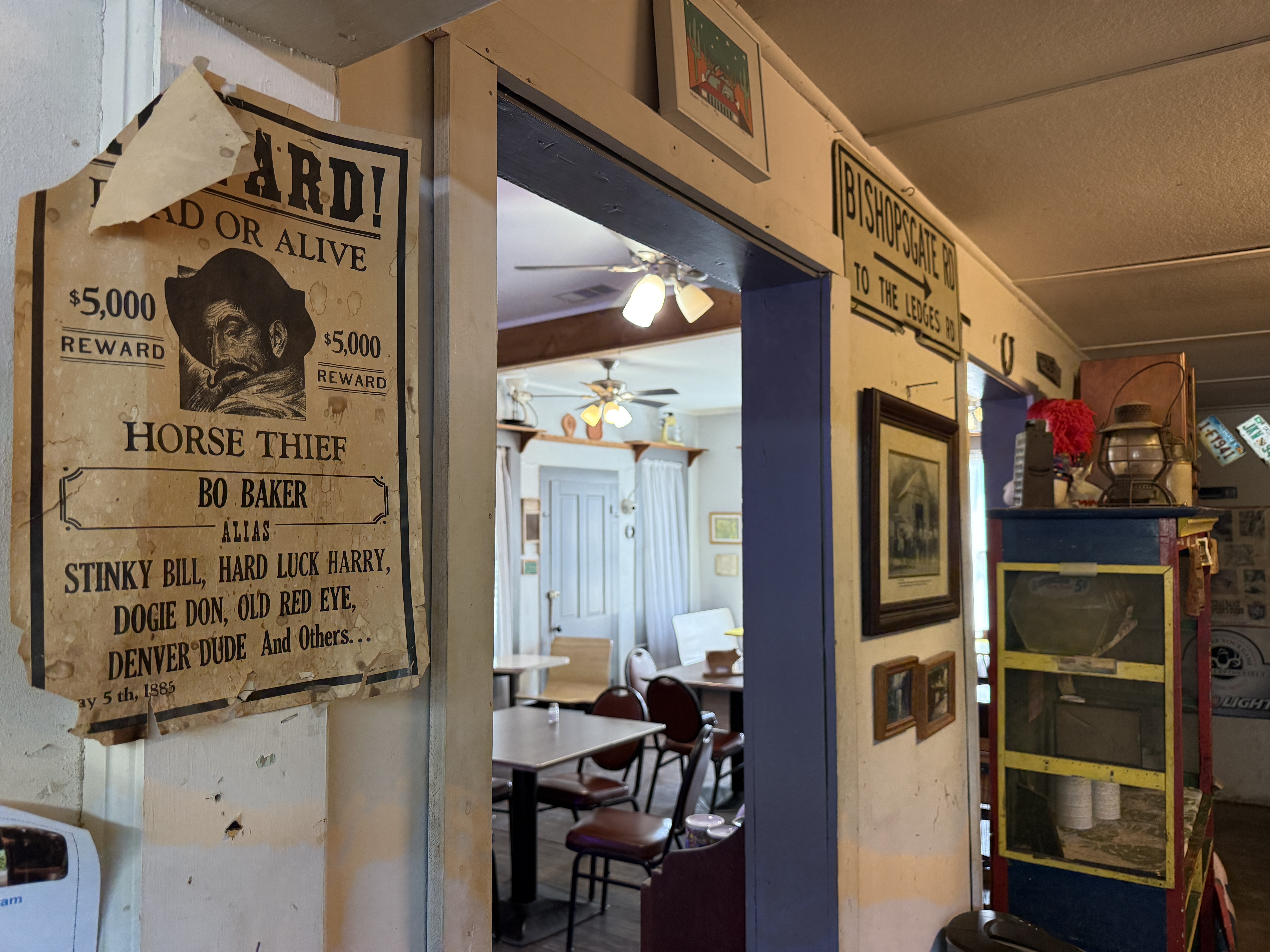

Places like the Kendalia General Store matter because they give us something a history book cannot: a physical connection to the lives of those who came before us. Walking through the door of an old store like the one in Kendalia can help us imagine a time when a general store was the center of community life.
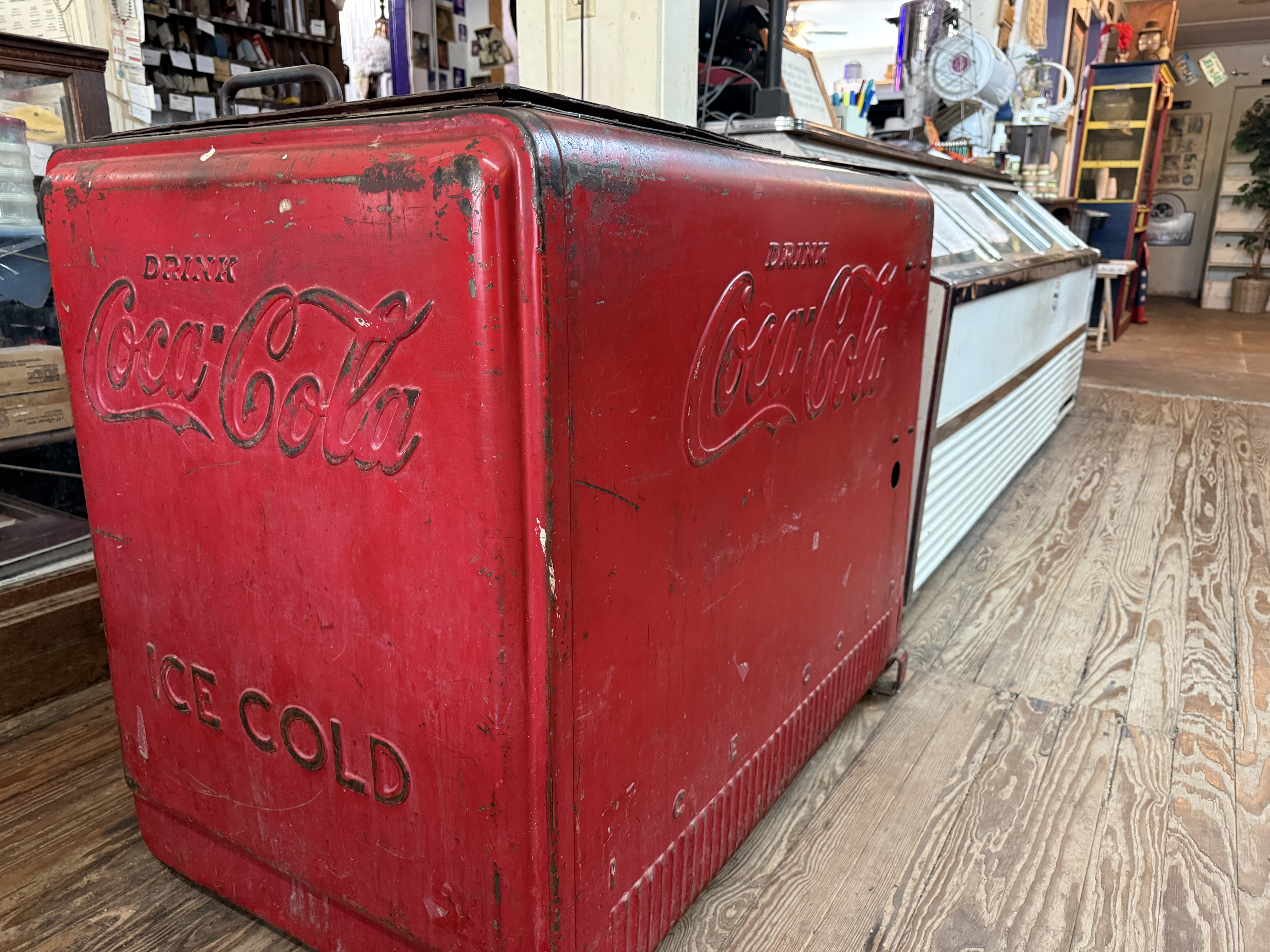

Once an old building is allowed to disappear, we lose an important connection to our past. While a photograph can preserve what a building looked like, it does not compare to the experience of opening an old door, hearing the floorboards creak beneath your feet, and being in a place that played an important role in the lives of previous generations.
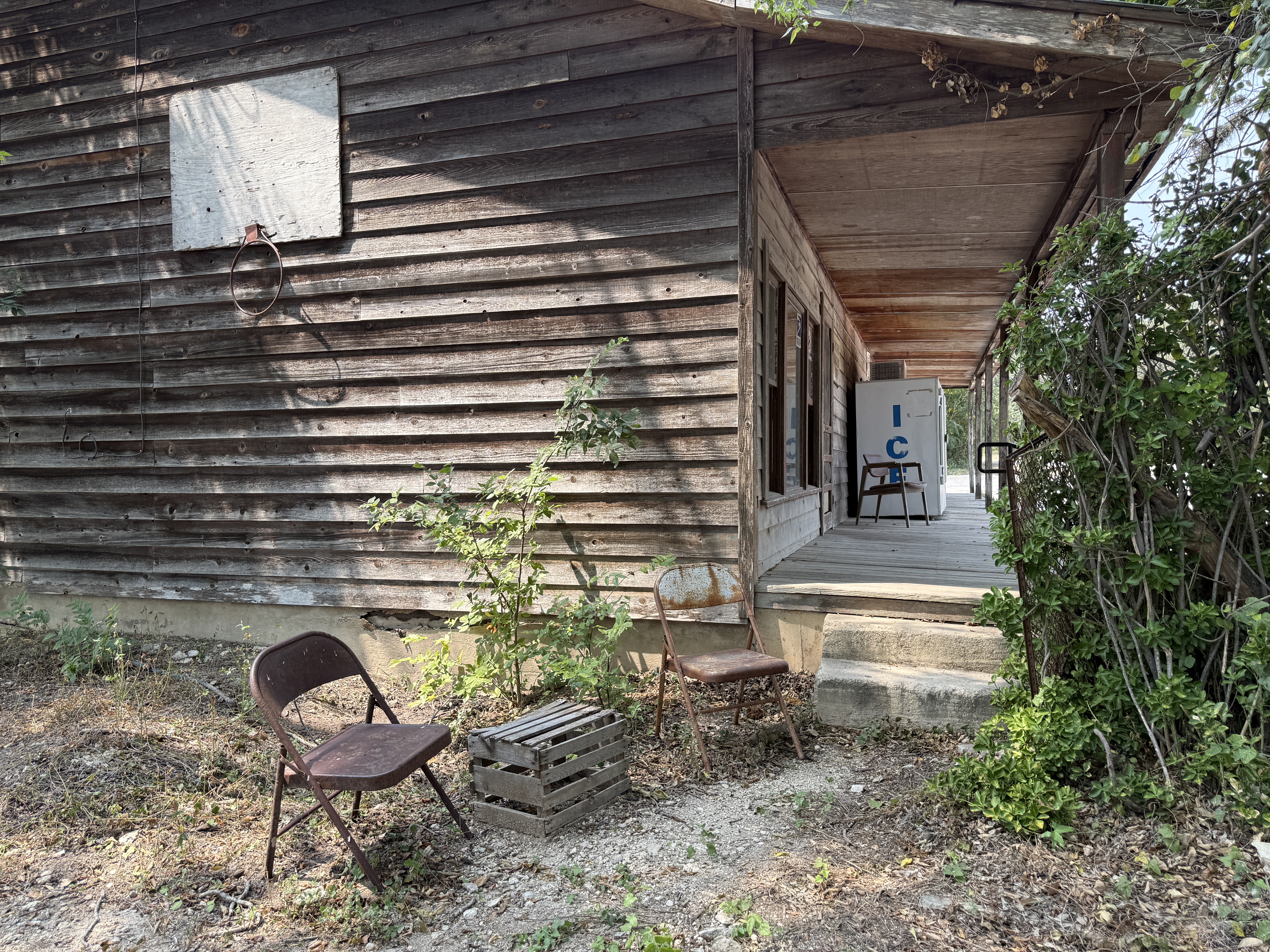

That is why stopping at a place like the Kendalia General Store is more than nostalgia. It is an act of appreciation for our history. The past rarely disappears all at once. It vanishes one old store, one weathered sign, one creaking floorboard at a time—which is why we should treasure places like the Kendalia Store and Cafe while we still can.

Welcome, Texas

Texas has no shortage of small towns with interesting names — including Welcome, a small unincorporated community in Austin County. Welcome is located on FM 109 between Industry and Brenham, the home of Blue Bell Ice Cream. This tiny if-you-blink-you-will-miss-it spot in the road is definitely worth a visit.
Welcome Texas SignThe town was settled in the late 1820‘s but remained nameless until 1852 when a German immigrant named J.F. Schmidt christened the town Welcome — a name that he felt reflected the hospitality of the residents. At its peak, the town boasted a population of no more than a couple hundred folks and a few businesses. Today, a little more than a hundred folks call Welcome their home.

A friend and I drove through New Ulm on our way to Welcome and pulled over to walk through the cemetery, established in 1853. I make it a point to stop by old cemeteries when I travel Texas backroads. You can learn a lot about a place and the folks who settled there by visiting their burial places.
New Ulm CemeteryAs my friend and I walked through the cemetery at New Ulm we headed for the oldest grave markers. That’s when we noticed a pattern — an entire section of graves of children who all died at the turn of the twentieth century. After reading the names and dates on these graves we felt heartsick and wondered what had happened to these children. We talked about how the deaths of these kids must have impacted their families and the New Ulm community in those years.
Welcome StoreWhen we arrived in Welcome we stopped by the Welcome Store, established in 1890 and a Texas Historic Landmark. The original two-story building was damaged by a storm in 1900 and reconfigured as a one-story building with two asymmetrical gables, a wide front porch, and a screened door entry. The building pretty much looks the same today as it did when it was rebuilt after the storm.
Omar at Welcome StoreStepping inside the Welcome Store was like stepping back in time. The place is a fascinating time capsule crammed with tons of interesting details. Leonard and Lynn Wittneben, the current owners, greeted us warmly. This sweet couple raised their family in Welcome and recently celebrated their 50th wedding anniversary.
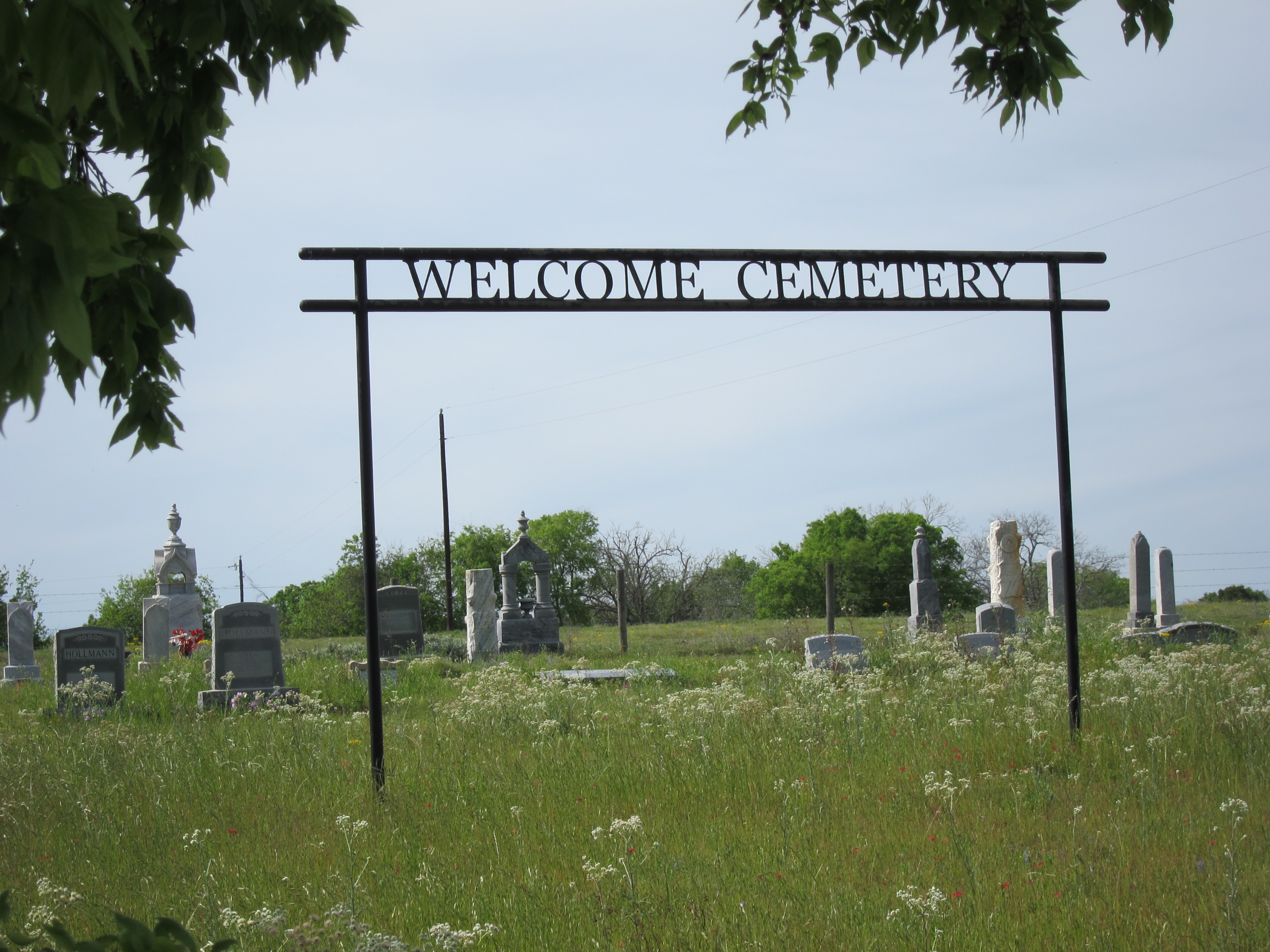
Welcome CemeteryWhen we told Leonard and Lynn about our visit to the New Ulm cemetery and mentioned the number of graves for kids, Lynn told us that a typhoid epidemic had taken the lives of the children. “You’ll see the same thing at the old Welcome cemetery, the one across the street from the Lutheran church” she said. “There’s a whole section of graves for kids who died during that same epidemic.” Times were hard then.
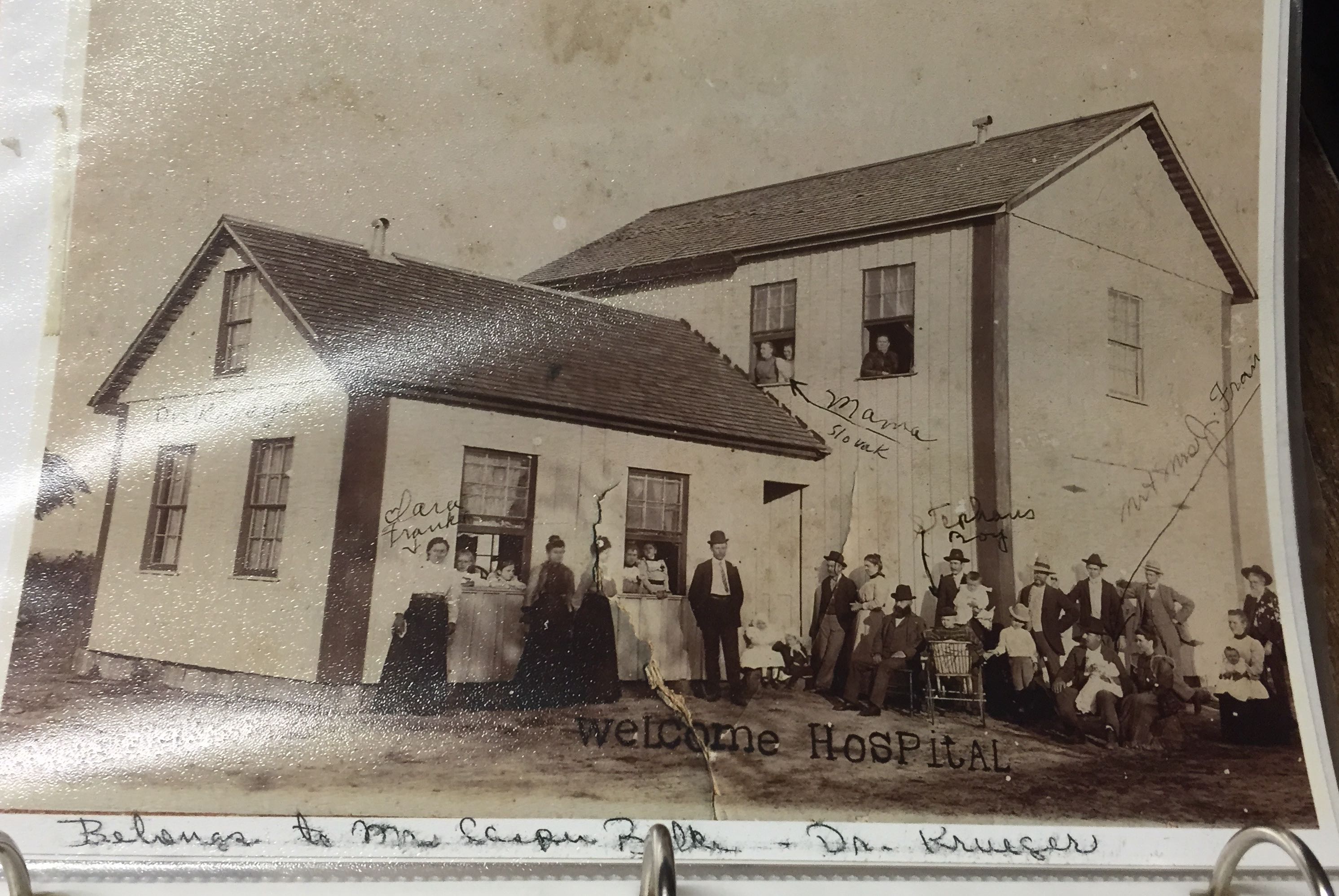
Welcome Hospital PicLynn motioned to Leonard to get their history album, a collection of old photos and stories  about Welcome crammed into an old notebook. Welcome actually had a hospital in its early days, and a doctor whose methods later came into question and led to his suicide. We sat with Leonard and Lynn for almost an hour and listened to the fascinating history of their beloved community.
Omar w Leonard and LynnWhen we finally exchanged good-byes, our new friends invited us to stop in again sometime. My buddy and I agreed that Leonard and Lynn are true ambassadors for a tiny community named for its hospitality. They indeed made us feel welcome in Welcome.

If you are ever anywhere near the vicinity of Welcome, take a moment to stop by the old Welcome Store, a place that has served travelers and residents for the past 125 years. Leonard and Lynn will welcome you and remind you that good-old Texas hospitality is never out of date. Oh, and while you are there, ask Lynn to tell you the fascinating story about their wedding cake!

Dime Box, Texas

One of the best resources for planning a Texas road trip is a map with lots of detail. That’s how I discovered Dime Box, Texas — a small town located 12-miles northeast of Giddings. When I saw the name of this little town on my map, I knew that I had to go there by way of the most meandering route available.
Gravel RoadDime Box was founded sometime between 1869 and 1877 by a man named Joseph S. Brown who built a sawmill about three miles northwest of the present community. Within a short period, other settlers came to the area and the community became known as Brown’s Mill.
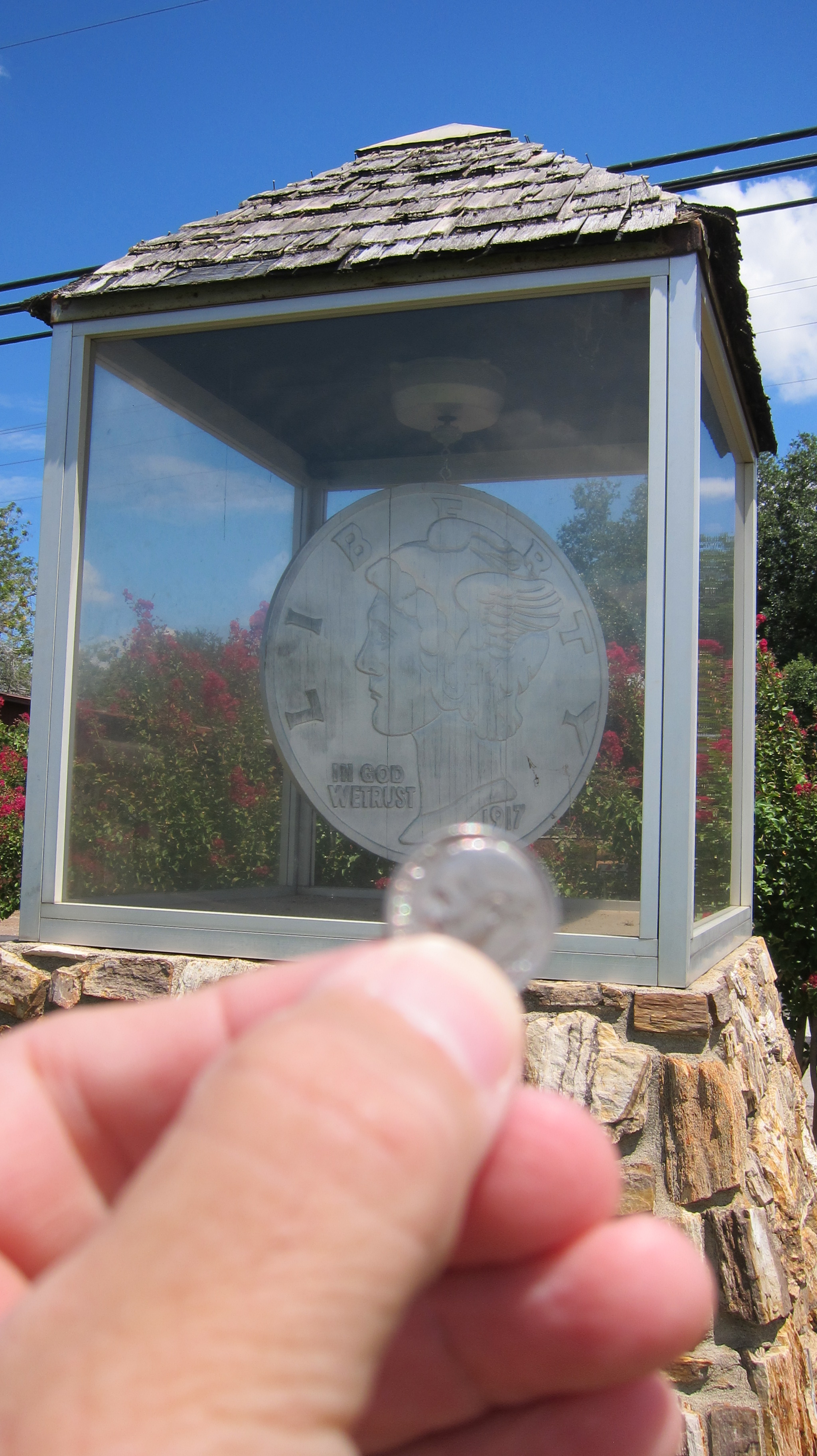
Dime Box DimeBrown’s Mill had no post office in its early days, so settlers placed their outgoing mail and a dime in a box in Brown’s office for weekly delivery to Giddings. However, when the postal service officially opened a post office in Brown’s Mill in 1884, they asked that the community be renamed to avoid confusion between Brown’s Mill and Brownsville. So, the community was renamed Dime Box.
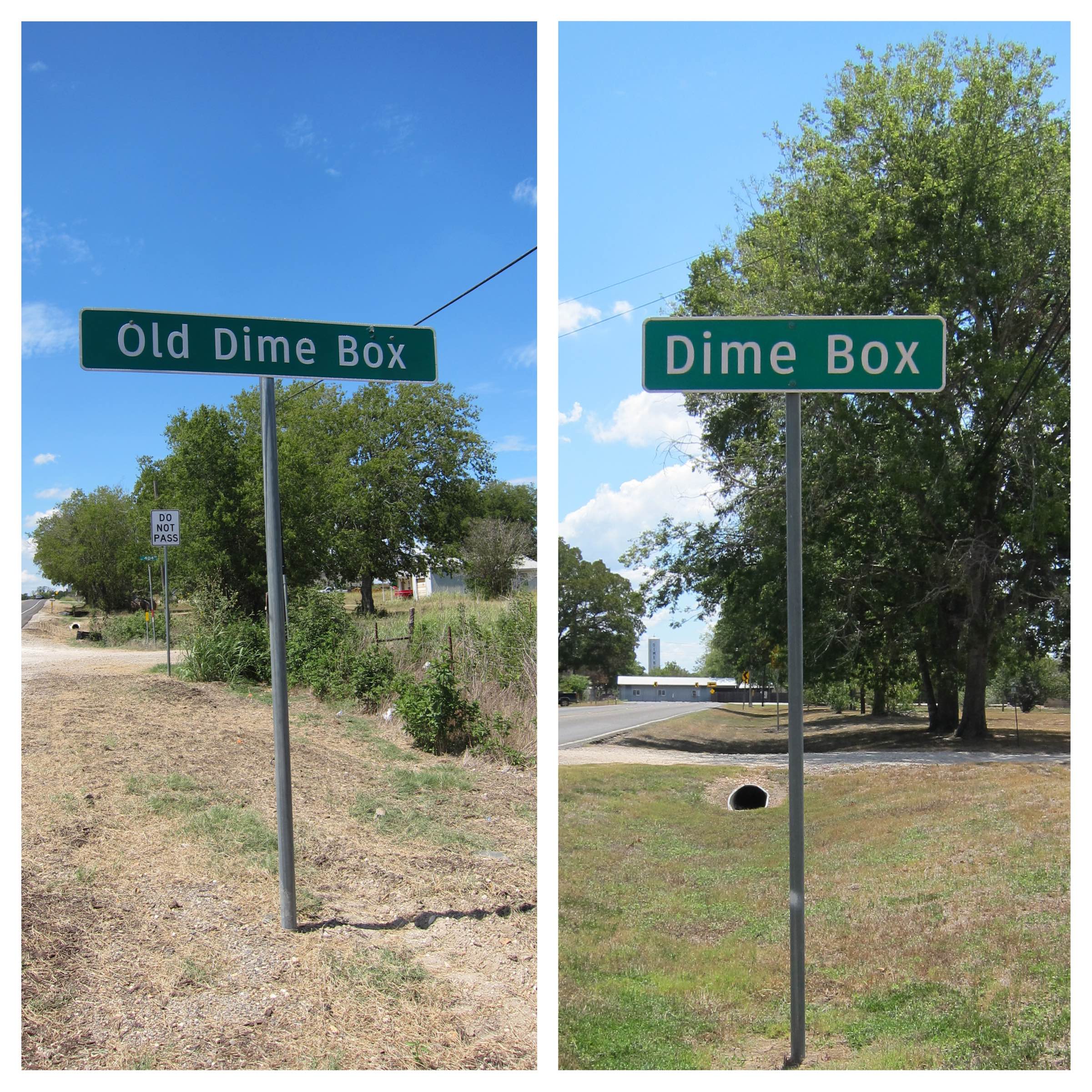
Dime Box Road SignsIn 1913, when the Southern Pacific Railroad built a line three miles from Dime Box, the folks there moved closer to the railroad. The original settlement became known as Old Dime Box and the new town became known as Dime Box. The railroad brought in new settlers and, at its peak, the population of Dime Box grew to five-hundred. The population has since declined to a little more than three-hundred people.
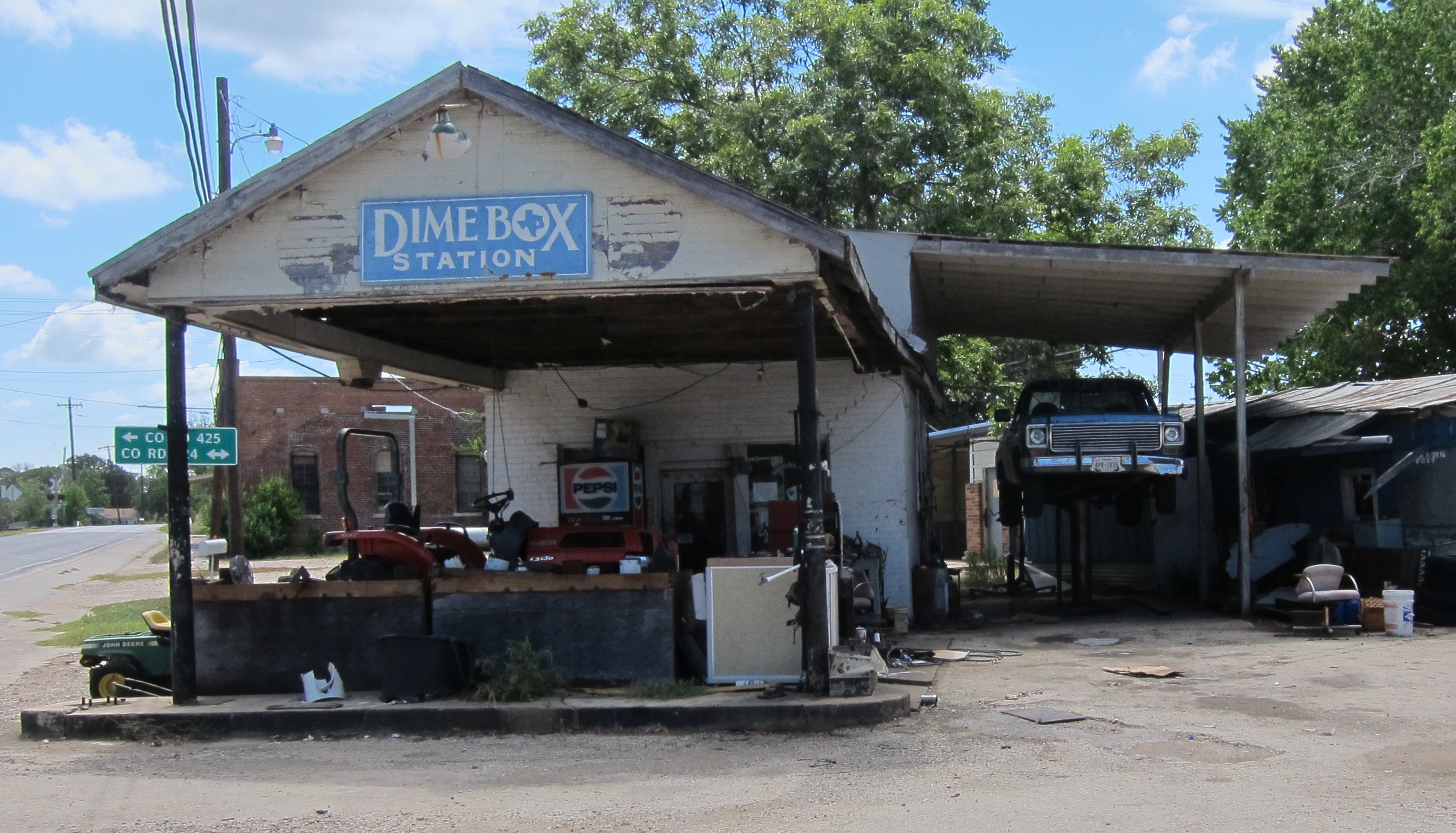
Dime Box StationDime Box had its fifteen-minutes of fame in the 1940’s when a CBS broadcast kicked off the national March of Dimes drive from Dime Box. Today, Dime Box is a quiet little community. I enjoyed driving around the few streets and had a pleasant chat with a local who was out for a walk.
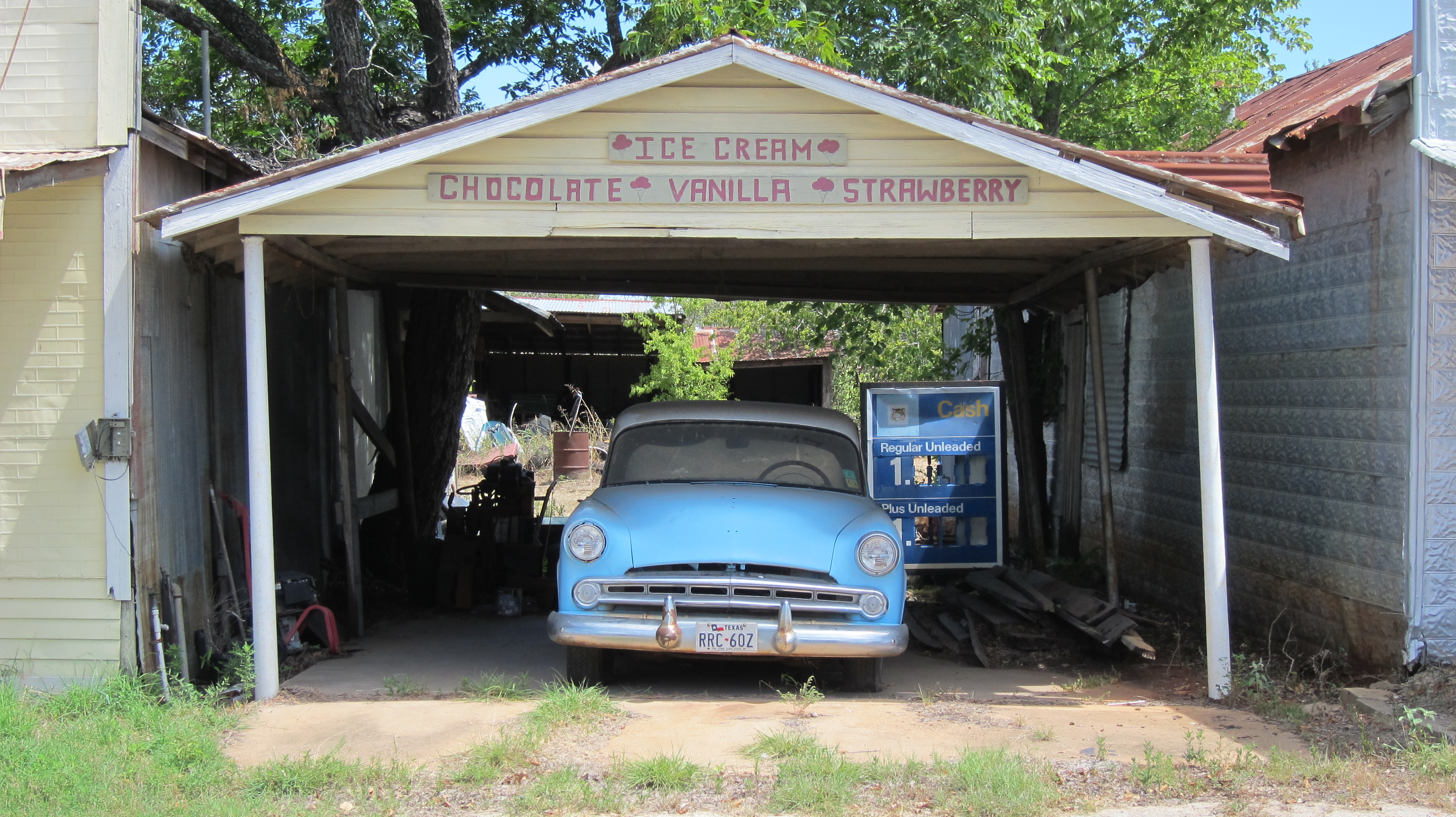
Dime Box ChevyDime Box is certainly not on any destination list you will ever find in the glossy pages of Condé Nast Traveler. But for any backroads adventurer, it is a place worth visiting, if for no other reason than its interesting name and history. The next time you look at a Texas map, pay particular attention to those small out-of-the-way places with interesting names. And the next time you go from here to wherever, take a detour to see those places for yourself.