
On January 1, Texans of all ages will head to our state and national parks to participate in First Day Hikes, a cooperative initiative among the nation’s state parks to get more people outside. On that single day alone, folks in Texas and around the nation will collectively log tens of thousands of miles on park trails. And that’s a good thing!
 I enjoy both hiking and biking the trails in our state parks. In fact, I use my Texas State Parks Pass as often as possible. There is no question I get more than my money’s worth every time I renew my annual pass. There is no better way to relieve stress and to clear my mind than heading down a trail in one of our parks.
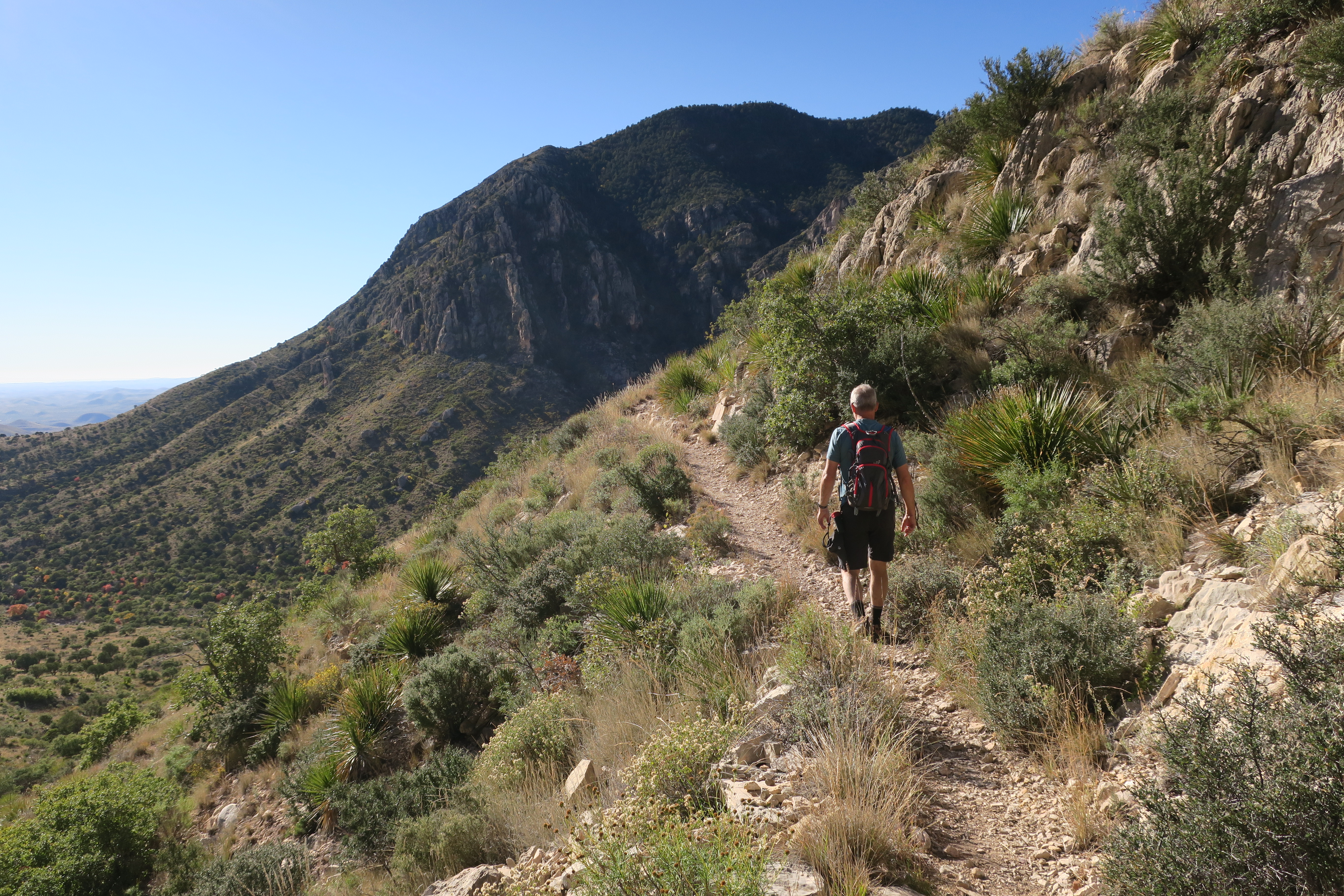 As a guy who enjoys taking dirt paths, I have often wondered about trail development and maintenance. After all, trails don’t maintain themselves. The fact of the matter is someone had to get out there and determine the best way to get a hiker from Point A to Point B. That means understanding the local geography, how to mitigate things that can erode or damage trails, how to scratch out switchbacks to get hikers to higher elevations, building boardwalks and bridges, and much more.
 On my recent visit to Guadalupe Mountains National Park, I had an opportunity to meet a trail crew — young folks who were there to do maintenance work on Tejas Trail. They were all thin, tanned, athletic, super-friendly, and excited to do their part to keep the trails we all enjoy in good repair. My friend Doyle and I made it a point to thank each of them for their work as we made our way up Tejas Trail toward Hunter Peak. And each of them in turn told us to enjoy our hike.
 At the end of a long day of hiking, more than nine hours on the trails, we made our way back down Tejas Trail as the sun was setting. The work of the trail crew was evident. They had refreshed quite a bit of the trail by pruning back limbs of adjacent trees and plants, filled areas damaged by erosion, and more to keep this particular trail well defined. What a great gift to those of us who show up ready for adventure.
 I hope you will participate in a First Day Hike (or ride) at a park near you. Lace up your hiking boots, fill your hydration pack, toss some snacks into your daypack, air up your bike tires, and then get outdoors. And as you hike or bike down a trail, do so with gratitude for the trail crews that work so hard to make sure every trail in the Lone Star State is well maintained for our enjoyment. Thank you, trail crews!
Month: December 2016
5 Facts About Alligator Juniper
The alligator juniper is one of my favorite trees. I first encountered this member of the juniper family while hiking in the Guadalupe Mountains. It’s one of those trees that is hard to miss once you identify and get to know its distinctive characteristics. Here are five facts about the alligator juniper tree.
 1. The alligator juniper is named for its most distinctive characteristic — its bark.
The easiest way to identify the alligator juniper is by its distinctive bark. Look for rough square-plated bark that resembles the skin of an alligator. The thick bark grows in a cracked or checkered and furrowed pattern that sets it apart from other trees. The leaves of the alligator juniper are a deep green to blue-green in appearance.
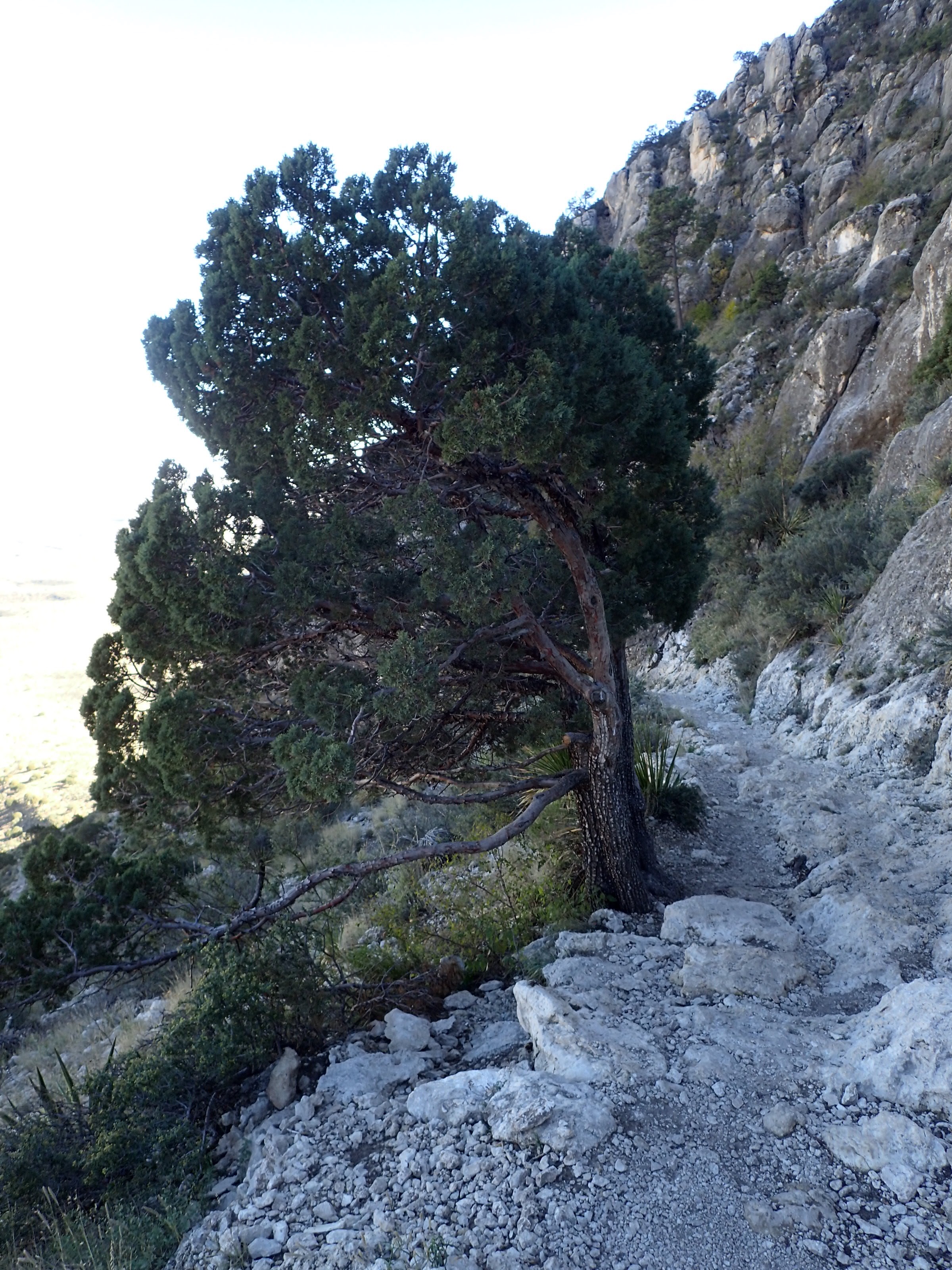 2. The alligator juniper is a tree as tough as its name.
The Guadalupe Mountains is a perfect place for alligator juniper. The tree prefers dry hillsides at moderate elevations like those found in the Trans-Pecos region of the state. The tree grows in the company of piñons, ponderosas, oaks, and other junipers. Alligator juniper has a high tolerance for heat and a low requirement for water. This evergreen tree thrives in either alkaline limestone or slightly acidic igneous soil.
 3. The alligator juniper is in no hurry.
According to the science of dendrochronology or the study of growth rings in trees, alligator juniper trees grow at a slow rate. Research has shown that young trees grow in diameter at a rate of 0.6 inches per decade — that’s pretty slow! The growth rate slows to 0.4 inches after the tree reaches 170 years of age. Alligator juniper trees have been known to live as long as 500 years. That’s pretty amazing!
 4. The alligator juniper is a berry producer.
The female tree produces edible berries that can be consumed raw or steamed. Native Americans used the strongly scented berries to flavor teas and incense and even added the berries to cornbread and sausages. Some Indians dried the berries for winter use or ground them into a mush and then formed them into cakes. In addition, they used the resin of the tree as chewing gum.
 5. The alligator juniper is a favorite of wildlife.
The alligator juniper attracts a variety of wildlife. Wild turkeys and deer especially enjoy juniper berries. Various bird species such as sparrows, Mexican jays, flycatchers, woodpeckers, and hummingbirds breed among junipers. So, keep your eyes peeled for wildlife when you are out hiking among alligator juniper.
Return to McKittrick Canyon
After my first visit to McKittrick Canyon I knew without question that I had to return. The mesmerizing beauty of this rugged landscape sliced into the eastern edge of the Guadalupe Mountains had earned a place in my memory. And not just any place but instead a place near the front where it refused to be ignored.
 My travel schedule did not allow me to return in the spring as I had hoped. I determined, therefore, to return in the fall when the canyon bursts into a palette of colors that have earned it the reputation as the most beautiful spot in the Lone Star State. Once you visit you will understand why its hard to argue against that. It is indeed a beautiful and unforgettable place.
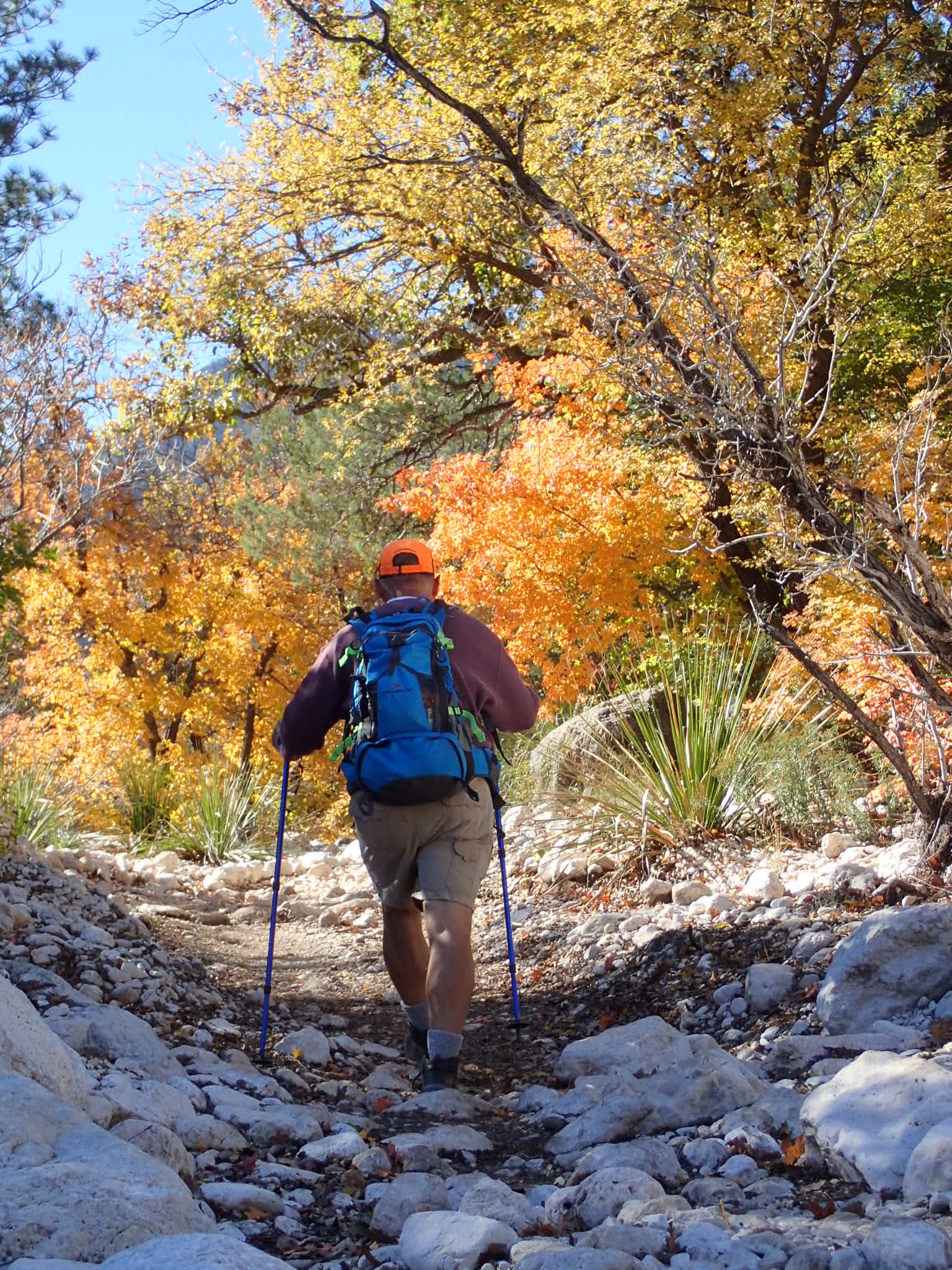
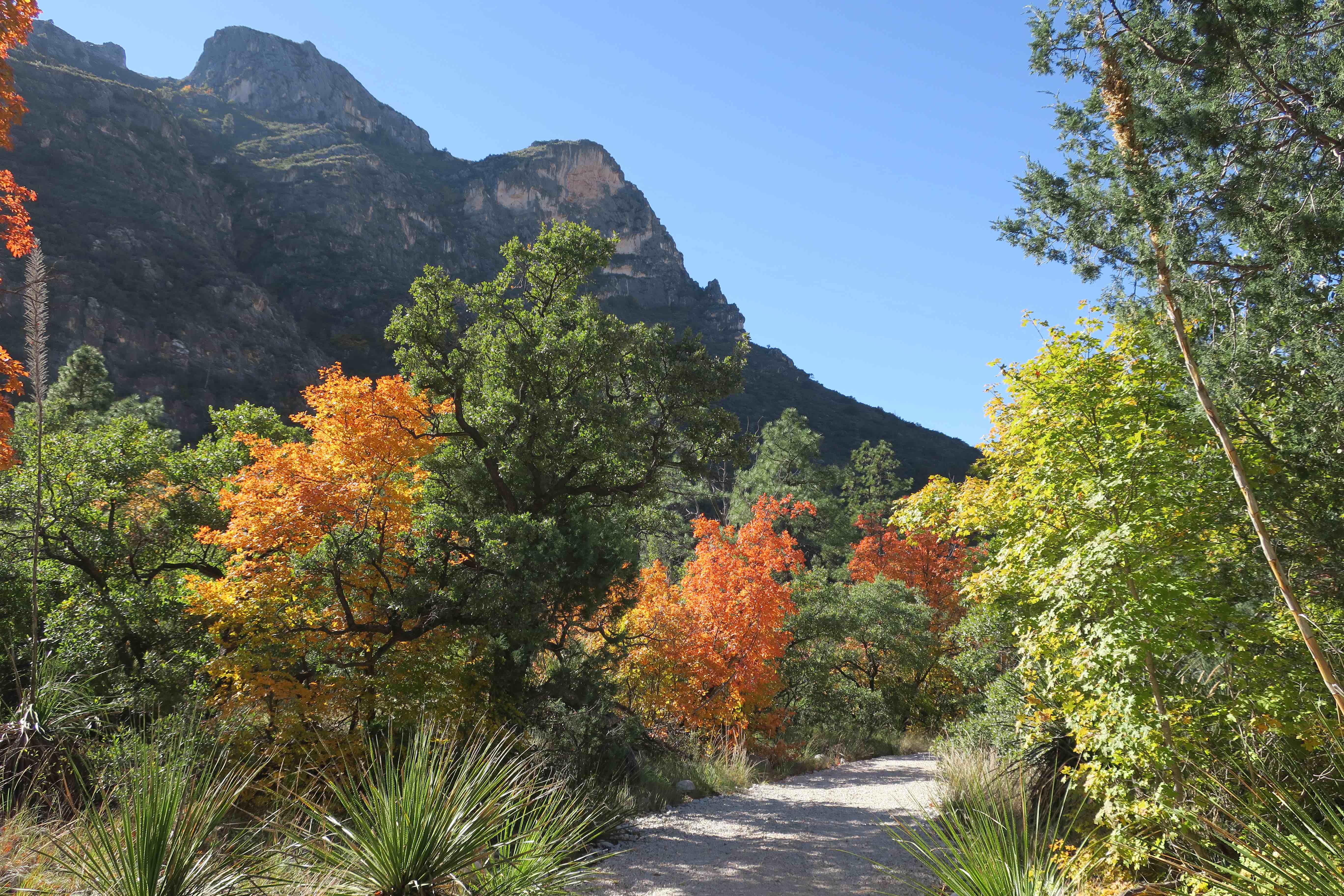 Whether you are a seasoned hiker or a novice, McKittrick offers trails to scratch every itch. The McKittrick Trail, a round-trip of about eight miles, is family friendly. The trail is flanked by beautiful trees and native plants hemmed in by jagged canyon walls. The color of the big-tooth maples is accented against the varying shades of green of alligator junipers and manzanita trees with their tiny apple-like berries.
 The Grotto, a small limestone cave that resembles the gaping toothy mouth of a dragon is the perfect spot for a picnic. The park service has built some rustic tables at this location under the shade of the trees. You can turn around at this point or head just a little farther up the trail to the Hunter’s Line Shack, built in 1924 — worth the extra steps.
 For those with more adventurous ambitions, you won’t be disappointed. There are even more hiking options available. But, regardless of whether you do a short or long hike, be sure to take a hydration pack and some snacks. Sign in at the trailhead when you start your hike and sign out when you leave. This will help the park personnel account for all visitors.
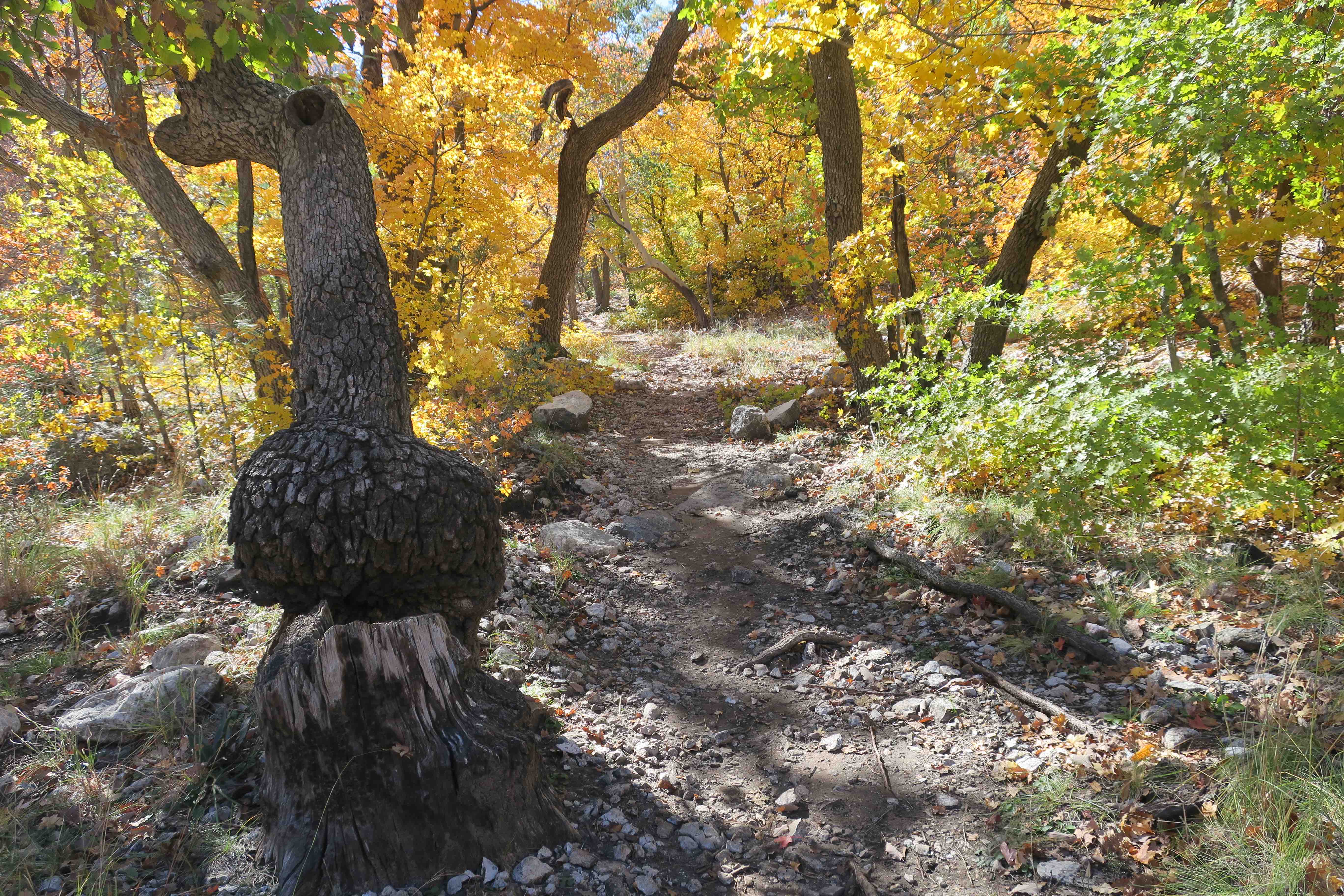 Regardless of where you live in the Lone Star State, make it a point to add McKittrick Canyon to your list of outdoor adventures. Consider visiting in the fall when the colors in the canyon are at their peak. Visiting and taking even a short-hike at McKittrick will do you good. In the words of John Muir, “In every walk with nature one receives far more than he seeks.” You will certainly find that to be true at McKittrick Canyon.
5 Facts About Sotol
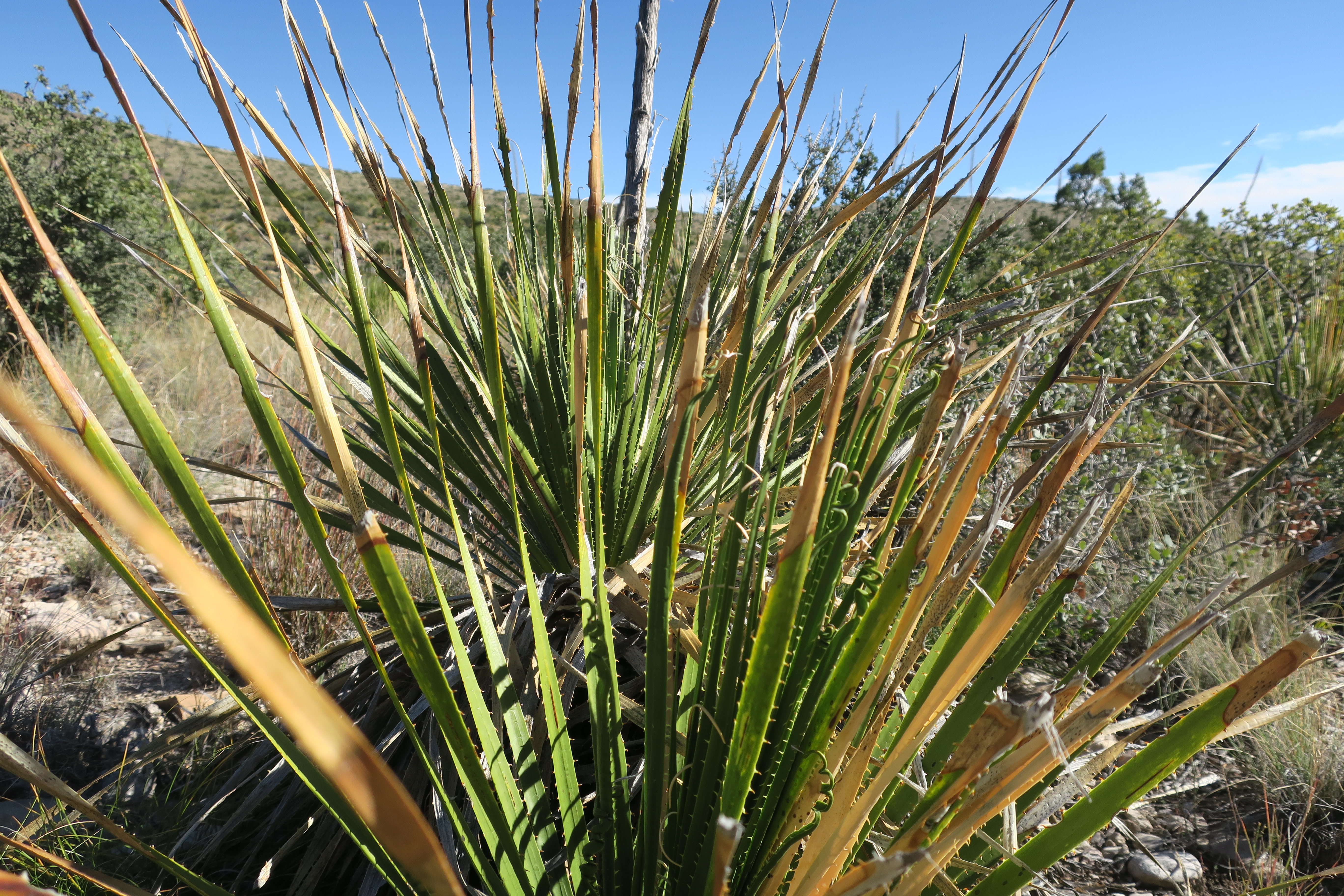
Like ocotillo, sotol is one of the most easily identifiable plants in the Trans-Pecos region of the Lone Star State. The plant’s tall and singular flower stalks are the most distinguishing feature of this hearty native. Growing upwards of ten to fifteen feet, these towering stalks look like periscopes rising above the surrounding sea of scrub and rock.
 1. The sotol flower stalk has a variety of uses.
Ancient peoples like the Lipan, Chiricahua, and Mescalero Apache depended on the sotol to meet a variety of needs. The tall and straight flower stalks were used to make spear shafts, knife handles, digging sticks, and tepee poles. However, perhaps the most important use of the stalk was to make fire drills and fireboards, also called hearth boards, for starting friction fires. Sotol stalks also make excellent walking sticks and are used in the construction of corrals, house roofs, and other structures.
 2. Sotol is a plant with a heart.
The heart of the sotol plant has been used for generations as a food source for humans and animals alike. In times of need, ranchers know that they can rely on the heart of sotol for cow fodder. However, this requires trimming back the armada of saw-edged leaves so that the animals can access the sugary and starchy pith of the plant.
Sotol heart was also a major staple food for ancient peoples. They discovered that the spongy sotol hearts are edible raw but tasted better if roasted slowly. The leaf bases can be eaten in a fashion similar to artichoke bracts. Ancient people also pounded sotol hearts into a paste that, when dried, could be mixed with nuts and fruits or ground into a flour.
 3. Fashion by sotol.
Native Americans used sotol leaves to weave mats and baskets and even durable sandals. These resourceful desert dwellers also used the fibers of the sotol leaves to make many varieties of twisted cordage. More recent uses of the leaves include making ropes, roof thatching, and hats.
 4. Drunk on sotol.
Hispanic peoples of the region learned to make sotol mescal — a potent alcohol drink made from the heart of the plant. One modern naturalist compared the drink to a “mixture of hair oil and gasoline.” Sotol mescal became a common alcoholic beverage among the frontier population of west Texas. During the Prohibition, sotol mescal became a leading article of contraband.
 5. A source of fuel.
The dead leaves of the sotol plant make an excellent fuel for fires in places where both trees and fire wood is scarce. The leaves burn rapidly and brightly, making them an excellent source of fuel for an emergency fire. The green leaves of the plant can be used for providing smoke for emergency signaling.
 Explore Texas