5 Facts About Texas Bluebonnets

I love Springtime in Texas — that wonderful season when highways and byways in the Lone Star State are adorned with the most beautiful wildflowers. While you may not know the names of all of these colorful spring blooms, any self-respecting Texan can recognize the bluebonnet in the bunch.

The bluebonnet is “not only the state flower,” wrote historian Jack Maguire, “but also a kind of floral trademark almost as well known to outsiders as cowboy boots and the Stetson hat.” Maguire also said: “The bluebonnet is to Texas what the shamrock is to Ireland, the cherry blossom to Japan, the lily to France, the rose to England and the tulip to Holland.”

In anticipation of wildflower season in Texas, I thought it might be fun to consider five interesting facts about Texas bluebonnets.

1. The bluebonnet is the official state flower of Texas.

If you are from Texas, this is one fact that we all learned in elementary school. However, things could have been different when the Texas Legislature was considering our state’s official mascots in 1901. The bluebonnet was, in fact, one of three blooms under consideration by our elected officials at the time.
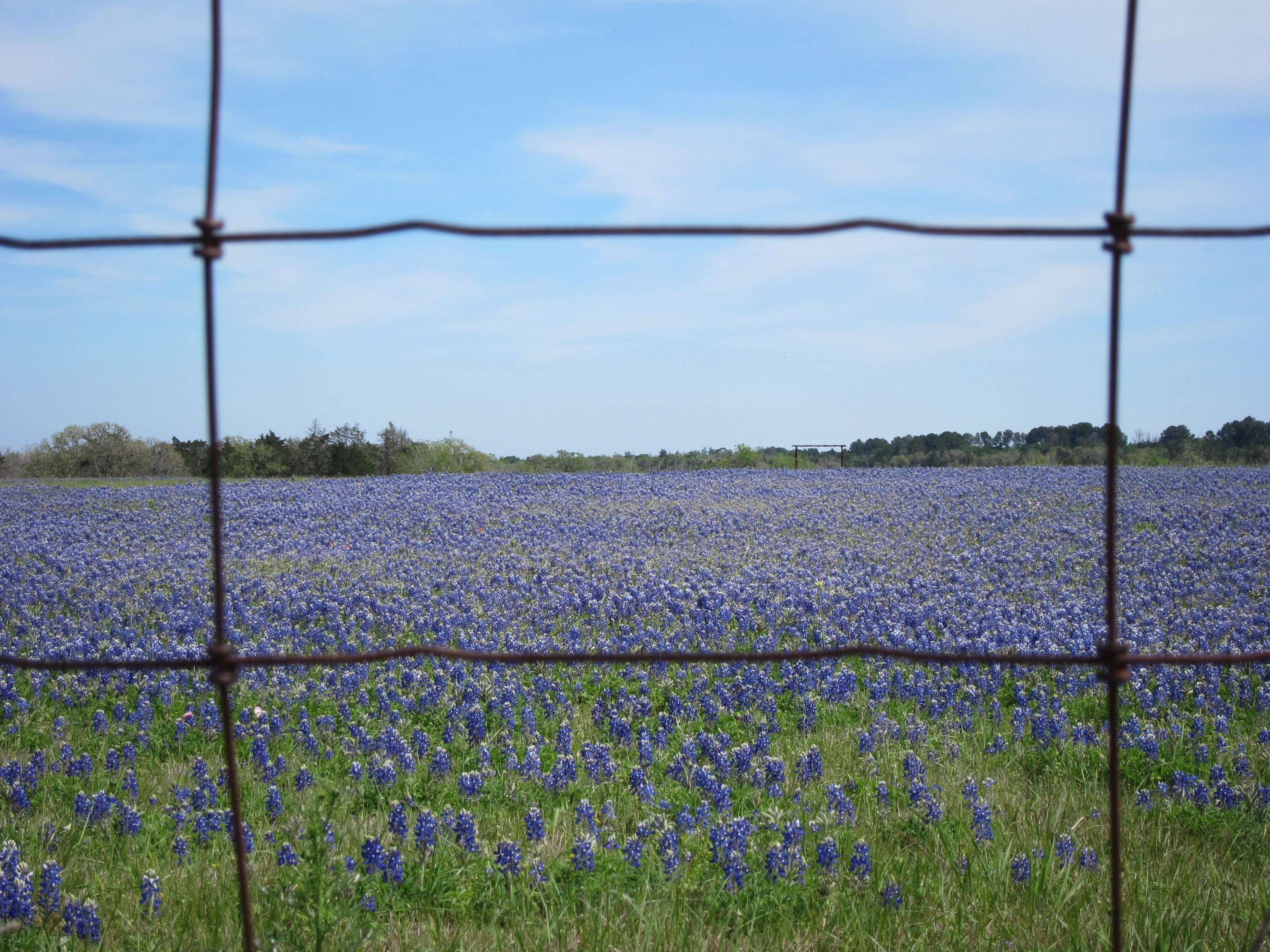
Bluebonnets Wire FenceThe cotton ball was nominated but did not garner much support because, quite frankly, it’s somewhat plain and not much to look at. A fellow named “Cactus Jack” Garner, reputed to be as prickly as his name, nominated the pretty flower of the prickly pear cactus. This hardy flower also lost out. These nominees paled by comparison to the bluebonnet, nominated by the National Society of Colonial Dames of America.

2. A bluebonnet by any other name.

The bluebonnet is also known by other names, including Buffalo Clover and Wolf Flower. The Spanish called the bluebonnet El Conejo from the Spanish word for rabbit because the bluebonnet’s white tip looks like a cottontail rabbit’s tail. The bluebonnet was also called Azulejo from azul, the Spanish word for blue. According to the Lady Bird Johnson Wildflower Center, this word can be loosely translated as “indigo bunting.”
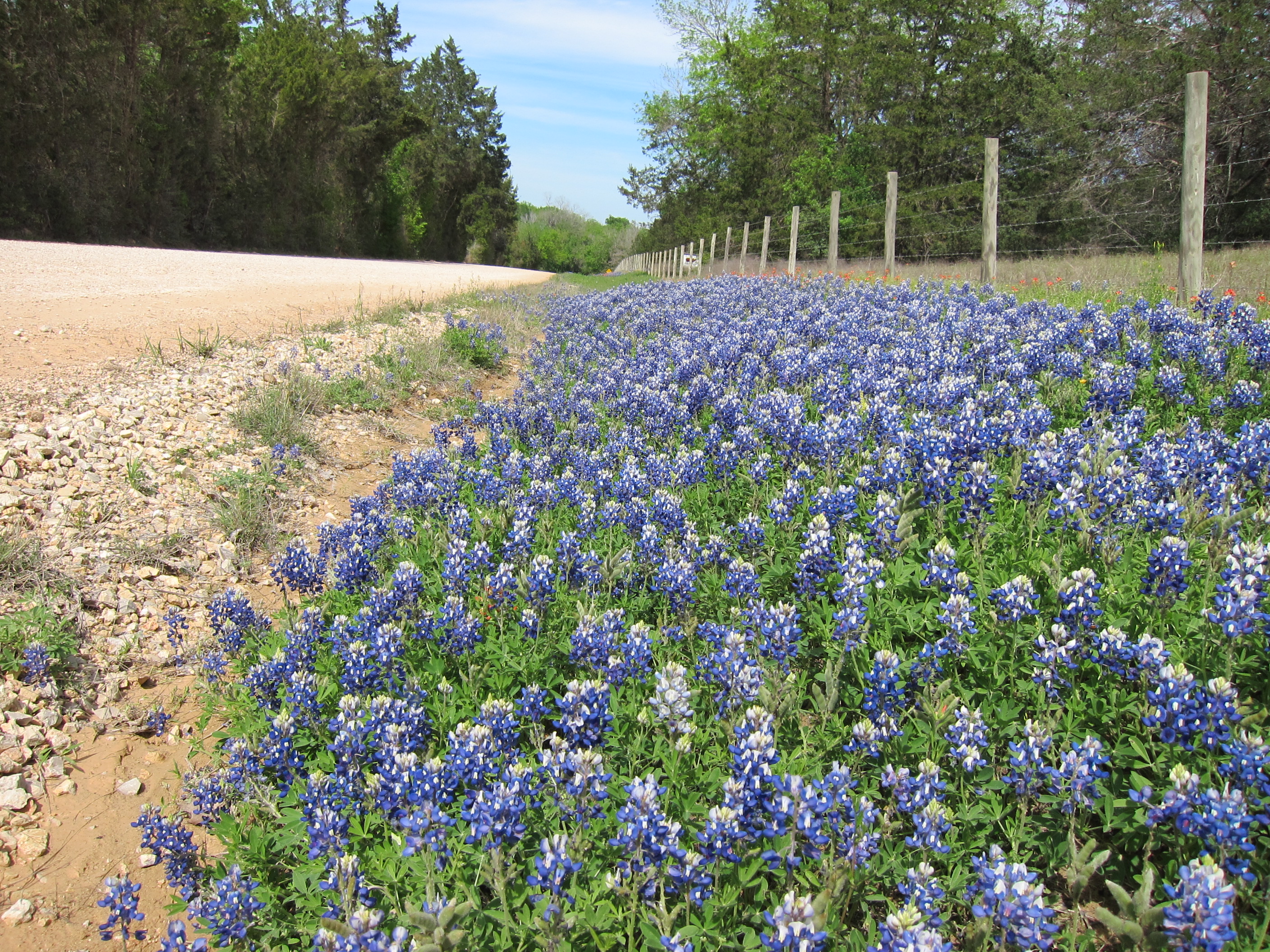
Bluebonnets Country RoadTexas is home to five native species of bluebonnets. In 1901, the Legislature selected lupinus subcarnosus as the state flower. However, citizens protested and petitioned that the lupinus texensis was a better choice because of its larger and more vibrant blooms. The matter was finally settled in 1971 when the Legislature classified all five species of bluebonnets as the Texas state flower.

3. Texas was the first state to plant flowers along state highways.

When the Texas Department of Transportation was organized in 1917, officials noticed that wildflowers were among the first plants to appear along roadways in the Springtime. In 1932, the department hired a fellow named Jac Gubbels as its first landscape architect. Gubbels was charged with maintaining, preserving, and encouraging the growth of wildflowers and other native plants along Texas roadways.
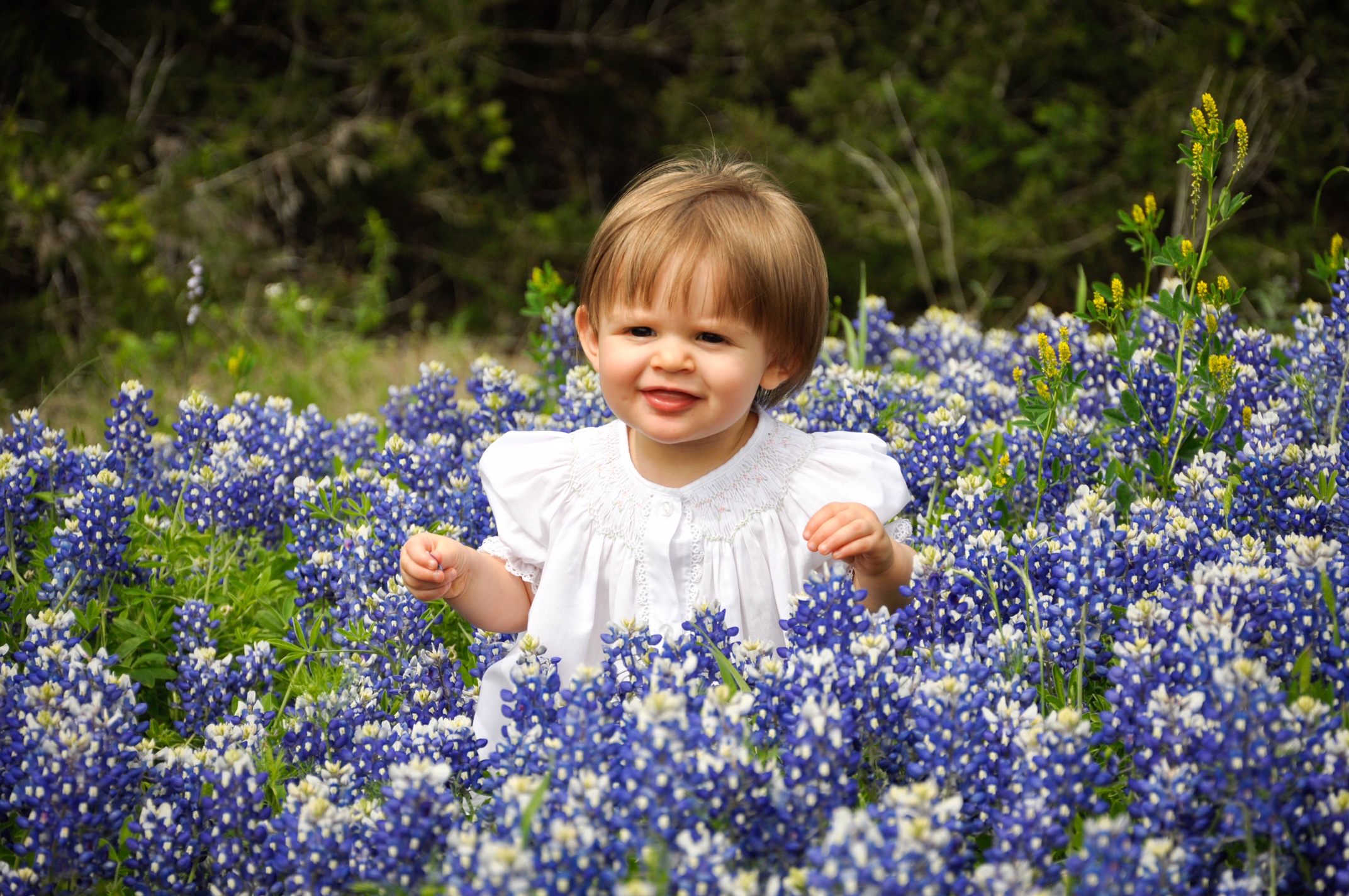
BG in BluebonnetsIn 1934, the department started to delay mowing along Texas roadways until the end of wildflower season. Today, the Texas Department of Transportation buys and sows about 30,000 pounds of wildflower seeds each year, making Texas highways among the most beautiful and scenic in the nation. Every year, flower lovers from around the state and around the nation can be found taking photos among the bluebonnets along Texas roadways.

4. And the award goes to…

The 1997 Texas Legislature named Ennis the official Bluebonnet City of Texas. And because Ennis is home to forty miles of roadsides covered with wildflowers, the Legislature also recognized Ennis as the Texas Bluebonnet Trail. Ennis holds its annual Ennis Bluebonnet Trails Festival every April.
Bluebonnets FenceThe town of Chappell Hill calls itself “the heart of Bluebonnet Country” and earned the title “Official State of Texas Bluebonnet Festival.” Chappell Hill holds its annual Bluebonnet Festival in April. And then there is Burnet, recognized by the Texas Legislature as the “Bluebonnet Capital of Texas.” Burnet holds its own Bluebonnet Festival during the second week of April.

5. Different species of bluebonnets bloom in the Spring.

Unless you are a naturalist, you will likely not be able to tell much difference among the various native species of bluebonnets. That’s ok! The important thing is to enjoy the bluebonnets that grow in or near your particular region. Here is a quick guide on where to go and what to look for.

Lupinus Texensis are found in Central Texas from late March to early April. Look for pointed leaflets and blue flowers tipped with white.

Lupinus Subcarnosus grow in Hidalgo, Leon, and LaSalle counties. Look for blunt leaflets and widely spaced flowers in late March.

Lupinus Havardii grow in Big bend country and grow up to three feet tall in early spring.

Lupinus Concinnus grow in the Trans-Pecos region in the early spring. These bluebonnets only grow as high as seven inches and produce flowers in purple, lavender and white.

And, finally, Lupinus Plattensis can be seen throughout the Panhandle plains from mid to late spring. These particular plants grow as tall as two feet.
Bluebonnets Road

Texas Outdoor Musical

If you live in Texas, you should add Palo Duro Canyon State Park to your list of must-see places in the Lone Star State — not only to enjoy the magnificent beauty of the canyon, but to see the outdoor musical drama “Texas.” This musical romance of Panhandle history will fill you with Texas pride. Now in its 51st season, “Texas” is even better than I remember when I first saw it in its 5th season.
texas-bookletThis musical drama, set in an outdoor amphitheater dwarfed by the thousand-foot walls of Palo Duro Canyon, was born in the heart of Margaret Harper. After reading an article in Reader’s Digest about a playwright named Paul Green who specialized in telling the history of a region in magnificent outdoor settings, Harper wrote to Green about the beauty of the Palo Duro Canyon. The rest is history.

The musical is a high-energy production filled with all of the things that make a story interesting, including conflict and romance. From the start, you are drawn into the story by a lone rider carrying a huge Texas flag, riding at full gallop along the edge of the canyon. And then it begins, the dancing and singing and the unfolding story of how the Panhandle was settled. One interesting side-note is that Benny Tahmahkera, the actor who plays Quanah Parker, the last Chief of the Comanches, is an actual descendent of Quanah Parker.

When my wife Cheryl and I sat through a performance last summer, at one point the wind picked up and we could smell the coming of rain. It’s happened before in this outdoor setting. As the nervous audience looked at the stage and at the dark clouds overhead, the actors on stage were lamenting a West Texas drought that threatened their crops. And then, the first drops of actual rain fell from the sky at the exact moment that Calvin Armstrong, a young homesteader, received word that it was raining and the drought was over. You can’t plan stuff like that!
texas-musicalThere is so much more to tell about this beautiful story. So, plan now to see it this year. The new season starts in June and ends in mid-August with performances every day of the week except Mondays. Visit the Texas Show website to book your tickets. And, take a few extra bucks with you and enjoy a heaping plate of grub at the Chuck Wagon Bar-B-Que. Regardless of whether you are from Texas, you’ll enjoy this family friendly show with a cool ending you’ll have to see for yourself!

Seabourne Creek Nature Park

John Muir, America’s most influential naturalist and conservationist, dedicated his life to the preservation of open spaces. Muir observed, “Everybody needs beauty as well as bread, places to play in and pray in, where Nature may heal and cheer and give strength to body and soul alike.” Muir was right. We need open and green spaces where we can escape — places where, even if for a brief time, we can breathe slowly, walk in the presence of trees, and bathe our souls in the natural beauty that God created.
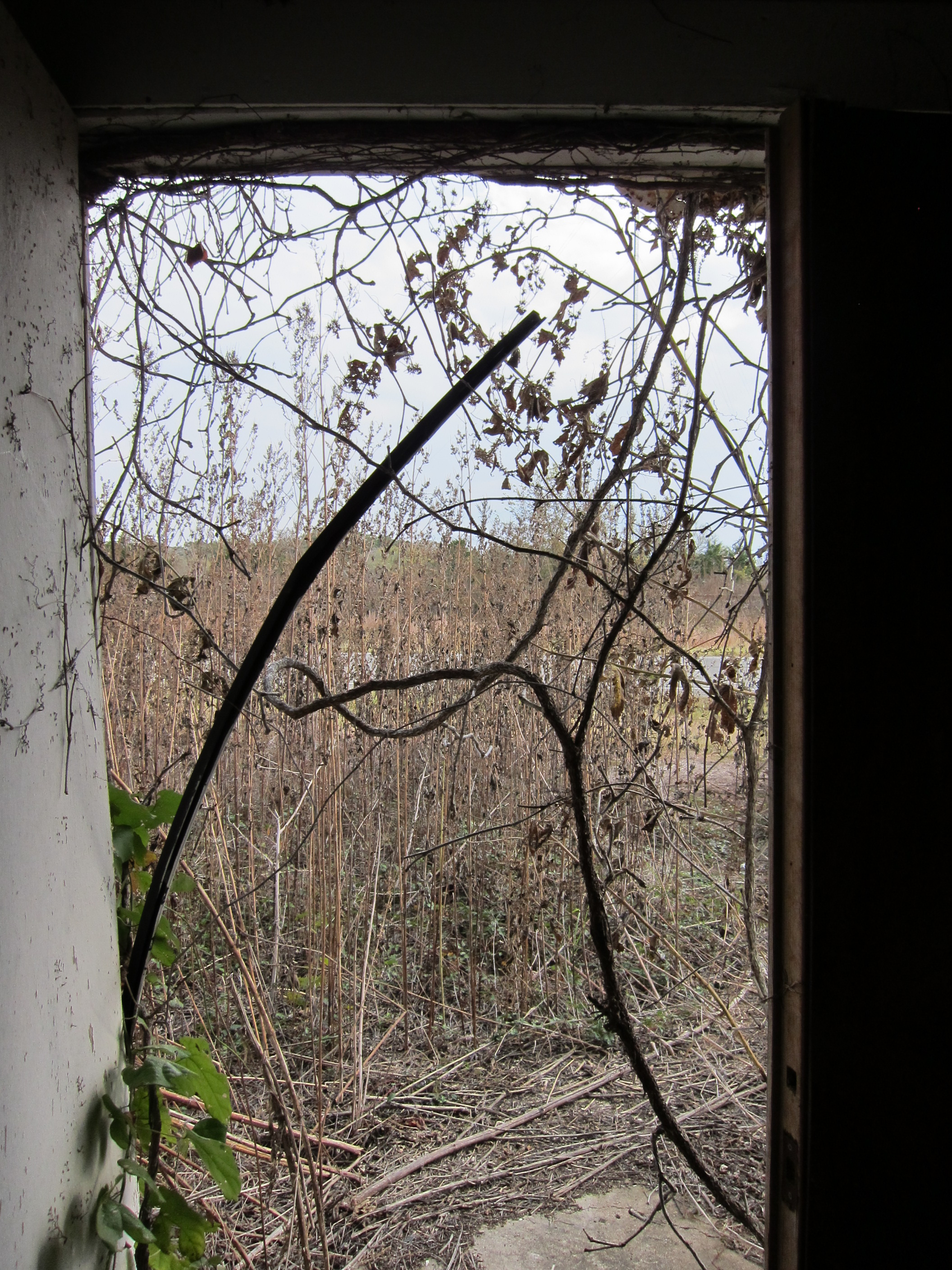
As cities areas grow, its important that city councils and developers factor in the preservation of green spaces. Green spaces are good for everybody. I recently listened to a report on NPR that said there is now so much concrete in Houston that in years to come temperatures will steadily rise in the Bayou City. All the more reason for cities big and small to take more intentional steps toward creating green spaces that thrive from heat rather than just reflect it.
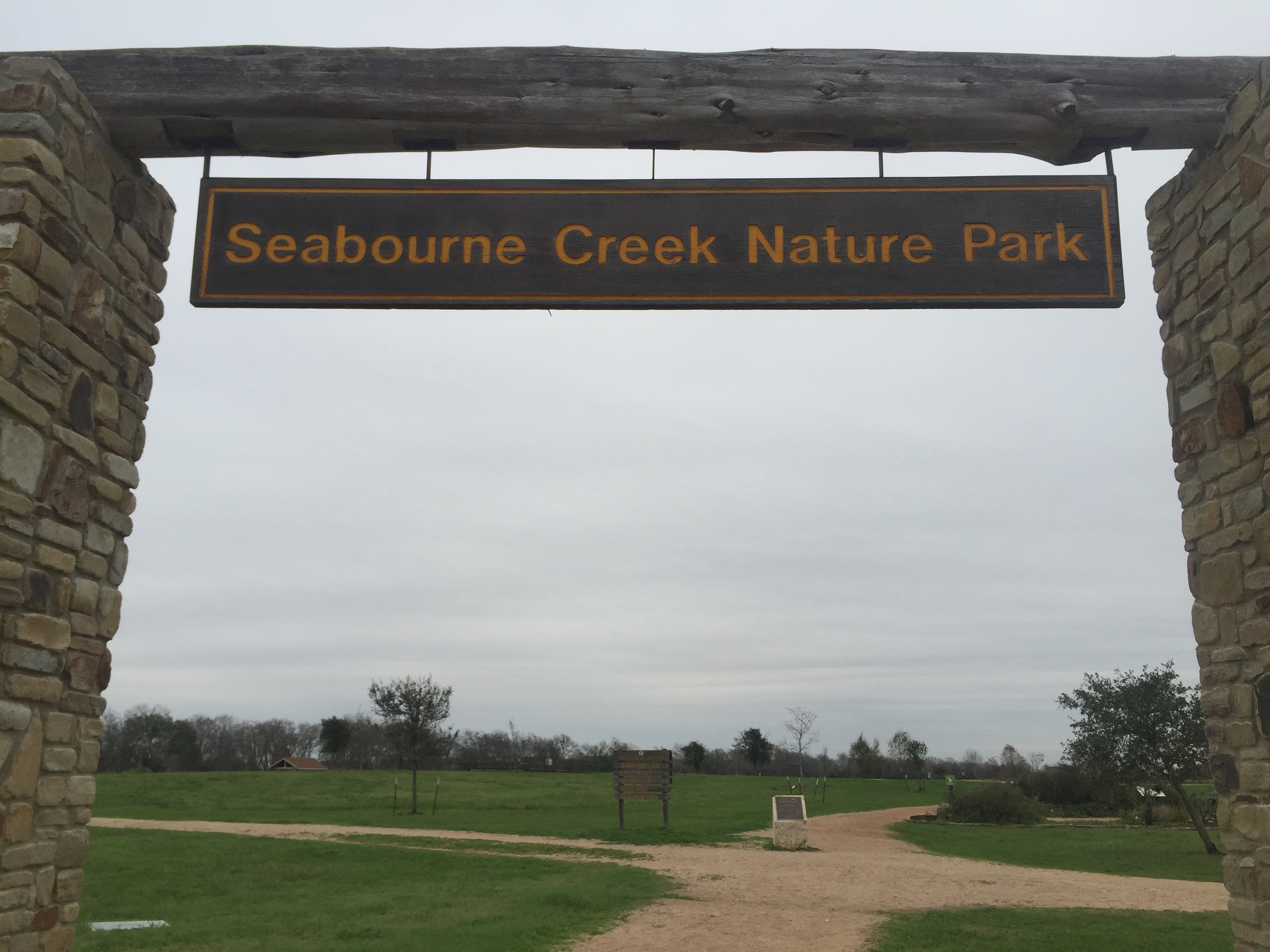
Seabourne SignThe Seabourne Creek Nature Park in Rosenberg is a good example of a beautiful and inviting green space in the midst of a rapidly growing community. Located on Highway 36, this 164-acre nature park features well-maintained walking, jogging, and biking trails. The Coastal Prairie Chapter of Texas Master Naturalists has contributed to the maintenance of the park and the development of wetlands and prairie restoration areas.
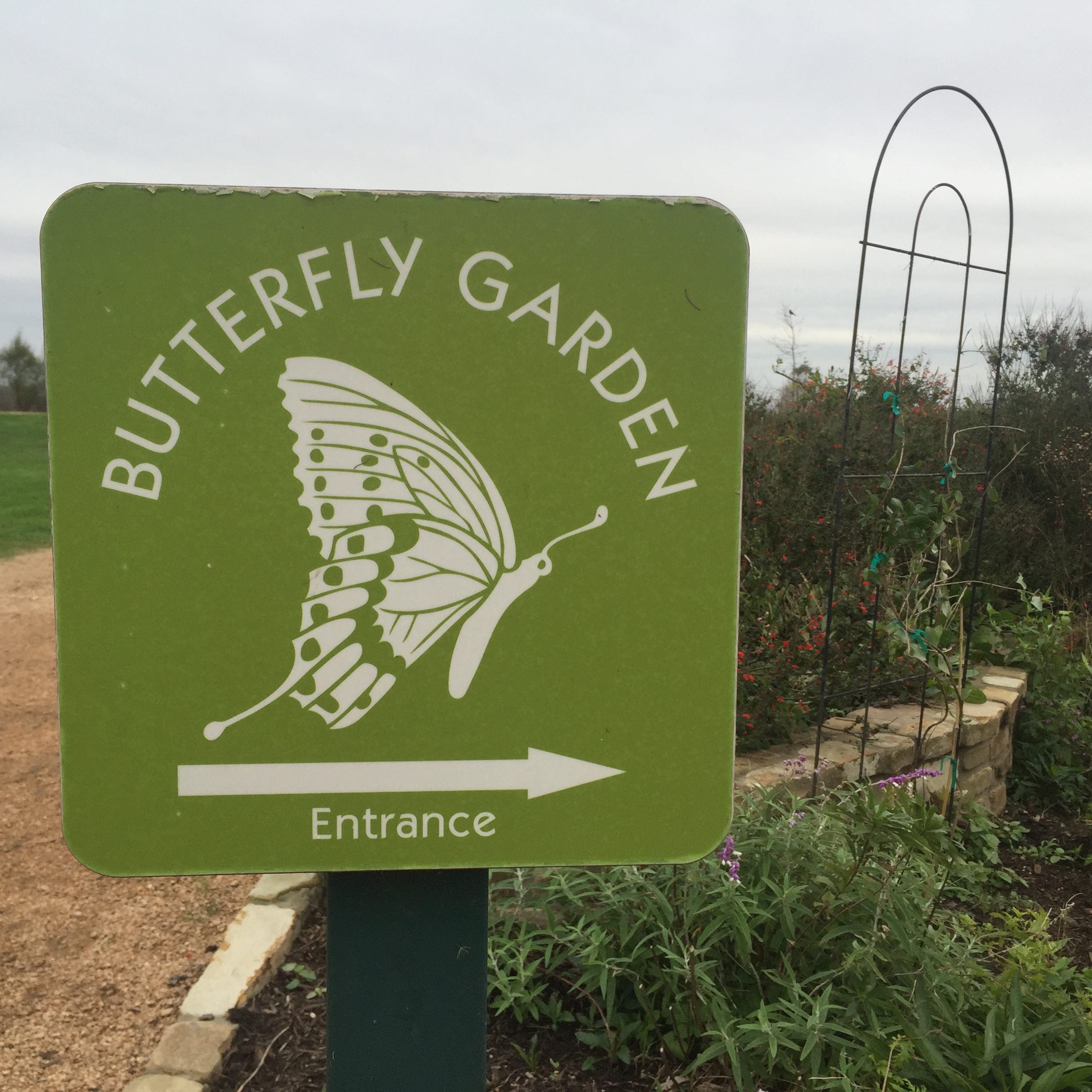
Seabourne Butterfly GardenMembers of the Coastal Prairie Chapter of Texas Master Naturalists have also created a beautiful butterfly garden, labeled native plant species throughout the park, developed a native grassland demonstration area, and oversee the four-acre lake stocked with bass, perch, and catfish. The work and long-range plans of the chapter will only make Seabourne better and better in years to come.
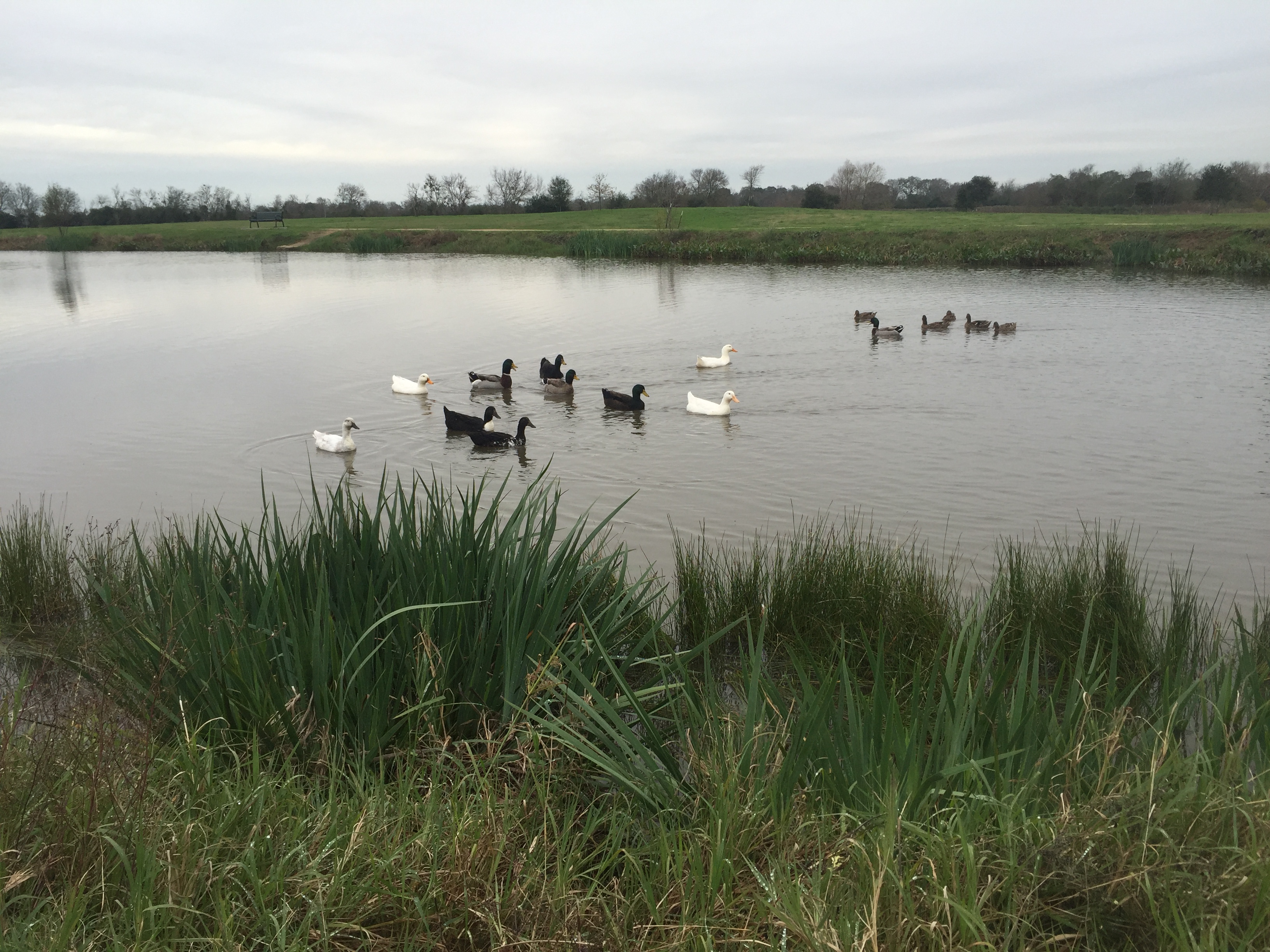
Seabourne DucksOne of the best things about the park is that it is family friendly. This is a great place to take your kids to teach them about the beautiful variety of native plants. On my visit, I enjoyed watching a dad and his young daughter feeding the ducks. There are benches at intervals around the lake where you and your kids can sit and enjoy the wildlife or one of our spectacular Texas sunsets.
Seabourne Trail SignThe crushed gravel trails are wide and open to hiking, jogging, and biking. No danger that you will get lost here. Everything is clearly marked. There is an adjacent sports area with a frisbee golf course and baseball and soccer fields. And, as an added bonus, there are actually  clean restrooms on site.
Seabourne Pollinator SignTake a note pad with you if you want ideas about what you will need in order to plant your own butterfly garden or other types of gardens that attract butterflies and birds. Every plant in these gardens is identified by a marker. The various information signs help to make a visit to the park educational.
Seabourne MapKudos to the City of Rosenberg and their partnership with Texas Master Naturalists to ensure that Seabourne Creek Nature Park remains a family friendly place that residents and guests can enjoy for years to come.

Geographic Center of Texas

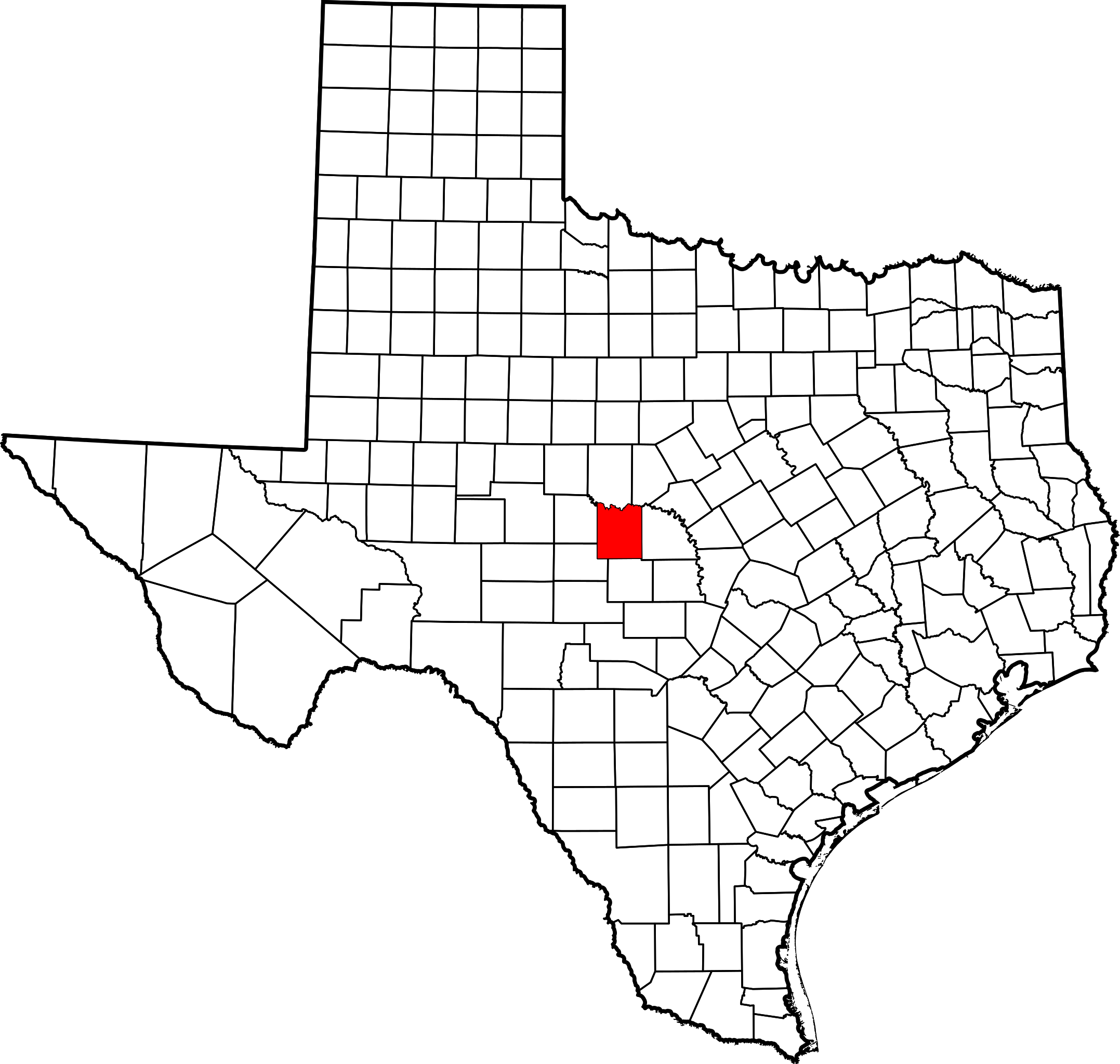
Brady, the county seat of McCulloch County, refers to itself as “The Heart of Texas.” That’s because it is the town closest to the geographic center of the Lone Star State. The town was originally named Brady City after Brady Creek, which runs through the town. However, when the town was incorporated in 1906 the name was shortened to Brady.
IMG_6340The McCulloch Country Courthouse is located in the heart of Brady. Construction of this Romanesque Revival styled building was completed in 1900. One odd feature of the building is that it has no clock in the tower — making its tower truly “timeless.” A marker on the courthouse lawn proudly displays the town’s Heart of Texas moniker.
Brady Courthouse Heart of TexasOne interesting fact about McCulloch County is that during World War 2, there was a German prisoner-of-war camp located three miles east of Brady. After the surrender of General Erwin Rommel’s Afrika Korps in April 1943, three-hundred German prisoners were transported to this camp deep in the heart of Texas. They remained there until 1945 when the United States began the process of repatriating these former prisoners of war.

As for the geographic center of Texas, it is actually located about 20 miles northwest of Brady. A historical marker off Highway 377 states that the actual smack-dab-in-the-middle coordinate is five miles from the marker on a private ranch. I’m sure that working out the location of the geographic center of Texas had its challenges, especially given the Lone Star State’s distinctive shape. The highway marker is as close as most Texans will ever get the the actual geographical center. I’m ok with that.

Standing at the marker near the point where the imaginary lines that divide Texas intersect was pretty cool. No matter which way you face from this center point, you get the idea that Texas is really big. In fact, fifteen of the fifty states could fit within Texas’ borders with more than 1,000 square miles left over. That’s a lot of space within the state’s distinctive outline.

To give you an idea of the vastness of Texas, the center point of the state is located 437 miles from the state’s most westerly point, 412 miles from the most northerly point, 401 miles from the most southerly point, and 341 miles from the most easterly point. Long distances no matter which way you face and even greater geographical diversity depending on which direction you travel.

McCulloch CountyIf you happen to have a bucket list of places to see in the Lone Star State, be sure to include a visit to the geographic center of the state. And, of course, be sure to stop in Brady to see its beautiful courthouse. They just don’t build them like that anymore! I’m certainly glad I visited the heart of Texas. As a Texan, I will always have Texas in my heart.

Cadillac Ranch

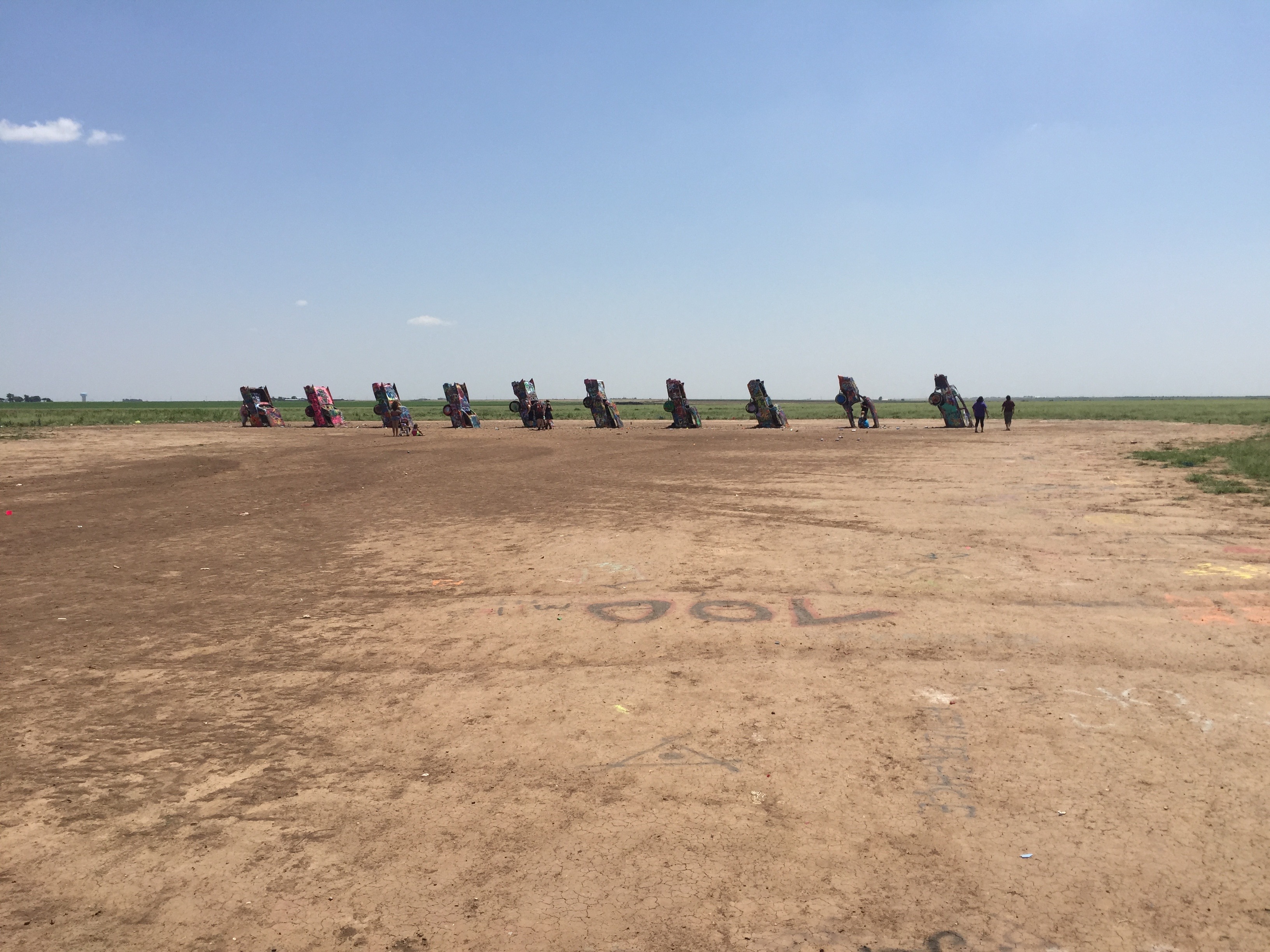
Cadillac Ranch may just be the quirkiest tourist attraction in the Lone Star State. The old folks up around Amarillo know it as one of the world’s first roadside sculptures — ten Cadillacs buried nose down in a field along old Route 66 west of town. This art project was the brainchild of the late Stanley Marsh 3, an eccentric Texas millionaire. Marsh used the number 3 after his name because the felt that the Roman numeral III was too pretentious. Imagine that!
Cadillac RanchIn 1973, Marsh invited a group of artists from California to help him create an unusual work of art, one that would baffle the locals. The hippie artist collective, known as the Ant Farm, was all too happy to help Marsh realize his dream. These guys came up with the idea of burying old Cadillacs nose down in a wheat field owned by Marsh. The Texas millionaire approved the plan and work started in 1974.
Cadillac Ranch CloseupThe California artists initially acquired eleven Cadillacs ranging in model year from 1948 to 1963. Most of the cars were purchased from junk yards at a cost of about a couple-hundred bucks each. Only ten of these cars, however, were used. Ten holes were dug and, one by one, each Cadillac was nudged nose first into its partially buried resting place.
Cadillac Ranch Car CloseupThe cars were buried in sequence from the oldest to the newest — all facing west and supposedly at the same angle as the Great Pyramid of Giza. As a result, a legend was born (or perhaps buried). The site immediately attracted the attention of folks traveling down the road and eventually came to be known as Cadillac Ranch.
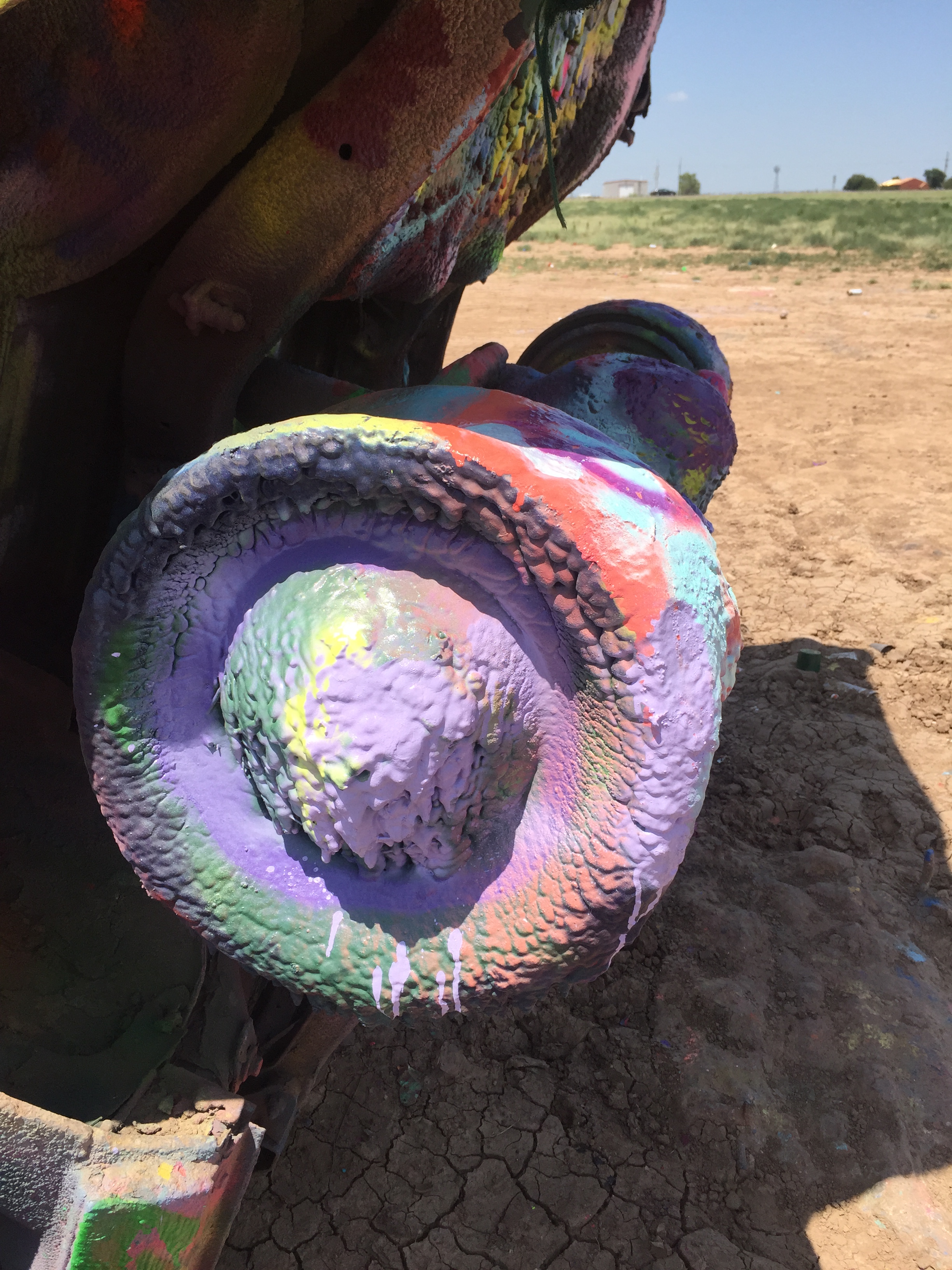
Cadillac Ranch TireIn 1997, the cars were exhumed and moved about two miles to the West because of the encroaching city. This roadside oddity continues to draw tourists and the curious. There is parking along the road and visitors are allowed to bring their own spray paint to add their personal tags to the sculptural oddity. Today, the cars are covered with thick layers of spray paint and ever-changing graffiti, possibly the only thing holding the old cars together.
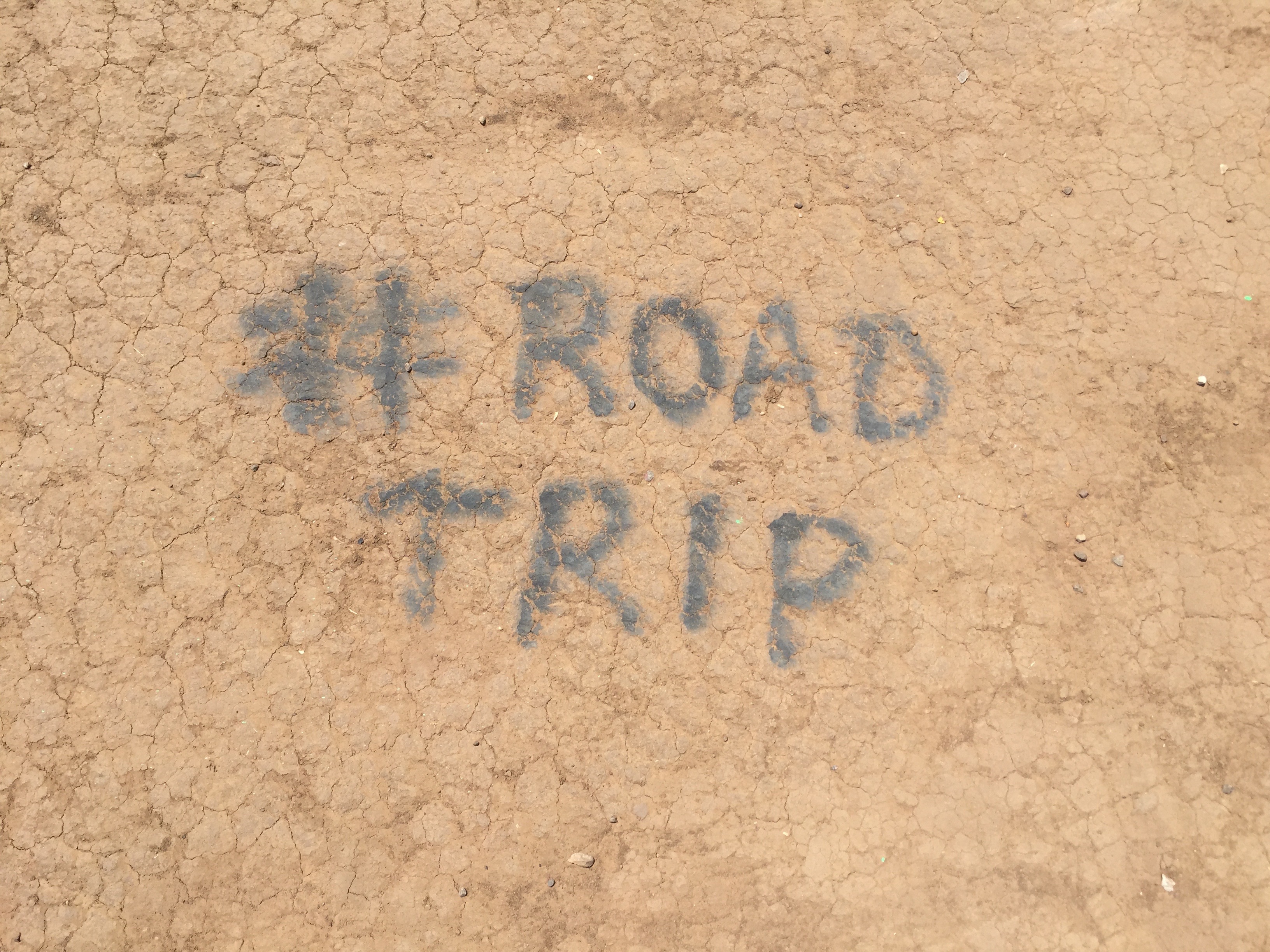
# Road TripI have visited the Great Pyramid of Giza. And while it’s impressive, it is certainly not as colorful as the old Cadillacs with their tails in the air. Interesting that ten cars buried nose first in a wheat field in Texas likely draw as many or more visitors than the pyramids we all learned about in school. We are definitely drawn to the historical and the comical. And although the quirky roadside attraction will not outlast the pyramids, kudos to Marsh, the patron saint of Cadillac Ranch, for turning an otherwise empty field in the Lone Star State into something to talk about.

The Regency Bridge

Bridges. I love bridges. There is something inherently beautiful about these structures that are designed to connect people and places. Over my years of traveling the world, I have crossed some of the most beautiful bridges on the planet and cautiously ventured across others.
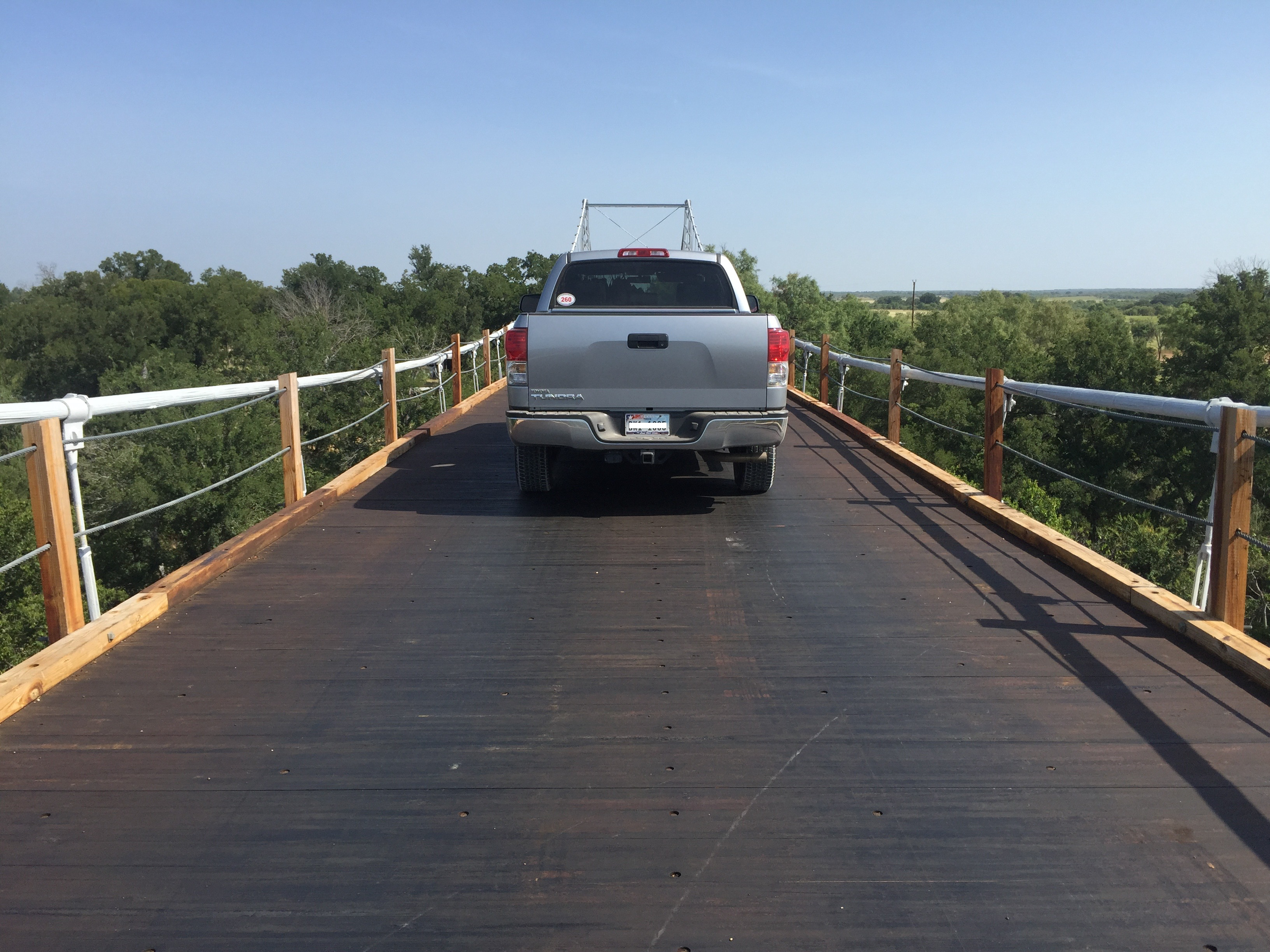
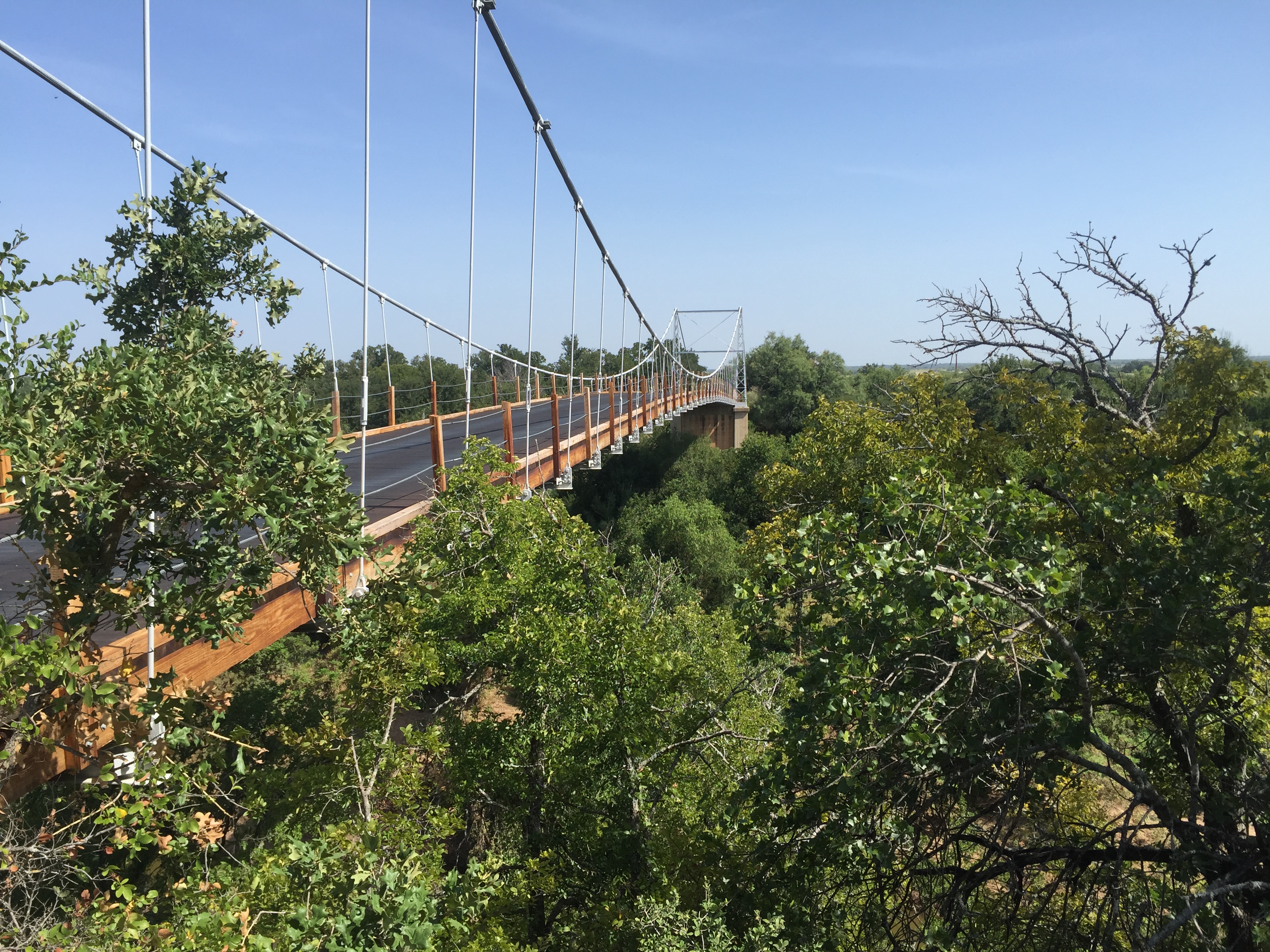
Regency BridgeAs a fan of Texas Country Reporter, I have long been fascinated by the one-lane suspension bridge featured in the opening segment of the show — the Regency Bridge. This beautiful bridge spans a remote section of the Colorado River on the Mills-San Saba County line.
Regency Bridge SignIt is, perhaps, a little known fact that Texas has more bridges than any other state in the Union. And, of the more than 52,000 bridges in the Lone Star State, the Regency Bridge is the last suspension bridge in the State that is open to automobile traffic. That alone makes it worth a visit.
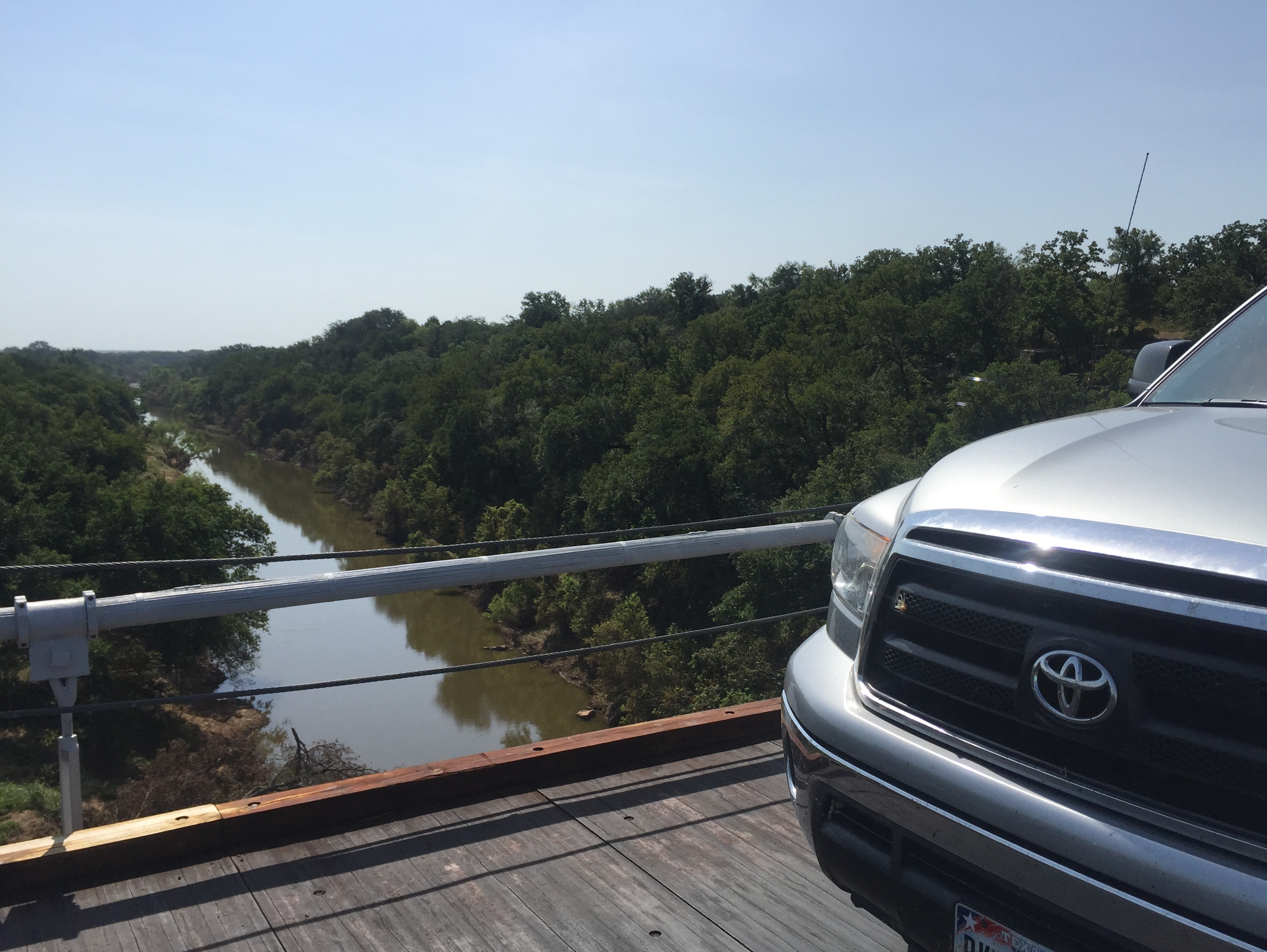
Tundra on Regency BridgeThe iconic suspension bridge gets its name from Regency, a now-abandoned farming community on the Mills County side of the Colorado River. The first bridge built at the location in 1903 collapsed under the weight of a herd of cattle. A second bridge was destroyed by a flood in 1936.
Regency Bridge ViewThe current Regency Bridge was built in 1939 and repaired and rededicated in 1999. In December 2003, kids shooting off fireworks accidentally started a fire on the wood decking, burning a hole in some of the planks. The bridge was repaired and today remains open to vehicular traffic.
Regency Bridge TundraThe Regency Bridge is located at the intersection of Mills County Road 433 and San Saba County Road 137, both gravel roads. There is room to park on the Mills and San Saba sides of the bridge. The views from the bridge of the Colorado River and the surrounding countryside are absolutely beautiful.
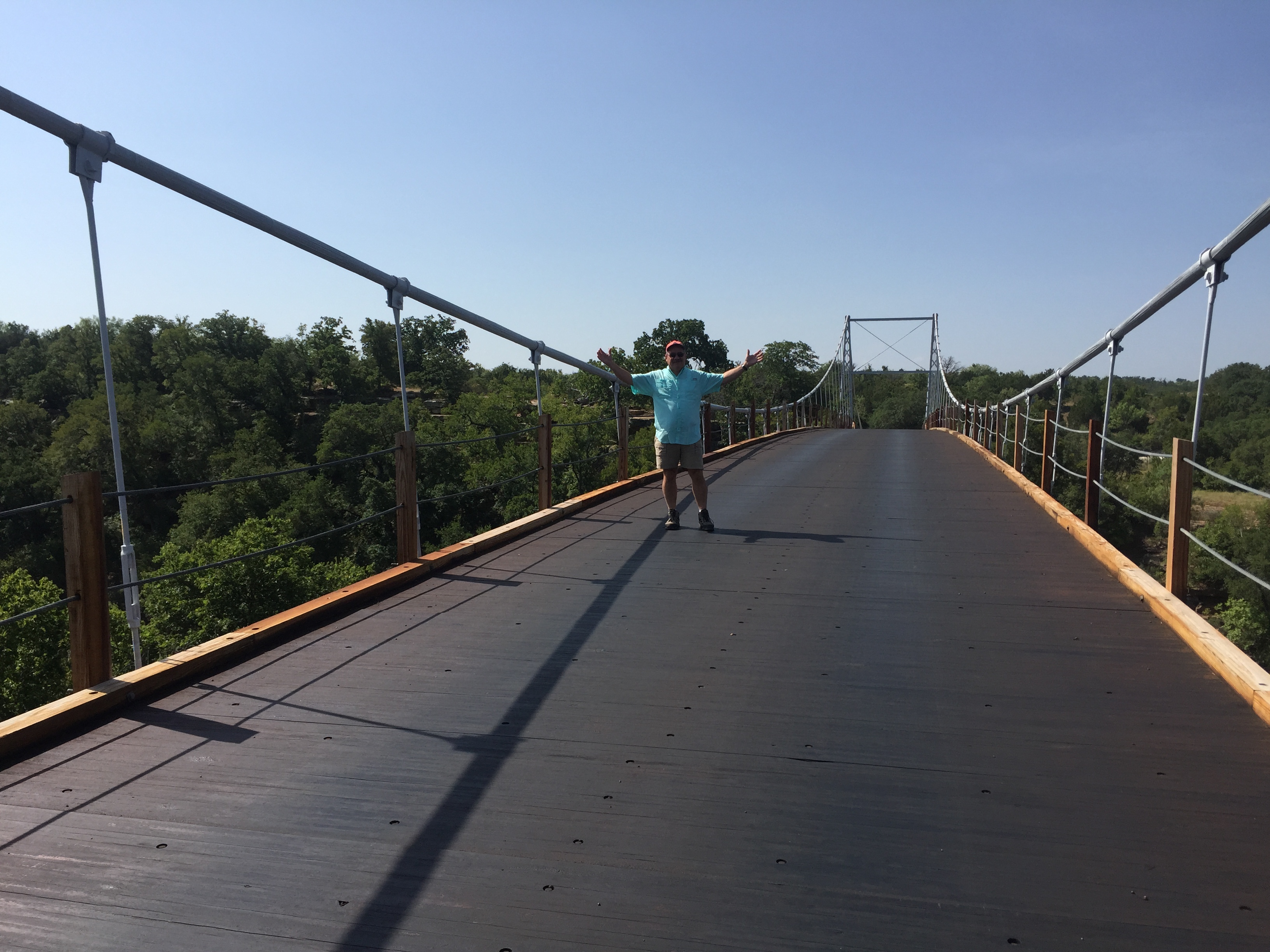
Omar on Regency BridgeIf you find yourself anywhere near the Regency Bridge, make it a point to take a detour to drive across the bridge and to stop and enjoy the scenery. The bridge does not get much traffic because it has been bypassed by newer paved farm to market roads. That makes it even better and possible to enjoy the bridge and the vistas for long uninterrupted periods.

Under Rainy Texas Skies

As a card-carrying Texas backroads adventurer, I look for opportunities to schedule windshield time on my calendar. And because I enjoy driving down Texas backroads, I am not picky when it comes to the weather. In fact, familiar backroads can take on a whole new look when you drive them in the rain.

I know that some folks prefer to stay inside when it rains, and I don’t blame them. There is something undeniably soothing about listening to the falling rain. But, I see rain as a great opportunity to get a new perspective on the sights along Texas backroads. I love how the rain changes the light and makes every color so much more vibrant and dramatic.
Rainy Road I-10On one particular rainy day adventure, I traveled from my home in Katy toward Brookshire. This small town, located a few miles west of Houston, was named for Captain Nathen Brookshire, an early settler who received title to a league of land as a member of Stephen F. Austin’s fifth colony in 1835. The intense rain made my early morning drive look like it was nighttime.
The Next BendOnce I got off the beaten path, the rain lightened up a bit and I was able to slow down and enjoy the sights. As you might imagine, most sane people stayed home so I pretty much had the backroads to myself. The overcast skies and steady rain made this familiar drive look like a totally new experience.
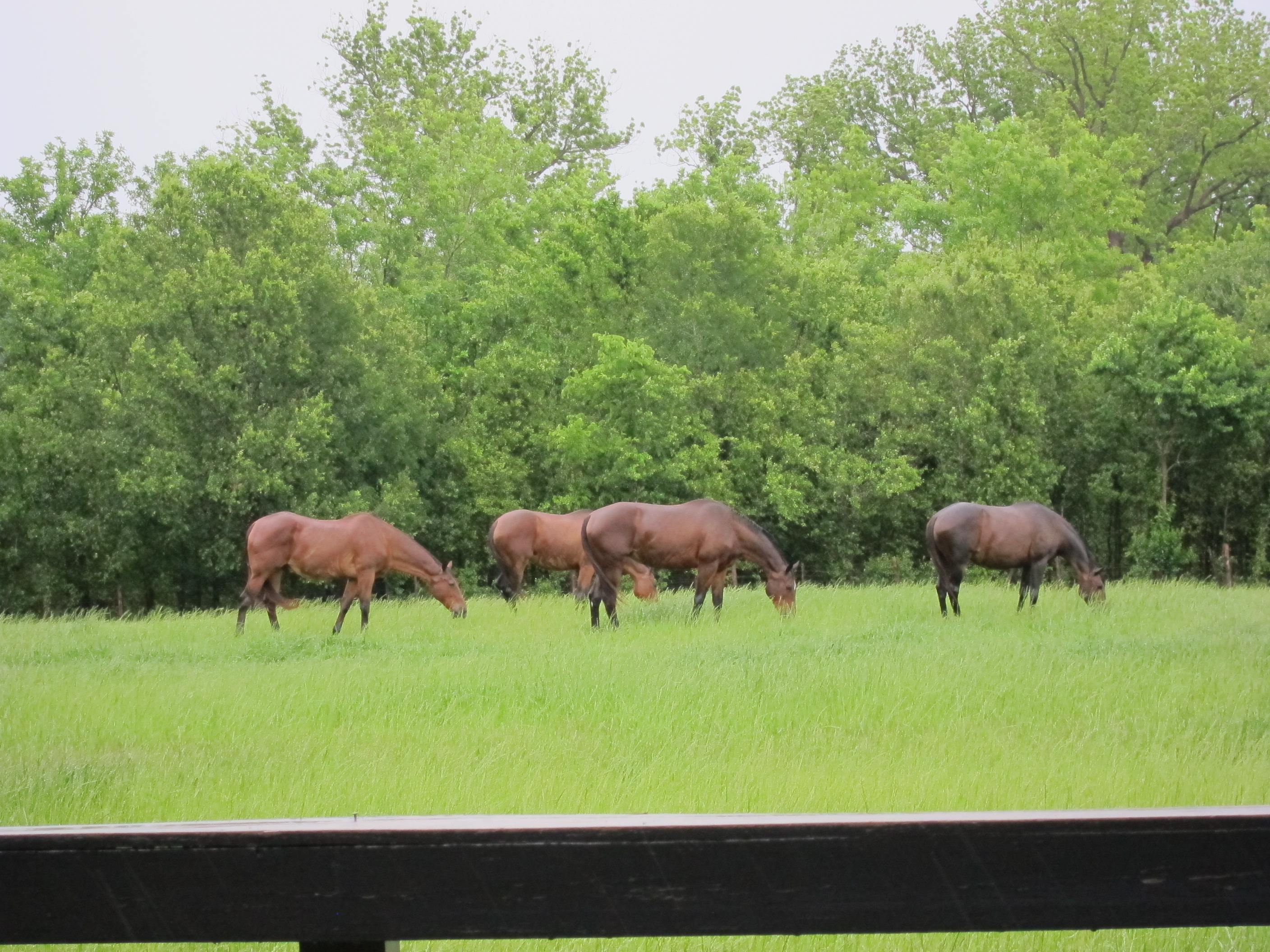
HorsesI absolutely love the what’s-around-the-next-bend-in-the-road feeling that I get when the road ahead turns one way or the other. My rainy day drive did not disappoint. Every little road had its own share of surprises for me. The rain did make it a little hard to take pictures but I managed to snap a few shots along the way.
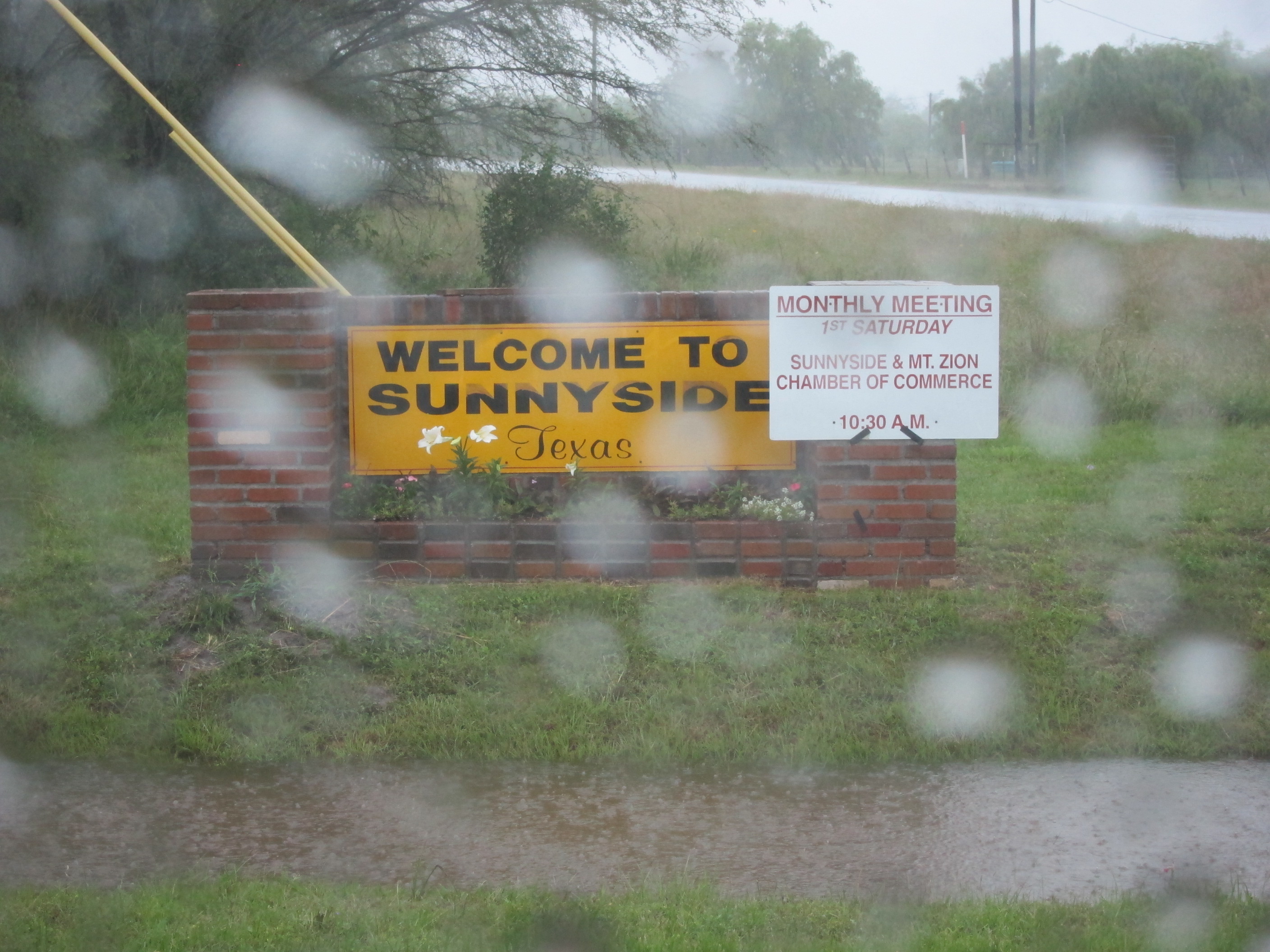
Sunnyside Texas
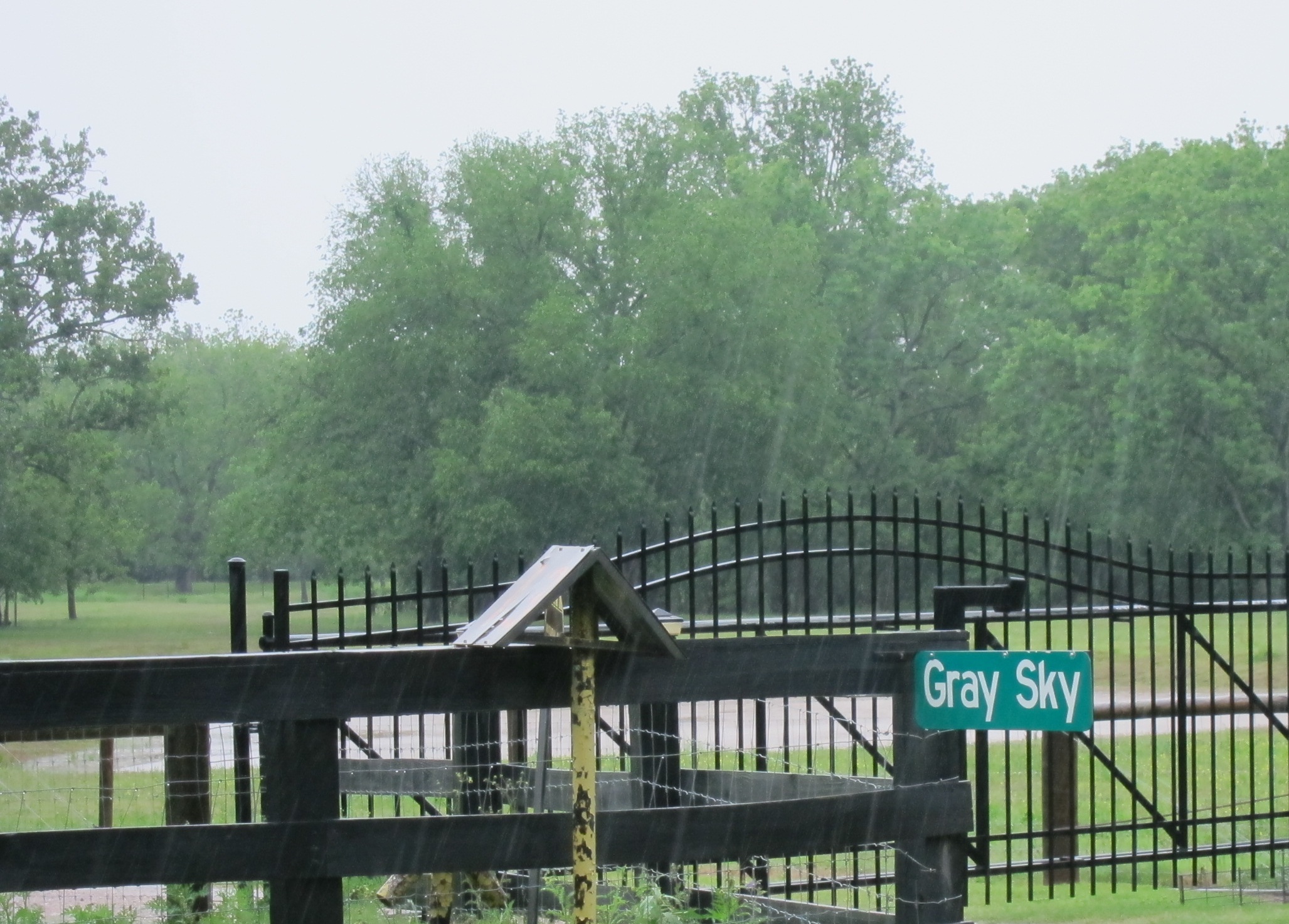
Gray Sky
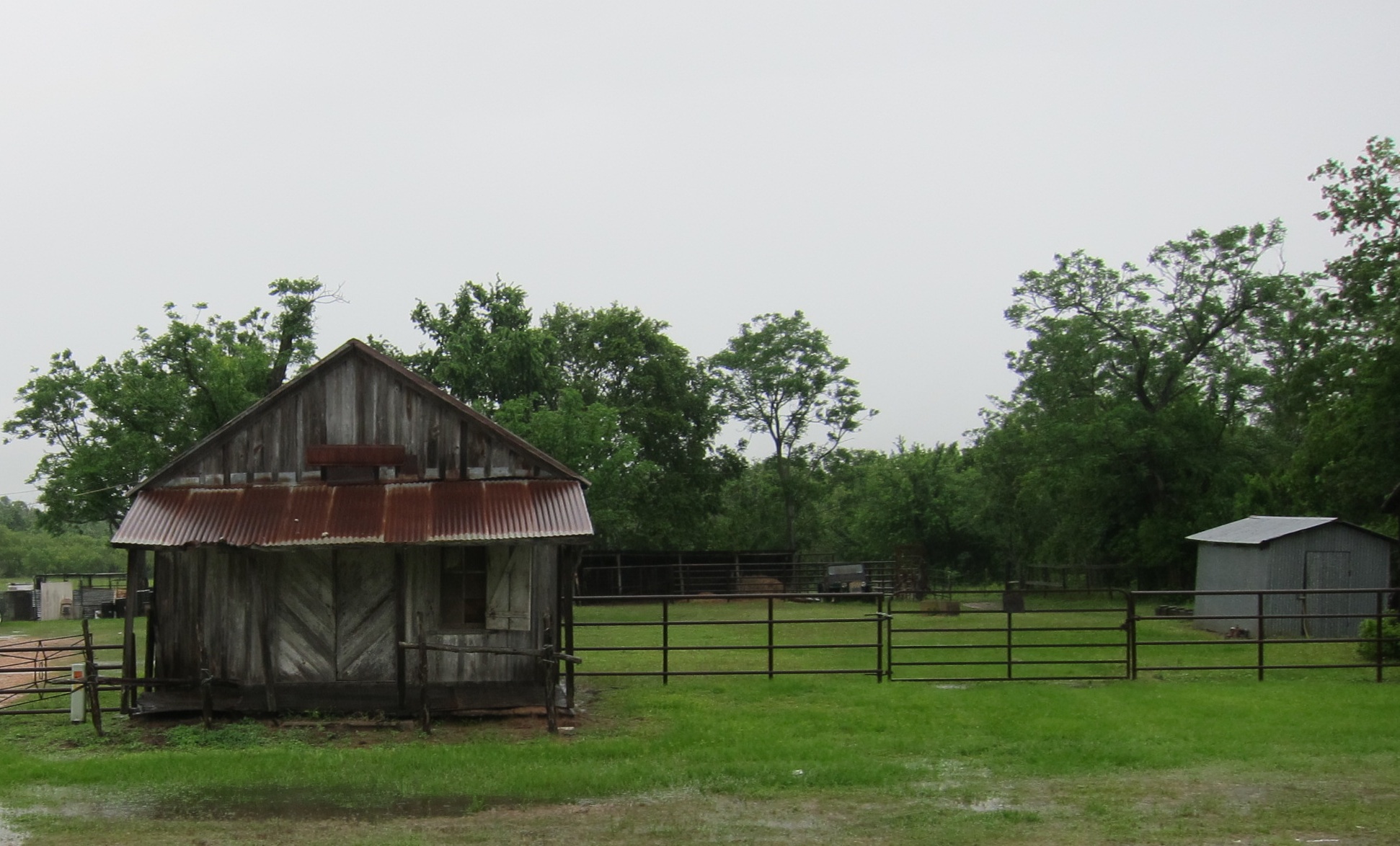
Rusty Roof HouseI especially enjoyed driving through Sunnyside, Texas in the pouring rain. A short time later I drove past a little road named Gray Sky — a name more appropriate for the day’s adventure. The old abandoned houses hidden away on these backroads looked even more mysterious in the rain. These old places always stir my imagination. They make me wonder who lived there, where they have gone, and what memories they still carry with them.
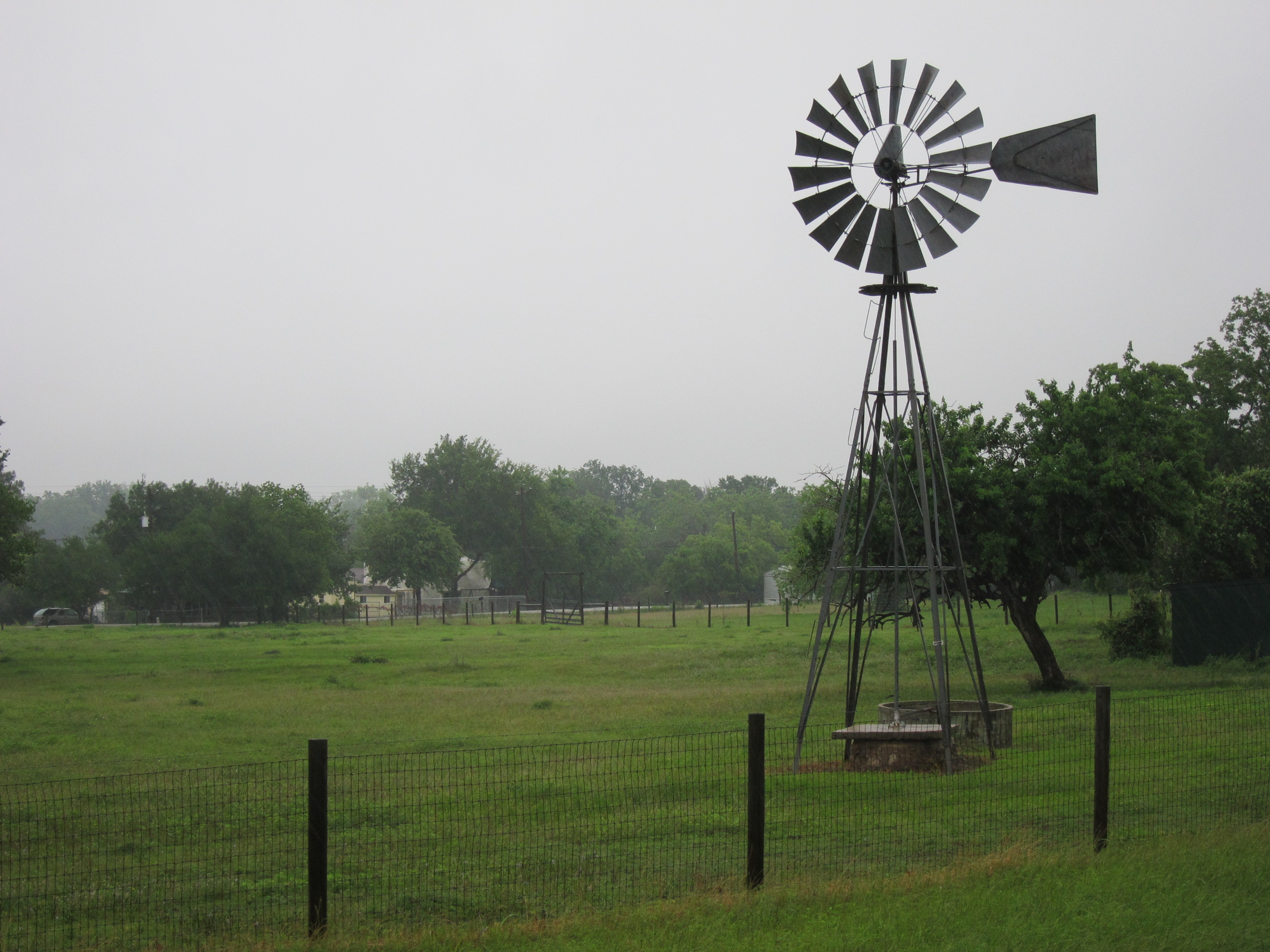
Windmill
Mixed SignalsOf course, I never tire of seeing windmills and stopping to look down railroad tracks that seem to go on forever. I came across one backroads sign along a bend in the road with two arrows pointing toward each other. Decisions, decisions!
RR TracksThe next time it rains, consider going for a drive down some lonely Texas backroad. The rain will give you a whole new perspective and appreciation for the beauty of the Lone Star State. The older I get the more I love Texas, the place I call home. And, as much as I enjoy traveling the world and seeing amazing and interesting places, there really is no place like home. Texas is indeed a beautiful place both in the sunshine and in the rain. Make it a point to discover the beauty of Texas under rainy skies.

The Church Near Muldoon

There is something about old and abandoned buildings that stirs my imagination and ignites my curiosity. Whenever I venture down Texas backroads, I always look for old houses and buildings — the ones that have been long abandoned and are slowly being reclaimed by the elements. One structure in particular beckoned me to pull off the road just outside of Muldoon, a tiny community with a population of a little more than a hundred residents. It was an old church building with only the vertical section of a cross remaining on the steeple.
Old Church Building - Muldoon Tx
IMG_1907As I made my way through the dry overgrowth, I noticed that the front door of the building was open. I grew up in a small town in the days when church buildings remained open all day and, in some cases, all night. In fact, I never recall the door to my childhood home ever being locked when I was growing up. In all of the years I lived at home I never had a house key. At any rate, I was glad to find an open door when I approached the old church building.
Muldoon Church InteriorOnce inside the building, I noticed the few remaining pews on either side of the red-carpeted aisle. Everything in the building was covered with the dandruff of decay. I paused for a moment and tried to imagine what things must have looked like when the building was new and wondered how many brides had walked down the short distance to the altar. I had to remind myself that this old building was not the church, only the building where the church had once met for a season.
Muldoon Church QuarterliesThe signs that this had once been a place where people studied the Scriptures were evident. Old Sunday School quarterlies littered the floor, some with the fading names of the members written on the covers. Once again, I could not help but wonder about those who had studied those lessons and perhaps made some life-changing decisions in this old country church building. In a way it did not matter so much that these old lesson books were strewn on the floor because what really matters is what the folks who studied here carried away in their hearts.
Muldoon Church Pulpit ViewStanding in the pulpit and looking toward the pews, I wondered about those who had stood in that same spot over the years. How many sermons and weddings and funerals had taken place there? What about special seasonal observances or musical presentations? The history of what happened in that building is lost to all but those who worshiped there. But, without question, so much must have happened in this humble little building throughout the years.
Muldoon Church ExitAfter lingering for a while I made my way slowly down the aisle toward the exit. Once again the open door beckoned me out toward the world at large, the place where we are to live out our faith. And again I wondered about how many people might have left this place a little different than when they walked in, perhaps more determined to love God and love people. That’s really the way we should always leave our places of worship — changed for the better, a little more in love with God, and ready and willing to serve others.

A Texas History Road Trip

Something good happens when you combine book learning with field trips — somehow the things and events that happened in a particular place seem to make more sense. I am a firm believer that being onsite can help folks to gain greater insight. Being in the geographical context of history’s happenings stirs the imagination, stimulates brain activity, promotes conversation, and inspires wonder.

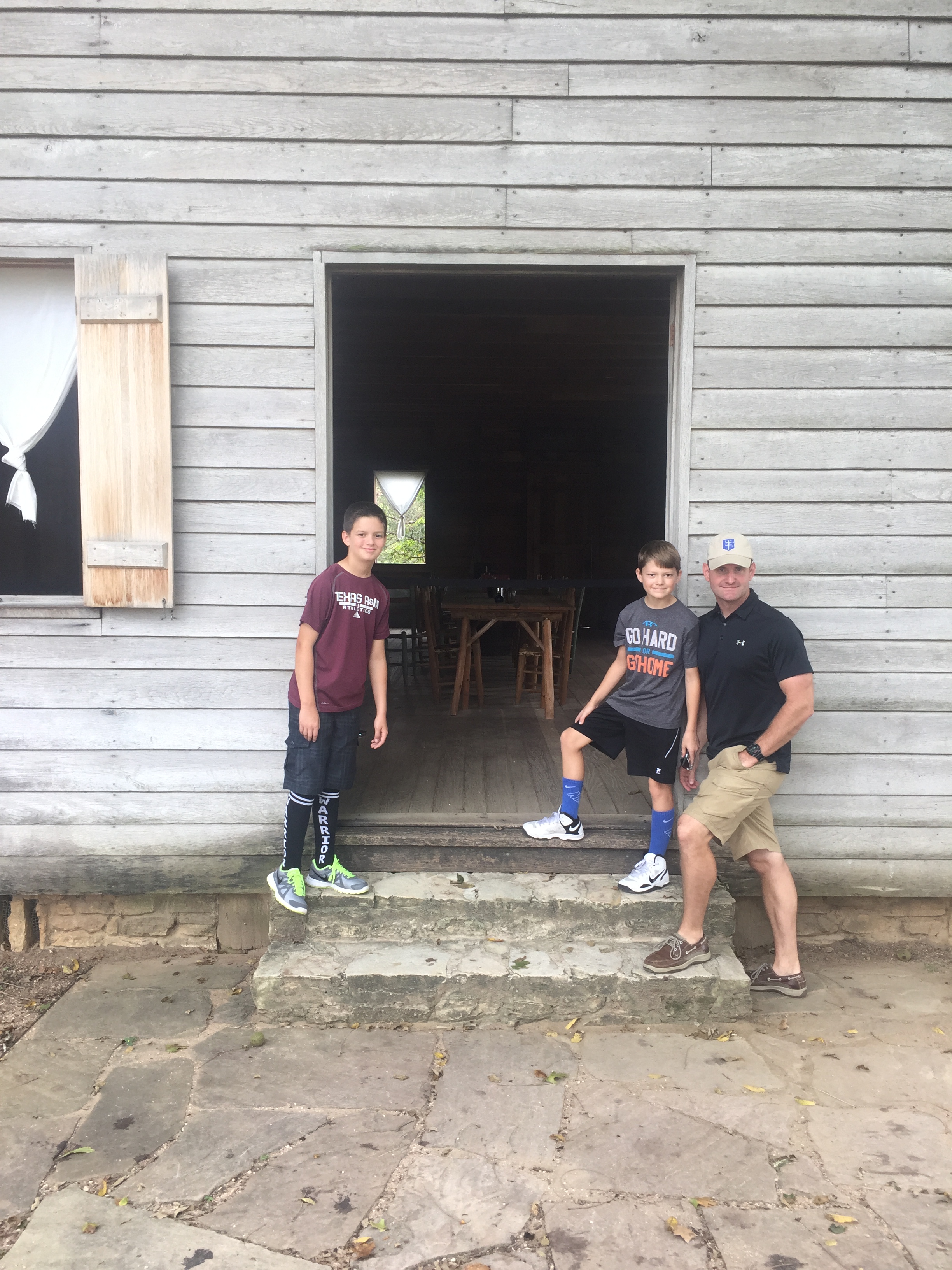
Last week, my friend Brad Flurry and his sons Hunter and Drew joined me for a Texas History road trip. Since we only had a few hours before the boys had to be at football practice, I planned a route to two locations along the Brazos River — San Felipe de Austin and Washington-on-the-Brazos. San Felipe is regarded as the “Cradle of Texas Liberty” and Washington-on-the-Brazos is the place where Texas became Texas.
IMG_5999Before visiting San Felipe, we drove to a spot where the boys could walk down to the Brazos River. This was the perfect setting for talking about the Lone Star State’s longest river, including how it got its name and the role it played in promoting commerce in the early days of Texas. And, of course, it was also a good spot for chucking a few rocks into the river.

San Felipe was the unofficial capital of the colony that Stephen F. Austin founded at this site in 1823. Today, the folks at the San Felipe State Historic Site, a Texas Historical Commission property, guide visitors in understanding the significance of the many historical events that occurred in this community. The site features a hand-dug water well from the period, a museum, and a replica of an old cabin with toys and games from the period.
Flurry Boys at Independence HallFrom San Felipe we drove an hour north to Washington-on-the-Brazos State Historic Site. This is the place where Texas became Texas. In March of 1836, while the Alamo was under siege by Santa Anna’s army, 59 representatives of the Texas settlements met in an unfinished frame building at Washington to make a formal declaration of independence from Mexico. A replica of this building, known as Independence Hall, marks the place where the Texas Declaration of Independence was signed.
Flurry and SonsFrom Independence Hall we hiked to a scenic overlook of the Brazos River and talked about the Runaway Scrape of 1836. As Santa Anna’s armies swept eastward from San Antonio, panic set in among the settlements of Texas. Colonists gathered personal possessions, abandoned their properties and headed eastward under difficult conditions. Settlers often waited days to cross the Brazos at Washington. After the Texas victory at the Battle of San Jacinto, settlers slowly returned to their homes.

To stand at the very spot where the Texas Declaration of Independence was signed or where something like the Runaway Scrape occurred does indeed stir the imagination. And, that’s a good thing! It’s far to easy for us to live disconnected from the past, unaware of how and why we are the beneficiaries of the courage and the sacrifices of those who came before us. The best antidote to that is to personally visit the places that shaped our history.

There are no shortages of affordable day trips from wherever you live in Texas that can help you and your kids gain a greater appreciation for the history of the Lone Star State. I hope you’ll hit the road soon and embark on a Texas history road trip.

A Stroll Along Shoreline Drive

Shoreline Drive in Corpus Christi is one of my favorite drives in the Lone Star State. There is just something about looking out at the vast expanse of Corpus Christi Bay that I find soothing. During the years I lived in the Sparkling City by the Sea, I often ventured to Shoreline Drive to eat my lunch. I always enjoyed watching ships come into the port, recreational boats skipping across the waves, and birds dancing on the warm breezes.

CC Bay BoatsWhenever I visit Corpus Christi, I especially like driving over the Harbor Bridge at night because it affords a cool view of the lights reflecting off the water. At Christmas, this entry point is especially beautiful because of the colored lights on the bridge and the buildings. Definitely worth seeing this iconic bridge at night.

On a recent visit, I took a stroll along the waterfront. My earliest memories of Shoreline Drive are of coming here on vacation with my family when I was just a few years old. My Mom and Dad took my sister and me to the t-heads where we met and talked with shrimpers. And then they took us out on a boat excursion where we held up crackers for the seagulls to eat. Dad captured these special moments on his 8mm camera.

CC ShrimperI thought a lot about those happy days as I walked slowly beside the shrimp boats. I stopped and had a nice chat with one shrimper — a colorful character with a weathered face, bushy mustache, raspy voice, and one arm. Shrimping is hard work and I wondered how the one-armed man was able to manage the equipment on his boat. Somehow he did.

CC Shrimper 2While chatting with the shrimper, a couple visiting from China stopped to buy some shrimp from him and joined in the conversation. We all had an enjoyable visit. I believe that it’s definitely worth slowing down and taking the initiative to meet people, even if we only have a few minutes to spend with them. You never know how investing a few minutes in someone else might be just the thing they needed or you needed to brighten your day.

Shrimp BoatsI enjoyed my nostalgic stroll down Shoreline Drive. And I’m grateful that my Mom and Dad modeled for me the importance of slowing down and meeting others in those early years when we stopped to meet and talk with shrimpers on our visit to Corpus Christi. People, after all, are what make the places we visit interesting and meaningful.

If you have not yet visited Corpus Christi, I encourage you to plan a visit. Shoreline Drive is very visitor friendly. There are safe places to park your car and to take a stroll along the bayfront. And, of course, there are some really good places to eat along Shoreline Drive. I’ll post soon about biking along the bayfront.