Under Rainy Texas Skies

As a card-carrying Texas backroads adventurer, I look for opportunities to schedule windshield time on my calendar. And because I enjoy driving down Texas backroads, I am not picky when it comes to the weather. In fact, familiar backroads can take on a whole new look when you drive them in the rain.

I know that some folks prefer to stay inside when it rains, and I don’t blame them. There is something undeniably soothing about listening to the falling rain. But, I see rain as a great opportunity to get a new perspective on the sights along Texas backroads. I love how the rain changes the light and makes every color so much more vibrant and dramatic.
Rainy Road I-10On one particular rainy day adventure, I traveled from my home in Katy toward Brookshire. This small town, located a few miles west of Houston, was named for Captain Nathen Brookshire, an early settler who received title to a league of land as a member of Stephen F. Austin’s fifth colony in 1835. The intense rain made my early morning drive look like it was nighttime.
The Next BendOnce I got off the beaten path, the rain lightened up a bit and I was able to slow down and enjoy the sights. As you might imagine, most sane people stayed home so I pretty much had the backroads to myself. The overcast skies and steady rain made this familiar drive look like a totally new experience.
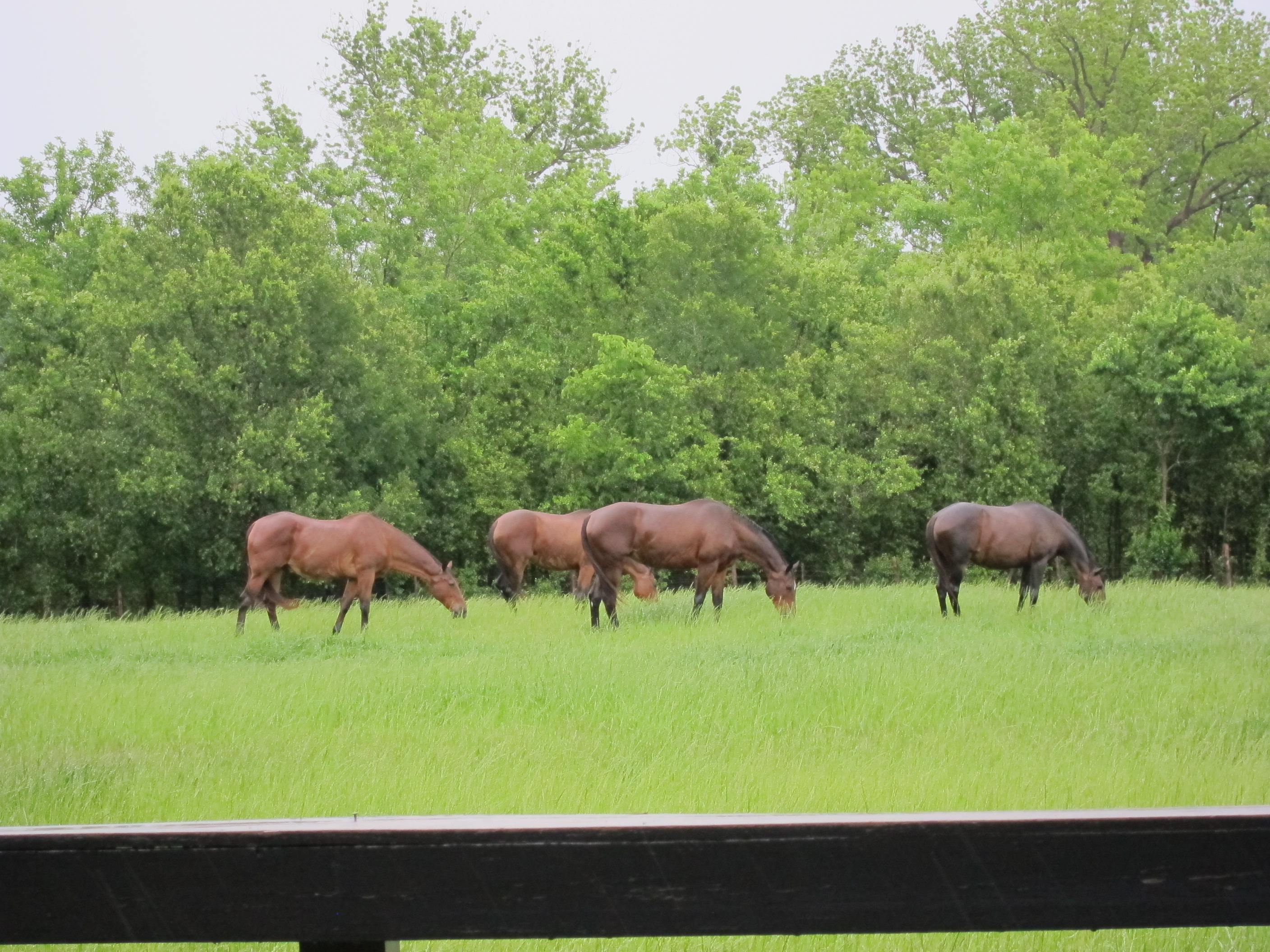
HorsesI absolutely love the what’s-around-the-next-bend-in-the-road feeling that I get when the road ahead turns one way or the other. My rainy day drive did not disappoint. Every little road had its own share of surprises for me. The rain did make it a little hard to take pictures but I managed to snap a few shots along the way.
Sunnyside Texas
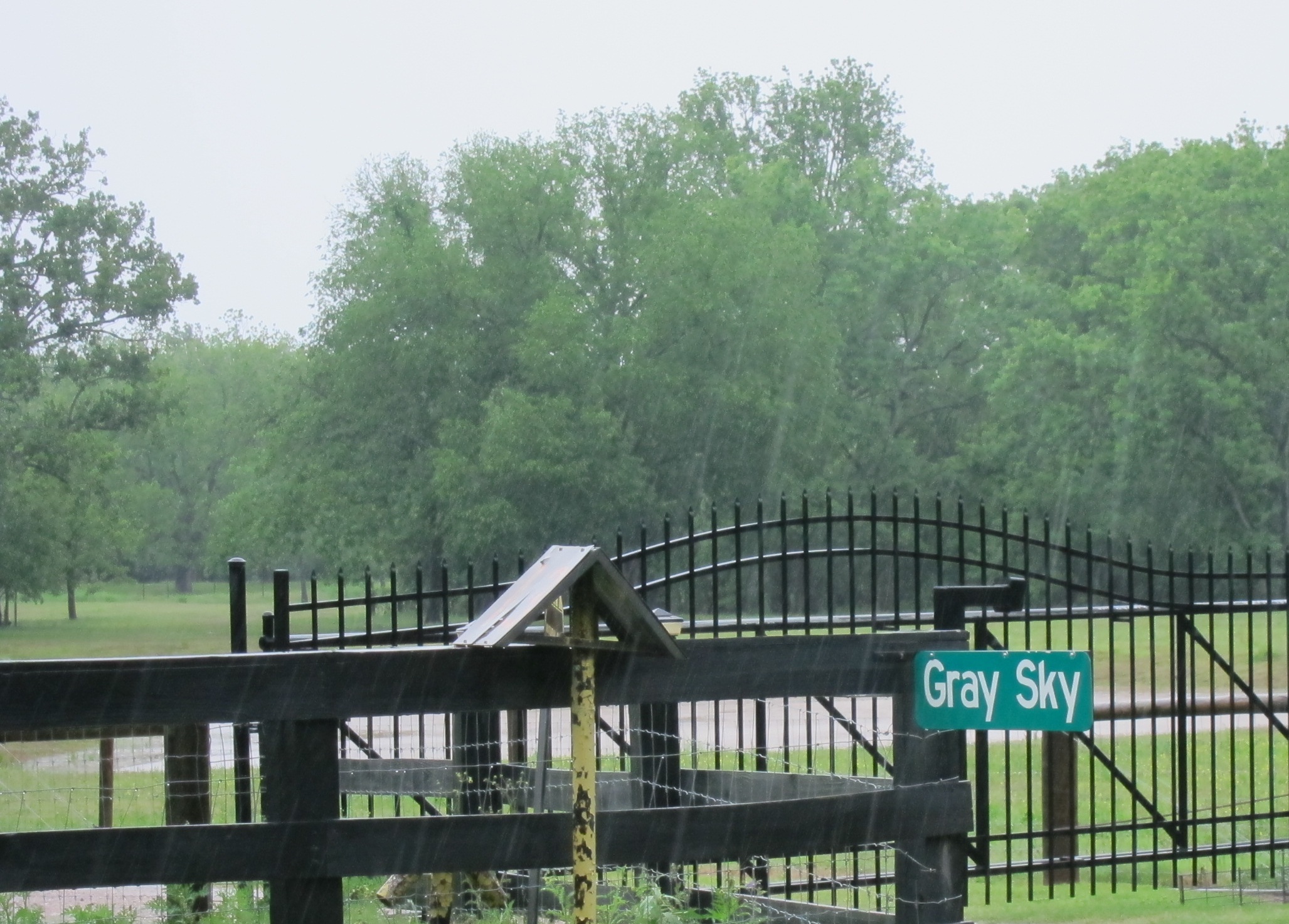
Gray Sky
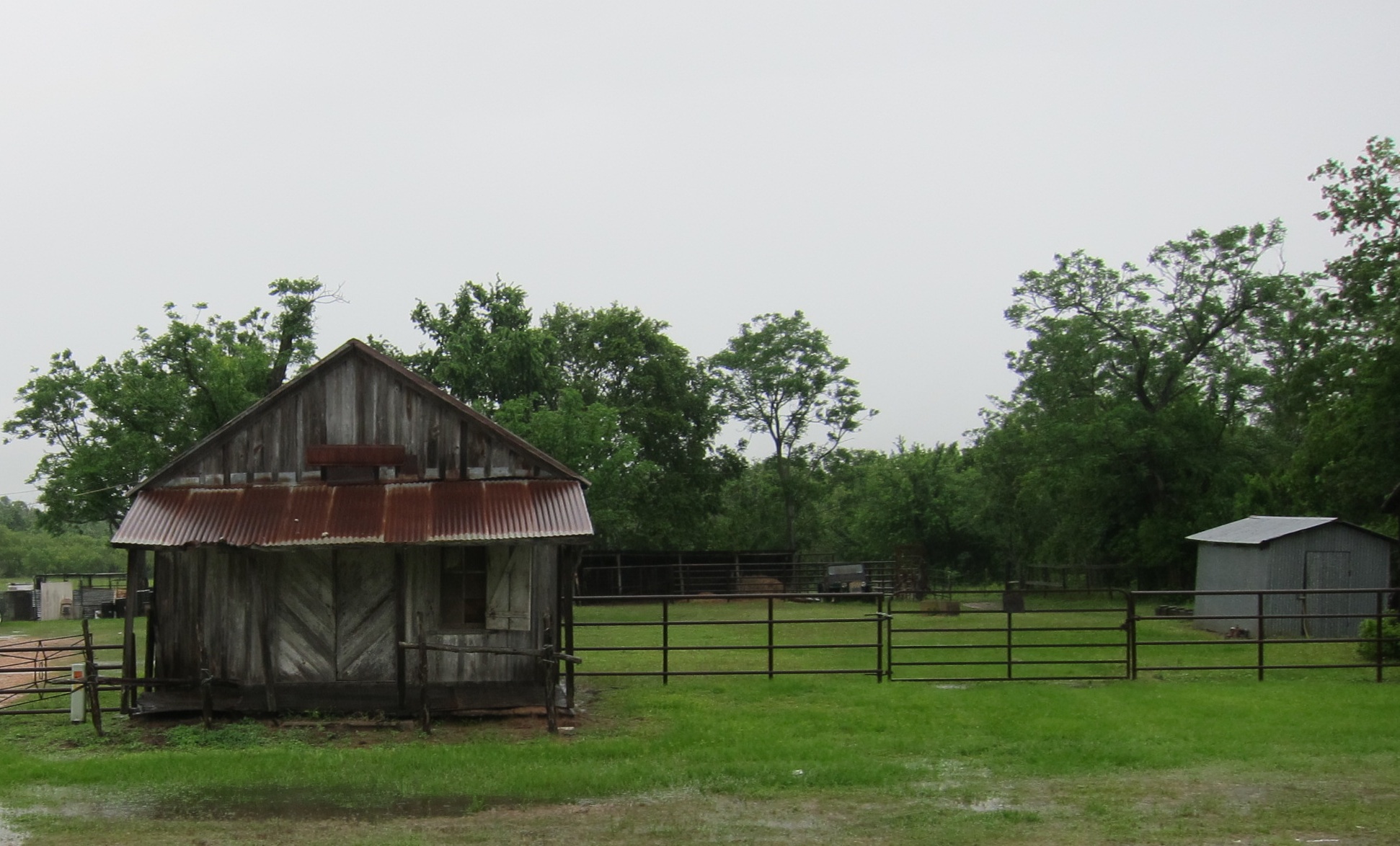
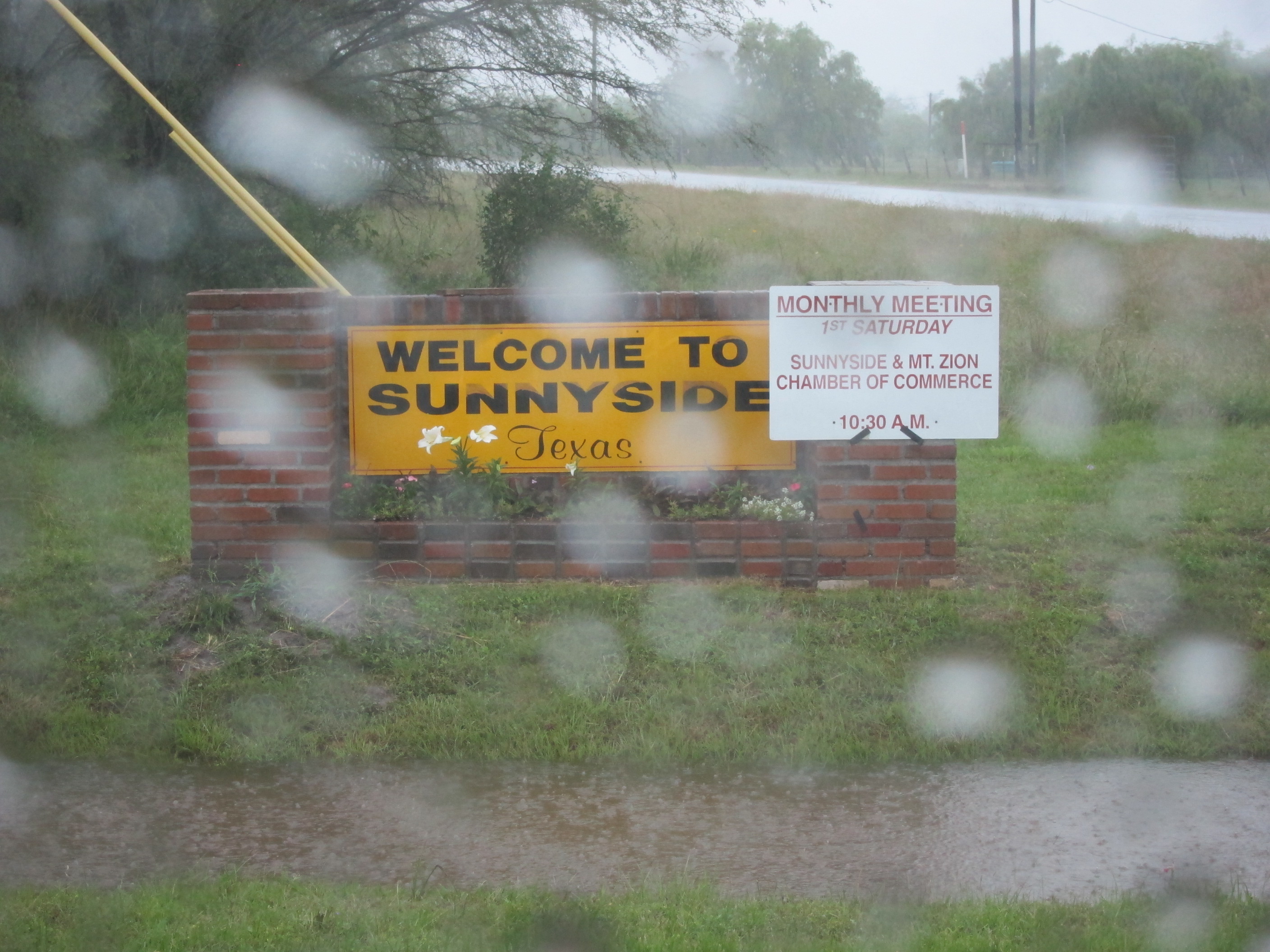
Rusty Roof HouseI especially enjoyed driving through Sunnyside, Texas in the pouring rain. A short time later I drove past a little road named Gray Sky — a name more appropriate for the day’s adventure. The old abandoned houses hidden away on these backroads looked even more mysterious in the rain. These old places always stir my imagination. They make me wonder who lived there, where they have gone, and what memories they still carry with them.
Windmill
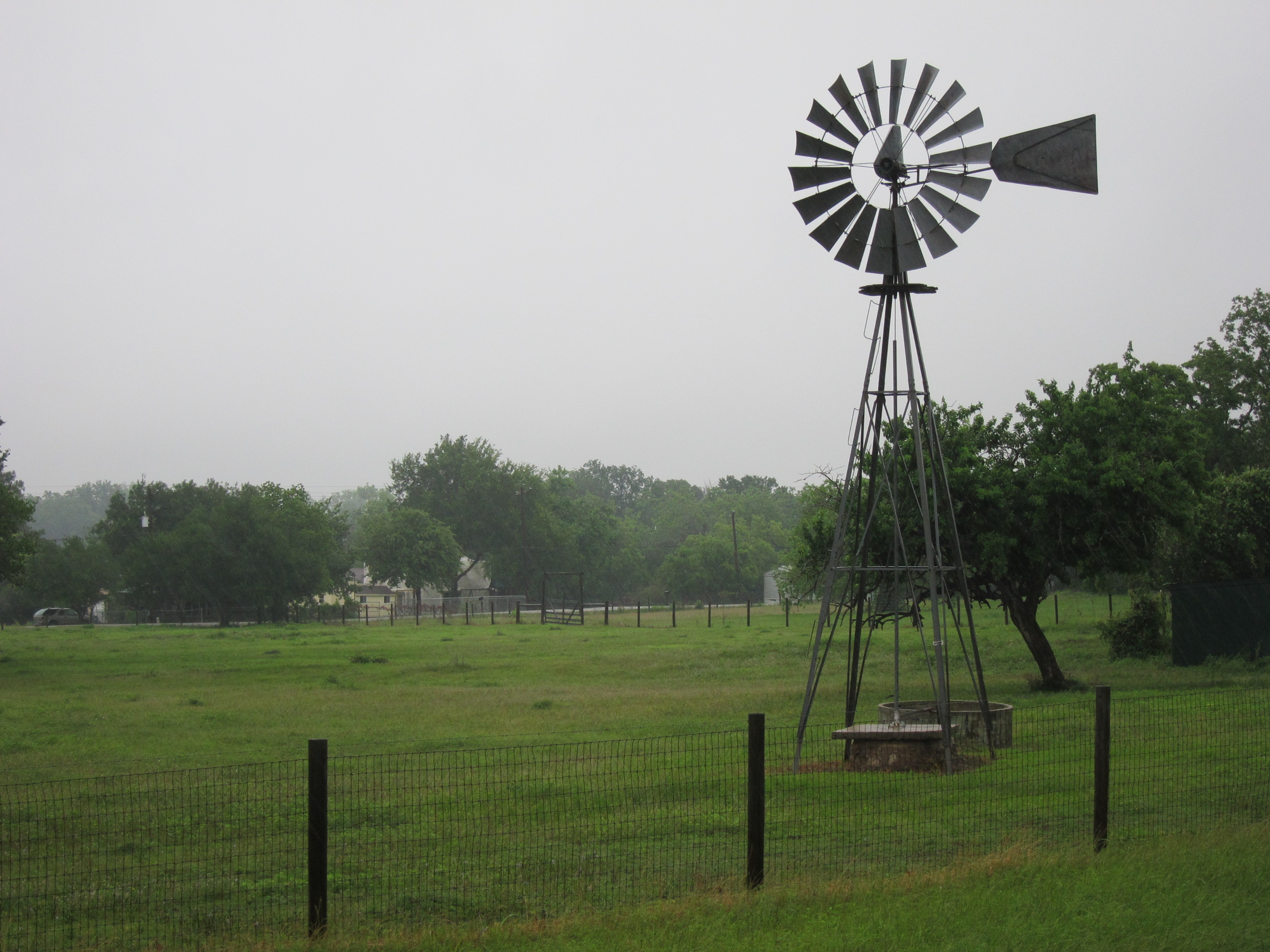
Mixed SignalsOf course, I never tire of seeing windmills and stopping to look down railroad tracks that seem to go on forever. I came across one backroads sign along a bend in the road with two arrows pointing toward each other. Decisions, decisions!
RR TracksThe next time it rains, consider going for a drive down some lonely Texas backroad. The rain will give you a whole new perspective and appreciation for the beauty of the Lone Star State. The older I get the more I love Texas, the place I call home. And, as much as I enjoy traveling the world and seeing amazing and interesting places, there really is no place like home. Texas is indeed a beautiful place both in the sunshine and in the rain. Make it a point to discover the beauty of Texas under rainy skies.

The Church Near Muldoon

There is something about old and abandoned buildings that stirs my imagination and ignites my curiosity. Whenever I venture down Texas backroads, I always look for old houses and buildings — the ones that have been long abandoned and are slowly being reclaimed by the elements. One structure in particular beckoned me to pull off the road just outside of Muldoon, a tiny community with a population of a little more than a hundred residents. It was an old church building with only the vertical section of a cross remaining on the steeple.
Old Church Building - Muldoon Tx
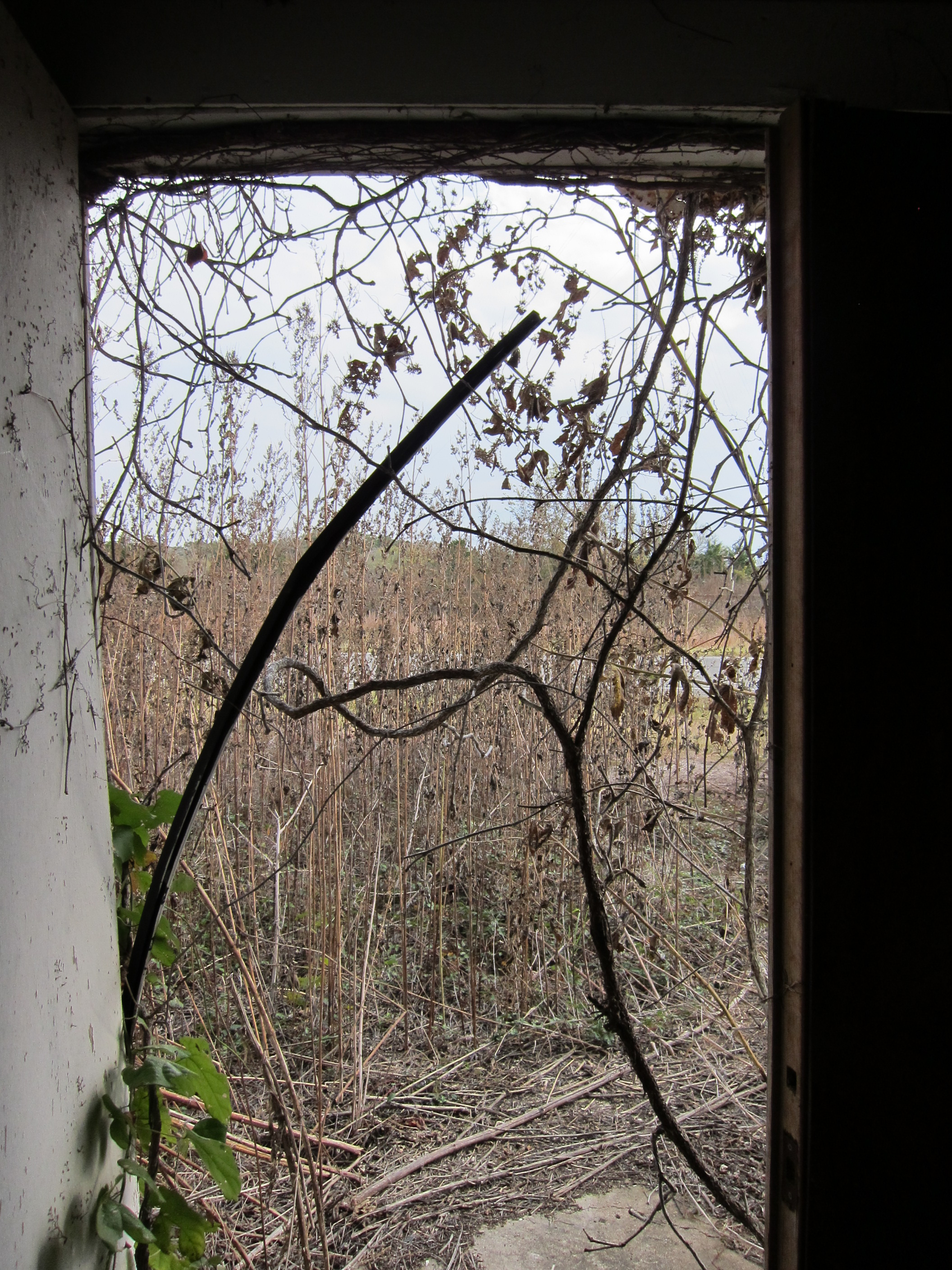
IMG_1907As I made my way through the dry overgrowth, I noticed that the front door of the building was open. I grew up in a small town in the days when church buildings remained open all day and, in some cases, all night. In fact, I never recall the door to my childhood home ever being locked when I was growing up. In all of the years I lived at home I never had a house key. At any rate, I was glad to find an open door when I approached the old church building.
Muldoon Church InteriorOnce inside the building, I noticed the few remaining pews on either side of the red-carpeted aisle. Everything in the building was covered with the dandruff of decay. I paused for a moment and tried to imagine what things must have looked like when the building was new and wondered how many brides had walked down the short distance to the altar. I had to remind myself that this old building was not the church, only the building where the church had once met for a season.
Muldoon Church QuarterliesThe signs that this had once been a place where people studied the Scriptures were evident. Old Sunday School quarterlies littered the floor, some with the fading names of the members written on the covers. Once again, I could not help but wonder about those who had studied those lessons and perhaps made some life-changing decisions in this old country church building. In a way it did not matter so much that these old lesson books were strewn on the floor because what really matters is what the folks who studied here carried away in their hearts.
Muldoon Church Pulpit ViewStanding in the pulpit and looking toward the pews, I wondered about those who had stood in that same spot over the years. How many sermons and weddings and funerals had taken place there? What about special seasonal observances or musical presentations? The history of what happened in that building is lost to all but those who worshiped there. But, without question, so much must have happened in this humble little building throughout the years.
Muldoon Church ExitAfter lingering for a while I made my way slowly down the aisle toward the exit. Once again the open door beckoned me out toward the world at large, the place where we are to live out our faith. And again I wondered about how many people might have left this place a little different than when they walked in, perhaps more determined to love God and love people. That’s really the way we should always leave our places of worship — changed for the better, a little more in love with God, and ready and willing to serve others.

A Texas History Road Trip

Something good happens when you combine book learning with field trips — somehow the things and events that happened in a particular place seem to make more sense. I am a firm believer that being onsite can help folks to gain greater insight. Being in the geographical context of history’s happenings stirs the imagination, stimulates brain activity, promotes conversation, and inspires wonder.

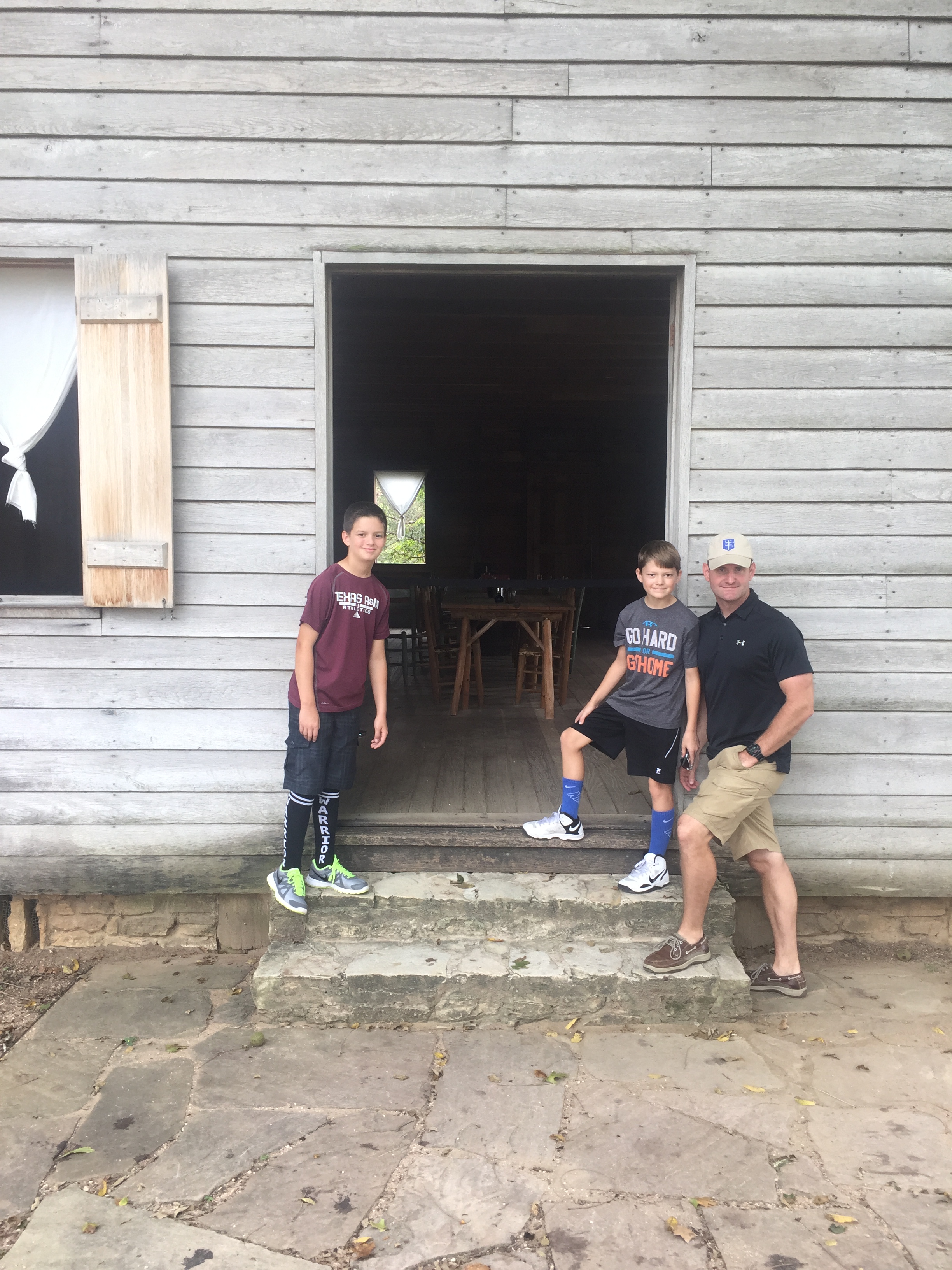
Last week, my friend Brad Flurry and his sons Hunter and Drew joined me for a Texas History road trip. Since we only had a few hours before the boys had to be at football practice, I planned a route to two locations along the Brazos River — San Felipe de Austin and Washington-on-the-Brazos. San Felipe is regarded as the “Cradle of Texas Liberty” and Washington-on-the-Brazos is the place where Texas became Texas.
IMG_5999Before visiting San Felipe, we drove to a spot where the boys could walk down to the Brazos River. This was the perfect setting for talking about the Lone Star State’s longest river, including how it got its name and the role it played in promoting commerce in the early days of Texas. And, of course, it was also a good spot for chucking a few rocks into the river.

San Felipe was the unofficial capital of the colony that Stephen F. Austin founded at this site in 1823. Today, the folks at the San Felipe State Historic Site, a Texas Historical Commission property, guide visitors in understanding the significance of the many historical events that occurred in this community. The site features a hand-dug water well from the period, a museum, and a replica of an old cabin with toys and games from the period.
Flurry Boys at Independence HallFrom San Felipe we drove an hour north to Washington-on-the-Brazos State Historic Site. This is the place where Texas became Texas. In March of 1836, while the Alamo was under siege by Santa Anna’s army, 59 representatives of the Texas settlements met in an unfinished frame building at Washington to make a formal declaration of independence from Mexico. A replica of this building, known as Independence Hall, marks the place where the Texas Declaration of Independence was signed.
Flurry and SonsFrom Independence Hall we hiked to a scenic overlook of the Brazos River and talked about the Runaway Scrape of 1836. As Santa Anna’s armies swept eastward from San Antonio, panic set in among the settlements of Texas. Colonists gathered personal possessions, abandoned their properties and headed eastward under difficult conditions. Settlers often waited days to cross the Brazos at Washington. After the Texas victory at the Battle of San Jacinto, settlers slowly returned to their homes.

To stand at the very spot where the Texas Declaration of Independence was signed or where something like the Runaway Scrape occurred does indeed stir the imagination. And, that’s a good thing! It’s far to easy for us to live disconnected from the past, unaware of how and why we are the beneficiaries of the courage and the sacrifices of those who came before us. The best antidote to that is to personally visit the places that shaped our history.

There are no shortages of affordable day trips from wherever you live in Texas that can help you and your kids gain a greater appreciation for the history of the Lone Star State. I hope you’ll hit the road soon and embark on a Texas history road trip.

A Stroll Along Shoreline Drive

Shoreline Drive in Corpus Christi is one of my favorite drives in the Lone Star State. There is just something about looking out at the vast expanse of Corpus Christi Bay that I find soothing. During the years I lived in the Sparkling City by the Sea, I often ventured to Shoreline Drive to eat my lunch. I always enjoyed watching ships come into the port, recreational boats skipping across the waves, and birds dancing on the warm breezes.

CC Bay BoatsWhenever I visit Corpus Christi, I especially like driving over the Harbor Bridge at night because it affords a cool view of the lights reflecting off the water. At Christmas, this entry point is especially beautiful because of the colored lights on the bridge and the buildings. Definitely worth seeing this iconic bridge at night.

On a recent visit, I took a stroll along the waterfront. My earliest memories of Shoreline Drive are of coming here on vacation with my family when I was just a few years old. My Mom and Dad took my sister and me to the t-heads where we met and talked with shrimpers. And then they took us out on a boat excursion where we held up crackers for the seagulls to eat. Dad captured these special moments on his 8mm camera.

CC ShrimperI thought a lot about those happy days as I walked slowly beside the shrimp boats. I stopped and had a nice chat with one shrimper — a colorful character with a weathered face, bushy mustache, raspy voice, and one arm. Shrimping is hard work and I wondered how the one-armed man was able to manage the equipment on his boat. Somehow he did.

CC Shrimper 2While chatting with the shrimper, a couple visiting from China stopped to buy some shrimp from him and joined in the conversation. We all had an enjoyable visit. I believe that it’s definitely worth slowing down and taking the initiative to meet people, even if we only have a few minutes to spend with them. You never know how investing a few minutes in someone else might be just the thing they needed or you needed to brighten your day.

Shrimp BoatsI enjoyed my nostalgic stroll down Shoreline Drive. And I’m grateful that my Mom and Dad modeled for me the importance of slowing down and meeting others in those early years when we stopped to meet and talk with shrimpers on our visit to Corpus Christi. People, after all, are what make the places we visit interesting and meaningful.

If you have not yet visited Corpus Christi, I encourage you to plan a visit. Shoreline Drive is very visitor friendly. There are safe places to park your car and to take a stroll along the bayfront. And, of course, there are some really good places to eat along Shoreline Drive. I’ll post soon about biking along the bayfront.

The Backroads Adventurer

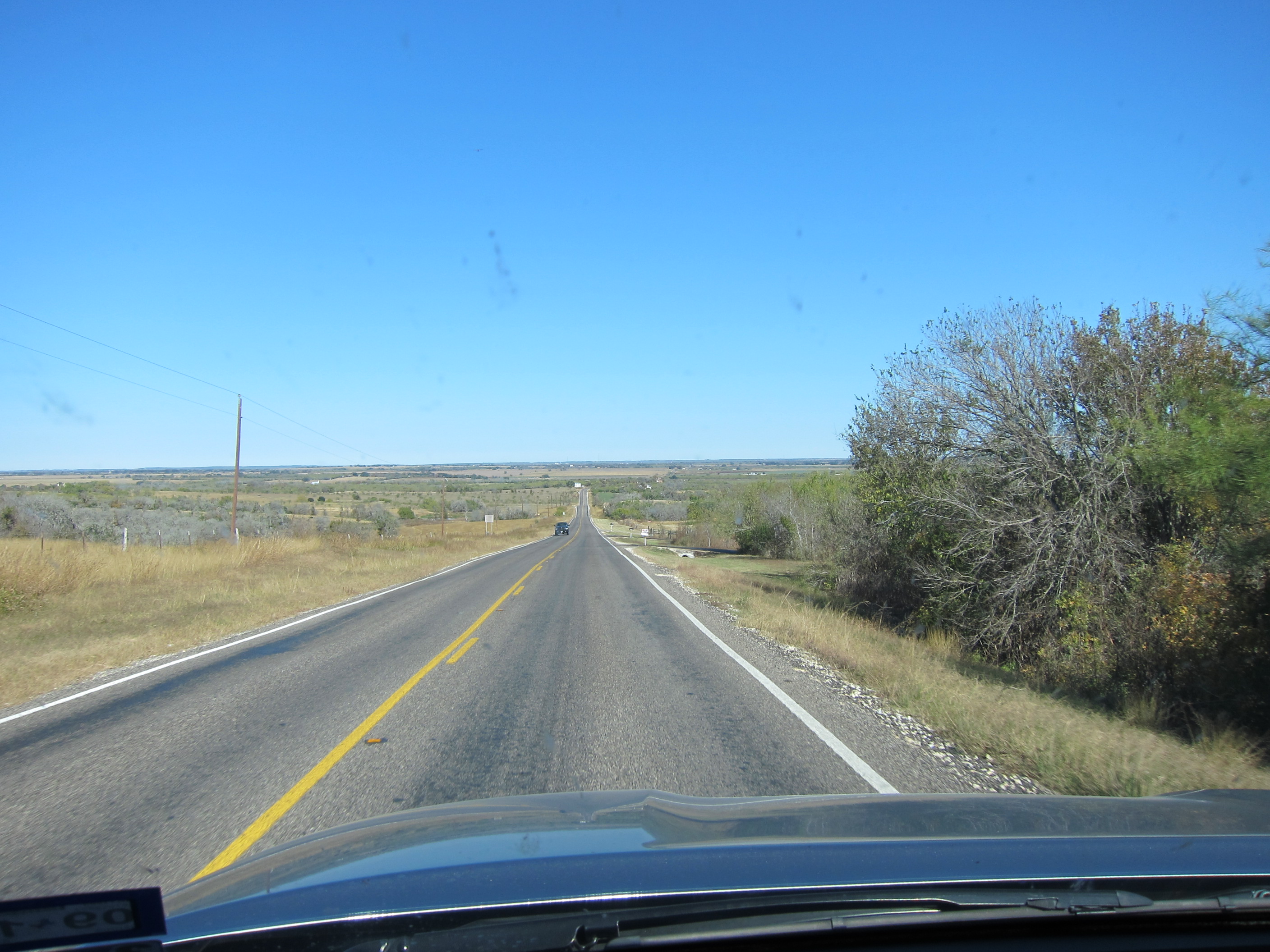
Texas leads the nation with 675,580 miles of highways and byways, enabling you to get to anyplace you want to visit at whatever pace you want to travel. While I enjoy the 85-mile per hour speed limit on Interstate-10 once you head west of San Antonio, I still prefer to travel the Lone Star State at a much slower pace.

Traveling Texas backroads yields treasures that are easily missed when you travel by faster routes. Not the least of these treasures are the many small towns, farms, and ranches along two-lane arteries off the beaten paths. I have made a list of some of my favorite things about traveling at a slower pace along Texas backroads.
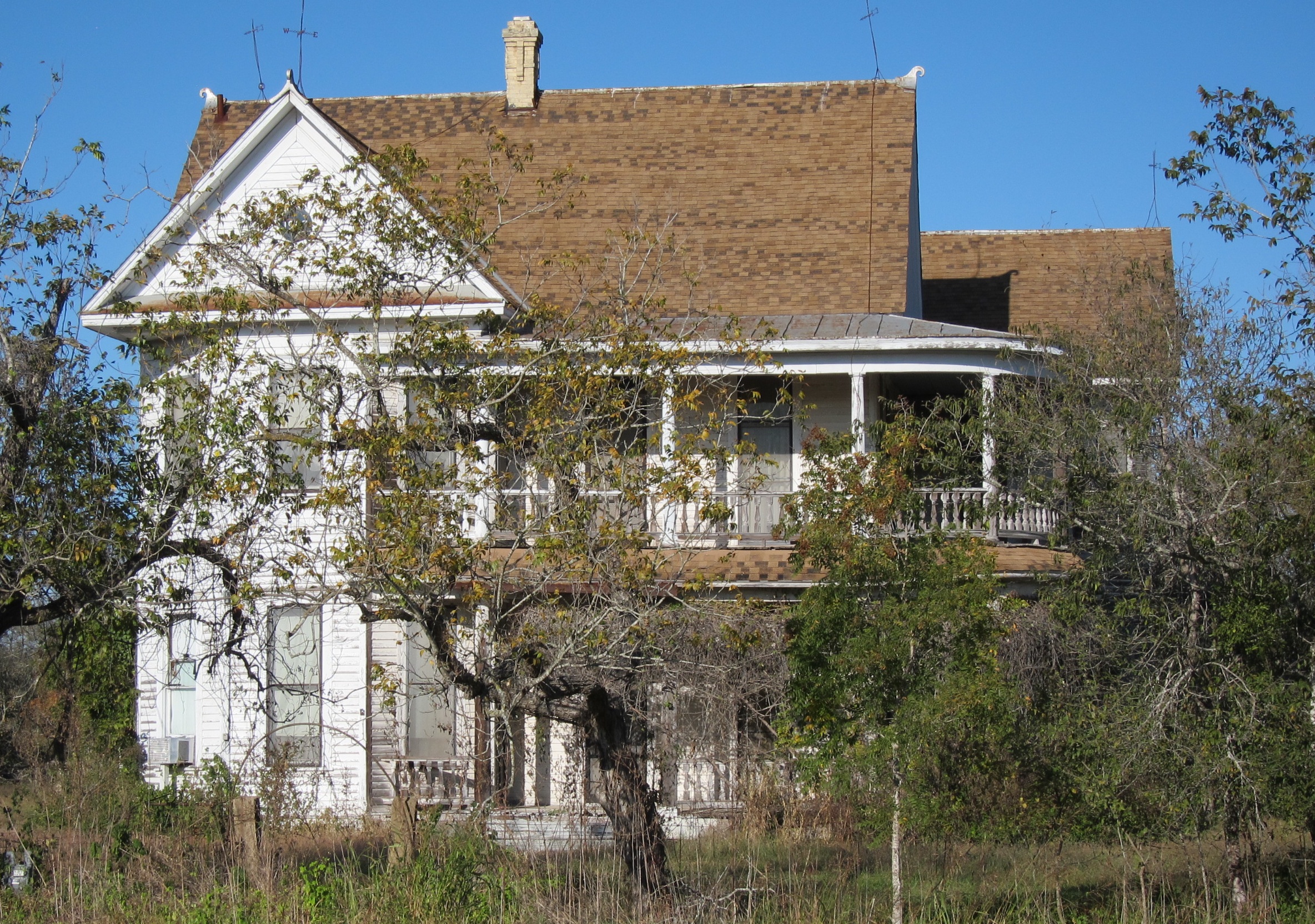
Texas 1907 House10. Interesting old houses and buildings. | Every small town has interesting old houses and buildings, some in a permanent state of disrepair, melting away in the heat of the passing years. These places stir my imagination. I also enjoy seeing how entrepreneurs have restored or repurposed old houses and buildings and turned them into craft shops, specialty boutiques, restaurants, and more. It’s nice to see new life breathed into old buildings.

9. Historic hotels. | Many of the smaller destinations in Texas have some of bigger and better historic hotels. I especially like the old Gage Hotel in Marathon and Hotel Limpia in Ft. Davis. These old hotels are beautifully appointed with antiques and offer comfortable common areas where you can actually enjoy relaxed conversations around the hearth with other guests.
Two Trucks8. Steering wheel salutes. | When driving Texas backroads, especially in a pick-up truck, you can expect the person in the approaching vehicle to give you a quick salute with the hand on top of his steering wheel. Or, if you make way for the guy behind you to pass you on some two-lane backroad, he will generally give you a courtesy thank-you wave. The good thing about all this is that folks in Texas wave at you with all of their fingers!

7. Incredible hospitality. | You can expect to meet some really friendly folks when you travel Texas backroads. Once, when my wife and I were running late, we phoned ahead to tell the small town hotel of our late arrival. The lady told us not to worry. “If you get here late,” she said, “we’ll leave the key in an envelope with your name on it on the front porch. It will unlock the front door to the hotel and also the door to your room.”
Dairy Queen Burnet Tx6. The Texas Stop Sign. | You will not see many Golden Arches when traveling Texas backroads, but you will see the Texas Stop Sign in almost every small town you come to — Dairy Queen. Enjoying a cone dipped in chocolate at a Dairy Queen in a small town is the equivalent of ordering one of those fancy coffee drinks at a big city Starbucks.

5. Home-style cooking and generous portions. | When traveling the backroads, you should always take time to ask the locals about the best places to eat. Or, just pick a place that looks interesting and stop in for a meal. That’s how I have discovered some really good places to eat that offer home-style-made-from-scratch cooking offered in generous portions complete with a tall glass of sweet tea. Oh my!
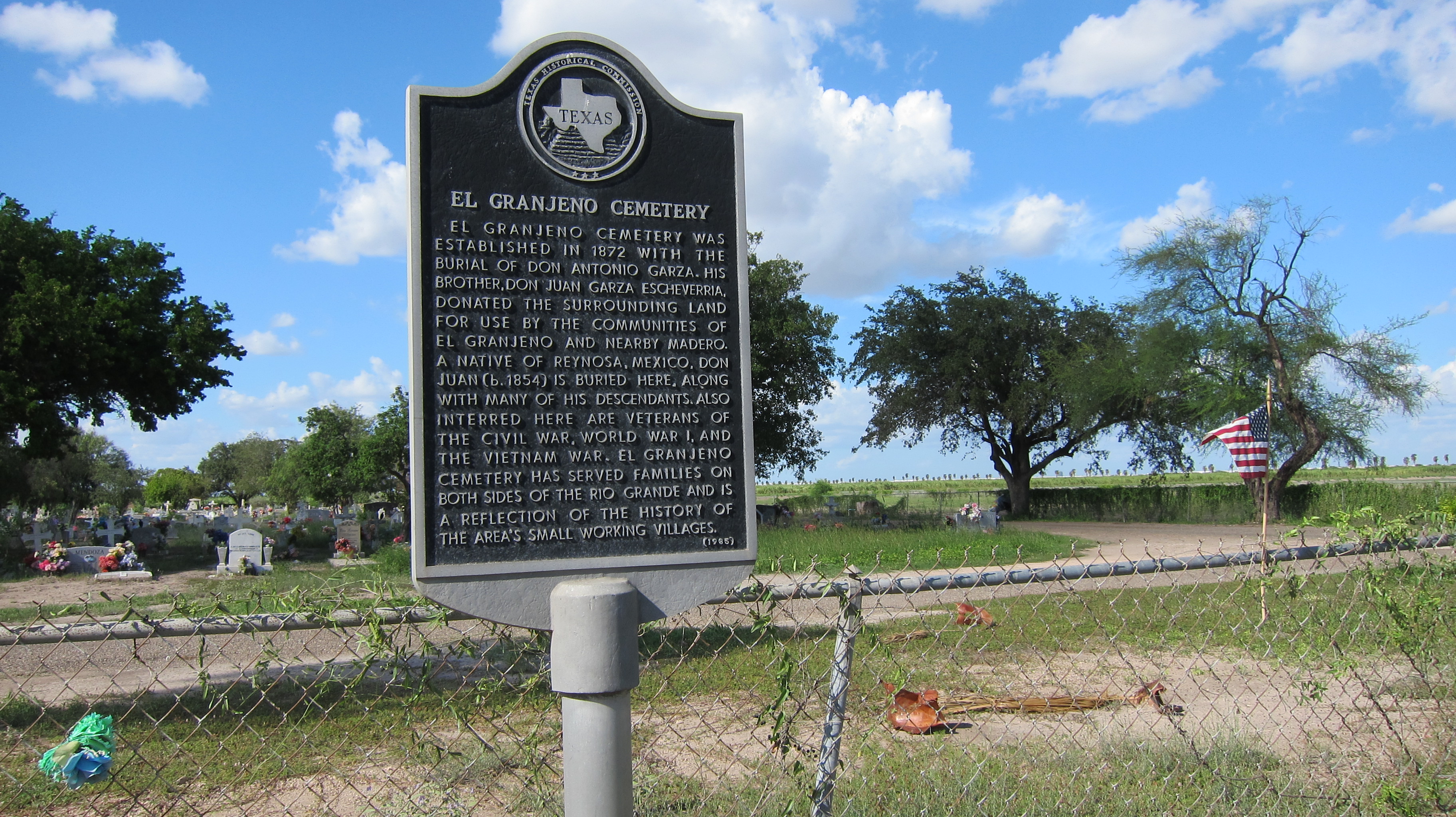
El Granejo Marker4. Historical markers. | Texas has a great Historical Marker system in place throughout the State. One advantage to not being in a hurry is that you can take the time to stop and read some really interesting things about what happened at or near wherever you happen to be.

3. County courthouses and town squares. | County seats in Texas boast some of the best-looking courthouses in the nation. These prominent courthouses are generally centrally located and adjacent to inviting town squares where people actually sit on park benches and have conversations.
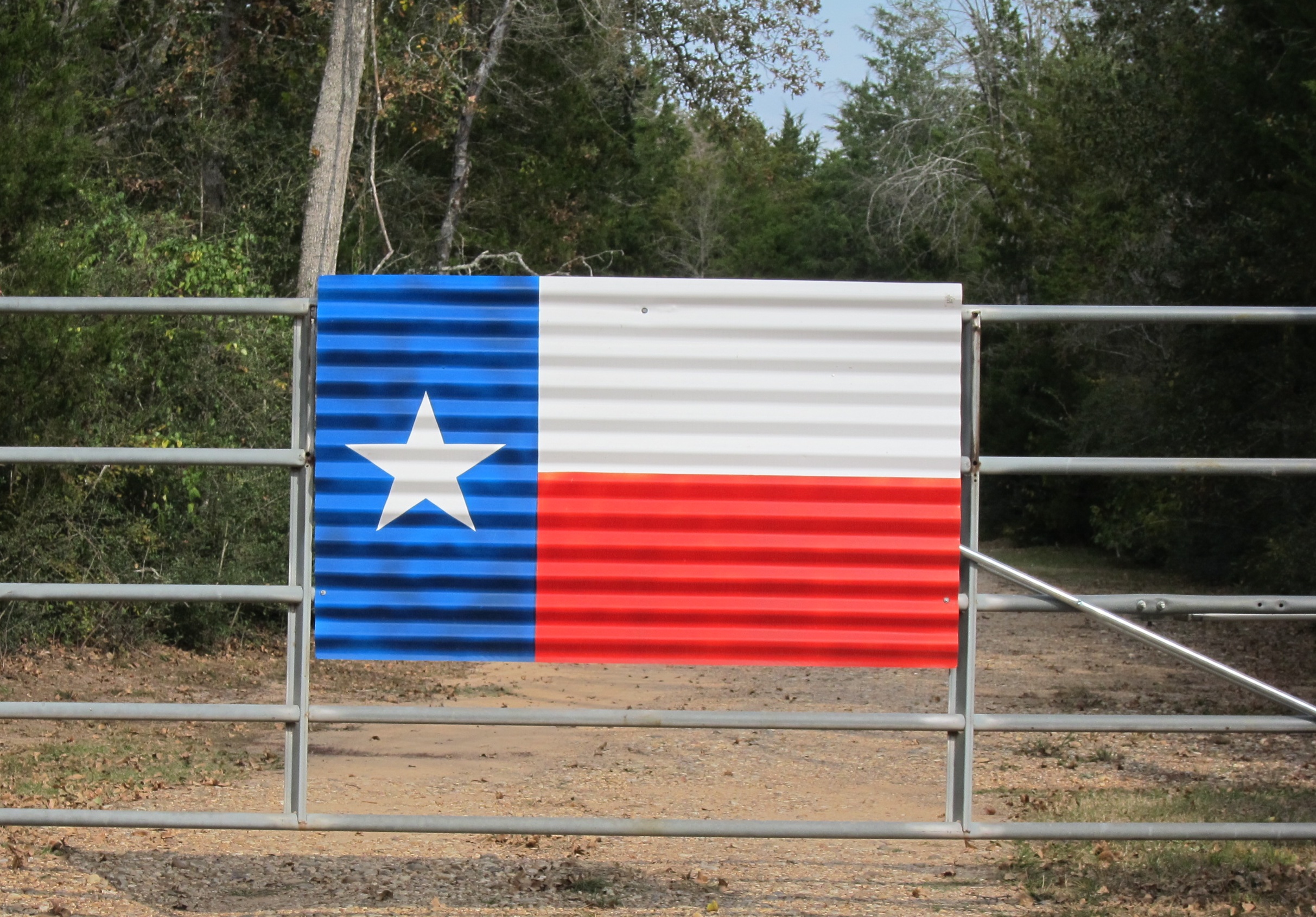
Texas Gate2. New friends. | One thing I enjoy most about slower travel along Texas backroads is meeting interesting people along the way. On one road trip, my wife Cheryl and I met a young lady from New York who had left the corporate world to seek new employment and adventure in small town Texas. She was excited about making a new start in really small town. This New Yorker turned Texan is one of many interesting people we have met over the years because we travel at a slower pace.

1. Sharing the adventure. | I have traveled many backroad miles all by myself in my pick-up truck. But, I prefer to travel with my wife or a friend in the passenger seat. I believe that the beauty of the Lone Star State is made even more enjoyable when you share the experience with a loved one or a friend. So, the next time you venture out, take someone along and enjoy Texas.

Dime Box, Texas

One of the best resources for planning a Texas road trip is a map with lots of detail. That’s how I discovered Dime Box, Texas — a small town located 12-miles northeast of Giddings. When I saw the name of this little town on my map, I knew that I had to go there by way of the most meandering route available.
Gravel RoadDime Box was founded sometime between 1869 and 1877 by a man named Joseph S. Brown who built a sawmill about three miles northwest of the present community. Within a short period, other settlers came to the area and the community became known as Brown’s Mill.
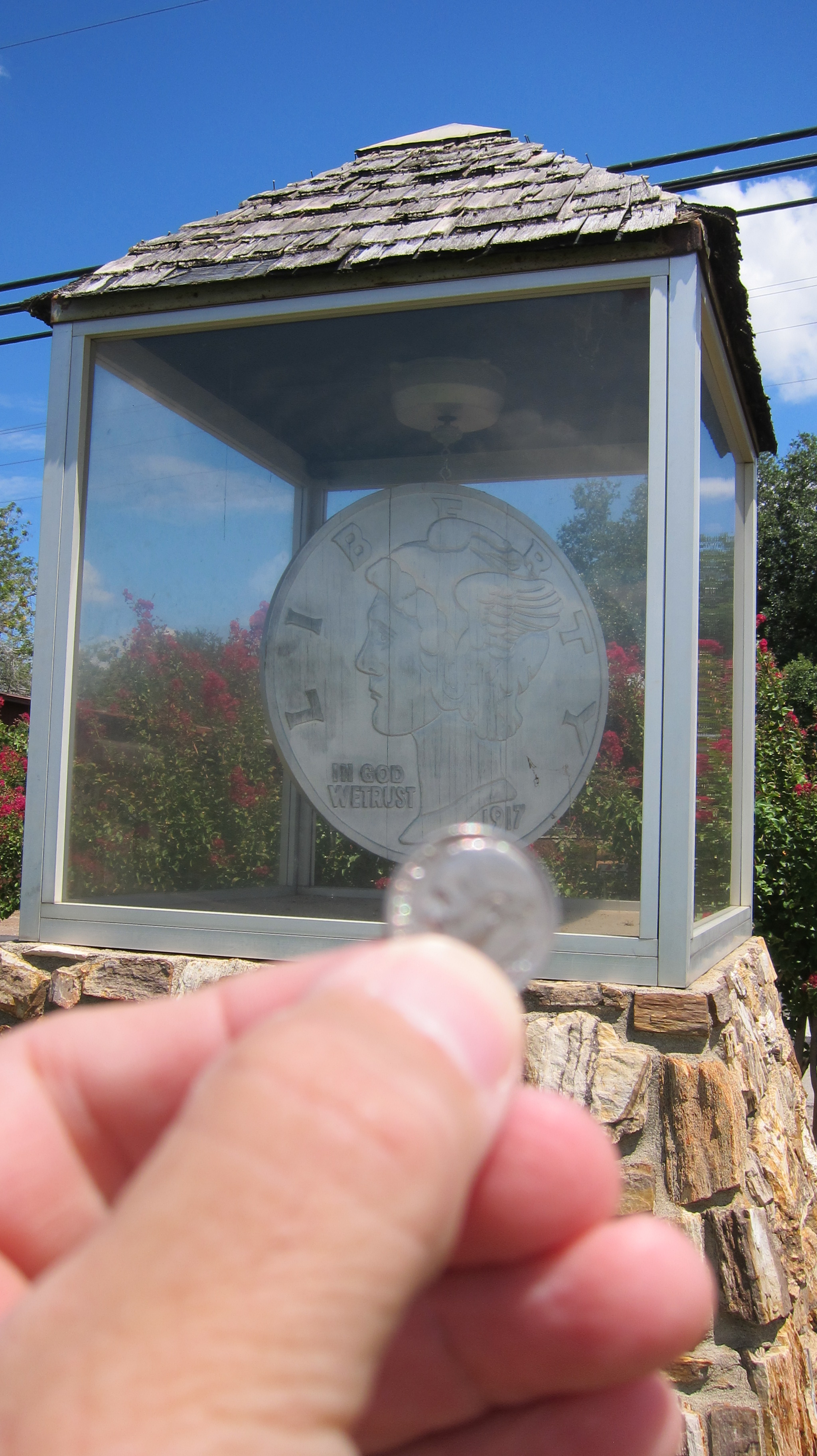
Dime Box DimeBrown’s Mill had no post office in its early days, so settlers placed their outgoing mail and a dime in a box in Brown’s office for weekly delivery to Giddings. However, when the postal service officially opened a post office in Brown’s Mill in 1884, they asked that the community be renamed to avoid confusion between Brown’s Mill and Brownsville. So, the community was renamed Dime Box.
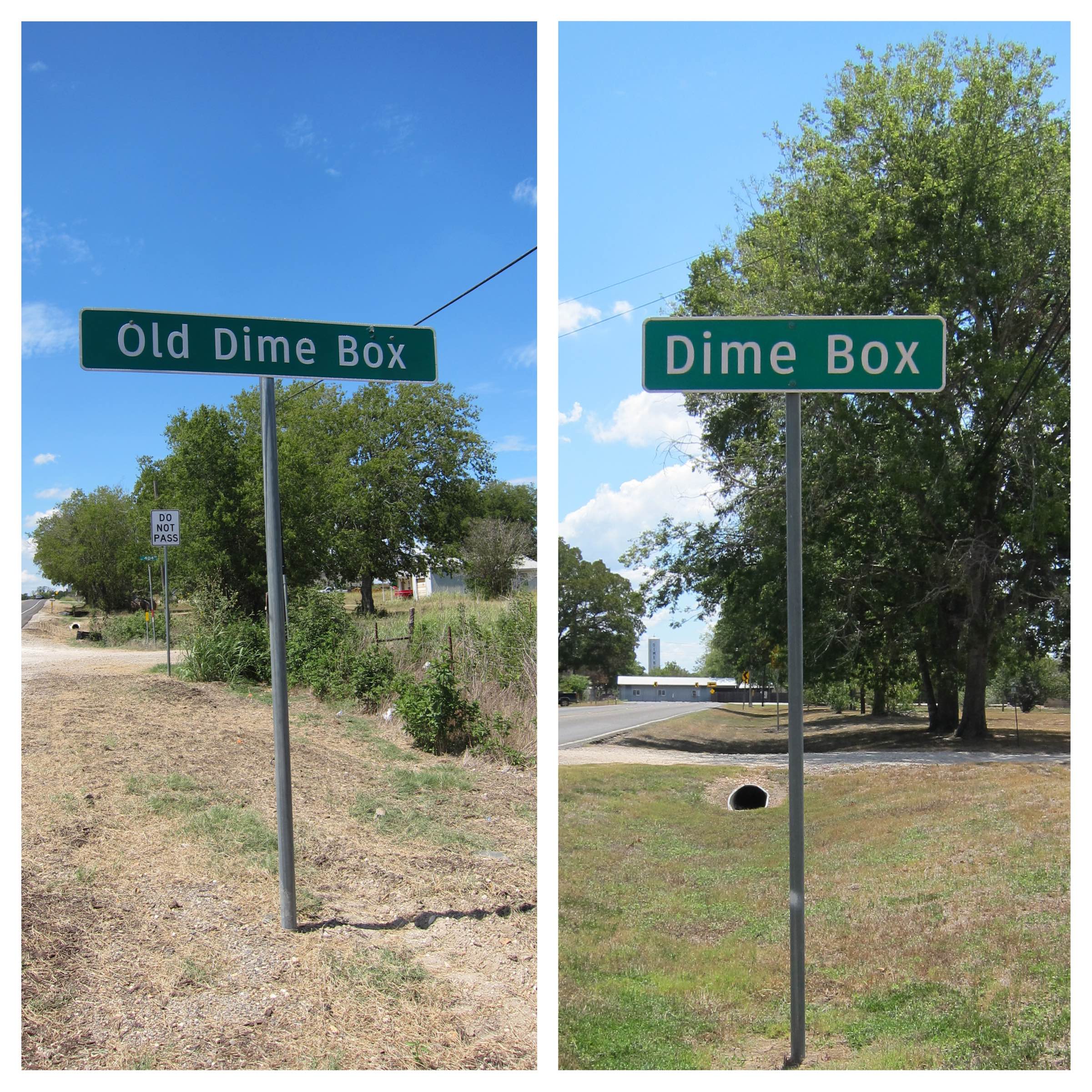
Dime Box Road SignsIn 1913, when the Southern Pacific Railroad built a line three miles from Dime Box, the folks there moved closer to the railroad. The original settlement became known as Old Dime Box and the new town became known as Dime Box. The railroad brought in new settlers and, at its peak, the population of Dime Box grew to five-hundred. The population has since declined to a little more than three-hundred people.
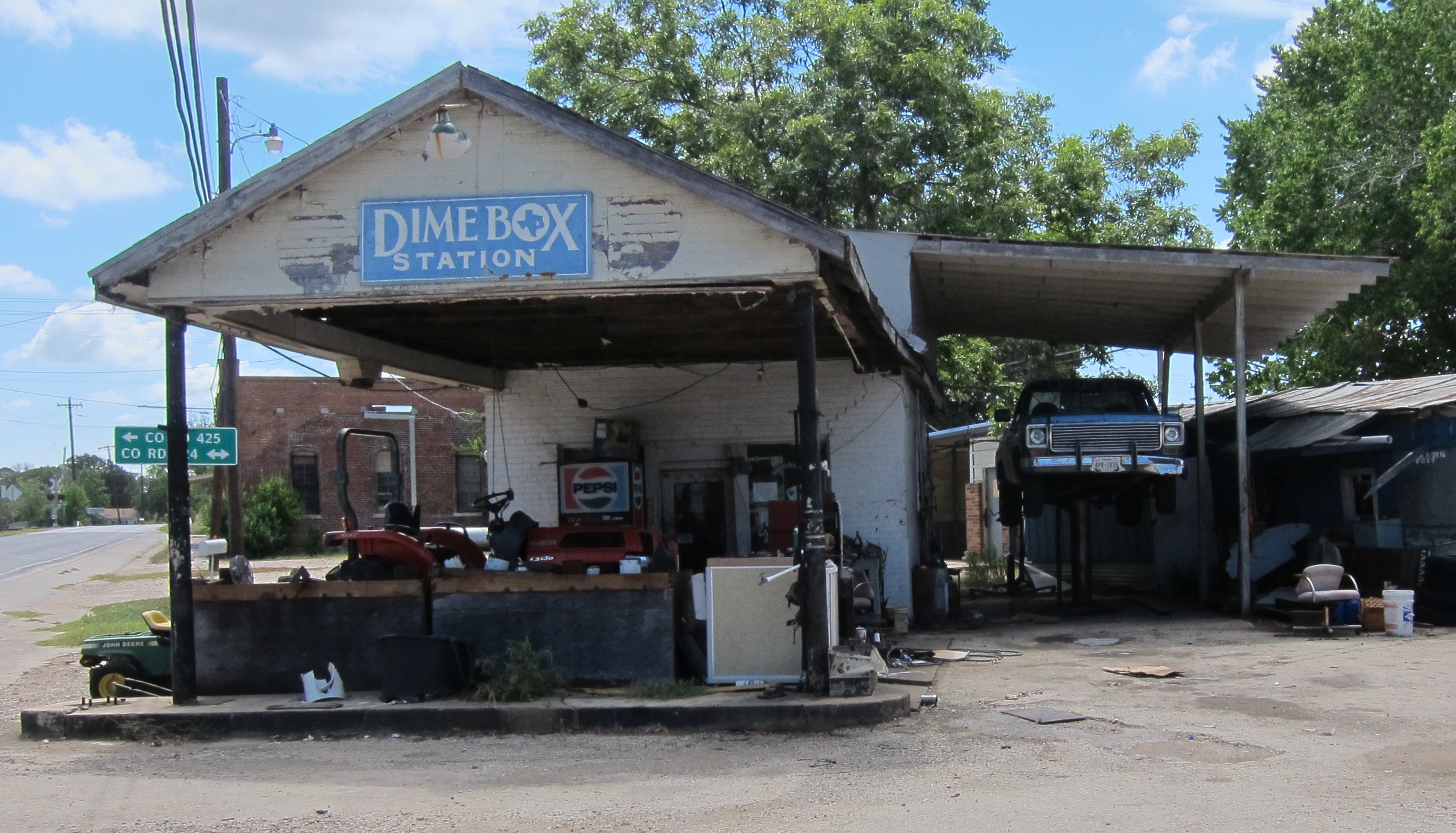
Dime Box StationDime Box had its fifteen-minutes of fame in the 1940’s when a CBS broadcast kicked off the national March of Dimes drive from Dime Box. Today, Dime Box is a quiet little community. I enjoyed driving around the few streets and had a pleasant chat with a local who was out for a walk.
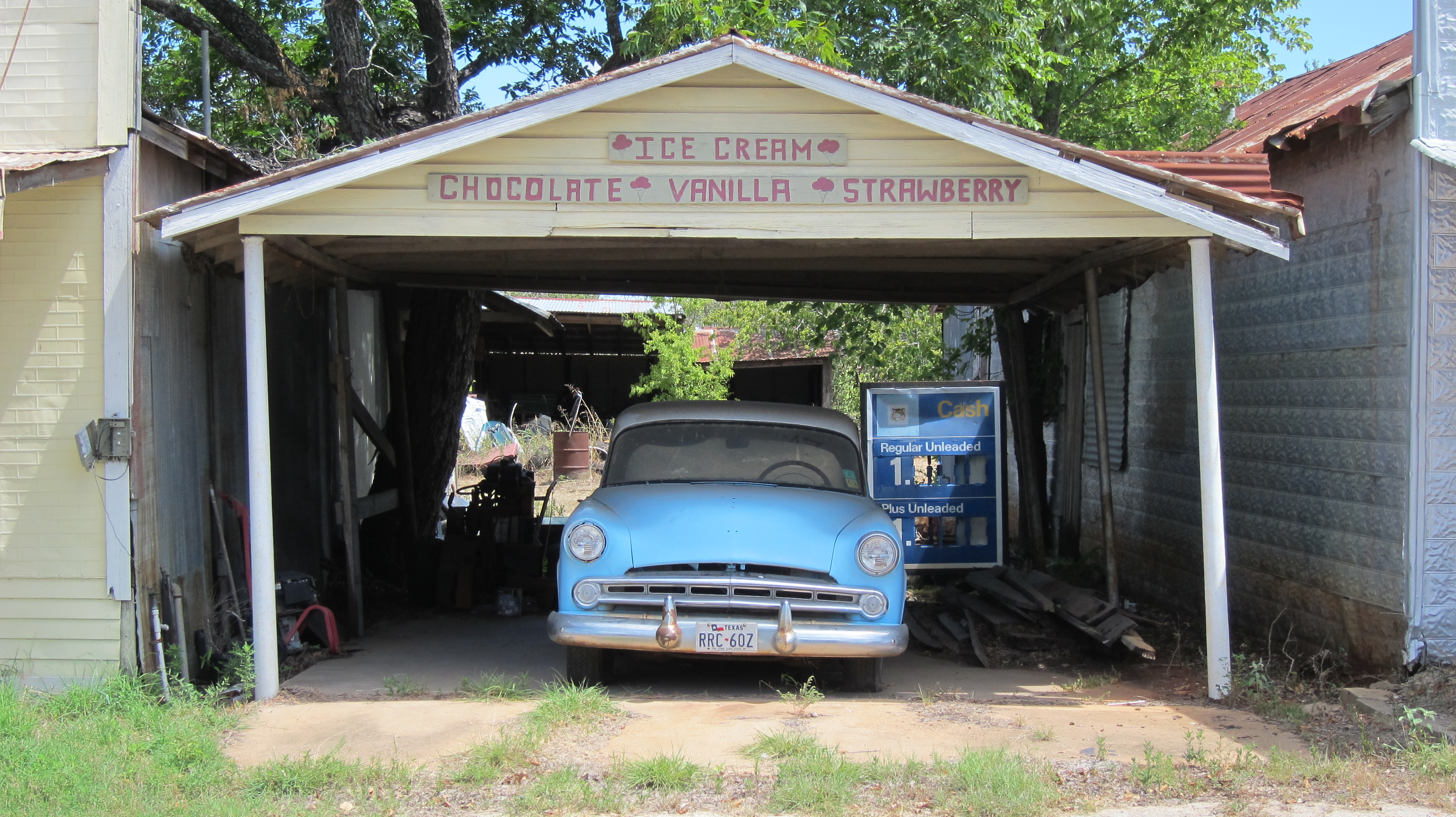
Dime Box ChevyDime Box is certainly not on any destination list you will ever find in the glossy pages of Condé Nast Traveler. But for any backroads adventurer, it is a place worth visiting, if for no other reason than its interesting name and history. The next time you look at a Texas map, pay particular attention to those small out-of-the-way places with interesting names. And the next time you go from here to wherever, take a detour to see those places for yourself.