Biking the Bayous

On occasion, my work and travel schedule keep me from wandering and exploring the Lone Star State. Whenever my adventure time is reduced from days to hours, I still like to look for opportunities to get out and do something fun and adventurous. I have discovered that there are all sorts of adventures close to home that do not require a huge investment of time or money.
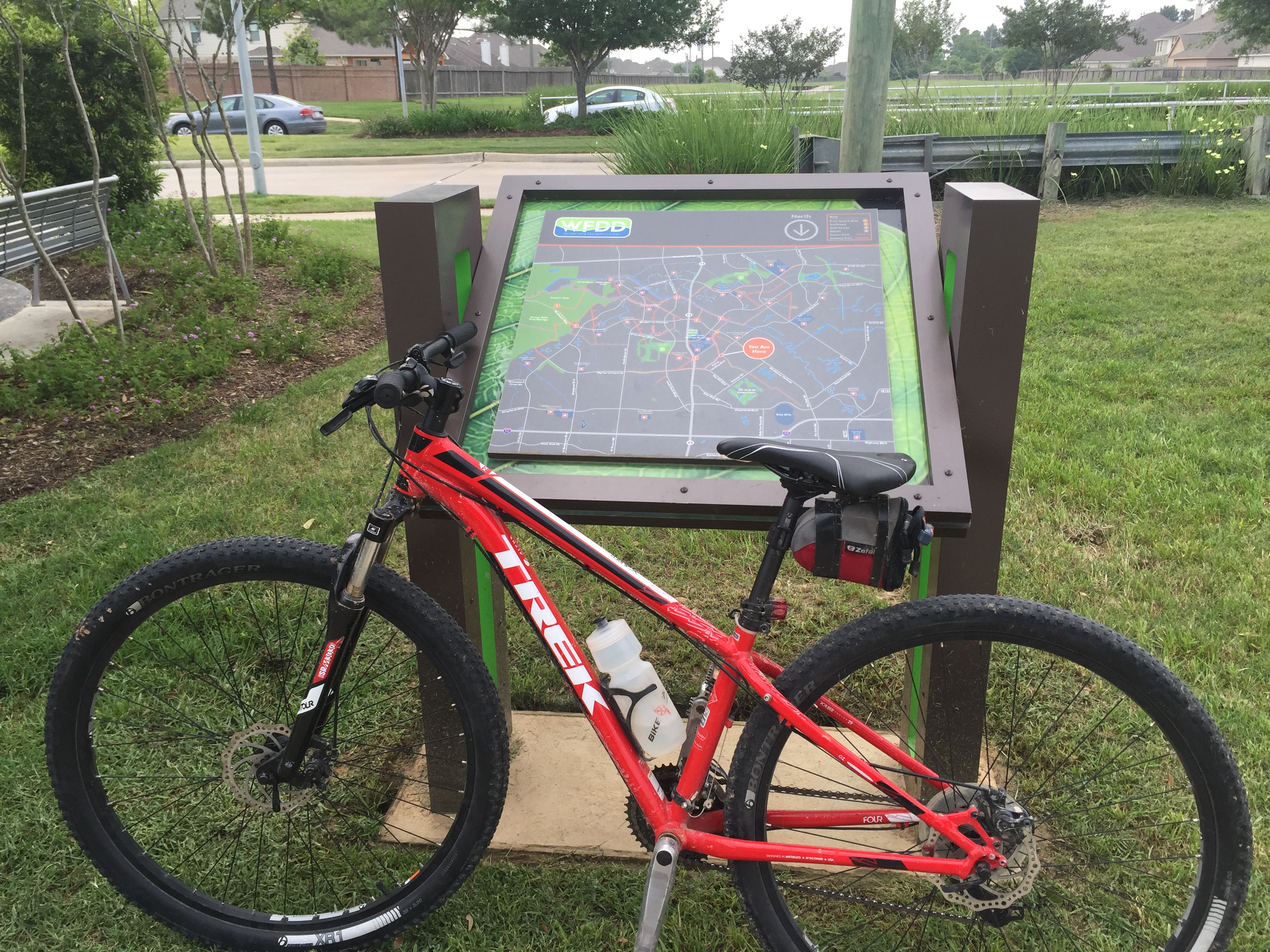
Bike and SignHouston is popularly known as “The Bayou City” because of the ten waterways that meander through the greater metropolitan area. I live in Katy just west of Houston, a beautiful city that has some of the best walking, hiking, and biking trails along the bayous that divert water toward the gulf. Developers in our area have done a really good job of planning and also maintaining these green spaces.
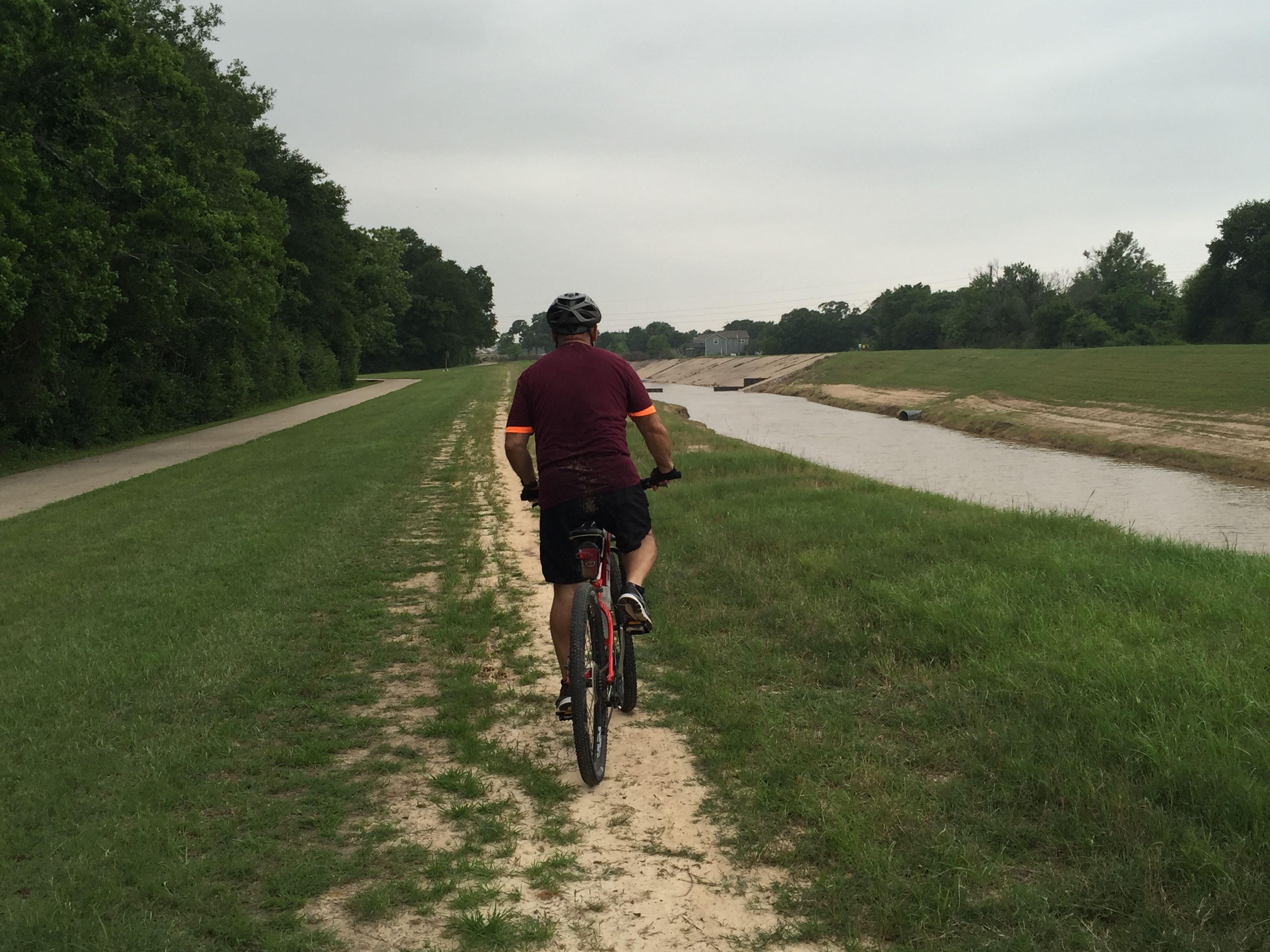
Omar Ride BayouUnless it’s raining, I like to hop on my mountain bike after work and do either a fourteen or twenty-mile ride along the bayous. The trails behind my neighborhood offer paved and unpaved riding options. I prefer, when possible, to stay off the sidewalks to avoid the folks who are out for a leisurely stroll or an afternoon run.
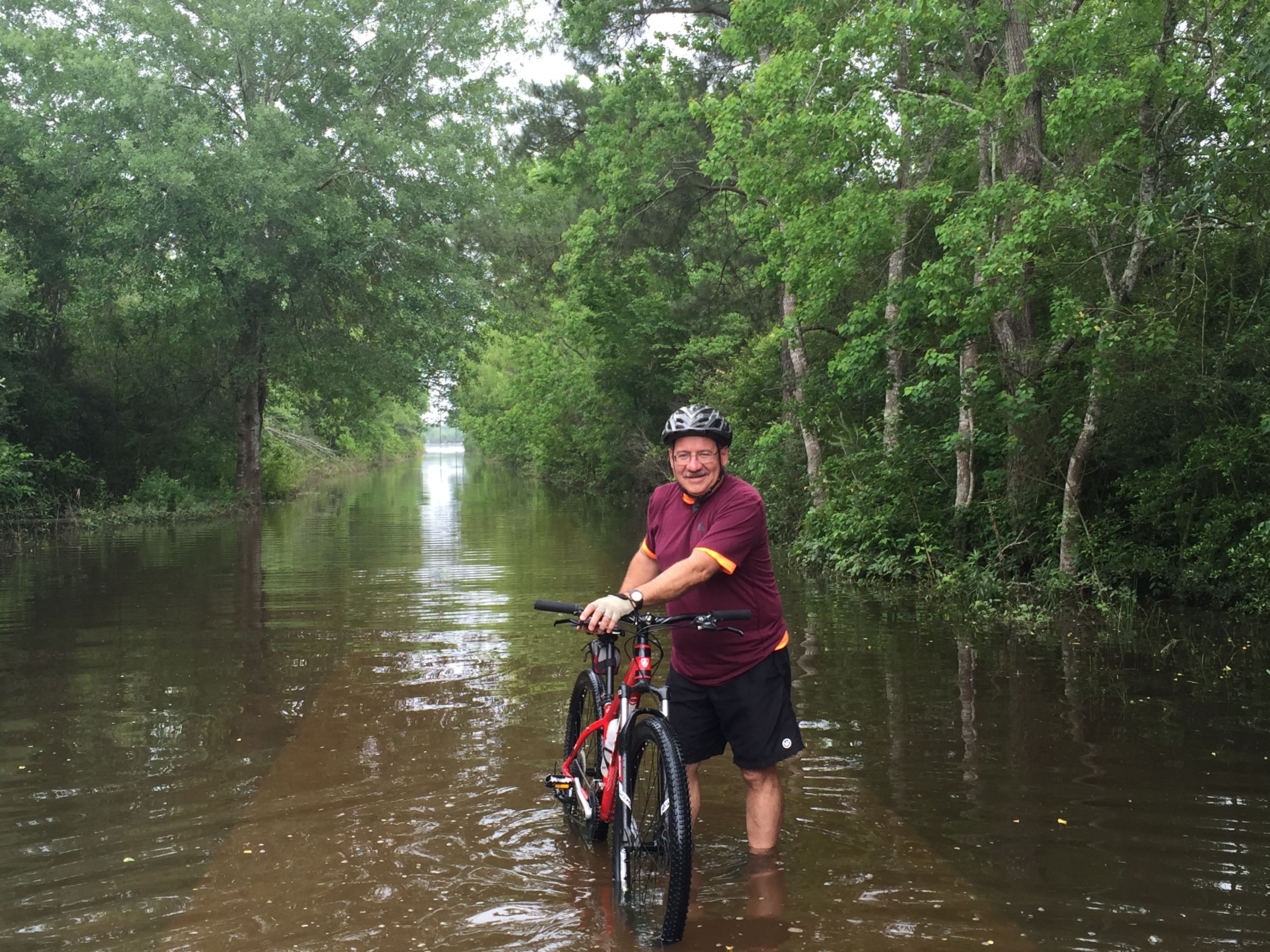
Omar Biking in WaterOn a recent ride, a mile section of sidewalk that leads to some ball fields that mark my turnaround point was under several inches of water. Instead of turning back, my friend Selim and I decided to do what any school boy in his right mind would do — press on through the water. Up until that point we were out on a normal bike ride. The water represented the opportunity for adventure. So, we pressed on.
Selim and BJAlong the way we met a new friend out for a ride. He was happy to join us on our great watery adventure. We saw an alligator and also some deer wading in the water. And, of course, we got soaked in the process. On the way back we had to portage our bikes because the trail under the Grand Parkway was covered in mud and debris from recent floods — something that only added to the challenge and adventure.
IMG_8739When it was all said and done we were glad that we had ventured out. After all, what could be better when you only have a couple of hours for an adventure. And the best part — it did not cost us a dime and we enjoyed a lot of good conversation and laughter along the way.
IMG_8747Regardless of where you live in the Lone Star State, look for opportunities to have adventures close to home. Doing fun stuff outdoors always trumps staying indoors. I’m thankful for the bayou trails near my home. Biking the bayous certainly scratches my itch for adventure when I only have a few hours to get outdoors. The next time you find yourself short on time or money, don’t despair. Find your next Texas adventure close to home.

There Is No Place Like Home

In the closing sequence of “The Wizard of Oz,” young Dorothy, who is longing to return to her home in Kansas, speaks one of the most memorable lines in the story — “There’s no place like home!” Dorothy’s words are true. There is no place like home. Just the mention of the word home does something good to our hearts, especially when we’ve been away for any period of time.
Dime Box HouseOne of the best things about backroads adventuring in the Lone Star State is coming across old homes — long abandoned structures weakened and worn by the passage of time. You won’t find these crumbling old places in our manicured HOA-governed subdivisions. You’ve got to hit the backroads and do some exploring.
Catspring Old HouseWhenever possible, I have to stop to explore these fascinating places once held dear by occupants unknown to me but not unlike me. Every decaying structure stirs my imagination and causes me to ask questions only walls could answer. How I’ve often wished walls could talk!
Catspring Old DFoorEach and every abandoned home share one thing in common — at one time they were all new. These old homes represent the dreams, aspirations, and perhaps the answer to the prayers of whoever built and lived in them. Someone was excited to see the walls go up and the roof take shape. Someone was the first to step across the threshold and the last to move away for good.
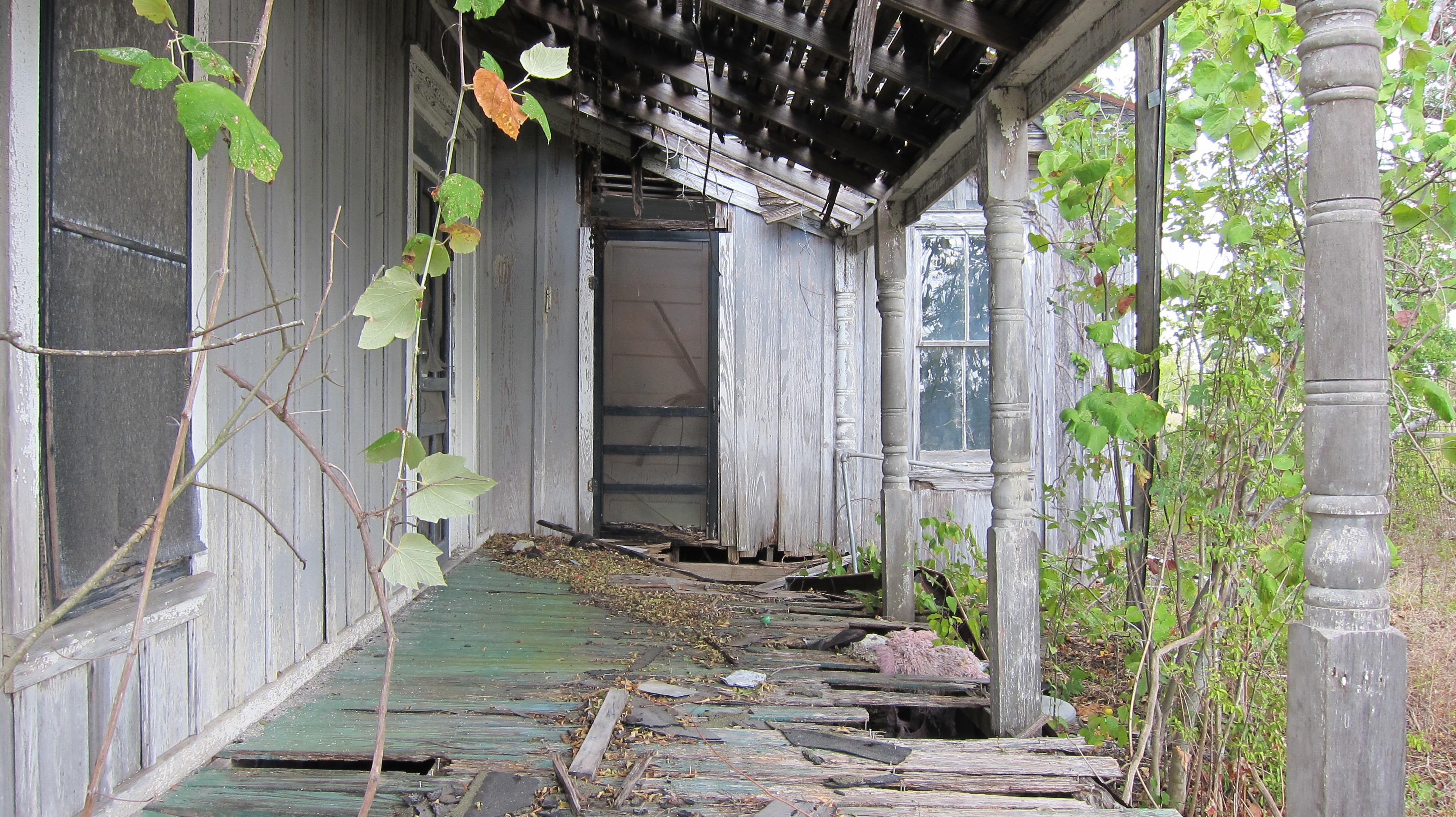
Old PorchWho looked forward to returning to these places, perhaps to be greeted by the welcoming embrace of a loved one? Who sat on the front porch watching a sunrise or sunset or the falling rain? Who carved the turkey at Thanksgiving or put the gifts under the Christmas tree? Who anxiously looked out a window, awaiting word about the welfare of a loved who was away? Who repaired the leak in the roof or the loose floorboards?
OPttine House 1907These old homes are the context in which people celebrated life’s ordinary days and holidays. And yet, at some point, the life and laughter moved out and silence moved in. Those connected to these old properties are the remaining custodians of their history. And, unless this history is recorded or passed on, it too will go the way of these old homes.
Catspring House GateThere is indeed no place like home. And the fascinating old and abandoned homes on Texas backroads are definitely worth exploring. If you happen to come across one of these old homes, ask permission before stepping onto private property, take nothing but photographs, leave nothing but footprints, enjoy the experience, and respect the home and its history.

Texas Proud

There is little, if any, doubt that Texans are a proud people. Anywhere you venture within the broad expanse of the Lone Star State, you can see Texas pride on display. The very shape of Texas makes it one of the most easily recognizable states in the Union. The same can be said of our Lone Star emblazoned flag. Texans use both of these iconic symbols to identify their love and pride for the place they call home.
Texas Flag WavingSomeone once said that Texas is a state of mind. And indeed it is. But it is more than that. New York born author John Steinbeck wrote, “For all its enormous range of space, climate, and physical appearance, and for all the internal squabbles, contentions, and strivings, Texas has a tight cohesiveness perhaps stronger than any other section of America. Rich, poor, Panhandle, Gulf, city, country, Texas is the obsession, the proper study and the passionate possession of all Texans.”
Texas Flag BarnFrom its earliest days, Texas has inspired a loyalty from both native born Texans and those who were born elsewhere but got to Texas as quick as they could. Tennessee-born Frontiersman Davy Crockett, also known as the King of the Wild Frontier, said, “You may all go to hell and I will go to Texas.” That quote reminds me of the line in the song by Chris Wall, a singer-songwriter from Austin: “I’d rather be a fencepost in Texas, than the king of Tennessee.”
Texas Flag PorchAs a kid, I went to see the movie Hellfighters, the story based on the life of Red Adair. John Wayne played the role of this Texas oil field legend who battled oil well fires all over the world. The real Red Adair said, “I’ve traveled all over the world, but I don’t think there is any place better than Texas.” I agree with Red. I have traveled to more than forty countries and there is nothing better than coming home to Texas.
Texas Flag TruckThe bottom line is that I love everything about our great state — beaches and bluebonnets, expansive skies and extraordinary sunsets, barbecue and burgers, country music and mariachi bands, the Chihuahuan Desert and pine forests. In the words of a proud Texan: “If you’re lucky enough to live in Texas, then you’re lucky enough.”

Lajitas Cemetery

Situated on a bluff in the northern part of the Chihuahuan Desert, the tiny community of Lajitas silently overlooks the lumbering Rio Grande River. Lajitas is Spanish for “little flat rocks” — a reference to the Boquillas flagstone of the area. Long before Anglo-Americans arrived on the scene, this arid territory was inhabited first by Mexican Indians and later by the Apache and Comanche.

The discovery of mercury in nearby Terlingua changed everything. Starting in the late 1800s, the populations of Lajitas and Terlingua surged as a steady stream of miners moved in to the area to work the mercury mines. Conditions in the mine were dangerous. Life in Lajitas was not for the fainthearted. Only the rugged survived.

During the days of the Mexican Revolution (1910-1920), General John J. “Blackjack” Pershing established a large cavalry post at Lajitas in 1916. Pershing spent several years unsuccessfully pursuing Poncho Villa, the famous Mexican Revolutionary general, around northern Mexico. Pursuing anyone in the vast and unforgiving Chihuahuan Desert was a huge undertaking.
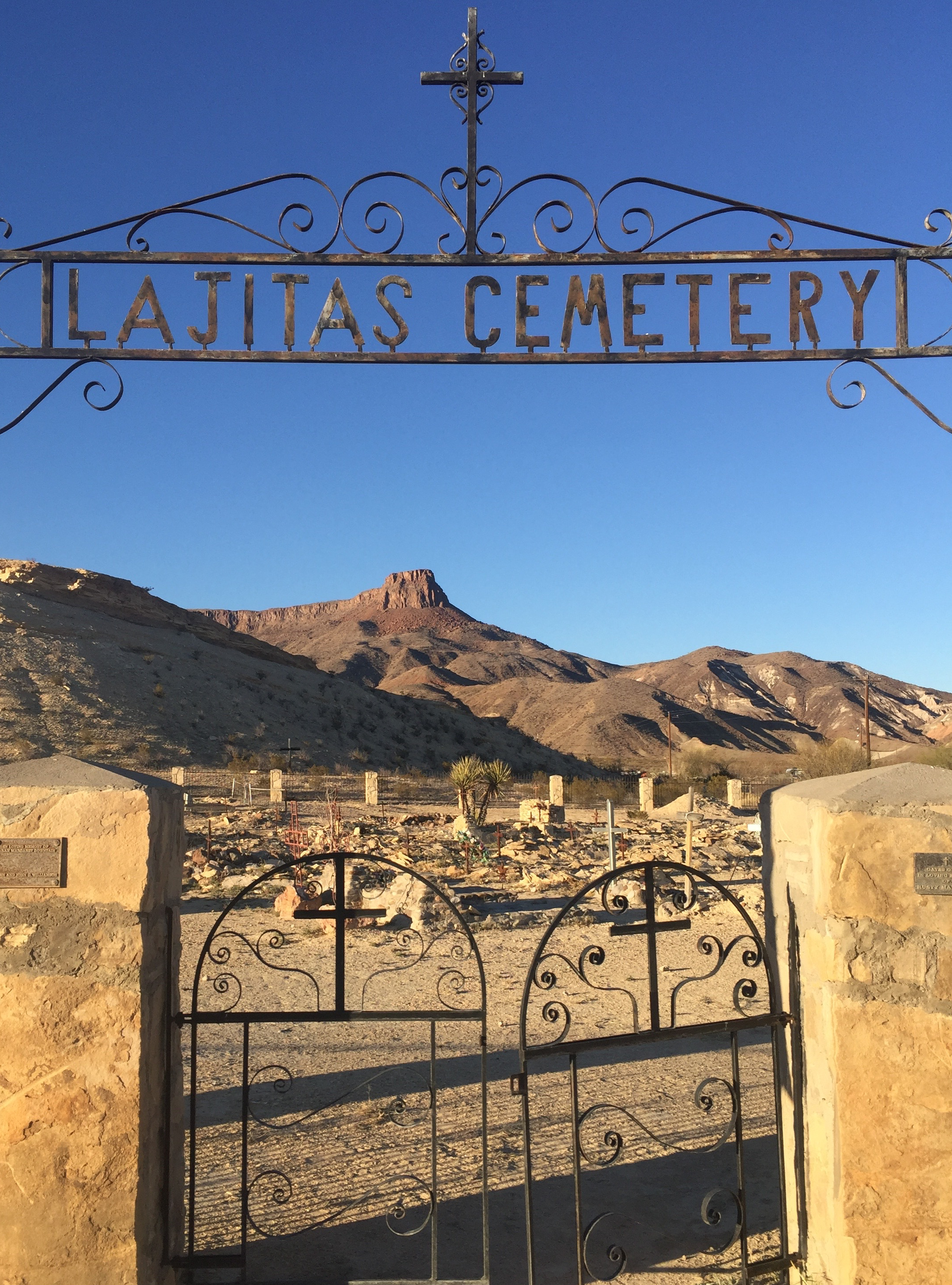
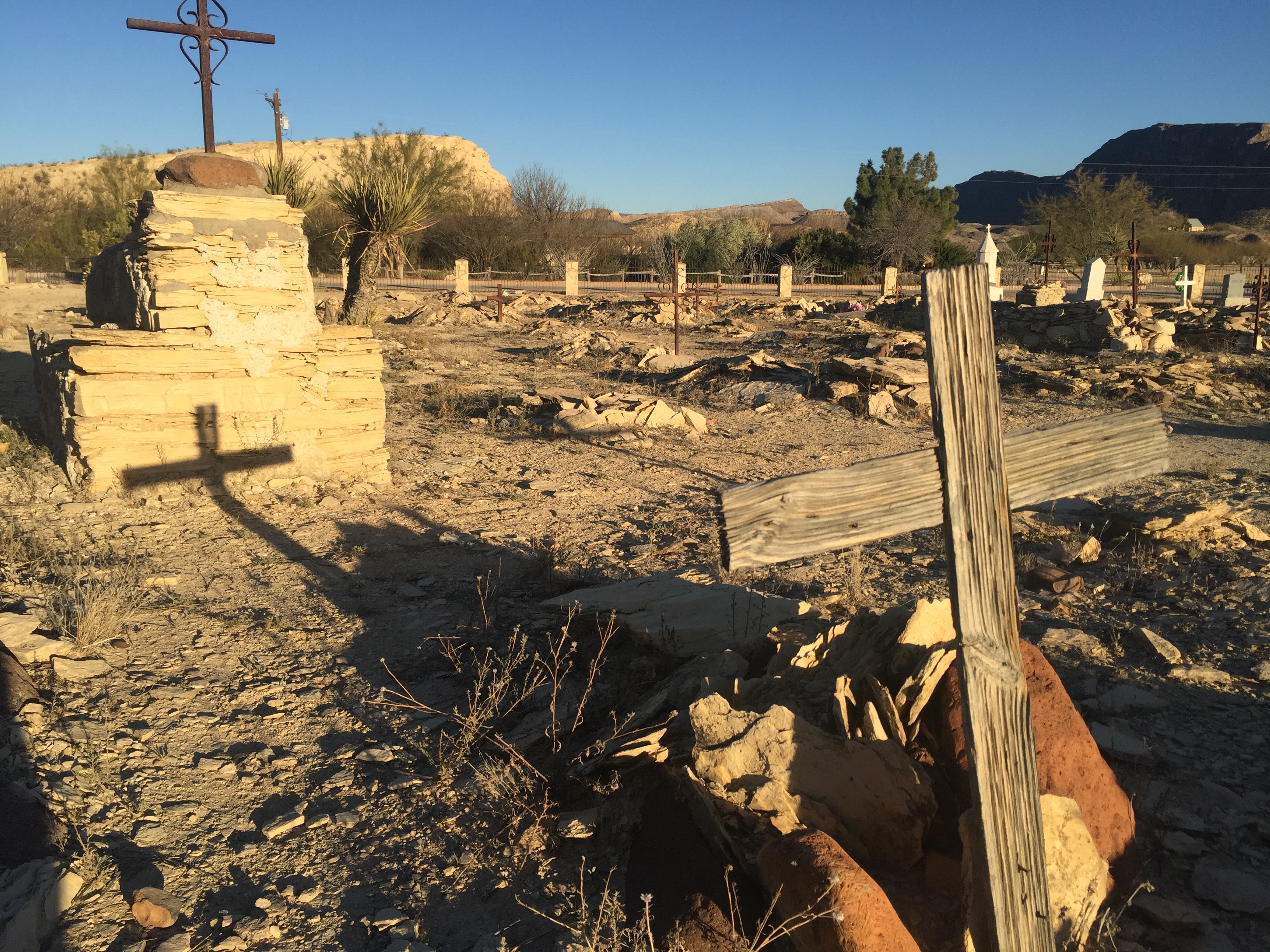
Lajitas CemeteryToday, the small Lajitas Cemetery is one of the must-see points of interest in the area. Like the nearby Terlingua Cemetery, this burial ground is filled with many fascinating old graves. Sadly, most of the names carved into handcrafted wooden crosses are no longer readable. Only the remaining descendants of the deceased know for certain who is buried beneath the rocky cairns.
Lajitas Cemetery GraveIn 1991, a woman named Elie Webb initiated a restoration project at the cemetery. Under her supervision, a fence was built around the cemetery and a gate and arch added. Webb also added iron crosses to many of the graves. Today, however, even these improvements are losing the battle against the harsh desert environment.
Lajitas Cemetery GravesOld cemeteries like the one in Lajitas are worth visiting. These old burial grounds are like dusty history books that can give us a little insight into what life was like in the days of cowboys, indians, and mercury miners. As you travel down Texas highways and byways, make it a point to stop at old cemeteries. These old burial grounds have their own interesting stories to tell.

Dog and Pony Grill

Searching for the best burgers in Texas is an enjoyable part of my adventuring in the Lone Star State. I have discovered that there are no shortages of places to find delicious burgers. I have visited some burger joints at the recommendation of friends, others because I read about them in some publication, and occasionally I just ask Siri to find me burger joints close to me as I wander down highways and byways.
Dog and Pony ExteriorWhile recently traveling from Katy to Big Bend Ranch State Park, I asked Siri to find me burger joints near San Antonio. Siri produced her usual list of fast food burger places as well as other options. That’s how I learned about the Dog and Pony Grill in Boerne. To be honest, my buddy and I decided to try this place just because we found the name so interesting. Google maps did the rest of the work and guided us to the parking lot.
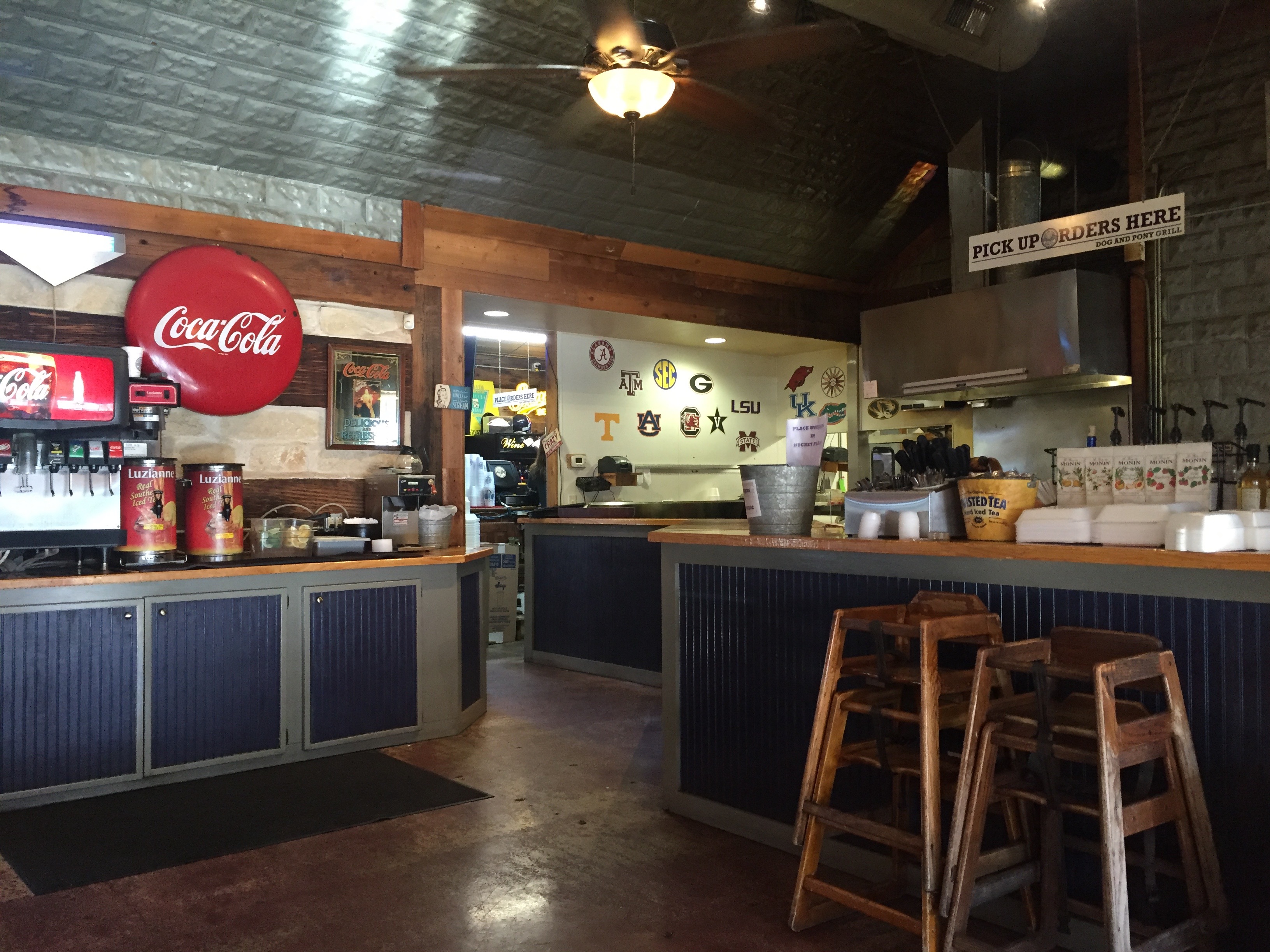
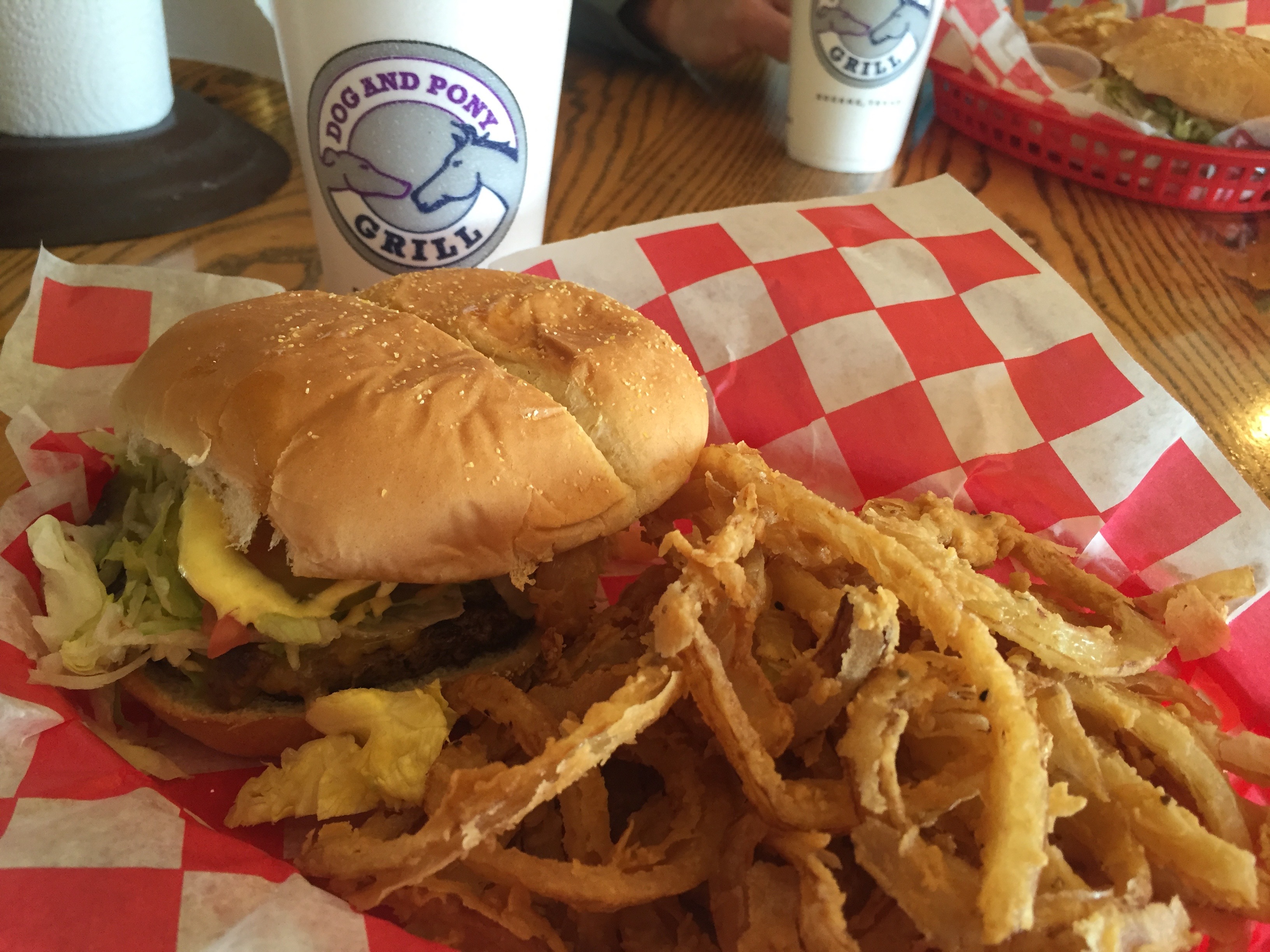
Dog and Pony InteriorWe arrived a bit early for lunch but with enough of an appetite to eat a healthy-sized burger. At the recommendation of the young lady at the counter, I ordered the Bodacious Boerne Cheddar Burger, listed as “Our Favorite Burger” on the menu. This burger comes with a healthy one-third pound of pure beef and is topped with lettuce, tomato, pickles, onions, mustard and mayo. A side order of onion rings and a cold cup of sweet tea completed my order.

When I started writing about burgers on my blog I decided that if I did not have anything good to say about a burger I just would not write about it. So, I am writing about the Bodacious Boerne Cheddar Burger because it definitely outclassed a lot of burgers I have eaten and because it was pretty doggone tasty. Wow! I mean it was a really good burger.
Dog and Pony BurgerEverything about his burger worked well, from the amazing bun to the delicious cooked-to-perfection patty. And the onion rings were pretty good, too. After taking my last bite, I took a deep satisfying breath and determined that this is a place I want to visit again. And it’s a place I highly recommend to anyone passing through the area. In fact, it’s worth taking a detour to go to the Dog and Pony Grill if you are anywhere near this part of the state.
Dog and Pony Grill VanThe Dog and Pony Grill offers a lot more than their tasty burgers on their menu. The joint has a cool and comfortable vibe — the kind of place where you can have a good time with family and friends. The next time you find yourself near Boerne, set your map app to get you to the Dog and Pony in time for lunch. You won’t be disappointed!

Estero Llano Grande State Park

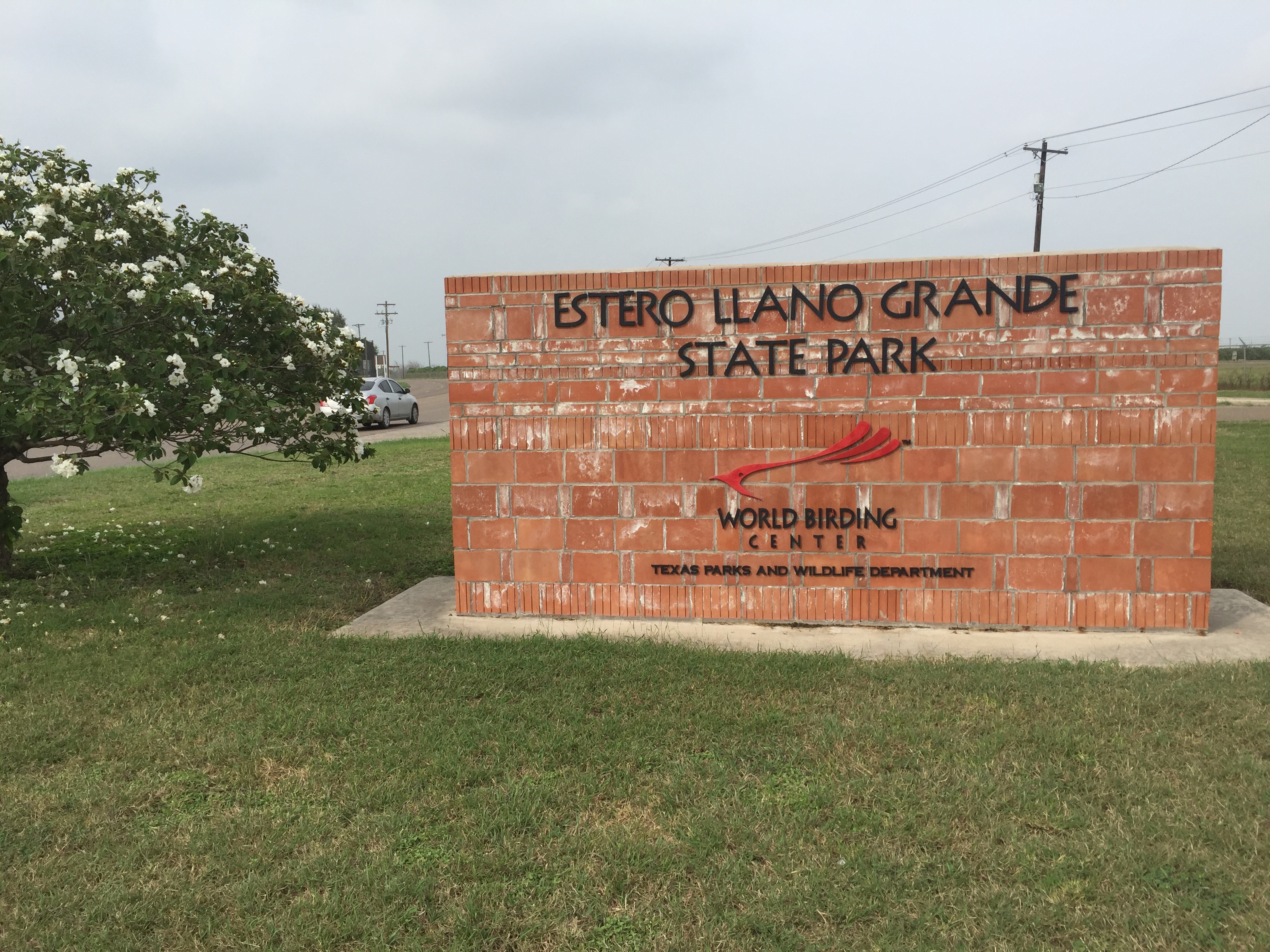
When it comes to lesser known state parks in Texas, Estero Llano Grande State Park is  definitely on that list. This under-the-radar park is located south of Weslaco along International Boulevard, the road that leads to the Rio Grande River and Nuevo Progreso, Mexico. Estero Llano is at the geographic center of the World Birding Center — a network of nine unique birding locations along a 120-mile stretch in the Rio Grande Valley.
Estero Llano Grande EntranceThe Spanish words Estero Llano Grande are translated “a wet place on the big plain.” And indeed it is. More than 300 species of birds and a variety of flora and fauna can be found within the park’s 230 acres of ponds, woodlands, and thorn forest. Since opening in 2006, the park has become one of the top birding destinations in the Rio Grande Valley.
Ibis PondEstero Llano Grande is indeed a treasure among our state parks. And because it is located along a major bird migration corridor, it is a popular hotel for migratory birds as well as many tropical bird species found nowhere else in the United States. The park offers regular guided bird, butterfly and dragonfly hikes — an excellent way to learn some really interesting stuff about everything that lives, grows, and thrives at the park.
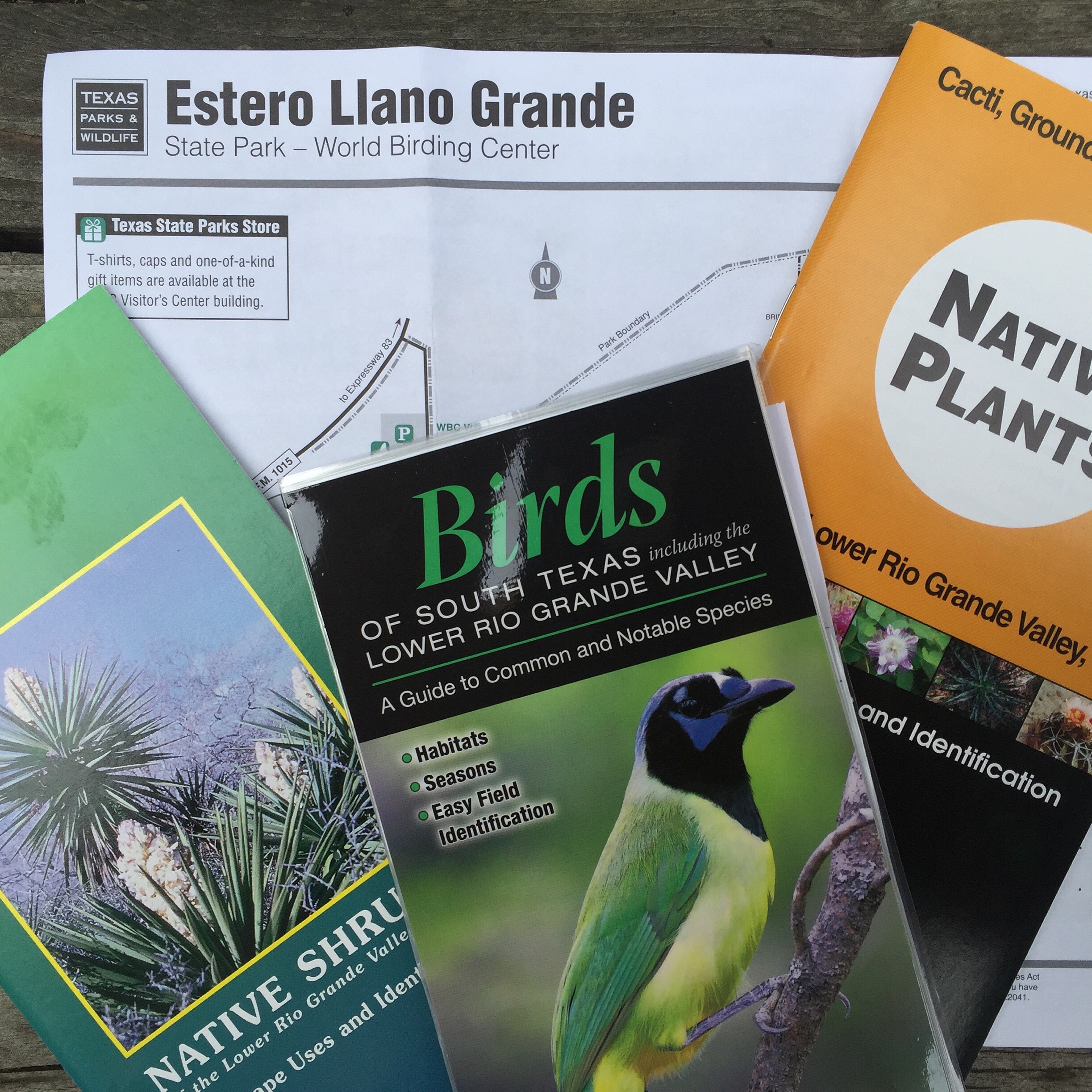
Estero Llano DucksWhether or not you are a birder, you will enjoy all that this beautiful park has to offer. I am not a birder but I did purchased a guide to South Texas birds at the park store. I was amazed at how many birds I saw as I strolled along the well-maintained trails. The benches along the trails prompted me to slow down to enjoy and to listen to the birds. Hopefully I will get better at the identification of birds with time and practice.
Estero Llano GuidebooksI also purchased guidebooks about native shrubs and plants of the Rio Grande Valley. Many of the trees, plants, and shrubs at the park are already identified by information markers. Others were easy to identify with the help of the guidebooks. This area is rich with a diversity of native plants and trees. Of course, I am partial to the gnarly mesquite.
Estero Llano BoardwalkI hope that you will discover and enjoy the state parks and natural areas near you. Invest in a Texas State Parks Pass — well worth every penny and a great way to support our Texas Parks and Wildlife Department. Estero Llano is just one of 95 Texas State Parks you can enjoy with your State Parks Pass. This South Texas wildlife refuge is certainly worth a visit.

Mission Nuestra Señora del Espíritu Santo

The area around Goliad is rich in Texas history. The Goliad Massacre, regarded as the darkest day in Texas history, took place at Presidio La Bahia. On March 27, 1836, Colonel James Fannin and 342 of his men were put to death under orders of Mexican General Santa Anna. Texans were so outraged that they embraced the battle cry “Remember Goliad” and vowed to win the war for Texas independence.
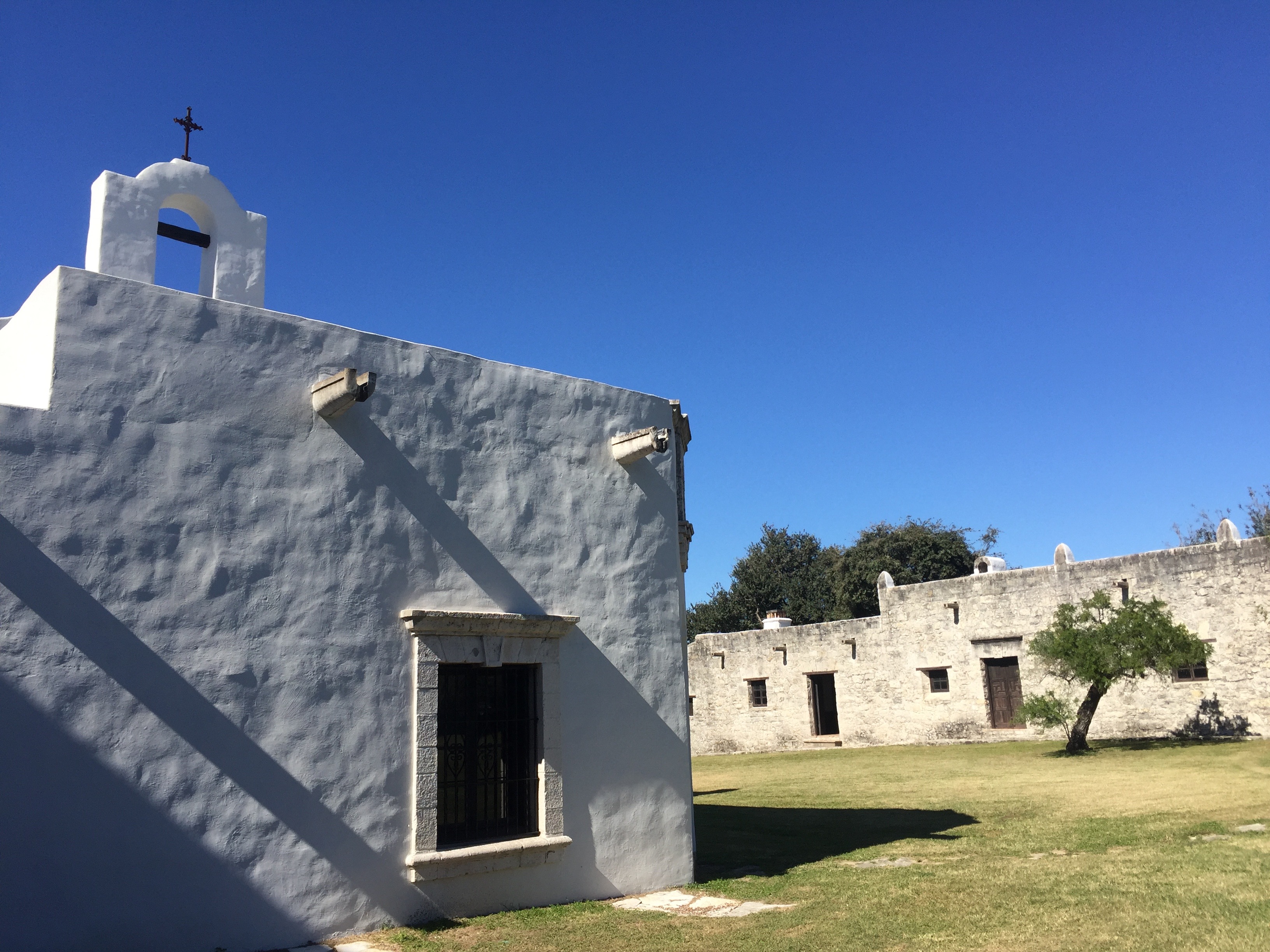
Mission Espiritu SantoLess than one-quarter mile from Presidio La Bahia is Mission Nuestra Señora del Espíritu Santo de Zúñiga. This spiritual outpost was established by Franciscan priests. The first mission was built at Matagorda Bay in 1722 adjacent to Presidio La Bahía. In 1749, both the mission and the fort were relocated to their present sites on opposite banks of the San Antonio River and near Camino La Bahía, a major Spanish trade route.
Mission Espiritu Santo InteriorThe Franciscan priests reached out to the native Aranama peoples and involved them in life at the mission. Under the supervision of the priests, the Indians worked with cattle, tilled the soil, learned to build with stone and mortar, spun wool for clothing, and made clay pots. Ranching, however, eventually became the main occupation at the mission and the indians became accomplished vaqueros (the original cowboys). By 1830, the mission was forced to close because of declining Indian populations and lack of money.
Mission Espiritu Santo CourtyardIn 1886, a hurricane destroyed what was left of Mission Espíritu Santo. In the 1930s, the Civilian Conservation Corps was tasked with the reconstruction of the historic mission complex and the nearby Presidio La Bahia. Along with the restoration work, archeologists excavated the site and uncovered artifacts from the original mission structure. These are now on display at the site. The mission received a historical park designation in 1931 and is today listed in the National Register of Historic Places.
Mission Espiritu Santo AltarMission Espíritu Santo is part of Goliad State Park and Historic Site. You can take a self-guided tour of the mission’s church and grounds, the focal point of the park. Park personnel and volunteers are available to answer your questions and to give you insight into what life was like at the mission. Also, there is an informative museum adjacent to the church. I encourage you to add this beautiful and historic site to your list of places to visit in the Lone Star State.

5 Facts About Indian Paintbrush

The magnificent Texas Bluebonnet is the undisputed star of the wildflower show that premiers every spring in the Lone Star State. This beautiful state flower is always a sight to behold when it makes its debut along our highways and byways. The Indian Paintbrush, another beautiful flower, has earned a costarring role alongside the bluebonnet. These two flowers are often seen together, complementing one another on nature’s springtime screen. Here are five interesting facts about this costar in the Lone Star State’s springtime wildflower extravaganza.
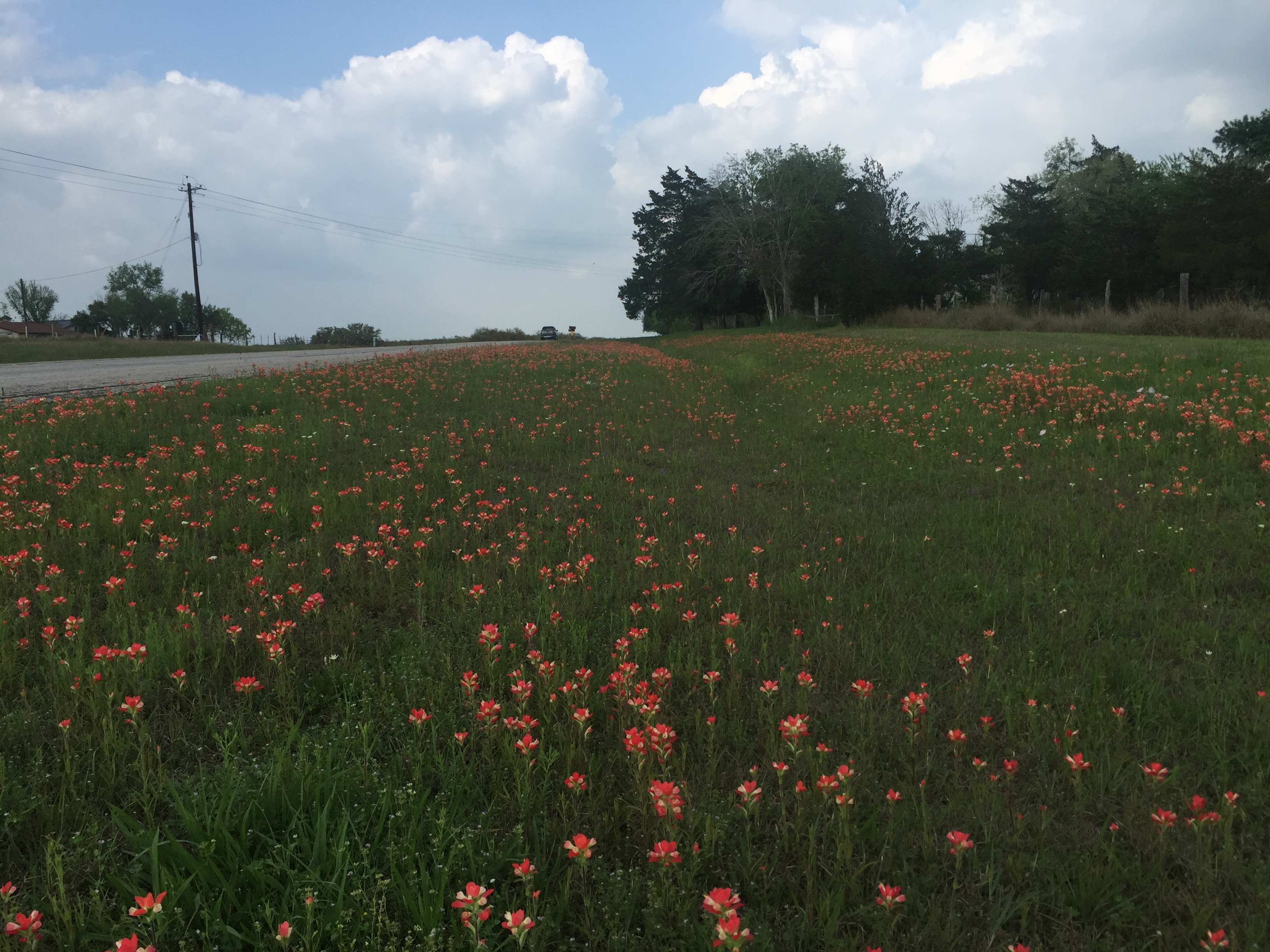
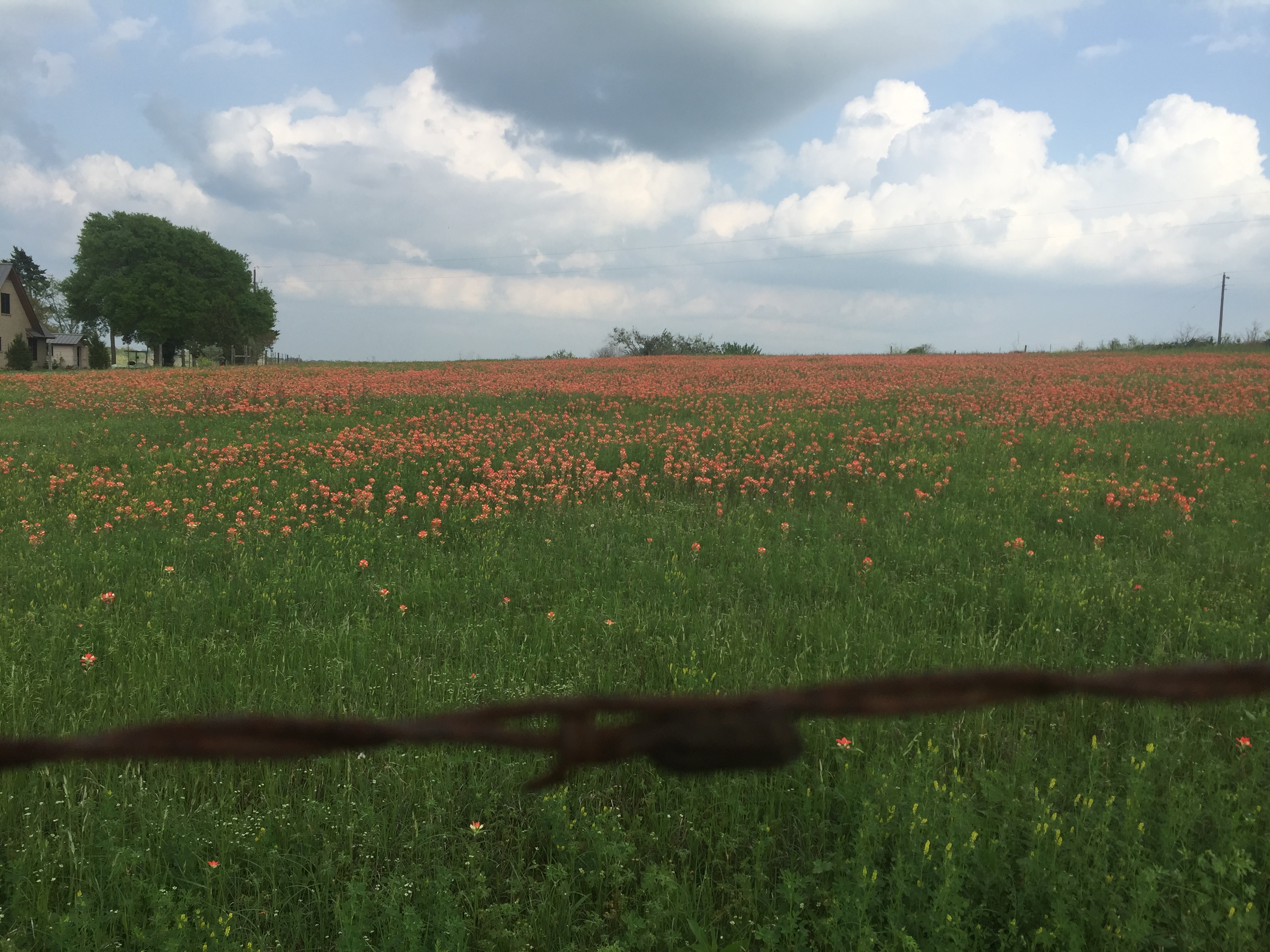
Indian Paintbrush Field1. How the Indian Paintbrush was named.

The name of this flower is based on the legend of an Indian who wanted to paint a sunset. Frustrated that he could not produce any of the colors that matched the beauty of a sunset, he asked the Great Spirit for help. The Great Spirit provided him with paintbrushes to create his painting. After completing his work, the artist then discarded his used paintbrushes around the landscape. These paint bushes later blossomed into plants. Another similar Native American legend also involves an artist whose discarded paint brushes became flowers.
Indian Paintbrush Along Road2. The Indian Paintbrush has several aliases and uses.

This beautiful flower is also known by other names like Texas Paintbrush, Scarlet Paintbrush, Grandmother’s Hair, Common Red Paintbrush, Butterfly Weed, Prairie Fire, Painted Cup, and Painted Lady. Most folks prefer to call it by its most popular name — Indian Paintbrush.

The name Grandmother’s Hair is attributed to the Chippewa Indians who used the plant to treat women’s diseases and rheumatism. The Navajo Indians also used the plant for medicinal purposes. And, Native Americans soaked the plant in grease to make a hair oil.

3. Indian Paintbrush are parasitic.

Don’t be alarmed. This means that the Indian Paintbrush rely on other plants to grow. When the roots of the Indian Paintbrush come in contact with the roots of other plants and grasses, they latch on to their neighbor’s roots to get additional nutrients. So, the next time you see Indian Paintbrush growing alongside Texas Bluebonnets, you can pretty much know what’s going on. Those free-loading paintbrushes are actually soaking up nutrients from their blue clad neighbors.
Bluebonnets and Indian Paintbrush4. Indian Paintbrush are made up of bracts.

From a distance, it appears that the slender stalk of the Indian Paintbrush is covered with flowers. These flowers are actually petallike bracts or colored leaves that grow below the actual flower of the plant. In the case of the paintbrush, these bracts get more attention than the inconspicuous cream-colored flowers.
Indian Paintbrush5. The Indian Paintbrush is the Wyoming State Flower.

By 1916, over half of the states had already designated a state flower. The Wyoming Chapter of the Daughters of the American Revolution felt it was time for Wyoming to designate a state flower and put their support behind the Indian Paintbrush. Some objected on the grounds that there were too many varieties and the flower was not common throughout the state. However, when all was said and done, the Wyoming Legislature made the Indian Paintbrush (Castilleja linariaefolia) the official state flower of Wyoming on January 31, 1917.

Bentsen—Rio Grande Valley State Park

The Texas Parks and Wildlife Department manages 95 state parks in the Lone Star State. My goal is to visit all of them. Regardless of where you live in Texas, you are within a short drive of a state park or a state natural area — places where you can go hiking, biking, camping, boating, birding, or whatever scratches your outdoor itch.

If you are a history buff then you are in luck. Several parks preserve and bring Texas history to life — everything from ancient pictographs, twentieth century battleships, hallowed burial grounds, silent battle sites, and Spanish missions. You can even visit the place where Texas declared its independence from Mexico. We are indeed fortunate to have so many parks in Texas.
Bentsen State Park SignBentsen—Rio Grande Valley State Park, located just outside of my hometown of Mission, is the first state park I visited as a kid. As a Boy Scout, I spent many days camping and hiking all over this 760-acre park. This is where I learned to identify a variety of birds, where to locate the constellations in the night sky, and how to leave a campsite better than I found it.
Bentsen Birding SignNamed after the family of the late Senator Lloyd Bentsen, this park serves as the headquarters of the nine World Birding Center sites in South Texas. More than 340 species of birds and more than 200 species of butterflies have been documented within the park’s boundaries. Because the park is a World Birding Center, no vehicular traffic is allowed in the park. Access into the park is restricted to walking, biking, or tram.
Bentsen Bird Viewing AreaBentsen is more than a popular stop for migratory birds and butterflies, it’s a very popular place for birders, locals, and winter Texans. The park offers several convenient places from which to watch birds, including a two-story high Hawk Observation Tower. A pair of binoculars is definitely a plus when visiting the park. And, if you are not a birder, pick up an inexpensive guide to the birds of the area at the park store and see how many species you can spot.
Bentsen State Park MesquiteLike all of our state parks, Bentsen is a Texas treasure. I enjoy riding my bike in the park and stopping at the designated bird observation areas to see the amazing varieties of birds. And because I happen to love mesquite trees, I enjoy taking photos of these trees with their gnarled trunks and branches throughout the park. The park is also home to other varieties of trees, including the beautiful ebony.
Bentsen State Park BikingI always enjoy visiting Bentsen—Rio Grande Valley State Park whenever I am in South Texas. It is a nostalgic and peaceful place for me. I am glad that in 1944 the Bentsen family gave this land to the state of Texas with the understanding that it be maintained and preserved for the enjoyment of future generations. Their generous gift continues to be enjoyed by countless visitors from all over the world.

Enchanted Rock Defaced

The Lone Star State is home to some of the most beautiful natural areas in the country. Along with our state parks, these natural areas are managed by the Texas Parks and Wildlife Department for the enjoyment of all Texans and guests to the Lone Star State. The rules and regulations about what visitors can and should not do are designed to ensure that we steward these natural treasures for our own enjoyment and that of future generations.
The Texas State Parks Rules and Regulations clearly state what should be a no-brainer in regard to what one should not do to geological features: “It is an offense for any person to take, remove, destroy, deface, tamper with, or disturb any rock, earth, soil, gem, mineral, fossil, or other geological deposit except by permit issued by the director.” The problem is that some people who visit our parks and natural areas have no brains.

Earlier this week, two individuals of questionable intelligence visited Enchanted Rock State Natural Area. Most people who visit our parks carry water bottles, snacks, and trekking poles. These dull-witted guests carried spray paint — which puts their actions into the premeditated category. Honestly, who carries a can of spray paint with them to a state park? That’s like taking an accordion with you when you go deer hunting.
Enchanted Rock TaggedThe parks service believes that two individuals seen in a photograph are responsible for tagging one of the granite formations at Enchanted Rock. The offense took place sometime between 3:00 PM and 5:00 PM on Sunday, March 20. Further evidence that these culprits have a combined IQ lower than that of a bucket of rocks is the cryptic message they graffitied onto the face of the geological formation: CA$H TRUCK. Really?

And now, the search is on to find the two imbeciles who messed with Texas. The Parks and Wildlife folks are utilizing social media to circulate the pic of the alleged suspects. Hopefully someone will recognize them and contact the TPWD at 830-685-3636 or email Doug Cochran at doug.Cochran@tpwd.texas.gov. In the meantime, dollars that could have been used for something better must now be invested in cleaning up after Goofus and Doofus.

So, what should you do if you see someone defacing property at one of our state parks or natural areas? At the very least use your smart phone to take pics of the violators. If you do not feel it is safe to confront them, then follow them to their vehicle and take a photo of their license plate. And, report it to park personnel as quickly as possible.

Most of our state parks and natural areas are big and vast, making it hard for park personnel to know everything that is going on. These guardians of our parks need our eyes and our cooperation. Every Texan has a responsibility to help steward the precious natural areas that we are all privileged to enjoy. So, keep your eyes open for Goofus and Doofus. Let’s stop them before they strike again!