John Henry Faulk’s Christmas Story
Everybody loves a good story — a real or imaginary account that captures our imagination and transports us to another place or time. That’s what would happen every time my grandfather would tell me a story. The sound of his voice, the subtle inflection of a word, a phrase told in a rising crescendo or trailing off into a whisper. He used these tools of the storyteller to mesmerize me — to unlock the door to my soul where his stories ultimately took up residence.
A few years ago I became acquainted with another storyteller whose masterful delivery also captured my imagination. John Henry Faulk, the fourth of five children, was born in Austin in 1913 and would become one of the Lone Star State’s most beloved storytellers. He was deeply influenced by his freethinking Methodist parents who taught him to detest racism. His post-graduate thesis at the University of Texas was about the civil rights abuses faced by African-Americans.
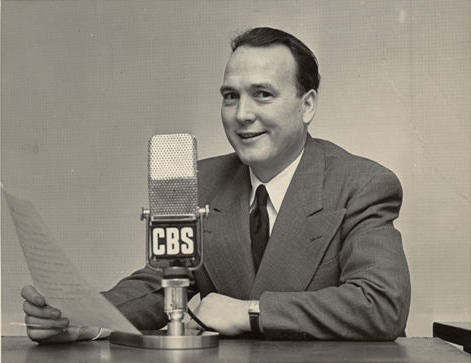
Faulk honed his storytelling abilities while teaching English at the University of Texas and later as a Merchant Marine during the Second World War. His friend Alan Lomax, who worked at the CBS network in New York, hosted several parties during Christmas 1945 to introduce his radio broadcasting friends to Faulk’s yarn-spinning abilities. A few months later, CBS gave Faulk his own weekly radio program, providing him with the thing every storyteller craves — an audience.
Sadly, Faulk’s radio career was derailed in 1957 when he became a victim of Wisconsin Senator Joseph McCarthy’s witch hunt for Communist sympathizers. The blacklisted storyteller, however, fought back. With support from famed broadcast journalist Edward R. Murrow, Faulk won a libel suit against those who had tarnished his reputation. The jury, in fact, awarded him the largest libel judgement in history to that date. In 1963, Faulk chronicled his experience in his book Fear on Trial. CBS television broadcast its movie version of Faulk’s story in 1974.
In his latter years, Faulk made numerous appearances as a homespun character on the popular Hee-Haw television program. He also wrote two one-man plays — Deep in the Heart and Pear Orchard, Texas. Throughout the 1980s he was a popular speaker on college campuses, speaking often on the freedoms guaranteed by the First Amendment. On April 9, 1990, Faulk died of cancer in his hometown of Austin. The city of Austin later named the downtown branch of the public library in his honor.
A few years ago on a dark December night, while traveling to my hometown for Christmas, I tuned in to National Public Radio and heard a story that touched me deeply. The story was one that John Henry Faulk had recorded in 1974 for the program Voices in the Wind. NPR later rebroadcast Faulk’s story in 1994. Every year since then, NPR has rebroadcast Faulk’s heartwarming Christmas Story. This story has earned a place among my favorite Christmas stories and movies. I listen to it every year at Christmas.
I encourage you to take a few minutes to listen to John Henry Faulk’s Christmas Story. Gather your family around and invite them to listen as well. But, be warned. Faulk’s homespun story will mesmerize you. The sound of his voice will transport you back to simpler days before Christmas came under fire. I think you will agree that the Lone Star State produced a great storyteller in John Henry Faulk and that his Christmas story should be heard by a new generation. Best wishes for the most wonderful Christmas ever.
The Pink Church of Ammannsville
Ammannsville is a tiny community located about nine miles southeast of La Grange. German and Czech immigrant farmers first settled in this region in the 1870s. The town is named after Andrew Ammann who just happened to be the first settler to arrive on March 12, 1870.
Ammannsville is also home to St. John the Baptist Catholic Church, also known as the Pink Church — one of the Lone Star State’s historic painted churches. This church opened its doors in 1890 and served the people of the area until it was destroyed by the Velasco Hurricane of 1909.
The second church to occupy the site was built by Leo Dielmann, the young German architect who designed and built the beautiful St. Mary’s Catholic Church in High Hill. Architectural plans and photographs on file at the Dielmann archives in San Antonio reveal that this second structure had a beautifully ornate interior, much like St. Mary’s church.
Sadly, the second church building was destroyed by fire eight years after it was built. One woman, who was just a child at the time of the fire, recalled that the fire was so intense that it melted the church bells. When folks saw the smoke, she said, they raced to the church to try to save it. Only a few of church’s statues escaped the flames.
The people of Ammannsville, determined to have their place of worship, immediately made plans to rebuild their beloved church on the same site. This third church was completed in 1909. Although the interior is beautiful, it is less ornate than that of the previous structure. The interior, sans columns, is open and bathed by the natural light that pours in through the large windows.
While the exterior of the church is white, the interior is painted in a rosy pink color — thus the name, The Pink Church. According to a legend, an unknown artist painted and embellished the interior of the church and then vanished, never to be seen again. Although the legend adds an aura of mystery to the church’s interesting history, the community actually hired a painter named Fred Donecker. Little is known about this decorative painter who is believed to have also painted the Catholic Church in Moravia, Texas.
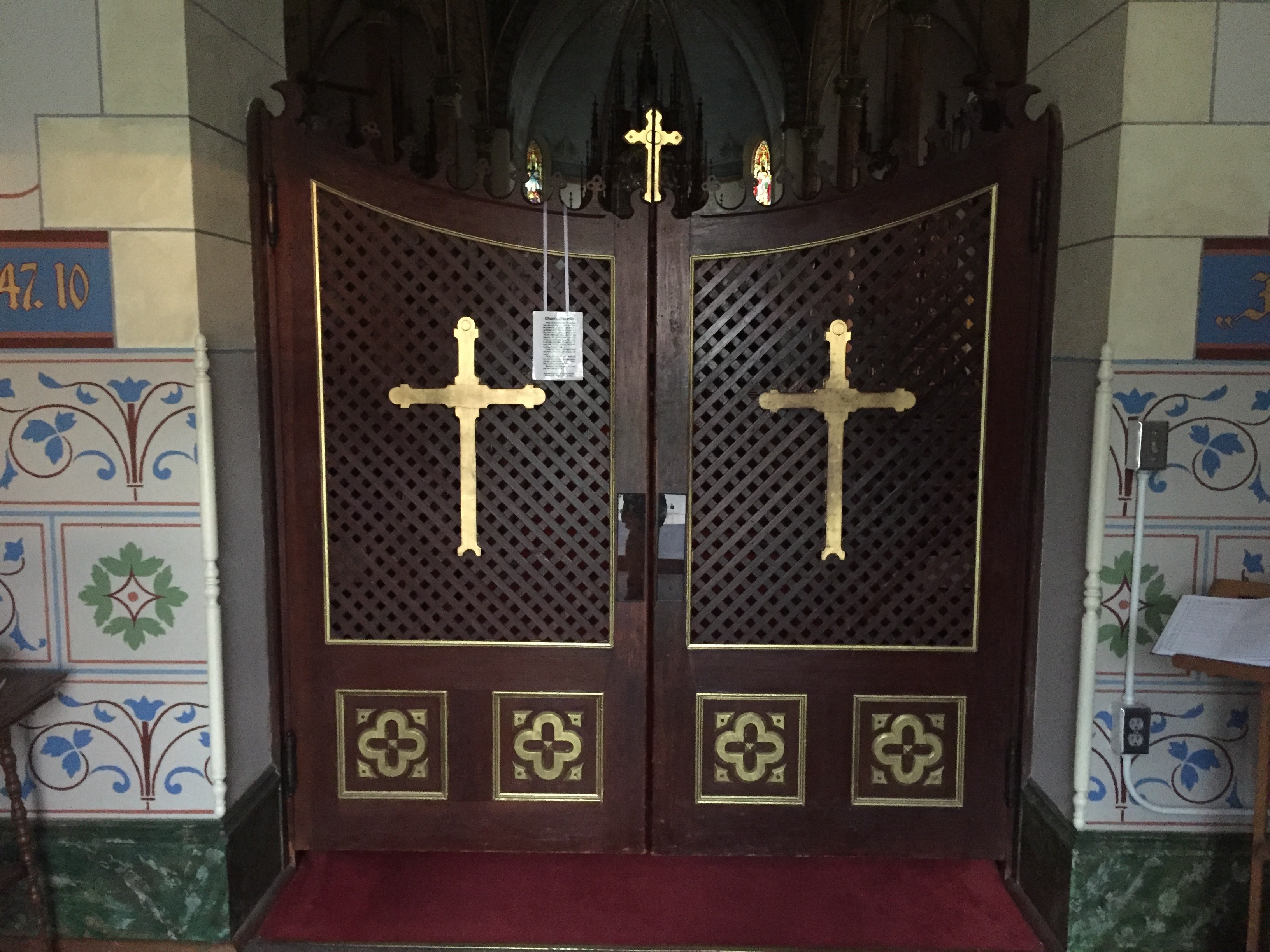
Like the other painted churches in the area, St. John the Baptist Catholic Church has a beautiful and worshipful interior. The altar is a masterpiece of carpentry. The walls on either side are adorned with the familiar stations of the cross that portray the events of the Passion of Christ. The welcoming angel statues at the entrance of the church hold sea shell shaped containers of holy water for those who come to pray and worship.
St. John the Baptist Catholic Church was added to the National Register of Historic Places in 1983. The church is open daily to visitors who venture off busy Interstate 10 or who meander down the surrounding farm to market roads. Set your GPS to Ammannsville — that’s all the address you need. You can’t miss the church. It’s the tallest structure in the area, and the most beautiful.
The Hanging Tree Restaurant
My continuing quest to find the best burgers in the Lone Star State recently me took to Goliad, one of the oldest Spanish colonial municipalities in the state. Goliad was established in 1749 and was originally named La Bahia. The name of the town was changed to Goliad in 1829 in honor of Father Miguel Hidalgo, the patriot priest of the Mexican Revolution. The name Goliad is an anagram of the letters of the name Hidalgo (minus the silent H).
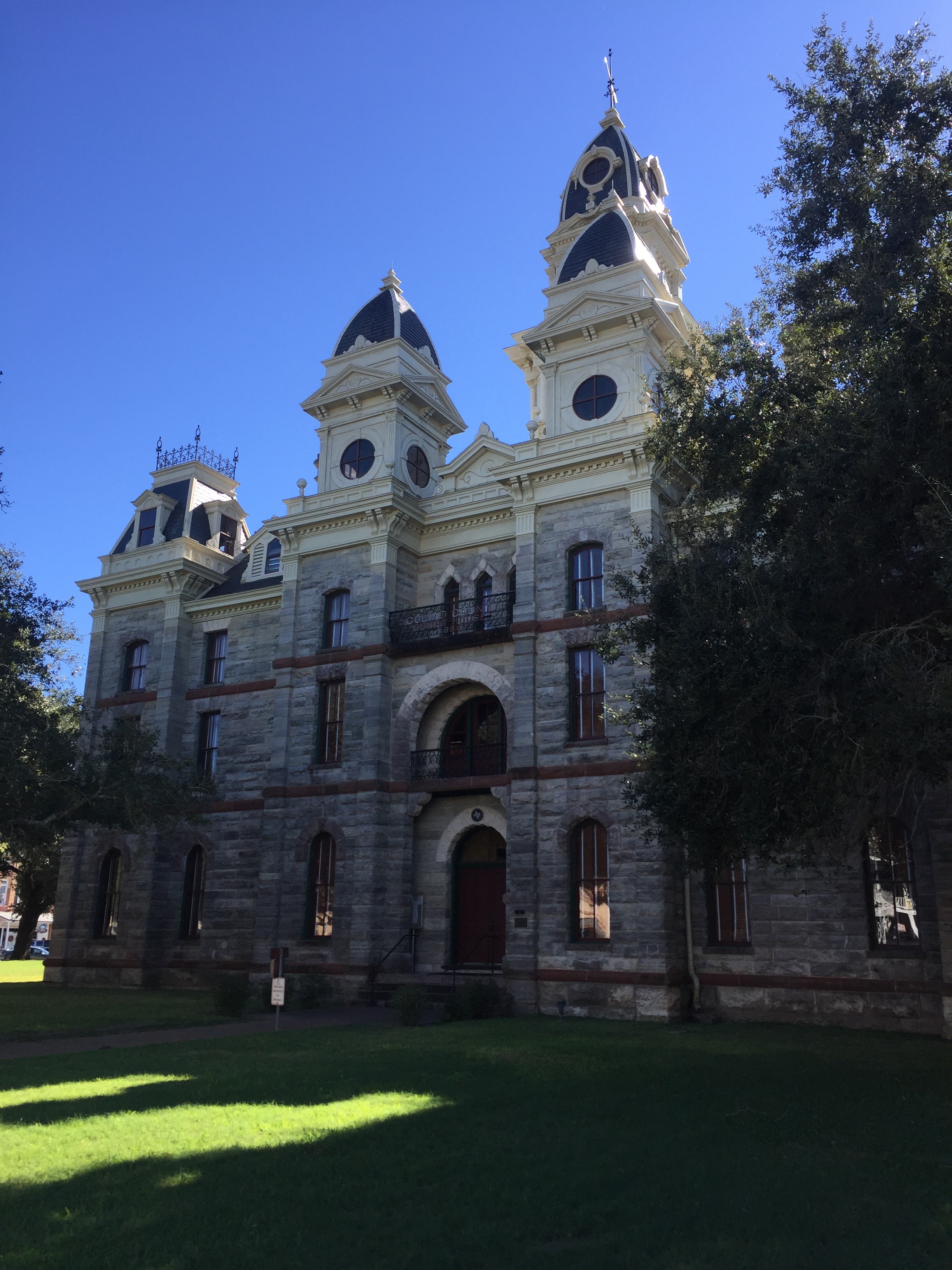
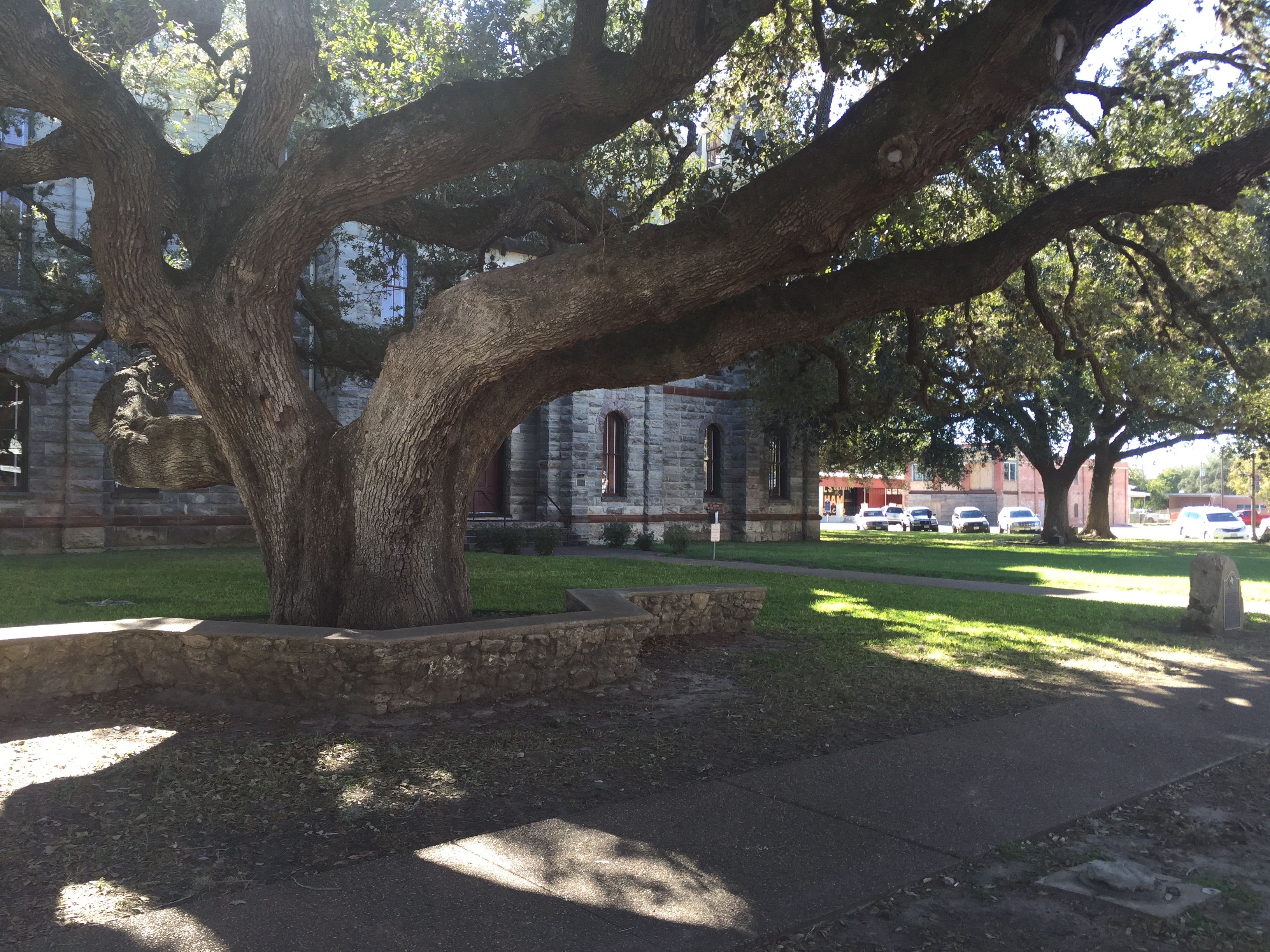
Goliad is the county seat of Goliad County. Like other county seats in Texas, Goliad boasts a beautiful courthouse situated in the town square. The current courthouse was built in 1894 and was recorded as a Texas Historic Landmark in 1964. The famous Goliad Hanging Tree on the courthouse lawn survives as a symbol of justice. This tree was used for both court-approved hangings as well as a number of impromptu lynchings during the infamous 1857 Cart War between Texans and Mexican Texans.
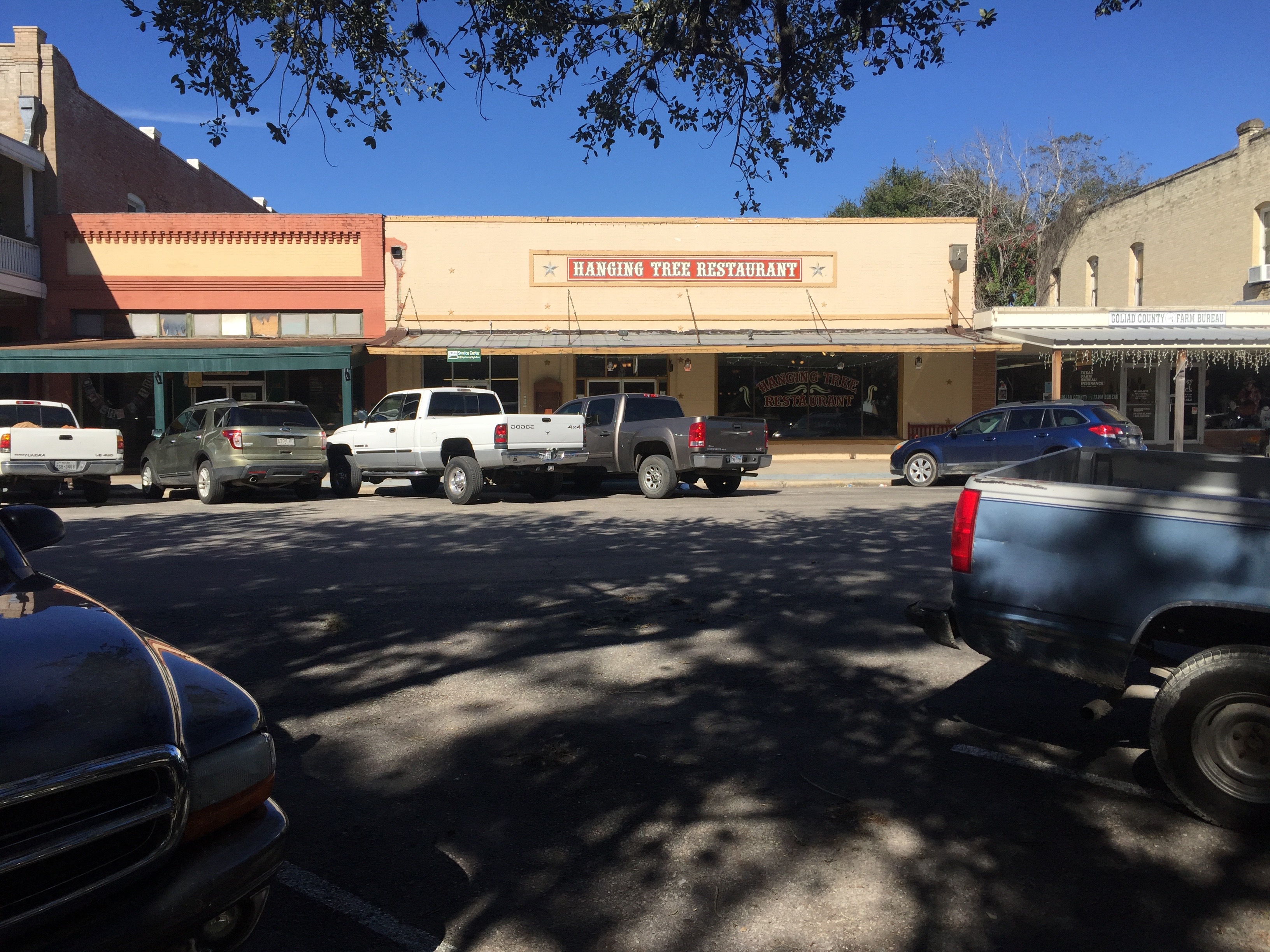
Across the street from the courthouse and the actual hanging tree is the Hanging Tree Restaurant. This eating establishment specializes in good down-home cooking. The restaurant is very clean. Mounted animals adorn the walls and silently look down on diners. The glass top tables frame old historic photos of Goliad and the surrounding area. I love these old and grainy black and white photos of the area’s early buildings and residents.
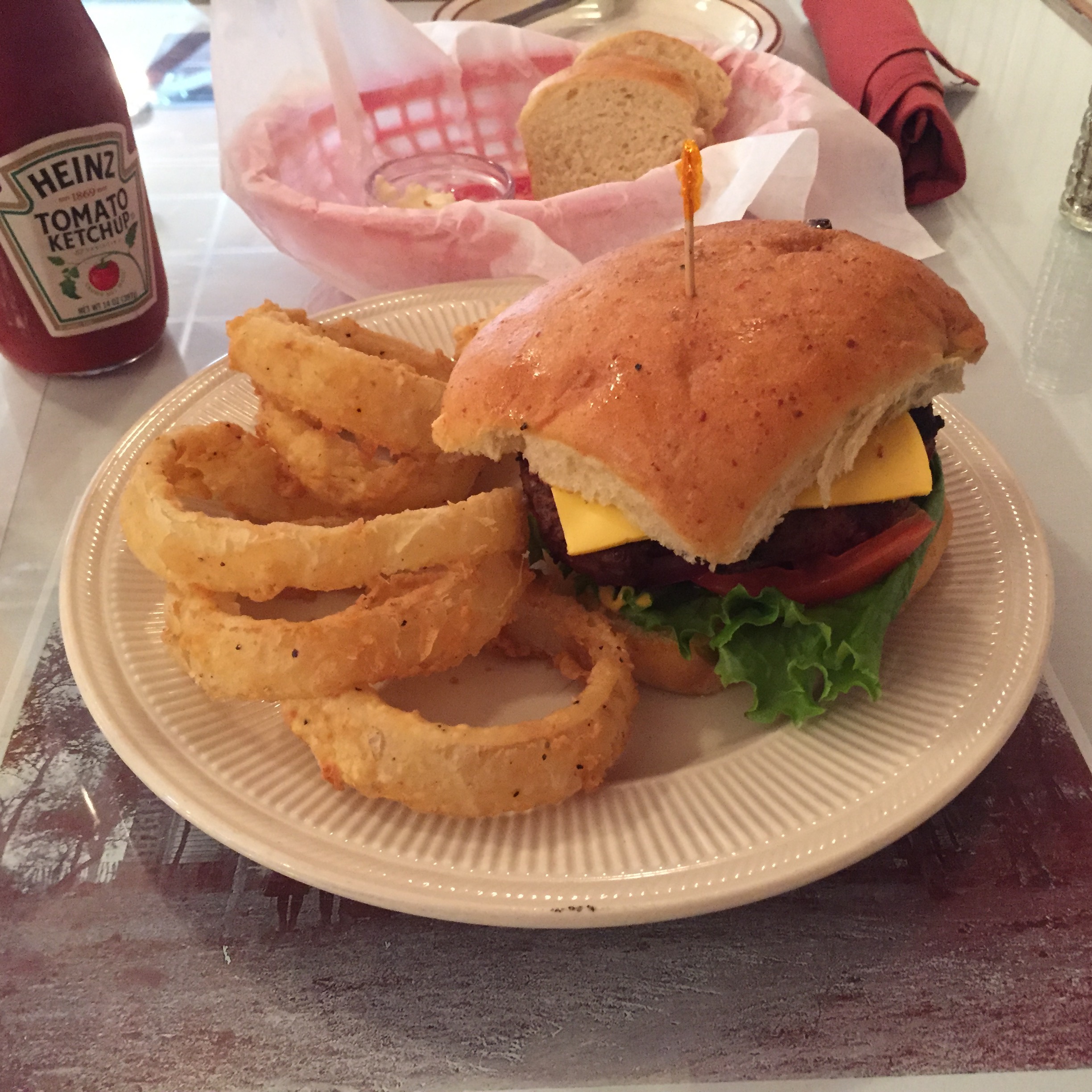
Of course, I was at the Hanging Tree to eat a hamburger. I ordered a cheeseburger with an order of onion rings along with a cold glass of tea. Looks like the hamburger was a popular choice. I noticed that several other diners had also ordered burgers and onion rings. I could hardly wait.
A good hamburger bun is just as important to me as the flavor of the meat. A bun is supposed to serve as more than just parentheses around the meat. A bun should enhance the overall flavor of a burger. The first thing I noticed about my cheeseburger was the square bun. This was no ordinary out-of-the-bag bun. This bun was infused with bits of jalapeño and cheese. And it was mighty delicious.
Bottom line — I’m glad I stopped to eat at the Hanging Tree. Absolutely enjoyed my cheeseburger and onion rings. Also enjoyed the ambiance of the place and the big picture window that frames the hanging tree on the courthouse lawn across the street. I am happy to add the Hanging Tree to my list of interesting places in Texas to eat a delicious hamburger.
McKittrick Canyon
The most beautiful spot in Texas. These are the words that piqued my interest in McKittrick Canyon. Located near the eastern edge of the Guadalupe Mountains National Park, the canyon has the most breathtaking display of fall colors in the Lone Star State. These spectacular fall colors attract thousands of visitors to the park in late October and early November.
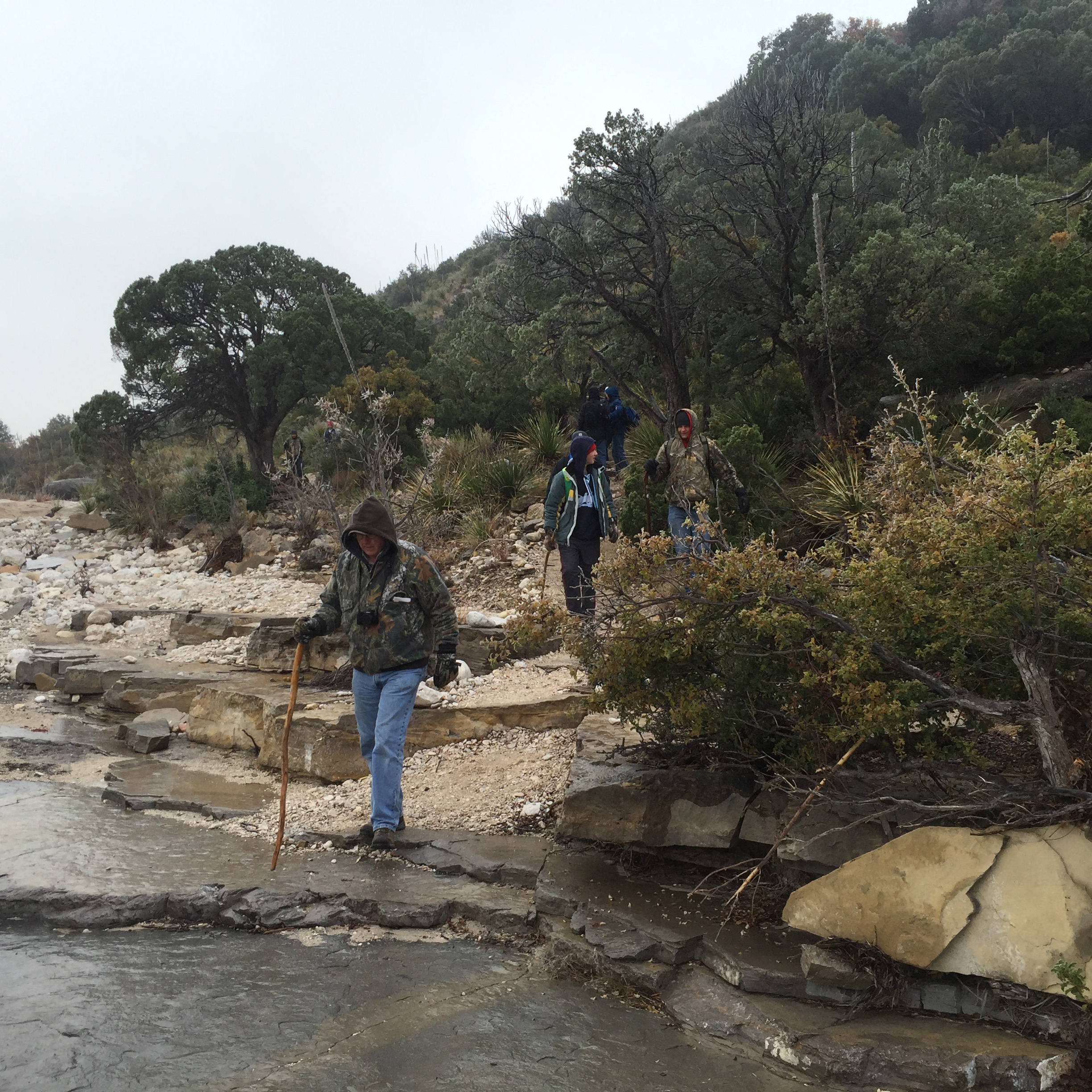
Although I visited the canyon in late November, I was not disappointed. Friends and I camped at the Pine Springs Campground under overcast skies and freezing rain. The morning of our planned hike to McKittrick greeted us with 20-something degree temperatures and a world of ice. Through the night, the freezing rain had turned the plants and trees in the park into beautiful ice sculptures. We all felt privileged to see the park as few others have the opportunity to see it.
McKittrick Canyon is located about seven miles from the Pine Springs Visitor Center — the headquarters for Guadalupe Mountains National Park. We paid our entrance fee at the visitor center and then drove to the canyon. The freezing temperatures kept most sane folks away so we had the canyon pretty much to ourselves. Once we arrived, we wasted no time in setting off down McKittrick Trail toward the Grotto and the Hunter Line Shack (a round-trip hike of about eight miles).
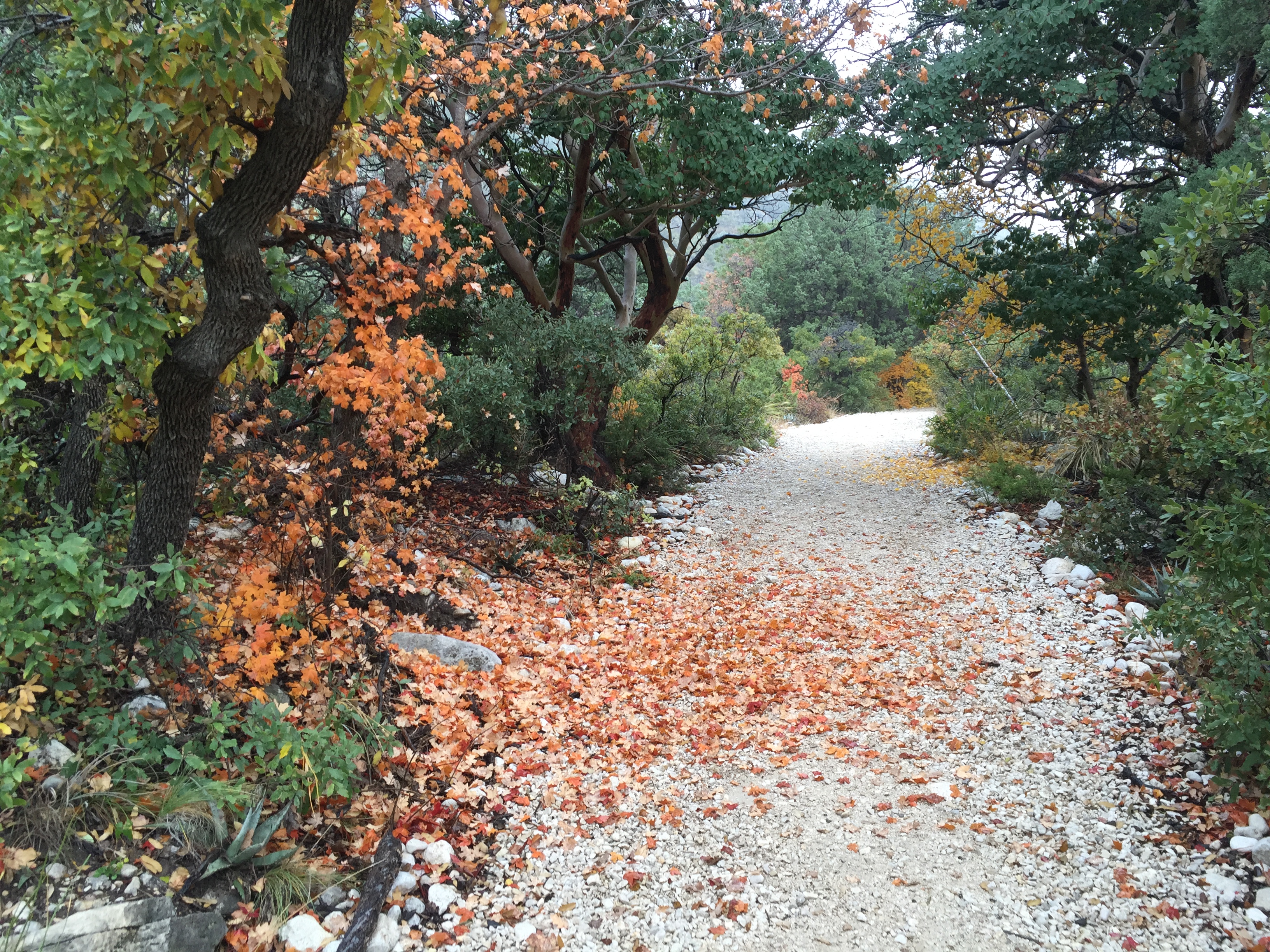
McKittrick Canyon has a beauty all its own. It did not take long for us to realize that we were indeed in one of the most beautiful spots in the Lone Star State. We hiked through a striking palette of fall colors made even more dramatic by the cold, overcast skies. Colorful big-tooth maples, deep-green alligator juniper, bark-shedding manzanita trees, and other native plants each contributed to the beauty of the canyon.
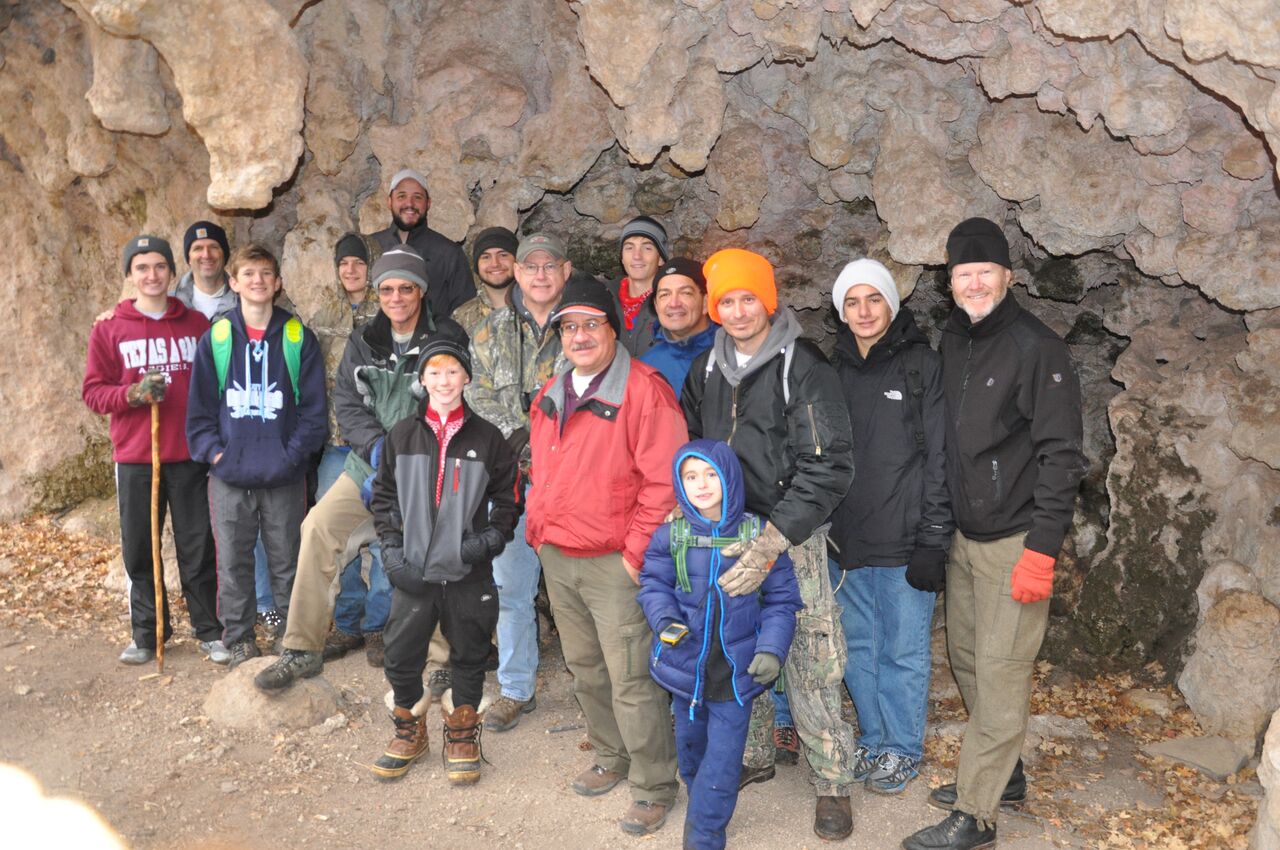
The McKittrick Trail is the most popular in the park and a relatively easy trail to hike. The path is well-maintained and marked, making it almost impossible to get lost. The trail also crosses the only year-round stream found in the park. This stream is home to Texas’ only reproducing stock of rainbow trout. We hiked this trail to the Grotto, a tiny limestone cave filled with stalagmites and stalactites.
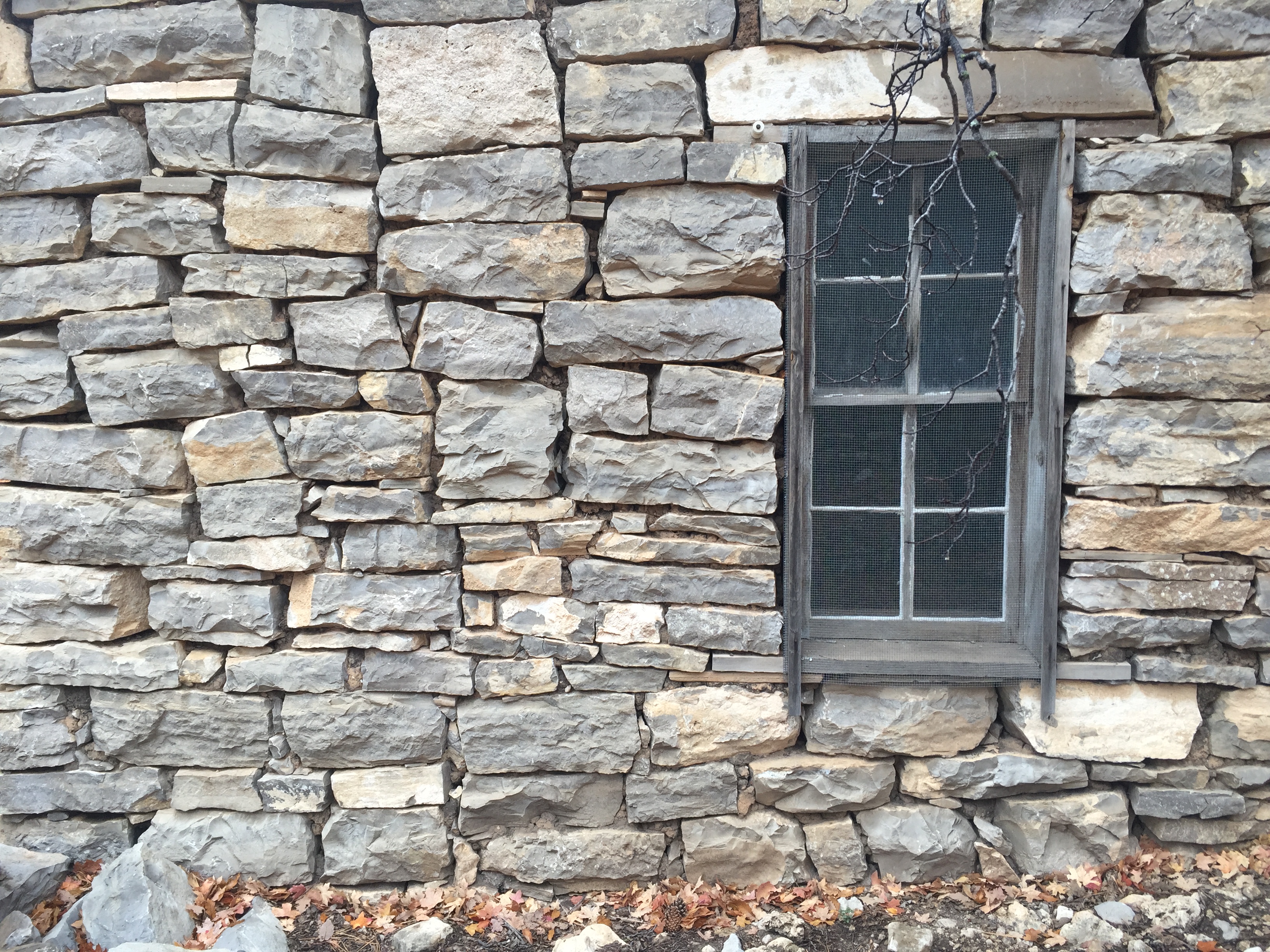
Just past the Grotto is a beautiful picnic area with rock tables and benches. We lingered a while at this peaceful spot and just soaked in the beauty of the place. After enjoying a few snacks, we wandered down the trail to the Hunter Line Shack, built in 1924. You can’t visit a place like this without letting your imagination run wild — wondering about the people who built and used it. What an amazing setting for a cabin! The stars at night must have indeed seemed big and bright to the guys who built this cabin deep in the heart of the canyon.
McKittrick Canyon is just one of the gems that makes a trip to the Guadalupe Mountains National Park worth the drive from anywhere in Texas. In addition to this amazing place that boasts the best fall colors in the state, the park is also home to Guadalupe Peak, the highest point in Texas, and El Capitan, the most dramatic landmark in the Lone Star State. I’m glad my friends and I visited the canyon in the fall. I look forward to returning again soon to enjoy the beauty of the canyon in the Spring or Summer.

Life’s Better With Birds!
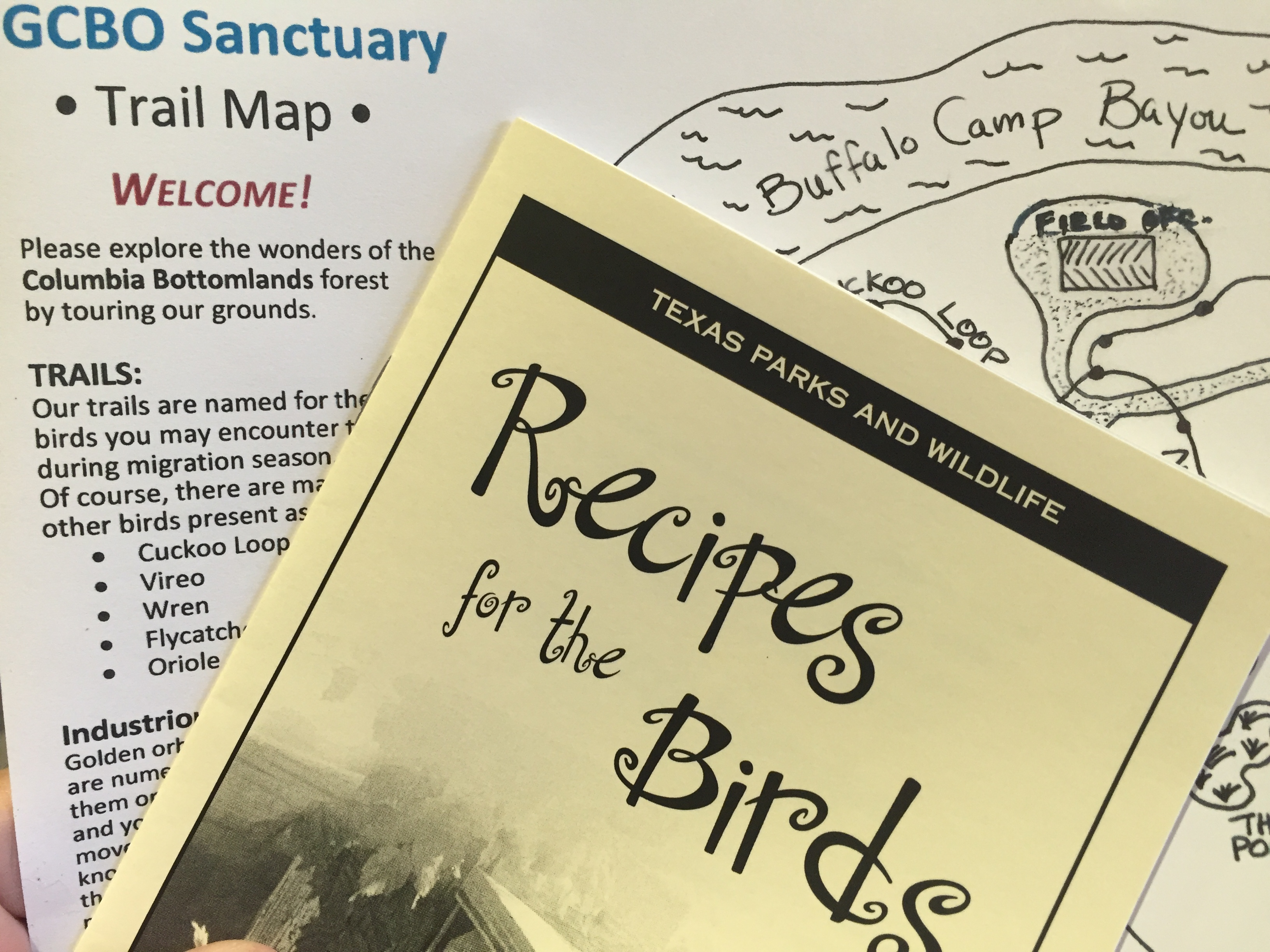
According to the folks at the Gulf Coast Bird Observatory, life’s better with birds! Located at 103 West Highway 322 in Lake Jackson, the observatory sits on 34 acres of Columbia Bottomland forest. Had it not been for my wife Cheryl, I might never have visited the observatory. She invited me to join her for her Texas Master Naturalist class on ornithology led by Chris Eberly, the Executive Director of the observatory. “We’ll also get to see how they band birds,” she said. That sounded too interesting to pass up.
Eberly and his team believe that life’s better with birds for good reasons. Birds do more to help our environment and our Texas economy that most people realize. The mission of the Gulf Coast Bird Observatory is to protect birds and their habitats around the Gulf of Mexico and beyond. Why? Because migratory birds benefit us through pollination, seed dispersal, and pest control. Beyond that, bird-watching contributes more than five-billion dollars annually to the Texas economy.
The ecoregion known as the Columbia Bottomlands includes the thick forest along the southeast coast of Texas. An estimated 29 million migratory birds pass through the Columbia Bottomlands every year. Think of this ecoregion as a hotel for migratory birds, many of which fly hundreds of miles on their migration routes. Migrating birds lose as much as one-third of their body weight. These birds stop to rest and to replenish their strength in the insect-rich woods before they continue their perilous journey north.
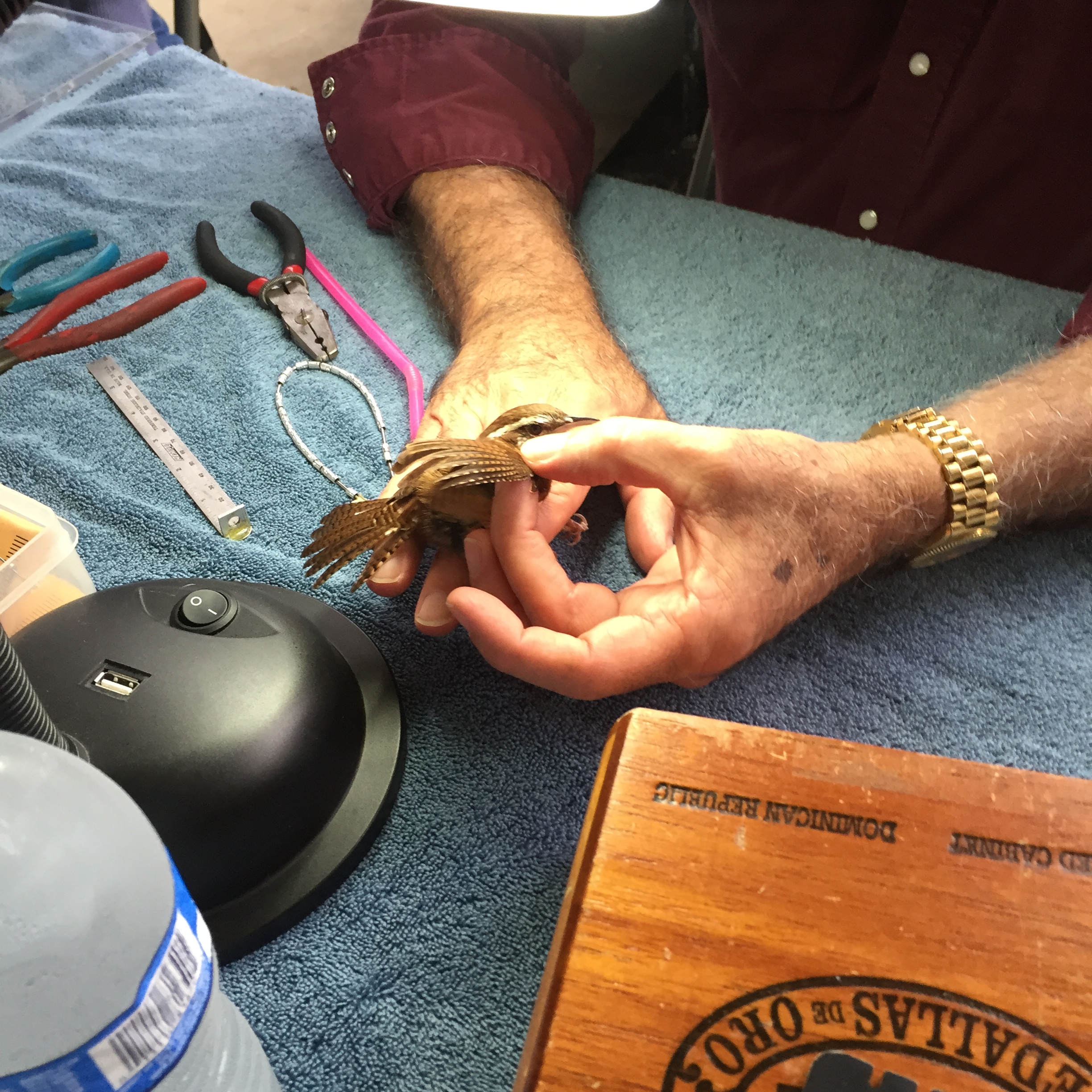
On the third Saturday of every month, the Gulf Coast Bird Observatory conducts a bird banding event that helps them collect baseline data on bird populations at the sanctuary. Robert and Kay Lookingbill operate the banding program. They share the information they gather with a national database that tracks the movement of birds and ultimately helps scientists better understand how to protect birds and their habitats.
I found the whole banding experience fascinating to watch. I have never before had an opportunity to see such a variety of beautiful birds so up close and personal. Robert and Kay handled each bird with the utmost care and recorded every detail about each of the birds — weight, wingspan, body fat, and more. They know their stuff and answered a lot of questions from those of us in attendance.
In addition to visiting our state parks, consider a trip to the Gulf Coast Bird Observatory. The self-guided nature trails are open Monday through Saturday from 8:30 AM to 4:30 PM. The monthly bird-banding operation is free of charge and no reservations are required. For more information on the Gulf Coast Bird Observatory visit their website. It’s a great place for adults and kids alike. Once you visit you too will agree that life’s better with birds!
Queen of the Painted Churches
The steeple of St. Mary’s Catholic Church towers like the tall mast of a ship above the vast pastures surrounding the historic community of High Hill. Founded by German and Austrian-Moravian settlers in the 1840s, High Hill is home to the beautiful St. Mary’s Catholic Church, known as the Queen of the Painted Churches. The painted churches of Texas are indeed a treasure.
St. Mary’s was designed and built in 1906 by Leo Dielmann, a young architect from Germany. At a time when churches were built in the more practical Mission style that was better suited to the hot Texas climate, Dielmann championed the classic gothic revival architectural style. Many of the wood churches of the period were destroyed by fire and storms, thus influencing German and Czech immigrants to build their churches of brick or stone.
In its early years, High Hill was a stop along a transcontinental stage-coach route. However, when the Galveston, Harrisburg, and San Antonio Railway wanted to lay tracks through their community, the residents refused to give the railroad any right of way. They feared that doing so would destroy the tranquility of the town. Instead, the railroad built its line south of town and Schulenburg was founded as a result. As for High Hill, it remained a quiet and tranquil little town.
Today, St. Mary’s Catholic Church remains as an enduring and endearing monument to the faith of the early settlers of High Hill. The interior of the church is absolutely beautiful. Every ornate detail testifies to the remarkable craftsmanship and talent of the artists and builders. The interior is a symmetrical feast for the eyes. The stained glass windows allow just enough light to seep in to enhance the worshipful atmosphere. You can easily sense that the church’s builders labored for the glory of God.
Visiting the Queen of the Painted Churches is certainly worth taking the short three-mile detour north of Schulenburg on Interstate 10. The doors are open and guests are requested to show proper etiquette when visiting the church. Be sure to take your camera. Once you stop by for a visit, you’ll understand why St. Mary’s is on the National Register of Historic Places and has earned the title Queen of the Painted Churches.
Hotel Blessing Coffee Shop
My road trip to the tiny town of Blessing was inspired by the name of the town. Blessing was established in 1903 on land owned by Jonathan Edwards Pierce, a namesake of Jonathan Edwards, the renowned 18th century preacher. When Pierce gave the right-of-way to the Galveston, Harrisburg, and San Antonio Railway, the settlement was as yet unnamed. Pierce proposed to name the settlement “Thank God.” However, when the Unites States Postal Service rejected his proposal, he named the place Blessing instead.
The best known spot in Blessing is the old Hotel Blessing, built in 1906. The hotel was built for land-seekers and was also a residence for developers Pierce and his son, Abel. Today, the hotel looks pretty much the same as when Pierce lived there and shipped his cattle to market on the nearby railroad. Hotel Blessing has survived the ravages of time, the battering of Gulf Coast storms, and retains its turn-of-the-twentieth-century charm.
Once you step through the double entry doors it’s as though you have entered a time capsule. The long entry hall is accented with period antiques and other Texas memorabilia. A stairway on the left leads to the second floor. At the end of the hall is the entry to the Dining Room — the historic Hotel Blessing Coffee Shop. Of course, this is more than a coffee shop. This cafe has been serving meals for more than a hundred years and is unquestionably one of the best places to eat in the Lone Star State.
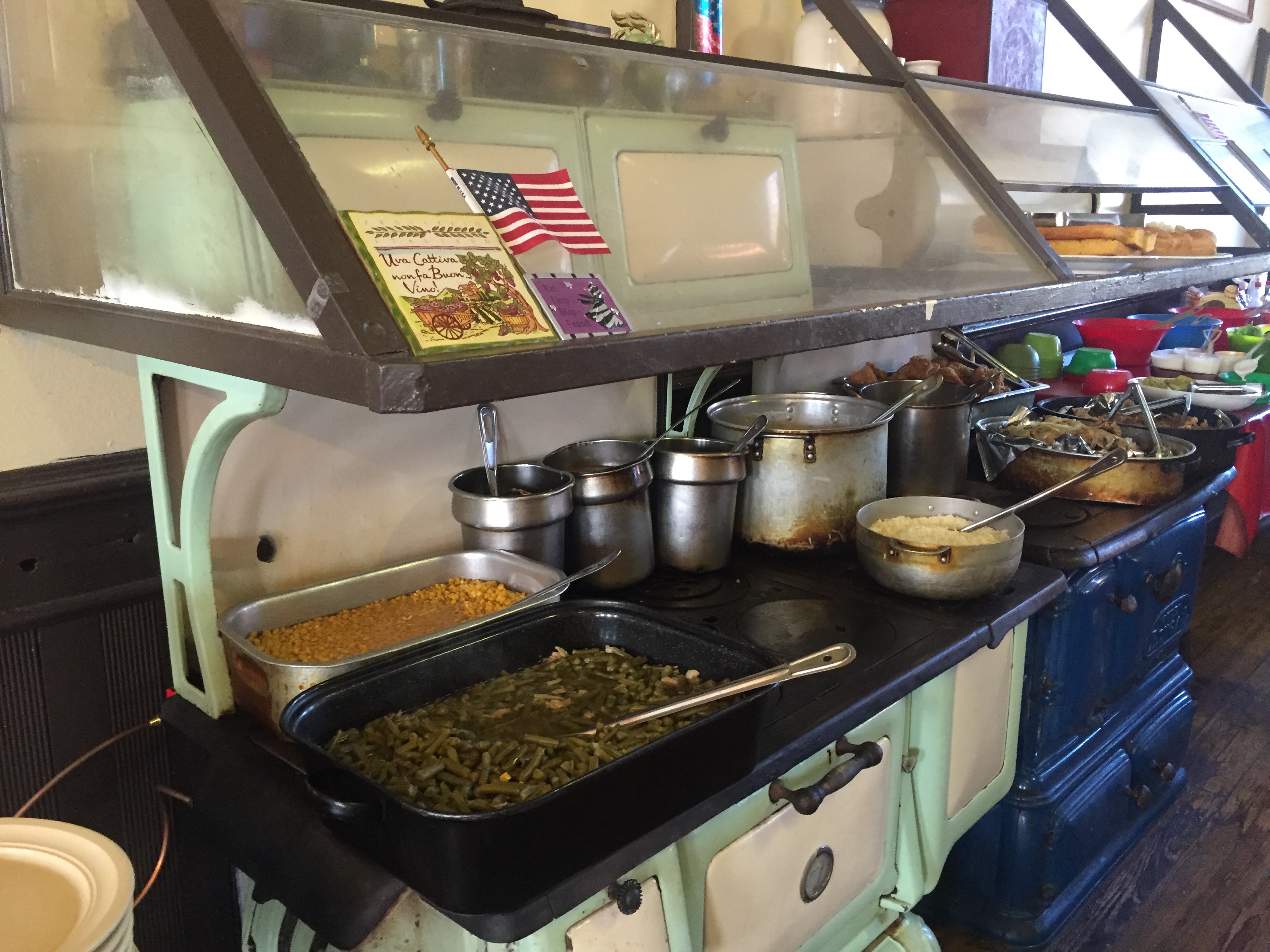
The cafe is a bit unorthodox, which is what makes it so special. My wife Cheryl and I were immediately greeted when we walked in. We were instructed to “grab a plate and help yourself to as much as you can eat — and sit anywhere you like.” The food is served buffet style on antique stoves at the back of the dining area boasting tables, chairs, and decor as old as the hotel itself. Crissy, one of the young ladies who works at the cafe told us the peach cobbler was especially good. “I made it myself,” she smiled.
Cheryl and I loaded our plates with more food than you can legally eat a Baptist potluck fellowship. And it was all good. In fact, it was better than good. It was excellent. This was homestyle cooking at its best. Some have said that if you leave the cafe hungry then “it’s your own dang fault.” I agree. I ate more than I should have. And, Crissy was right. The peach cobbler was very good!
And the price for all of this homestyle goodness served in a place steeped in so much history — only ten bucks per person, including drink, dessert, and all the food you can possibly eat. That’s it. Ten bucks — tax included (pay with cash or check only). Not many places where you can get a deal like that these days and enjoy your meal in a laid back historical setting.
There is no question about the fact that Cheryl and I will look for the next opportunity to hit the road to the cafe at Hotel Blessing. We think that maybe next time we will go there for breakfast. Crissy assured us that the pancakes are amazing. And she definitely knows what she’s talking about!
Tamales in Texas
Whenever I hear the word “tradition” I can’t help but think of Tevye, the milkman in “Fiddler on the Roof” whose struggle to maintain his Jewish traditions was made even more challenging by the choices of his three older daughters. In the month of December, the word “tradition” in South Texas is all about La Tamalada or a tamale-making party.
One of my very favorite memories of growing up in South Texas is of the Tamaladas that my beautiful mother would host in our home. The annual Tamalada was a big family and social event when our home was filled with extended family and friends who gathered to make tamales, empanadas, pan de polvo, and other Christmas goodies. It was a great time of the year to be a kid in our home because the house was filled with people we loved, with music, laughter and conversation, and the opportunity to sample lots of food.
Tamales have been around for a long time. Bernardino de Sahagún, a Franciscan friar and ethnographer who came to New Spain (Mexico) in 1529, documented that the Aztecs served tamales to the Spaniards in the mid-1500s. We have traced our ancestry on my Dad’s side of the family to the 16th century, so perhaps our ancestors were among those who sampled Aztec tamales.
The word tamale is derived from the word tamalii from the Nahuatl language spoken by the Aztecs. The word means “wrapped food.” However, the Aztecs were not the only people to enjoy tamales. Tamales were also a favorite food of the Mayans in Central America and the Inca in Peru. Warriors from all of these peoples survived on tamales because it was a portable food.
My mother taught my wife Cheryl how to make tamales. Making tamales is a time-consuming, labor intensive, messy, and creative process but one that is worth the effort when that first batch of tamales is ready to be sampled. In keeping with tradition, Cheryl has hosted tamaladas in our home. My job is to sample the various fillings and making sure that the masa has the perfect taste.
A Tamalada is hard work but fun. It takes lots of hands to soak, dry, and sort the corn husks, to prepare and spread the masa on each husk, and then to add the filling, tie and bundle each tamal (singular) and then finally steam all of the tamales. Because the process is so labor intensive, families that keep the Tamalada tradition make as many tamales as possible. And then, the best part — eating and sharing tamales at Christmas.
Traditions are not all bad, especially those that keep us connected and grounded to faith and family. I hope that you will consider your Christmas traditions and help create memories that will bless and comfort your family and friends for years to come. And, whatever you do, be sure to eat plenty of tamales this Christmas.
Presidio La Bahia
Presidio La Bahia, the world’s finest example of a Spanish frontier fort, is located outside the town of Goliad. The original fort was built in 1721 on the banks of Garcitas Creek near present day Port Lavaca. When this location proved unsuitable, the fort was moved inland in 1726 to a location near present day Victoria. In 1749, the fort was again relocated to its present location near the banks of the San Antonio River.
Presidio La Bahia was responsible for the defense of the coastal area and eastern province of Texas. Within time, a settlement called La Bahia (The Bay) grew up around the fort. The name of La Bahia was changed to Goliad in 1829 in honor of Father Miguel Hidalgo, the patriot priest of the Mexican Revolution. Goliad is an anagram formed from the letters of the name Hidalgo (minus the silent letter H).
On October 9, 1835, Captain George Collinsworth and his band of Texas fighters attacked and defeated the Mexican garrison stationed at the Presidio. On December 20 of that year, the first Declaration of Texas Independence was formally declared at the fort. This Declaration was signed by 92 Texas citizens inside the chapel of Our Lady of Loreto, the oldest building in the compound.
The darkest day in Texas history, the Goliad Massacre, took place at Presidio La Bahia on March 27, 1836 — Palm Sunday. Colonel James Walker Fannin and 341 men under his command had surrendered to General José de Urrea of the Mexican army on March 20 at the Battle of Coleto Creek. The Mexican army held Fannin and his men as prisoners at the Presidio and at the chapel of Our Lady of Loreto.
Fannin and his men had drafted terms of surrender and expected to be treated with a measure of dignity as prisoners of war. General Urrea, however, told Fannin that he could not ratify his terms. He was bound by Santa Anna’s orders and a congressional decree to accept no terms other than unconditional surrender. And, although General Urrea recommended clemency for Fannin and his men, he later received orders from Santa Anna to execute all of the prisoners. He was left with no choice but to carry out the orders.
Some of the men were killed on the grounds of the Presidio and others were killed outside the fort. A few managed to escape. Twice as many men died at the Goliad Massacre than died at the Alamo. As news of the Goliad Massacre spread, streams of volunteers came to Texas to take up arms against the brutal dictator Santa Anna. “Remember the Alamo!” and “Remember Goliad!” became the most potent battle cries of the Texas Revolution.
Fannin and his men are buried in a mass grave outside of the walls of the Presidio. Their names are etched on the pink granite walls of the Fannin Memorial Monument, erected over the burial site in 1938 by the State of Texas. This site is located next to La Bahia Cemetery where you can find grave markers that date back to the mid-nineteenth century.
Our Lady of Loreto Chapel, where Fannin and his men spent their final days, is one of the oldest churches in the United States and is still in use today. In 1946, Antonio Garcia of Corpus Christi, known as the “Michelangelo of South Texas,” painted a beautiful fresco behind the altar. Lincoln Borglum, son of Gutzon Borglum of Mount Rushmore fame, sculpted the statue of Our Lady of Loreto that sits in the outside niche above the doors to the chapel.
You can learn much more about the history of Presidio La Bahia by visiting this National Historic Landmark. Visitors should watch the brief video that gives a broad overview of the history of the fort before walking through the museum filled with artifacts found on site. The grounds and out buildings are well-maintained and give visitors a sense of what life was like at the Presidio.
As you travel the Lone Star State, be sure to visit the sites that preserve the history of the Texas Revolution. Visiting Presidio La Bahia and the Fannin Memorial Monument in Goliad is a great way to remember and honor those who gave their lives for the great state of Texas. Their sacrifice should not be forgotten.