Discover Pan Dulce

Pan Dulce is the bread of my youth. This Mexican sweet bread was always available in our home when I was growing up. Today, a trip to my childhood home in South Texas means a visit to the panaderia (the Spanish word for bakery) to buy pan dulce. Just looking at the trays of pan dulce in the panaderia can stir up the most wonderful childhood memories.
Pan DulceThe history of pan dulce dates back to the 16th century when the Spanish introduced wheat in Mexico. Initially, the indigenous people did not care for the bland taste of wheat. In fact, the first panaderias in Mexico were not popular at all. However, all of that changed when panaderos (bakers) adopted many of the baking techniques they learned from the French.

Soon, the panaderos added new ingredients such as corn flour, chocolate, vanilla, native fruits and vegetables, and raw sugar cane to their culinary creations — giving their breads distinctive flavors. The panaderos also created breads with playful designs and gave them names associated with their appearance.

Today, pan dulce is a tradition that is deeply ingrained in Hispanic culture. Pan dulce is enjoyed in the morning over a cup of hot coffee or cocoa or as a merienda (mid-afternoon snack). These sweet breads are enjoyed on ordinary days and holidays by people around the world. That’s because panaderias have made their way from Mexico to countries all over the planet.

When it comes to pan dulce, I have my favorites but confess that I have never been disappointed with anything I have sampled at a panaderia. If you have never visited a panaderia, I encourage you to do so. Discover pan dulce. Live adventurously. Spend a few bucks. Sample a lot. I promise that you will not be disappointed.

The photos below are of a few of my favorite Mexican sweet breads.

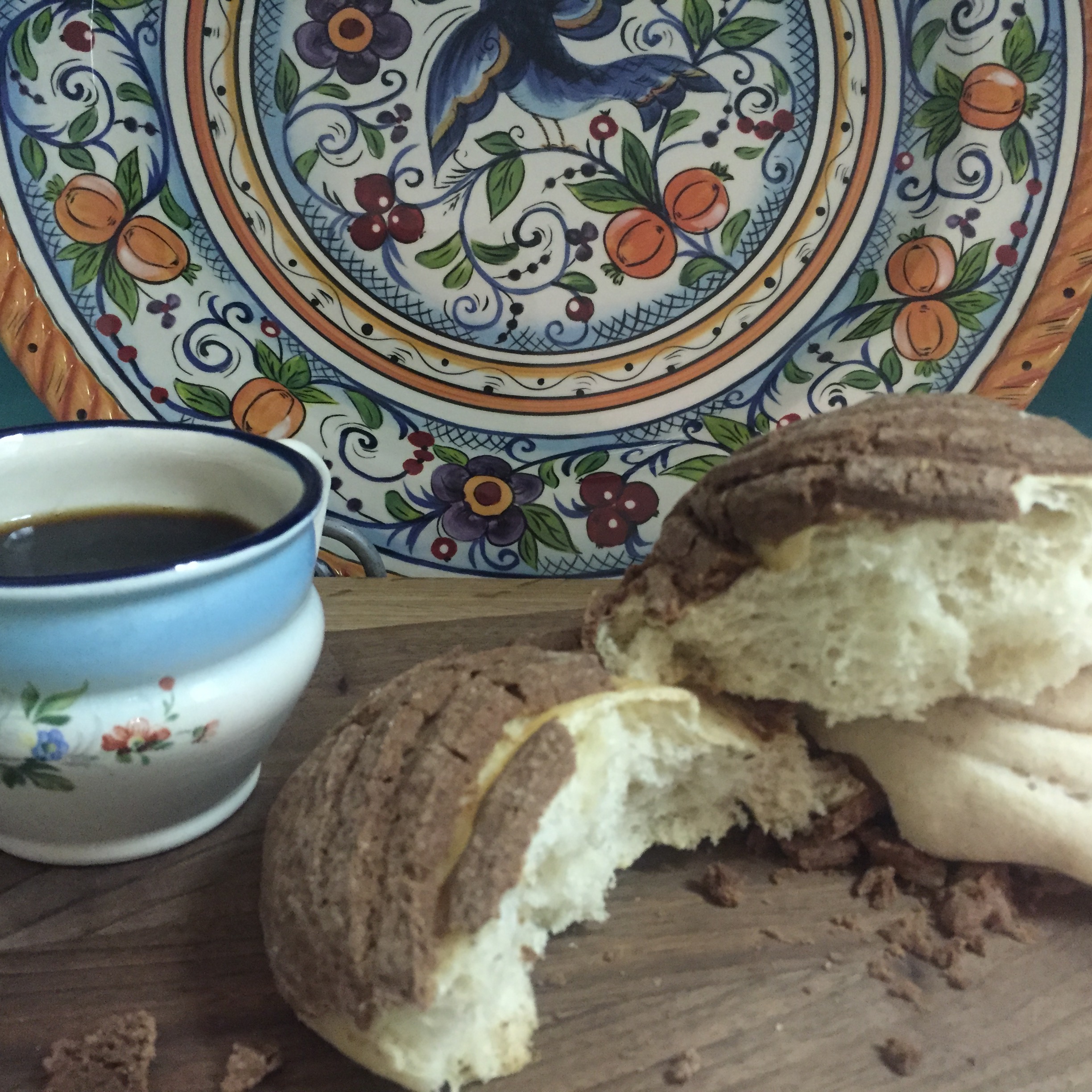
Conchas from the Spanish word for seashells.

Conchas, the Spanish word for seashells.


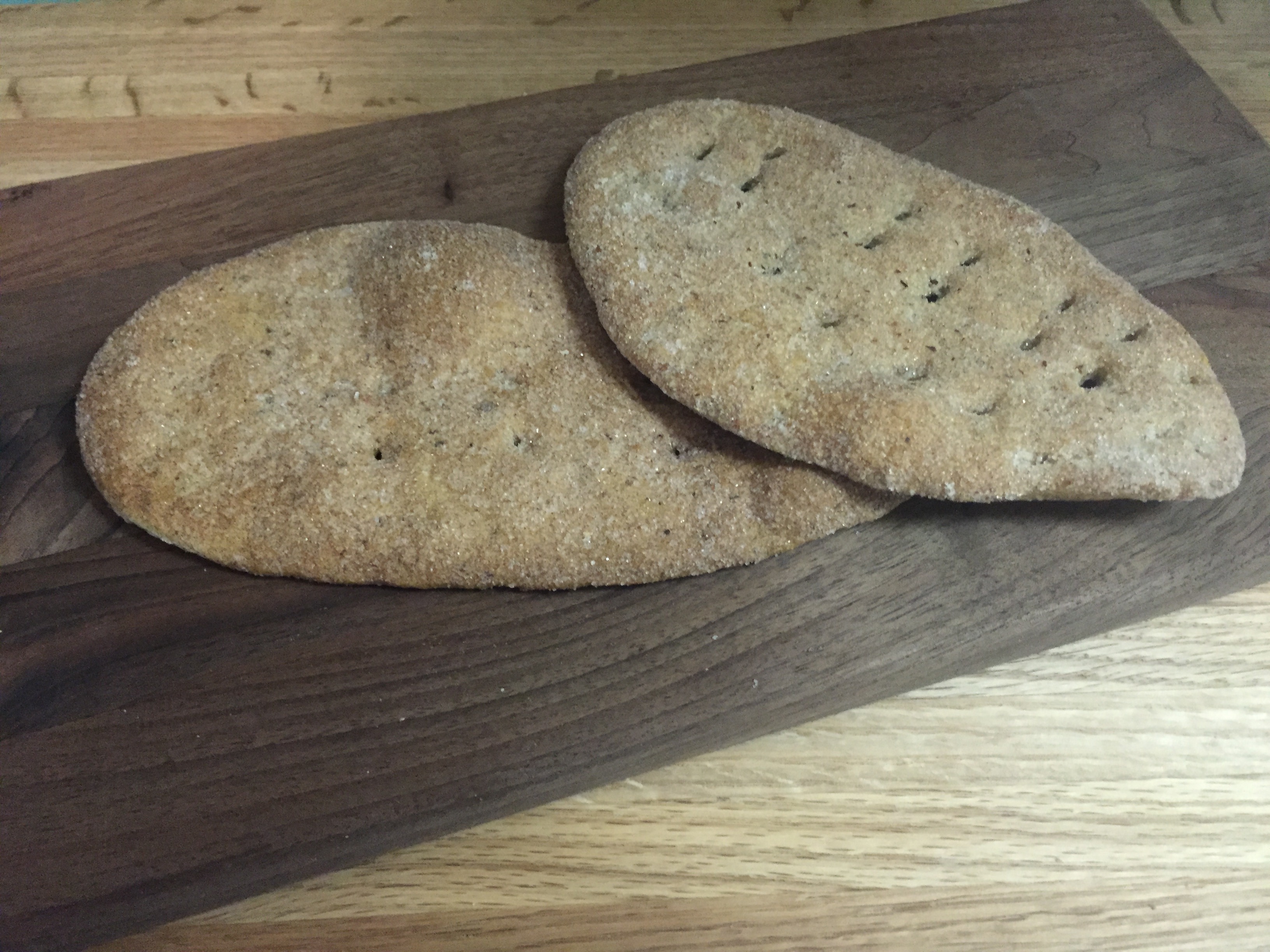
Huaraches from the Spanish word for sandals.

Huaraches, the Spanish word for sandals.


Marranitos, the Spanish word for piglets.

Marranitos, the Spanish word for piglets.


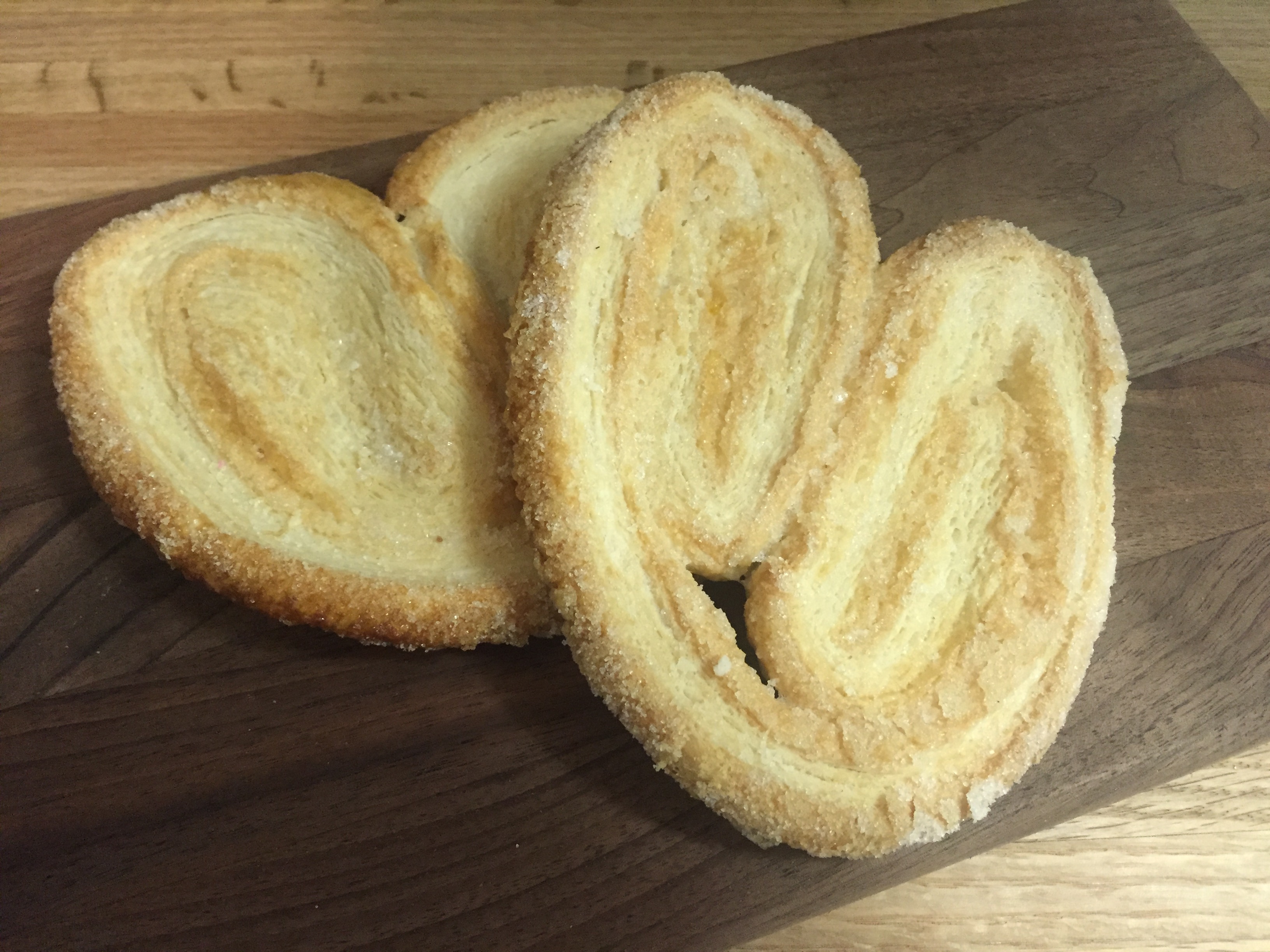
Orejas, the Spanish word for ears. Also called Elephant Ears.

Orejas, the Spanish word for ears. This pan dulce is also called Elephant Ears.


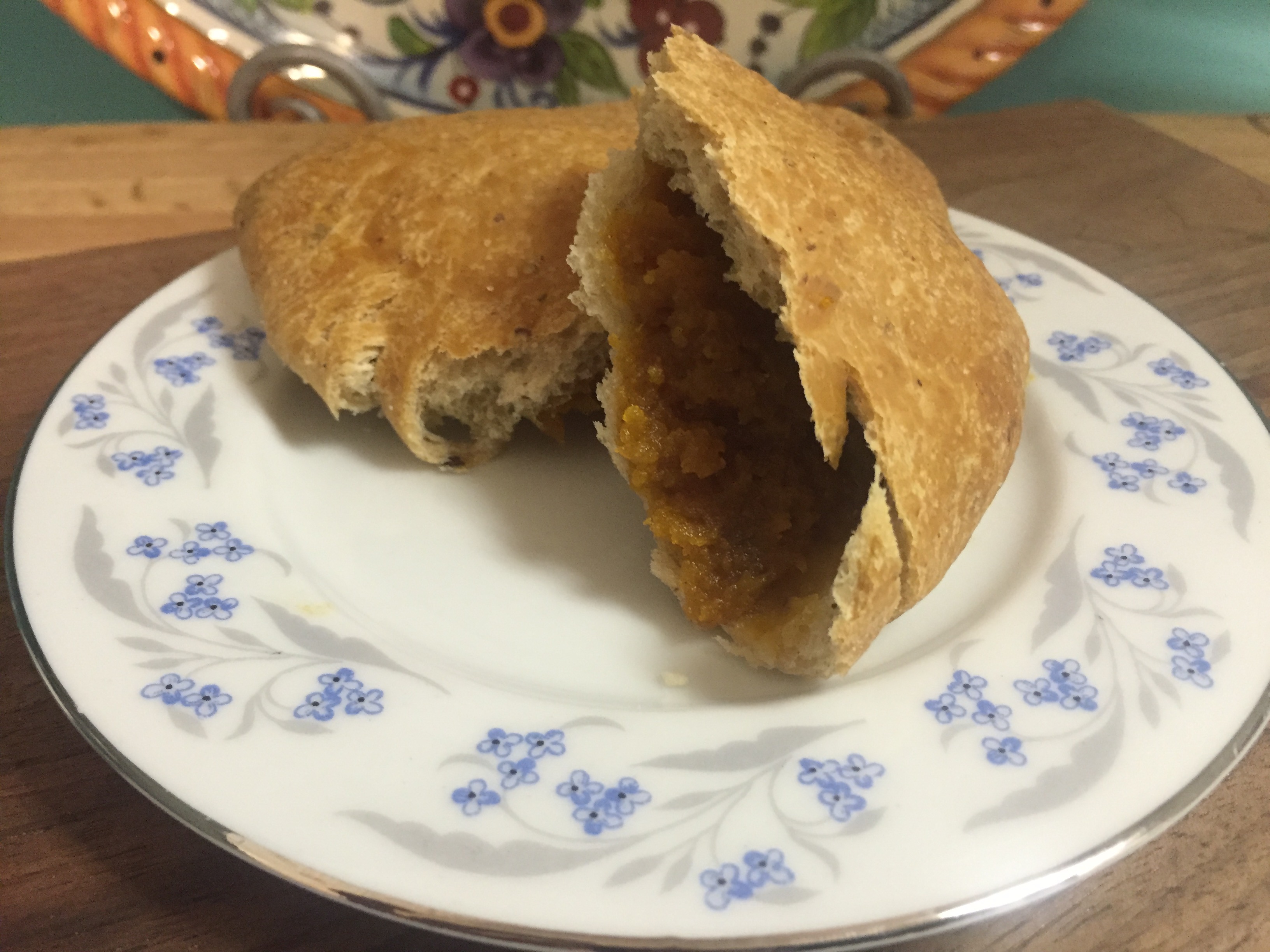
Empanada, the Spanish version of a fruit-filled turnover.

Empanada, the Spanish version of a fruit-filled turnover.

The Tortilla Burger

I think it is safe to say that there are not many eateries in the Lone Star State that make a tortilla burger. I first learned about this burger without buns on a recent episode of The Texas Bucket List. This “everything you should do, see, and experience in Texas” television show is one of my favorites. When I watched the feature on the tortilla burger I immediately added this culinary adventure to my personal Texas bucket list.
The Frosty DinerThe tortilla burger featured on The Texas Bucket List is served at The Frosty, a 50’s-themed diner located in Woodsboro. The small town of Woodsboro is located at the intersection of U.S. Highway 77 and Farm Road 2441 in Refugio County. Originally named Church, the name of the town was changed to Woodsboro sometime around 1907 after a fellow named Captain Tobias D. Wood, a real estate developer, sold a large ranch property.

The Frosty is located at 809 Wood Avenue, the same spot it has occupied for years. Over time, previous owners expanded the place to include a small dining area and a drive-thru window. You can also place your order at the convenient walk-up window. This cool little diner is very likely the birthplace of the tortilla burger, a creative solution born on a day when the kitchen ran out of hamburger buns. The rest is history.
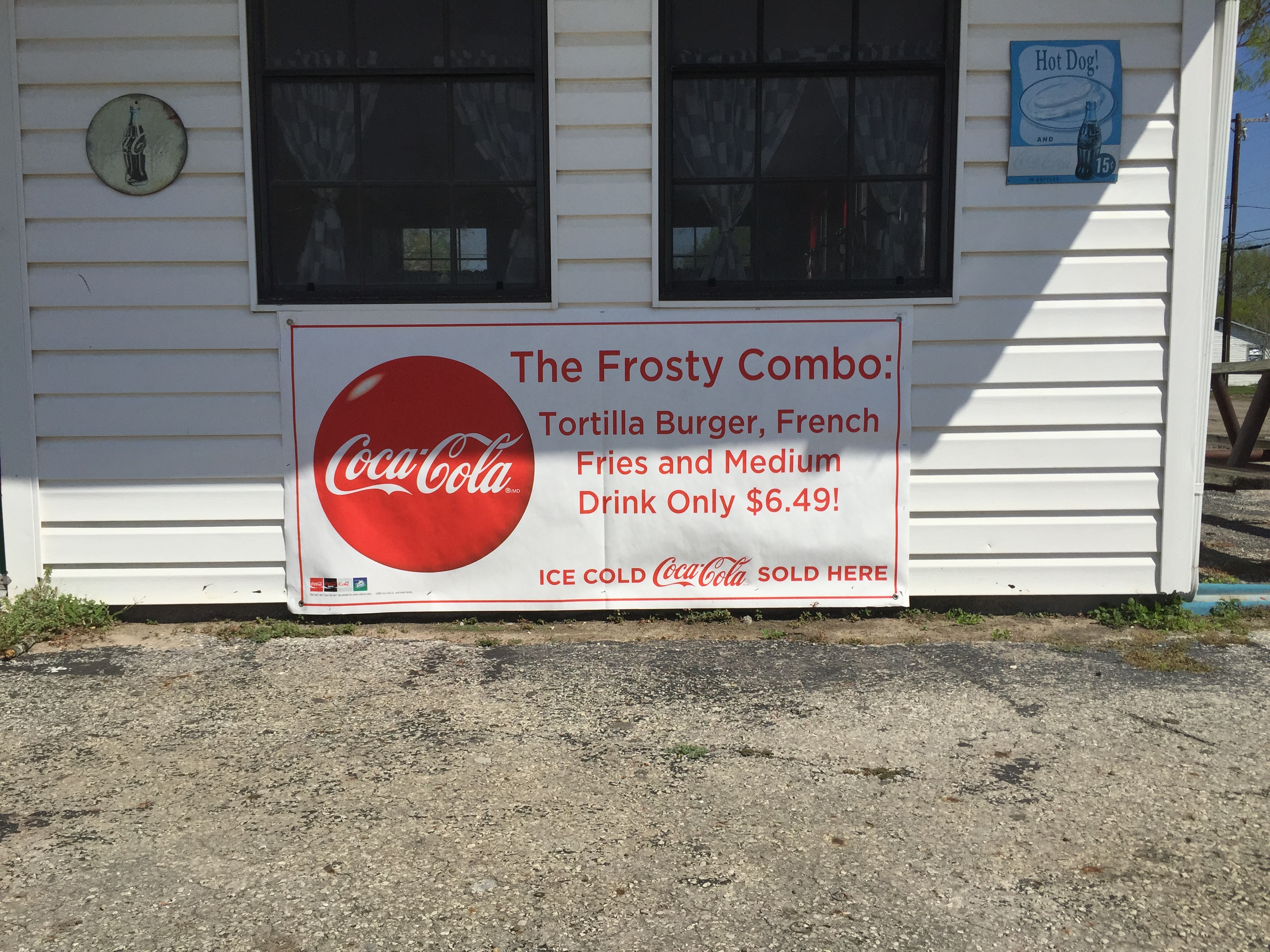
The Frosty ComboAfter weeks of waiting, my wife and I decided to swing by Woodsboro on our way from Katy to Corpus Christi. The first thing we noticed when we pulled in to the parking lot at The Frosty was the sign outside the building advertising The Frosty Combo — a tortilla burger, fries, and a medium drink for less than seven bucks. This is exactly why we were in Woodsboro.
The Frosty InsideOnce inside we were more than pleasantly surprised. To say that The Frosty is a clean diner would be an understatement. The place was immaculate. And the bathrooms, by the way, were every bit as clean as Buc-ee’s! But, I digress. Back to the reason we took this detour on our Spring Break road-trip — to eat a tortilla burger. We both ordered The Frosty Combo.
The Frosty Daniel LinaresDaniel Linares, the current and ninth owner of The Frosty, was in front of the stove. Since taking ownership, he has expanded the menu but keeps alive the tortilla burger tradition. I told Daniel that we had come all the way from Katy to try the tortilla burger for ourselves. He promised us a good dining experience — and he delivered on his promise.
The Frosty Tortilla BurgerThe thought of eating a burger that replaces buns with tortillas sounds counterintuitive. I mean, who slathers mustard on a lightly fried corn tortilla? But, counter-intuitiveness aside, the tortilla burger has endured at The Frosty because it actually works. The tortillas do nothing to rob the burger of its integrity but, in fact, contribute their own distinct flavor to enhance the entire burger experience.
IMG_8237As for the first bite — surprisingly delicious. Who would have thought that a burger as crazy as this would be this good. The crispy, pepper-speckled fries were also tasty. Add a glass of tea with crunchy ice and this turned out to be a great meal. Cheryl and I are really glad that we stopped by The Frosty and hope to do so again.
The Frosty CarIf you find yourself anywhere near Woodsboro, live adventurously. You owe it yourself to stop by The Frosty to try their tortilla-clad burger. As for me, this hybrid burger has definitely earned a place on my personal list of delicious burgers in the Lone Star State. The tasty tortilla burger — only in Texas!

Road-Tripping Close to Home

One of the advantages to living anywhere in the Lone Star State is having quick access to off-the-beaten-path drives. The Lone Star State’s network of Farm to Market roads can connect travelers with some of the most scenic places in the state. I enjoy wandering down these backroads where I can soak in the richness of Texas.
Gravel RoadHere is a sample of one of my no-agenda backroads excursions. The starting point was my home in beautiful Katy just west of Houston. I have convenient access to Interstate 10 and from there to Farm to Market roads and even more remote unpaved roads that lead me deeper into the heart of Texas.
BluebonnetMy first stop was at the San Felipe de Austin State Historic Site. Founded in 1823 by Stephen F. Austin, the Father of Texas, this little colony was the focal point for issues related to the immigration and settlement of American colonists in Mexican-controlled Texas until 1836. Austin built his only home in Texas at San Felipe de Austin. His log cabin also served as the colony’s land office and became the center of San Felipe commerce.
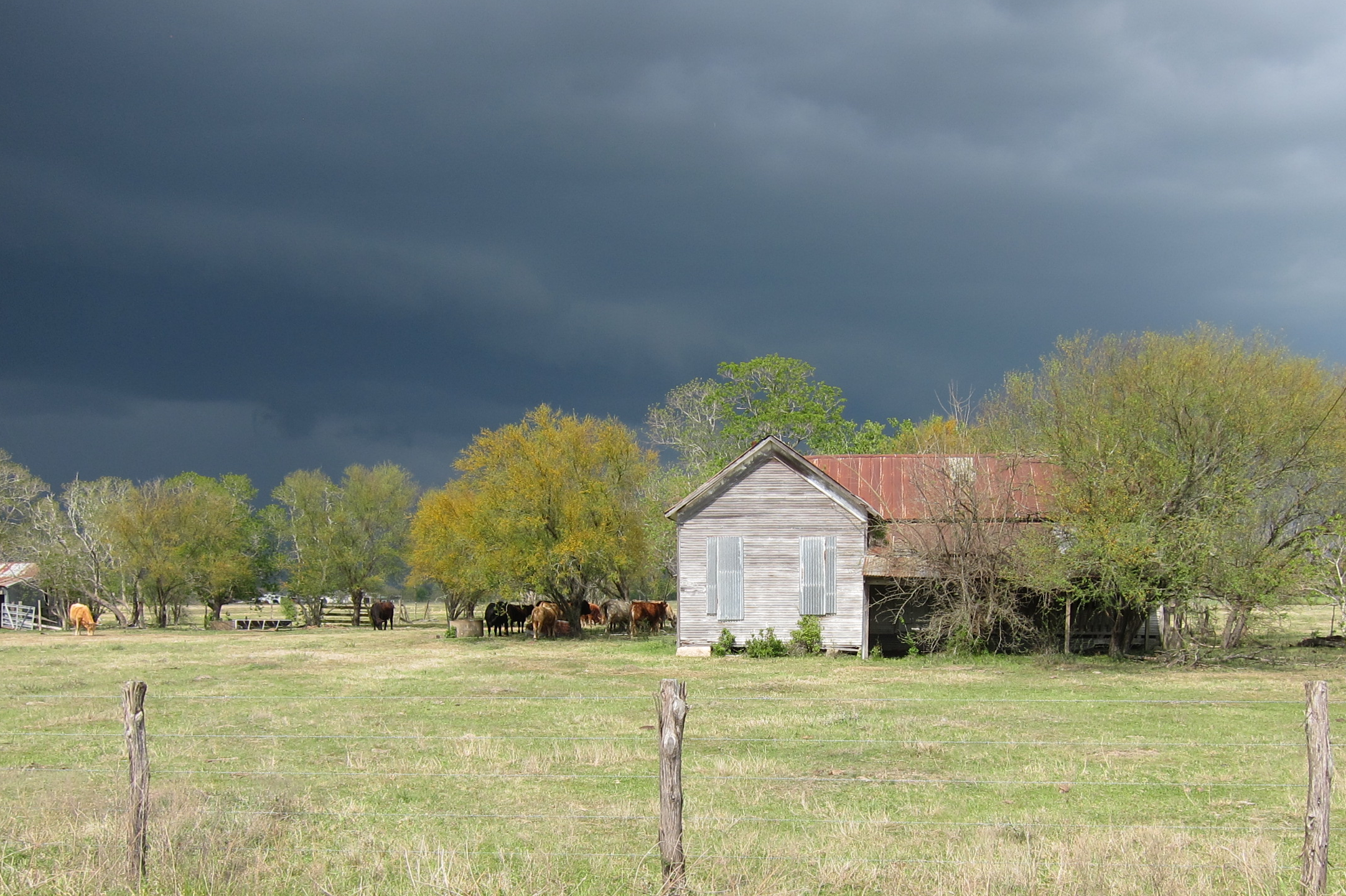
Austin's CabinFrom San Felipe I headed farther west on my backroads excursion. I enjoy the backroads because there is little traffic and I can drive slowly in order to better appreciate the sights. While driving, I received a Weather Channel message on my phone alerting me to severe thunderstorms in the area. I could see the approaching storm in the distance. The darkening skies created some beautiful light, making all of the sights a little more dramatic.
RR TracksI especially enjoyed seeing the old houses and farm buildings, places no longer inhabited that are slowly losing the battle against time and the elements. Looking at these old houses always makes me wonder about who might have lived there or who looked forward to returning there to visit family or friends on holidays and ordinary days. These old decaying homesteads always remind me that we are here for a season and should therefore make the most of every day that we have.
House and CowsAfter a couple of hours of driving, the thunderstorms finally arrived. There is nothing quite like the smell and sound of rain in the Springtime — absolutely therapeutic. My drive home was slower because of the heavy rains, but I absolutely enjoyed every mile. Although I only spent a few short hours away from home, I was refreshed by the experience.
Old House BarbedYou don’t have to travel far to have an adventure, but you do have to venture out and away from where you are. Little backroads excursions do not cost much and they do yield good returns. I encourage you to find your next adventure on a Farm to Market or gravel road close to your home. It’s a great way to redeem an afternoon and to learn a little more about the people and places that have shaped the history of your area.

5 Facts About Texas Bluebonnets

I love Springtime in Texas — that wonderful season when highways and byways in the Lone Star State are adorned with the most beautiful wildflowers. While you may not know the names of all of these colorful spring blooms, any self-respecting Texan can recognize the bluebonnet in the bunch.

The bluebonnet is “not only the state flower,” wrote historian Jack Maguire, “but also a kind of floral trademark almost as well known to outsiders as cowboy boots and the Stetson hat.” Maguire also said: “The bluebonnet is to Texas what the shamrock is to Ireland, the cherry blossom to Japan, the lily to France, the rose to England and the tulip to Holland.”

In anticipation of wildflower season in Texas, I thought it might be fun to consider five interesting facts about Texas bluebonnets.

1. The bluebonnet is the official state flower of Texas.

If you are from Texas, this is one fact that we all learned in elementary school. However, things could have been different when the Texas Legislature was considering our state’s official mascots in 1901. The bluebonnet was, in fact, one of three blooms under consideration by our elected officials at the time.
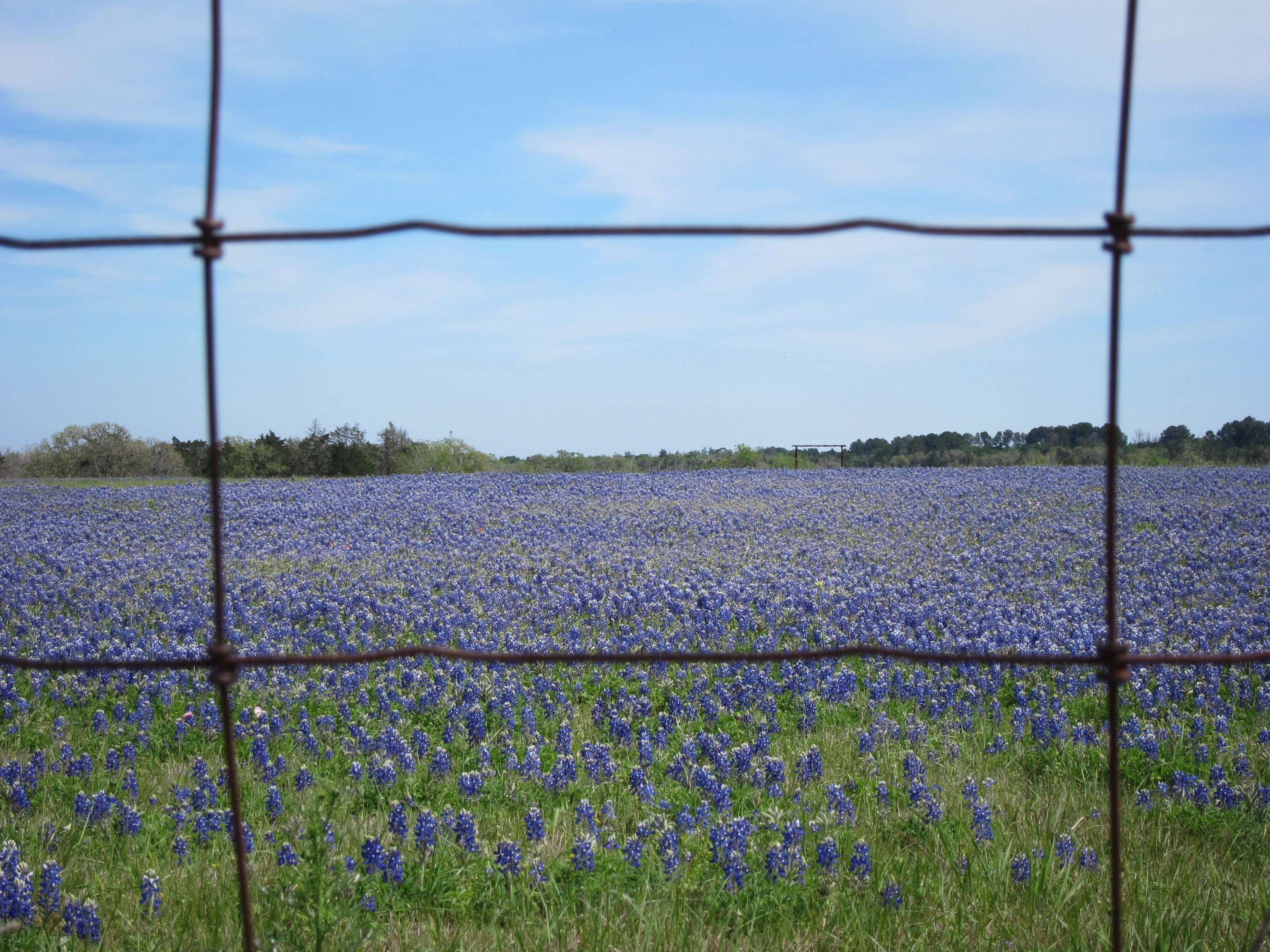
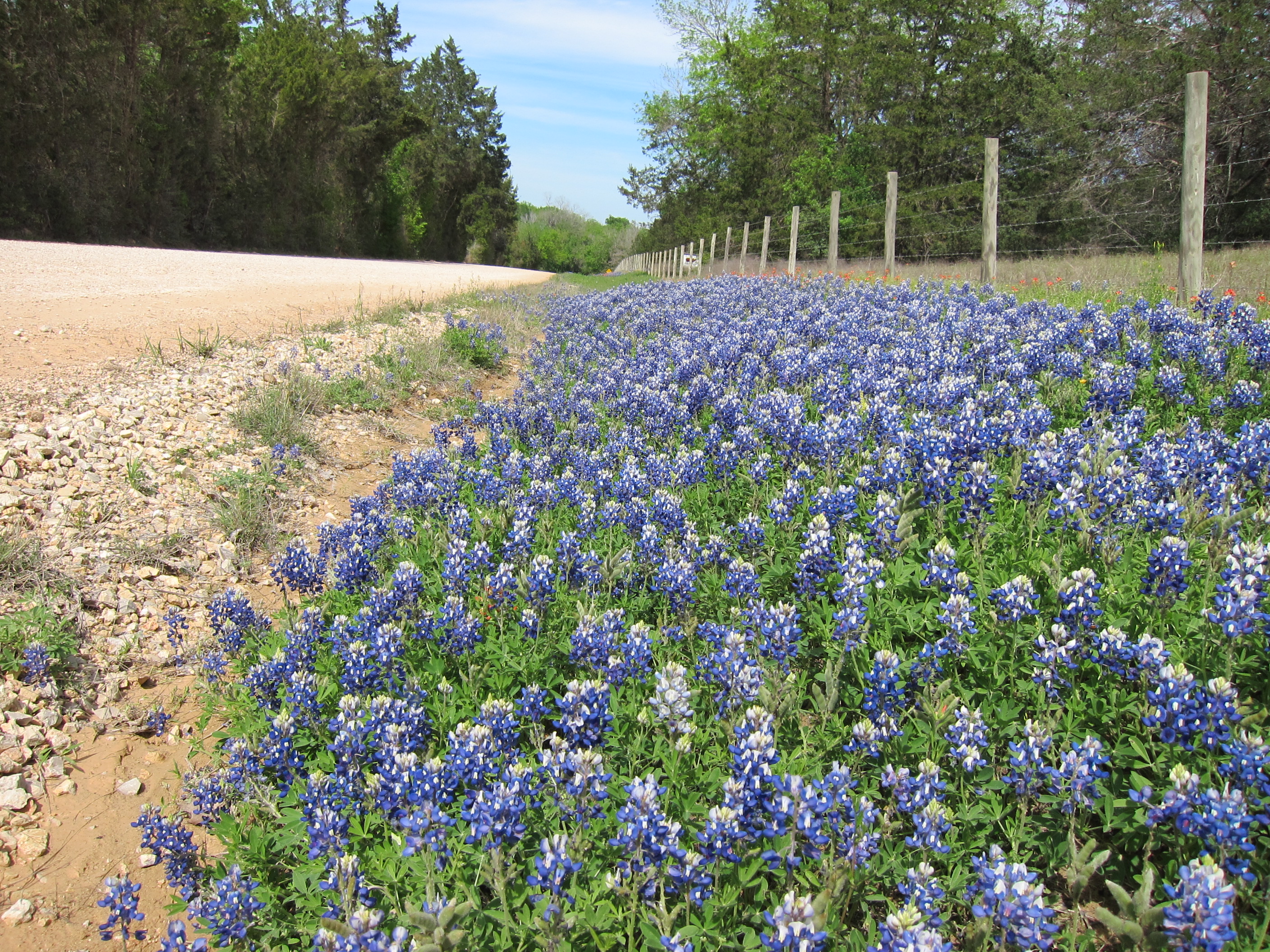
Bluebonnets Wire FenceThe cotton ball was nominated but did not garner much support because, quite frankly, it’s somewhat plain and not much to look at. A fellow named “Cactus Jack” Garner, reputed to be as prickly as his name, nominated the pretty flower of the prickly pear cactus. This hardy flower also lost out. These nominees paled by comparison to the bluebonnet, nominated by the National Society of Colonial Dames of America.

2. A bluebonnet by any other name.

The bluebonnet is also known by other names, including Buffalo Clover and Wolf Flower. The Spanish called the bluebonnet El Conejo from the Spanish word for rabbit because the bluebonnet’s white tip looks like a cottontail rabbit’s tail. The bluebonnet was also called Azulejo from azul, the Spanish word for blue. According to the Lady Bird Johnson Wildflower Center, this word can be loosely translated as “indigo bunting.”
Bluebonnets Country RoadTexas is home to five native species of bluebonnets. In 1901, the Legislature selected lupinus subcarnosus as the state flower. However, citizens protested and petitioned that the lupinus texensis was a better choice because of its larger and more vibrant blooms. The matter was finally settled in 1971 when the Legislature classified all five species of bluebonnets as the Texas state flower.

3. Texas was the first state to plant flowers along state highways.

When the Texas Department of Transportation was organized in 1917, officials noticed that wildflowers were among the first plants to appear along roadways in the Springtime. In 1932, the department hired a fellow named Jac Gubbels as its first landscape architect. Gubbels was charged with maintaining, preserving, and encouraging the growth of wildflowers and other native plants along Texas roadways.
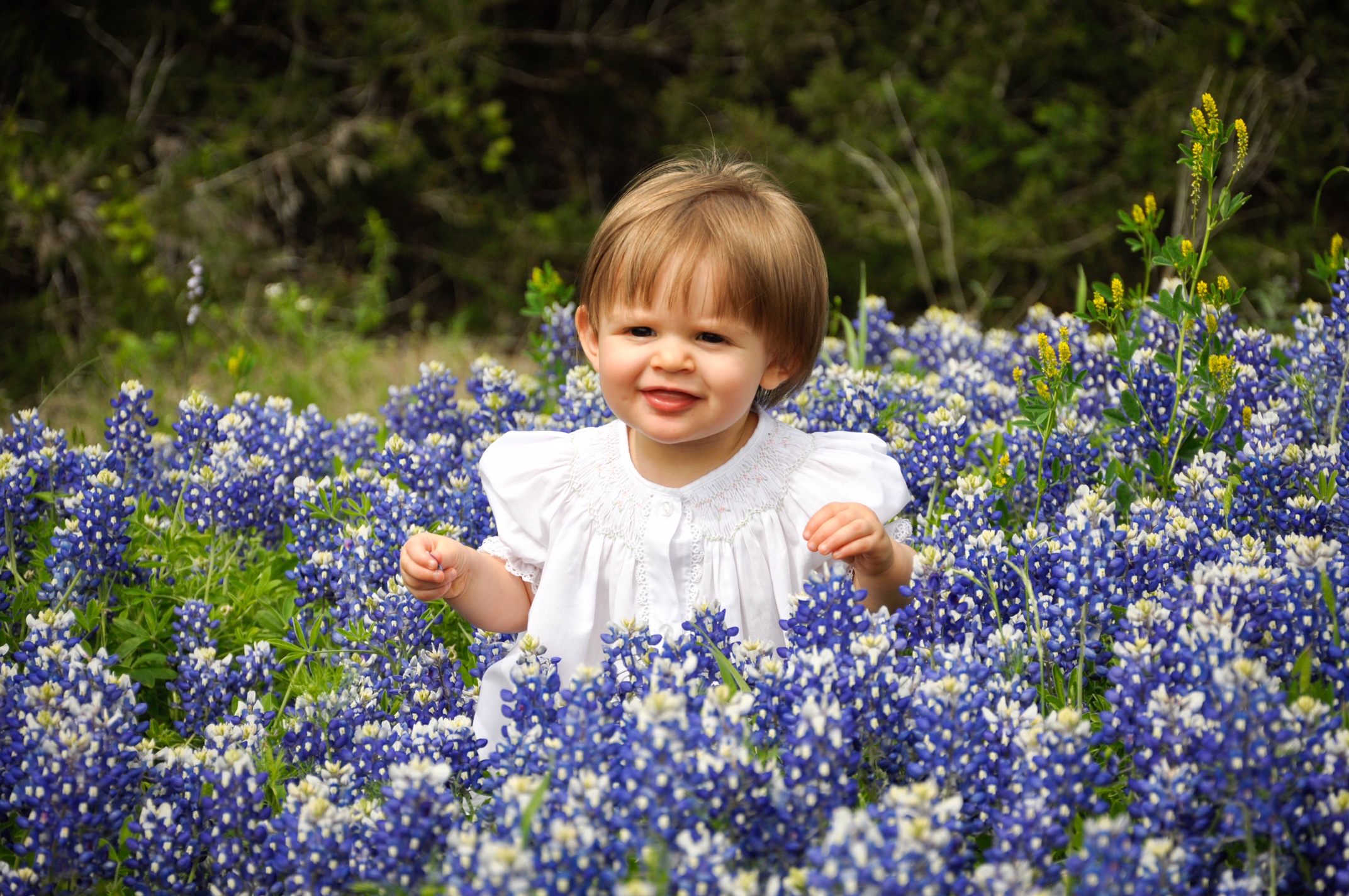
BG in BluebonnetsIn 1934, the department started to delay mowing along Texas roadways until the end of wildflower season. Today, the Texas Department of Transportation buys and sows about 30,000 pounds of wildflower seeds each year, making Texas highways among the most beautiful and scenic in the nation. Every year, flower lovers from around the state and around the nation can be found taking photos among the bluebonnets along Texas roadways.

4. And the award goes to…

The 1997 Texas Legislature named Ennis the official Bluebonnet City of Texas. And because Ennis is home to forty miles of roadsides covered with wildflowers, the Legislature also recognized Ennis as the Texas Bluebonnet Trail. Ennis holds its annual Ennis Bluebonnet Trails Festival every April.
Bluebonnets FenceThe town of Chappell Hill calls itself “the heart of Bluebonnet Country” and earned the title “Official State of Texas Bluebonnet Festival.” Chappell Hill holds its annual Bluebonnet Festival in April. And then there is Burnet, recognized by the Texas Legislature as the “Bluebonnet Capital of Texas.” Burnet holds its own Bluebonnet Festival during the second week of April.

5. Different species of bluebonnets bloom in the Spring.

Unless you are a naturalist, you will likely not be able to tell much difference among the various native species of bluebonnets. That’s ok! The important thing is to enjoy the bluebonnets that grow in or near your particular region. Here is a quick guide on where to go and what to look for.

Lupinus Texensis are found in Central Texas from late March to early April. Look for pointed leaflets and blue flowers tipped with white.

Lupinus Subcarnosus grow in Hidalgo, Leon, and LaSalle counties. Look for blunt leaflets and widely spaced flowers in late March.

Lupinus Havardii grow in Big bend country and grow up to three feet tall in early spring.

Lupinus Concinnus grow in the Trans-Pecos region in the early spring. These bluebonnets only grow as high as seven inches and produce flowers in purple, lavender and white.

And, finally, Lupinus Plattensis can be seen throughout the Panhandle plains from mid to late spring. These particular plants grow as tall as two feet.
Bluebonnets Road

Bobby J’s Old Fashion Hamburgers

My continuing quest to find delicious burgers in the Lone Star State recently led me to a place recommended by a reader who lives in San Antonio. He insisted that I had to eat at Bobby J’s Old Fashion Hamburgers — a popular burger joint in Helotes, a community located on the far northwest side of San Antonio. So, when my travels took me west, I did just that. A friend and I timed our trip so that we could stop for lunch at Bobby J’s.
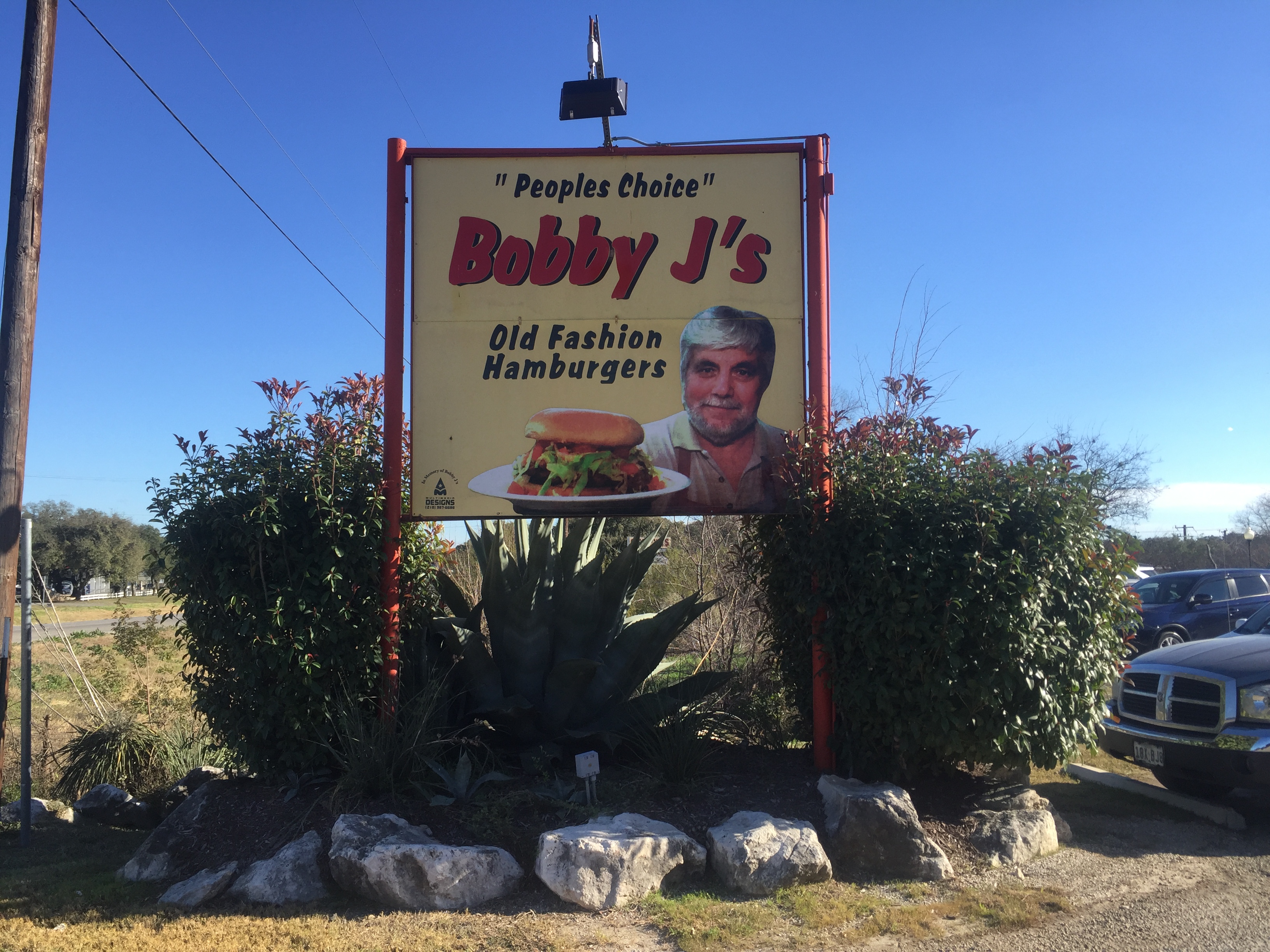
Bobby J's SignFolks have been eating at Helotes for quite a long time. The name Helotes is derived from the Spanish word elotes, meaning corn on the cob. Spanish explorers reported the use of corn on the cob by Apaches in the area as early as the 1700’s. By 1873, Helotes became a stagecoach stop on the Bandera Road, a place where travelers could relax and enjoy a meal.

Bobby J’s was certainly not around in those years when stage coaches traveled the Bandera Road. If it had it would have made Helotes an even more popular stop along this old stage route. Bobby J’s was the brainchild of a real estate guy named Bob Sfalos. In 2000, Sfalos fulfilled a personal dream of opening a burger joint on property that he owned. His wife thought he was crazy but joined him in this new venture to concoct a better-tasting burger.
Bobby J's InteriorAfter eating at every burger place in the area, Sfalos and his wife narrowed their favorites down to three. Then they strategized on how to improve on their favorite burgers and came up with their own secret burger formula. The rest is history. Whatever they came up with worked and soon Bobby J’s earned its own place on top of the burger joint heap. Bobby J’s is undeniably one of the most popular place to eat a burger in the greater San Antonio area.

My buddy and I arrived at Bobby J’s after the lunch crowd — or so we thought. The place had a steady stream of customers the entire time we were there. I ordered the Jalapeño Cheddar Cheese Burger with a side order of onion rings and a glass of sweet tea. A lady named Benita took our order and made us feel right at home. I always appreciate friendly folks like Benita who make a dining experience all the better.
Bobby J's BurgerAs for the burger — it arrived with jalapeños cascading out of the bun. Perfect! I cut the burger in half to reveal a perfectly cooked hand-pressed patty smothered in cheese. The first bite confirmed everything I had heard from my friend who recommended I eat at Bobby J’s. That first bite told me that this was destined to be one of my favorite burger dining experiences. And, the onion rings were the perfect companion to this meal.
Bobby J's Burger HalfBobby J’s is definitely a burger joint I will have to visit again. I enjoyed the eclectic license-plate themed decor and absolutely loved the burger. Along with countless others who have eaten at Bobby J’s, I am glad that Bob Sfalos left the real estate business to make burgers. If you find yourself anywhere near San Antonio, set your compass to Helotes and head on over to Bobby J’s for one of the most delicious burgers in the Lone Star State.

Hiking to Gorman Falls

Gorman Falls is one of the Lone Star State’s best tucked away treasures — a hidden gem of a site. Located along a remote section of the Colorado River, the falls are a part of Colorado Bend State Park. Although the falls are located a little more than a mile from the trailhead, getting there requires a semi-strenuous hike along a rugged but scenic trail.
Gorman Falls TrailThe last hundred yards of the trail require cautiously working your way down a steep descent along slick outcroppings of rock. You will hear the sound of the water as you make your final approach. The park service has placed cables along this final section of the trail to give hikers a handhold along the steep descent to the base of the falls.
Omar at Gorman FallsThe final steps of the hike lead down to a heavily shaded bluff at the base of the falls next to the Colorado River. There is a nice seating area there, something akin to a pew in this heavily shaded area that feels like a beautiful outdoor cathedral. This is a relaxing spot to sit and enjoy the sound of the falls under the shade of the trees.
Gorman Falls (Web Pic)Gorman Falls are fed by Gorman Springs. Cascading down from a 60-foot high limestone cliff, the calcium deposits in the water have created what look like window drapes. These formations are covered with green moss and ferns, adding a calming beauty to the picturesque scene. The park service has restricted access to the base of the falls to help protect the area from damage, so don’t expect to take a dip there.
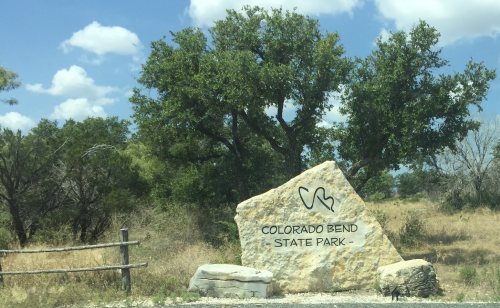
Colorado Bend State ParkAccording to my hiking app, my round-trip hike to Gorman Falls from the trailhead was 3.2 miles. There is little shade along the trail so you might want to wear a ball cap. Although this is not a long hike, don’t make the mistake of hiking in poor shoes or flip-flops or it will definitely feel like a much longer hike. And be sure to take plenty of water to stay hydrated. When you finally arrive at the falls, you’ll agree that hiking to Gorman Falls is definitely worth every step that it takes to get there.

St. Agnes Church in Terlingua

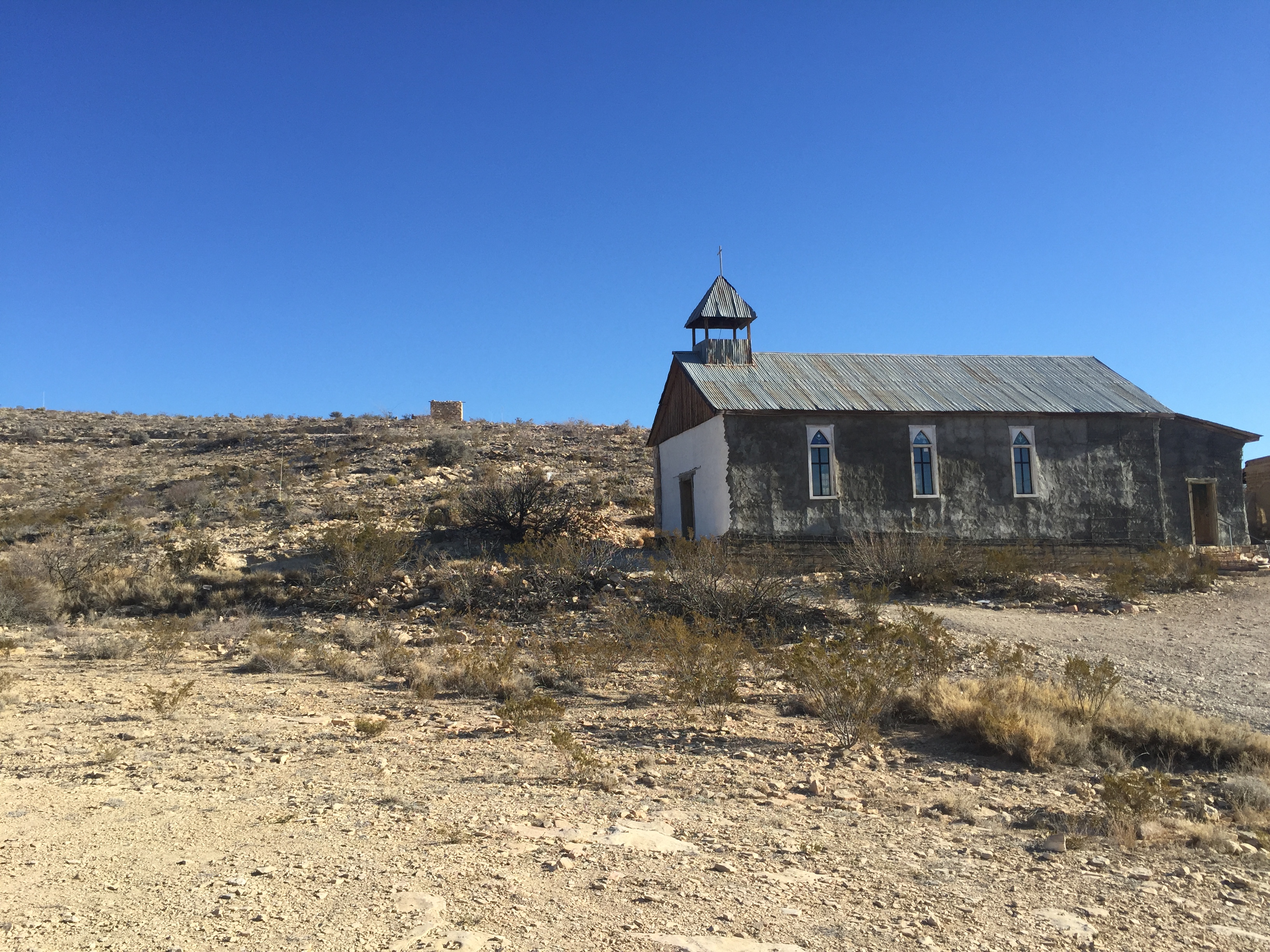
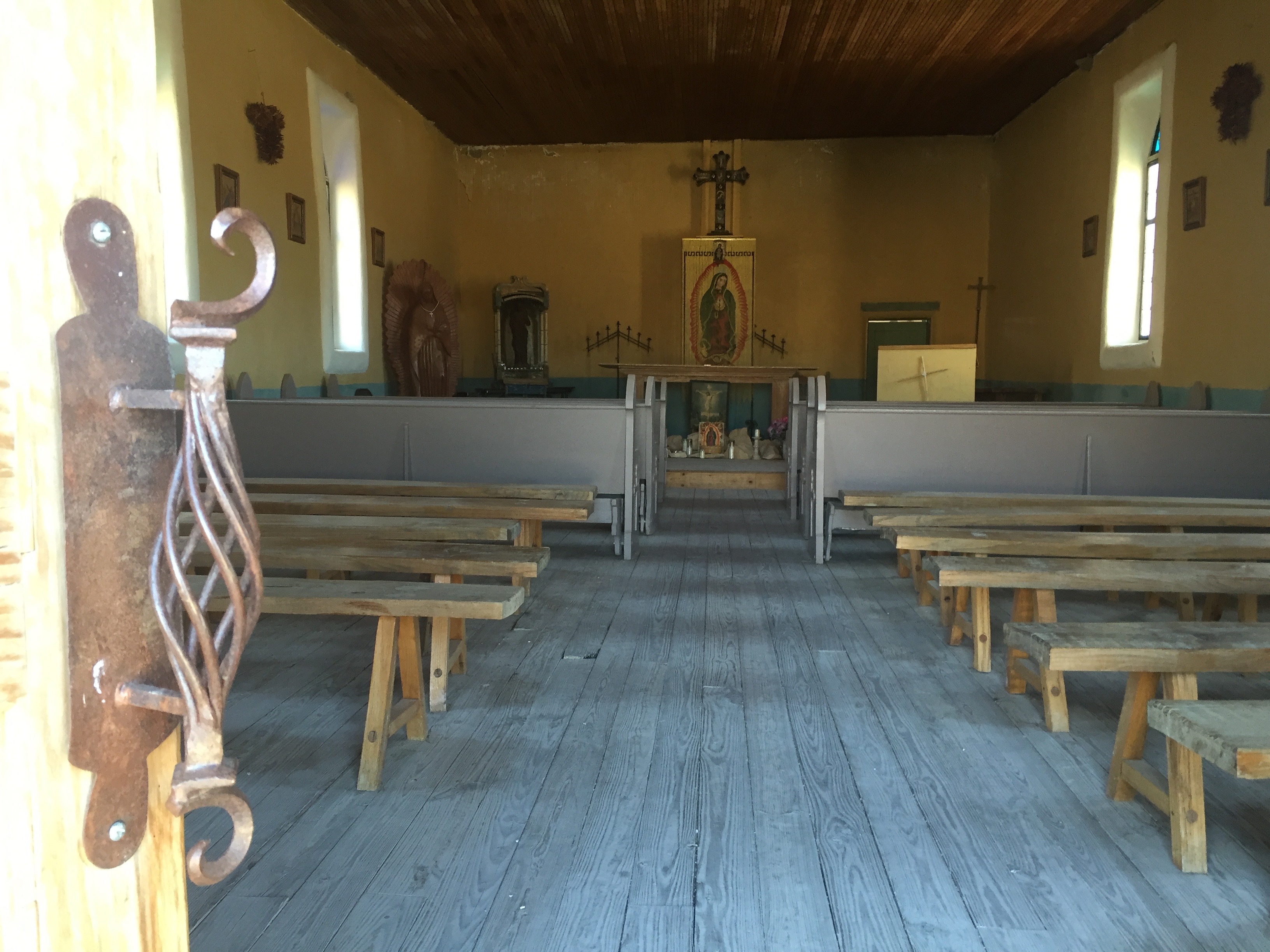
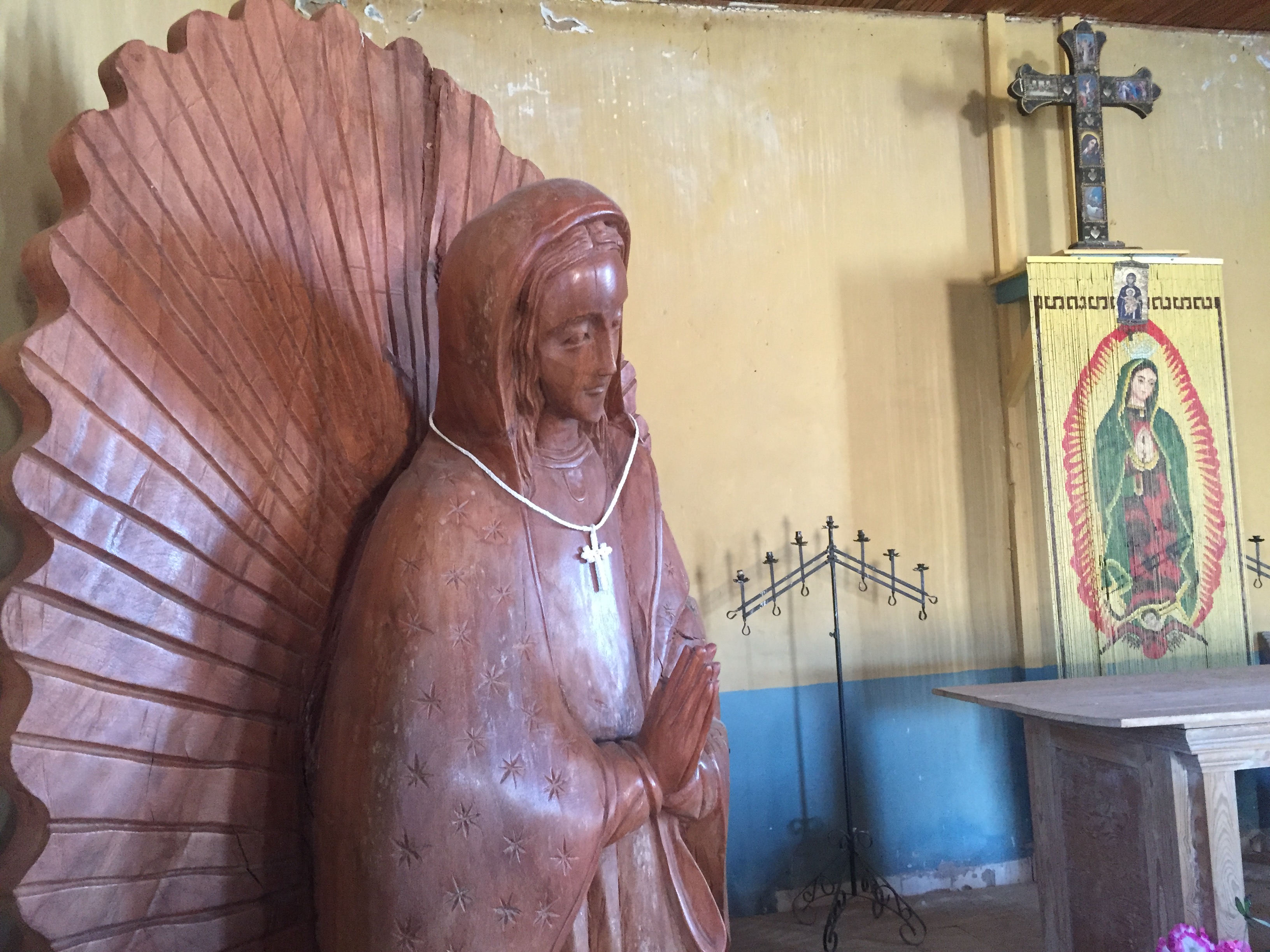
The ghost town of Terlingua is located in the heart of the Chihuahuan Desert, one of the most rugged and hostile environments in Texas. The name of the town is derived from the Spanish words “tres lenguas” meaning “three tongues.” The discovery of quicksilver in the mid-1880s turned Terlingua from a sleepy little village into a town of a thousand-plus residents.St. Agnes ChurchBy 1913, Terlingua had a dependable water supply, mail delivery, somewhat reliable telephone service, a hotel, and a physician. Sometime in 1914, St. Agnes Church, also known as Chisos Mission, was established and became the focal point of the mining town. Itinerant priests held services at the church once a month and also officiated at baptisms, weddings, and funerals.St. Agnes Church InteriorChurch records indicate the priests adopted the Terlingua Cemetery. The burial ground is listed as St. Agnes Chisos Cemetery on church records but the official death records continued to list it as the Terlingua Cemetery. And although the town was segregated with Mexican families living east of the company store and Anglo families to the west, both Mexicans and Anglos were laid to rest in the same cemetery.St. Agnes Church AltarThe adobe building was constructed on a raised stone foundation on the side of a hill overlooking the town. The building has survived the ravages of time and remains an iconic symbol of the importance of faith in this remote place. The interior is completely unpretentious — offering worshipers hard wooden benches, a weathered pine floor, painted adobe walls, and a simple altar. The spiritual comfort the faithful have received here, however, more than makes up for any lack of creature comforts.St. Agnes Church ExteriorI hope to return to Terlingua to learn more about the old church and its history. Suffice it to say that St. Agnes Church has a beauty all its own. We’ll never know how many people over the years found solace, refuge, and the help they longed for inside the walls of this old church. St. Agnes Church remains as an enduring reminder that faith is important and can thrive in the harshest of places.

Mamie’s Kitchen

Pattison, a small town located in southern Waller County, was named after James Tarrant Pattison. This early settler built his plantation house on a tract of land he purchased in 1839. Pattison’s house served as a stage-coach stop on the Atascosito Road, a military highway established by the Spaniards sometime before 1757.

According to the Pattison family, there is a little more to the story. As they tell it, Pattison and a rival plantation owner each wanted the rights to name the town. So, they decided to match their favorite horses in a race. They agreed that the winner would have the privilege of naming the proposed town after himself. The rest is history.

Pattison is located west of Houston and north of Brookshire near the junction of Farm Roads 1458 and 359. Pattison is a small town that is home to Mamie’s Kitchen — a restaurant that serves dishes big on flavor. This small town eatery is named after Mamie Wilpitz Wilson. For more than 40 years, Mamie and her husband John operated Wilson’s Grocery in Pattison. This grocery store became a favorite gathering place for locals.

Miss Mamie earned a reputation as a woman who cared about her neighbors. That’s because she and her husband John had an open door policy that endeared them to others. Mamie, in fact, became known as an encourager who was always ready to listen and to give sage counsel to kids and adults alike. She was regarded as a mother by the folks of her community.
Mamie's RestaurantMamie’s Kitchen, a fairly new restaurant in Pattison, was named in honor of Miss Mamie. Their aim is “to reclaim the feeling of years ago, by offering food and a warm and comforting atmosphere to all who enter this place.” After stopping to eat at Mamie’s a couple of months ago, I have returned to Pattison more than once to eat at Mamie’s.
Mamie's Christmas DinnerMy first meal at Mamie’s was their Christmas Dinner. Oh my soul, it was delicious. I shared a table with a bunch of friends. Each of us received a plate heaping with turkey and dressing and the works. Every bite was filled with home-cooked deliciousness. But, as good as my turkey dinner was, I knew I would have to return to eat a burger.
Mamie's BurgerOn my return visit, I ordered a hamburger with a side of onion rings. This is one big burger. Those of you who follow my blog know that I have a first-bite rating when it comes to trying a new burger. If the first bite is good then all is well. The first bite was indeed good. As a matter of fact, it was better than good. And the onion rings were oh so amazing. Mamie’s is also known for its fabulous pies. So, I forced myself to eat a piece of pecan pie infused with slivers of almonds. Wow!
Mamie's MenuBecause we are all busy it’s easy to fall into a tired routine of eating at the same fast food joints or chain restaurants. Don’t get stuck in that rut. Get out and look for interesting places to eat near you. Make it a point to not judge a book by its cover. Take a chance on a place you might otherwise pass by. You just might find a culinary treasure like Mamie’s Kitchen — a place that will delight your palate and make your taste buds think they won the lottery.

Terlingua Cemetery

Terlingua is one of the most fascinating places to visit in the Lone Star State. If you want to see this old mining town, then you have to adjust your compass settings to off-the-beaten-path. What remains of Terlingua is nestled between Big Bend National Park and Big Bend Ranch State Park in far southwest Texas.
Terlingua RuinsThe name Terlingua is derived from the Spanish words “tres” and “lenguas,” meaning “three tongues.” Some folks say three tongues refers to Native American, Spanish, and English — the three languages spoken in the early days of the region. Others insist that the name refers to the three forks of Terlingua Creek. Either way, Terlingua is a cool name that somehow fits this rugged and hard place.
Terlingua CarAt the turn of the twentieth century, Terlingua became a flourishing mining town that yielded copious amounts of mercury, called quicksilver at the time. Today, Terlingua is a ghost town — the most visited ghost town in Texas. The town still has a few residents who live among abandoned ruins slowly being reclaimed by wind and weather. Visitors will find unique lodging options, a few places to eat, art galleries, a trading company, and a whole lot of vast open spaces and endless skies.
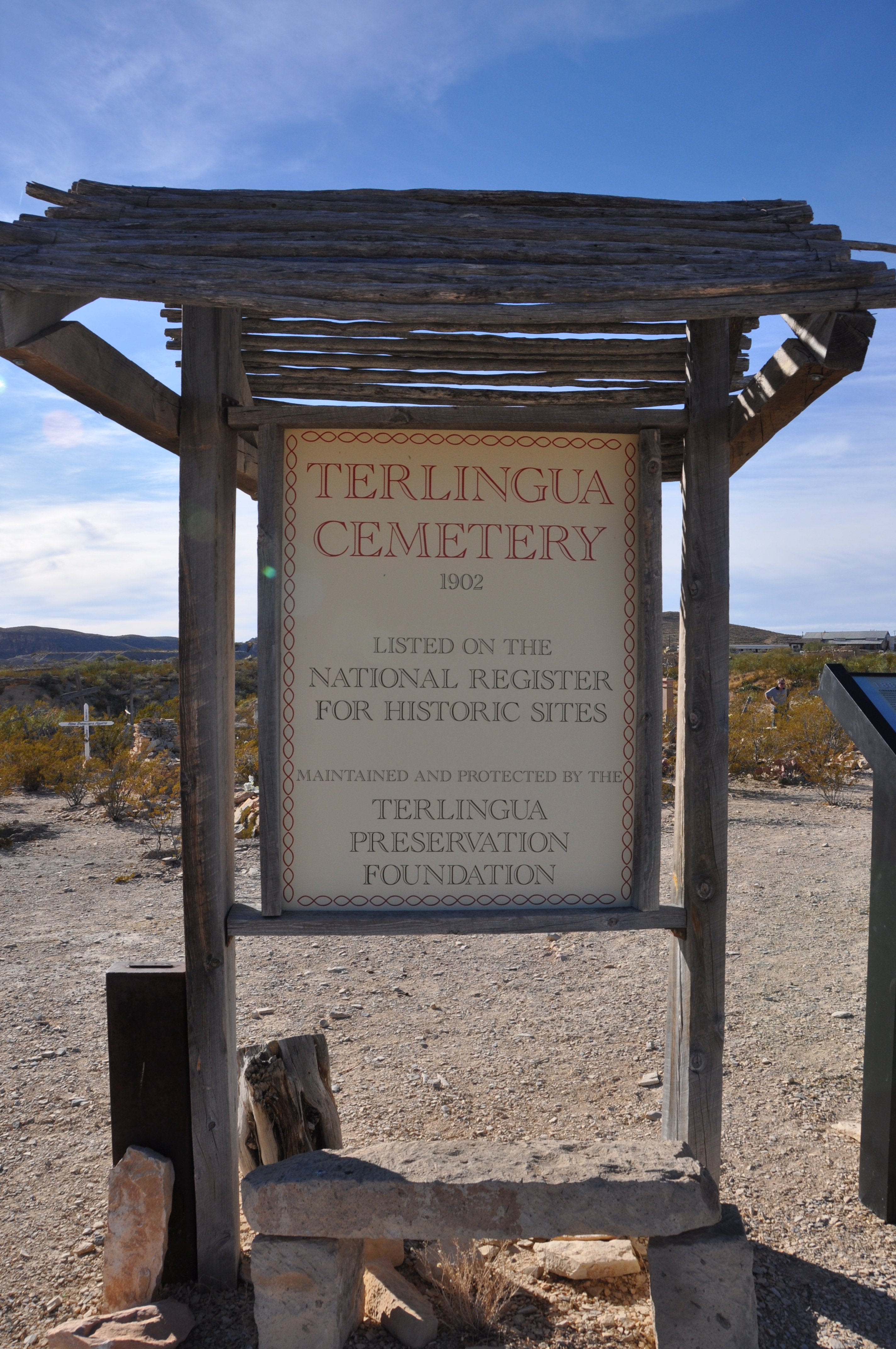
Terlingua Cemetery SignOne of the most interesting places in Terlingua is the old cemetery that dates back to the 1900s. Workers who lost their lives in the mines, victims of the influenza epidemic of 1918, gunfighters who were seconds too slow on the draw, and early residents are all buried there. Every year in November, folks gather at the cemetery to celebrate Day of the Dead and to offer their respect to the departed.
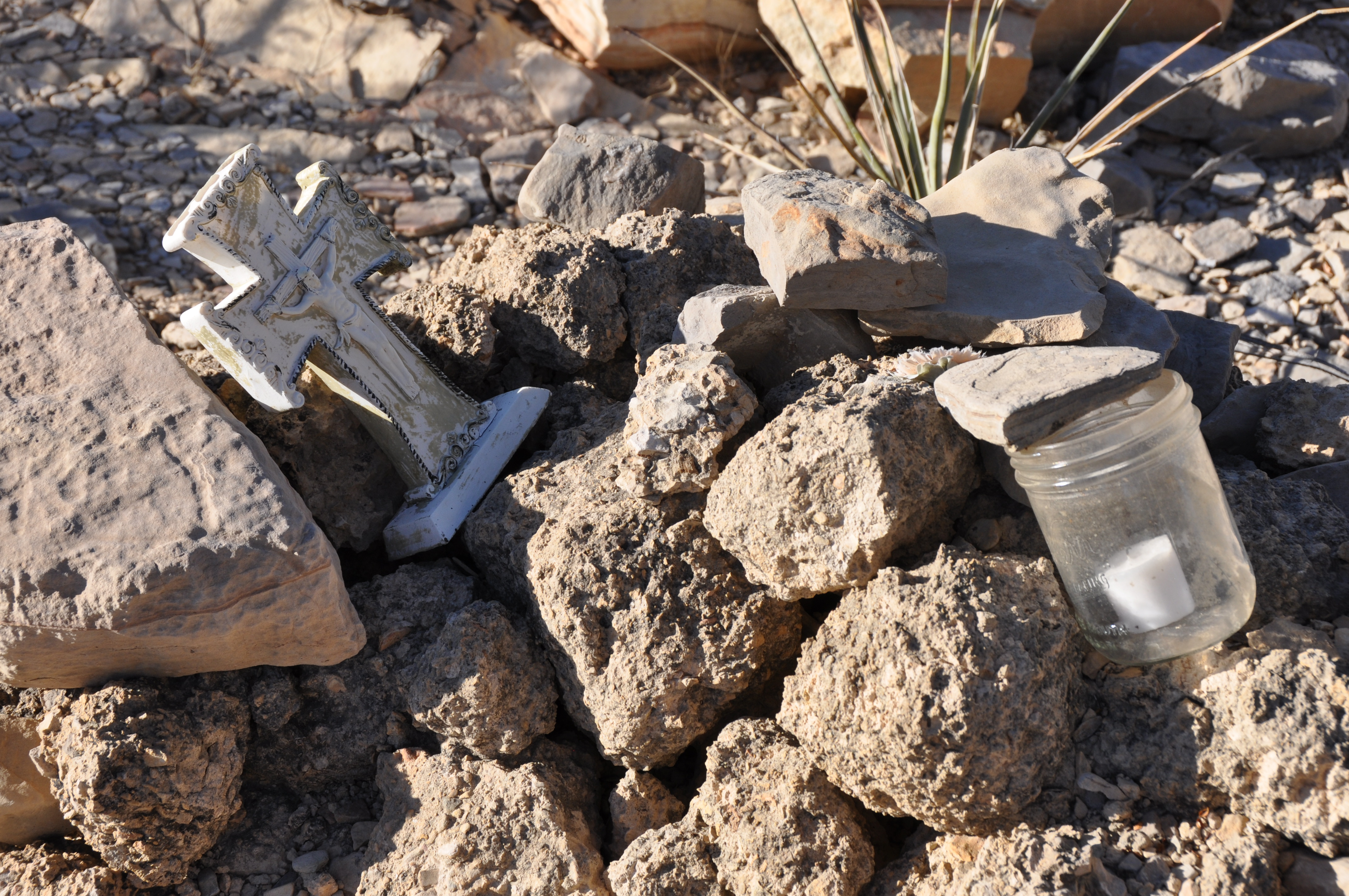
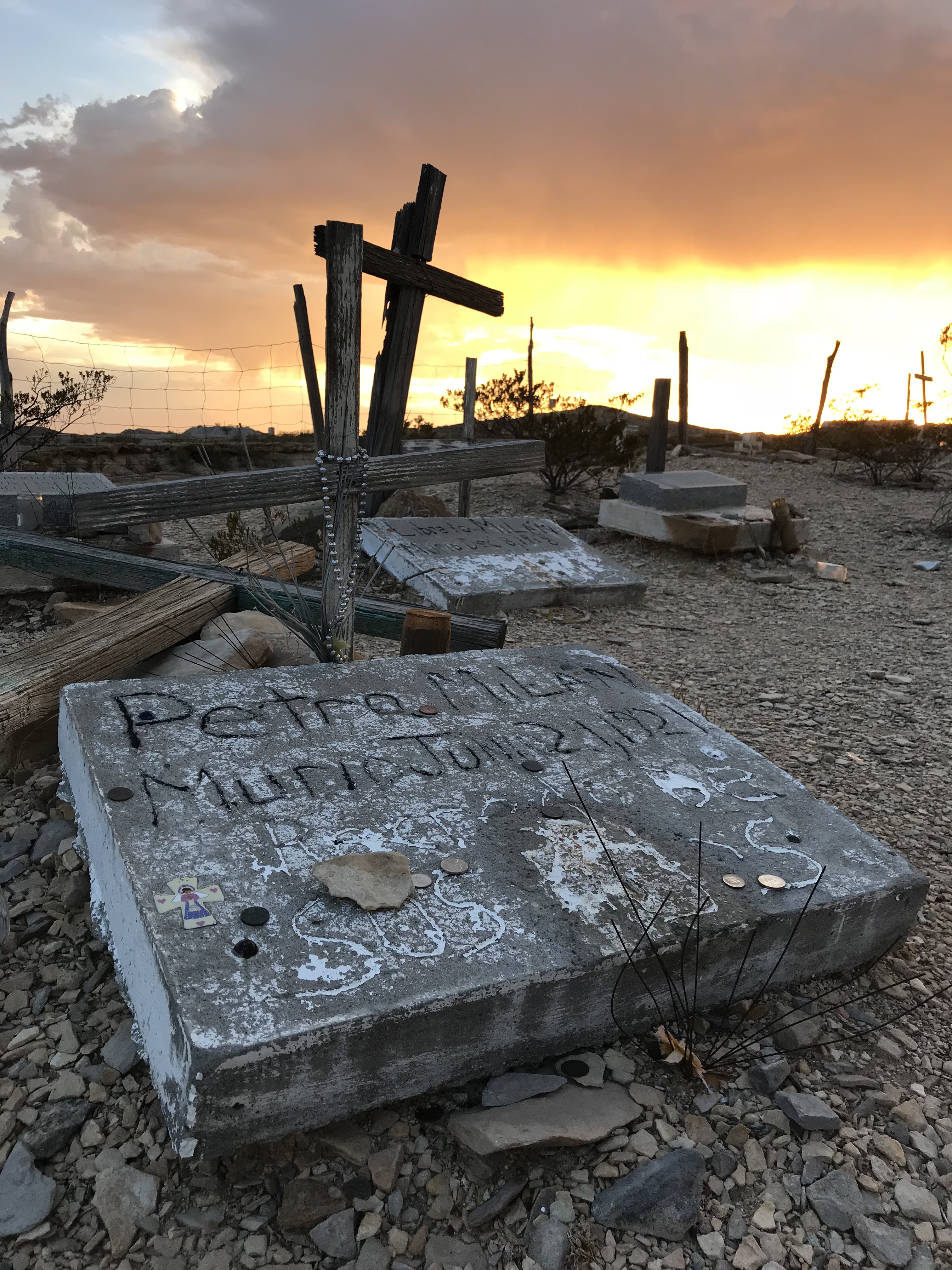
Terlingua CrossesWalking slowly among the old graves is a sobering experience — the kind that makes you reflect on just how hard life is in this remote and rugged land. Names of the departed etched on weathered wooden crosses are no longer legible. Creosote, ocotillo, and cactus cling to life among the rocks that cover the graves. Plastic flowers and miscellaneous mementos placed on graves are the only indications that some of the dead are not yet forgotten.
Terlingua GraveThe Terlingua Cemetery is a time-capsule. Every grave holds secrets and stories that will never be told. Visitors can only speculate about the deceased and what their daily lives must have been like in days when quicksilver turned this region from a sleepy little village into a community of a couple of thousand — and eventually into a ghost town.
Terlingua Cemetery Mask Even though Terlingua is out of the way and far from just about any place in the Lone Star State, it’s definitely worth visiting. And, when in Terlingua, take a quiet and meditative stroll through the historic Terlingua Cemetery. You’ll be reminded that we are only here for a season and then we too will be laid to rest somewhere, maybe even in an old cemetery like the one in Terlingua. As for me, it doesn’t matter where you bury me as long as it’s in Texas.

Novrozsky’s Hamburgers Etc

I discovered Novrozsky’s Hamburgers Etc on a recent road trip to Orange to visit the fascinating old Farmers Mercantile, a general store that has served the people of the area for almost 90 years. Hungry for a good burger, I asked Siri to find places to eat near me. Novrozsky’s topped the list. The name alone made me curious so I entered the address into Google maps and headed in their direction.

The original Novrozsky’s restaurant was founded in 1982 in Beaumont. Today, they have locations through Southeast Texas, including Orange. According to their website, they pride themselves “on serving the most delicious and satisfying burgers in Texas.” Another reason I had to check this place out for myself.
Novrozsky's FrontThe Novrozsky’s restaurant in Orange is housed in a modest and nondescript building with only the name Novrozsky’s on the front. No problem! As someone who enjoys sleuthing out a good burger, I was far more interested in what I would find inside the building.

I arrived well past the lunch crowd and walked right up to the counter and ordered their Bacon Cheddar Burger with all of the trimmings on a jalapeño bun along with a side order of hand-battered onion rings. Novrozsky’s hamburgers are made with Nolan Ryan beef — 100% all natural, hormone-free beef raised right here in the Lone Star State.
Novrozsky's CupI filled my styrofoam cup with raspberry iced tea and waited for my burger. Looking around, I noticed that I was not the only person interested in having a burger for lunch. My burger arrived with a heaping order of onion rings. If the aroma was any indication, I knew this was destined to be a mighty good meal.
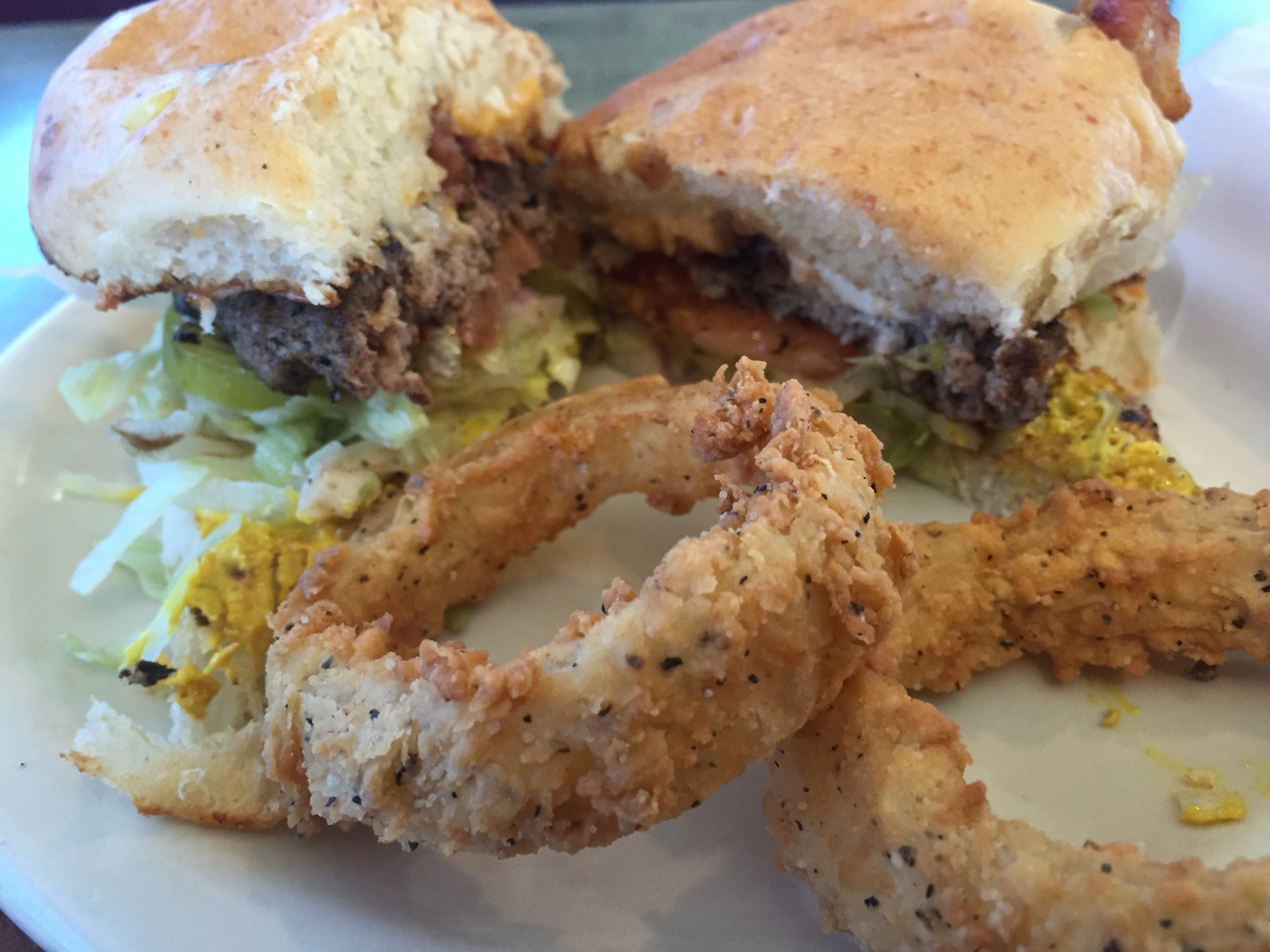
Novrozsky's BurgerOf course, the first bite always tells the story and my first bite was not disappointing. Oh my soul! This was truth in advertising — a truly delicious and satisfying burger. If it had been possible I would have eaten two of these fabulous burgers. As for the onion rings — unbelievably delicious! The onion rings were a meal in themselves.
Novrozsky's Burger PlateThe only thing that disappointed me was the last, moist, delicious bite. Not because it did not taste as good as the first bite but because I did not want for this meal to end. It was that good. I give Novrozsky’s absolutely high marks in every burger regard. You can bet that I will stop at Novrozsky’s again the next time I find myself anywhere near one of their many locations in Southeast Texas.