5 Facts About Ocotillo

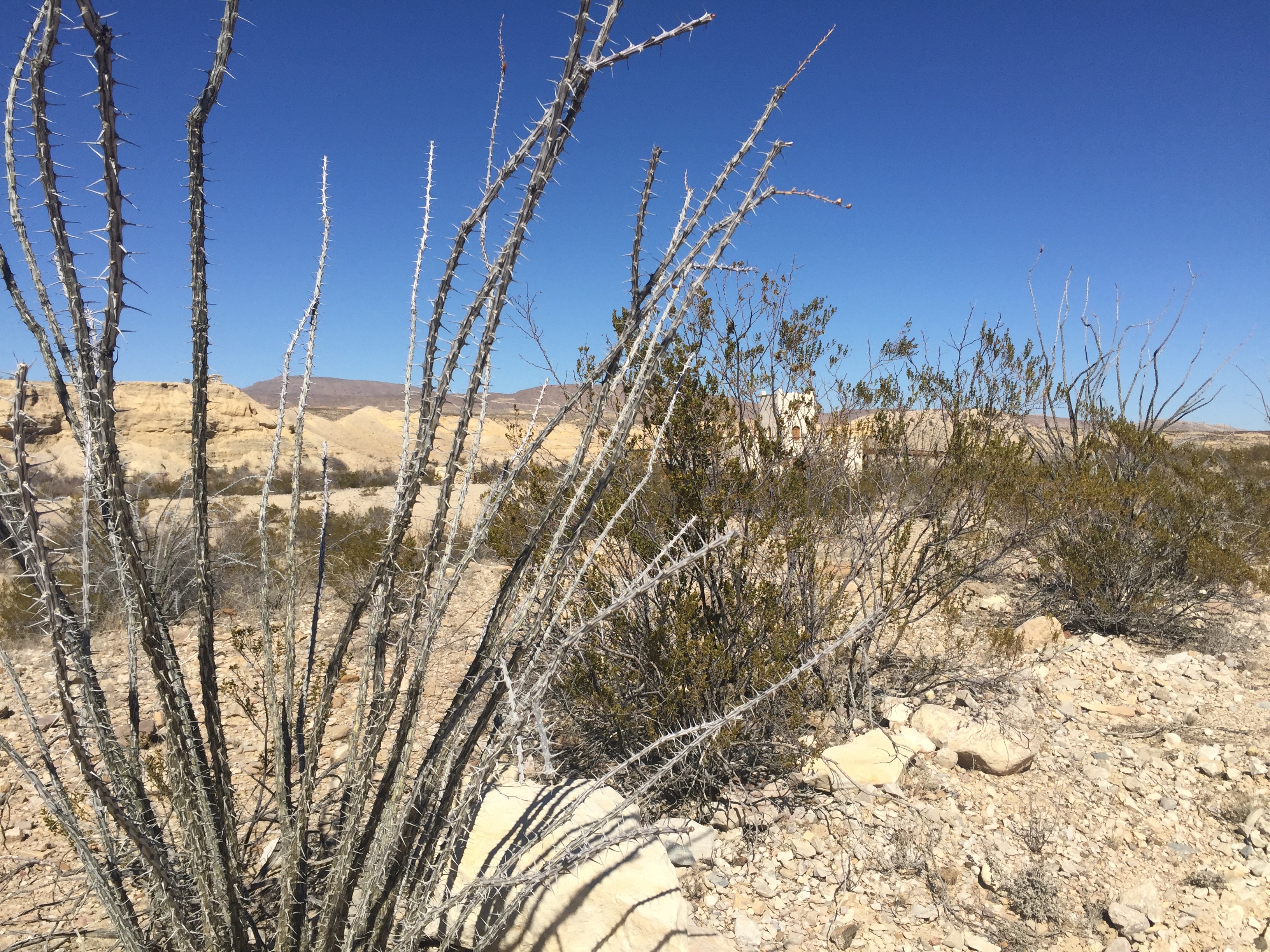
When it comes to desert shrubs, the Ocotillo is in a class by itself. It is one of the easiest plants to identify in the desert and, in my estimation, one of the most beautiful. Whether I am hiking or biking down a desert trail, I love how the Ocotillo accents a desert landscape. Here are five interesting facts about this hardy desert shrub.
Ocotillo Plant1. The Ocotillo is at home on the range.

The beautiful Ocotillo is at home in the harsh environment of the Chihuahuan Desert. This is one hardy shrub that can handle the wide temperature ranges of the desert and requires little water to survive. The Ocotillo is not some sissy plant that requires pampering. It prefers a rocky and well-drained habitat, the kind of environment that intimidates other plants. And, make no mistake about it, whenever you see a brown and leafless Ocotillo, it is still very much alive.
Ocotillo Bike2. The Ocotillo is not a cactus.

The Ocotillo is also known by many different names including Candlewood, Slimwood, Coachwhip, Flaming Sword, and Jacob’s Staff — all names that take their cue from some physical characteristic of this spiny-stemmed shrub. Vine Cactus is also an alias for the Ocotillo, although it is not a cactus.
Ocotillo Dormant3. The Ocotillo has a long lifespan.

Folks are not exactly sure about how long Ocotillo can live. Some believe that a good estimate is 60 years. Some studies, however, indicate that this tough shrub can live well beyond a hundred years. One reason the Ocotillo can live so long is because it has few pests and no known diseases.
Ocotillo Leaves4. The Ocotillo is a flowering plant.

The whip-like branches of the Ocotillo can grow as high as twenty feet or more. After a rain these slender branches are covered with small green leaves that resemble those of the boxwood. When water is scarce, these leaves turn brown and fall off. If the rainfall is good, the Ocotillo produces bright red or pink tube like flowers between March and June. And, hummingbirds like the honey nectar these flowers produce.
Ocotillo Closeup5. Ocotillo can be used to make a durable fence.

Ocotillo fencing is a popular design element in the southwest. When planted in rows, the Ocotillo becomes a living fence. Its spines stop people and animals from passing through. Some nurseries even sell Ocotillo fencing panels that add a rustic component to a garden and can last for years.
Ocotillo FenceThe next time you find yourself anywhere near the Chihuahuan Desert or Big Bend, keep your eyes open for the Ocotillo. This hardy shrub is truly a success story in the world of desert plants.
The Devils River

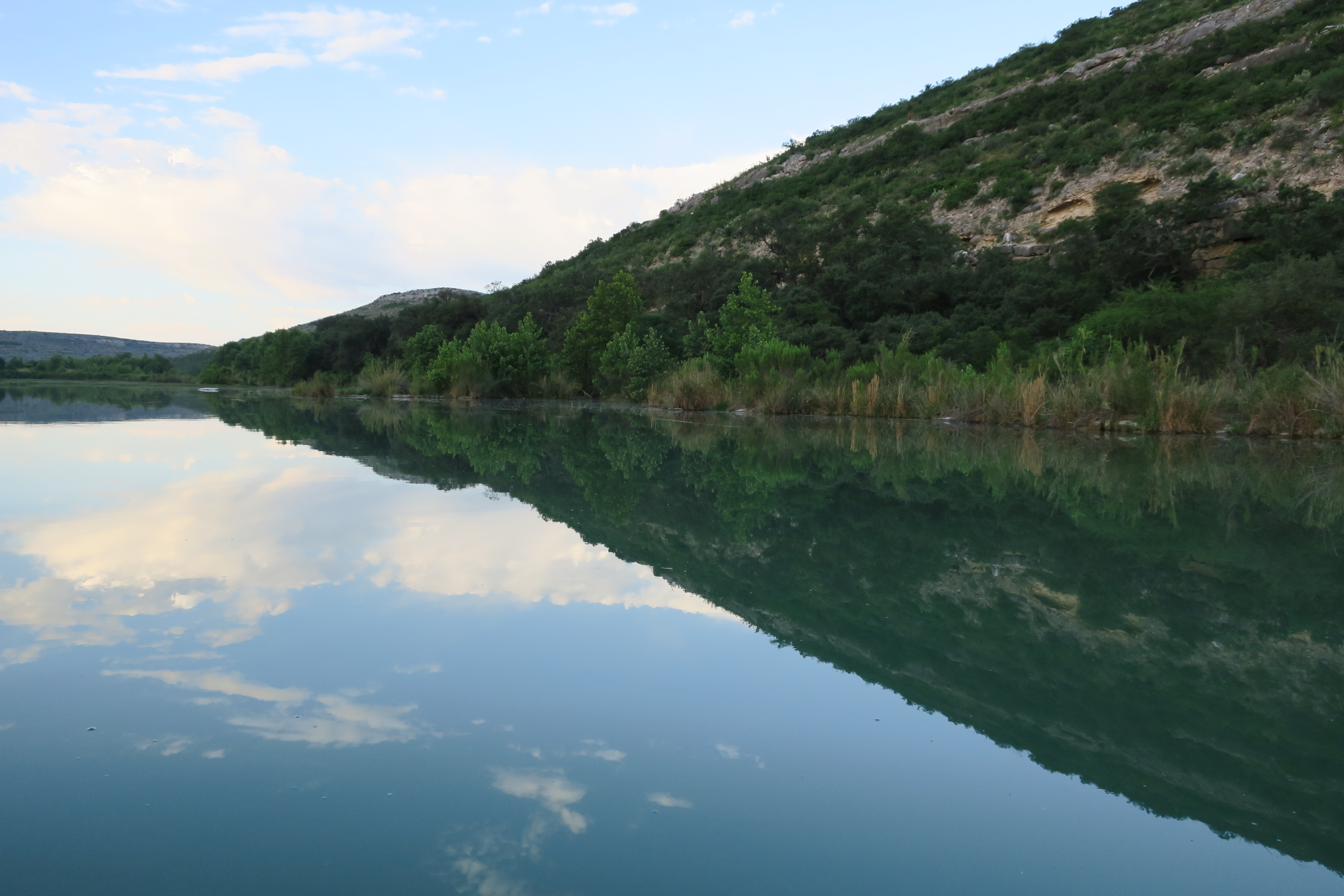
The Devils River is one of the lesser known rivers in Texas — and that is just fine! Defiantly snaking its way through some of the most rugged terrain in the Lone Star State, this is a river that lives up to its name. Texas Monthly magazine reported, “If the Devils River were a woman, Willie would have married her twice and we would be crying into our beer as he lamented her wicked ways.”
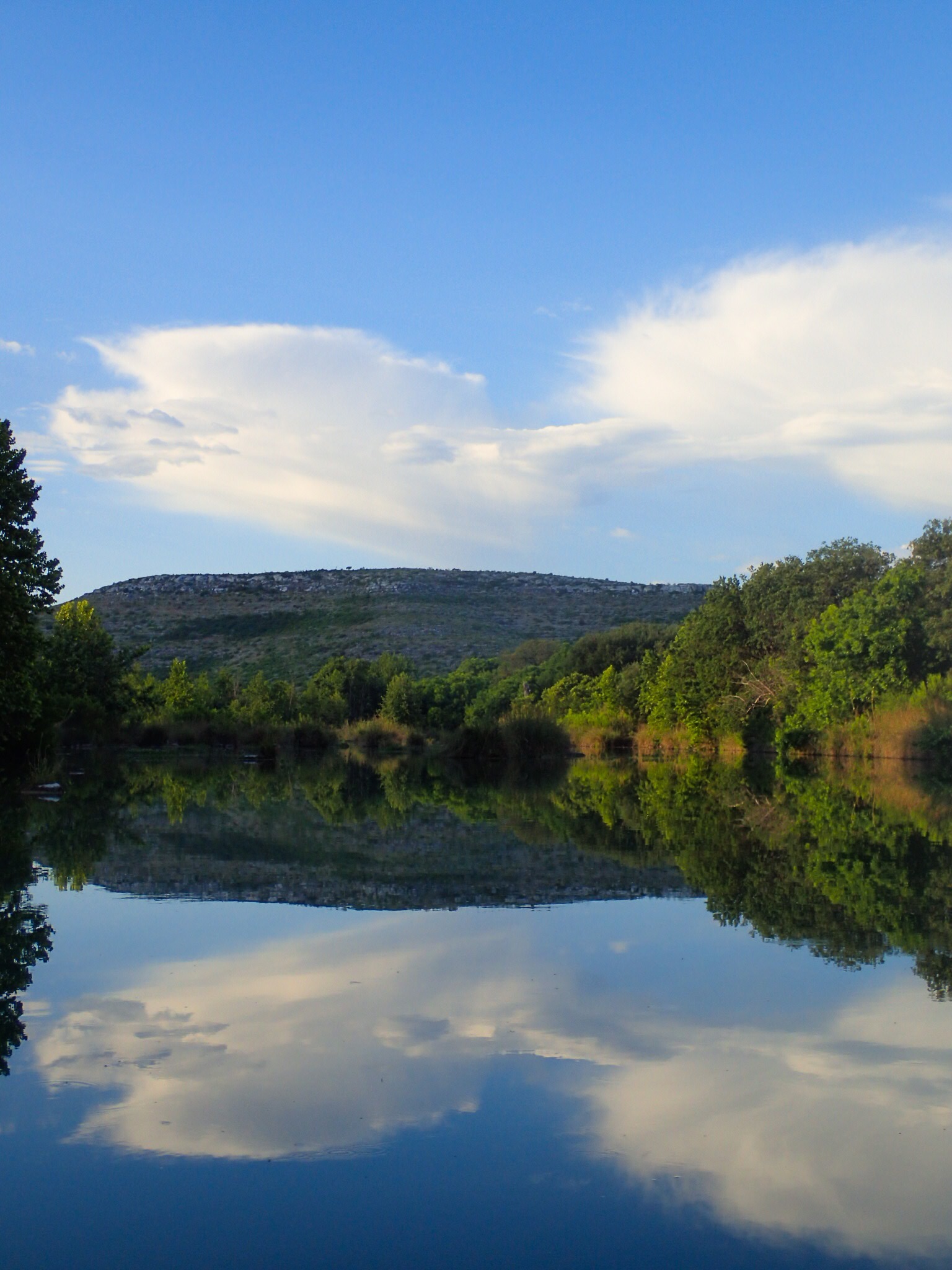
Devils River Bank ReflectionAs a canoeist, the Devils River has been on my list of must-do paddling adventures in Texas. However, paddling on this river requires a bit of research and connecting with the right outfitter. The river flows through private ranches whose owners do not allow camping on the long riparian stretches of their big backyards. This also means that there are few public take-out sites along the way. So, careful planning is essential.
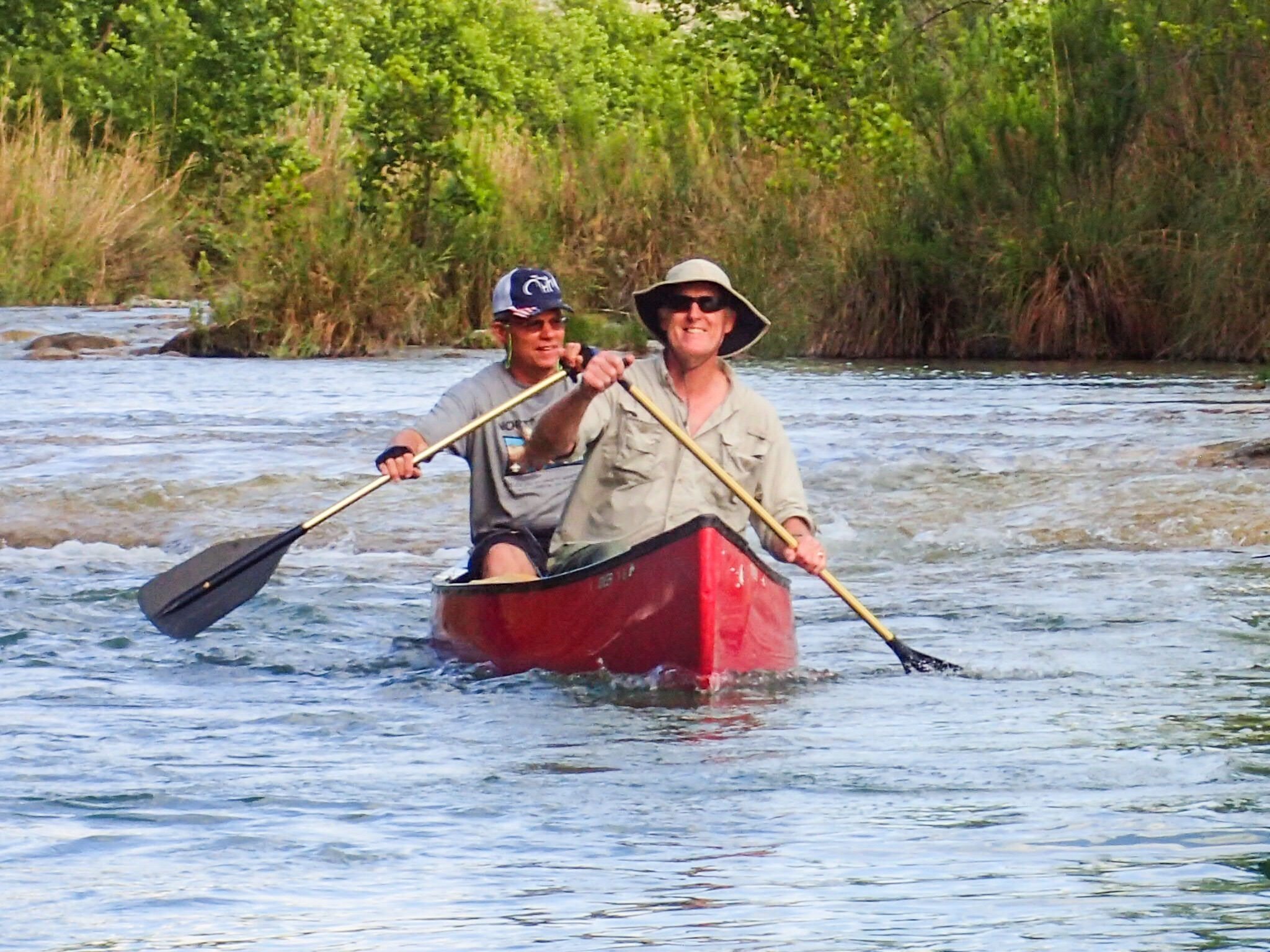
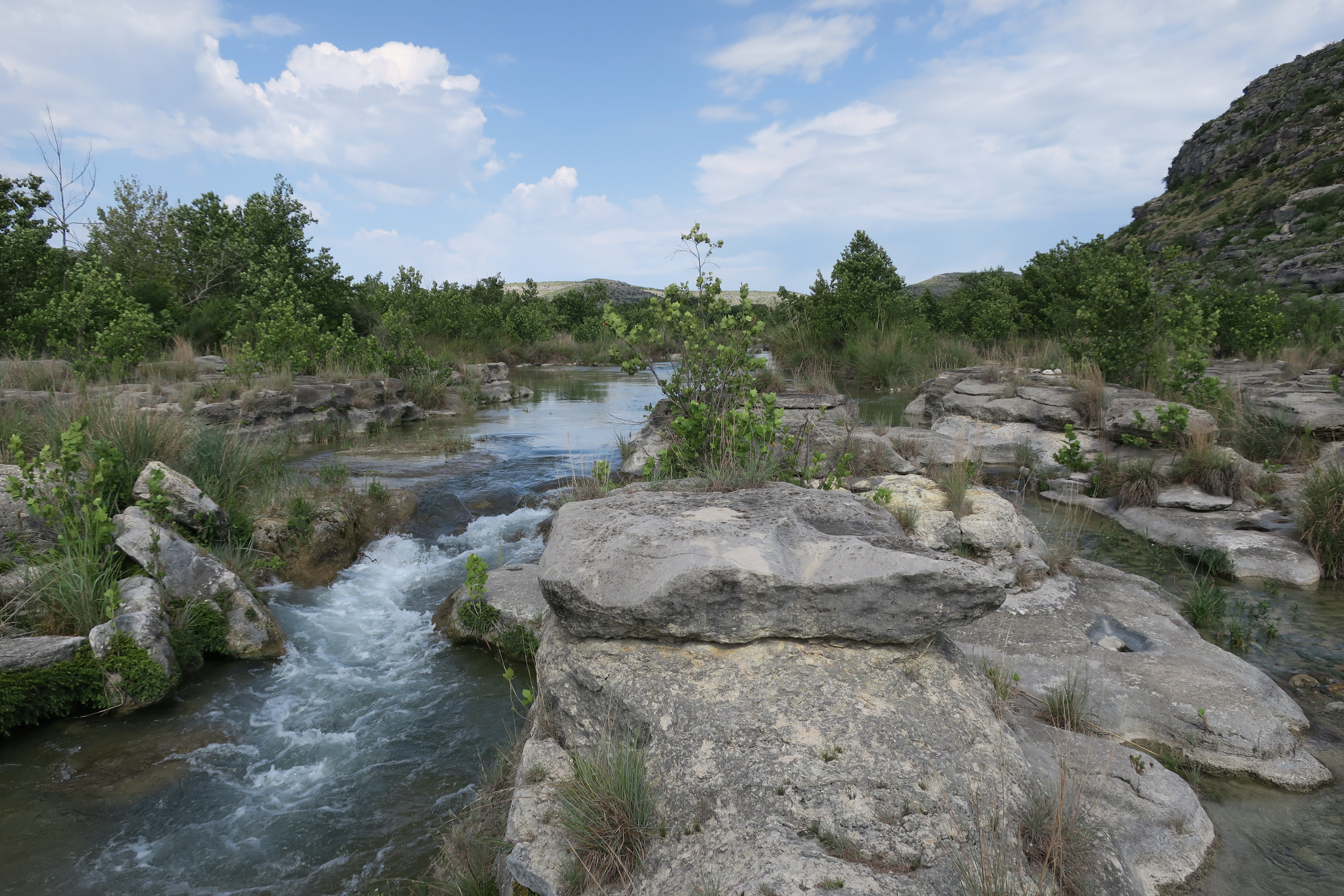
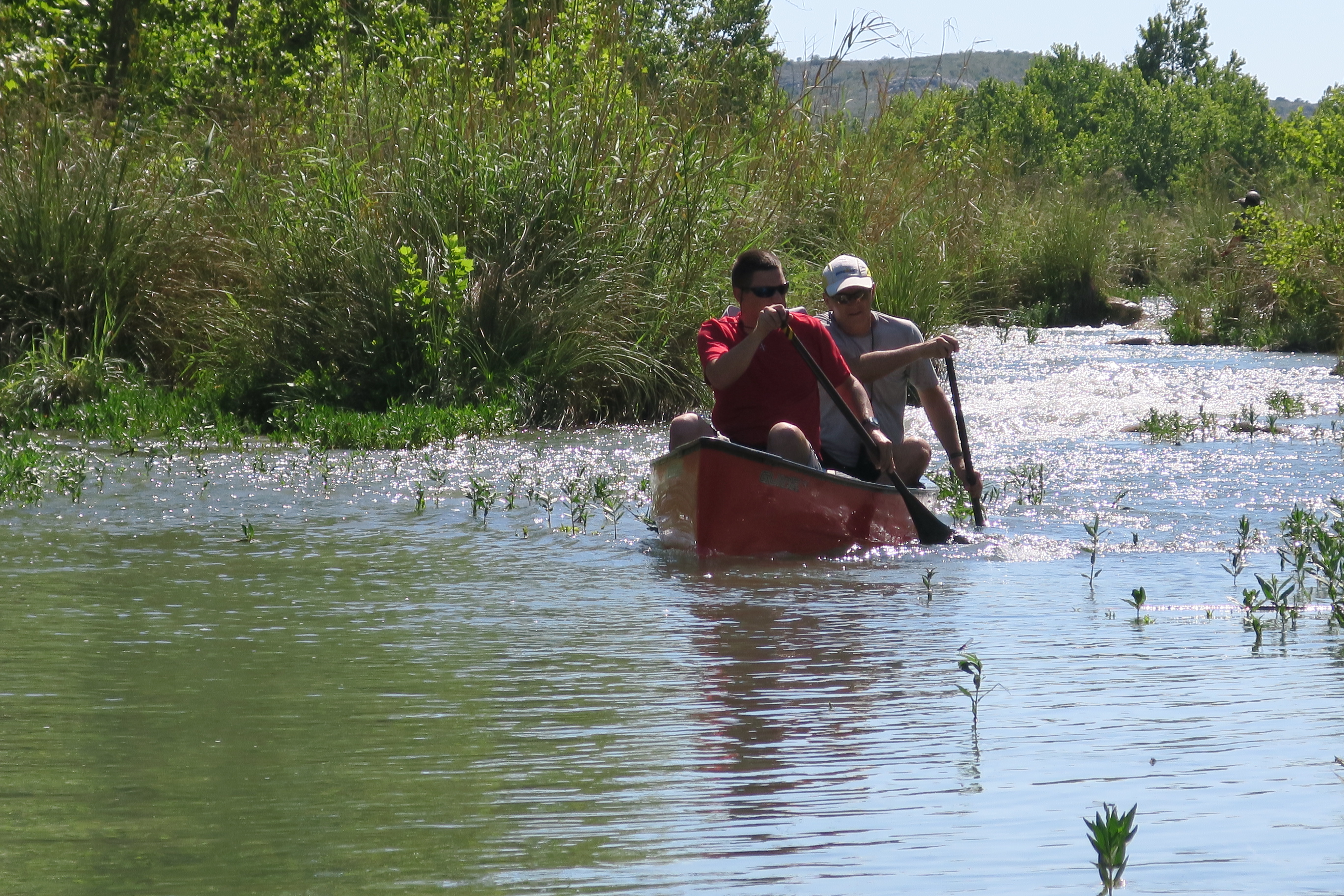
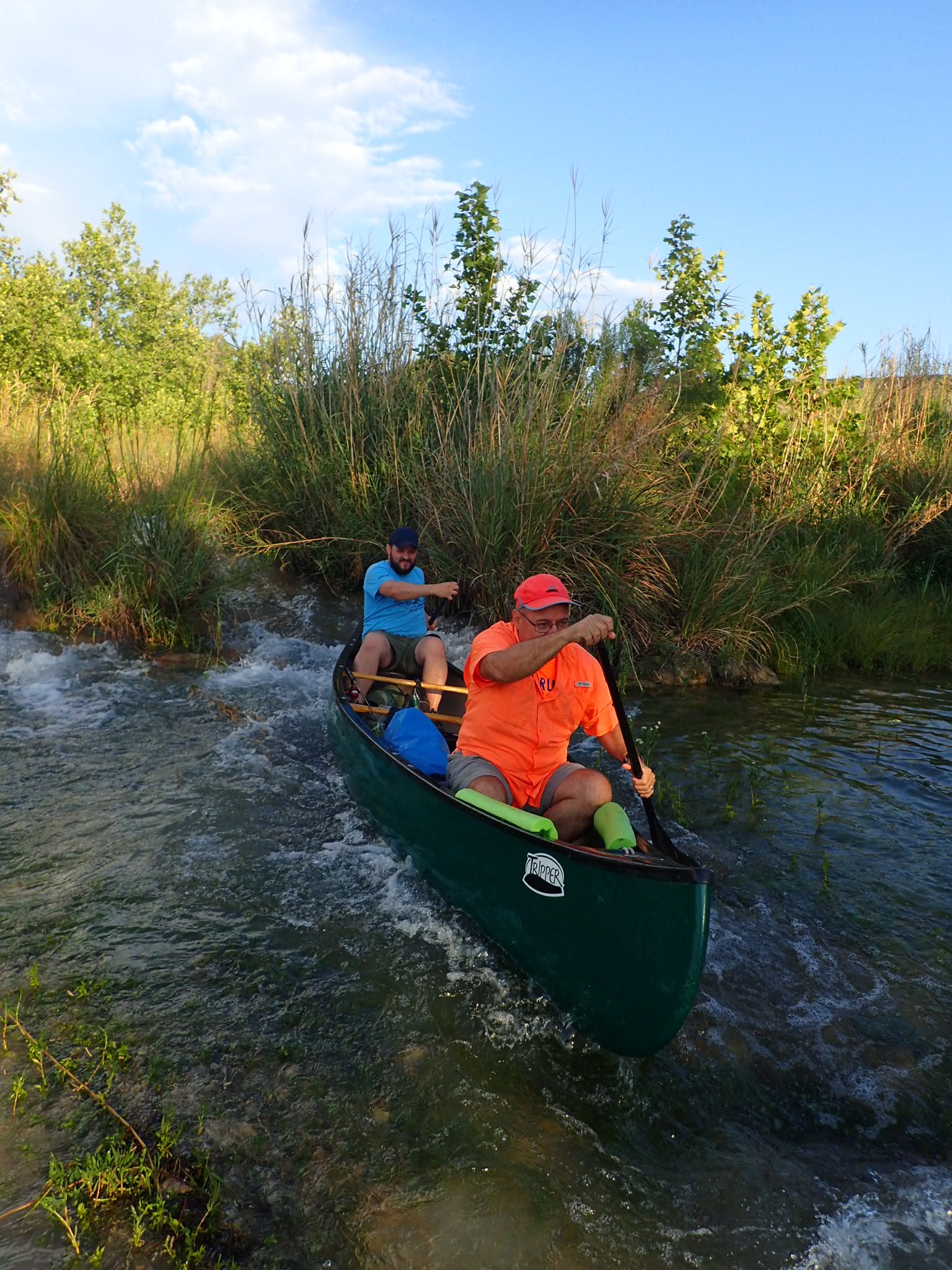
Devils River Team StartThe Texas Parks and Wildlife Department cautions that a trip on the Devils River is suitable only for experienced paddlers who are prepared to spend more than a day on the river. There are a number of Class I and Class II rapids, deep pools, strong headwinds, rocky shallows, and dense canebrakes along the route. Knowing how to pick your line and when to apply a good draw stroke are vital to successfully navigating the rocky rapids.
Dougal and Cathy CameronMy dream of paddling the Devils River became a reality through the generosity of some dear friends. The best part about it was the opportunity to share this adventure with my son Jonathan and a few of our paddling friends. Our team traveled to Rocker U Ranch where Dougal and Cathy Cameron welcomed us with the warmest of Texas hospitality. Their beautiful ranch sits along a three-mile stretch of the Devils River below Baker’s Crossing.
Dougal Paddling CanoeDougal, a real estate professional, is no stranger to the Devils River. Although not an outfitter by trade, he understands the pulse of this waterway, how to navigate through the confusing canebrakes, the best islands for camping (since you are not allowed to camp along the banks), the warning signs that indicate the potential for a flash flood, and the fascinating history of the river. He is an excellent paddler and proved to be the perfect guide.
Russell and James
James at Dolan FallsDougal led us from his ranch all the way to the magnificent Dolan Falls, a 10-foot Class IV waterfall about 16.4 miles downstream from Baker’s Crossing. Dolan Falls is the largest continuously flowing waterfall in Texas. At the bottom of the falls is a deep blue swimming hole — a perfect place for jumping in from the smooth overhead crag. Our guys could not resist the temptation to dive in.
Devil River and CloudsThe Devils River is regarded as the most pristine river in Texas. And indeed it is. We saw absolutely not one scrap of trash along the way. The spring-fed water was a consistent turquoise and blue, and clear all the way to the bottom. In fact, we filled our water bottles from the river and drank it unfiltered. Not many places left where you can do that!
Game Warden Rock
Doyle and JaredThe banks of the river are lined with elm, sycamore, live oak, pecan, mountain laurel, and a variety of other trees and shrubs. The hills on either side are pockmarked with natural caves that beg to be explored. Dougal has found numerous arrowheads along the river banks on his property, an indication that native Americans once lived along this river.
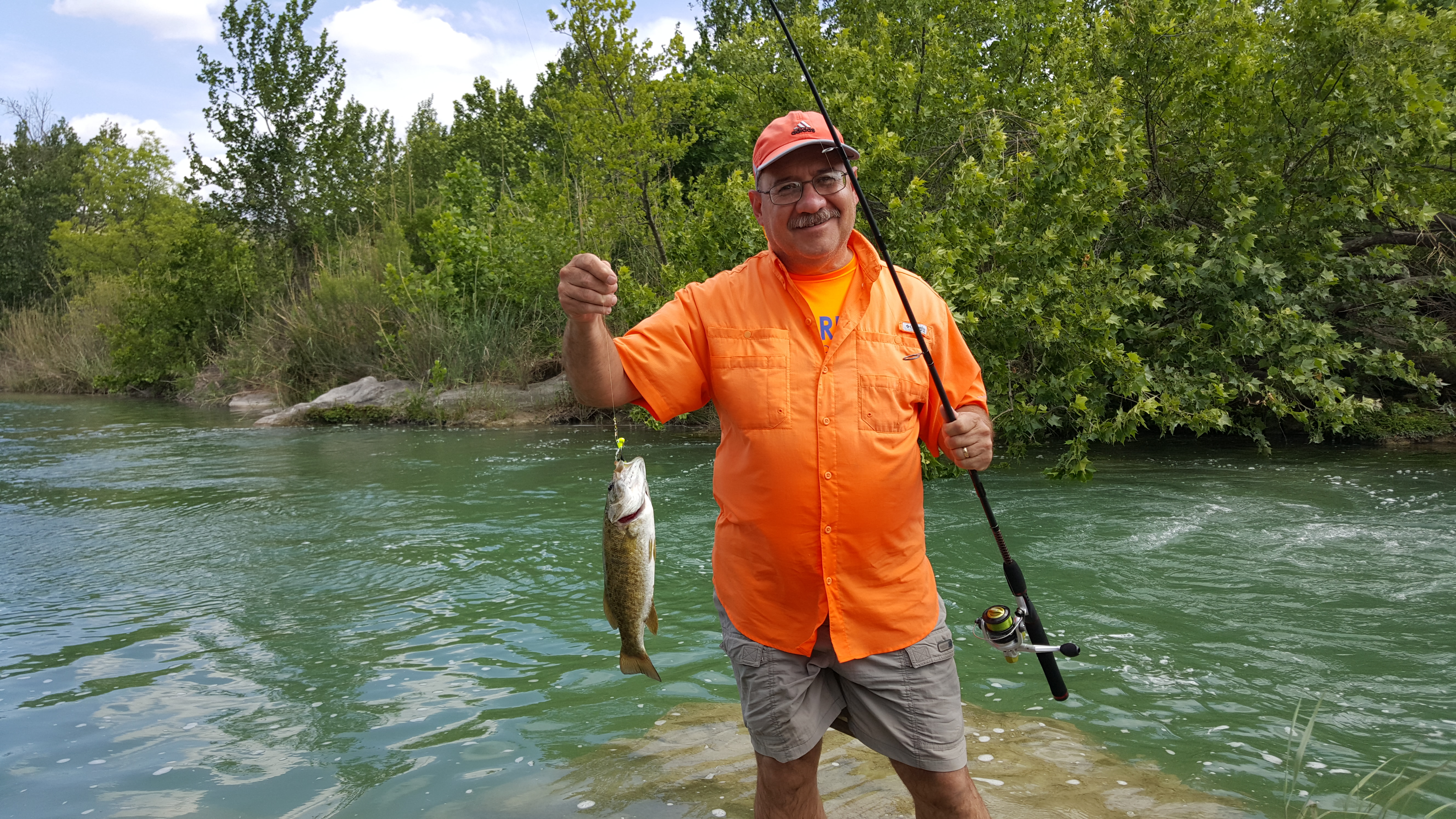
Devils River FishWe did have an opportunity to fish along the way and caught and released several large and smallmouth bass. We spent the night on Game Warden Rock in the middle of the river. That was a cool experience. We slept under the stars and enjoyed an amazing display of thunder and lightning off in the distance. Jonathan summed it up by saying that while we may not have slept like a rock it was really cool sleeping on a rock.
Omar and Jonathan on Devils RiverFrom Dolan Falls, we did something that I doubt few, if any, other paddlers have done. We paddled up river back to Dougal’s place. That meant, of course, portaging the many rapids and rocky shallows on the way back. No problem! This made for a great adventure and we actually made good time. We arrived back at Rocker U Ranch in time for a late lunch followed by a sumptuous evening meal. And we arrived with deep gratitude for having shared an adventure of a lifetime.
Devils River TeamThe Devils River is a Texas treasure because of the efforts of the Nature Conservancy and local ranchers to protect the surrounding watershed, including nearly 150,000 acres in the Devils River basin. Paddlers must also do their part to protect this river. To learn more about preparing for a Devils River trip, visit the Texas Parks and Wildlife Department’s webpage. If you have an opportunity to visit the Devils River, I think you’ll agree that it is indeed a paddlers paradise.

Uncle Barney’s Old Fashioned Hamburgers

My burger adventures have led me to some of the best burger joints in the Lone Star State. One thing is certain, there is no shortage of places to eat really delicious burgers in Texas. On a recent road trip from Carrizo Springs to Katy, I reached San Antonio at noon and decided to stop at Uncle Barney’s Old Fashioned Hamburgers.
Uncle Barney's SignI was glad to pull in to a full parking lot — always a good endorsement for an eatery. When I got out of my truck, the fragrant aroma of meat on a grill greeted me and quickened my steps. I arrived hungry and ready to try a new burger. Walking past the windows and catching a glimpse of folks chowing down on healthy-sized burgers got me even more excited about this place.
Uncle Barney's EntranceUncle Barney’s Burgers shares a building with the Hungry Farmer Steakhouse, their sister restaurant. According to a sign, Uncle Barney’s grinds their meat daily from the cuttings of steaks from the Hungry Farmer next door. And, to make matters really interesting, their hamburger patties are Texas-shaped.
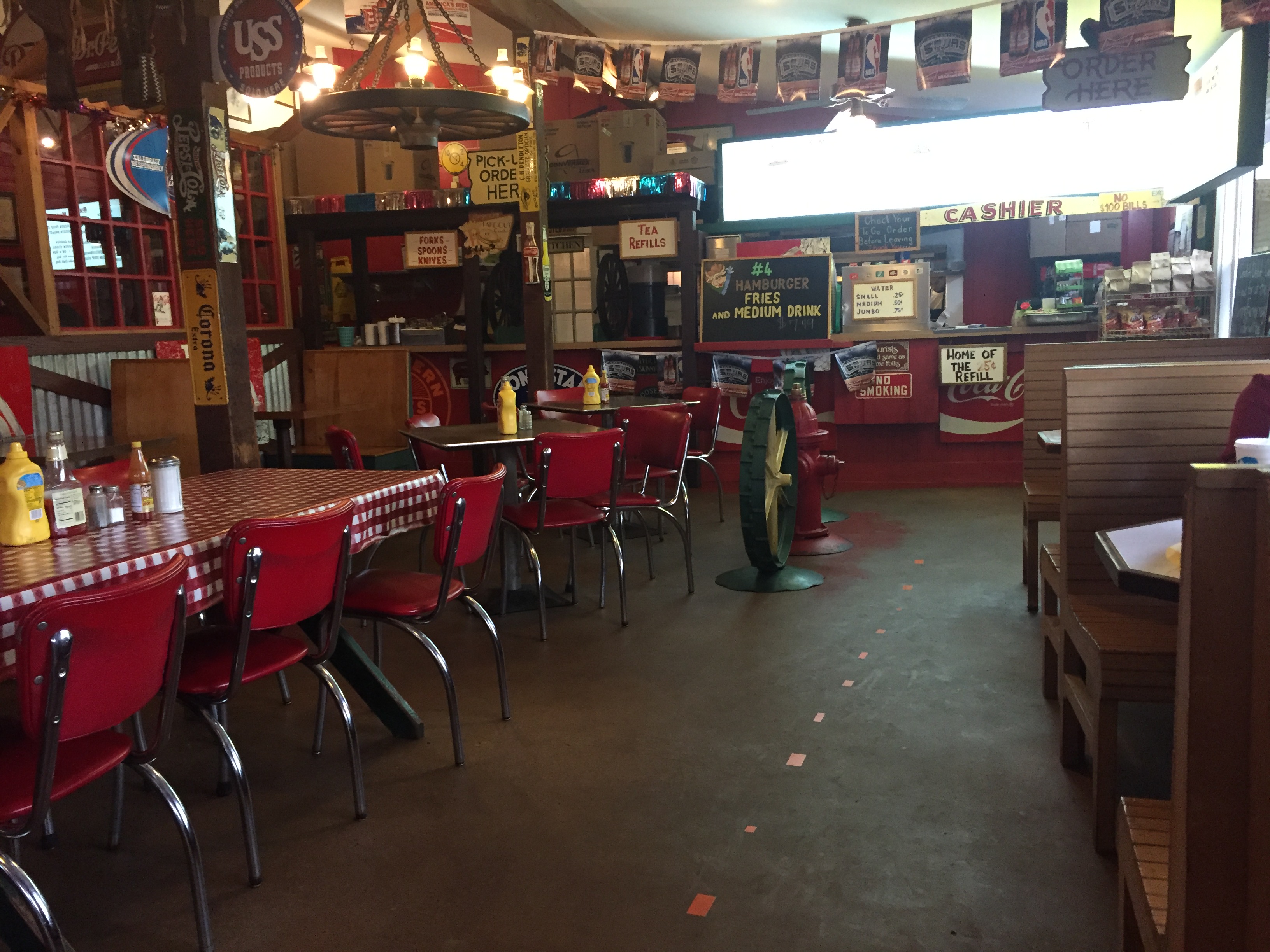
Uncle Barney's RefillI knew exactly what I wanted when I walked up to the counter to place my order — a bacon cheeseburger with a side of onion rings along with a glass of tea. I’m glad I ordered the tea because tea refills are free. According to a sign at the counter, all other refills will cost you a quarter.
Uncle Barney's InteriorMy burger arrived complete with onion rings in a paper-lined basket. Everything about this burger looked inviting. All of the ingredients were fresh. The meat was cooked to my liking. The bun was nice and warm. As for the first bite — very tasty. The only problem I had was trying to compress the burger enough to bite into it. But, somehow I managed to do a lot of damage to this burger.
Uncle Barney's BurgerI’m not sure how much the Texas-shaped patty weighed but it was a significant about of meat. In fact, for the first time on my burger adventures, I am embarrassed to say that I was not able to finish this burger. It was just a little more food than I could handle on this particular day. I hated to leave any portion of a burger this good on the table but I had no choice. I was stuffed!
Uncle Barney's Burger in HandI’m glad I stopped at Uncle Barney’s and recommend it without hesitation. The restaurant was clean and the food was delicious. Eating a burger at a place like this definitely beats eating a burger at any fast food chain any day of the week. The next time you head out on a Texas road trip, keep your eyes open to interesting places to grab a bite and live adventurously.

Attwater Prairie Chicken

The words endangered species generally bring to mind visions of exotic animals in faraway places. Animals like the black rhinoceros or the Asian elephant or the bandicoot of Australia. However, unbeknownst to many, the Lone Star State has its own critically endangered species — the humble Attwater prairie chicken.

What is a prairie chicken, you ask?
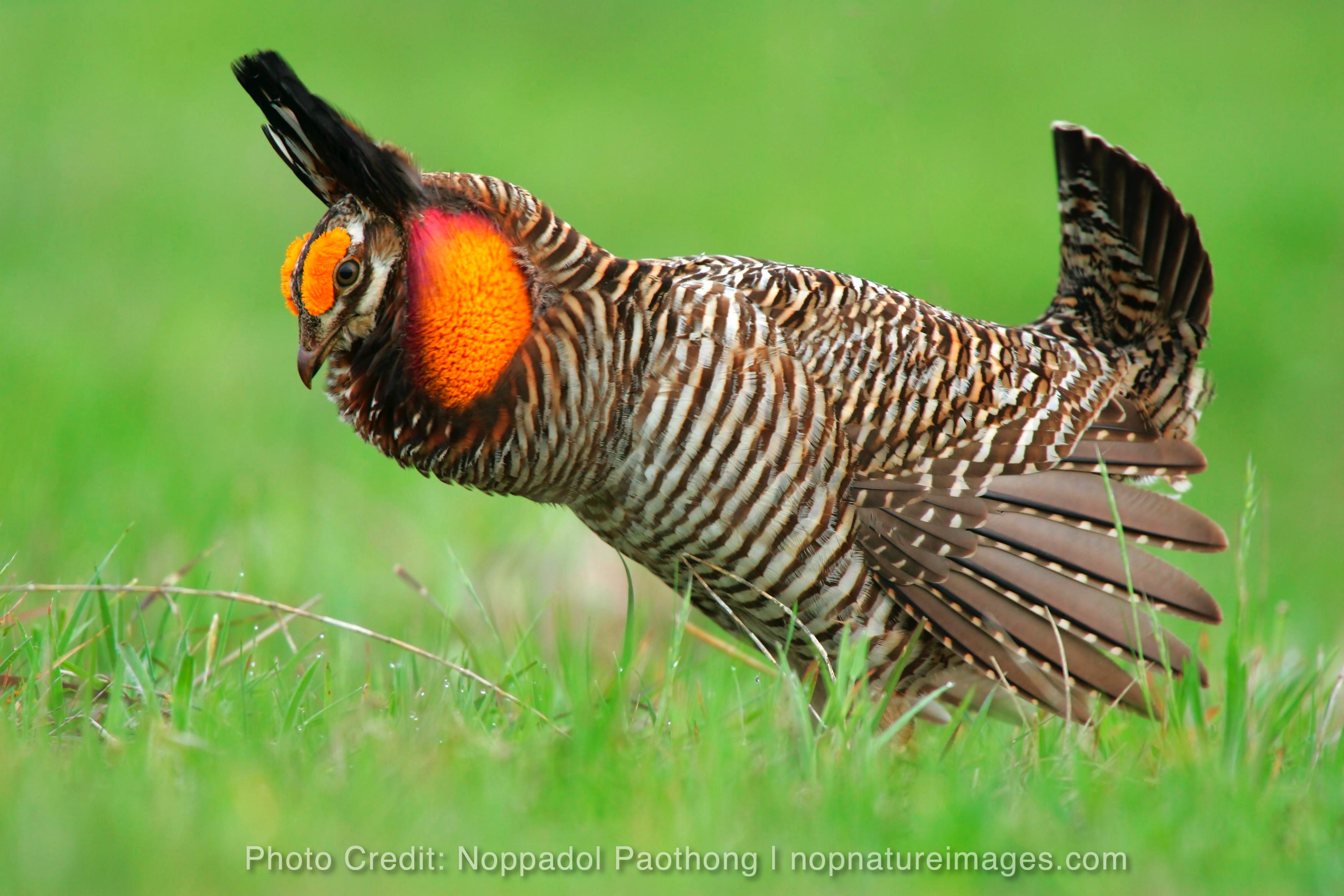
Attwater Prairie Chicken ImageThe Attwater prairie chicken is one of the most endangered birds in North America. A member of the grouse family, this barred brown and tan bird is unique to the coastal prairies of Texas and Louisiana. A hundred years ago they numbered up to an estimated one million birds. Today, the few remaining birds are protected by the Endangered Species Act of 1973.
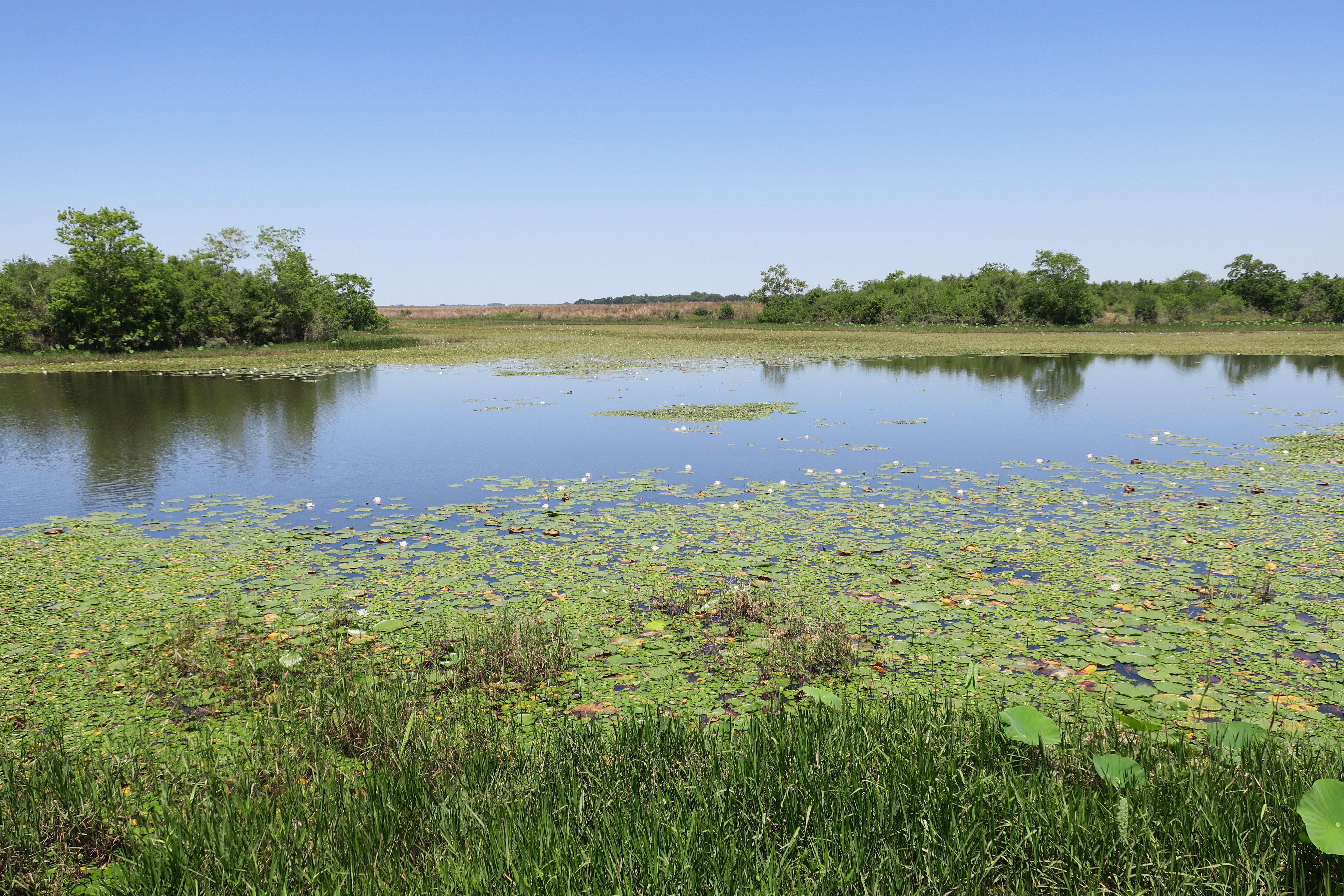
Attwater Refuge SignThe Attwater Prairie Chicken National Wildlife Refuge is home to the remaining population of this ground-dwelling grouse. The prairie chicken is a fascinating bird. Each spring, the males of the species gather to perform an elaborate courtship ritual that includes inflating their yellow air sacs and emitting a strange, booming sound. Rangers at the refuge can tell you the best seasons and times to catch a glimpse of these remarkable birds.
Attwater ViewDevelopment along the Gulf Coast over the years has claimed almost six-million acres of prairie, pushing the prairie chicken to the edge of extinction. The survival of this endangered species depends on the faithful stewardship and careful management of the prairie chicken’s declining ecosystem. Today, less than 200,000 fragmented acres of prairie remain, including the 10,339-acre Attwater Wildlife Refuge.
Attwater BirdhousePlaces like the Attwater Wildlife Refuge are important because they are a haven for native and migratory birds. The Attwater Refuge is one of a few refuges managed specifically for an endangered species. Intentional efforts to protect prairie chicken hatchlings, for example, increases the likelihood that their numbers will continue to steadily rise and once again grace our remaining prairies with their courtship dance.
Attwater HeadquartersThe Attwater Prairie Chicken National Wildlife Refuge is located southwest of Sealy and northeast of Eagle Lake. The refuge is easily accessible and offers a car route, hiking trails, wildlife viewing stands, and acres of beautiful vistas in every direction. The headquarters features a remarkable display of birds native to the region and a brief orientation video.
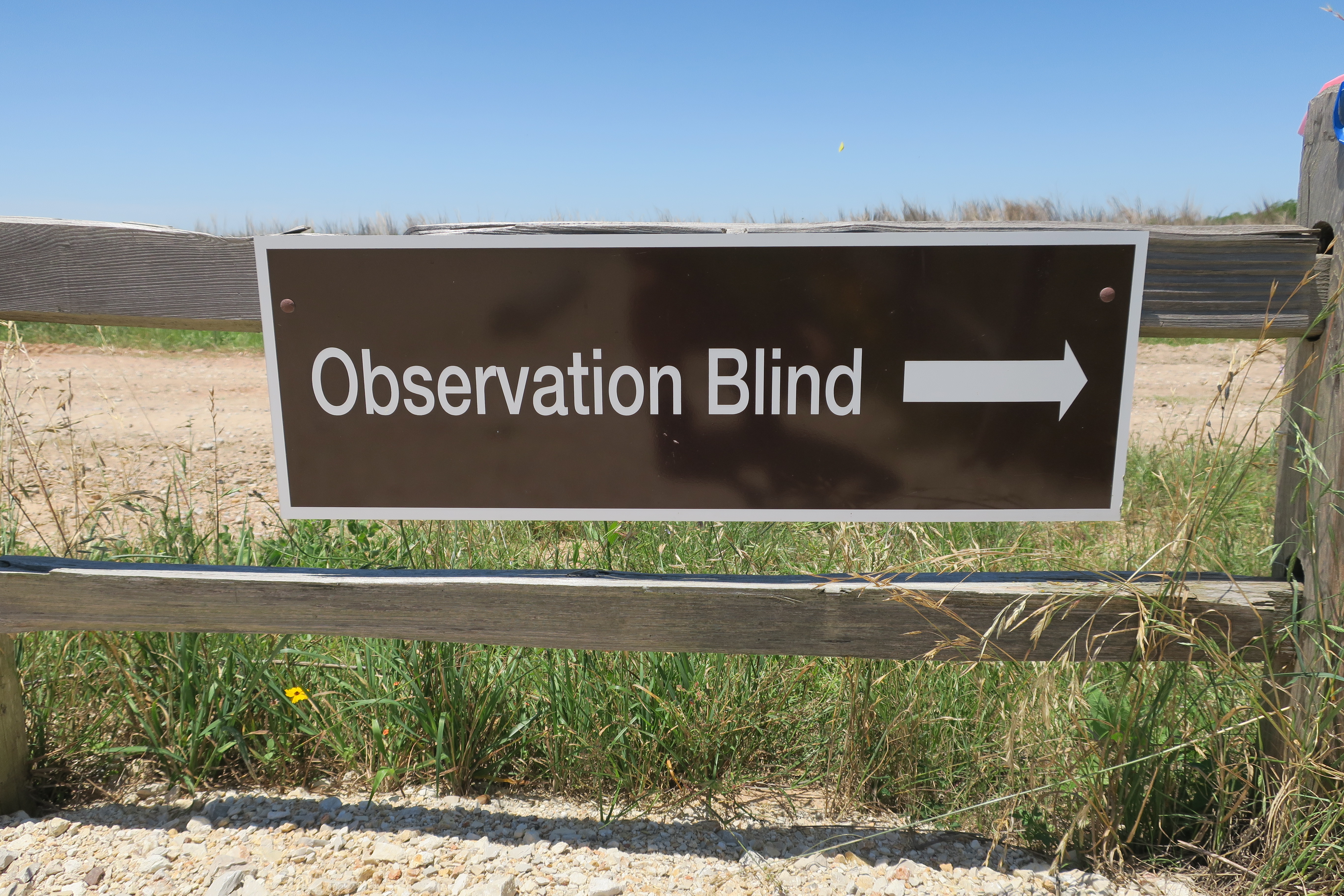
Attwater Observation BlindIf you are looking for a day trip near Houston, check out the Attwater Prairie Chicken National Wildlife Refuge. You will enjoy the vistas, the fresh air, and learning about the birds and plants native to our remaining gulf coast prairies.

Peppers Burgers and More

One of the best things about wandering down Texas backroads is discovering new places to eat a burger. On a recent day trip to take photos of windmills and railroad tracks, my friend Doyle and I found ourselves in Eagle Lake at high noon. And we were mighty hungry when we drove into this small community whose presence on Texas maps dates back as far as 1821.

Eagle Lake is located on Highway 90A east of the Colorado River and fifty miles southwest of Houston in southeast Colorado County. Folks believe the town was named by two of Stephen F. Austin’s scouts. When one of them killed an eagle on the lake, he called the water Laguna del Águila, which is translated Eagle Lake.
Peppers Burgers and MoreWhen we drove into town I asked Siri, my faithful smart phone concierge, to retrieve a list of burger joints in town. Peppers Burgers and Fries seemed the most interesting so that is where we headed. On our first pass we missed the restaurant entirely. So, we turned around and drove a bit slower and almost missed it a second time.
Peppers in Eagle LakePeppers is housed in a modest little building on Main Street. The only sign is out in front of the building. The young lady at the counter told us that they’ve only been around for about a year. We ordered our meal at the counter and then sat and sipped cold iced tea while we waited for our food in the small but very clean dining area.
Peppers Burger CloseupI ordered the Bacon Cheeseburger Combo and opted for fries rather than the side of okra offered with the meal. The service was reasonably fast. My burger arrived complete with a generous portion of slender fries. All of the ingredients were crispy fresh and held in place by a hot butter grilled bun.
Peppers Burger in HandAs for my first bite — it was good. What I held in my hands was not some fancy gourmet inspired city burger. This was just an honest small town burger. No pretense. Just the basic burger ingredients that worked together well to make a good homestyle burger. I was not disappointed. I enjoyed my burger and certainly felt that I got my money’s worth.
Peppers InteriorThere are not a lot of burger options in Eagle Lake. If I lived in town I would make it a point to eat at Peppers on a regular basis. And, as their sign says, they offer burgers — and more. If my travels take me through Eagle Lake again in the future, I will be sure to stop and sample some of the other things on the menu. And, if you ever find yourself in their neighborhood, stop by Peppers and give them a try. I think you’ll be glad you did.

5 Facts About Prickly Pear Cactus

Over the years, the Texas State Legislature has designated 72 official state symbols. Some, like the bluebonnet, are better known than others. In 1995, our esteemed lawmakers designated the prickly pear cactus the official state plant. I’m glad they did. There is just something about the resilient prickly pear cactus that has Texas written all over it.

As a South Texas boy, I grew up in the land of prickly pear cactus. My big backyard playground was thick with prickly pear and mesquite growing out of barren hard-packed dirt. I learned early on how painful it can be to rub up against a cactus plant.

I also have vivid memories of my uncle burning the thorns off of cactus plants on his Duval County ranch so that his cattle would have something to eat. He referred to this process as chamuscar which means to singe. Prickly pear cactus was an abundant food source for the cattle on his ranch. With that in mind, here are five interesting facts about our Texas-tough State plant.
Prickly Pear Cactus1. Cactus has a Greek root.

That’s right! The word cactus is derived from the ancient Greek word kaktos which means prickly plant. Enough said.
Prickly Pear Fruit2. The prickly pear cactus is both fruit and vegetable.

The deep red fruit that adorns the prickly pear is referred to as tuna. This fruit is edible — but first be sure to burn off the fine and barely visible barbed spines lest they get lodged in your throat. The green pads are considered a vegetable and are also edible. My mother used to harvest these pads in late spring and early summer and then would dice and cook them. Most of the kids I grew up with had eaten nopalitos, a term derived from the Spanish word nopal which means cactus.
Prickly Pear Pads3. Those green things that look like leaves and not leaves!


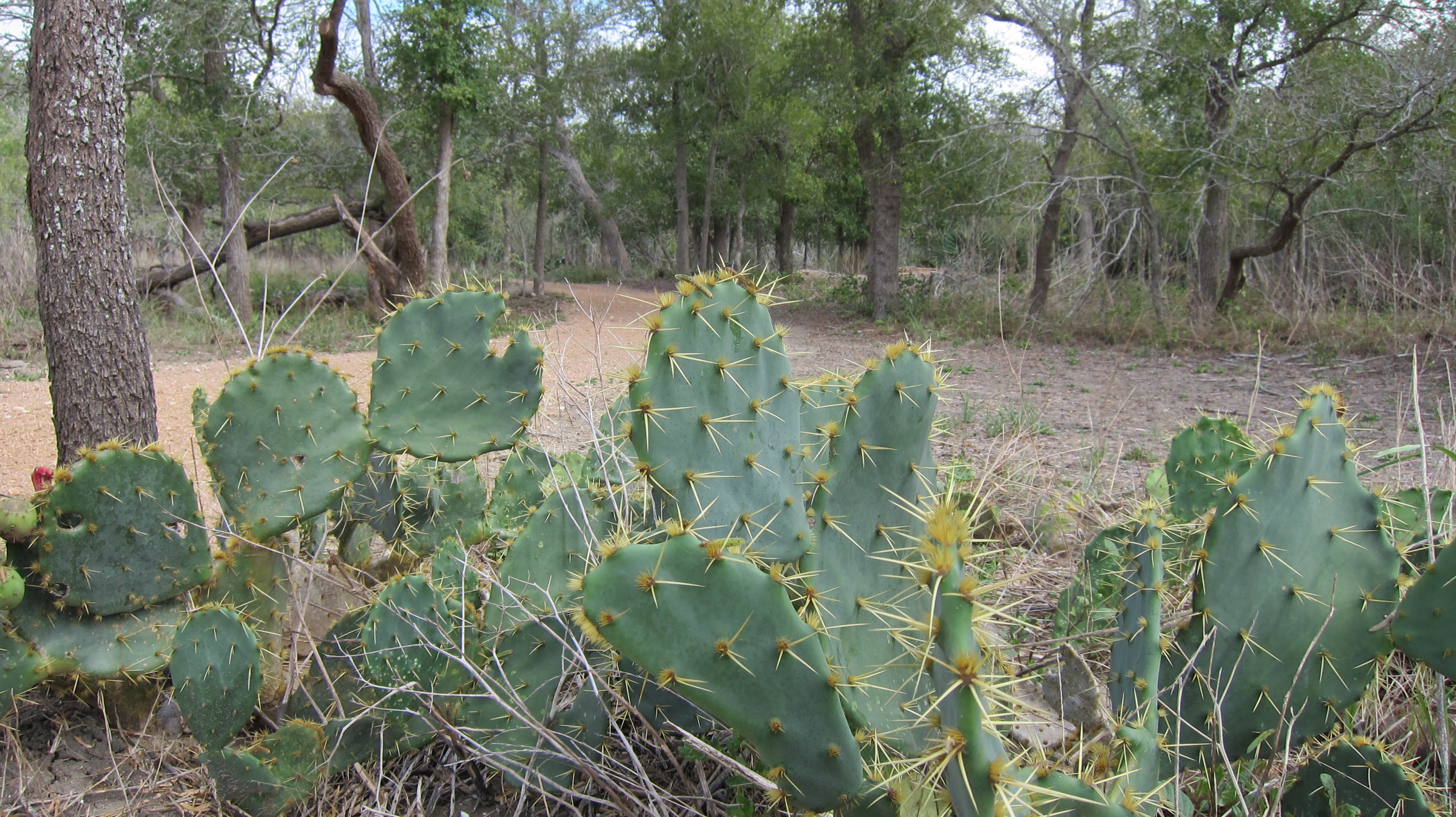
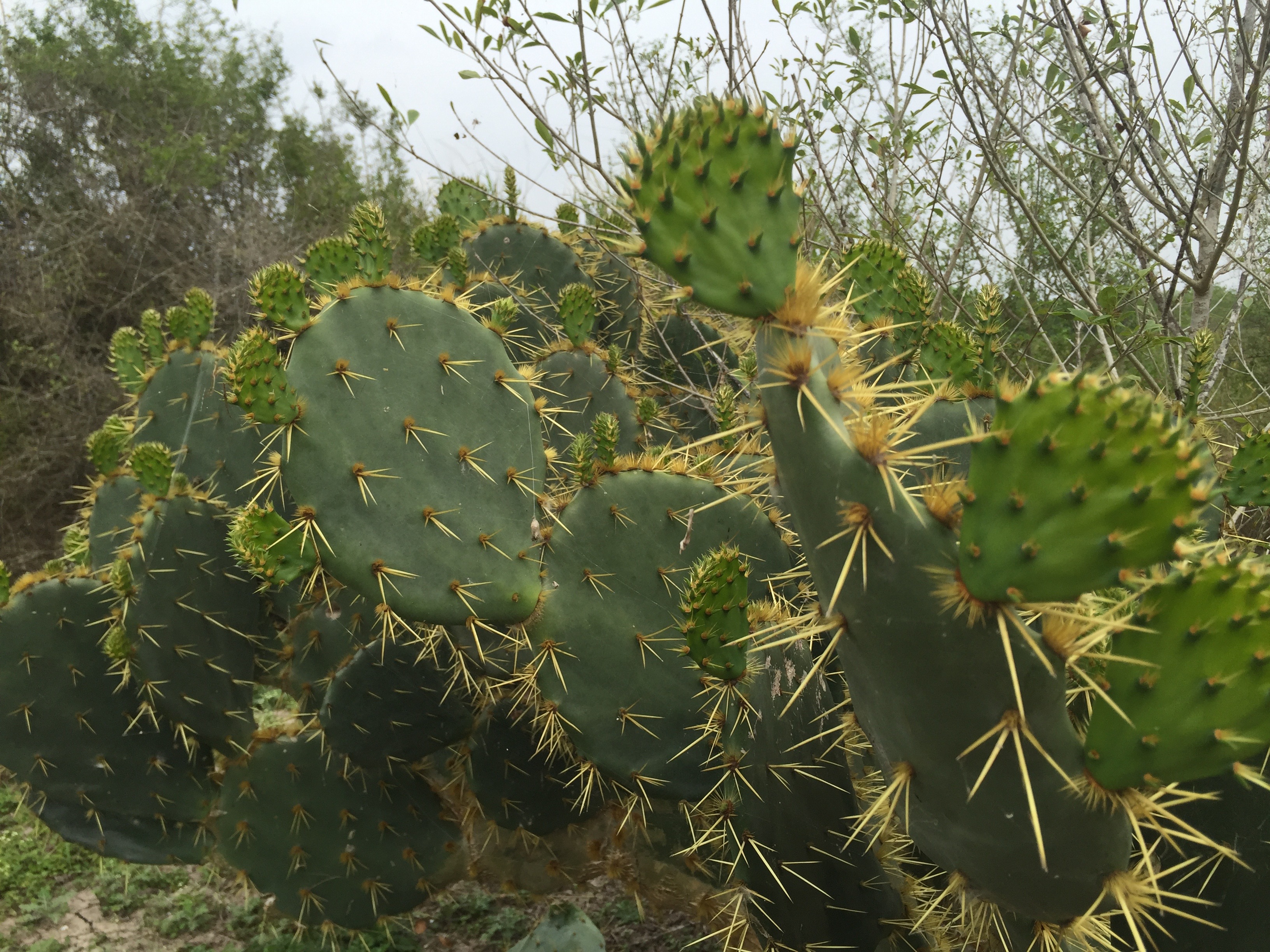
The flat, fleshy pads of the prickly pear look like leaves but are actually modified branches. These branches serve several functions, including water storage, photosynthesis, and flower production. The large spines that grow on these flat branches are modified leaves that harden as they age.

Some species of prickly pear have clusters of fine, barbed spines called glochids. These grow at the base of the large spines. They are hard to see and even harder to remove once they get lodged in the skin. So, be careful. There is a legend that the coyote brushes the spines off the fruit of the prickly pear with its tail before eating it. This practice is not recommended for humans!
Prickly Pear Path4. The prickly pear pharmacy.

Native Americans discovered more than a food source in the prickly pear cactus. These resourceful early inhabitants discovered a veritable pharmacy in the prickly plant. The prickly pear cactus has been used to treat stomach problems, cuts and bruises, sunburn, constipation, cold symptoms, and even diabetes. One folk remedy involves heating the pads and placing them on a cold sufferer’s chest to relieve congestion.
Prickly Pear Bike Path5. The prickly pear is Texas tough.

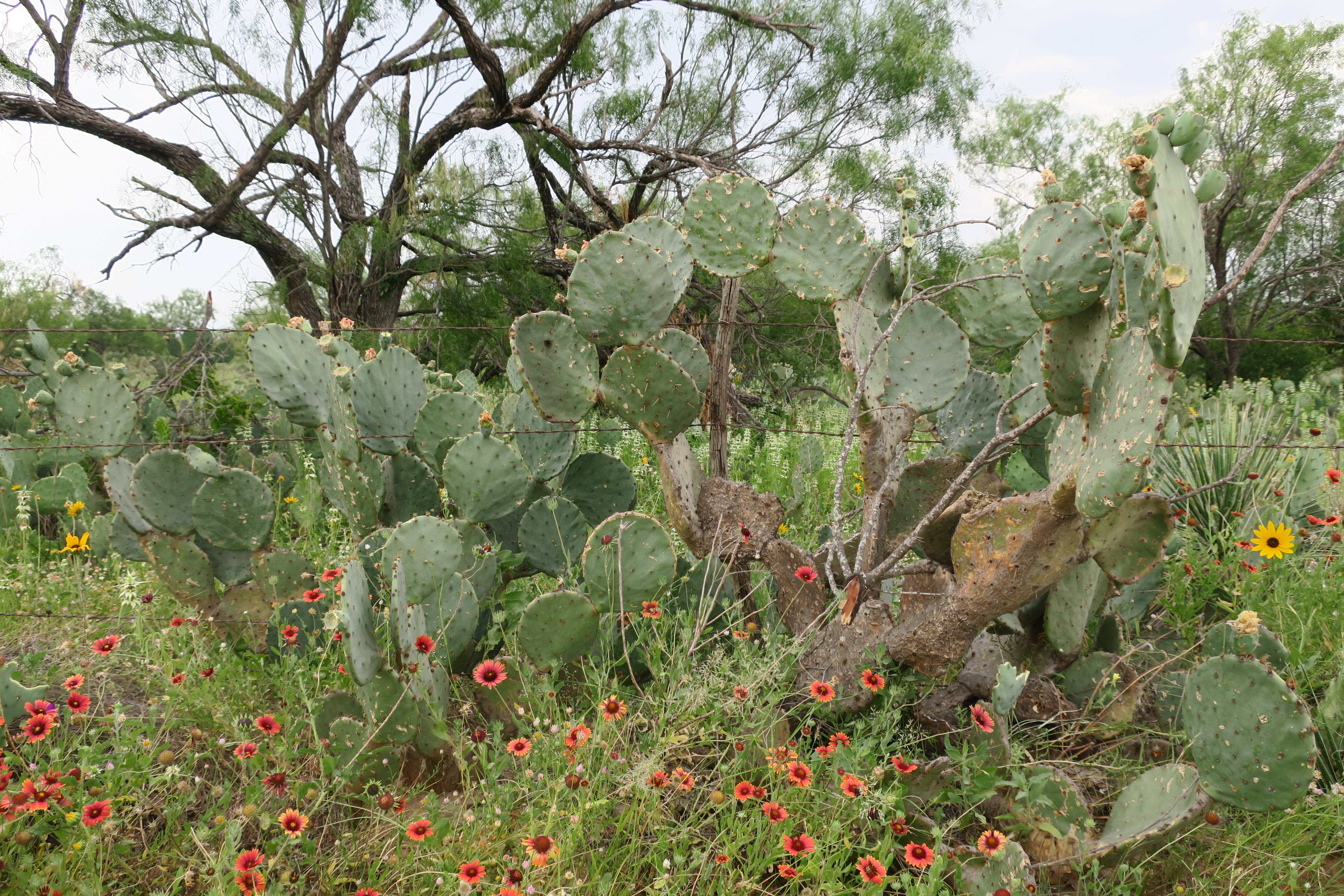
Texas is home to about 20 species of prickly pear that can be found throughout the Lone Star State — from the thick piney woods to the rugged Chihuahuan Desert. The resolution that designated the prickly pear cactus the official plant of Texas declares: “Rugged, versatile, and beautiful, the prickly pear cactus has made numerous contributions to the landscape, cuisine, and character of the Lone Star State, and its unusual status as both a vegetable and a fruit make it singularly qualified to represent the indomitable and unique Texas spirit as an official state symbol.”
Cactus and Wildflowers

Biking the Bayous

On occasion, my work and travel schedule keep me from wandering and exploring the Lone Star State. Whenever my adventure time is reduced from days to hours, I still like to look for opportunities to get out and do something fun and adventurous. I have discovered that there are all sorts of adventures close to home that do not require a huge investment of time or money.
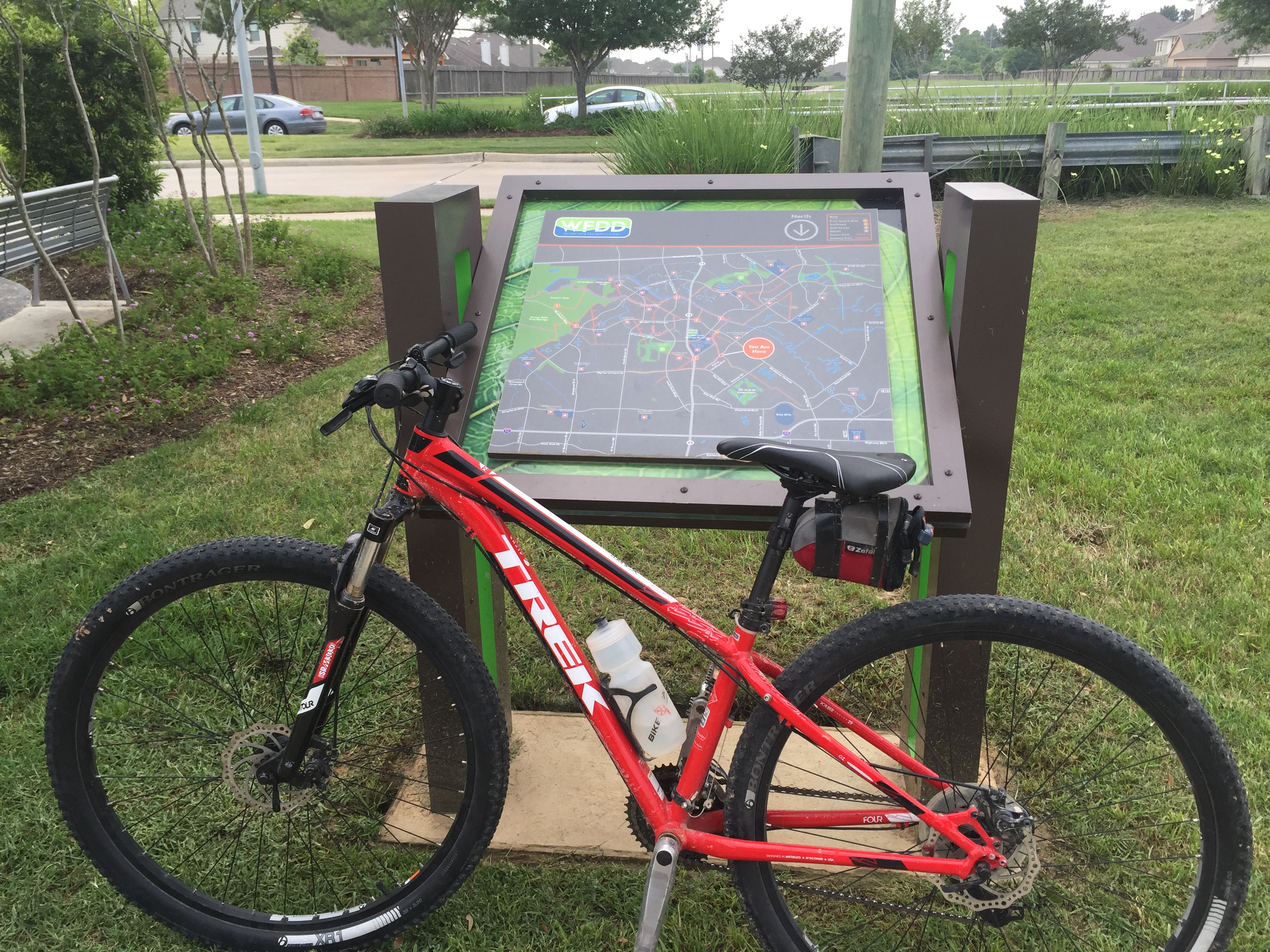
Bike and SignHouston is popularly known as “The Bayou City” because of the ten waterways that meander through the greater metropolitan area. I live in Katy just west of Houston, a beautiful city that has some of the best walking, hiking, and biking trails along the bayous that divert water toward the gulf. Developers in our area have done a really good job of planning and also maintaining these green spaces.
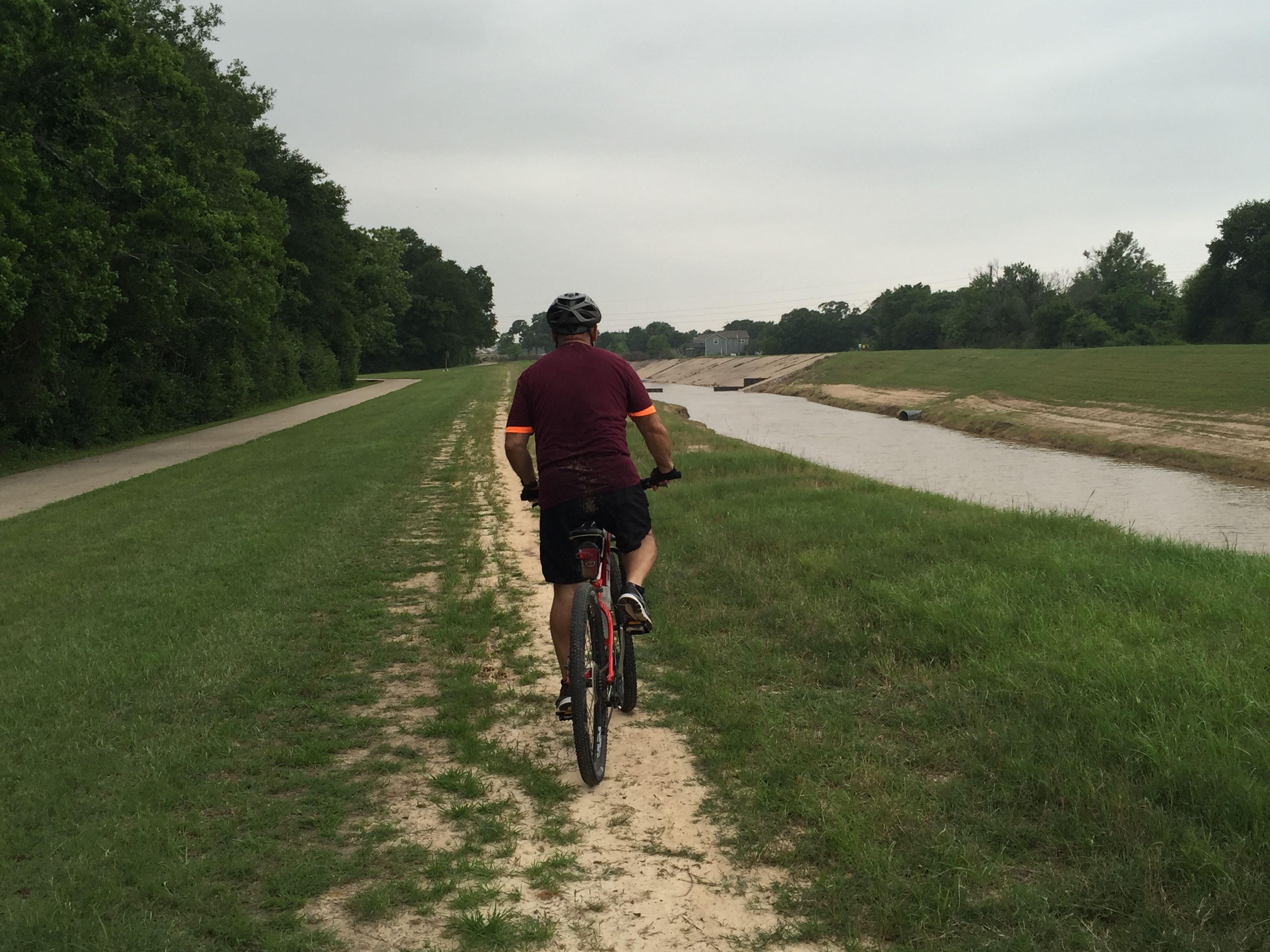
Omar Ride BayouUnless it’s raining, I like to hop on my mountain bike after work and do either a fourteen or twenty-mile ride along the bayous. The trails behind my neighborhood offer paved and unpaved riding options. I prefer, when possible, to stay off the sidewalks to avoid the folks who are out for a leisurely stroll or an afternoon run.
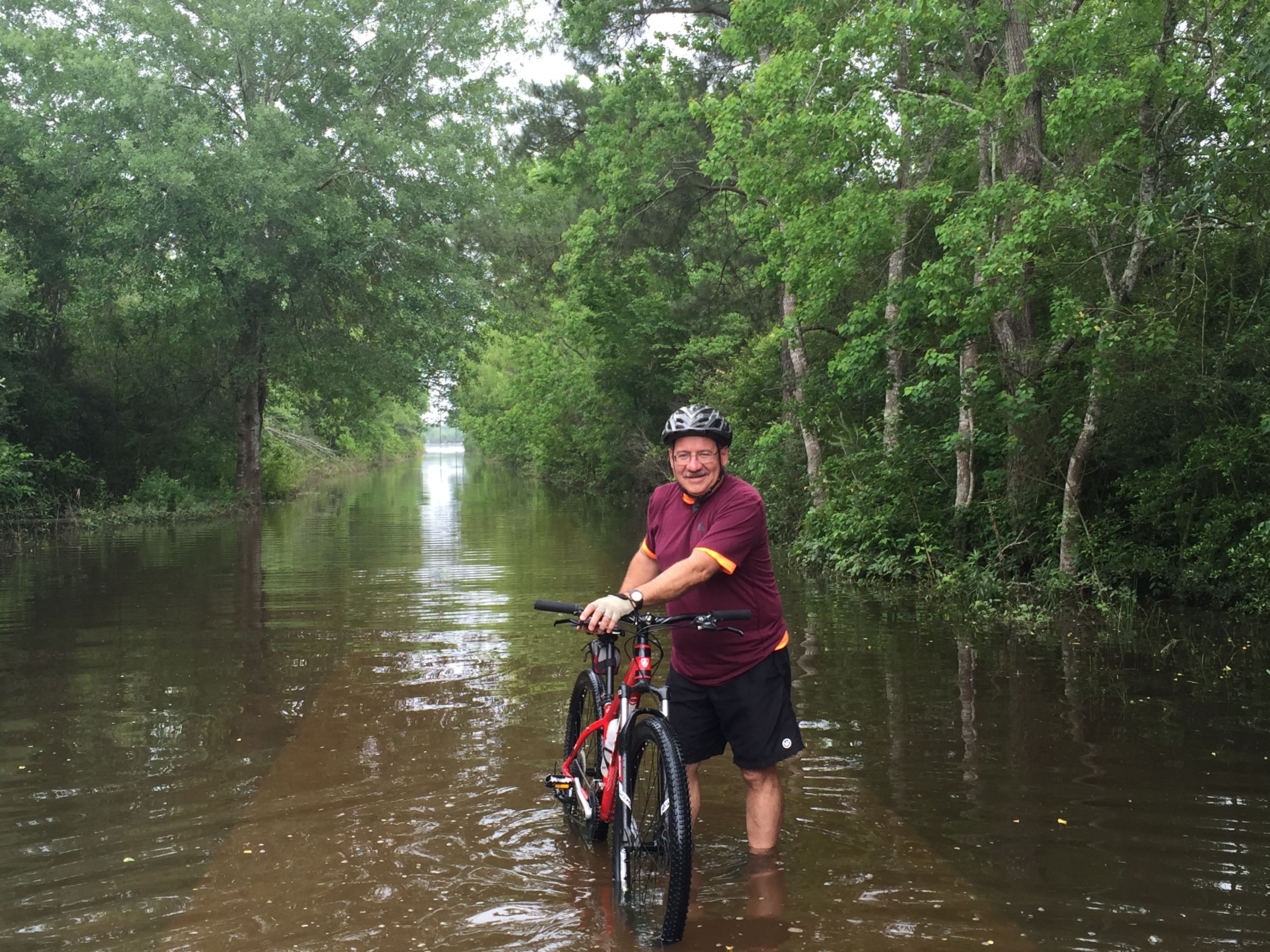
Omar Biking in WaterOn a recent ride, a mile section of sidewalk that leads to some ball fields that mark my turnaround point was under several inches of water. Instead of turning back, my friend Selim and I decided to do what any school boy in his right mind would do — press on through the water. Up until that point we were out on a normal bike ride. The water represented the opportunity for adventure. So, we pressed on.
Selim and BJAlong the way we met a new friend out for a ride. He was happy to join us on our great watery adventure. We saw an alligator and also some deer wading in the water. And, of course, we got soaked in the process. On the way back we had to portage our bikes because the trail under the Grand Parkway was covered in mud and debris from recent floods — something that only added to the challenge and adventure.
IMG_8739When it was all said and done we were glad that we had ventured out. After all, what could be better when you only have a couple of hours for an adventure. And the best part — it did not cost us a dime and we enjoyed a lot of good conversation and laughter along the way.
IMG_8747Regardless of where you live in the Lone Star State, look for opportunities to have adventures close to home. Doing fun stuff outdoors always trumps staying indoors. I’m thankful for the bayou trails near my home. Biking the bayous certainly scratches my itch for adventure when I only have a few hours to get outdoors. The next time you find yourself short on time or money, don’t despair. Find your next Texas adventure close to home.

There Is No Place Like Home

In the closing sequence of “The Wizard of Oz,” young Dorothy, who is longing to return to her home in Kansas, speaks one of the most memorable lines in the story — “There’s no place like home!” Dorothy’s words are true. There is no place like home. Just the mention of the word home does something good to our hearts, especially when we’ve been away for any period of time.
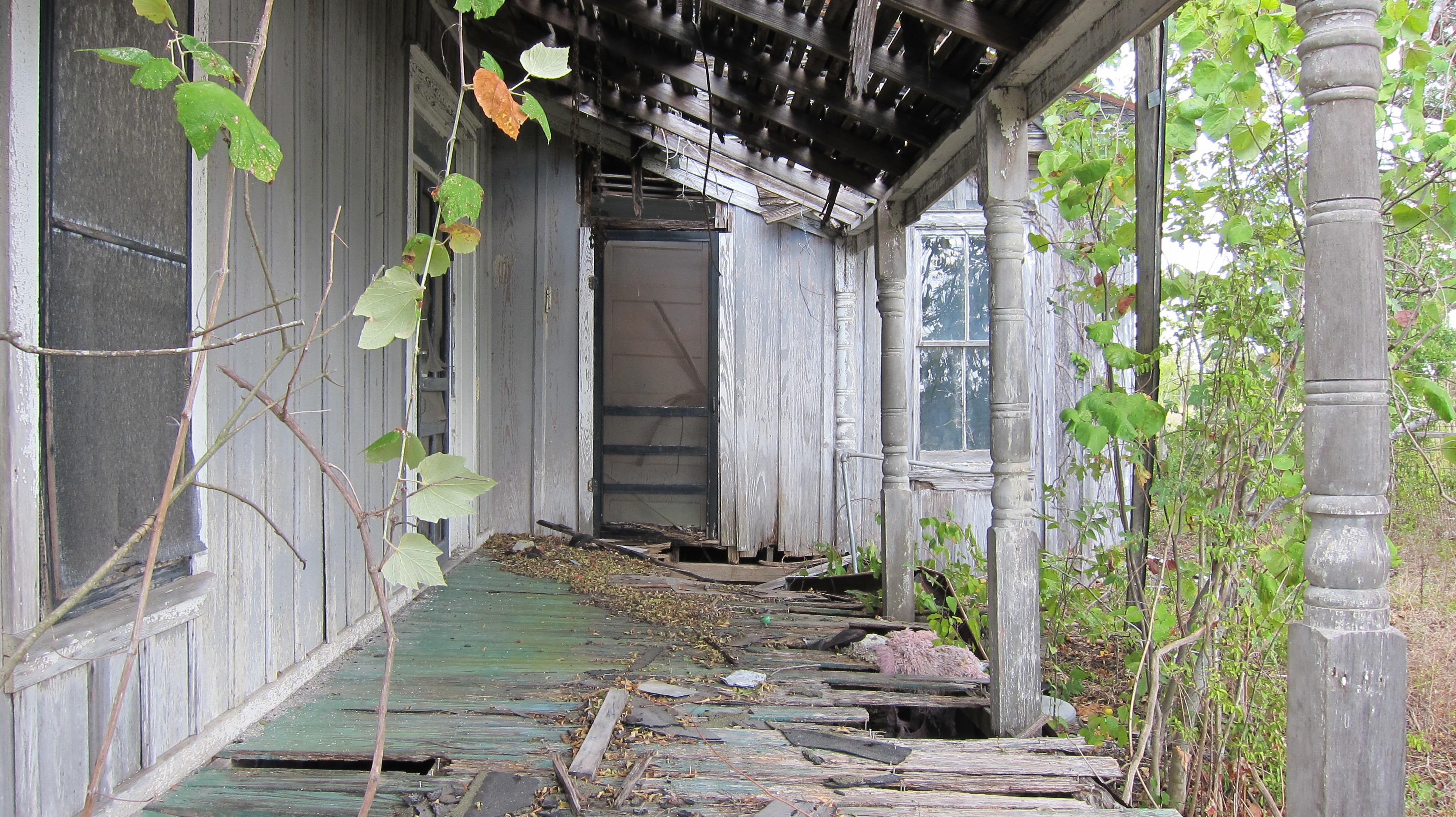
Dime Box HouseOne of the best things about backroads adventuring in the Lone Star State is coming across old homes — long abandoned structures weakened and worn by the passage of time. You won’t find these crumbling old places in our manicured HOA-governed subdivisions. You’ve got to hit the backroads and do some exploring.
Catspring Old HouseWhenever possible, I have to stop to explore these fascinating places once held dear by occupants unknown to me but not unlike me. Every decaying structure stirs my imagination and causes me to ask questions only walls could answer. How I’ve often wished walls could talk!
Catspring Old DFoorEach and every abandoned home share one thing in common — at one time they were all new. These old homes represent the dreams, aspirations, and perhaps the answer to the prayers of whoever built and lived in them. Someone was excited to see the walls go up and the roof take shape. Someone was the first to step across the threshold and the last to move away for good.
Old PorchWho looked forward to returning to these places, perhaps to be greeted by the welcoming embrace of a loved one? Who sat on the front porch watching a sunrise or sunset or the falling rain? Who carved the turkey at Thanksgiving or put the gifts under the Christmas tree? Who anxiously looked out a window, awaiting word about the welfare of a loved who was away? Who repaired the leak in the roof or the loose floorboards?
OPttine House 1907These old homes are the context in which people celebrated life’s ordinary days and holidays. And yet, at some point, the life and laughter moved out and silence moved in. Those connected to these old properties are the remaining custodians of their history. And, unless this history is recorded or passed on, it too will go the way of these old homes.
Catspring House GateThere is indeed no place like home. And the fascinating old and abandoned homes on Texas backroads are definitely worth exploring. If you happen to come across one of these old homes, ask permission before stepping onto private property, take nothing but photographs, leave nothing but footprints, enjoy the experience, and respect the home and its history.

Texas Proud

There is little, if any, doubt that Texans are a proud people. Anywhere you venture within the broad expanse of the Lone Star State, you can see Texas pride on display. The very shape of Texas makes it one of the most easily recognizable states in the Union. The same can be said of our Lone Star emblazoned flag. Texans use both of these iconic symbols to identify their love and pride for the place they call home.
Texas Flag WavingSomeone once said that Texas is a state of mind. And indeed it is. But it is more than that. New York born author John Steinbeck wrote, “For all its enormous range of space, climate, and physical appearance, and for all the internal squabbles, contentions, and strivings, Texas has a tight cohesiveness perhaps stronger than any other section of America. Rich, poor, Panhandle, Gulf, city, country, Texas is the obsession, the proper study and the passionate possession of all Texans.”
Texas Flag BarnFrom its earliest days, Texas has inspired a loyalty from both native born Texans and those who were born elsewhere but got to Texas as quick as they could. Tennessee-born Frontiersman Davy Crockett, also known as the King of the Wild Frontier, said, “You may all go to hell and I will go to Texas.” That quote reminds me of the line in the song by Chris Wall, a singer-songwriter from Austin: “I’d rather be a fencepost in Texas, than the king of Tennessee.”
Texas Flag PorchAs a kid, I went to see the movie Hellfighters, the story based on the life of Red Adair. John Wayne played the role of this Texas oil field legend who battled oil well fires all over the world. The real Red Adair said, “I’ve traveled all over the world, but I don’t think there is any place better than Texas.” I agree with Red. I have traveled to more than forty countries and there is nothing better than coming home to Texas.
Texas Flag TruckThe bottom line is that I love everything about our great state — beaches and bluebonnets, expansive skies and extraordinary sunsets, barbecue and burgers, country music and mariachi bands, the Chihuahuan Desert and pine forests. In the words of a proud Texan: “If you’re lucky enough to live in Texas, then you’re lucky enough.”

Lajitas Cemetery

Situated on a bluff in the northern part of the Chihuahuan Desert, the tiny community of Lajitas silently overlooks the lumbering Rio Grande River. Lajitas is Spanish for “little flat rocks” — a reference to the Boquillas flagstone of the area. Long before Anglo-Americans arrived on the scene, this arid territory was inhabited first by Mexican Indians and later by the Apache and Comanche.

The discovery of mercury in nearby Terlingua changed everything. Starting in the late 1800s, the populations of Lajitas and Terlingua surged as a steady stream of miners moved in to the area to work the mercury mines. Conditions in the mine were dangerous. Life in Lajitas was not for the fainthearted. Only the rugged survived.

During the days of the Mexican Revolution (1910-1920), General John J. “Blackjack” Pershing established a large cavalry post at Lajitas in 1916. Pershing spent several years unsuccessfully pursuing Poncho Villa, the famous Mexican Revolutionary general, around northern Mexico. Pursuing anyone in the vast and unforgiving Chihuahuan Desert was a huge undertaking.
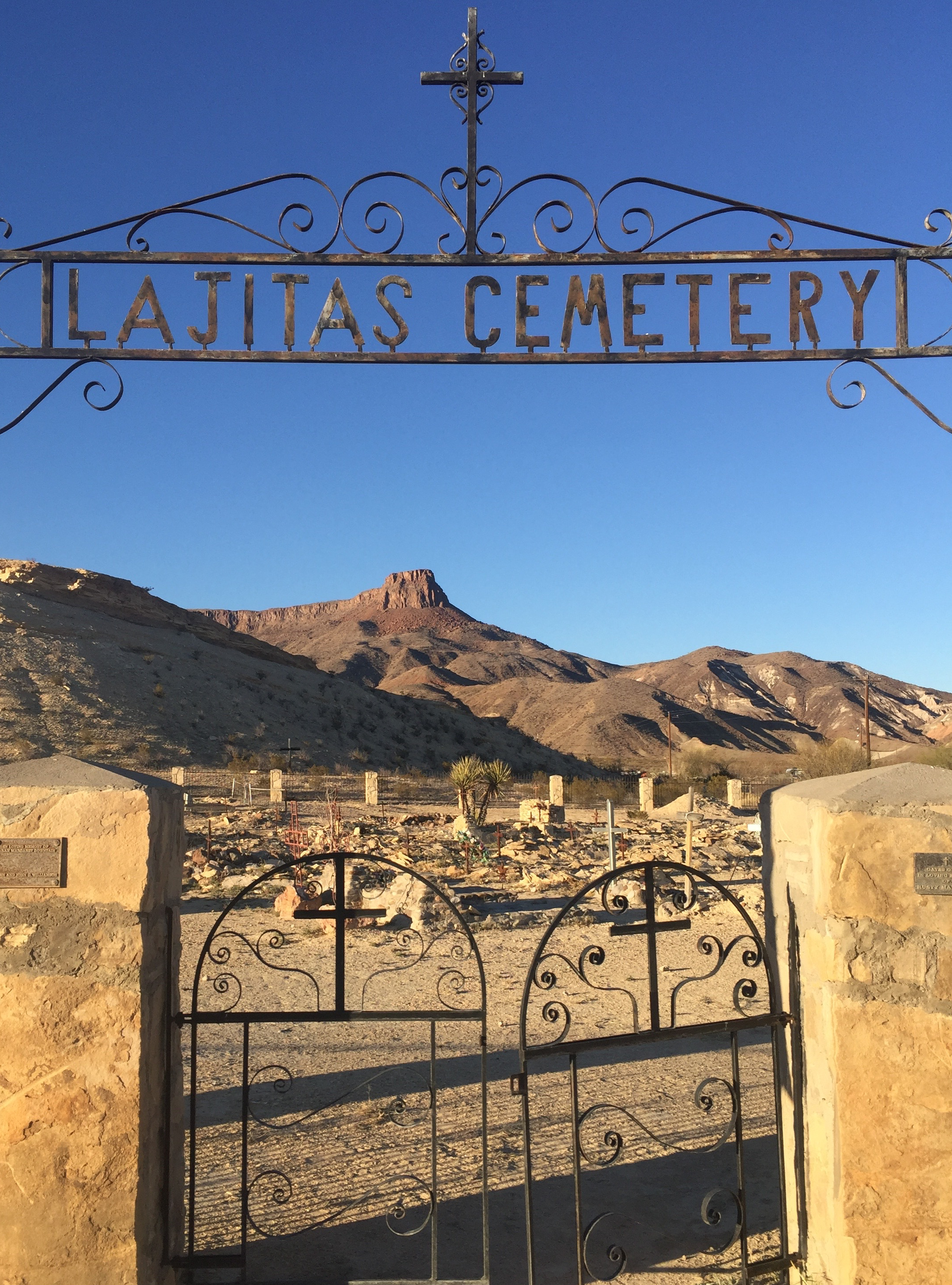
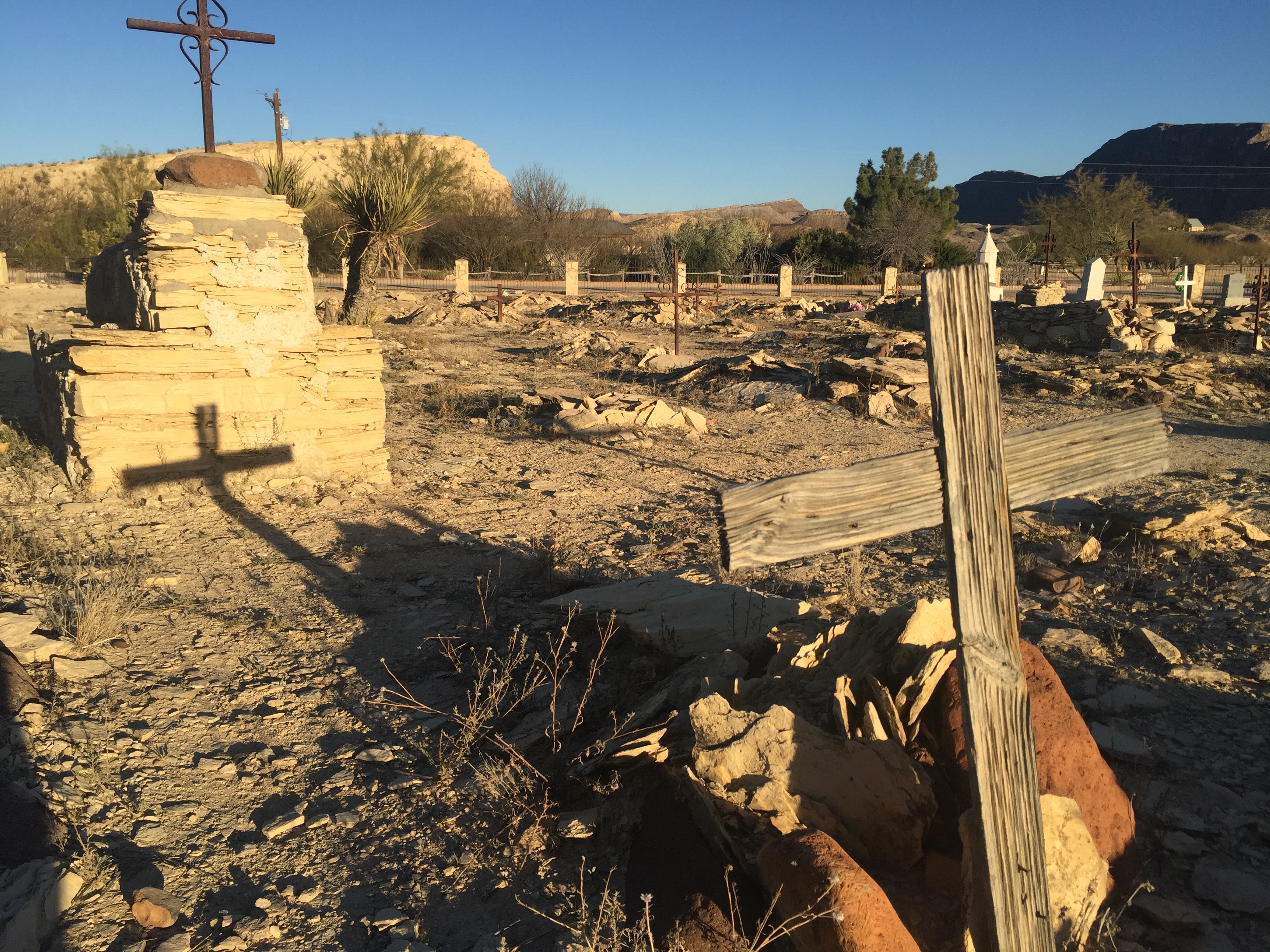
Lajitas CemeteryToday, the small Lajitas Cemetery is one of the must-see points of interest in the area. Like the nearby Terlingua Cemetery, this burial ground is filled with many fascinating old graves. Sadly, most of the names carved into handcrafted wooden crosses are no longer readable. Only the remaining descendants of the deceased know for certain who is buried beneath the rocky cairns.
Lajitas Cemetery GraveIn 1991, a woman named Elie Webb initiated a restoration project at the cemetery. Under her supervision, a fence was built around the cemetery and a gate and arch added. Webb also added iron crosses to many of the graves. Today, however, even these improvements are losing the battle against the harsh desert environment.
Lajitas Cemetery GravesOld cemeteries like the one in Lajitas are worth visiting. These old burial grounds are like dusty history books that can give us a little insight into what life was like in the days of cowboys, indians, and mercury miners. As you travel down Texas highways and byways, make it a point to stop at old cemeteries. These old burial grounds have their own interesting stories to tell.