The Bandera General Store

No road trip through the Texas Hill Country would be complete without a stop in Bandera. Located along the Medina River approximately 50 miles northwest of San Antonio, Bandera is the county seat of Bandera County. It sits where the rolling Hill Country meets the rugged Edwards Plateau.

Bandera takes its name from nearby Bandera Pass, which appeared on maps as early as 1842. Bandera is the Spanish word for “flag” or “banner.” Although the name’s exact origin remains uncertain, a popular account says Spanish settlers and Apache leaders met near the pass to make peace. According to the story, they placed a flag on a hill to mark the boundary between their territories.

The town was founded in 1853. Its early settlers included Polish immigrants who helped establish the community and built St. Stanislaus Catholic Church. One of Bandera’s earliest industries was the production of cypress shingles made from trees growing along the Medina River.


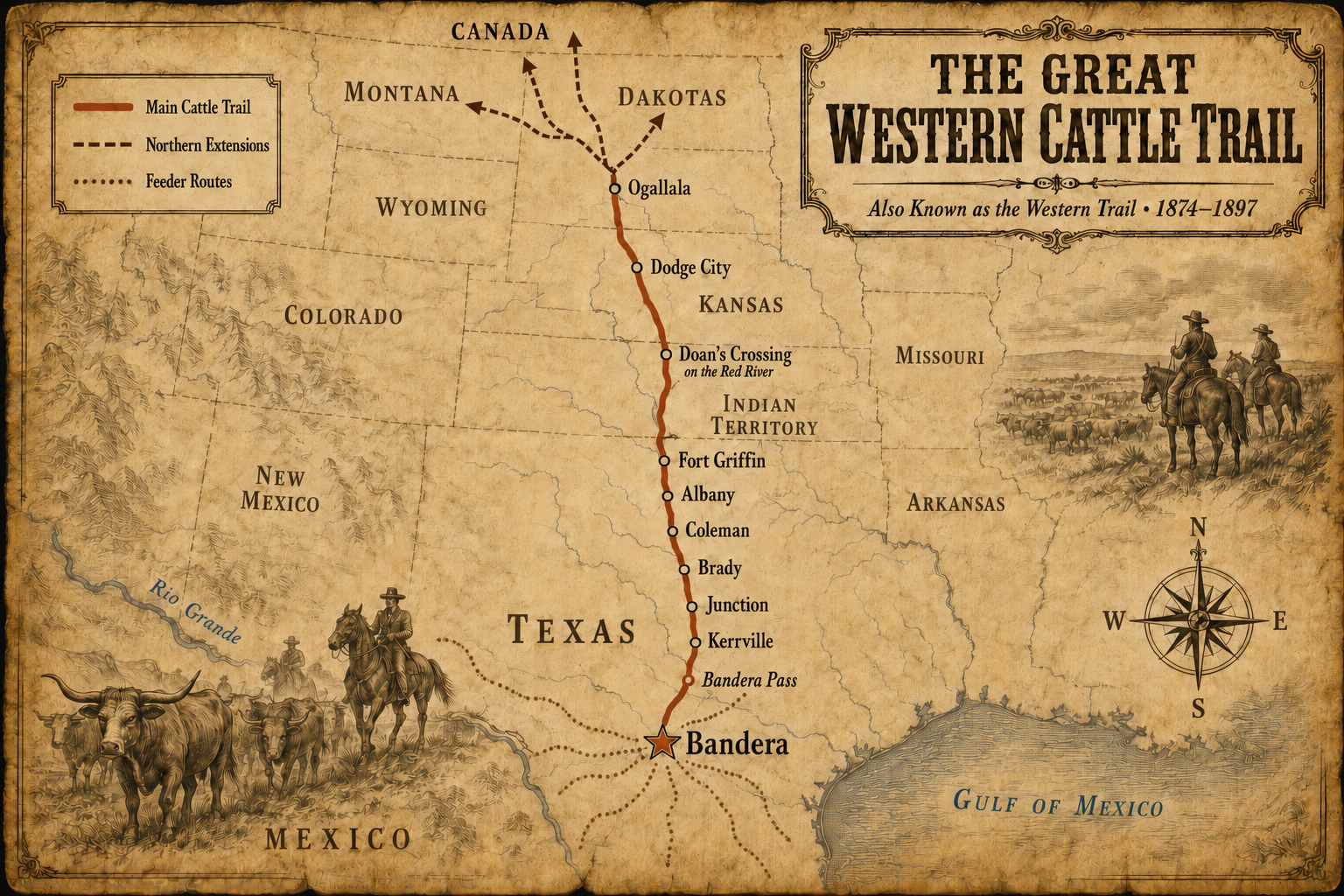
After the Civil War, Bandera became an important staging area for cattle drives heading north along the Western Trail. By the late 1870s, this route had largely replaced the famous Chisholm Trail as the principal trail north. Millions of cattle traveled the Western Trail before expanding railroads, barbed-wire fencing, and the closing of the open range brought the great cattle-drive era to an end.

Today, Bandera calls itself the “Cowboy Capital of the World.” Given its history as the start of the Western Trail, it has earned the title. Cheryl and I enjoyed our visit to Bandera. The downtown area has a vintage-western character all its own and is a fun place to explore. It’s easy to park, stroll the sidewalks, browse the unique stores, and enjoy a place where the spirit of the Old West still feels very much alive.


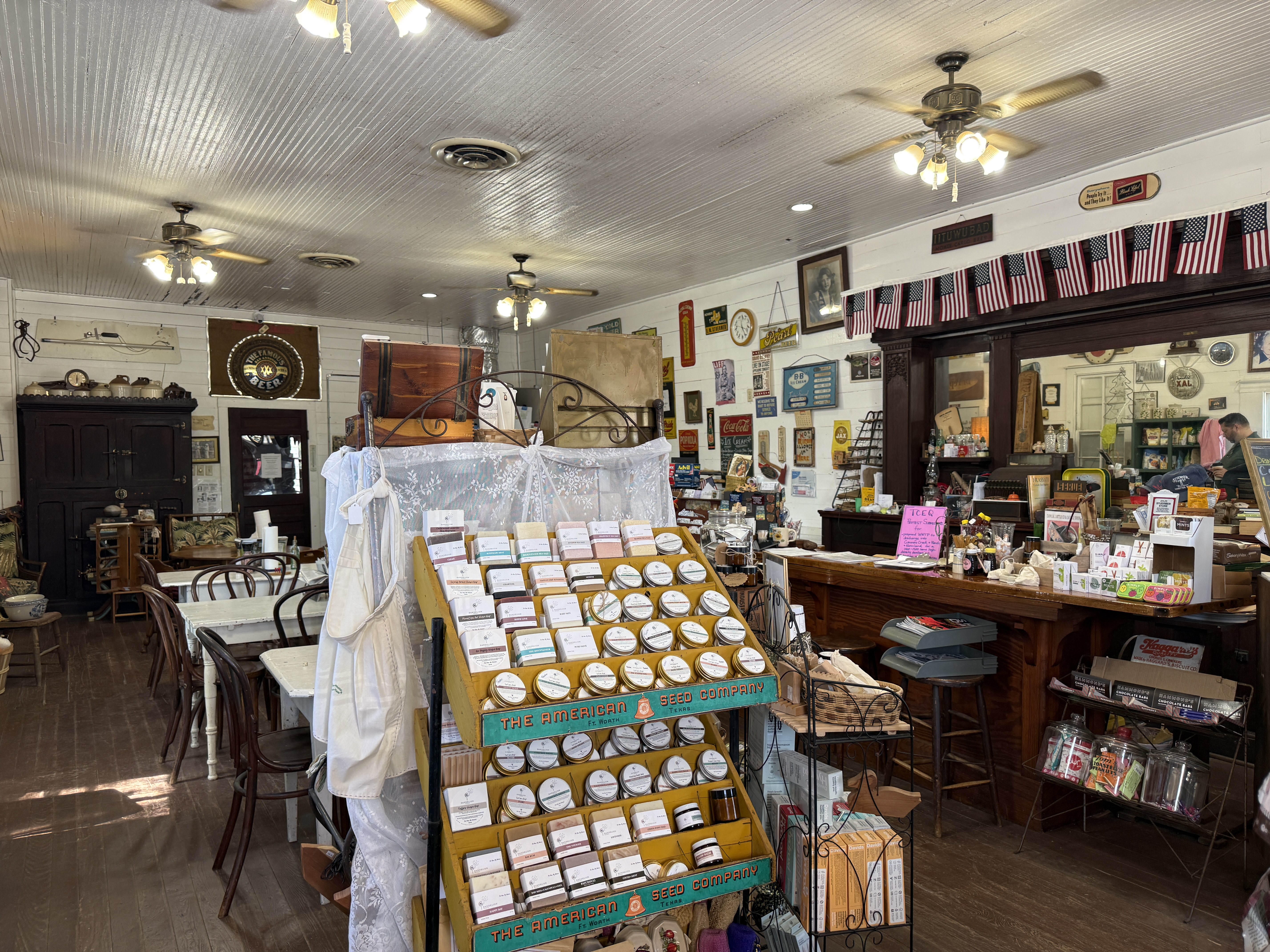
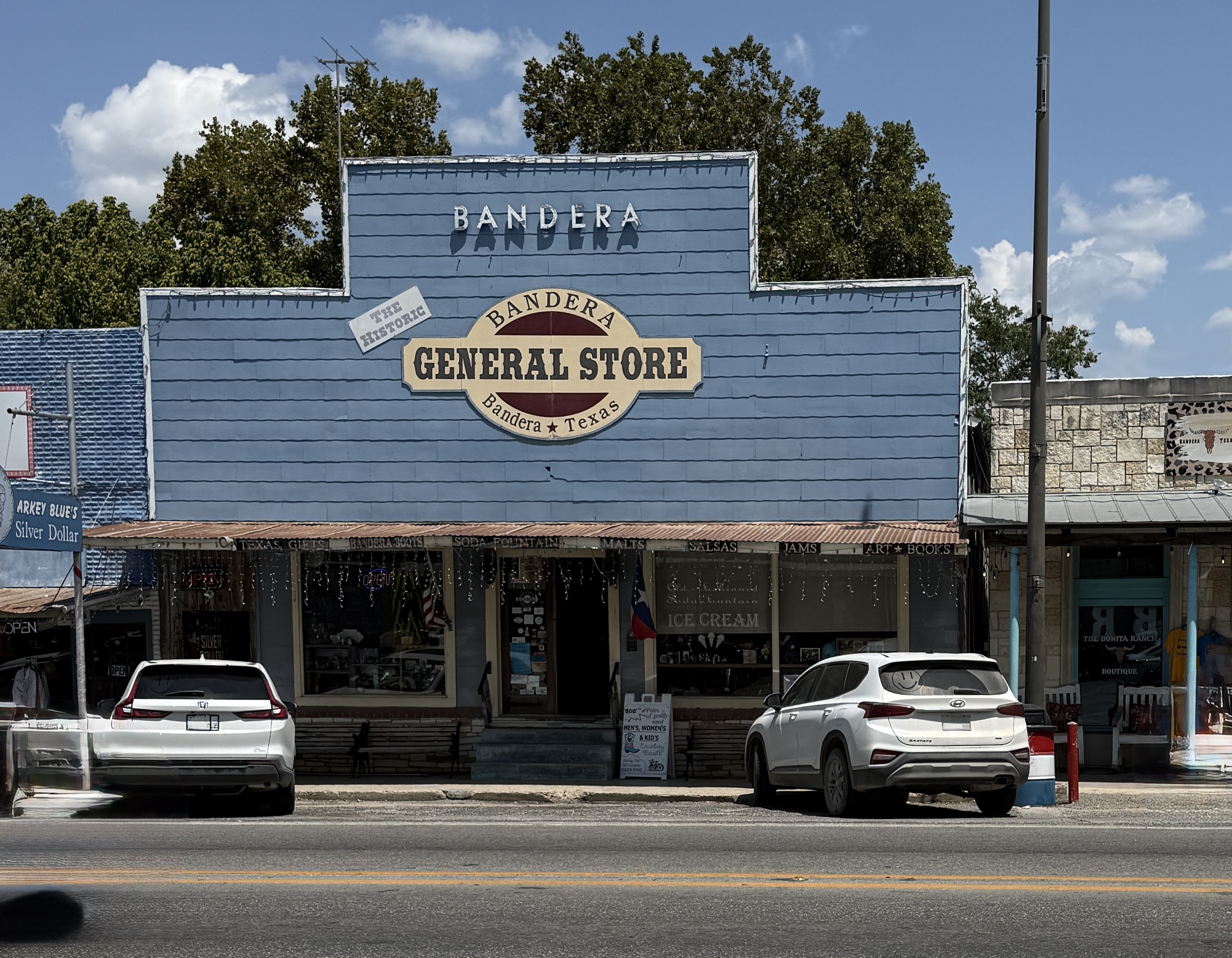
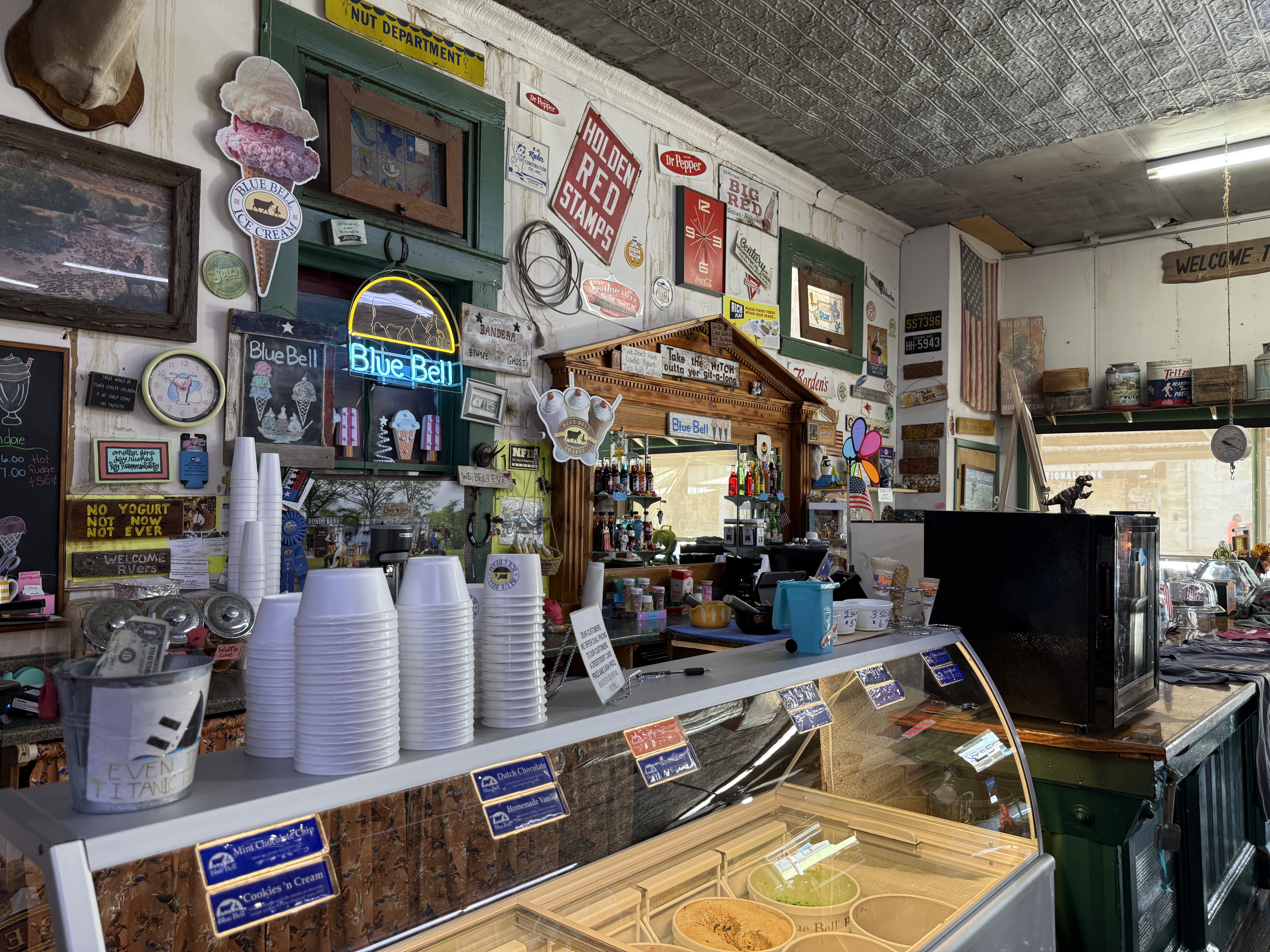
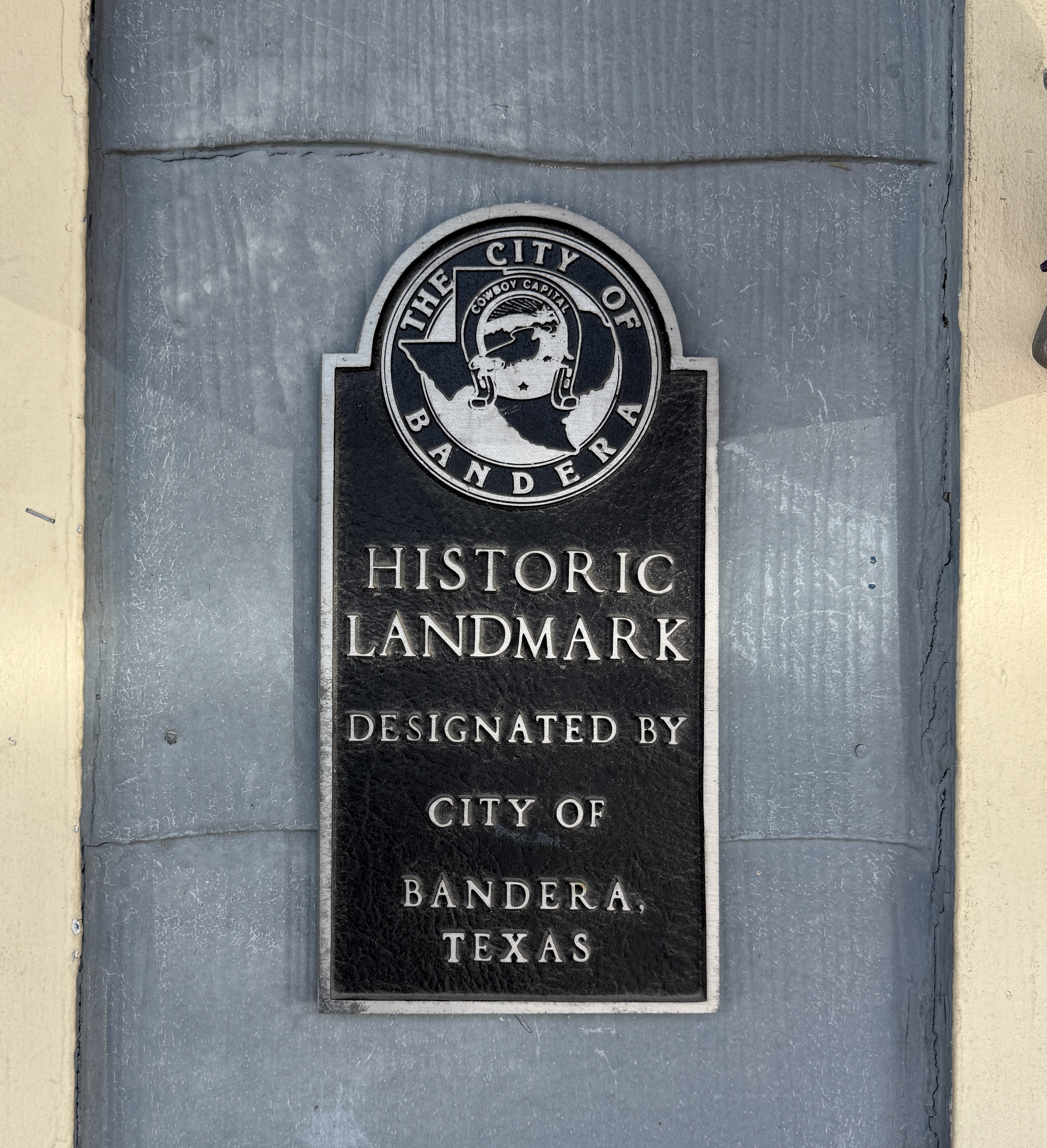
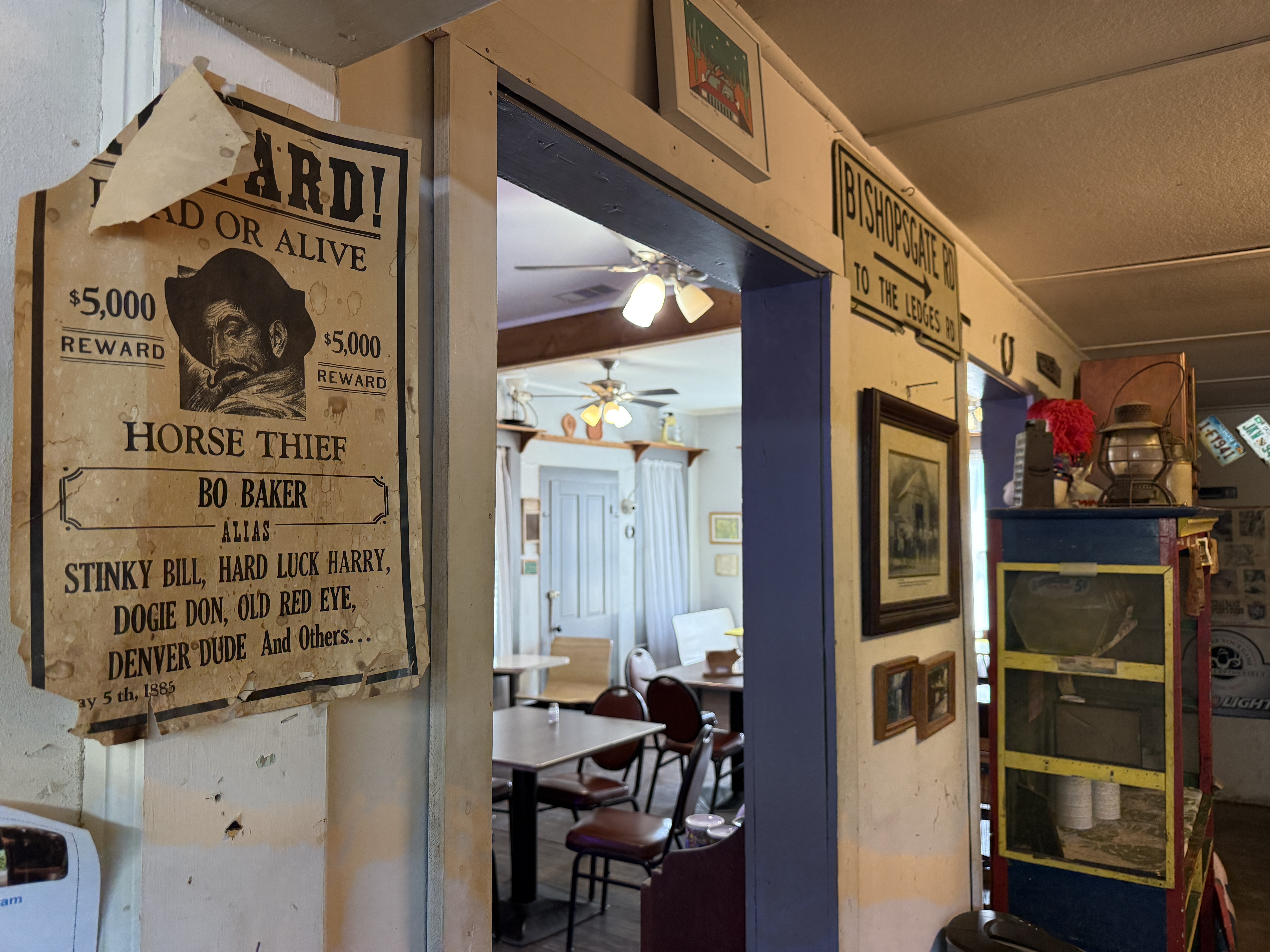
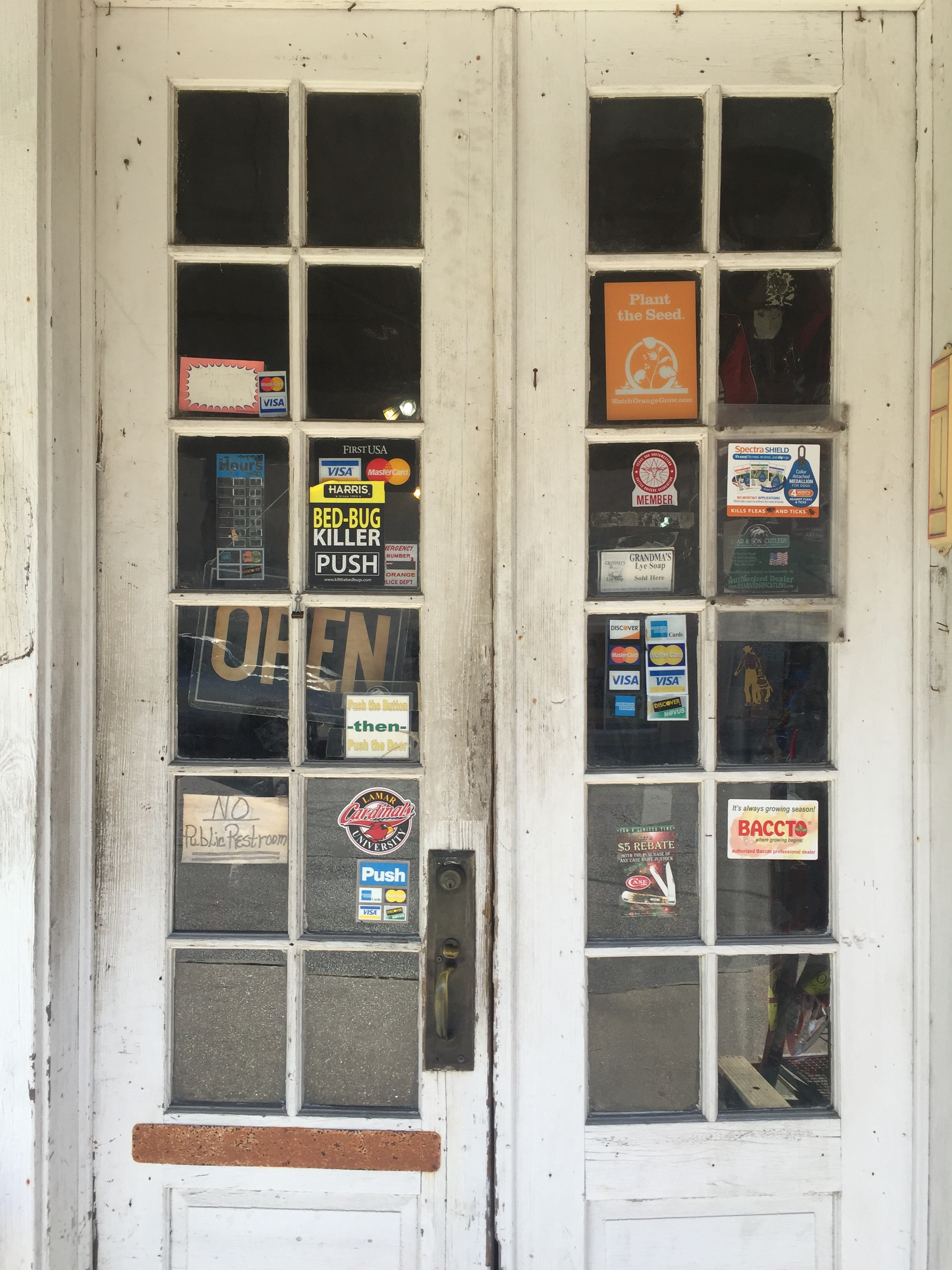
Our main reason for visiting Bandera was to explore the Bandera General Store at 306 Main Street. Historical sources differ on whether the building dates to 1907 or 1921, but it has certainly enjoyed a long and colorful past. Over the years, it has housed a dance hall, movie theater, saddle shop, feed store, appliance store, and Western-wear shop.


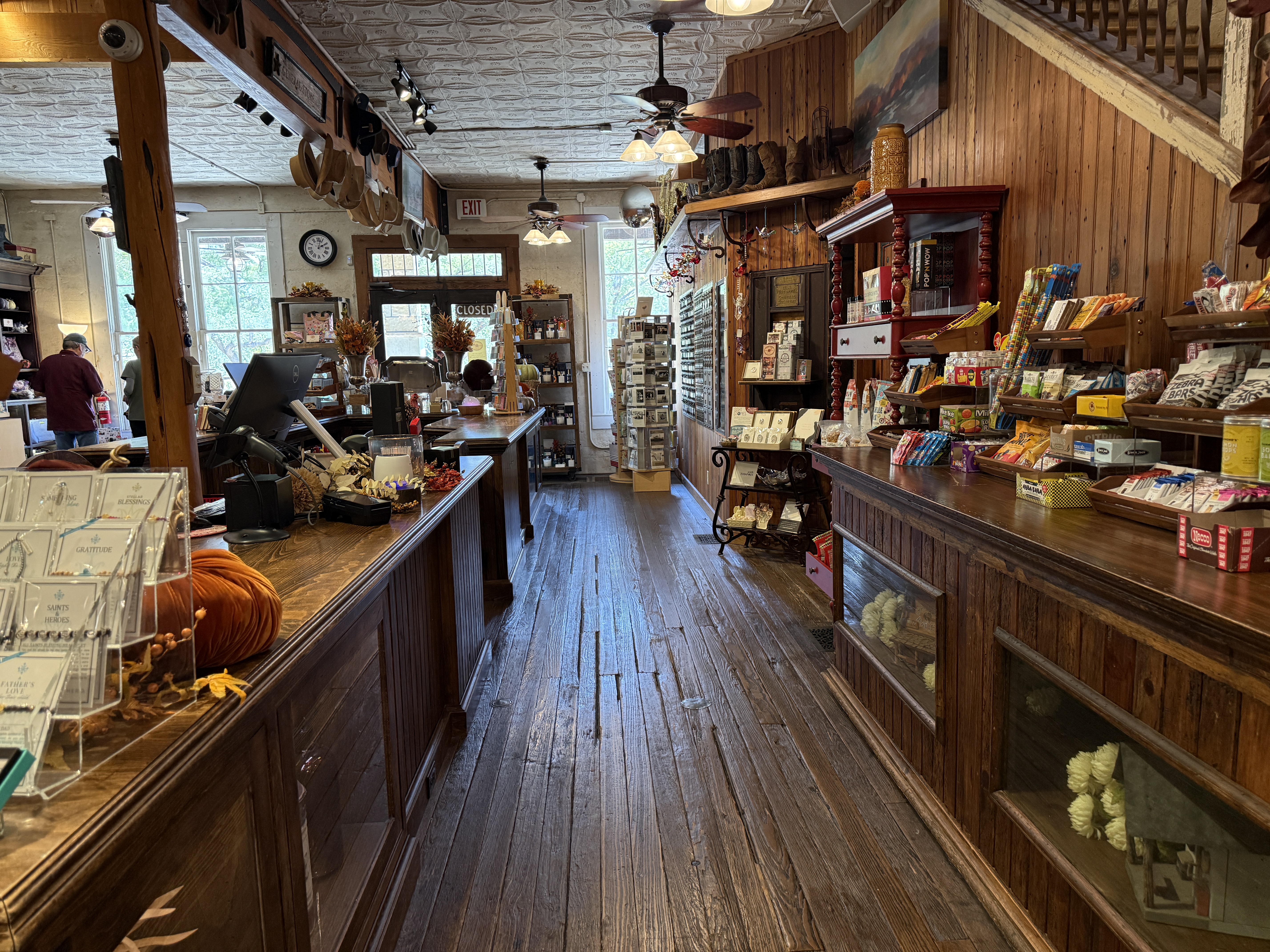
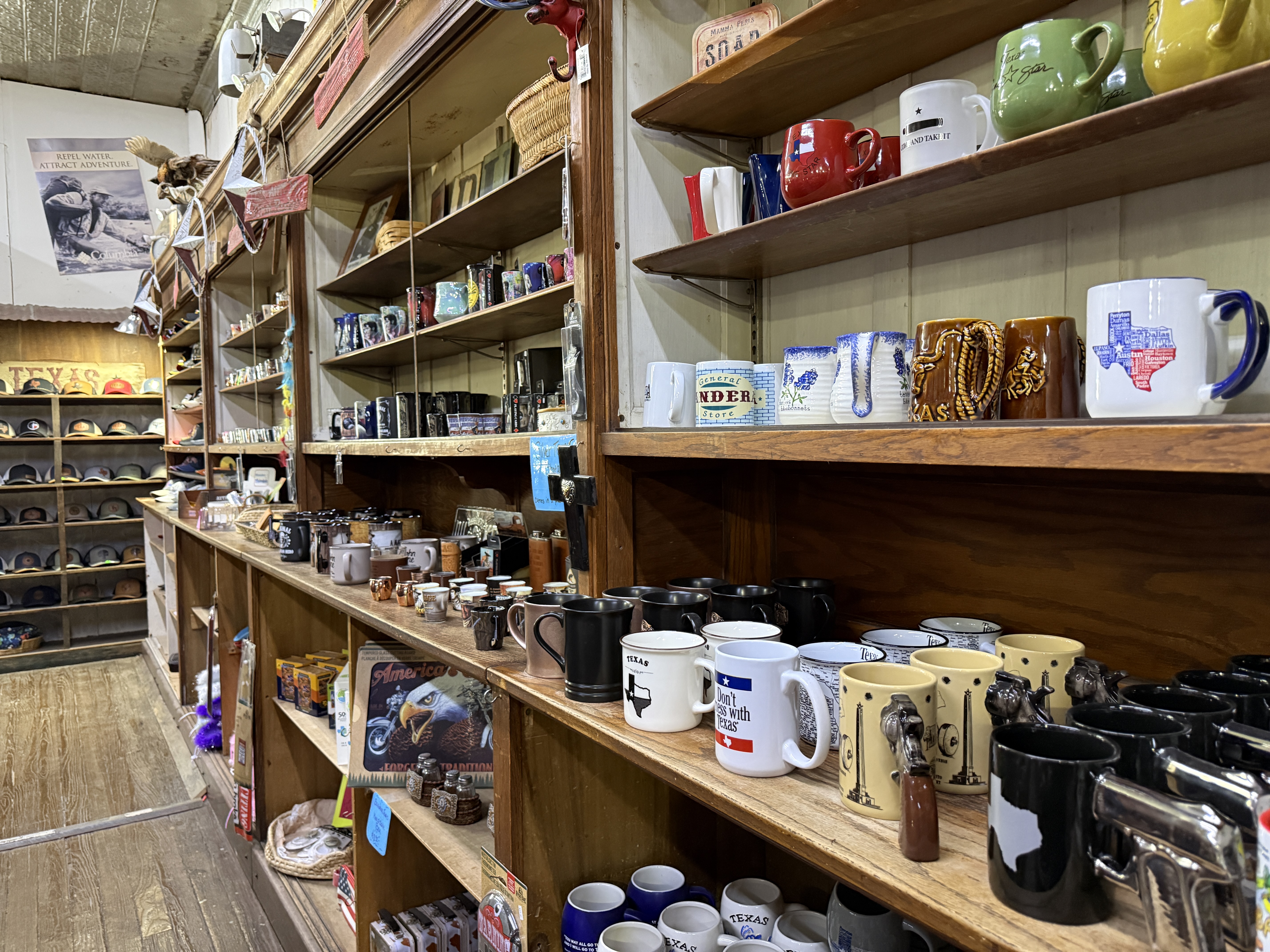
Like many of the historic stores we visited during our Texas Hill Country road trip, the Bandera General Store occupies one of the coolest old buildings in town. Its original wooden floors and pressed-tin ceiling remain, filling the store with vintage character and offering visitors a connection to Bandera’s colorful cowboy past.


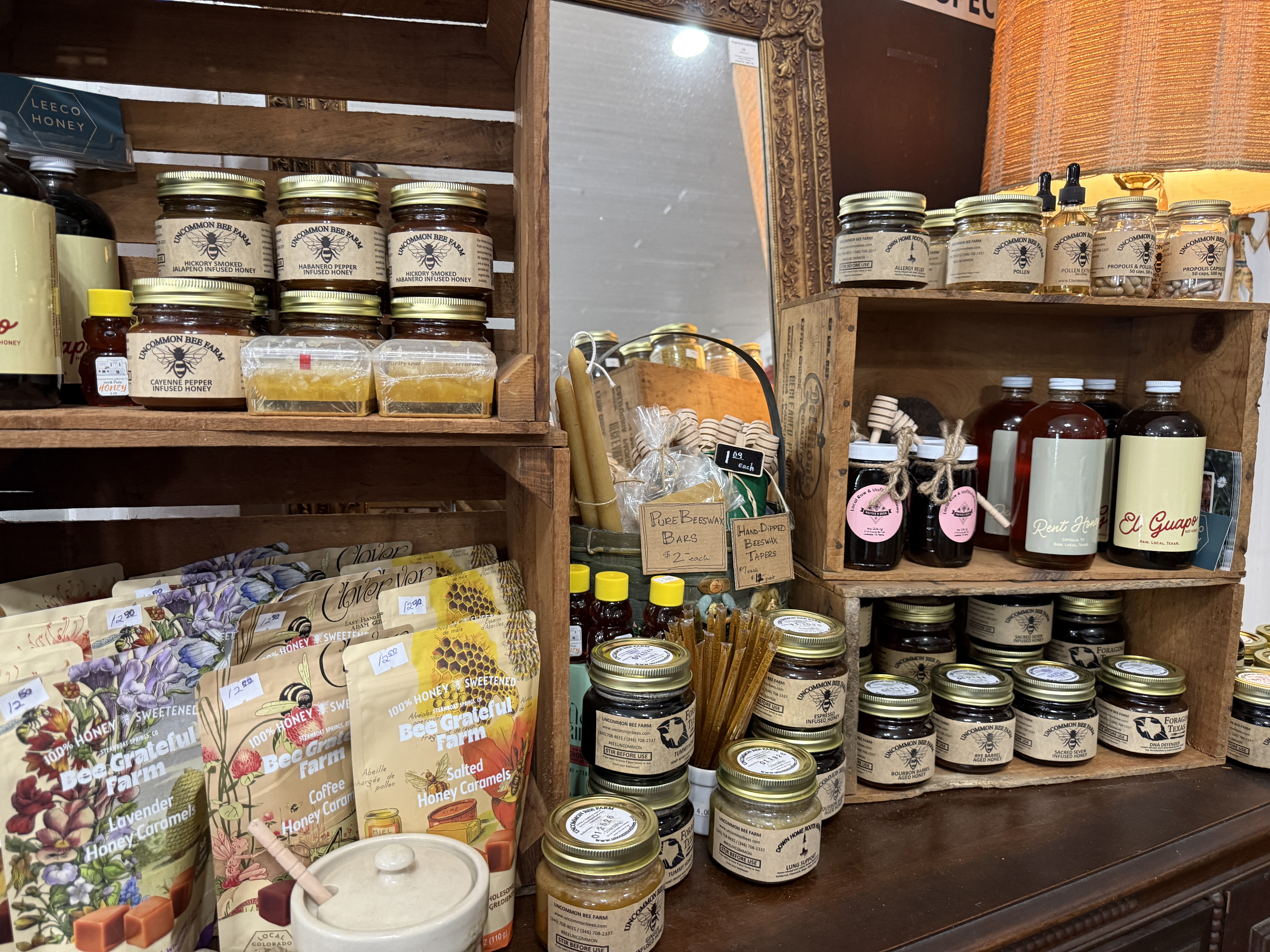
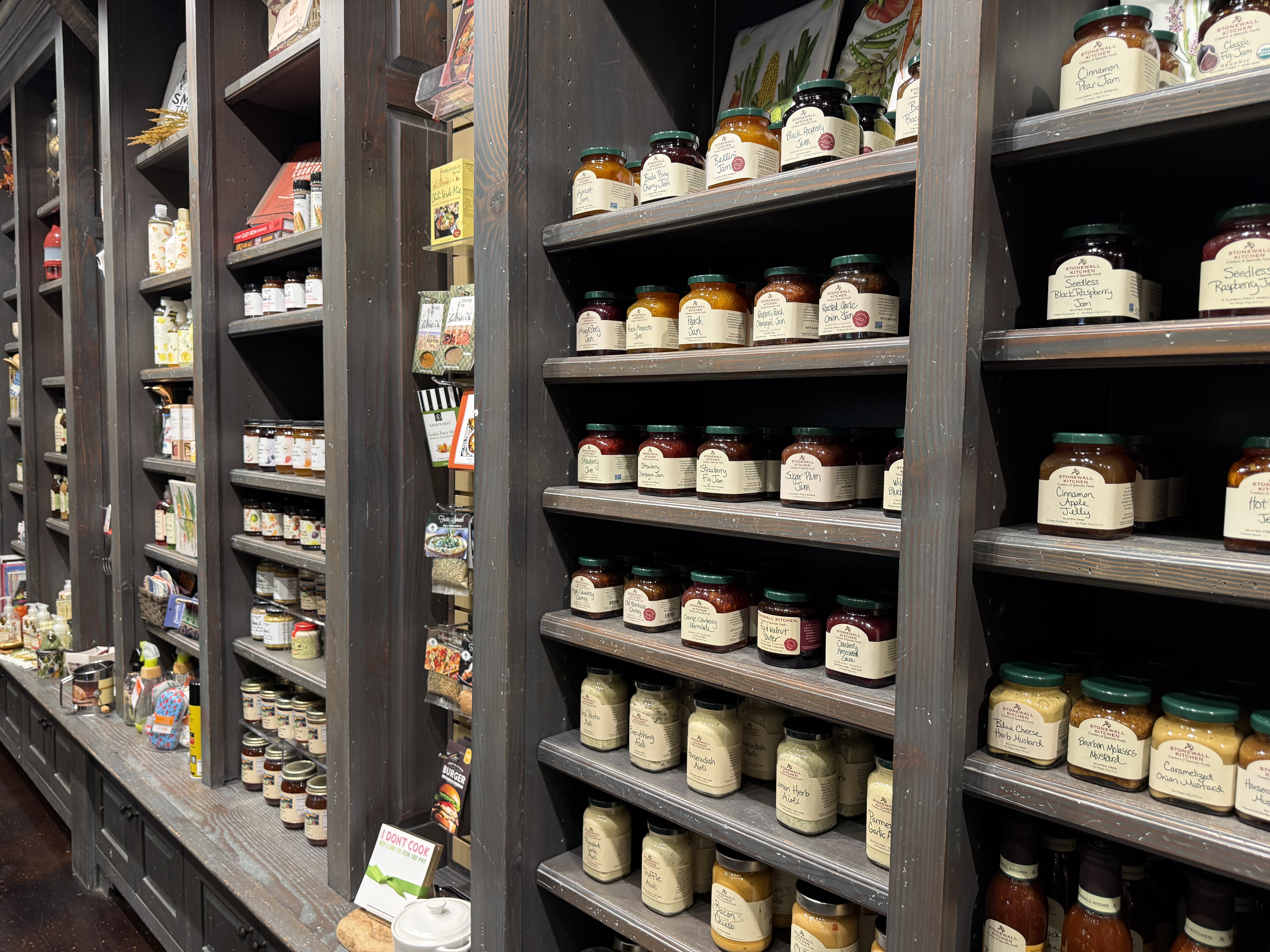
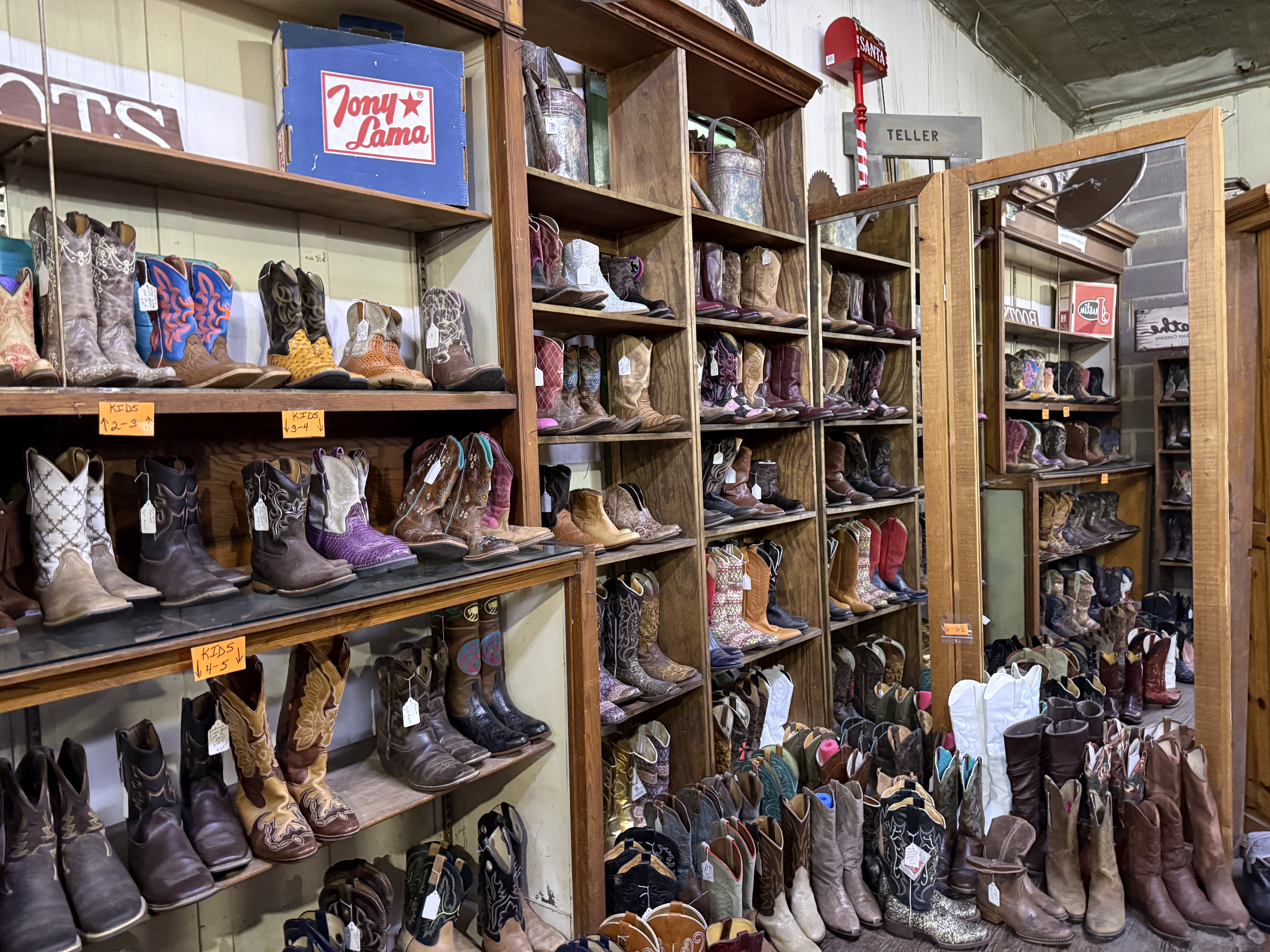
The Bandera General Store offers a wide assortment of Western and Texas-themed merchandise, including cowboy boots, hats, clothing, souvenirs, antiques, books, toys, and home décor. It also carries locally made jams, jellies, honey butter, spices, salsas, and hot sauces. We enjoyed browsing the store’s interesting selection and even picked up a couple of things for our cabin—along with some old-fashioned candy for the road.


One of the store’s coolest features is its 1950s-era soda fountain. Pull up a seat and enjoy Blue Bell ice cream, milkshakes, malts, floats, sundaes, sodas, freezes, or a classic banana split. The welcoming, family-friendly atmosphere makes this a great place for kids—and kids at heart—to enjoy a cool treat.


Cheryl and I really enjoyed our visit and appreciate how Bandera works to protect its unique history and character. This heritage is a special gift for everyone who lives in or visits the town. We hope Bandera keeps its one-of-a-kind spirit and continues to share its story for many years to come.
The Garven Store

Cheryl and I spent an amazing week driving the back roads of the Texas Hill Country in search of old country stores. We discovered so many interesting places and so much history along these quiet two-lane roads. After a few days of exploring, we set our navigation for Mountain Home, a small community south of Interstate 10 and home to the Garven Store, one of the historic stops on our list.

Mountain Home is a small, unincorporated ranching community in northern Kerr County, located at the junction of State Highways 27 and 41. Settled around 1856, it received its post office and name in 1879, briefly becoming known as Eura in the early twentieth century. Ranching has long been the foundation of the local economy in this rugged part of the Texas Hill Country.


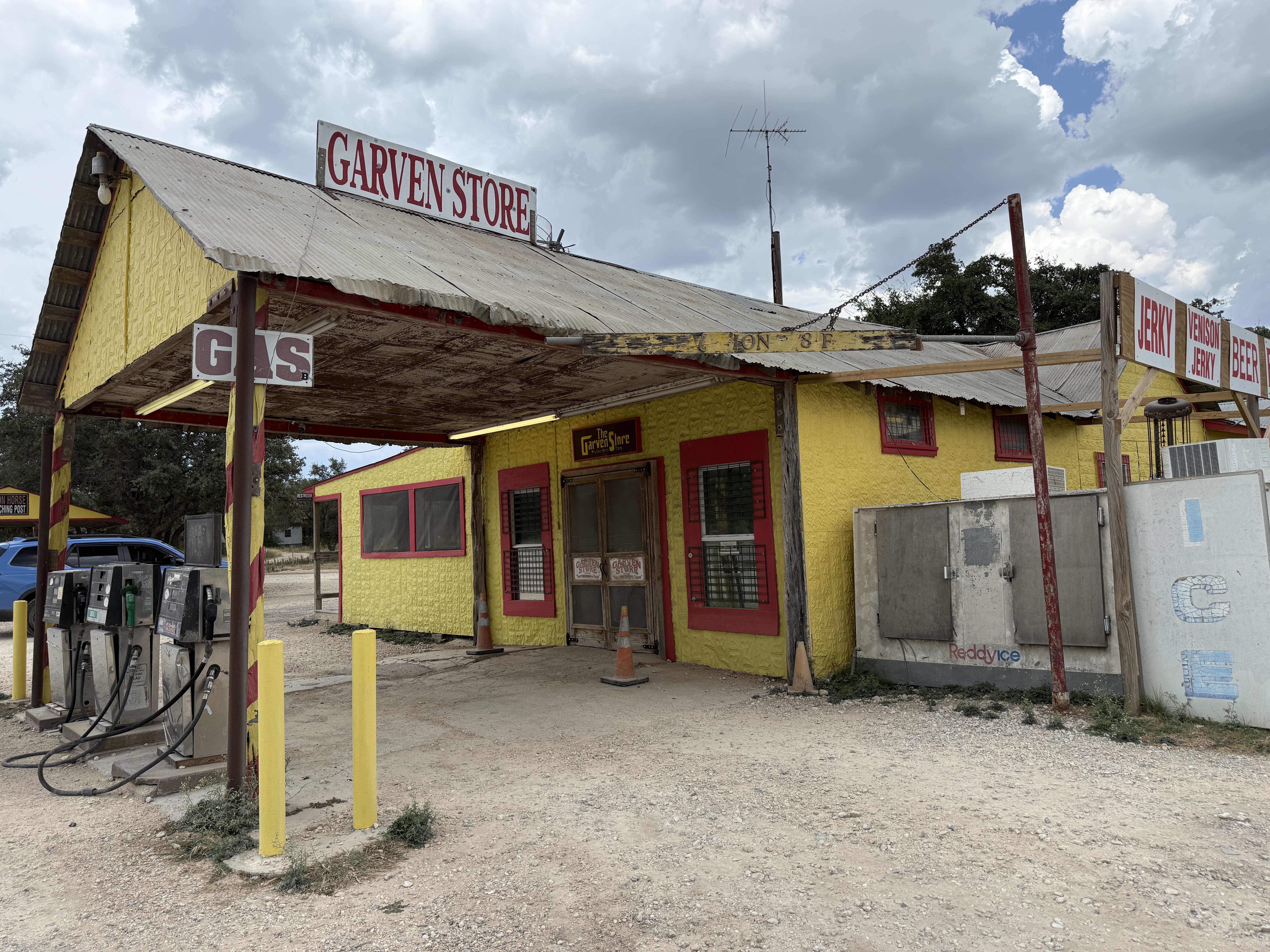
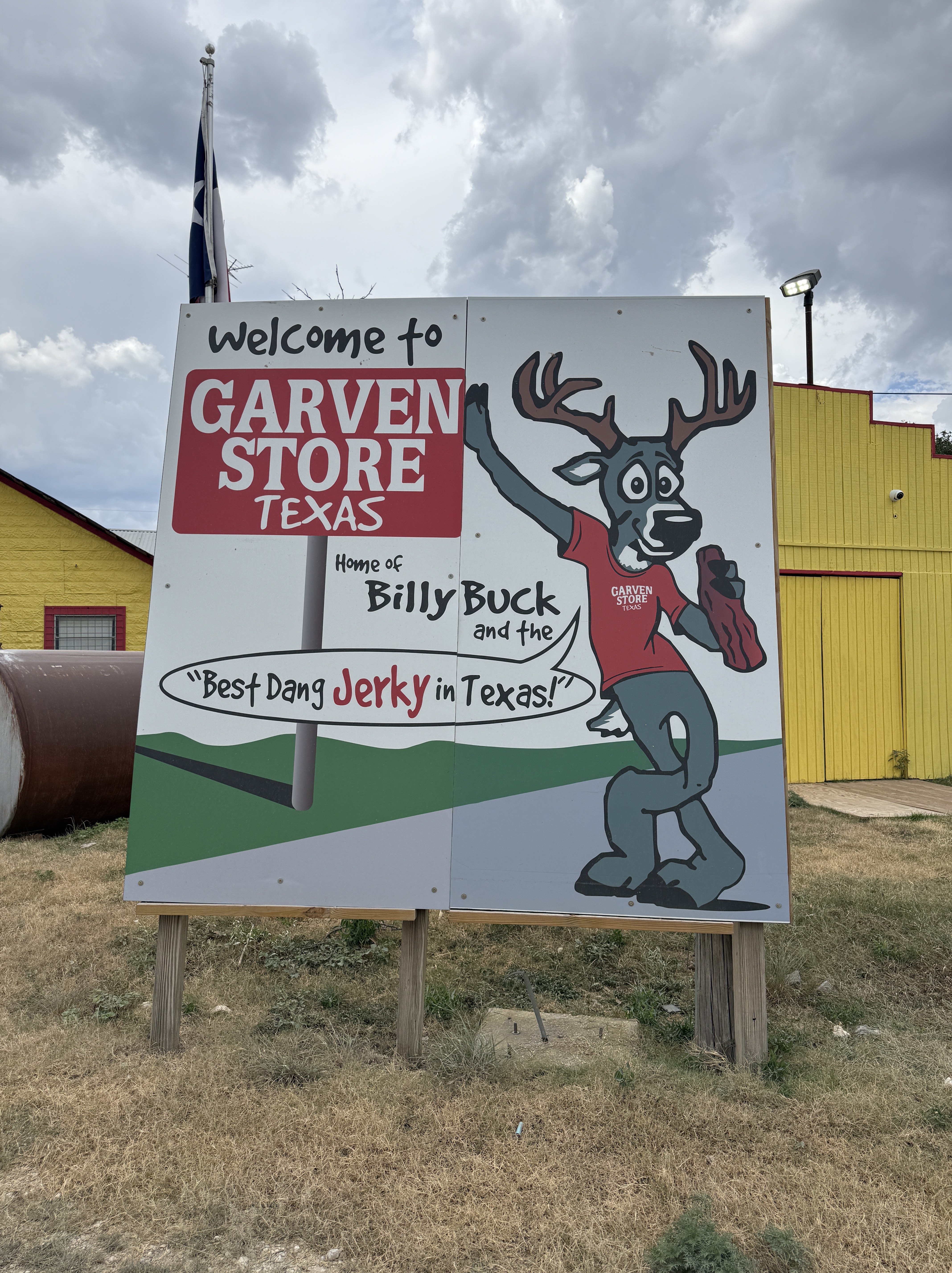
When we made our initial list of historic country stores to visit, the Garven Store easily made the cut. Everything we learned about the store convinced us that it was a must-see stop on our Hill Country trek. The historic Garven Store is located at the remote intersection of U.S. Highway 83 and Texas Highway 41 near Mountain Home. The store traces its roots to Scottish immigrant William Burney Garven and his son Edward, who purchased ranchland along the historic Rocksprings-to-Kerrville trail.

In 1932, Edward built the original store on his ranch beside Highway 41. When his son Clarence left the following year, Edward’s wife, Lettie, took over its operation with the help of ranch hand Gene Roberts.

In 1948, Edward and Lettie’s daughter Myrtle and her husband, George “Bill” Dowdy, assumed responsibility for the store. Their son Billy remembers a time when customers arriving after hours could take what they needed, write down their purchases, and leave payment on the counter. That was definitely a different time!

When U.S. 83 was constructed through the area in 1952, the store building was moved from its original location to the crossroads where it stands today. In 1998, Billy and Shirley Dowdy began operating the Garven Store, continuing five generations of family involvement. Over its long history, the little store has survived economic changes, highway construction, and the challenges of its isolated Hill Country location.


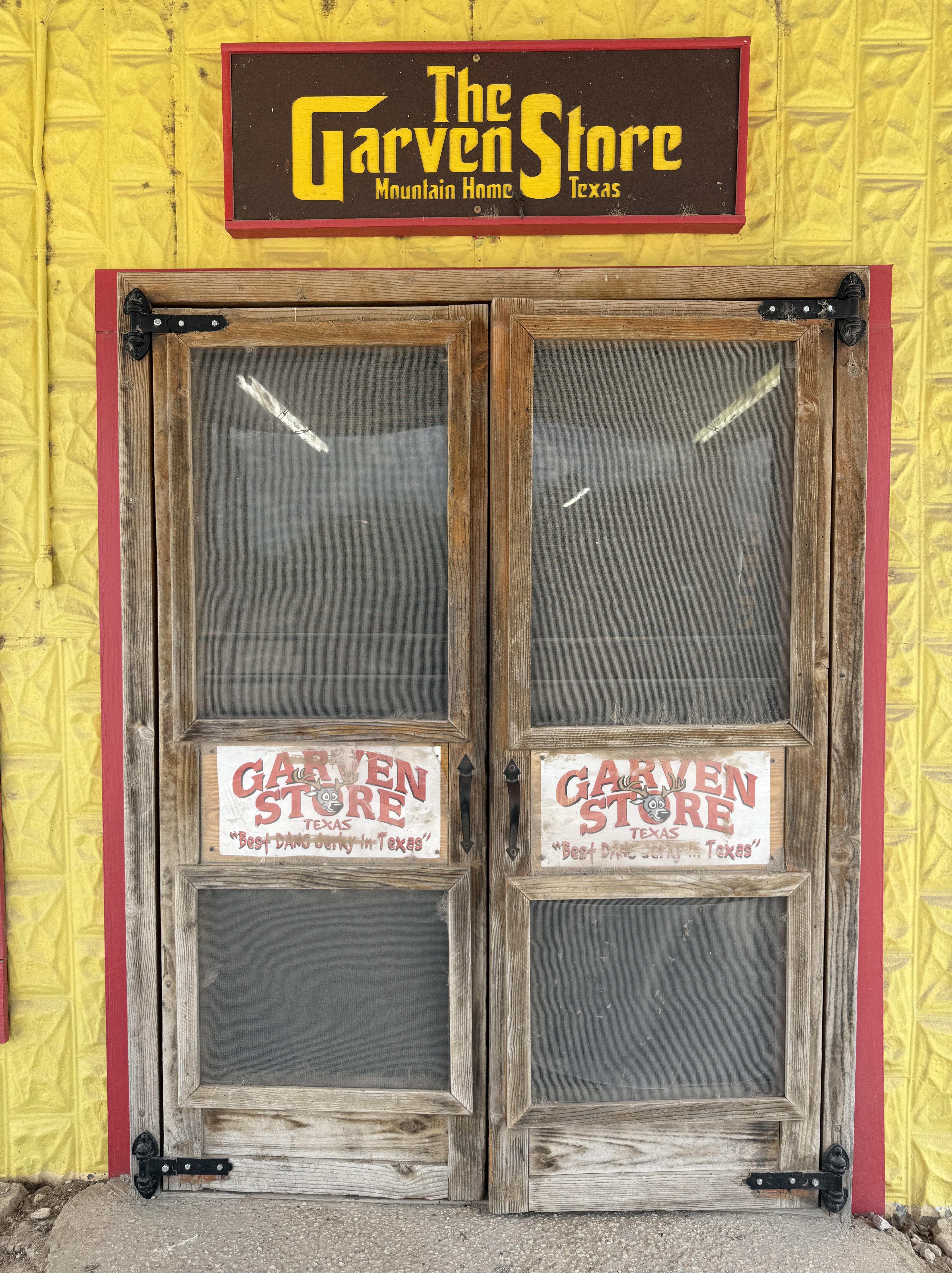
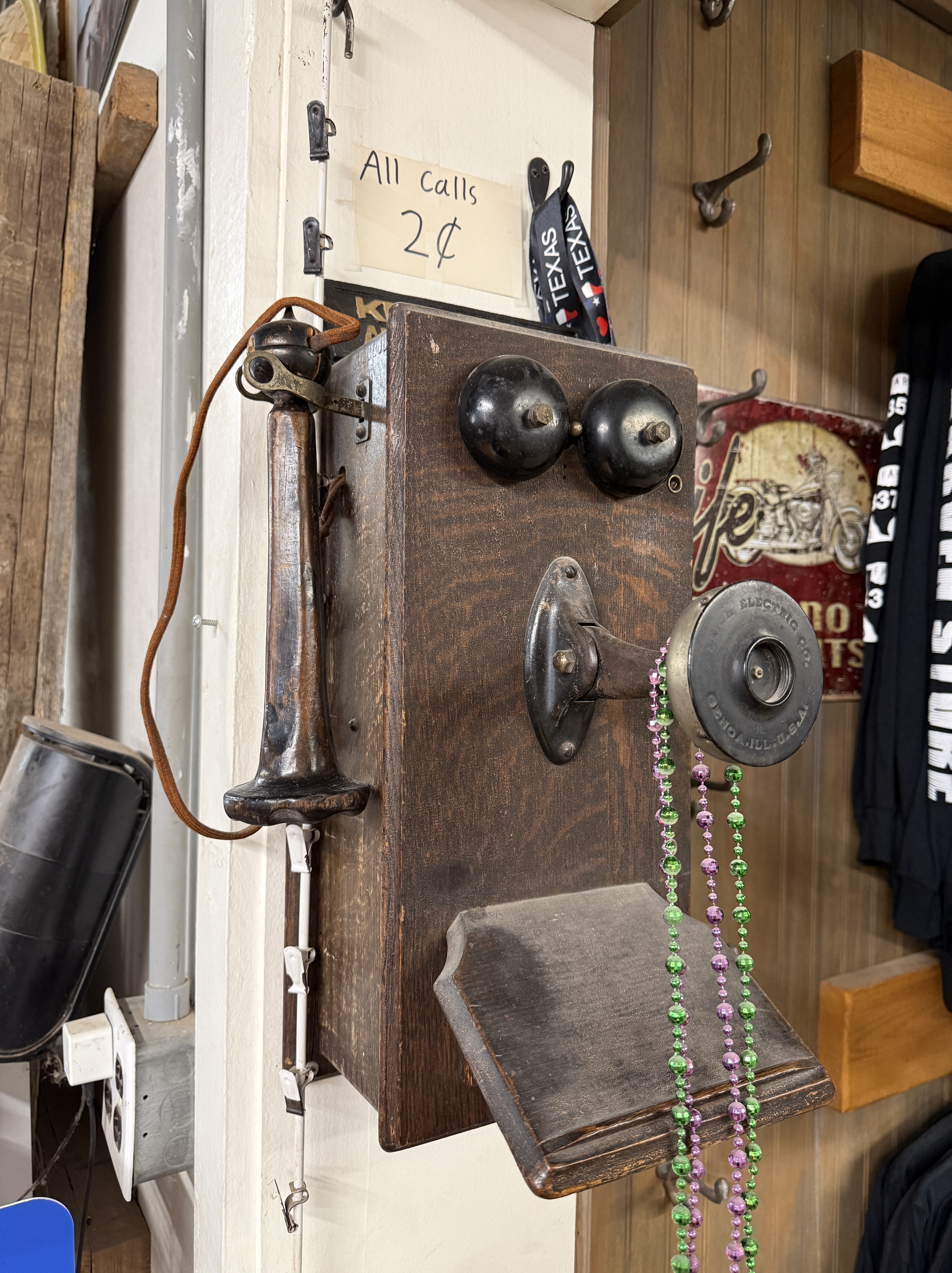
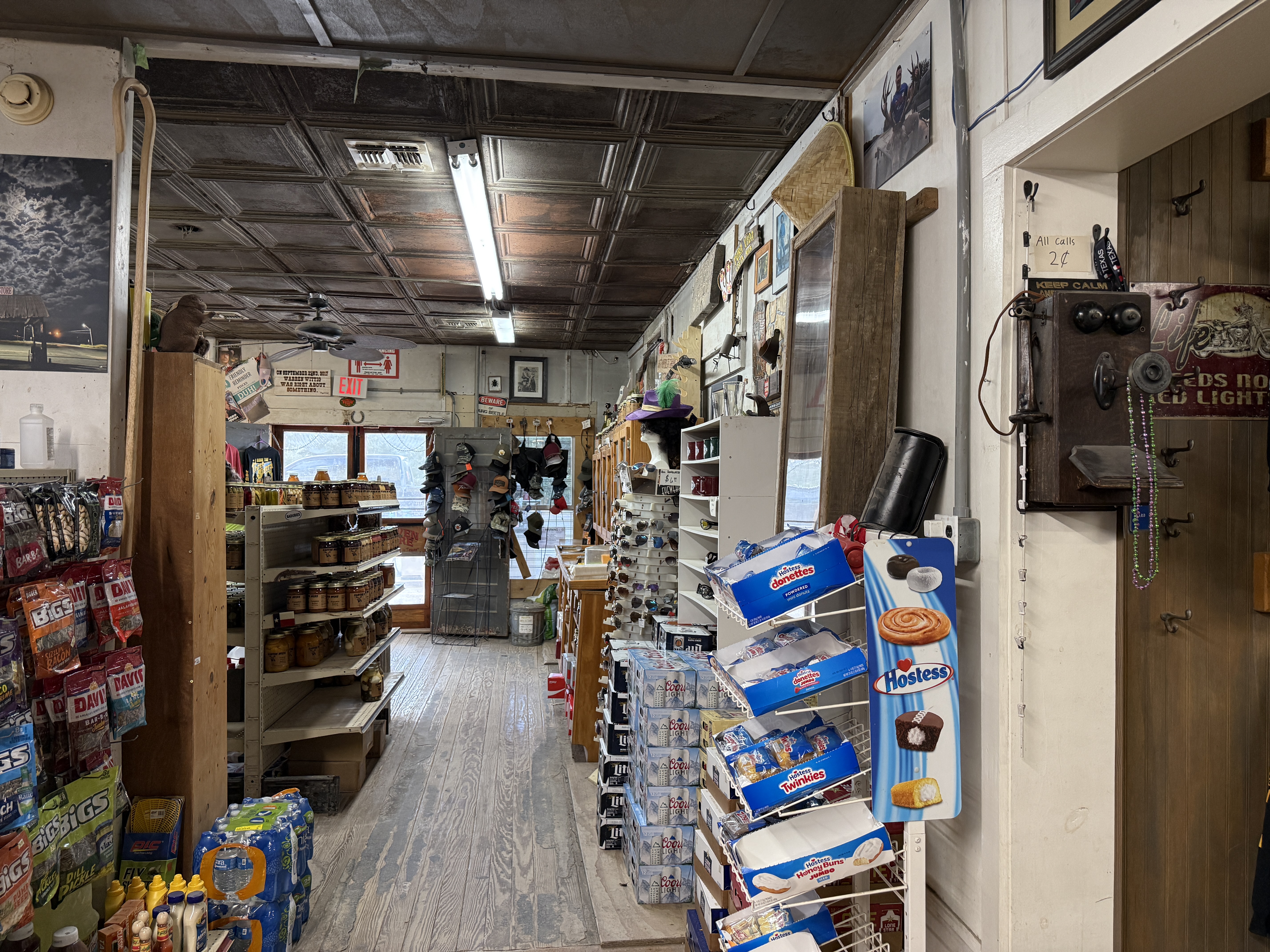
When we stepped through the double screen doors, we were not disappointed. The front part of the store remains much as it was when first built, with worn wooden floors, sturdy old shelving, a counter where generations of customers placed their purchases and exchanged money, and an original candlestick telephone mounted on the wall. The whole place felt as though decades of history were still lingering in the air.


Today, the Garven Store proudly boasts that it has “the best dang jerky in Texas.” Of course, we had to put that claim to the test. For such a little store, it offers an impressive selection, and Cheryl wasted no time choosing several varieties for us to sample. Our conclusion: They are telling the truth in their advertising. The jerky is truly outstanding.


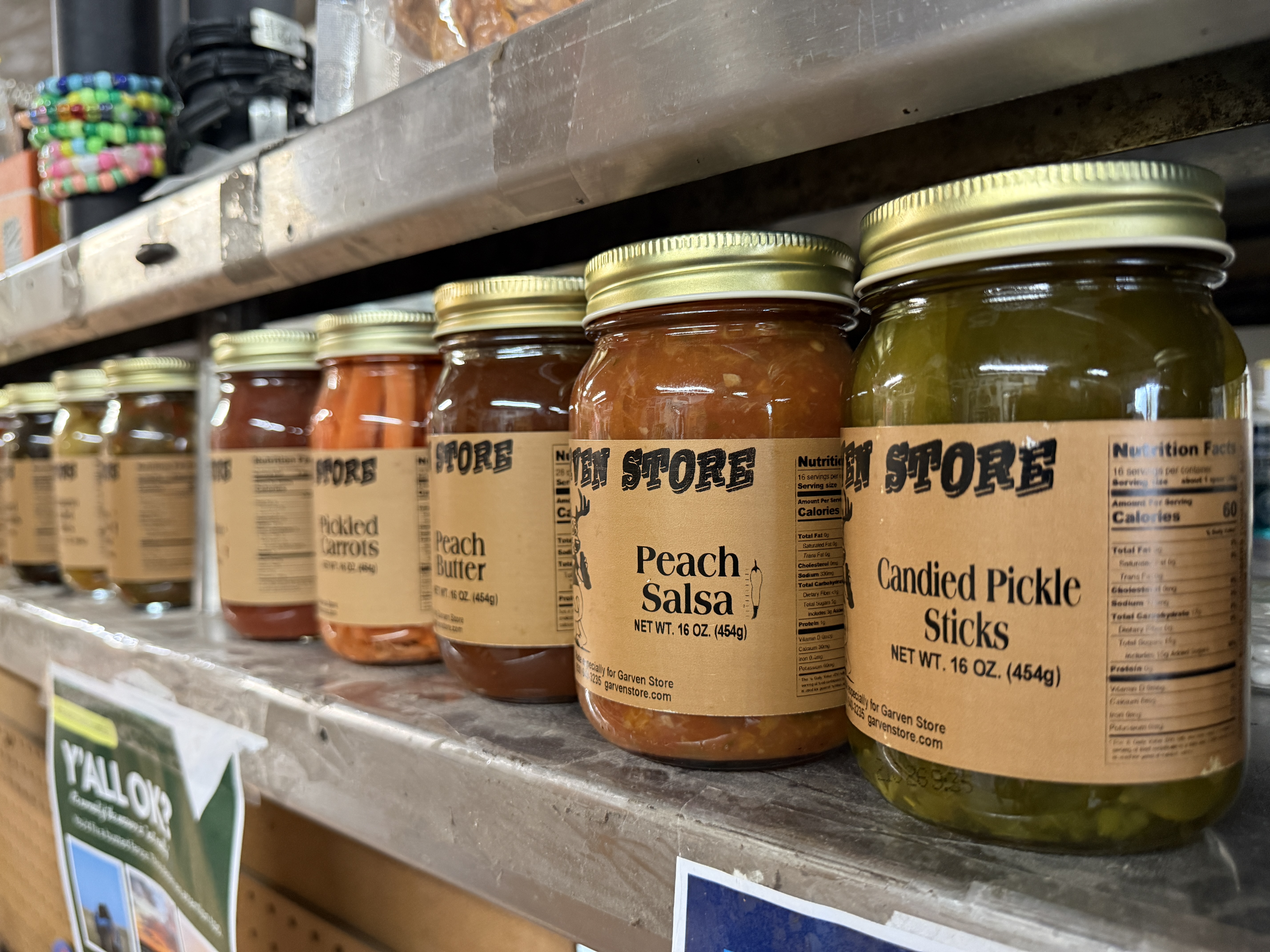
In addition to their great selection of homemade jerky, they offer a large selection of pickled products bearing the Garven Store brand. And if you need an affordable pocket knife, they have a selection in pick-and-grab boxes next to the cash register. The addition on the back side of the store has refrigerated coolers with a variety of drinks and a few simple grocery items.


The Garven Store has remained open for nearly a century, and we hope it will welcome travelers for many more years. Places like this are more than convenient roadside stops; they are living museums of Texas history. Country stores once played an essential role in rural communities, providing farming and ranching families with groceries, supplies, news, and a place to connect with their neighbors.


The next time you are traveling from here to there, take a closer look at the map and add a stop along a back road. Find an old country store, historic site, or other hidden place worth exploring. We are fortunate to have so many Texas treasures tucked away along quiet country roads. I promise you, the extra time and miles will be worth it.

Gruene General Store

I first visited Gruene in the late 1970s while living in Corpus Christi. I wanted to take a group of singles from our church on a rafting trip, so—long before the days of the internet—I did a little research and discovered the Gruene River Company. They were wonderful to work with, and our group had a great experience on the Guadalupe River. That trip became my introduction to Gruene and the beginning of my appreciation for this historic Texas community.


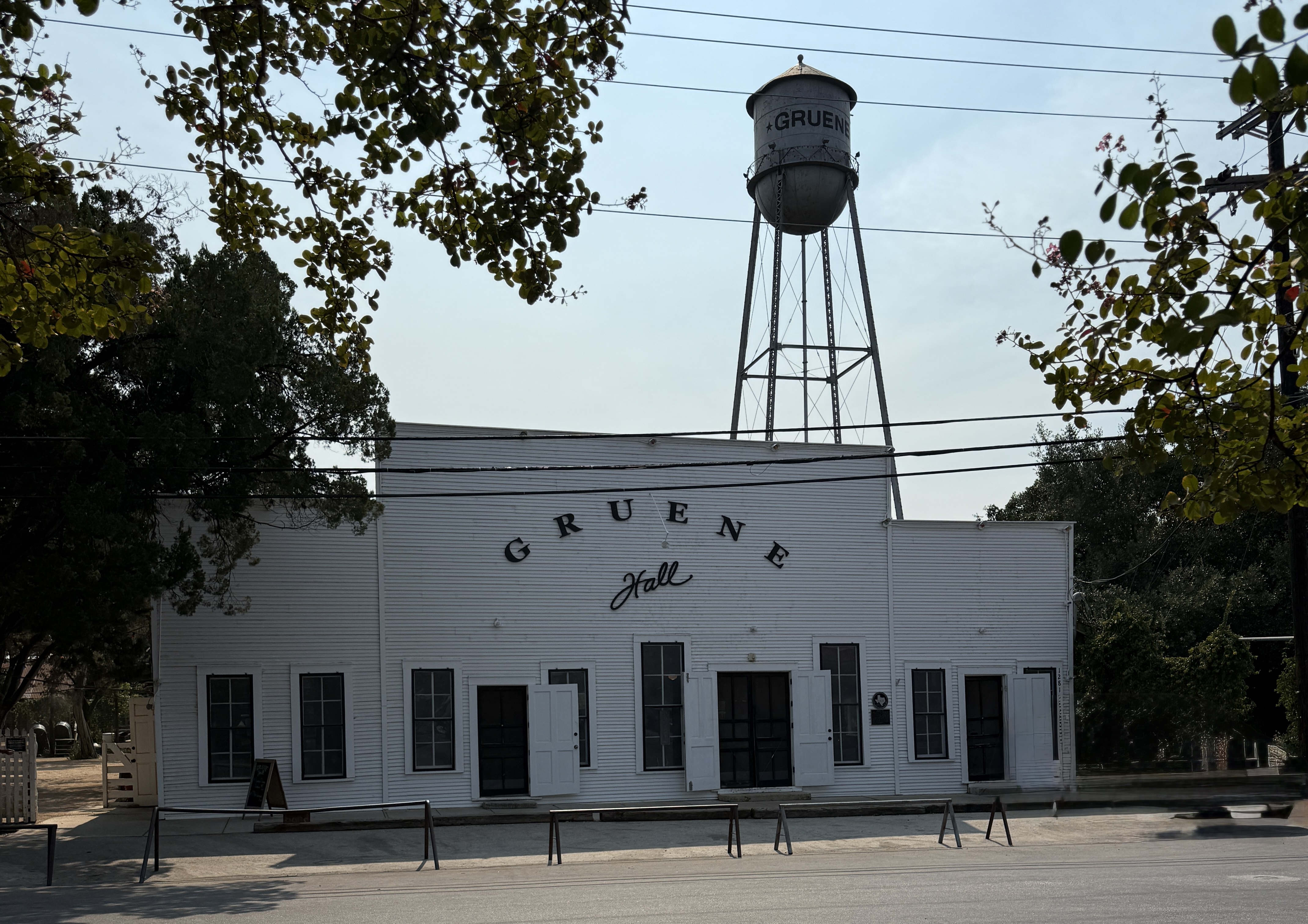
Gruene is located along the Guadalupe River within the city limits of New Braunfels, about 35 miles northeast of San Antonio. German immigrant Ernst Gruene and his family settled in the area in the 1840s. His son Henry later developed Gruene into a prosperous cotton-farming community, building homes, a general store, a cotton gin, and the now-famous Gruene Hall.


When the boll weevil devastated the local cotton industry in 1925, most of Gruene’s businesses closed. The dance hall—now known as Gruene Hall—was the town’s only business to remain open. Gruene lay largely dormant until restoration efforts began in 1974 and the community was recognized as a historic district.


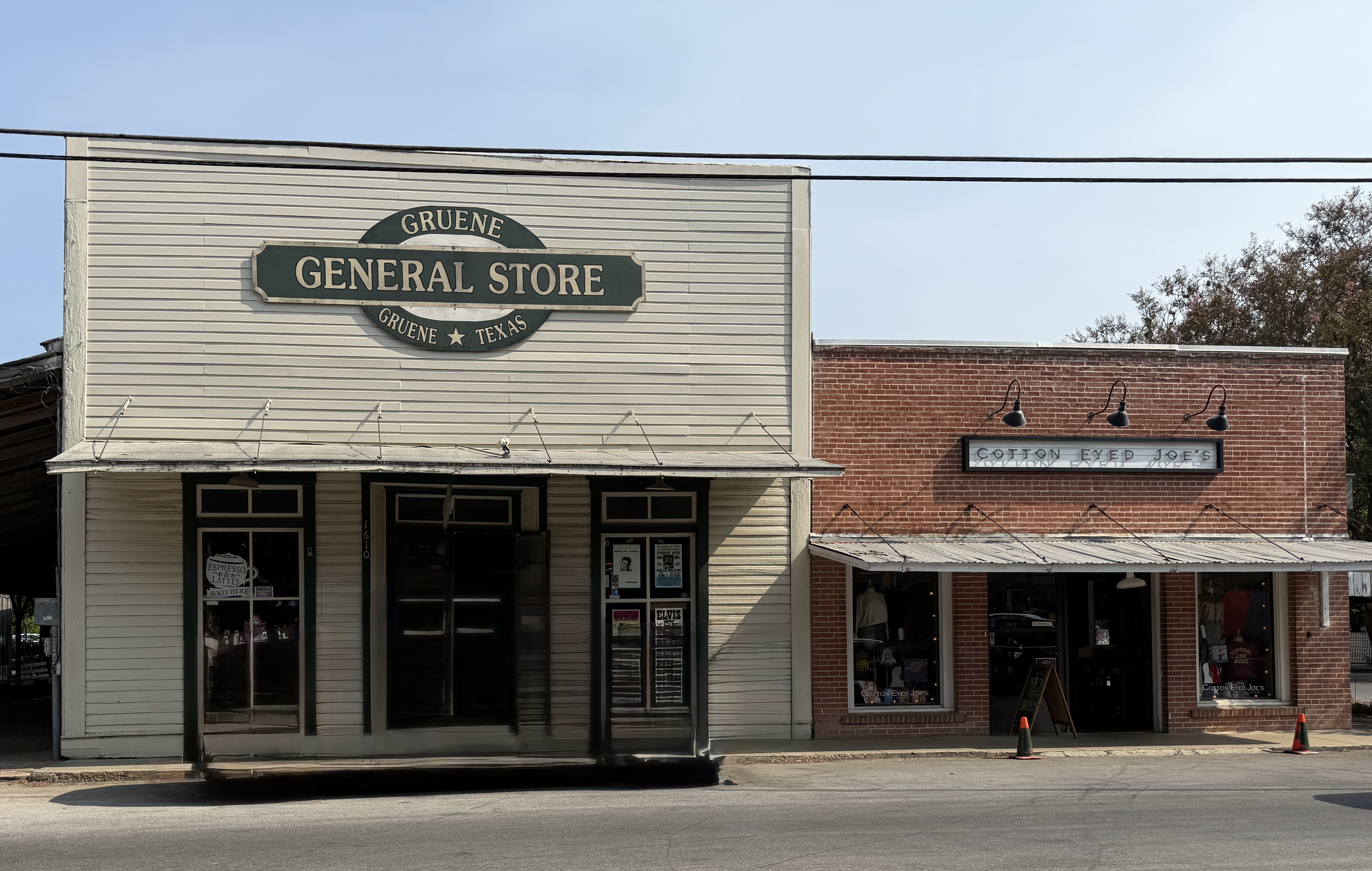
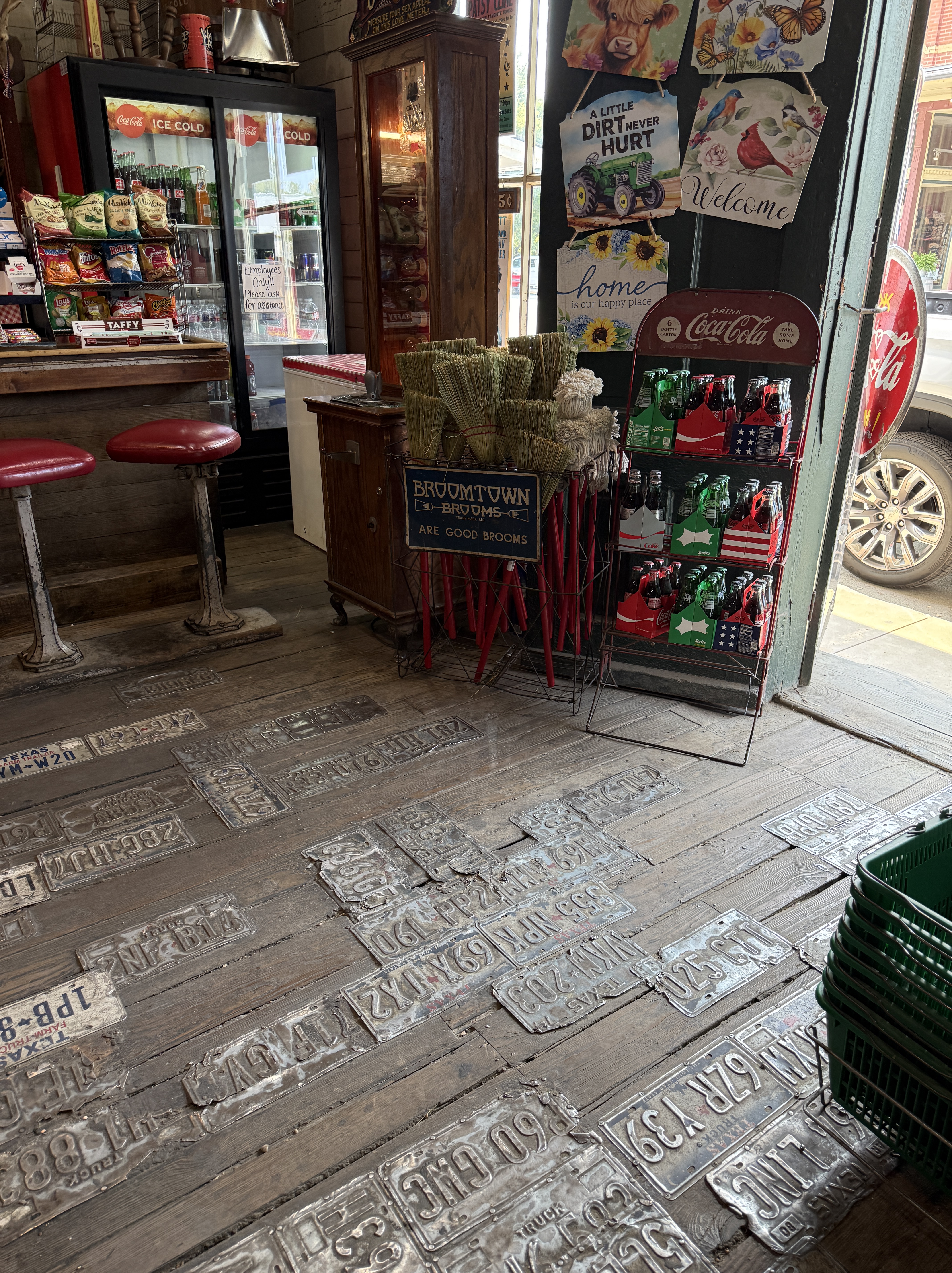
The Gruene General Store reopened in its original building in 1989, giving visitors a look at an old-fashioned Texas emporium. The wooden floors are worn and creak as you walk, with some damaged spots patched up with old license plates. Like many historic general stores in Texas, you can still feel the past in the air.


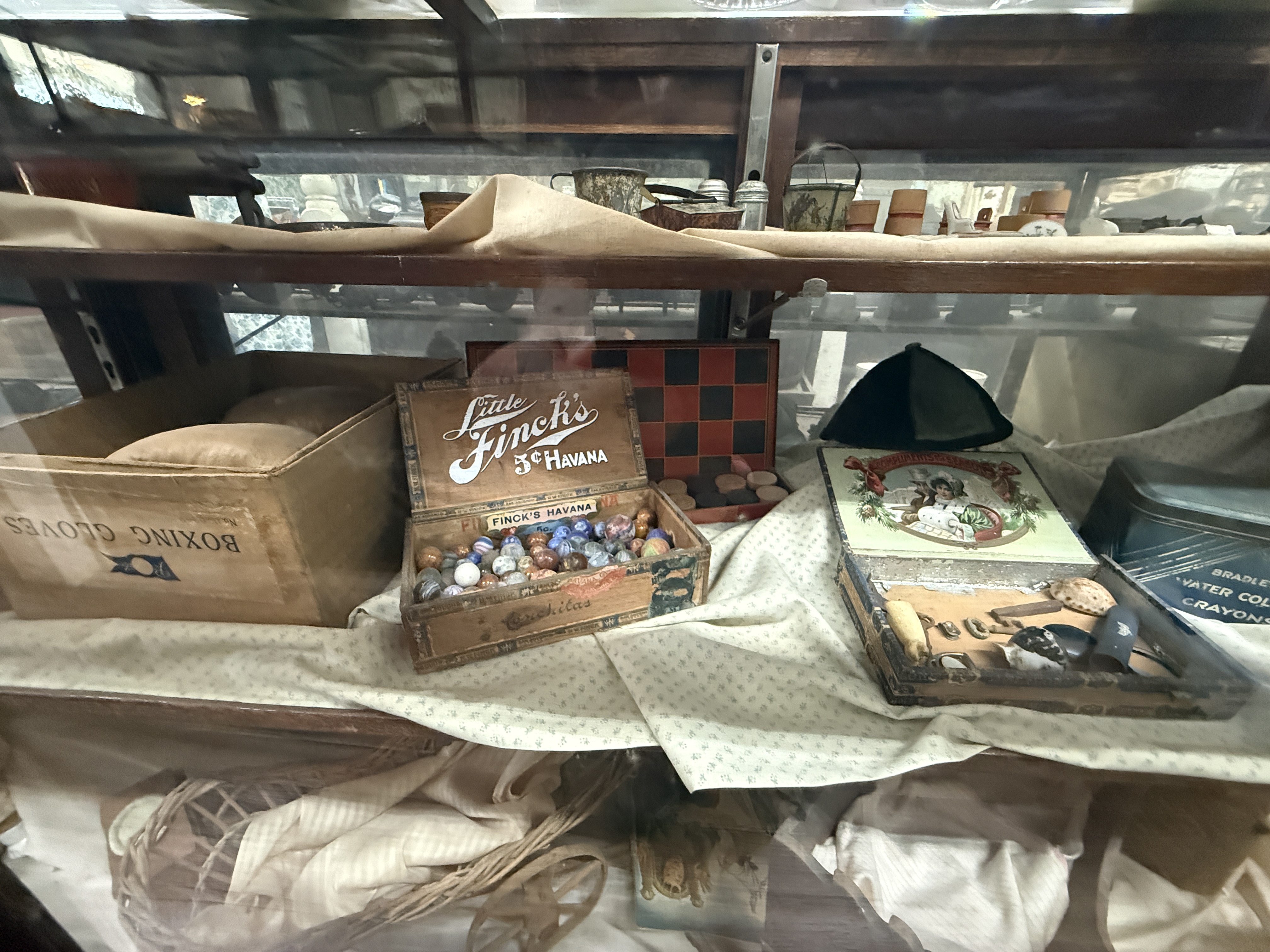
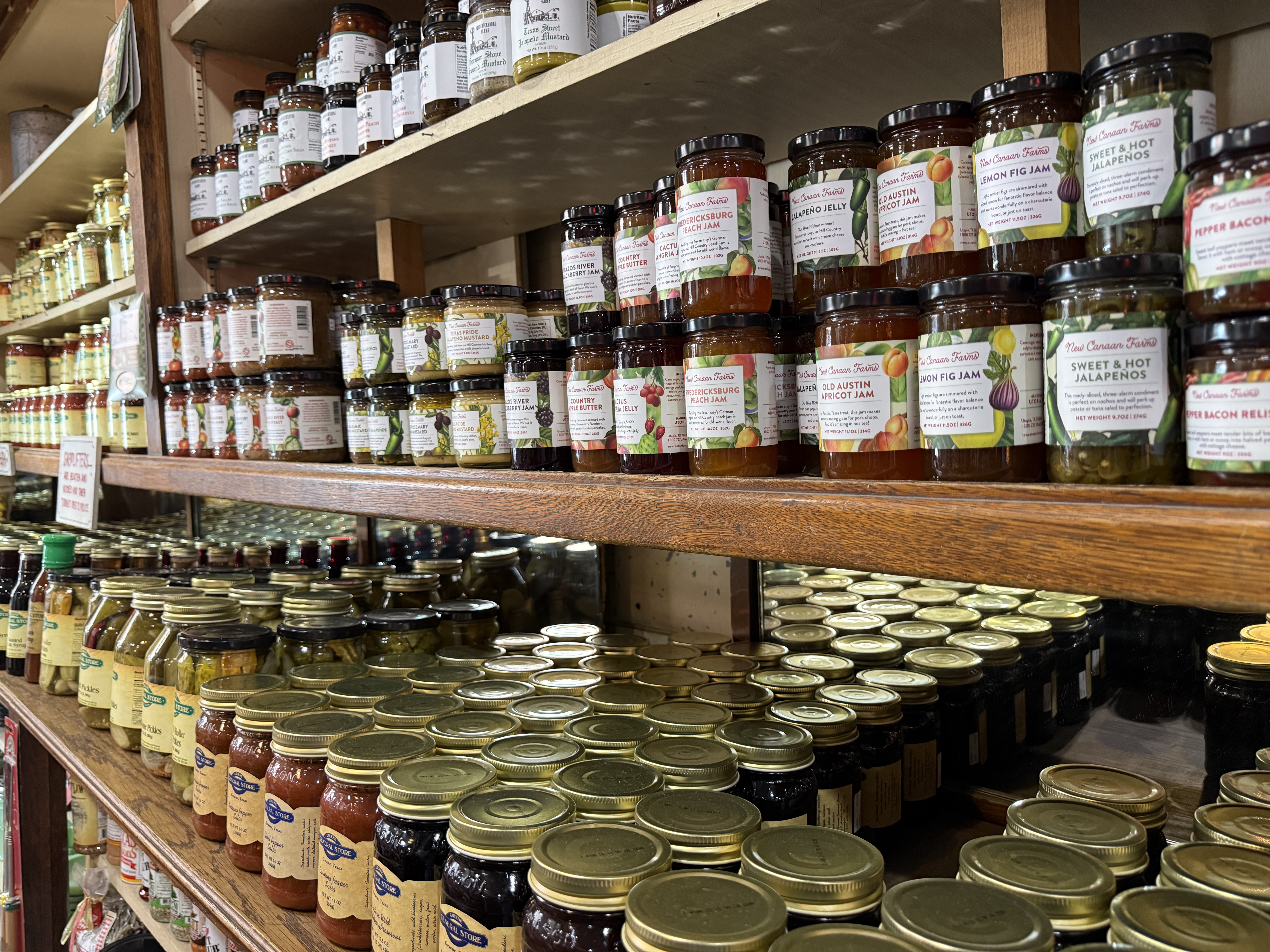
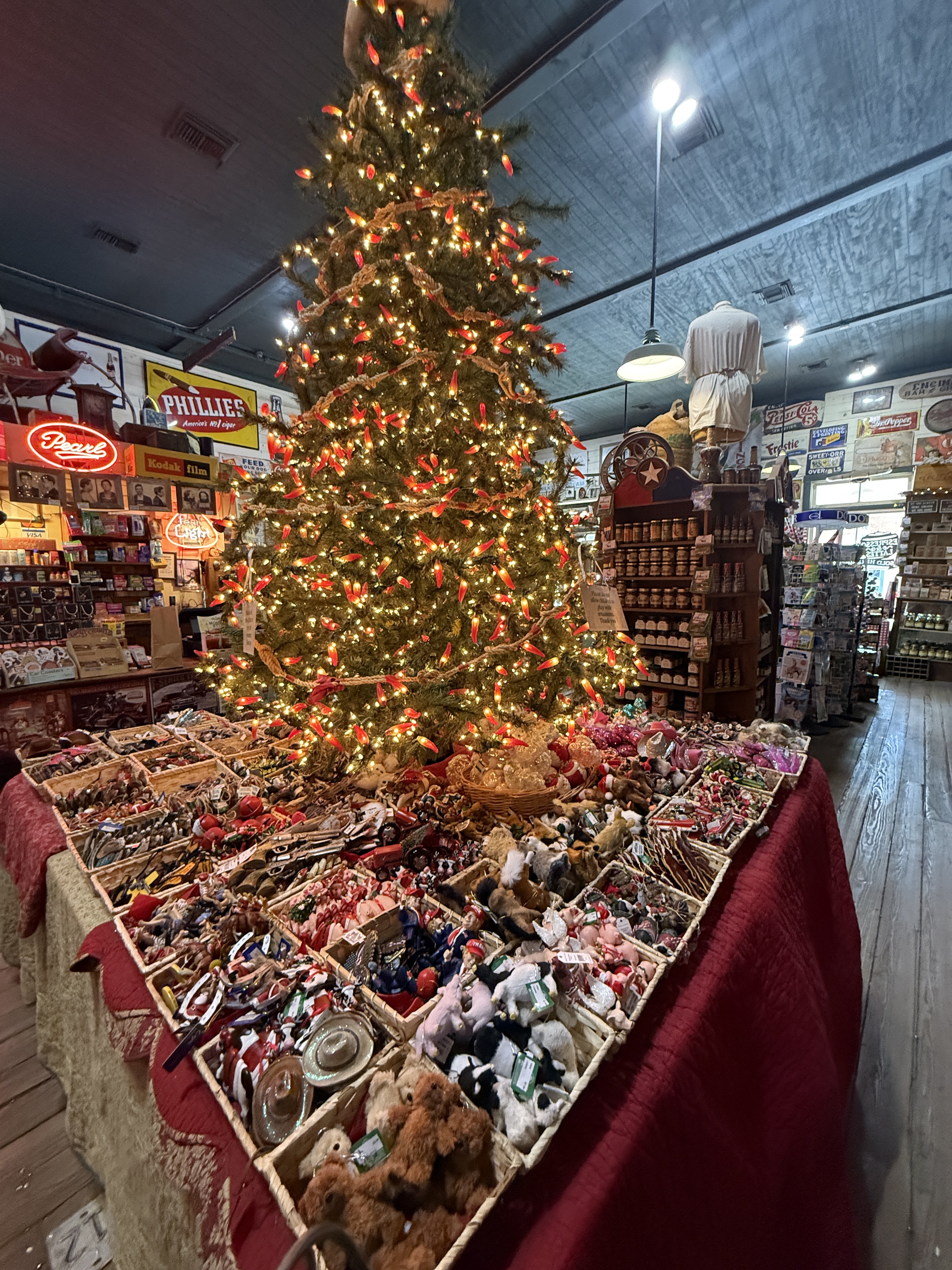
Cheryl and I took our time exploring the entire store. There was so much to see—vintage advertising signs, antique fixtures, old-fashioned candy, homemade fudge, Texas-made foods, Christmas ornaments, and an assortment of fun Texas-themed souvenirs. The store even has a soda fountain, completing the nostalgic experience and making a visit feel like a step back in time.


There is, of course, much more to see and experience in Gruene. The day we visited, the historic district was packed with visitors—and I loved seeing so many people enjoying this special place. Gruene is definitely a Texas treasure.


Cheryl and I can’t wait to introduce our granddaughters to the Gruene experience. And, of course, when we take them to the General Store, we will probably buy them whatever they want. That’s what grandparents do!

Pipe Creek General Store

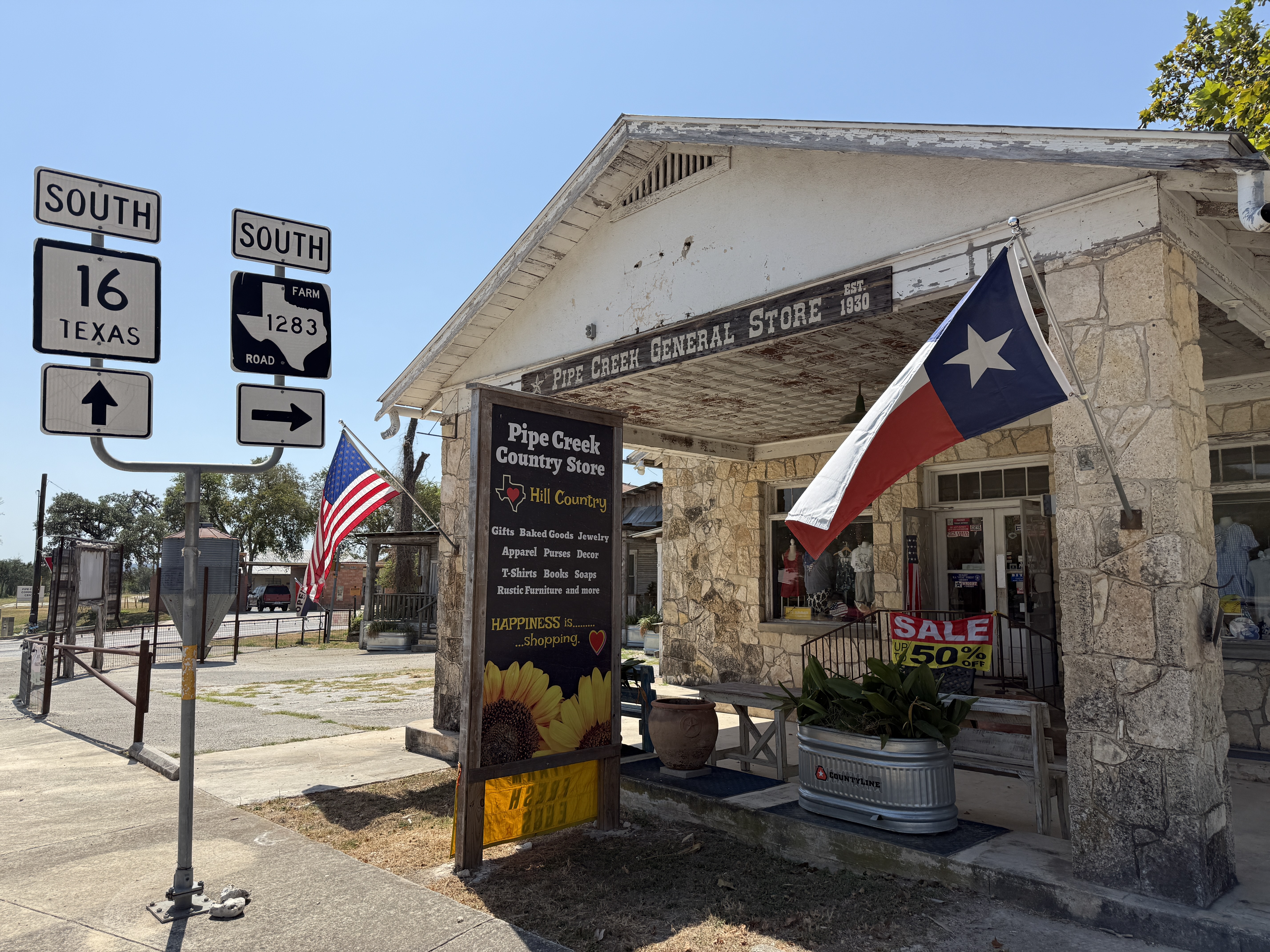
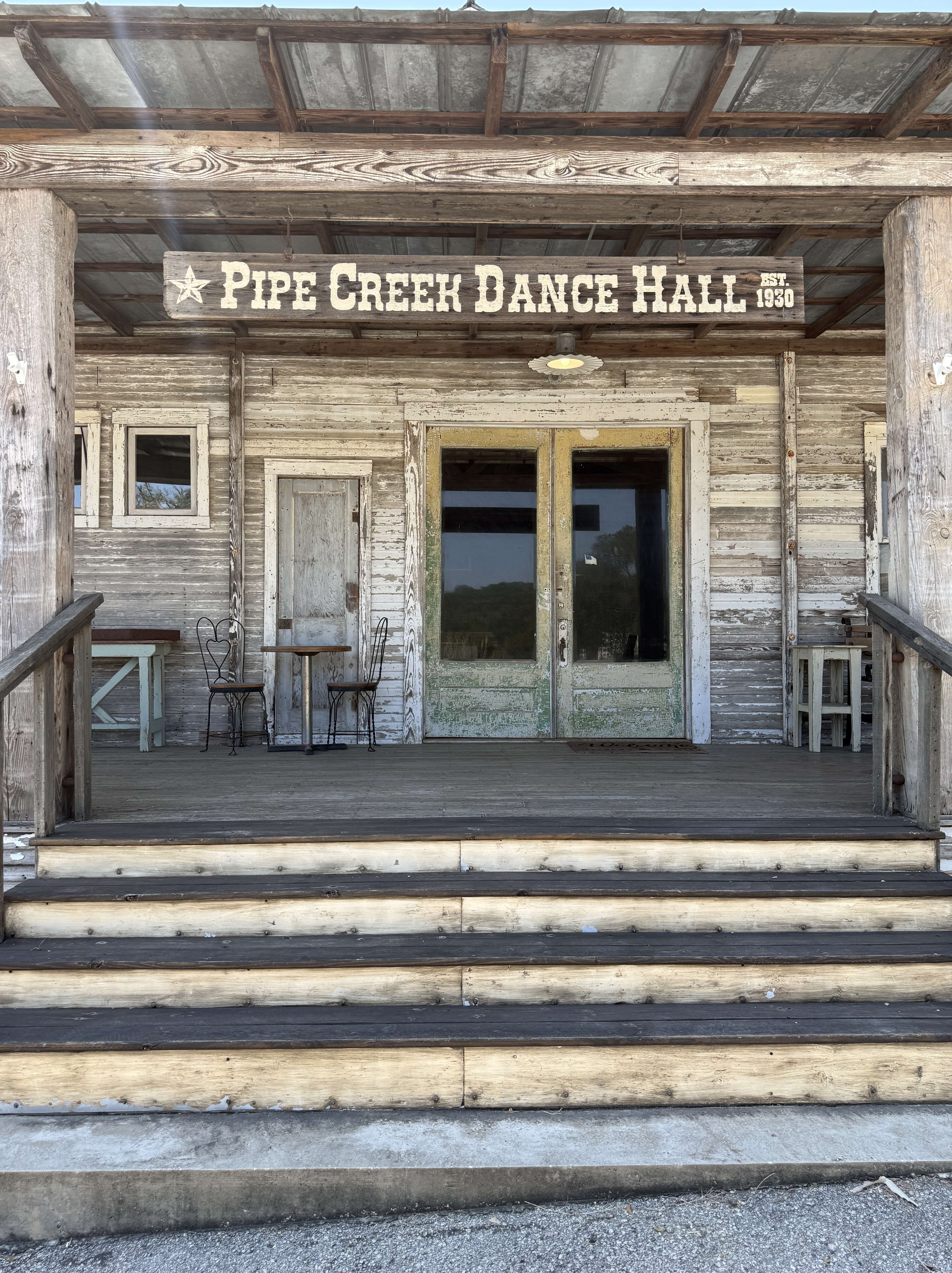
While Cheryl and I were driving down Highway 16 on our Texas Hill Country road trip, I spotted the Pipe Creek General Store and Dance Hall out of the corner of my eye. Curious, I turned the truck around to take a closer look. I’m really glad we stopped.

Honestly, we hadn’t planned to visit the Pipe Creek General Store because we had not heard about it. But that quick glimpse made us turn around, and I’m so happy we did. This Hill Country spot turned out to be a real find.


Pipe Creek is a small community in eastern Bandera County, about nine miles east of Bandera on State Highway 16. It was settled around 1870 and named after the nearby creek. The town started as a ranching and farming community, and it still has a peaceful, rural feel.


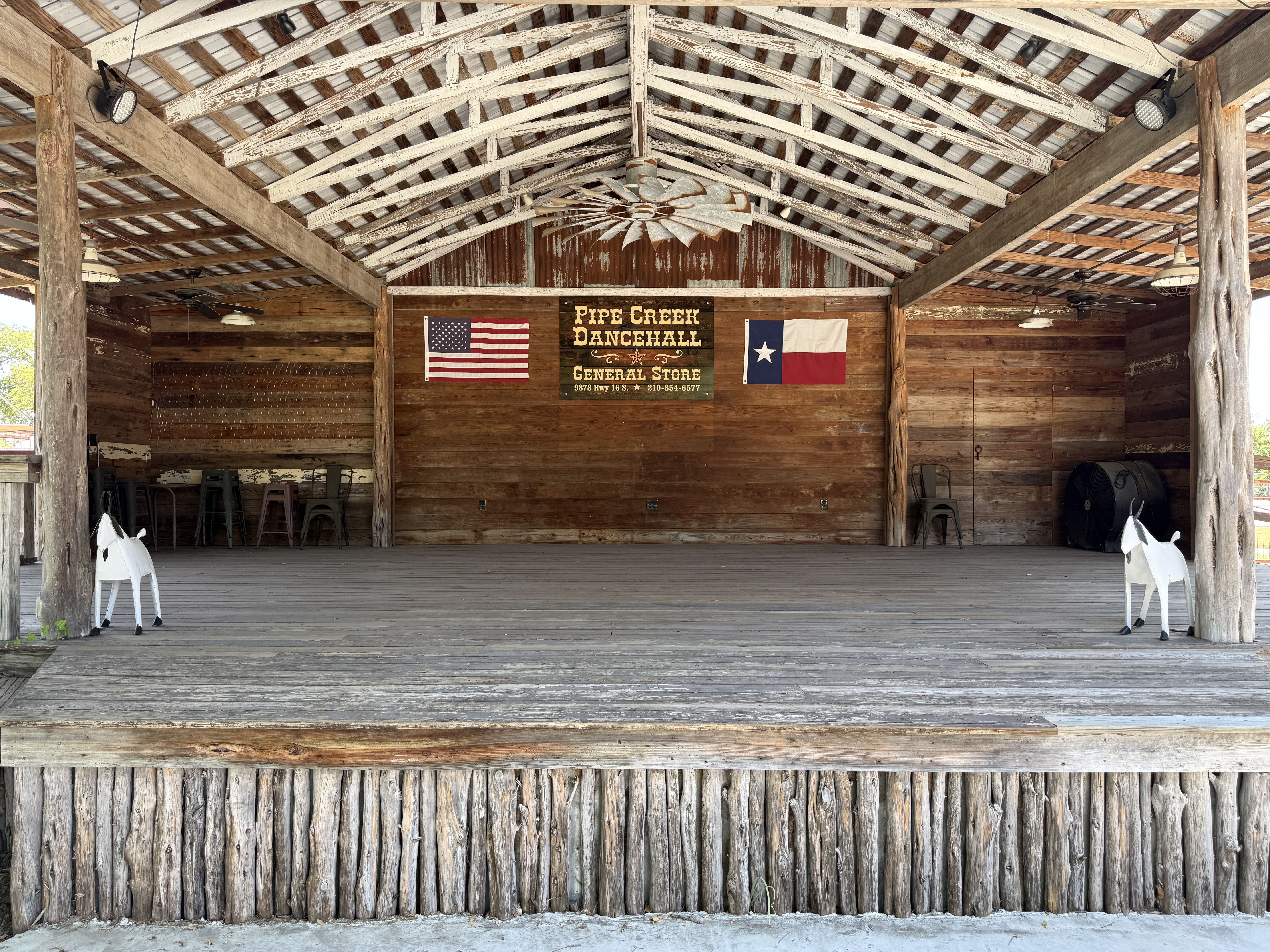
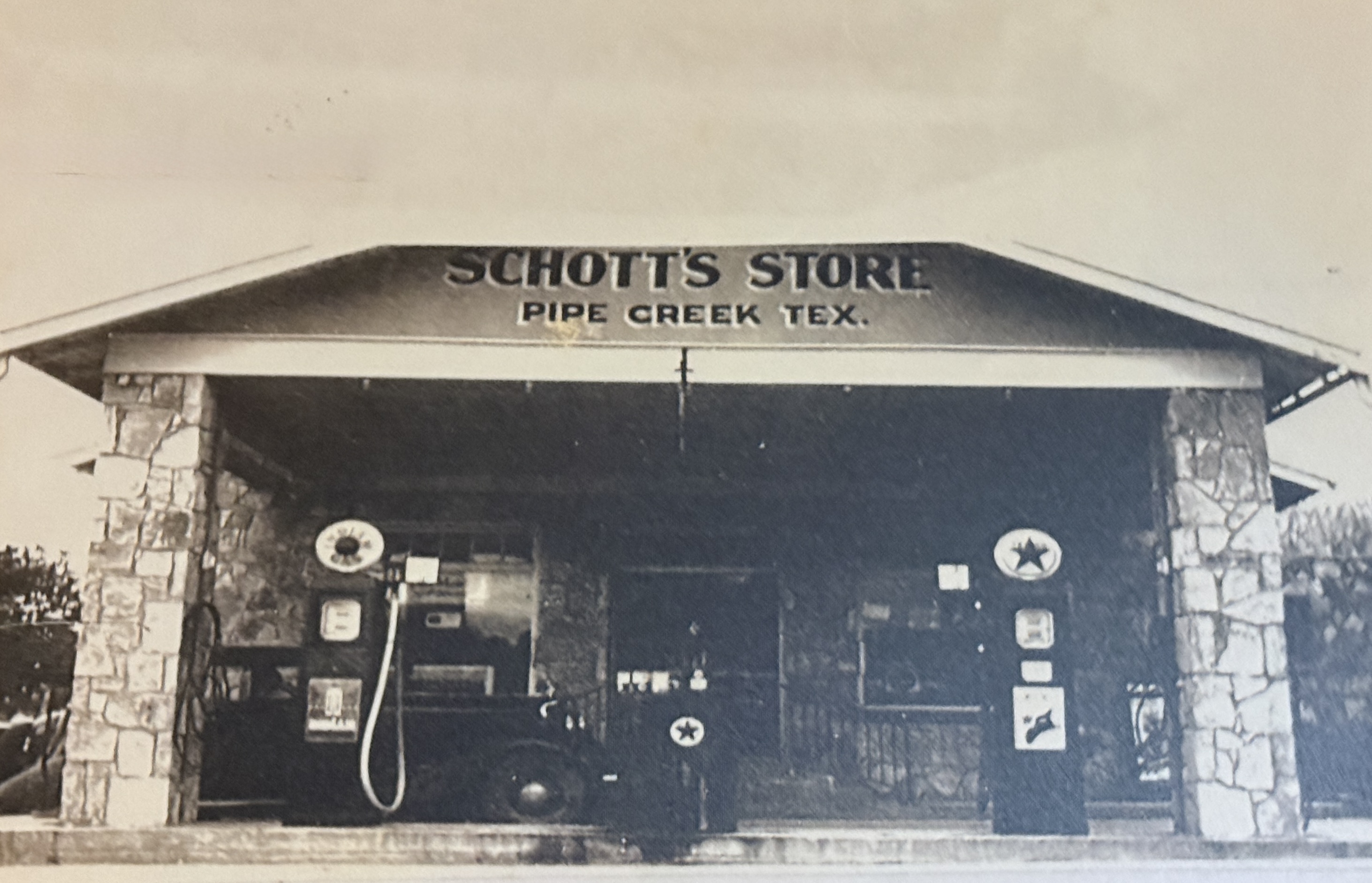
When we walked into the store, a young woman named Melissa greeted us warmly and happily answered my questions about the place and its history. Like many old general stores, the Pipe Creek store has a rich history dating back to 1911, when E. B. and Carrie Keefe established the first store on the property.


A dance hall was added in 1930, becoming a popular gathering place for dances, movies, and skating. The present store was built in 1936 when Highway 16 was widened. After decades of serving travelers and local families, Bruce Martin purchased the property in 2014. Martin restored the property and grounds, taking pains to preserve its historic 1930s-era character.

Places of historical interest need people like Bruce Martin. Preserving old places requires vision, personal commitment, and a great deal of respect for the past if old buildings are to be saved and given a new life.


Martin did more than restore the Pipe Creek General Store and Dance Hall; he preserved a community gathering place and an important part of Hill Country heritage for future generations to experience and enjoy.


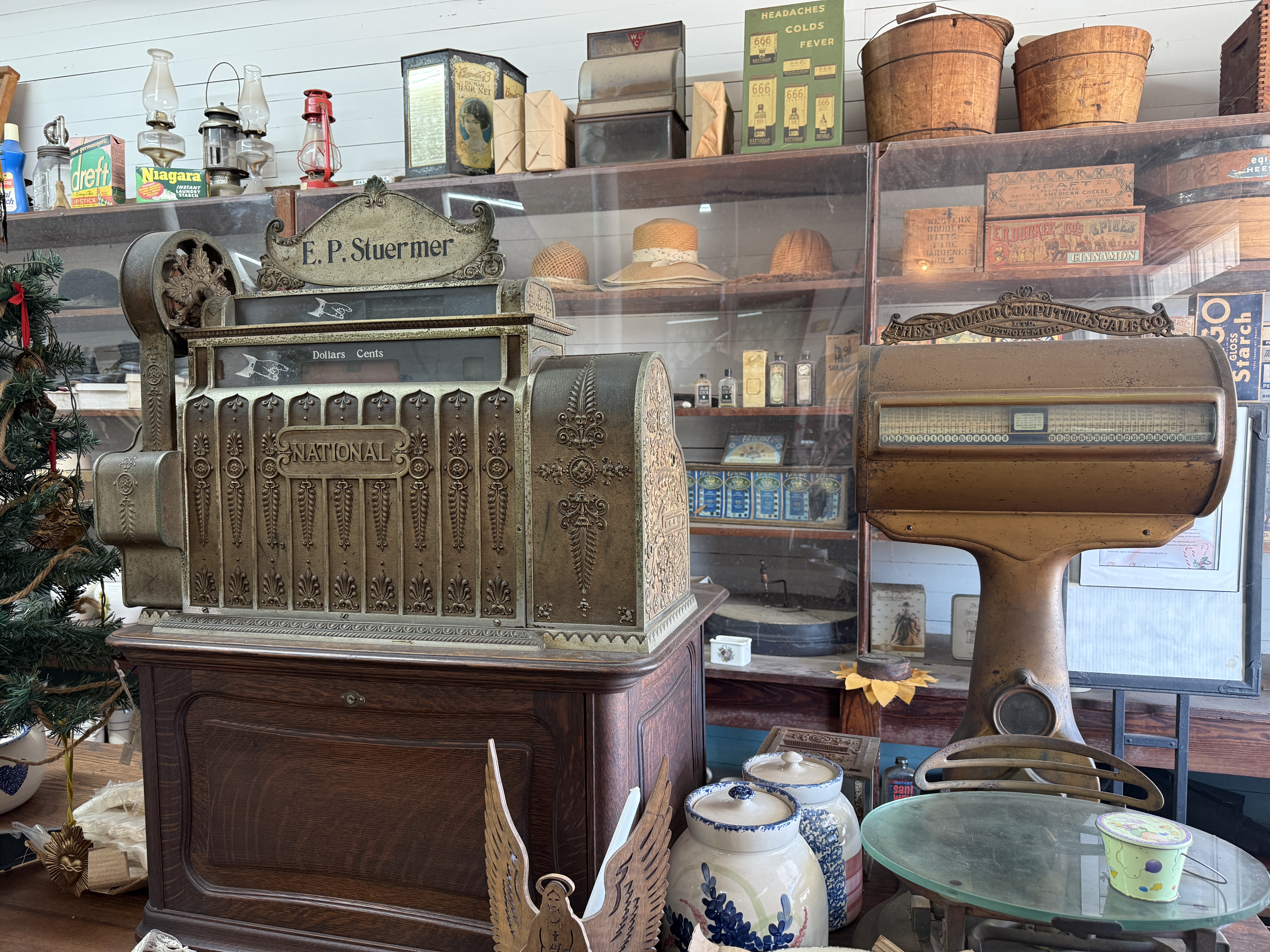
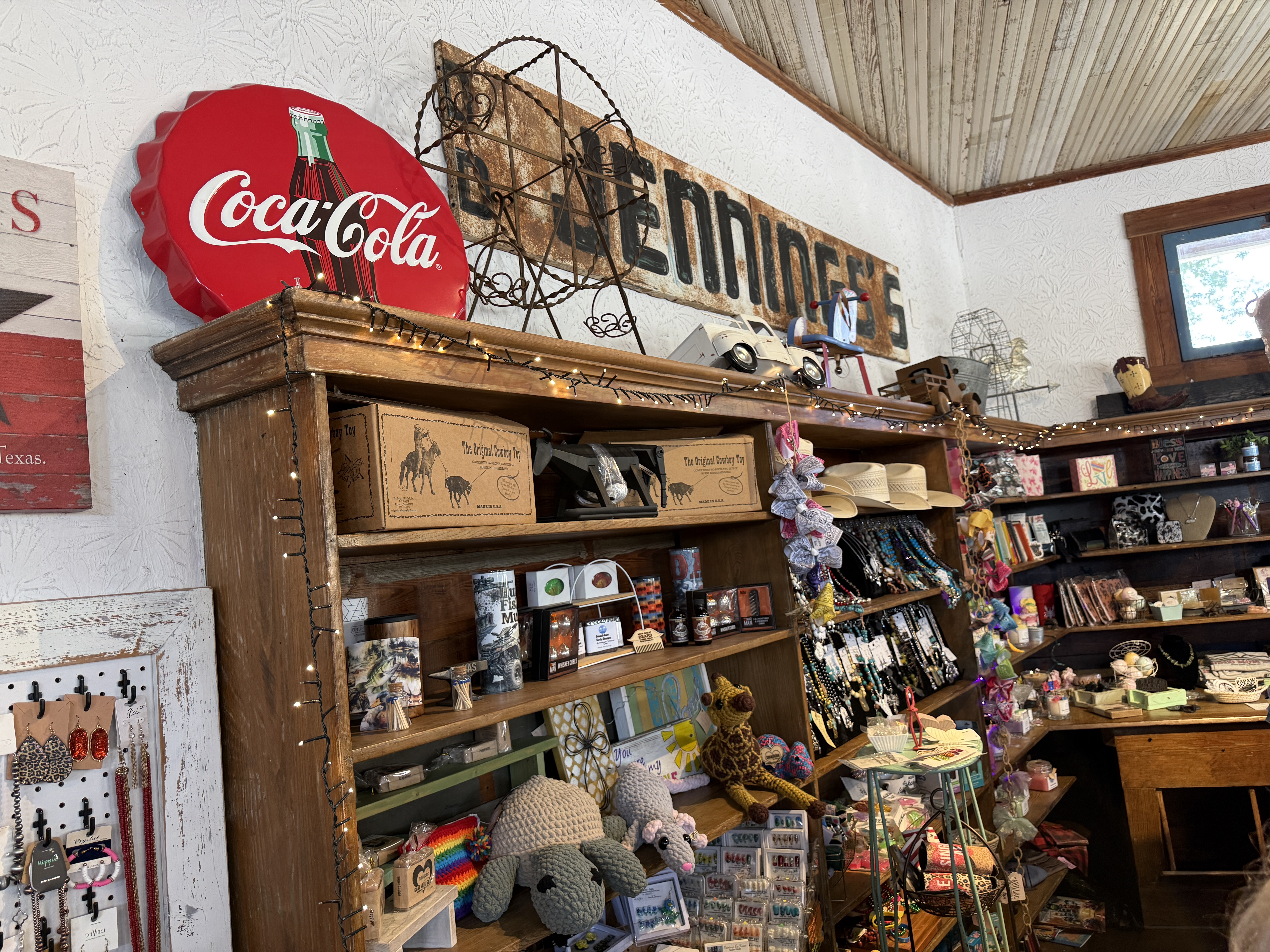
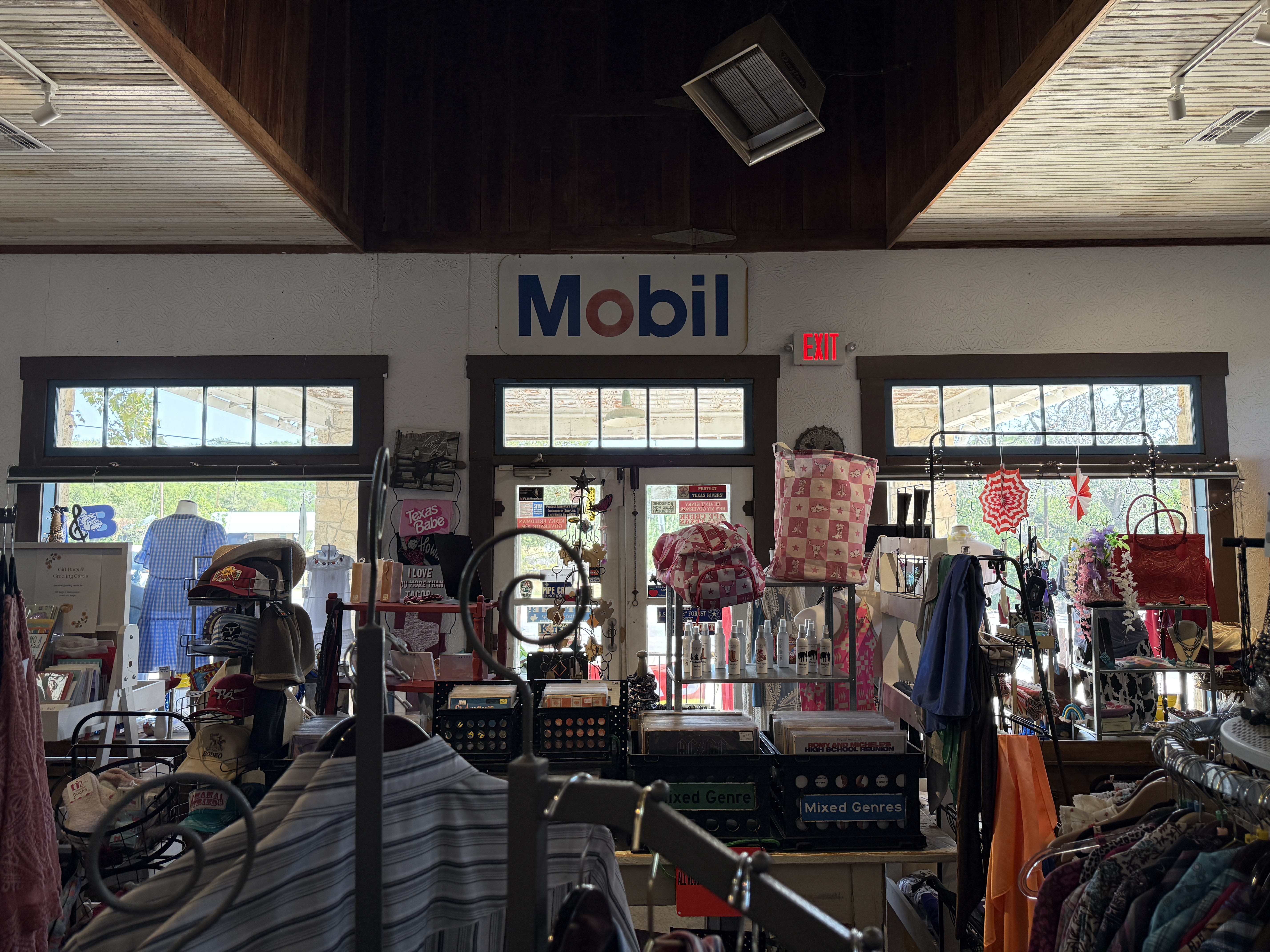
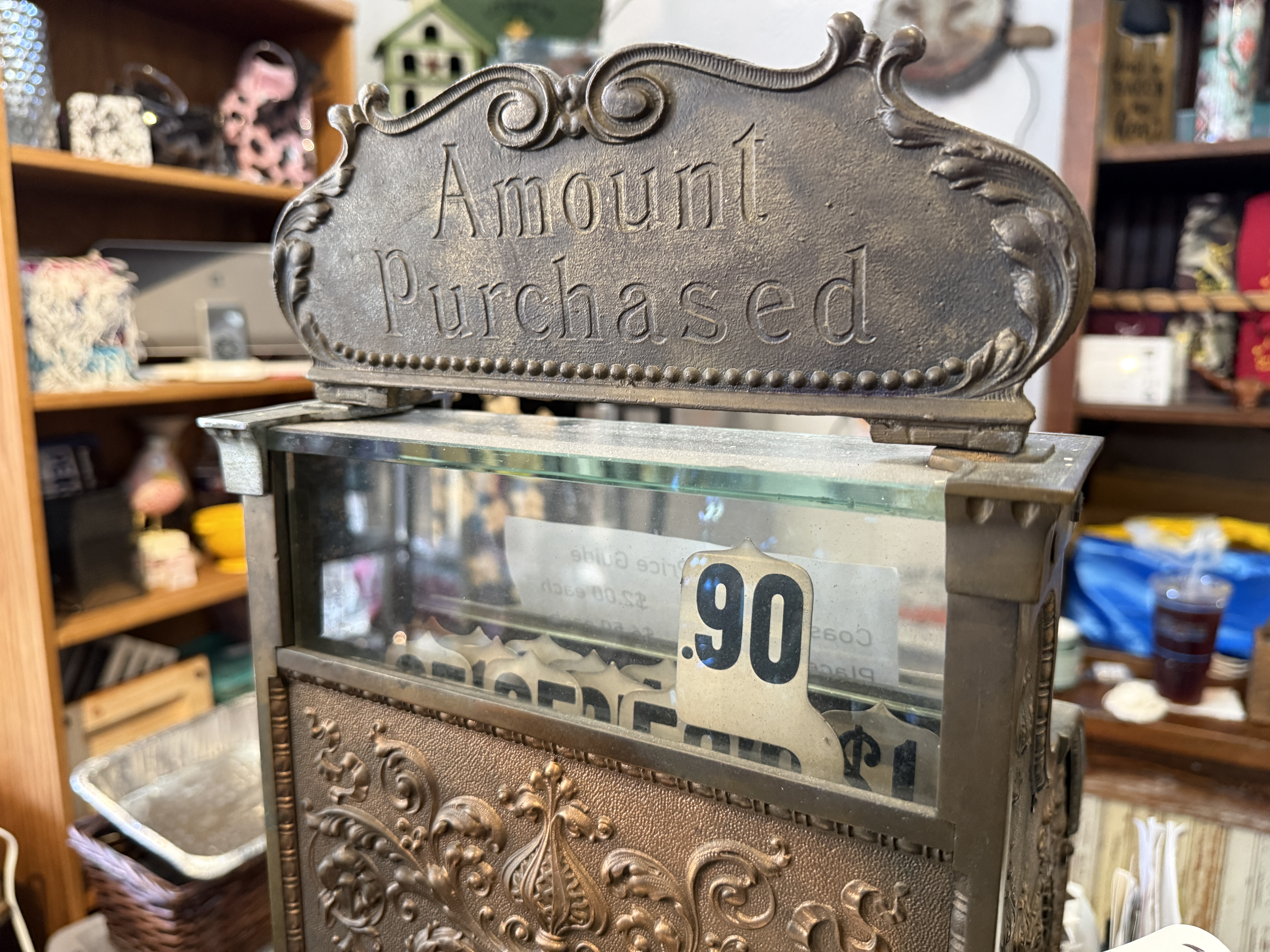
Today, the front of the store houses an inviting boutique stocked with a wide variety of merchandise. The original wood floors, period cabinets and counters, rustic décor, and vintage cash register preserve the building’s historic character and add to the charm of this special place.


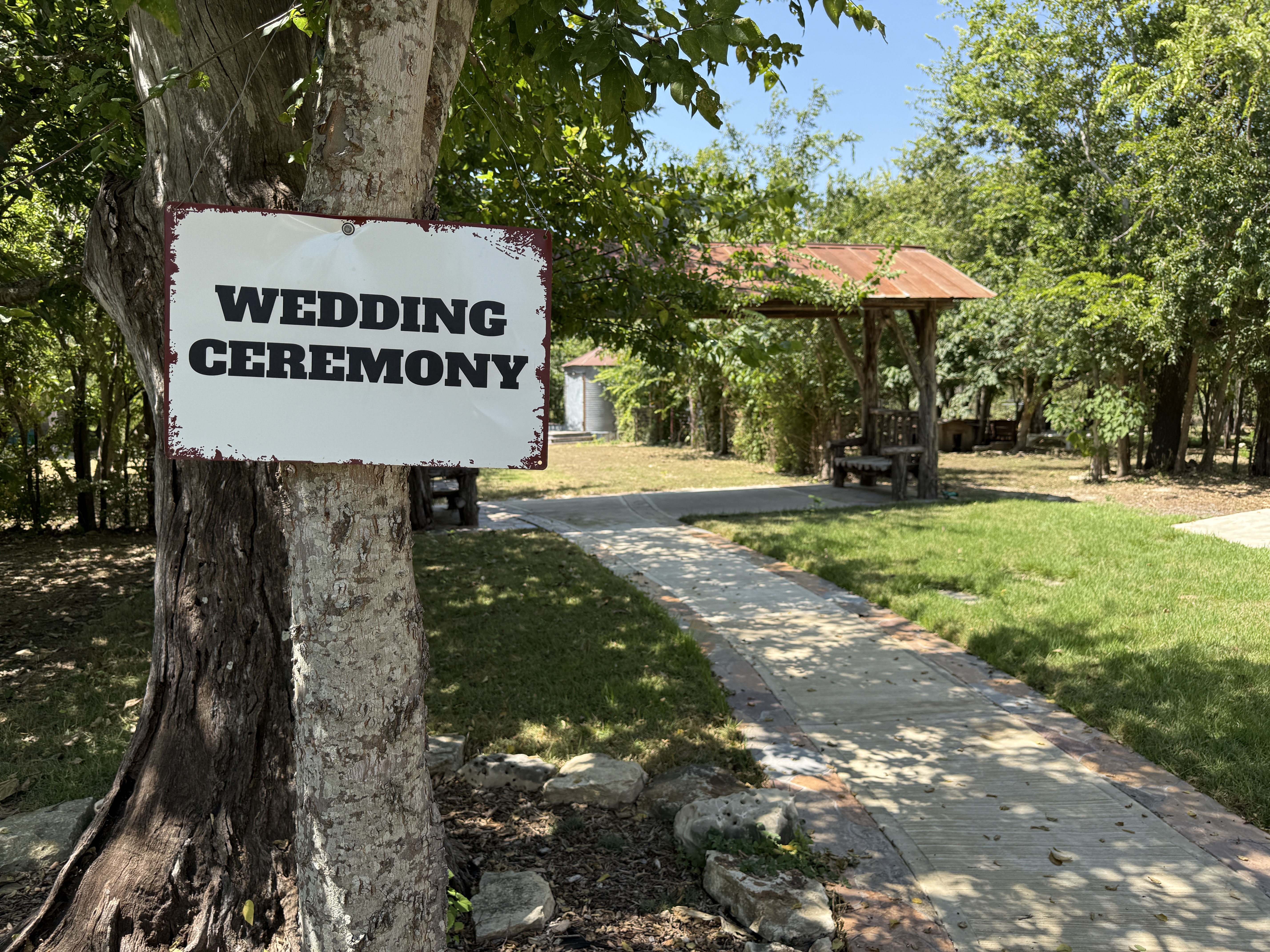
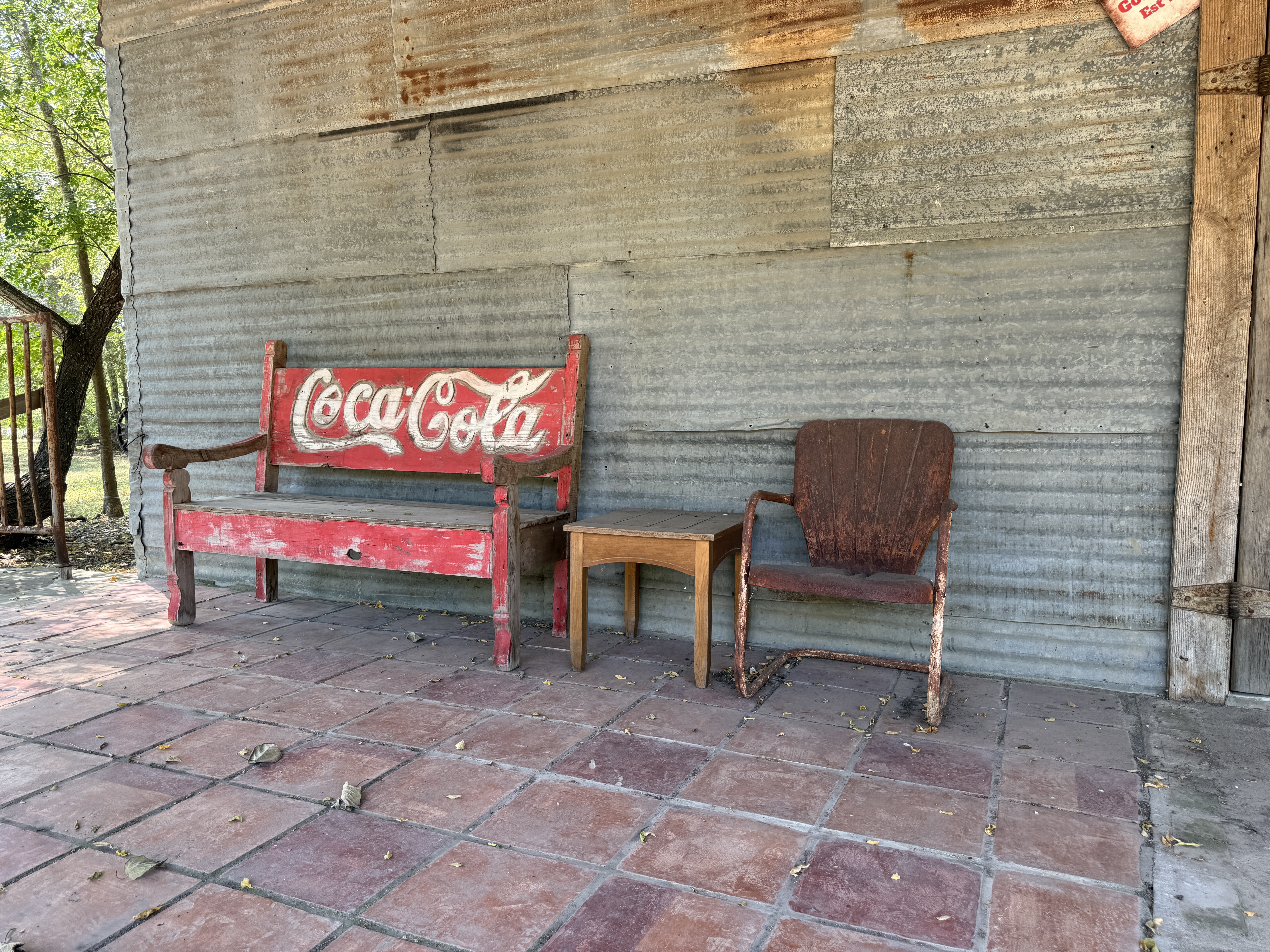
The dance hall next door and the three acres behind the store provide welcoming venues for celebrations of life, baby showers, weddings, and family gatherings. Everywhere you look, something interesting catches your eye—remnants of the past that make it easy to imagine the quieter, slower pace of life enjoyed by previous generations.


Communities need gathering places. Big cities may have them in abundance, but few can compare with the small-town stores and venues that connect us not only with one another but also with the generations that came before us. That is why places like the Pipe Creek General Store and Dance Hall matter—and why preserving them for future generations is so important.


I am so glad that a passing glance while driving through the Texas Hill Country led us to the Pipe Creek General Store. If you find yourself anywhere near Pipe Creek, it is well worth taking the time to step inside this charming time capsule and be transported to a simpler era—even if only for a few brief moments.


As Cheryl and I drove away, we talked about how much we hope places like the Pipe Creek General Store will still be around a hundred years from now. The busier and more complicated our lives become, the more we need places that invite us to slow down and remember where we have come from.

Kendalia General Store

There are still places in Texas where the past has not yet completely surrendered to the present. You will find them along two-lane roads that lead to little communities nestled off the beaten path. No longer fed by the nourishing streams of progress, weathered old buildings stand as quiet witnesses to another time. The old general stores are among the most interesting of these remaining fragments of the past.

The general store was once the heart of rural life. These were the places where neighbors bought what they needed, caught up on local news, collected their mail, and lingered for conversation. Life moved at a slower pace, and folks were not always in a hurry to leave. A visit to the general store broke the rhythm of hard work and the monotony of endless chores.

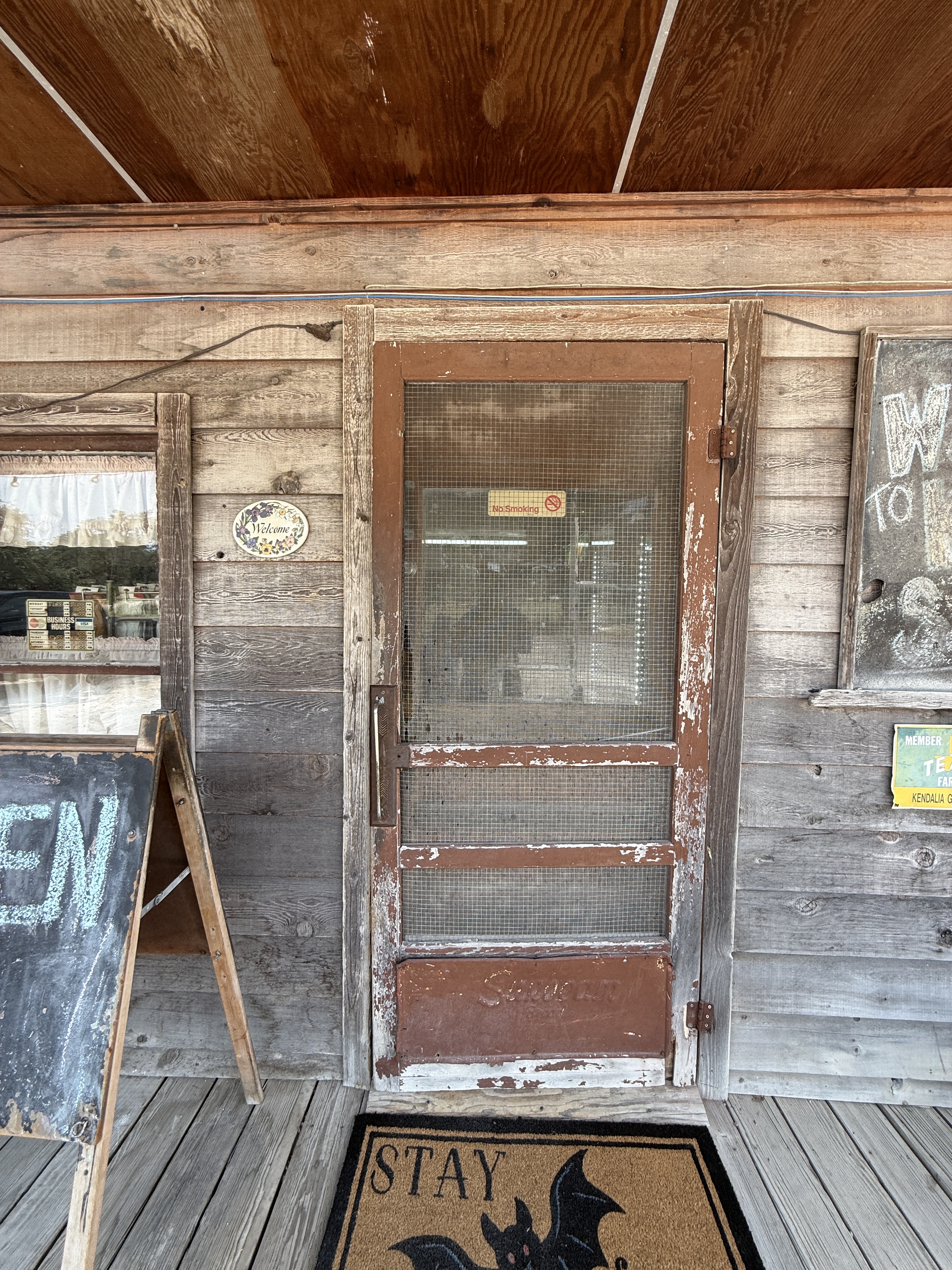
Most of these old places are gone. That is why the few that remain deserve more than a passing glance. They deserve a stop, walking through a tattered screen door, and spending a few unhurried minutes inside, smelling the unmistakable fragrance of the past. The undeniable reality is that someday, perhaps sooner than we imagine, these remaining pieces of old Texas will disappear.


Kendalia represents a piece of Texas that has largely disappeared. This tiny unincorporated community grew around mills, ranches, churches, a school, a post office, and a country store. Located in eastern Kendall County in the Texas Hill Country, roughly 25 miles northeast of Boerne and about 40 miles north of San Antonio, Kendalia has remained small, rural, and peaceful.


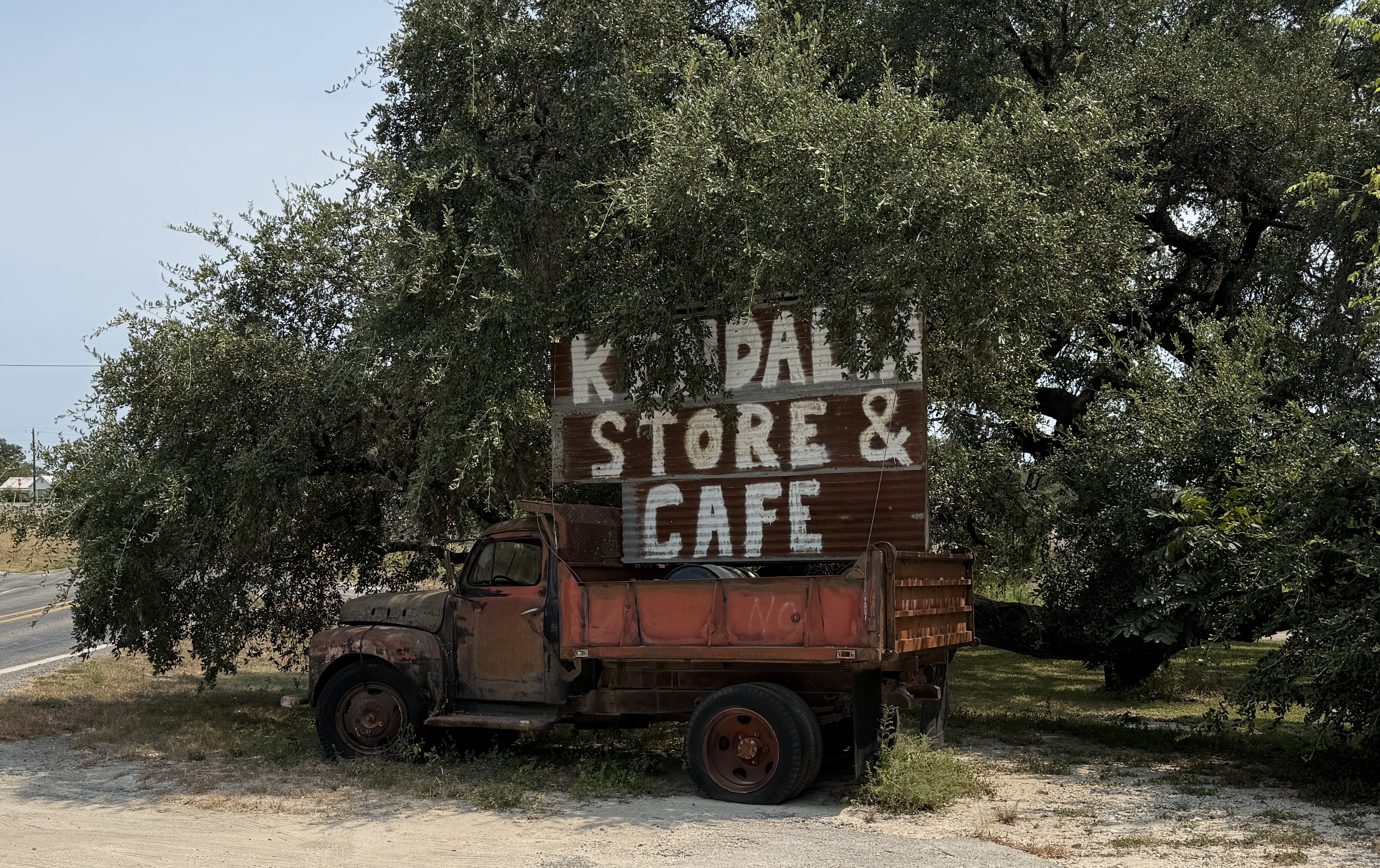
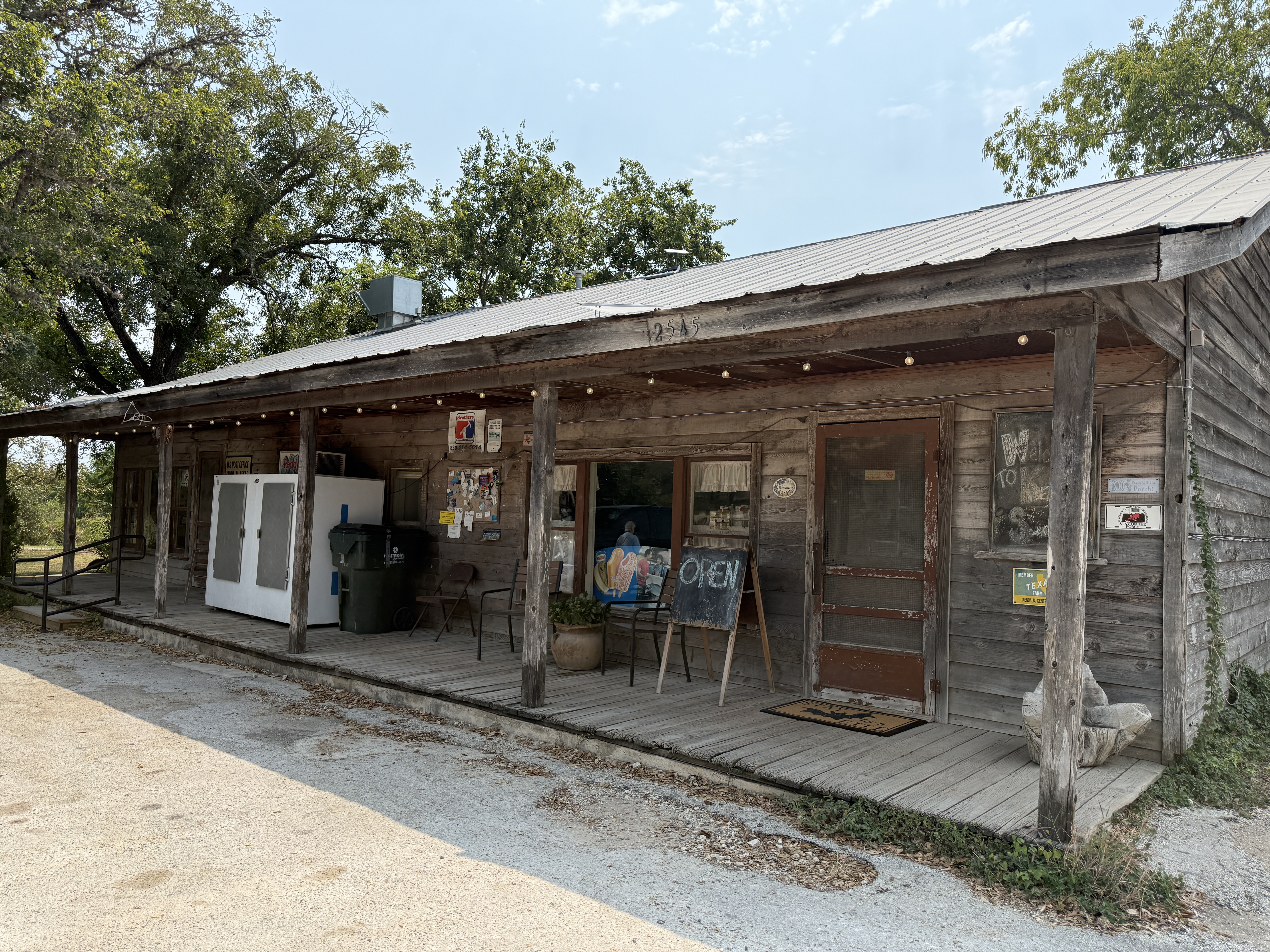
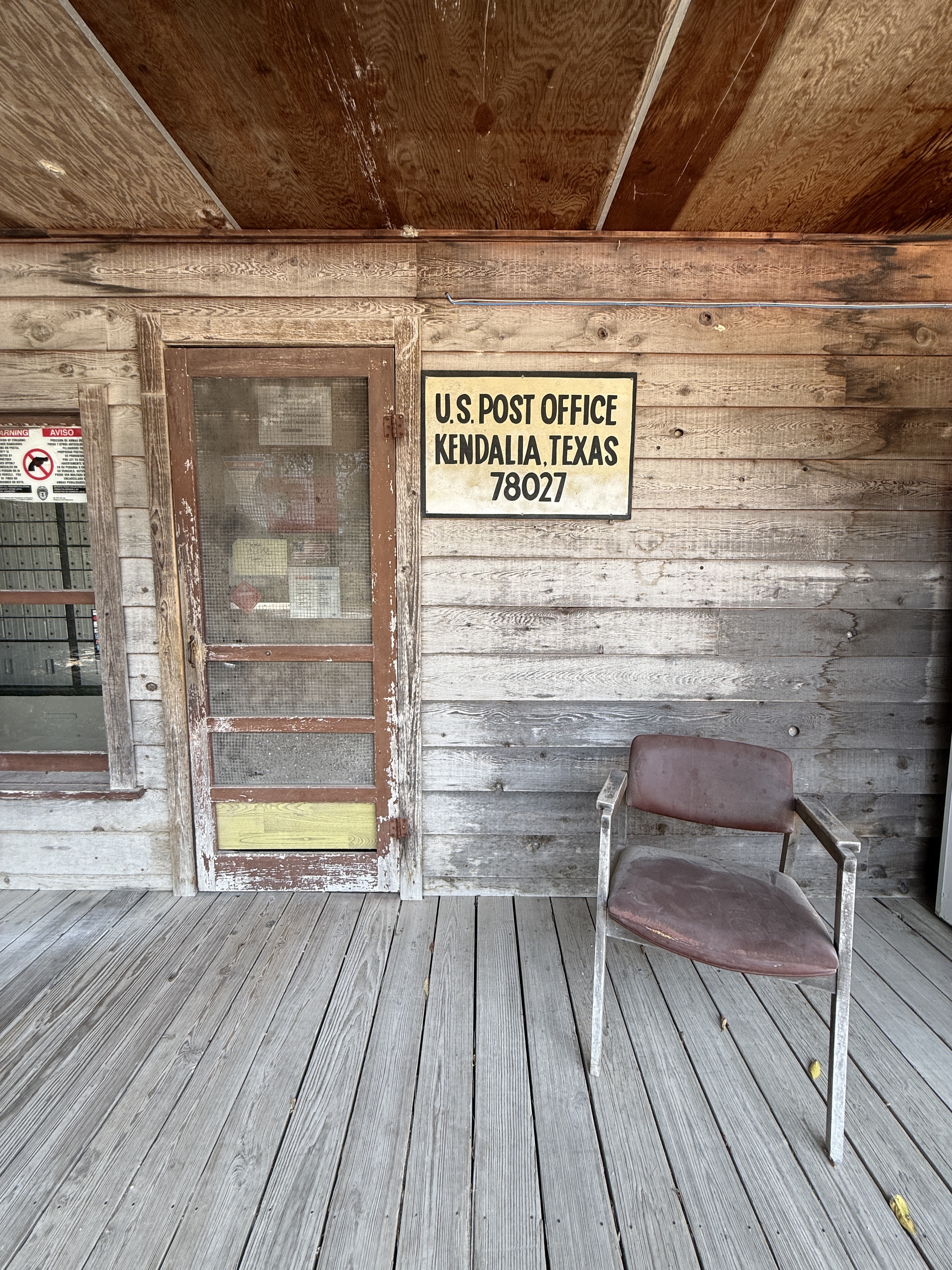
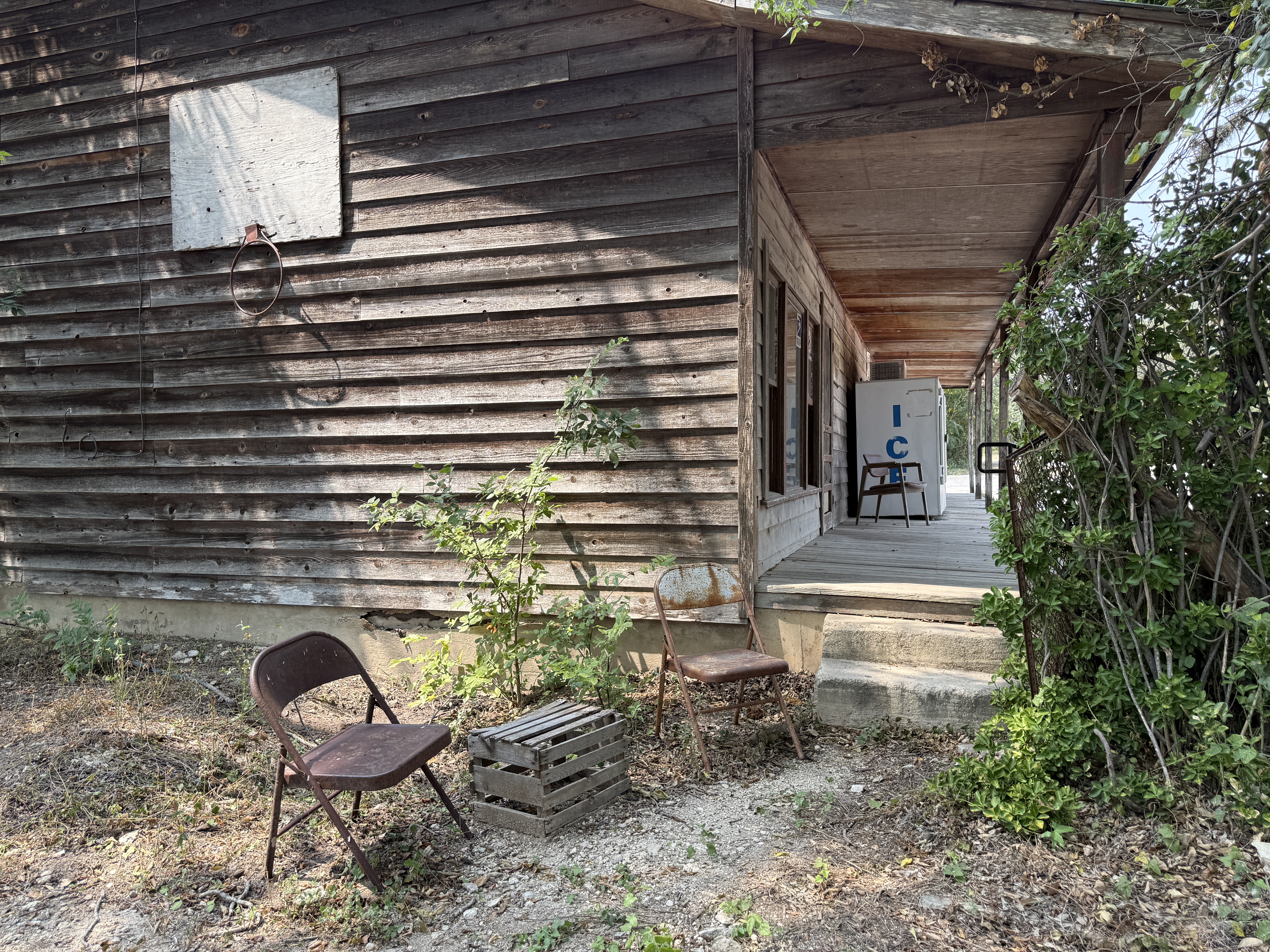
One of the best reminders of its small-town heritage is the Kendalia General Store on FM 473. The store continues the old Texas tradition of the general store. The years have changed the inventory of the little store but have not erased its charm. If its walls and worn wooden plank floors could talk, what stories they might tell.


Cheryl and I stopped by the Kendalia General Store while traveling the winding and scenic back roads of the Texas Hill Country. The weathered old screen door invited us to step into the past. Inside, we met a young man who shared a little about the store’s history with us. Apart from a couple of new full-glass coolers filled with soft drinks and bottled water, it was not hard to imagine what this place must have been like a hundred years ago.


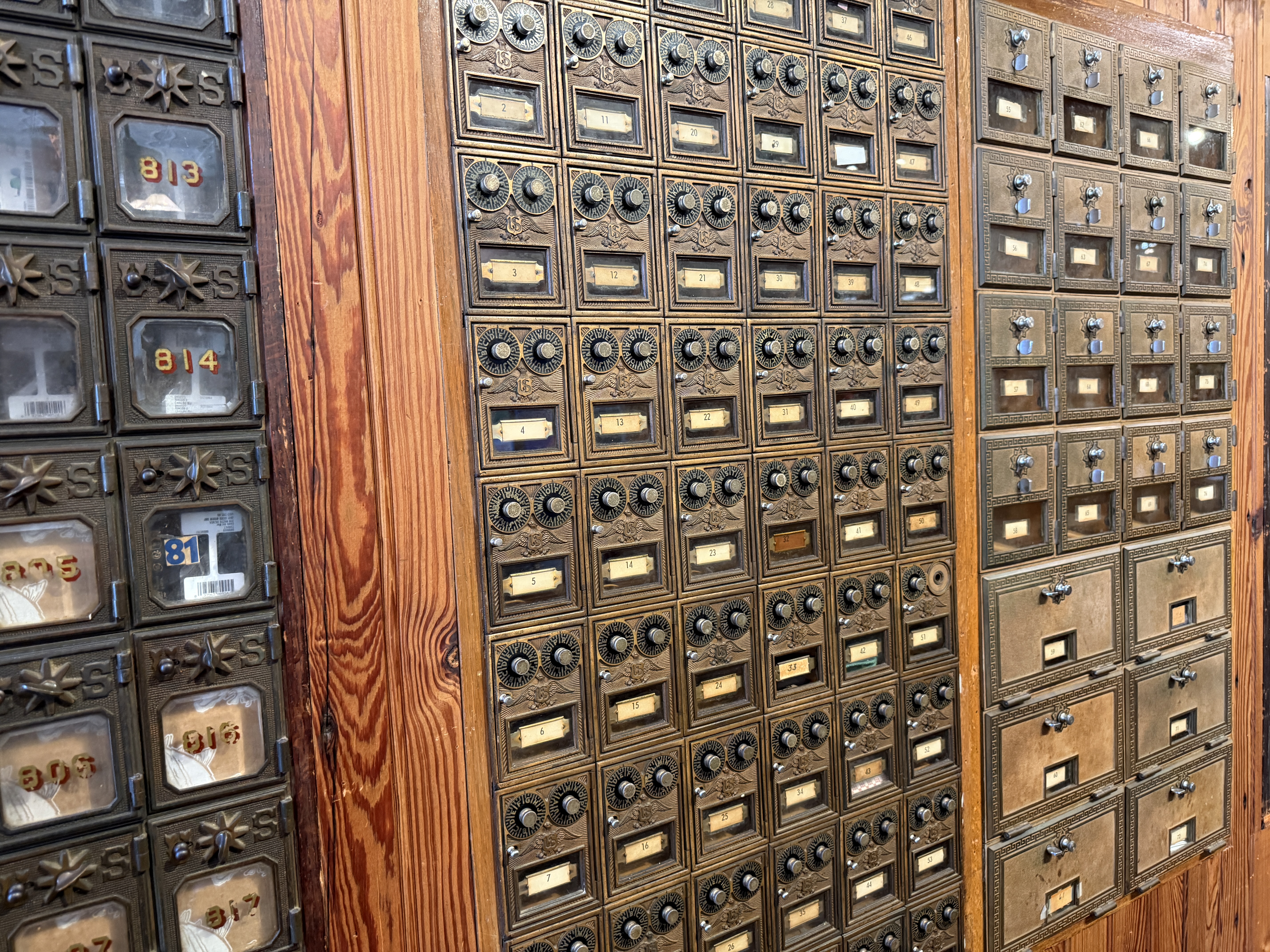
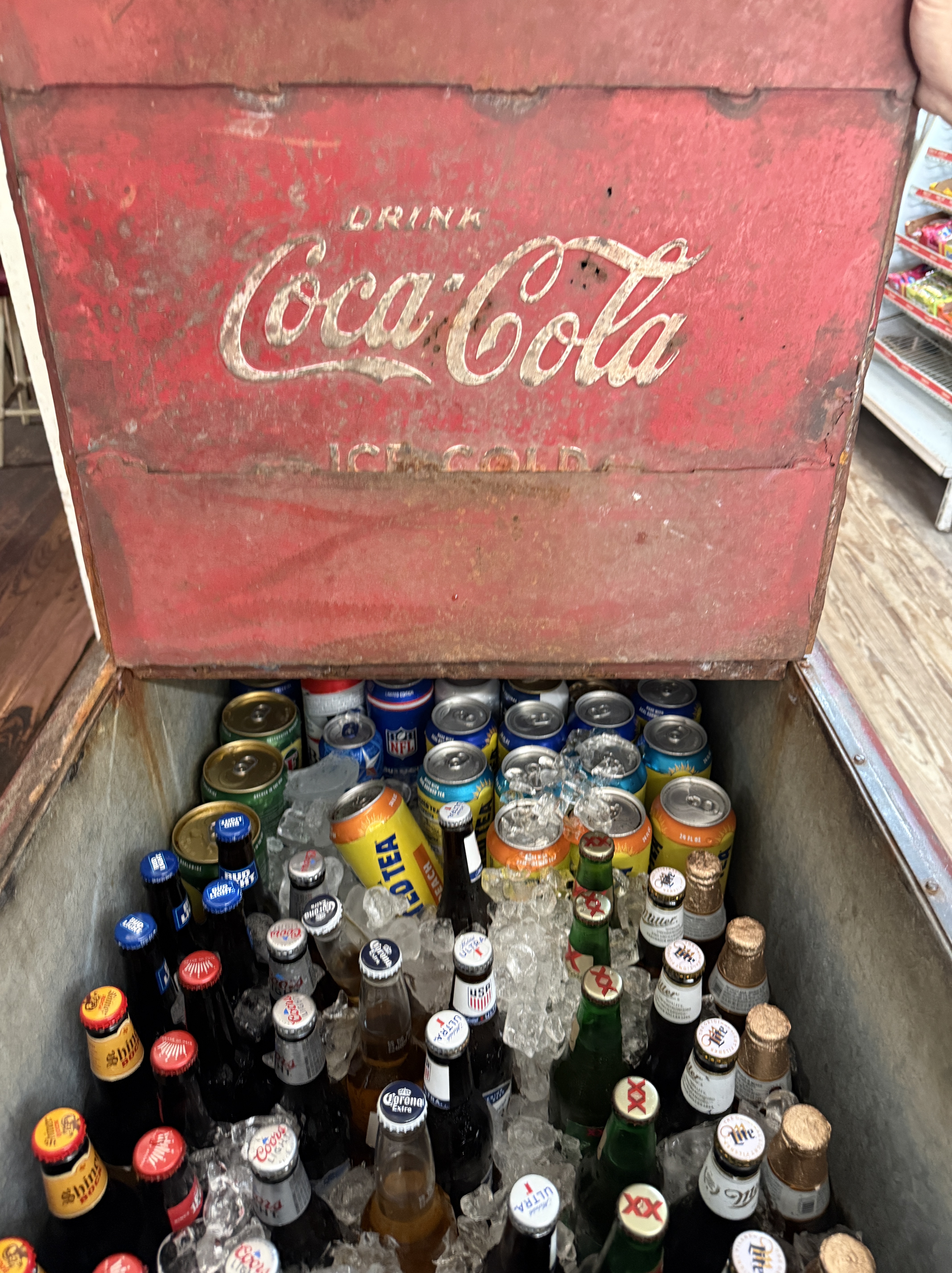
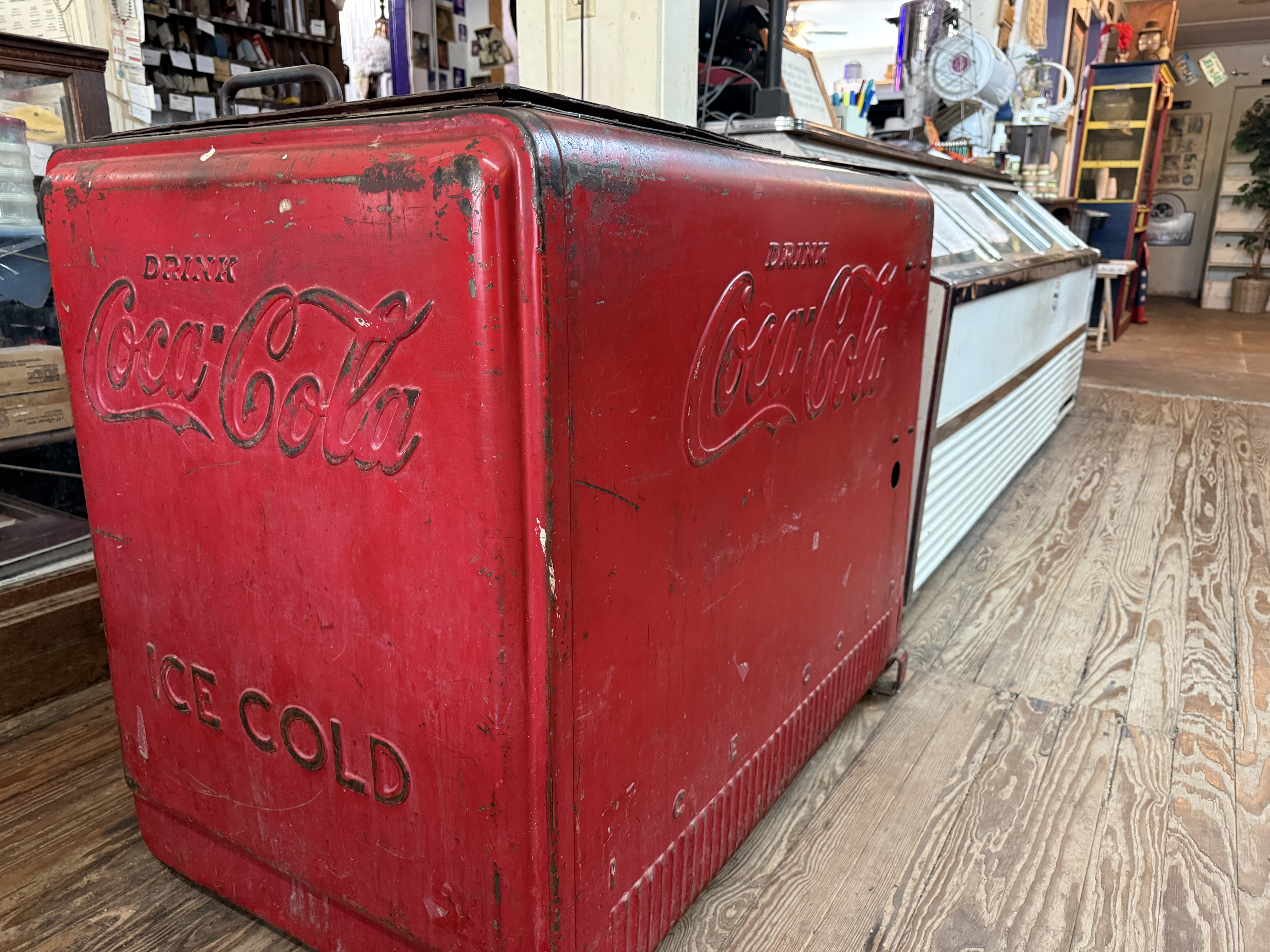
Today, you can order a burger, select your drink from an old Coca-Cola ice chest, grab a bag of chips off the shelves, and enjoy your meal in a time capsule of Texas history. And if you are a local, you can check your mailbox in the adjacent post office that shares the same front porch.


I hope the old store and post office in Kendalia will be around for another generation and retain its yesteryear charm. And I hope travelers who hurriedly drive down the Farm to Market road that passes in front of the store will slow down enough to stop and visit, have an unhurried conversation, and enjoy a Coca-Cola and a Moon Pie.


Places like the Kendalia General Store matter because they give us something a history book cannot: a physical connection to the lives of those who came before us. Walking through the door of an old store like the one in Kendalia can help us imagine a time when a general store was the center of community life.


Once an old building is allowed to disappear, we lose an important connection to our past. While a photograph can preserve what a building looked like, it does not compare to the experience of opening an old door, hearing the floorboards creak beneath your feet, and being in a place that played an important role in the lives of previous generations.


That is why stopping at a place like the Kendalia General Store is more than nostalgia. It is an act of appreciation for our history. The past rarely disappears all at once. It vanishes one old store, one weathered sign, one creaking floorboard at a time—which is why we should treasure places like the Kendalia Store and Cafe while we still can.

Our General Stores Bucket List

If you have watched enough Westerns, you have likely seen a scene or two play out in a general store. In the small towns of the American West, the general store played an important role in everyday life.


As a fan of old Westerns, I find one of the most memorable general-store scenes in the 1953 classic Shane, starring Alan Ladd. Much of the conflict between a powerful rancher and struggling homesteaders unfolds at Grafton’s General Store and adjoining saloon, which serves as the town’s commercial and social center.

Like so many things in history, the general store occupied a particular slice of time that is now gone. It was eventually replaced by stores that were bigger, broader, and supposedly better—but maybe not.


The closest thing to a general store in my world is the Little Burro Country Store, located about an hour south of Alpine in the Big Bend Valley, just north of Study Butte and Big Bend National Park. Our cabin is only a few miles away, and whenever we need something to get us through, this is the place we shop.

The Little Burro carries just enough essential goods to keep locals from making the hour-long drive to the grocery store in Alpine. More than once, however, what I expected to be a quick visit has turned into a much longer stay. I have enjoyed my share of conversations on the store’s front porch—a reminder that a good country store is still more than simply a place to shop.

The Little Burro is a small surviving example of the role general stores played in the history of the American frontier. It provides essential supplies and serves as a gathering place, with plenty of seating where locals and visitors can pass the time.


Old general stores were important for several reasons, not the least of which is that they helped the local economy. Farmers and ranchers bought supplies there. They also sold or traded their own goods. These stores connected small, isolated communities to the outside world, often acting as post offices, telegraph offices, and stagecoach stops.

Genuine general stores are a thing of the past. What remains are some really cool General Stores around the Lone Star State that, once you walk through the doors, revive nostalgic feelings and take you back to a simpler time. Some of these old stores occupy the same piece of real estate that housed them from their beginnings. Others are housed in old buildings that look and feel like an old-time general store.

Cheryl and I hope to visit as many of the remaining general store locations in Texas as we can on upcoming road trips. I have written about a few of these stores and will follow up with posts on the others as we visit them. The checkmarks indicate the stores we have visited. I hope you will come along for the ride.

Here is our General Stores Bucket List. Leave a comment with info about any locations missing from our list.

Hill Country and Central Texas
Bandera General Store — Bandera
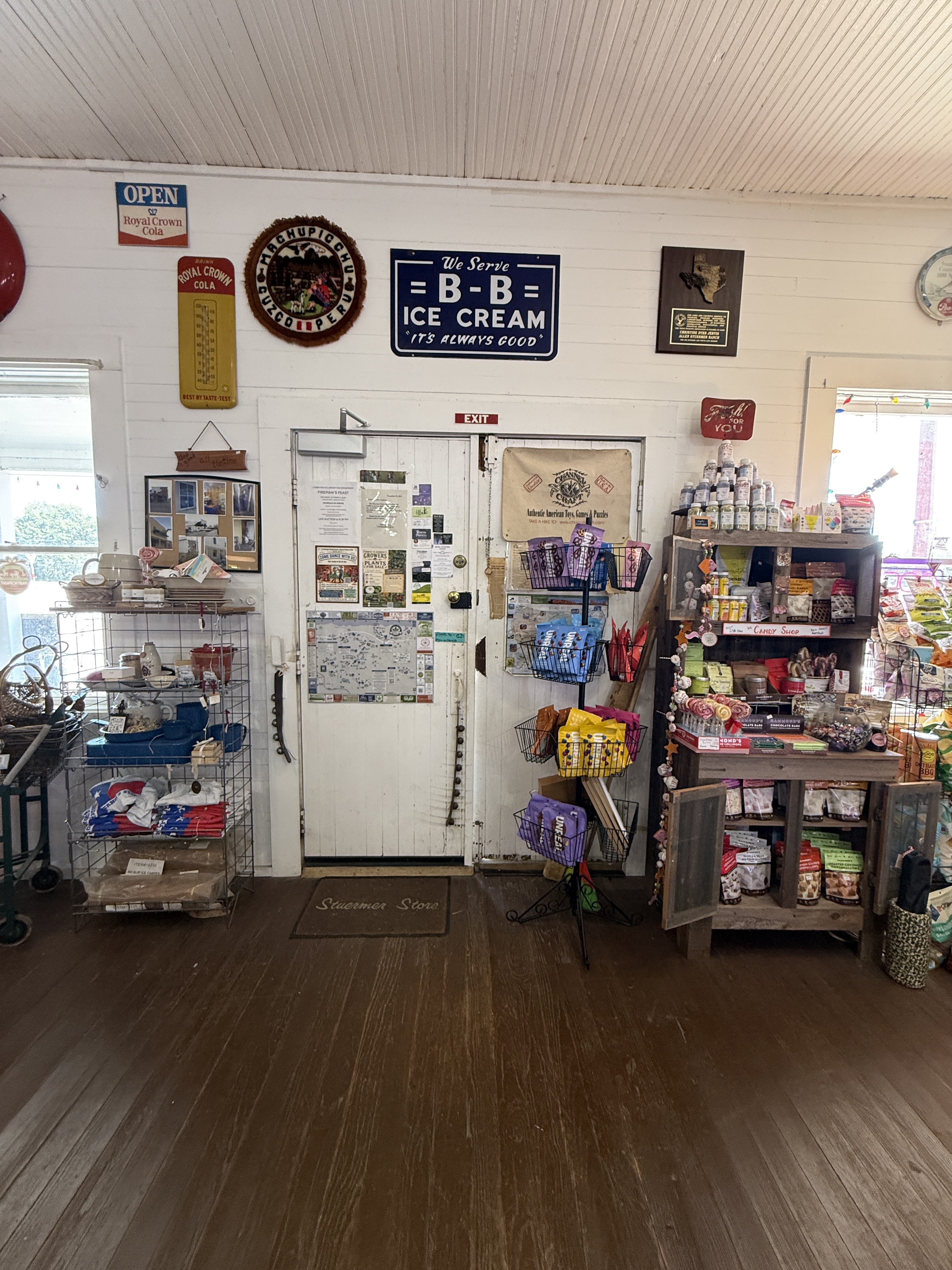
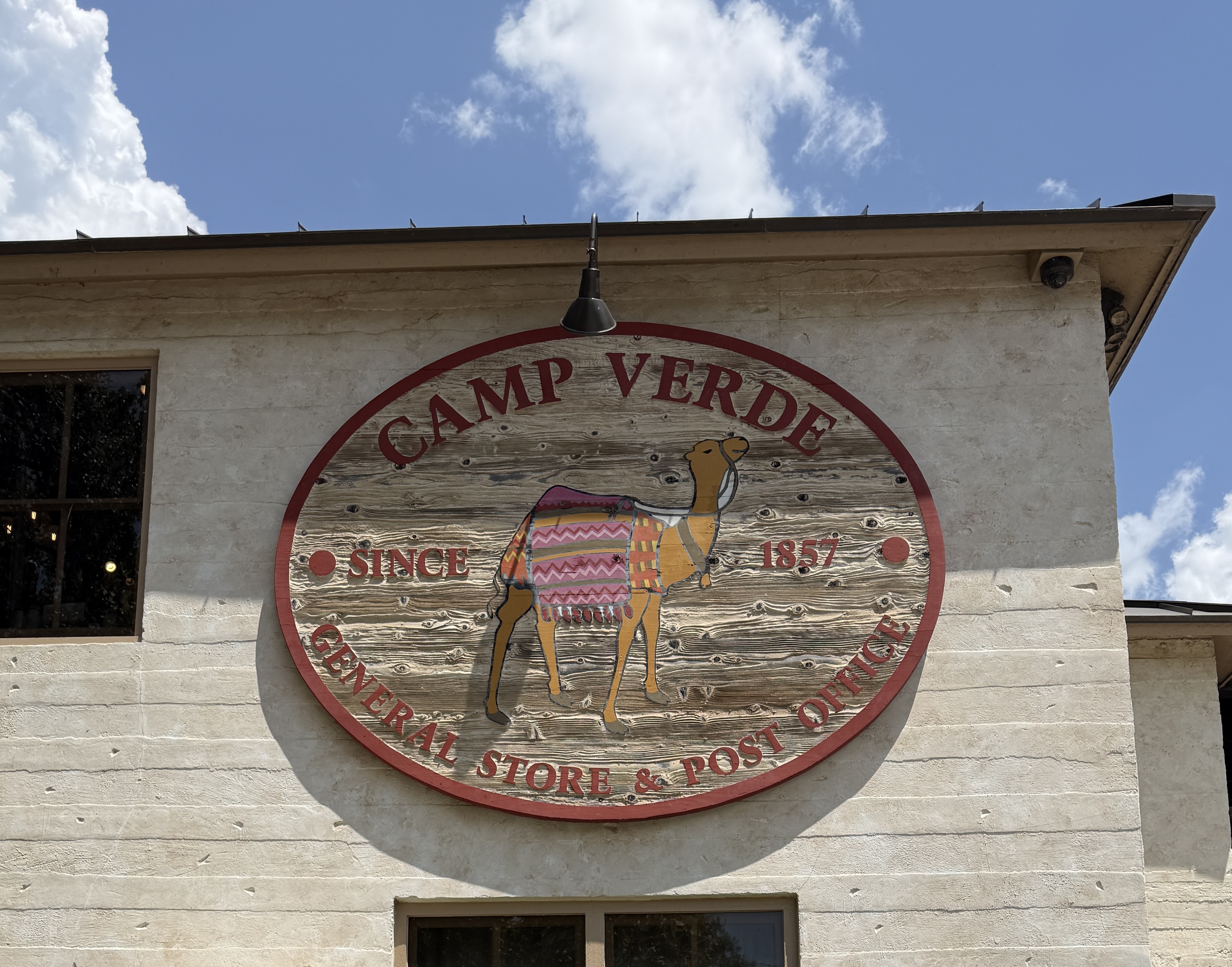
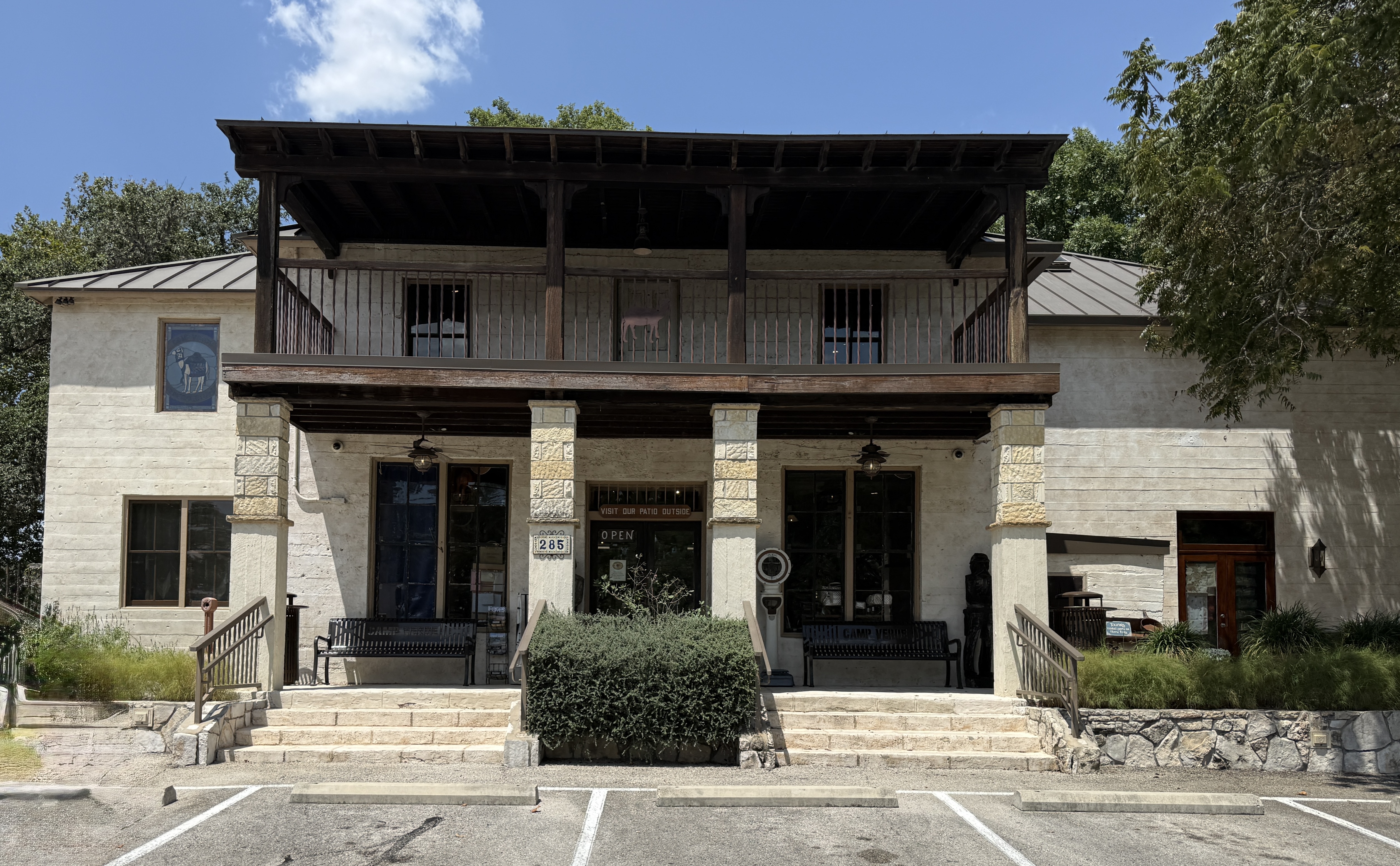
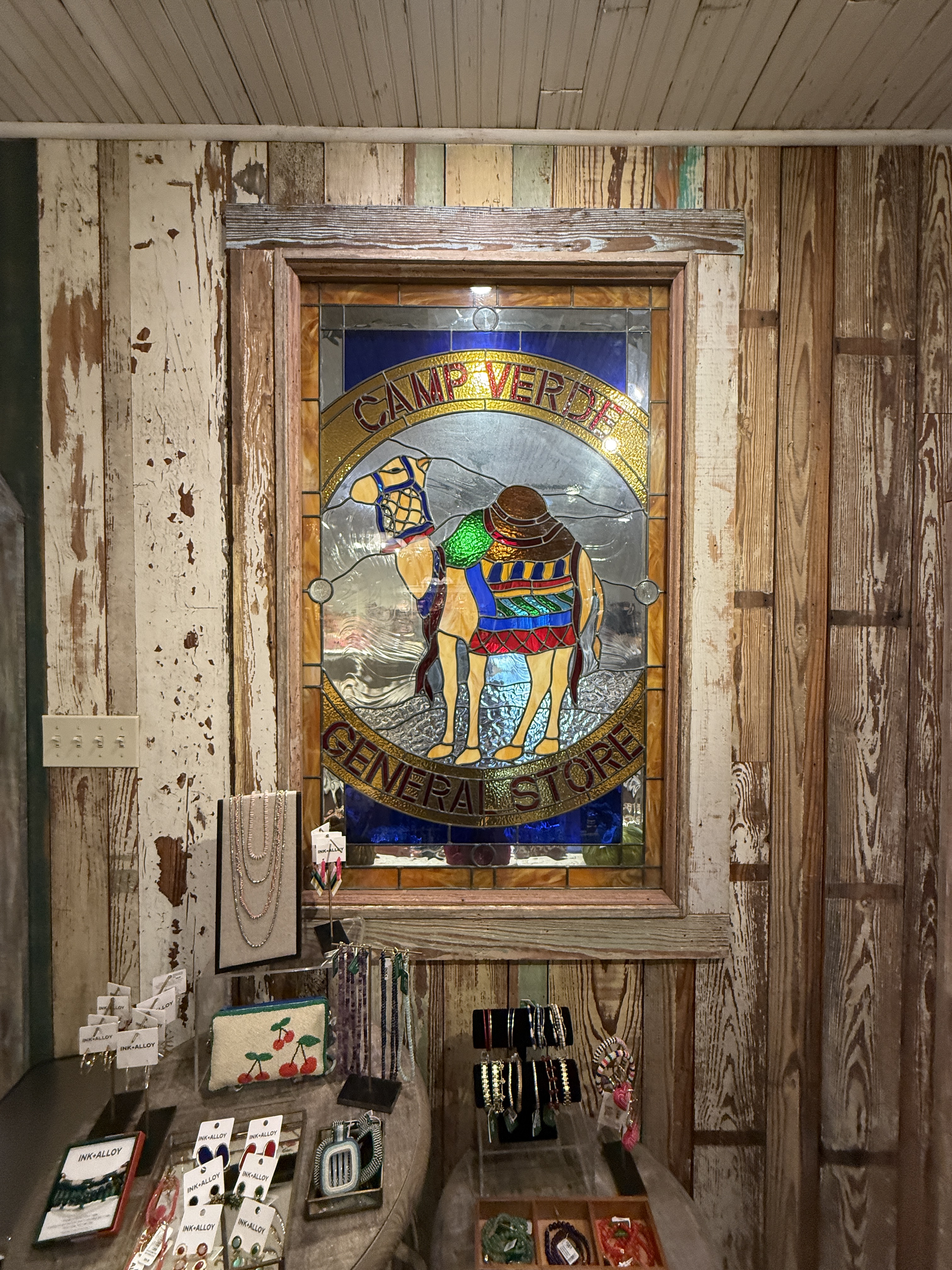
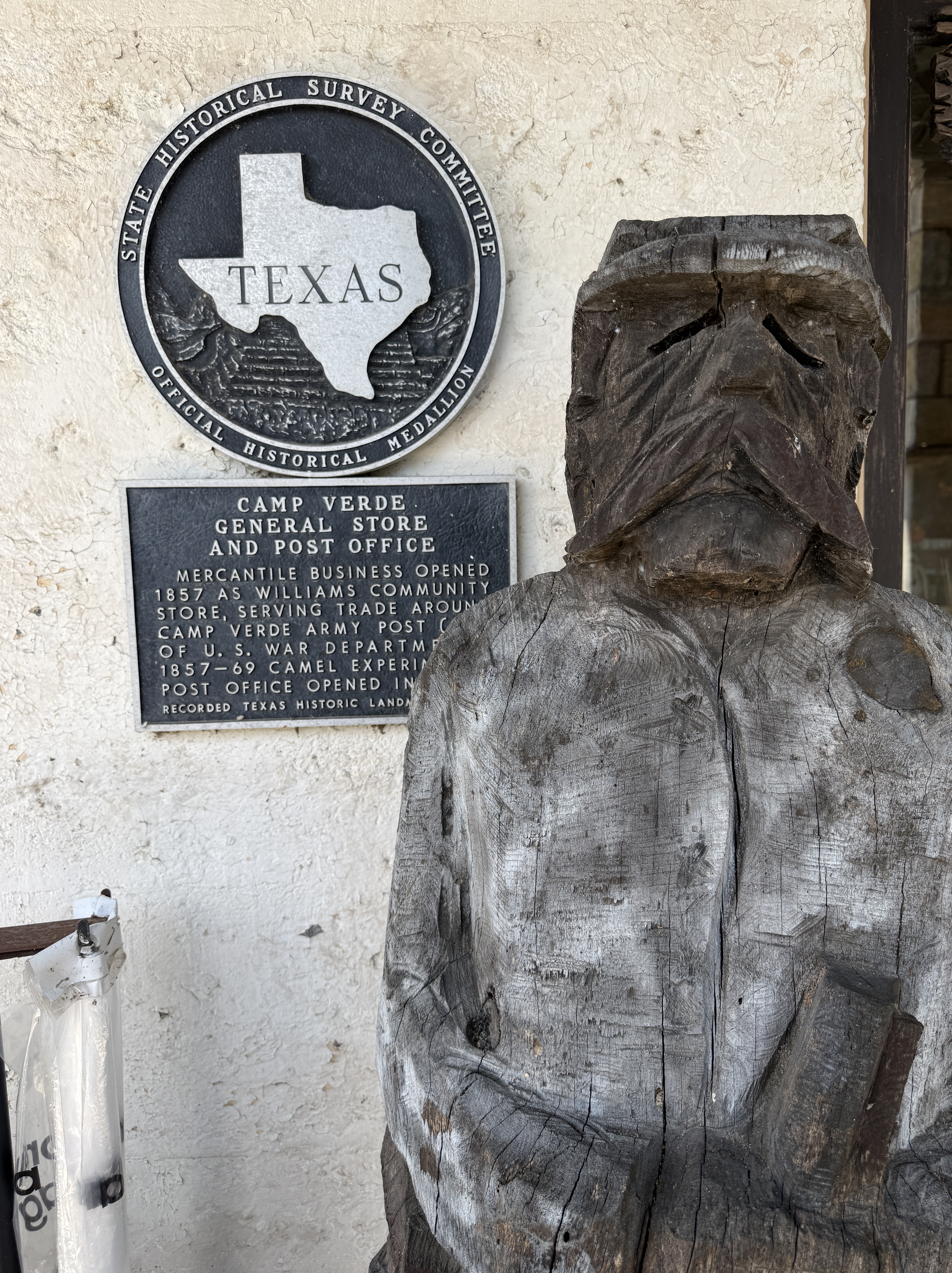
✓ Camp Verde General Store — Camp Verde, near Kerrville
• Castell General Store — Castell
• Coats Grocery and Market — Gause
✓ Fischer Store — Fischer
Garven Store — Mountain Home
Gruene General Store — Gruene Historic District, New Braunfels
✓ Heinsohn’s General Store — Frelsburg
Kendalia General Store — Kendalia
• Luckenbach General Store — Luckenbach
Pipe Creek General Store and Dance Hall — Pipe Creek
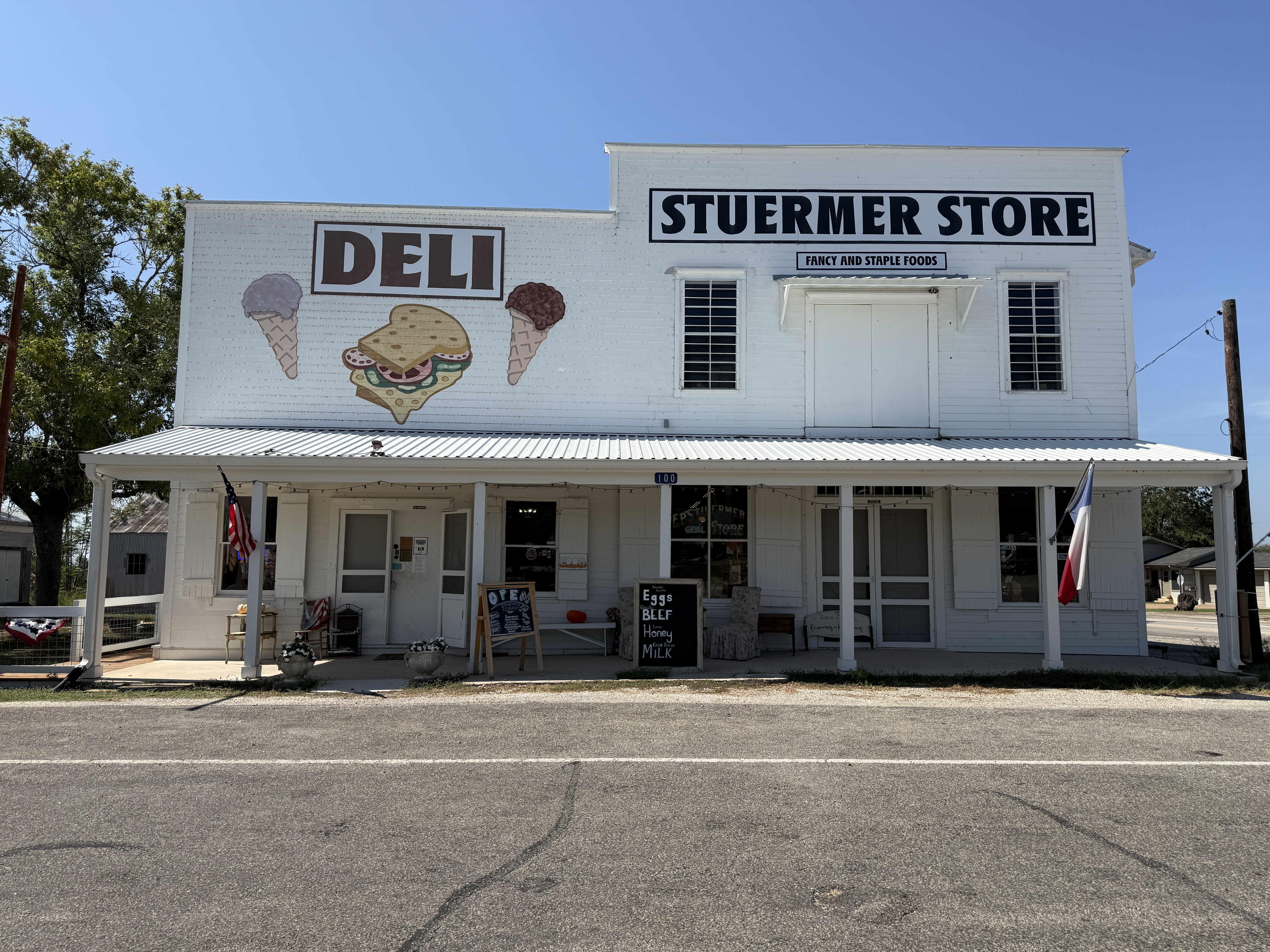
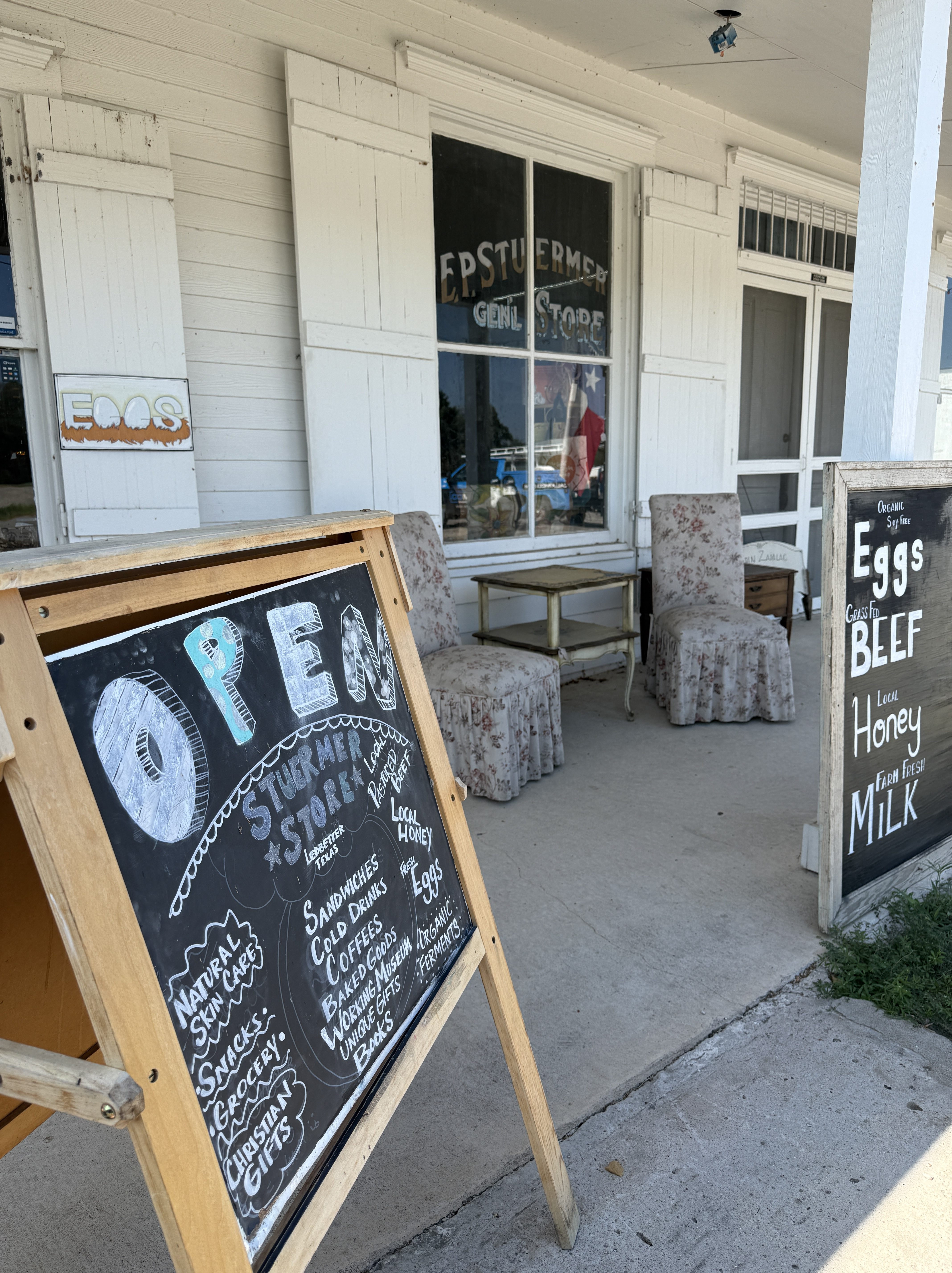
✓ Stuermer General Store — Ledbetter
Welcome General Store — Welcome, near Brenham

East Texas
• Edge General Store — Edge, near Hearne
Farmers Mercantile — Orange
• General Mercantile and Old-Time String Shop — Nacogdoches
Jefferson General Store — Jefferson
• T. C. Lindsey & Co. General Store — Jonesville

North Texas
• The General Store — Fort Worth Stockyards
• Martin General Store — Granbury
• Texas General Store — Grapevine

West Texas
• Eggemeyer’s General Store — San Angelo

Gulf Coast and South Texas
• Girouard’s General Store — Freeport
• Morales Store — Morales, near Edna

The Jefferson General Store

East Texas is unquestionably one of the most beautiful places in the Lone Star State. If you love forests and lakes then this is the place for you. This is definitely road trip heaven. On a recent road trip through East Texas, we headed over to Jefferson near Big Cypress Creek and Caddo Lake at the junction of U.S. Highway 59 and State Highway 49.

Jefferson was named for Thomas Jefferson when it was founded in the early 1840s by Allen Urquhart and Daniel Alley. In those early years it became the state’s leading inland river port as well as the leading commercial and distribution center of Northeast Texas. By 1870, Jefferson was the sixth largest city in Texas. But, with the advent of the railroad and less reliance on river boat transport of products, Jefferson gradually declined in population.
Today, Jefferson is one of the coolest road trip destinations in Texas. The town is home to more than fifty historic structures listed in the National Register of Historic Places. Many of the old historic buildings in the downtown area now house all kinds of specialty and antique shops. One must-see stop in Jefferson is the Jefferson General Store.

The Jefferson General Store occupies a building first used as a hardware store in the 1860’s and has remained an important part of the community through the years. There are not many places left in Texas where you can step through the door of an old building and go back in time. But that is exactly the feeling you’ll get when you step across the threshold of the front door and into the Jefferson General Store.
The sign above the door boasts “we have everything” — and that is not far from the truth as far as general store merchandise goes. The moment my wife Cheryl and I stepped through the door we looked at each other and smiled. This place was crammed with more interesting things than we could have imagined — including some of the hard-to-find candy we enjoyed as kids like Chick-O-Stick.

You can browse the stuff at the store, sit at the soda fountain and sip on five-cent coffee or any of their nostalgic soda fountain offerings, play a game of checkers on an oversided checker board, or fill a bag at the old-time candy counter. In addition to enjoying some of our favorite candy, we discovered fried peanuts in the shell. Delicious, indeed!

I enjoyed browsing through their eclectic selection of books on everything from Texas history, flora and fauna, recipe books, collections of humorous sayings, and more. If you like signs with funny messages, you’ll find plenty of those. They also have a great selection of Texas jams, jellies, and salsas.
If your travels take you to East Texas, I hope you’ll make time to go by Jefferson and to stop by the Jefferson General Store. Walk slowly. Look at everything. Have a soda. Eat candy. Peruse a book and laugh. Take a selfie. Have fun.

Farmers Mercantile

Farmers Mercantile is a Texas time capsule — an old general store where almost 90 years of memories compete with merchandise for shelf space. You can feel the past the second you walk through the front door and step onto the old wooden slats that cover the original dirt floor. Once inside you realize that you are standing in a place like few others in the Lone Star State.
Farmers Mercantile WindowJo Harris along with her mother Lou and brother Bubba are the latest generation to run the old store located in Orange. This historic old town is situated on the West bank of the Sabine River, the waterway that separates Texas and Louisiana. The mercantile occupies a building that was originally a Buick dealership. Jo’s great grandfather bought the place in 1927 and opened his general store in April of the following year.
Farmers Mercantile FrontFive generations of the Harris family have kept the old store running. The store has weathered the Great Depression and other economic lows through the years. However, Jo explained to me that the only reason they weathered the damage of Hurricane Ike in September 2008 was because of the kindness of the community.
Farmers Mercantile HatsThe two-plus feet of flood waters dumped by Hurricane Ike rushed into the store and destroyed half a million dollars worth of merchandise. After the flood waters receded, Jo walked in to find the floors covered in inches of mud. Without any insurance to cover the cost of the damage, Jo wondered if the end of Farmers Mercantile had finally come.
Farmers Mercantile StoveAnd then, something remarkable happened. The people of the community and surrounding farms rallied to the aid of the Harris family. They told Jo and her family that they would help them clean up the mess and get things back in order because Farmers Mercantile was too important to the community. And that’s exactly what they did. Seven days later, Jo and her family opened their doors once again for business.
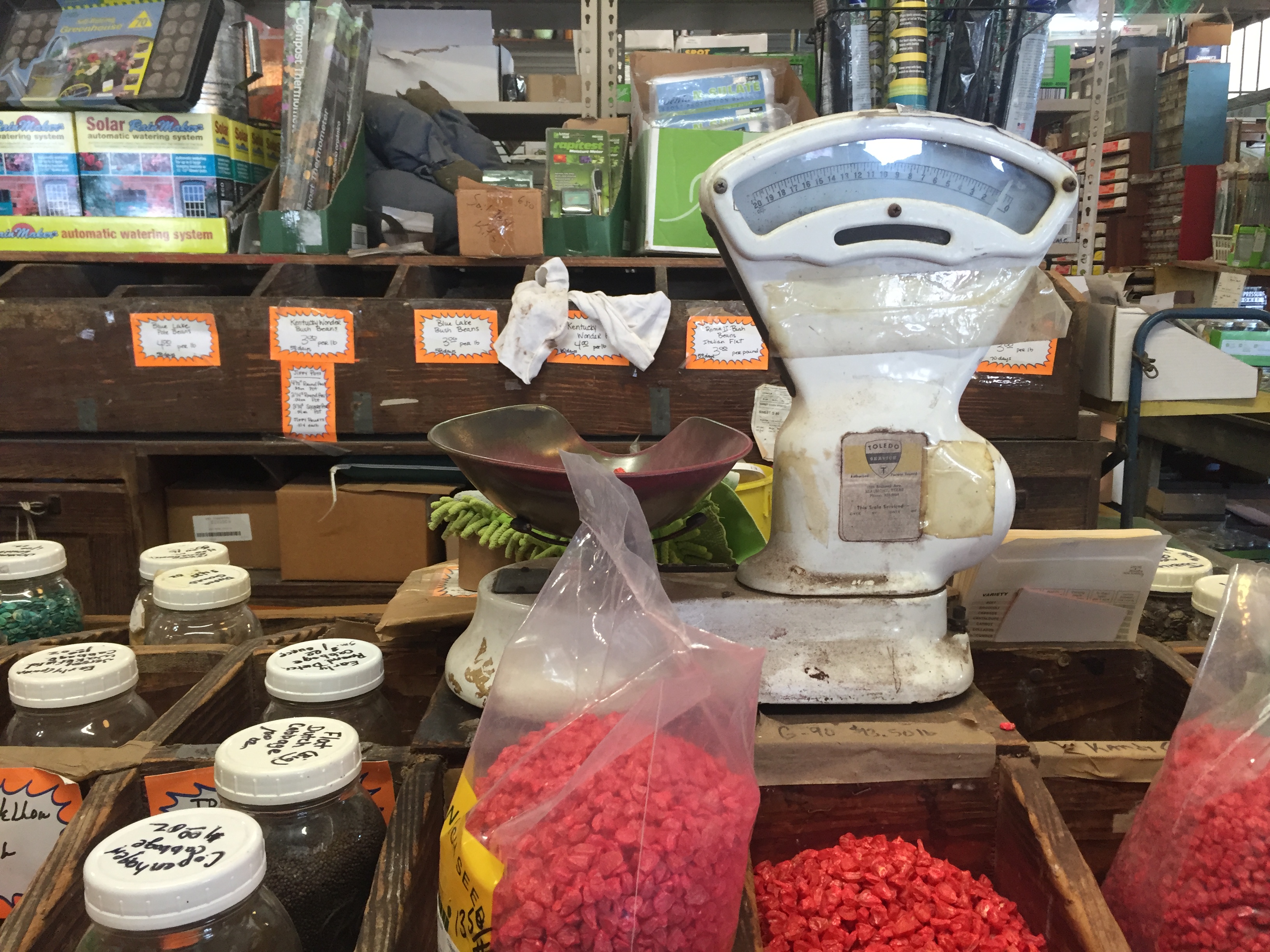
Farmers Mercantile ScaleToday, every shelf in the place is chock-full of the most interesting things — the kind of this-and-that kind of stuff that farming folks need. You’ll find garden supplies, seeds of every variety, corn shuckers, sausage stuffers, hand churns, straw hats, cast iron cookware, rope, saddles, wash tubs, bed bug poison, kerosene lamps, coolers, livestock feed, and much more. The store is, in fact, the oldest seller of Lone Star Feeds in Texas.
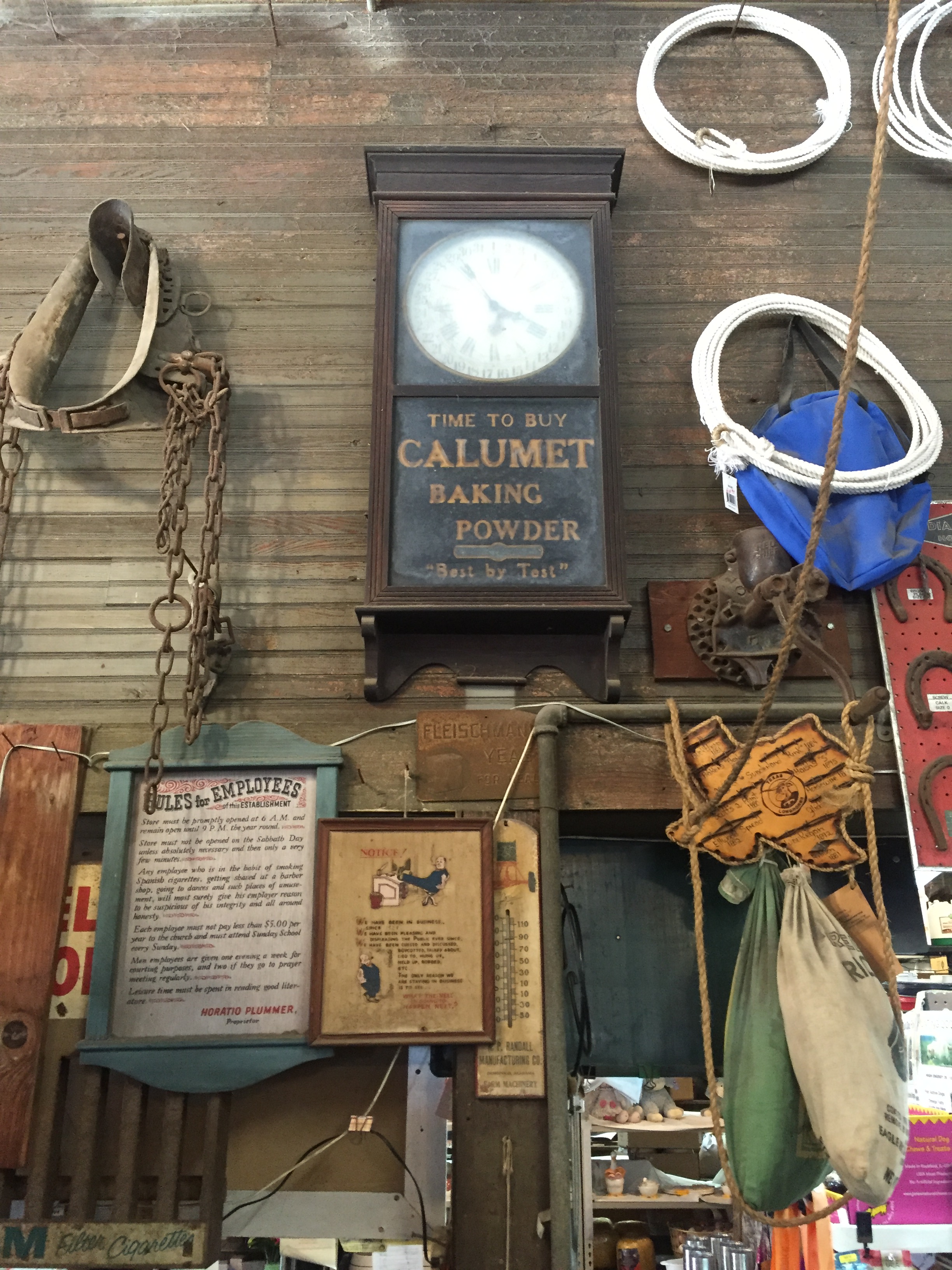
Farmers Mercantile ClockThe walls are adorned with almost ninety years worth of bric-a-brac — advertising signs, garden and farming implements, leftover automobile fan belts from the days when the Buick dealership occupied the place, assorted framed items, and other stuff. The most treasured is an old clock advertising Calumet Baking Powder. Jo’s grandfather won it in a contest after selling a full barrel of the brand’s baking powder. The clock remains exactly where her grandfather hung it on the wall.
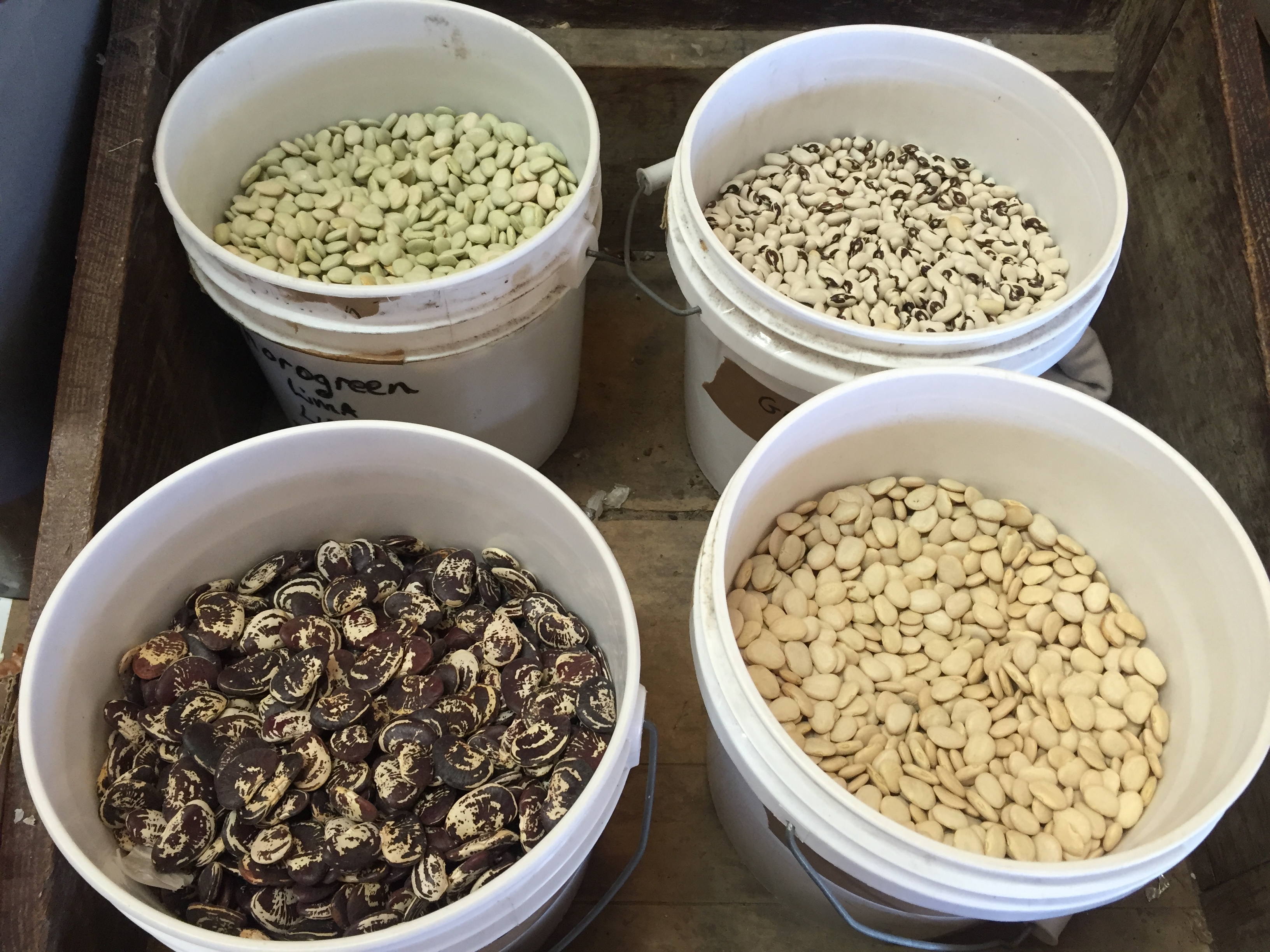
Farmers Mercantile SeedThere is one more thing that makes Farmers Mercantile a special place to the folks of the area — and that is the customer service. I enjoyed listening to Jo answer questions about seed and fertilizer and rat poison. Jo and her family know their stuff. They can advise you about what to plant and when to plant it and even tell you how to deal with bed bugs. In the hour-plus that I spent with Jo I was impressed by her knowledge and even more by her concern for every person who walked through the door.
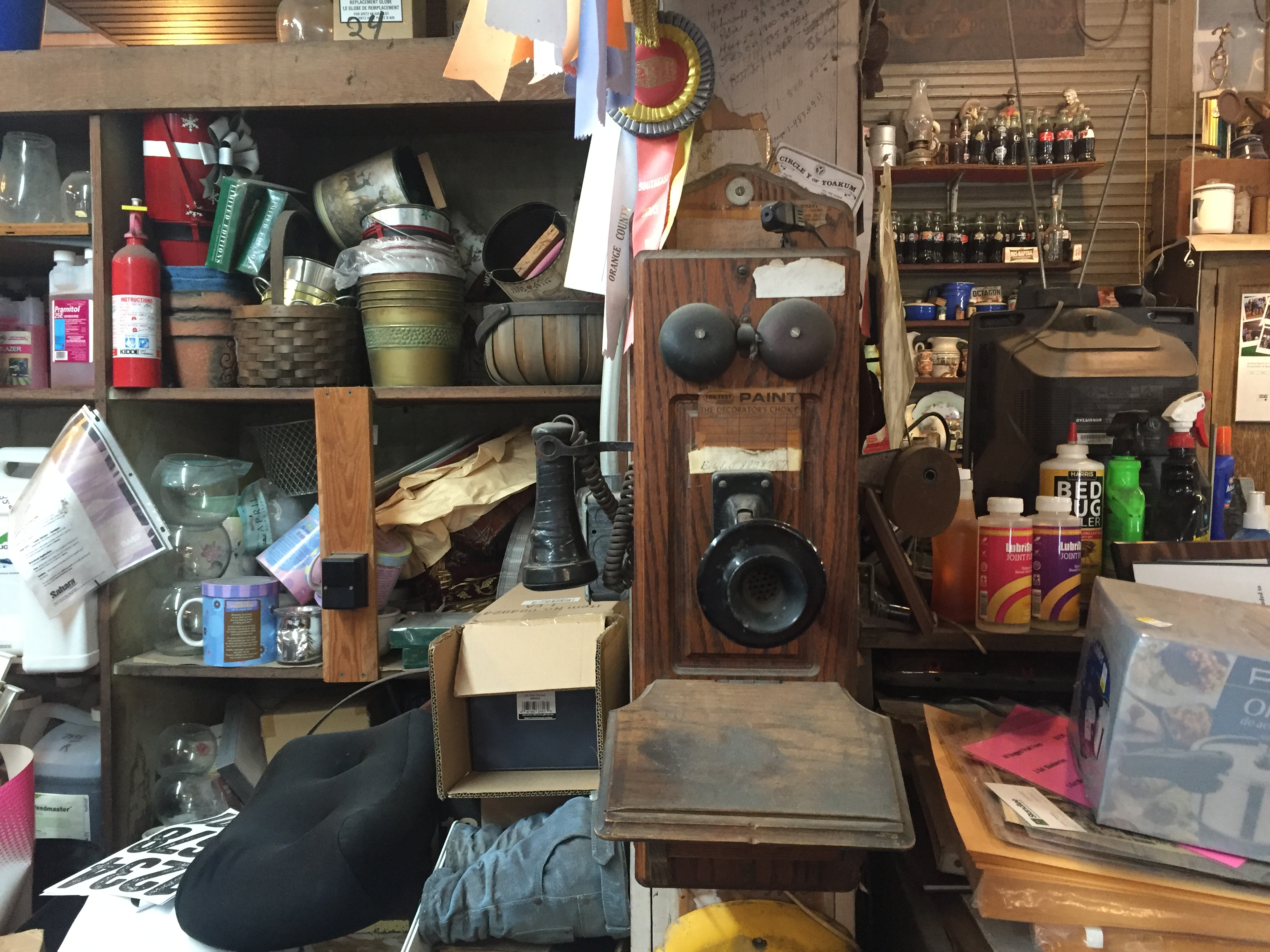
Farmers Mercantile PhoneThe world outside the Farmers Mercantile will continue to change. There is no doubt about it. However, in this day of constant motion and change, I find it comforting that there are still places like the Farmers Mercantile where what happens inside remains the same. Everyone who walks through the doors can expect to find the same unchanging and time-treasured values that have made this a special place.
IMG_7674Plan to visit Farmers Mercantile and to take your kids along. Jo and her family will be happy to show you around and to answer any questions about what you see on their shelves. It might surprise your kids to see a business that has survived for so long without any modern conveniences — no air conditioning in the summer and only a central stove to heat the place in the winter. It won’t take you long to discover why this place is valued by the folks around Orange and why it continues to endure.

Welcome, Texas

Texas has no shortage of small towns with interesting names — including Welcome, a small unincorporated community in Austin County. Welcome is located on FM 109 between Industry and Brenham, the home of Blue Bell Ice Cream. This tiny if-you-blink-you-will-miss-it spot in the road is definitely worth a visit.
Welcome Texas SignThe town was settled in the late 1820‘s but remained nameless until 1852 when a German immigrant named J.F. Schmidt christened the town Welcome — a name that he felt reflected the hospitality of the residents. At its peak, the town boasted a population of no more than a couple hundred folks and a few businesses. Today, a little more than a hundred folks call Welcome their home.

A friend and I drove through New Ulm on our way to Welcome and pulled over to walk through the cemetery, established in 1853. I make it a point to stop by old cemeteries when I travel Texas backroads. You can learn a lot about a place and the folks who settled there by visiting their burial places.
New Ulm CemeteryAs my friend and I walked through the cemetery at New Ulm we headed for the oldest grave markers. That’s when we noticed a pattern — an entire section of graves of children who all died at the turn of the twentieth century. After reading the names and dates on these graves we felt heartsick and wondered what had happened to these children. We talked about how the deaths of these kids must have impacted their families and the New Ulm community in those years.
Welcome StoreWhen we arrived in Welcome we stopped by the Welcome Store, established in 1890 and a Texas Historic Landmark. The original two-story building was damaged by a storm in 1900 and reconfigured as a one-story building with two asymmetrical gables, a wide front porch, and a screened door entry. The building pretty much looks the same today as it did when it was rebuilt after the storm.
Omar at Welcome StoreStepping inside the Welcome Store was like stepping back in time. The place is a fascinating time capsule crammed with tons of interesting details. Leonard and Lynn Wittneben, the current owners, greeted us warmly. This sweet couple raised their family in Welcome and recently celebrated their 50th wedding anniversary.
Welcome CemeteryWhen we told Leonard and Lynn about our visit to the New Ulm cemetery and mentioned the number of graves for kids, Lynn told us that a typhoid epidemic had taken the lives of the children. “You’ll see the same thing at the old Welcome cemetery, the one across the street from the Lutheran church” she said. “There’s a whole section of graves for kids who died during that same epidemic.” Times were hard then.
Welcome Hospital PicLynn motioned to Leonard to get their history album, a collection of old photos and stories  about Welcome crammed into an old notebook. Welcome actually had a hospital in its early days, and a doctor whose methods later came into question and led to his suicide. We sat with Leonard and Lynn for almost an hour and listened to the fascinating history of their beloved community.
Omar w Leonard and LynnWhen we finally exchanged good-byes, our new friends invited us to stop in again sometime. My buddy and I agreed that Leonard and Lynn are true ambassadors for a tiny community named for its hospitality. They indeed made us feel welcome in Welcome.
If you are ever anywhere near the vicinity of Welcome, take a moment to stop by the old Welcome Store, a place that has served travelers and residents for the past 125 years. Leonard and Lynn will welcome you and remind you that good-old Texas hospitality is never out of date. Oh, and while you are there, ask Lynn to tell you the fascinating story about their wedding cake!