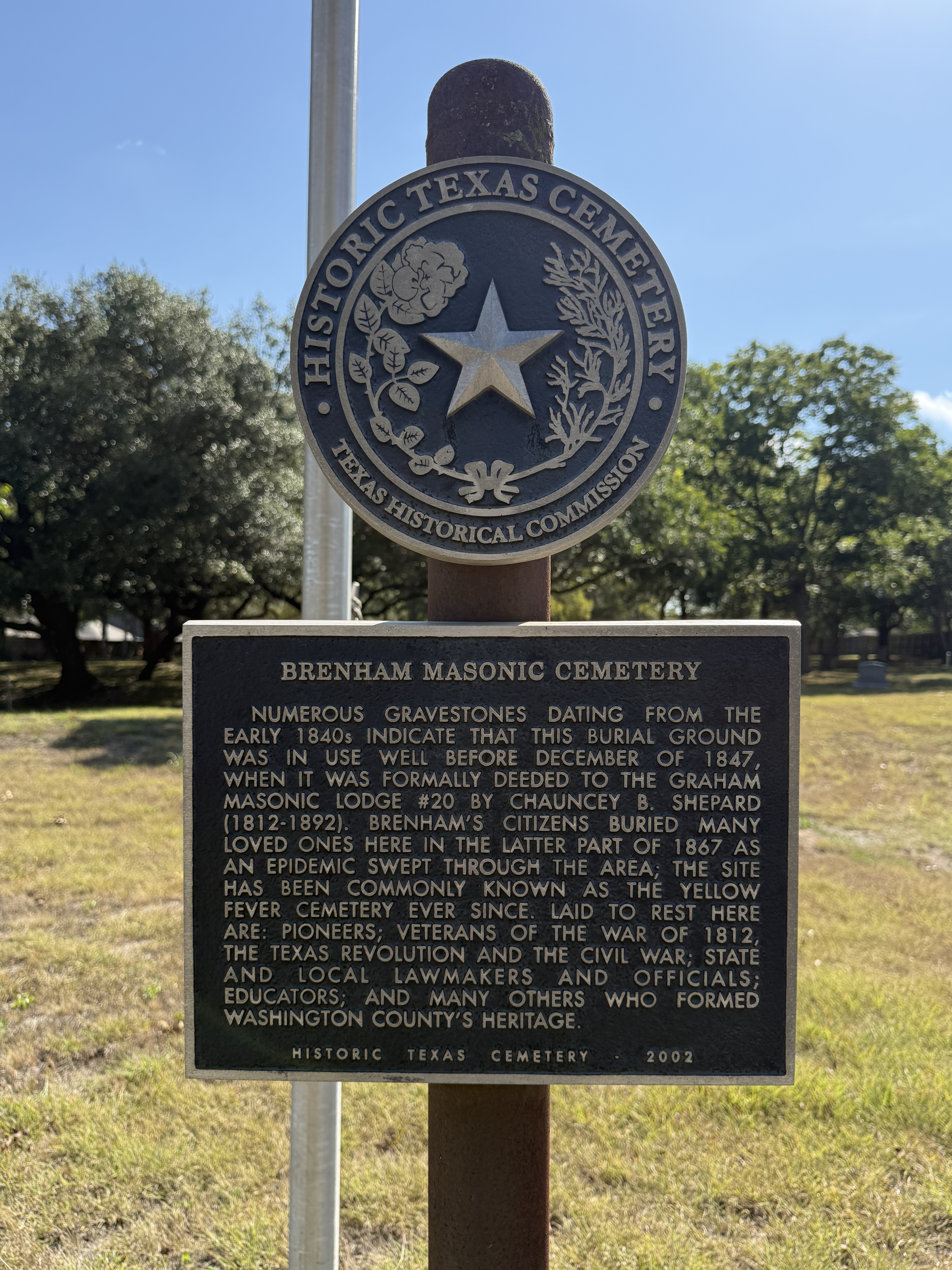
While researching old cemeteries in Texas, I came across one with a name that immediately caught my attention: Yellow Fever Cemetery (officially the Brenham Masonic Cemetery). A haunting name like that made me want to know more about one of the Lone Star State’s more unusually named cemeteries. As it turns out, this quiet cemetery preserves the memory of one of Washington County’s darkest chapters.
In 1867, a devastating yellow fever epidemic swept through Brenham and the nearby community of Independence. Every person was vulnerable. In Independence, Margaret Lea Houston, widow of Sam Houston, died of yellow fever on December 3, 1867, at age 48. She is buried in the Houston-Lea Family Cemetery in Independence.
Brenham was hit especially hard by the epidemic. To protect itself, the town adopted a quarantine ordinance on August 13 of that year. As the disease spread, people became increasingly fearful and stayed close to home. Yet, despite the danger, some willingly stepped out of the relative safety of their homes to care for their neighbors.
One of the most remarkable stories from that dark period concerns a local businessman and civic leader named DeWitt Clinton Giddings. For nearly three months, Giddings helped care for the sick and dying. As people died, he also helped laborers prepare graves at the old Masonic Cemetery.
At times, there were so few healthy people available that Giddings stood beside a grave as the only mourner. No grieving friends. No neighbors. Just Giddings, the laborers, and another victim of the epidemic being lowered into the Texas soil.
Many of those who died during the epidemic were buried in this old cemetery. The events of 1867 became so closely associated with the burial ground that, over time, people began referring to it by the name that caught my attention more than 150 years later: Yellow Fever Cemetery.
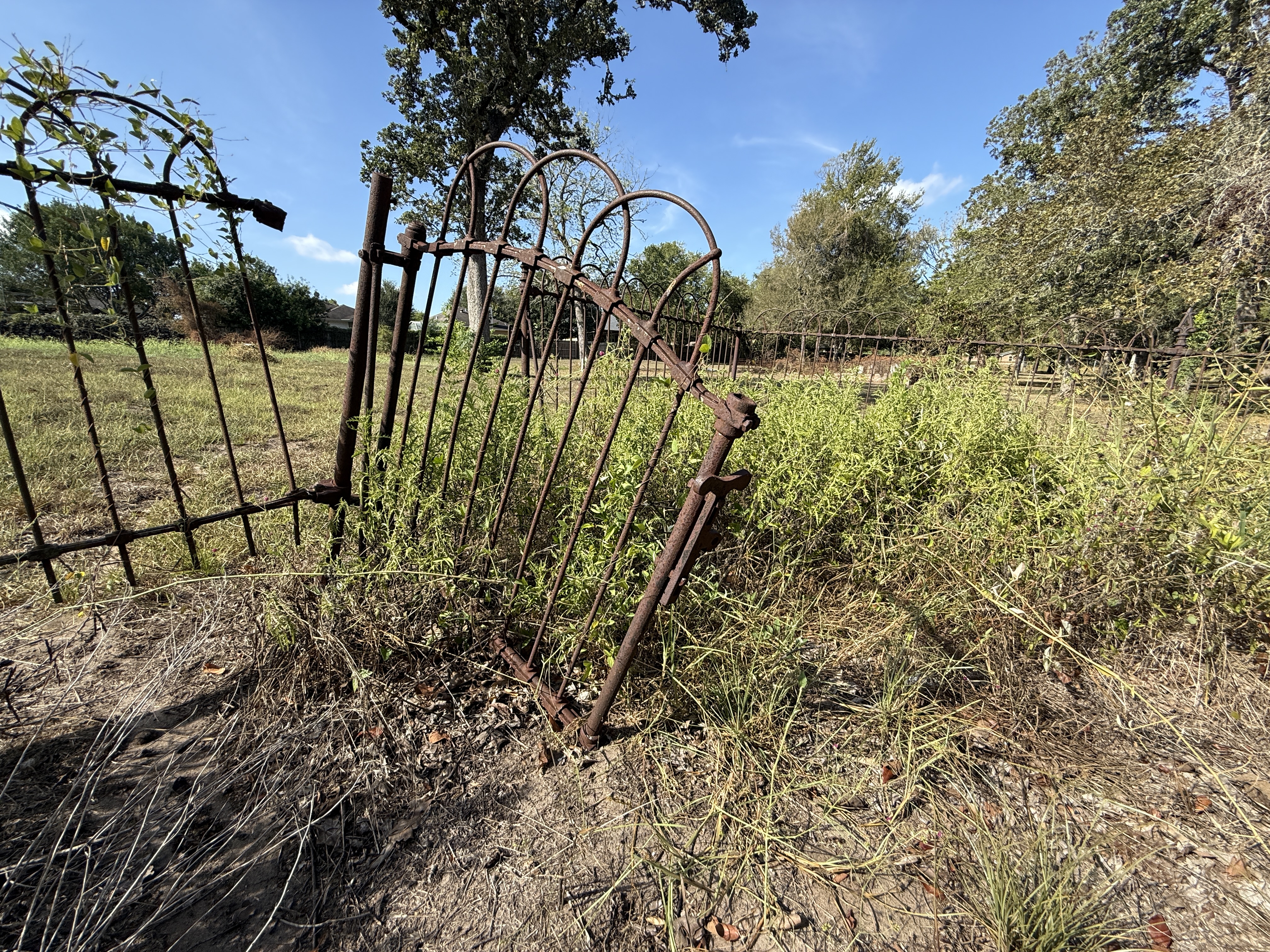
When Cheryl and I arrived at the cemetery, we were disappointed to see the sad condition of this historic burial ground. I have visited many old and historic cemeteries throughout Texas, and despite its beautiful setting beneath the shade of old trees, this one was in the poorest state of repair of any I have visited.
Weathered and broken headstones, overgrown areas, and the general deterioration of the grounds made it clear that time has not been kind to this place. Perhaps that is to be expected to some degree in a cemetery that dates to the earliest days of Texas, but I was still saddened by what we found.
These stones mark more than graves. They preserve the names and stories of people who lived through, and in some cases died during, one of the darkest chapters in Washington County history. Some survived the Texas frontier. Some served their country. Some helped build the community that became Brenham. And some were laid to rest here during the terrible yellow fever epidemic of 1867.
Places like this deserve to be remembered. And, whenever possible, they deserve to be preserved.
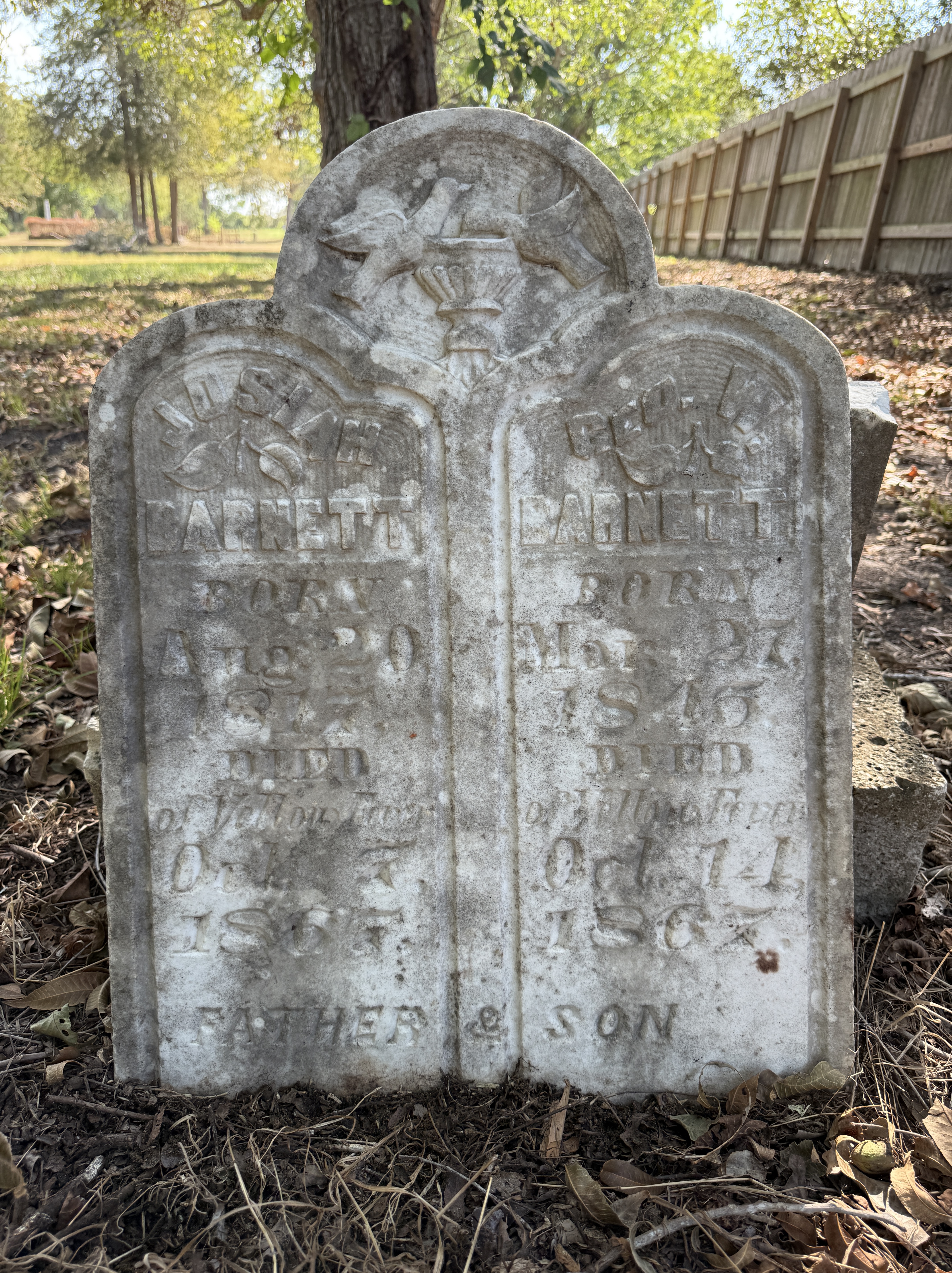
As I walked slowly among the old headstones—many with epitaphs nearly erased by more than a century of wind and weather—I found myself looking for one date in particular: 1867. I was able to find several.
Not far from the entrance is a headstone marking the burial place of a father and son who died during the yellow fever epidemic of 1867. Josiah, the father, was 53 when he succumbed to the fever. His son, George, was only 22 when he died a few days later.
A father and son. Two deaths in the same family during the same terrible epidemic.
How I wish I knew the rest of their story.
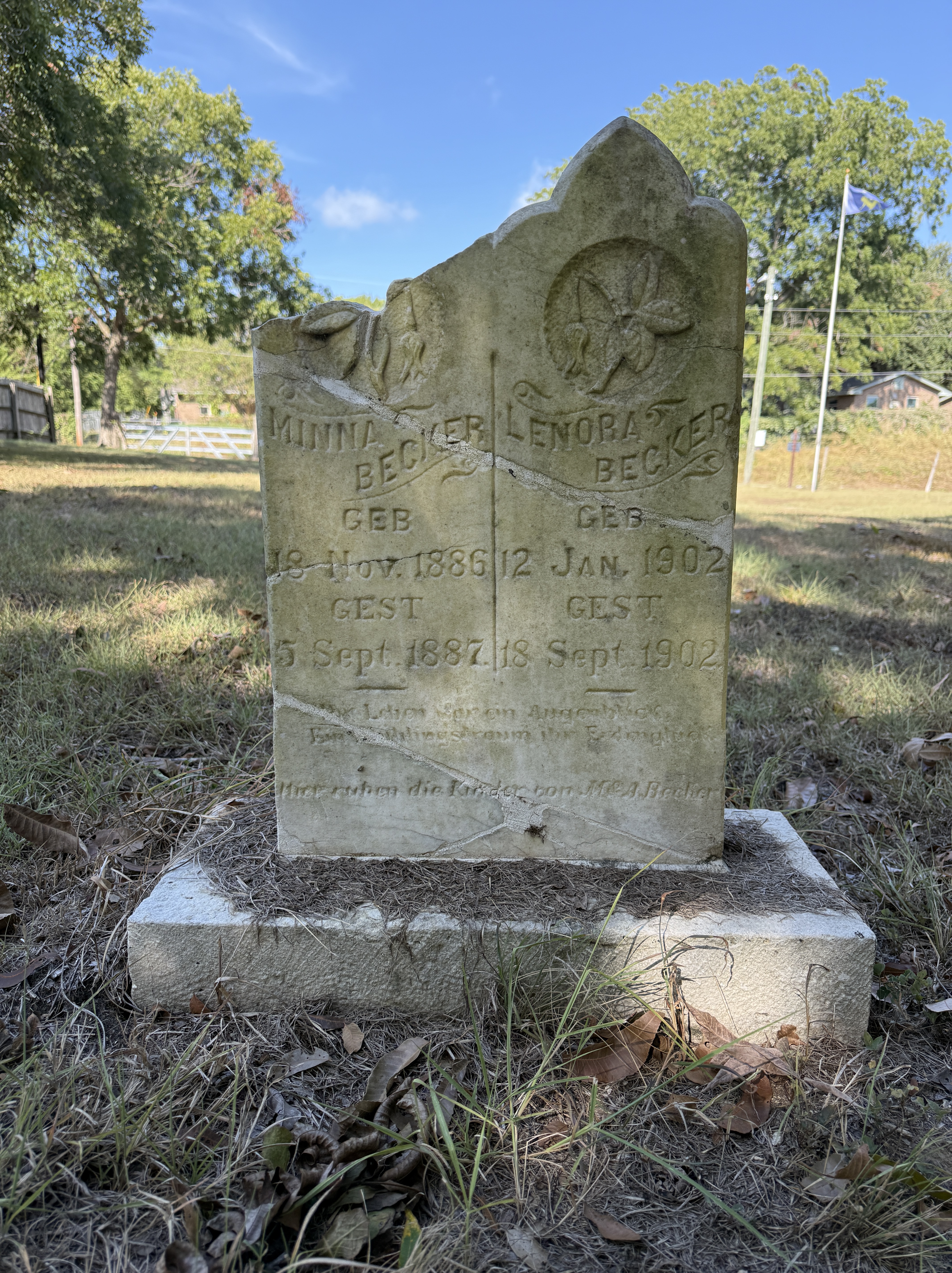
Not related to the yellow fever epidemic, but just as heartbreaking, another stone commemorates two children of the Becker family. Minna Becker died at only nine months of age in 1887. Lenora Becker died at eight months in 1902.
Their epitaph is written in German. Translated, it reads:
Beloved were our children.
Far from us is their resting place.
The little children now rest with the Savior.
I can only imagine the grief the Becker family experienced after the loss of these two little girls. And yet, more than a century later, the fading words carved into their headstone still testify to the family’s hope that their children were safe in the embrace of Jesus.
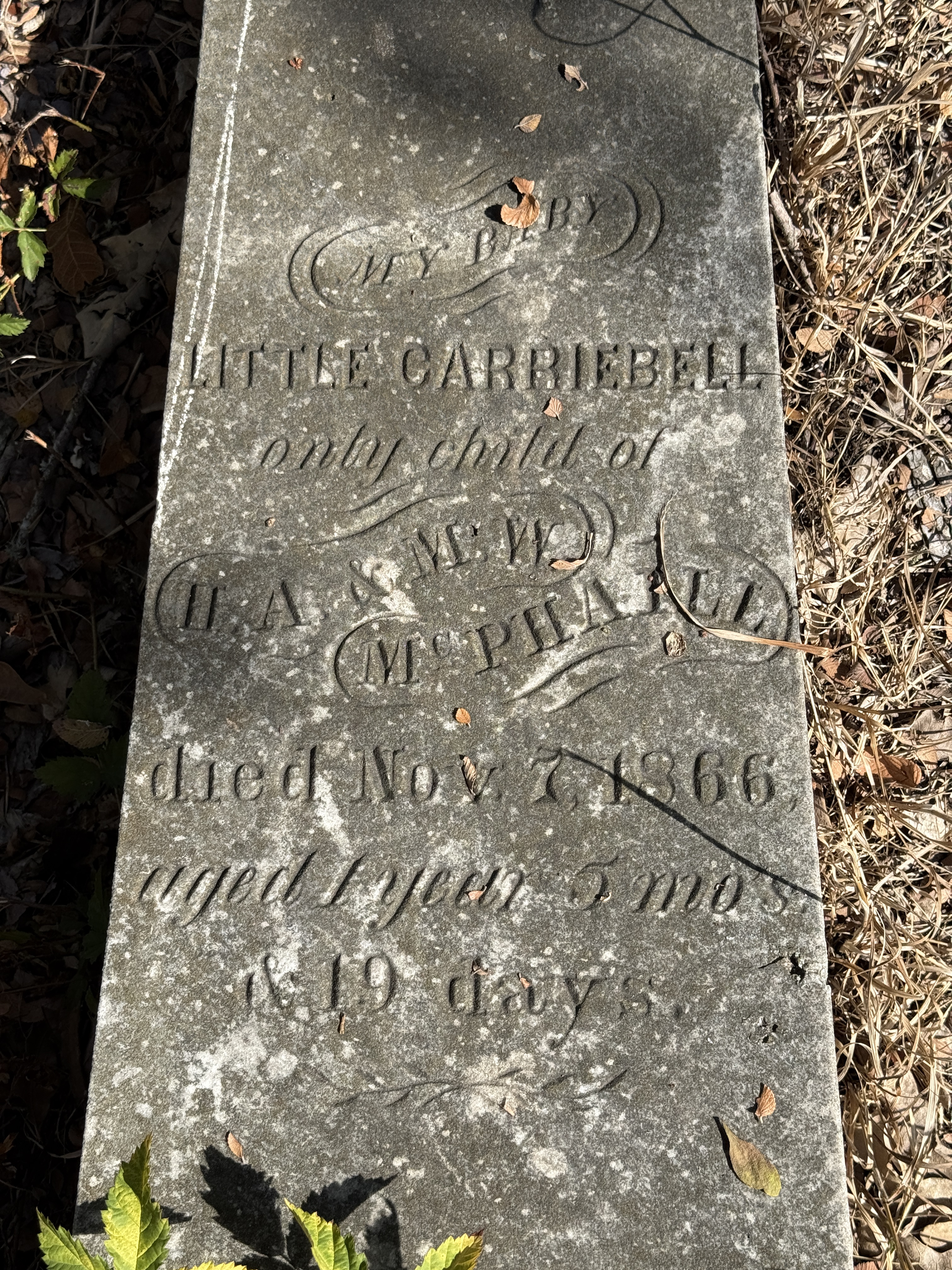
Another headstone, toppled over and lying on the ground, marks the grave of Little Carriebell. Her marker records that she was the only child of her parents and died at just 1 year, 5 months, and 19 days old.
Another devastating loss.
But what moved me most were two words carved in decorative script across the top of her headstone:
My Baby
Those words somehow make a century-old grave feel very close. How many times must Carriebell’s parents have whispered those same two words as they held their little girl, cared for her, and feared for her life? We may know almost nothing about Carriebell today, but those two simple words tell us something that dates and genealogical records never could: she was deeply loved.
These are only a few of the stories preserved by fading epitaphs—words that, once erased by time and weather, will no longer be able to tell their stories. And there are undoubtedly other stories beneath this ground, already lost to time, without even the remnant of a marker to acknowledge the lives once lived or the place where they were laid to rest.
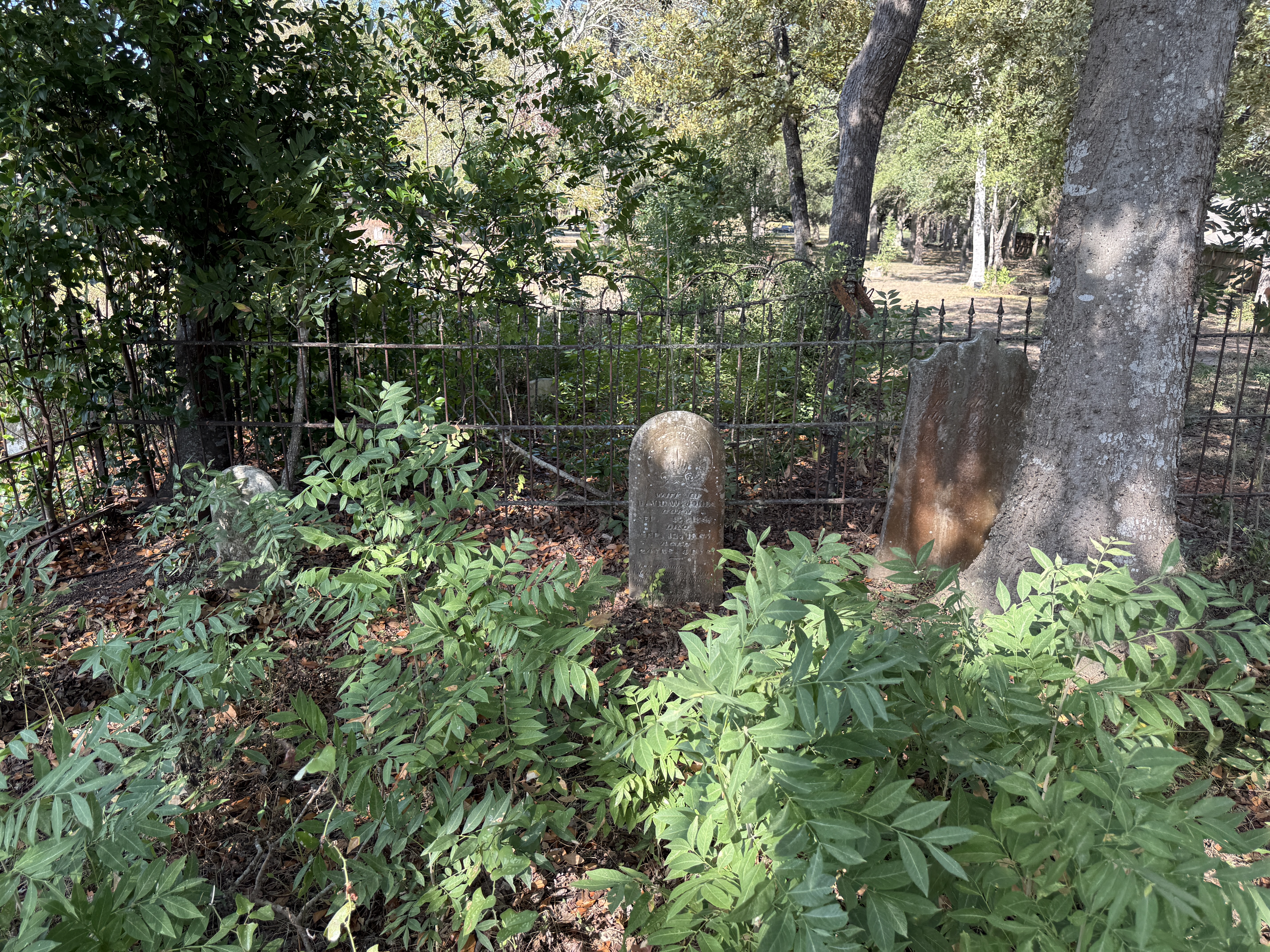
Perhaps that is what saddened me most about this old cemetery’s condition. We are not simply losing stones. We are losing stories.
During the terrible yellow fever epidemic of 1867, Brenham experienced an extraordinary number of deaths, and victims had to be buried quickly. Some graves may never have received permanent markers; others have been lost to time.
As I walked back toward the entrance, I realized this may be why old cemeteries matter. They are more than names and dates carved into stone. Each headstone represents a life—a person who was known, a person who was loved.
And every old cemetery holds stories worth remembering.


Hi Omar! Are you aware of FindAGrave.com? You could probably look up some of the interesting grave sites and cemeteries while you’re standing there looking at the grave. It is free. I’m related to several folks in the Reliance Cemetery and the Itasca Cemetery. I’m even related to Uncle Billy that has a Texas Historical Cemetery marker in Reliance. Interesting stuff.
LikeLike
Hi Karen,
Yes. FindAGrave.com is a useful tool. I do use it. Sadly, the Yellow Fever Cemetery is in such poor condition that it made it really hard to find graves. While walking around I noticed several smaller markers completely covered with grass and weeds. I took the time to pull away the weeds from one. I told my wife that if we lived closer I would get permission to start cleaning up the cemetery.
My heart was especially moved by the marker for Little Carrie Bell. I would love to see her marker restored and placed upright again. Also the stone marking the grave site of the father and son.
I will add both Reliance Cemetery and Itasca Cemetery to my list so that when I am anywhere near I can stop by to explore.
Thanks for reading and commenting.
LikeLike