I’ve loved poetry for as long as I can remember. My appreciation for poetry began in childhood, largely because of my grandfather’s influence and his own love of poetry. Some of my favorite childhood memories are of listening to him recite poems. I loved the rhythm of the words and how my grandfather could bring them to life simply by reciting them from memory.
In junior high school, one of my teachers invited me to participate in a University Interscholastic League (UIL) poetry competition. I memorized three poems for the competition, and I was hooked. I discovered that a good poem can tell a compelling story, stir the imagination, make you laugh, or leave you thinking.
Over the years, my appreciation for poetry has grown. And somewhere along the way, I developed a particular fondness for cowboy poetry. Cowboy poetry is a really cool genre of poetry unlike any other. It instantly appealed to me, not just for the stories, but for the storytellers themselves.
Like my grandfather, a good cowboy poet understands that how you tell a story can be just as important as the story itself. The rhythm, the pauses, the expressions, and the personality of the person reciting the poem all bring the words to life.
The poem that first hooked me on cowboy poetry was “The Fence That Me and Shorty Built” by Red Steagall, who was named the Official Cowboy Poet of Texas in 1991.
I still remember hearing Steagall recite this poem for the first time. His storytelling stirred my imagination. As I listened, I could picture the characters, the setting, and the events unfolding. But what made the experience especially memorable was that it reminded me of my grandfather reciting poetry when I was a boy. It was almost like hearing my grandfather all over again.
And what a great story!
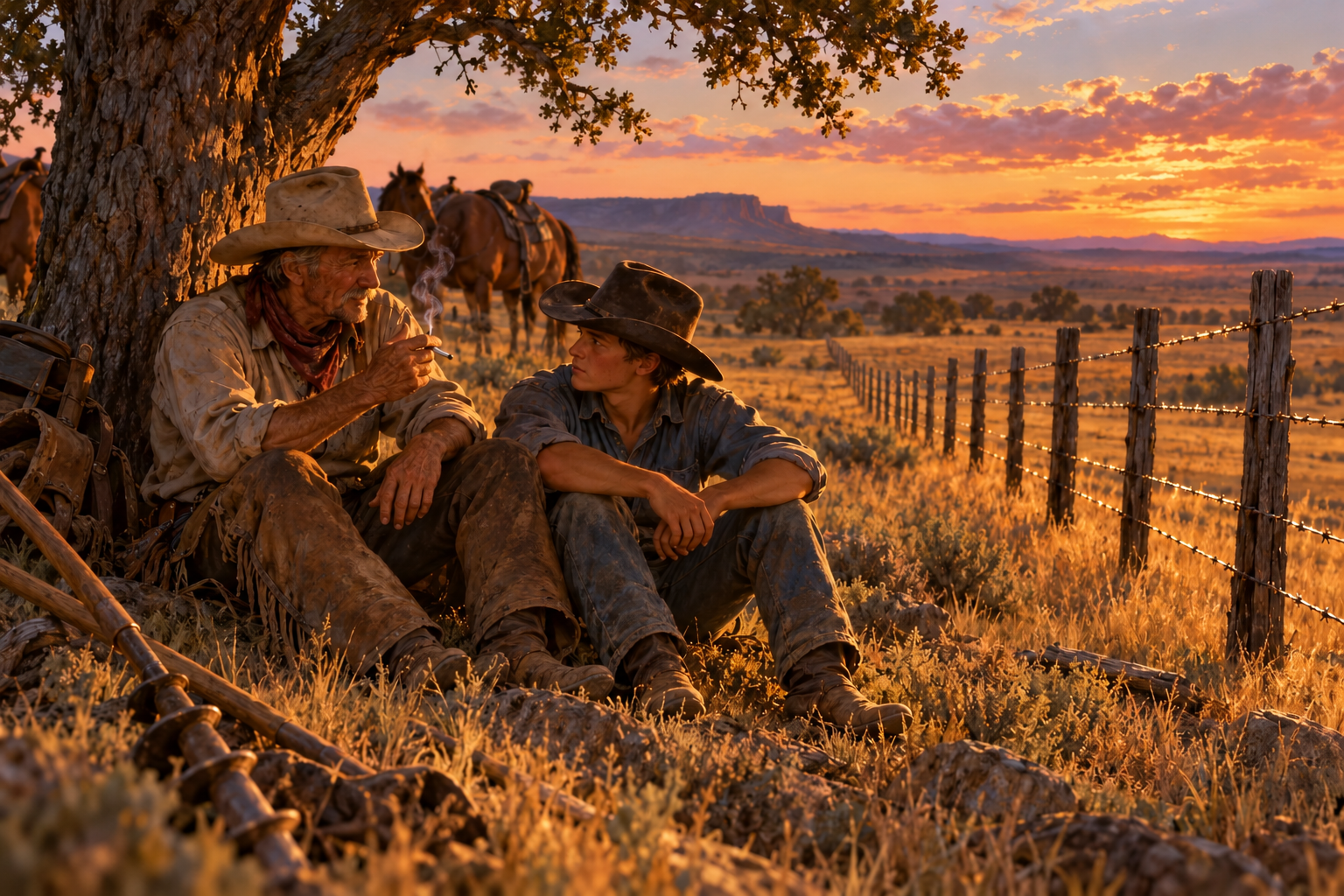
At its heart, this poem is about building a fence, an ordinary but necessary ranch chore. Ranchers know the hard work it takes to build and maintain fences. But when a young cowhand does a sloppy job, Shorty sees a chance to teach him an important life lesson: take pride in your work and do it right.
It’s a simple lesson, but it extends far beyond the ranch and building a fence. The poem reminds us that the quality of our work says something about our character.
There is an old cowboy proverb that says, “If you work for a man, ride for his brand. Treat his cattle as if they were your own.”
The same goes for fences: If you work for a man, build his fences as if they were your own.
That’s the work ethic cowboy poetry celebrates—doing an honest day’s work, taking pride in a job well done, and giving your best effort whether you get the credit or anyone is watching.
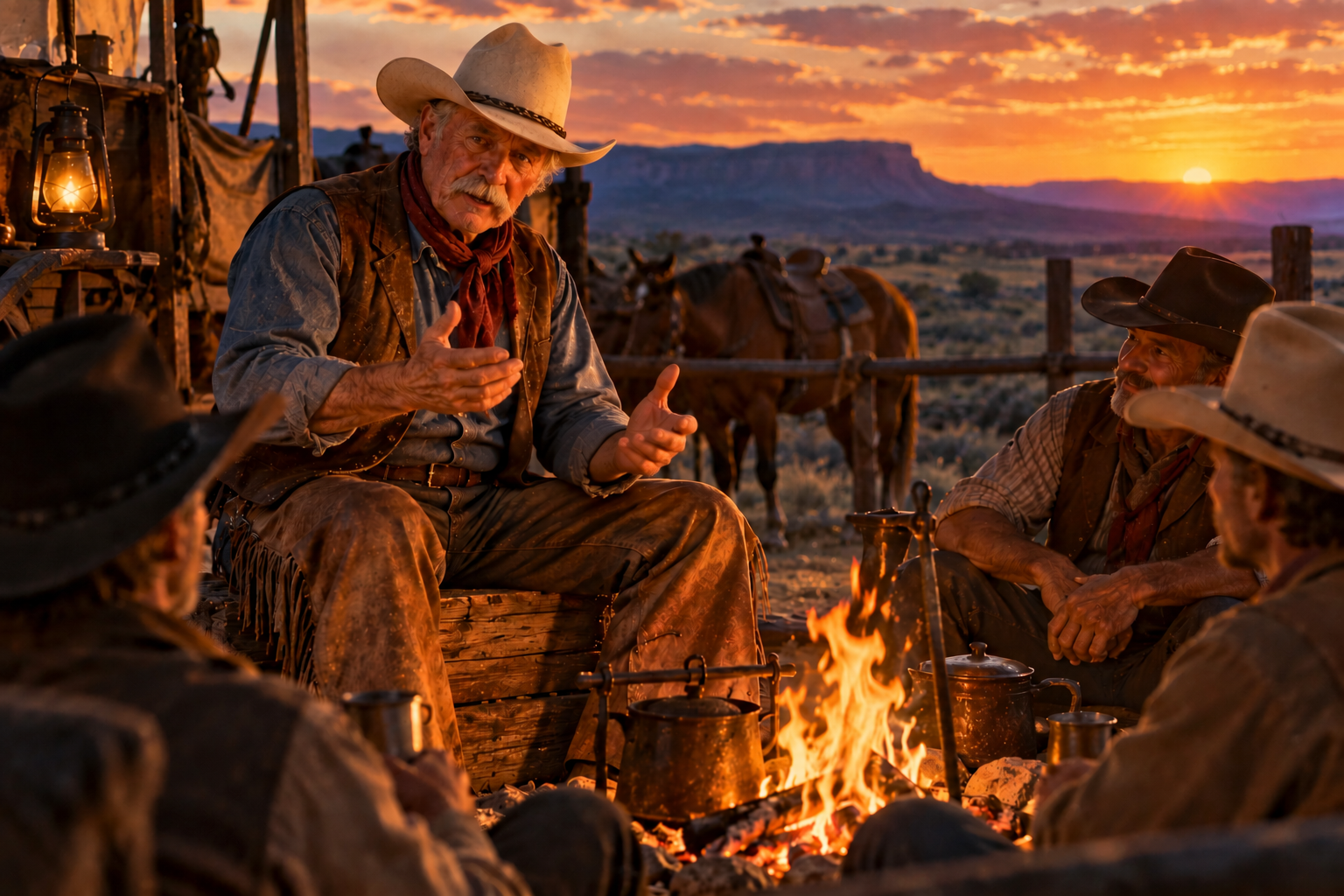
One reason I love cowboy poetry is that it reminds me of something we risk losing in our digitally saturated lives. Cowboy poetry takes us back to a time when people gathered around campfires to tell stories, share experiences, look one another in the eye, laugh and cry together, and learn from one another.
Cowboy poems do more than entertain. They give listeners something to think about long after the storyteller has finished speaking.
And perhaps that’s why cowboy poetry continues to appeal to me. Behind the characters, rhymes, and stories, there’s often a little wisdom worth tucking away in our saddlebags and carrying with us down the trail.
__________
⭑ Click here to watch and listen: The Fence That Me and Shorty Built

