⭑ The Painted Churches of Texas Series
Much of Texas history is found along the back roads—the two-lane roads that take us off the beaten path and into the small communities where immigrants settled generations ago. They came to Texas to build a new life. They established farms and homes, opened schools and stores, and organized communities. And almost everywhere they settled, they built churches.

Many of those churches still stand today, their steeples pointing heavenward along quiet country roads and in what remains of the small communities established by these early settlers. They stand as enduring reminders of the people who brought their faith, traditions, and hopes with them to Texas—and of the communities they built.
Among the most remarkable are the Painted Churches of Texas.
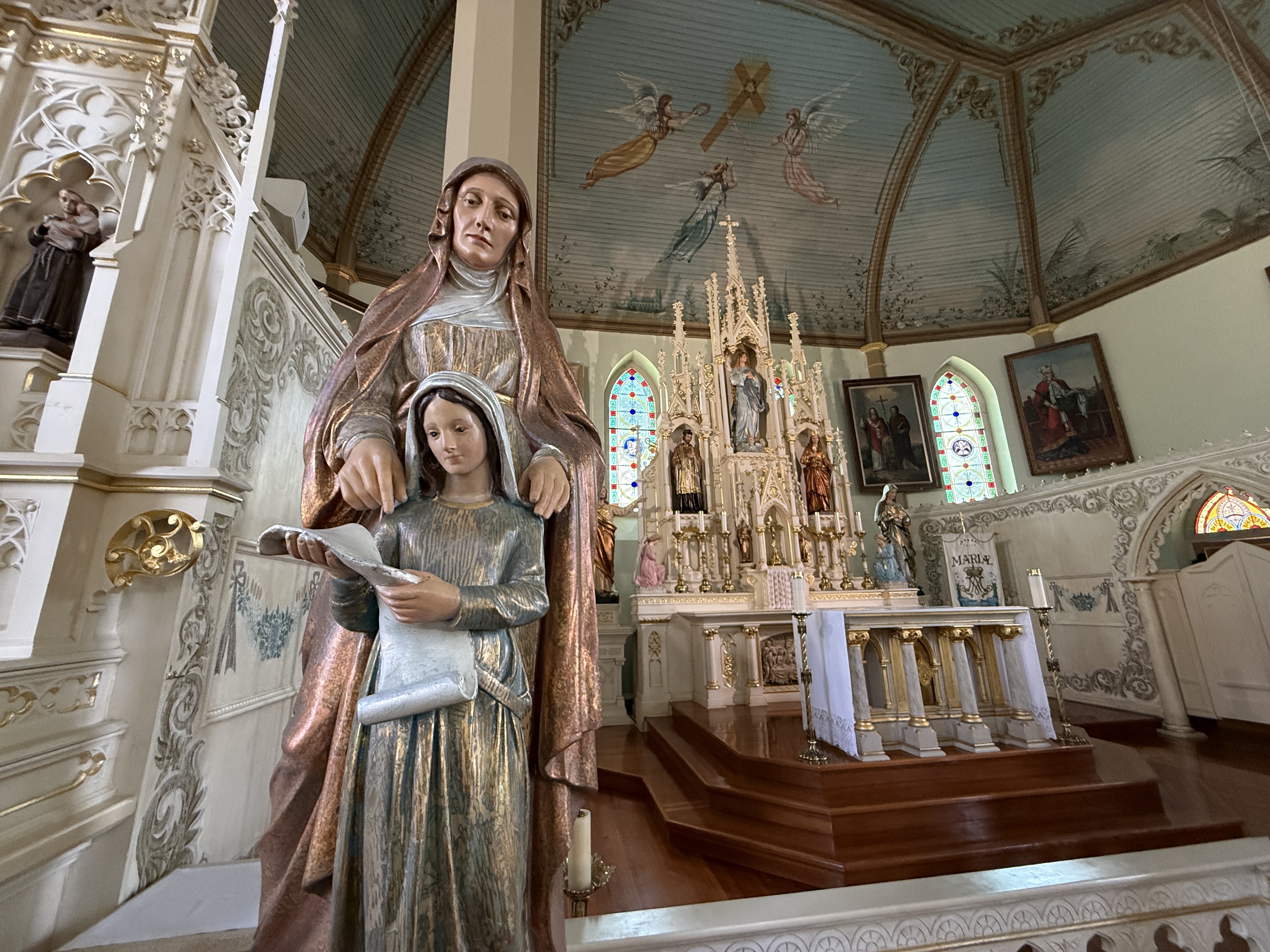
From the outside, some look rather ordinary and give a passing traveler little reason to stop. However, step through their doors, and you will discover something entirely different. The Painted Churches get their name from their beautiful interiors that stand in striking contrast to their often modest exteriors. Inside, you will see painted ceilings, elaborate stenciling, murals, stained glass, decorative columns, and remarkable craftsmanship inspired by the churches their builders remembered from Europe.
What appears ordinary from the road often becomes extraordinary once you step inside.
Faith was important to the Czech, Moravian, German, Wendish, and Polish immigrants who settled in Texas. The churches they built became the spiritual and social centers of their respective communities. There they worshiped God, often in their native languages. They baptized their children, celebrated marriages, buried their dead, and gathered with neighbors who shared their faith and heritage. In their churches, they also maintained connections to the traditions and culture they had brought with them from Europe.

These churches were more than places of worship. They were at the heart of community life. And what you see inside them today tells you a lot about the hearts of those who built them. Many of the immigrants who built these churches were not wealthy. They could not reproduce the magnificent cathedrals of their native lands. But they did have other options. They had paint.
Skilled craftsmen and artists used paint to transform their churches’ interiors into beautiful places of worship. They made ordinary wooden columns look like marble. They transformed ceilings into the heavens. They employed stenciling, murals, wood graining, and other decorative techniques—all with paint.
They used what they had to create something beautiful for God.
Most of the churches on my Painted Churches bucket list are active places of worship. They are not museums or monuments to Texas history. They are places where Texas history is still alive. I’ve already checked a few off the list but there are plenty more waiting down a farm road somewhere. And that’s exactly the kind of bucket list I like. Small towns. Back roads. Old churches. Texas stories.
Below is the list of Painted Churches divided into two groups. The first 15 churches are listed under the National Register of Historic Places because of their decorative interior painting.
• Ascension of Our Lord Catholic Church in Moravia
• Church of the Blessed Virgin Mary, Queen of Peace in Sweet Home
• Church of the Guardian Angel in Wallis
• Church of the Immaculate Conception of the Blessed Virgin Mary near Halletsville
• Forest Baptist Church in Amarillo
• Forest United Methodist Church in Paris
• Nativity of Mary, Blessed Virgin Catholic Church in High Hill
• Saints Cyril and Methodius Catholic Church in Shiner
• St. John the Baptist Catholic Church in Ammansville
• St. Joseph Catholic Church in Galveston
• St. Mary’s Catholic Church in Fredericksburg
• St. Mary’s Catholic Church in Umbarger
• St. Mary’s Church of the Assumption in Praha
• St.Peter’s Catholic Church in Lindsay
• Wesley Brethren Church in Wesley
The term Painted Churches of Texas is now commonly used more broadly than the original National Register designation. The following churches are on that broader list and are included in my personal Painted Churches bucket list.
• Saints Cyril & Methodius Catholic Church in Dubina
• St. John the Baptist Catholic Church in St. John
• St. Paul Lutheran Church in Serbin
• Immaculate Conception Catholic Church in Panna Maria
• St. Mary’s Catholic Church in Plantersville
• Holy Trinity Catholic Church in Corn Hill
• Sacred Heart Catholic Church in Palestine
• St. Stanislaus Catholic Church in Bandera
• Sacred Heart Catholic Church in Corpus Christi
• St. Stanislaus Kostka Catholic Church in Anderson
• St. Louis Catholic Church in Castroville
• Our Lady of Grace Catholic Church in La Coste

