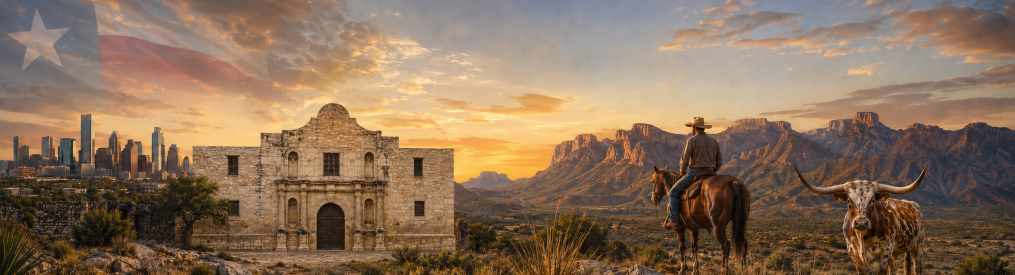
Cemeteries, with few exceptions, do not rank high on lists of places to visit. But, perhaps they should. Cemeteries, after all, are the resting places of those who, to whatever degree, have influenced the course of our own lives. If we look back and connect the dots, then the dots in our respective stories will eventually lead us back to a cemetery — perhaps to the grave of a family member or a friend or some historical figure whose life had a far-reaching impact.
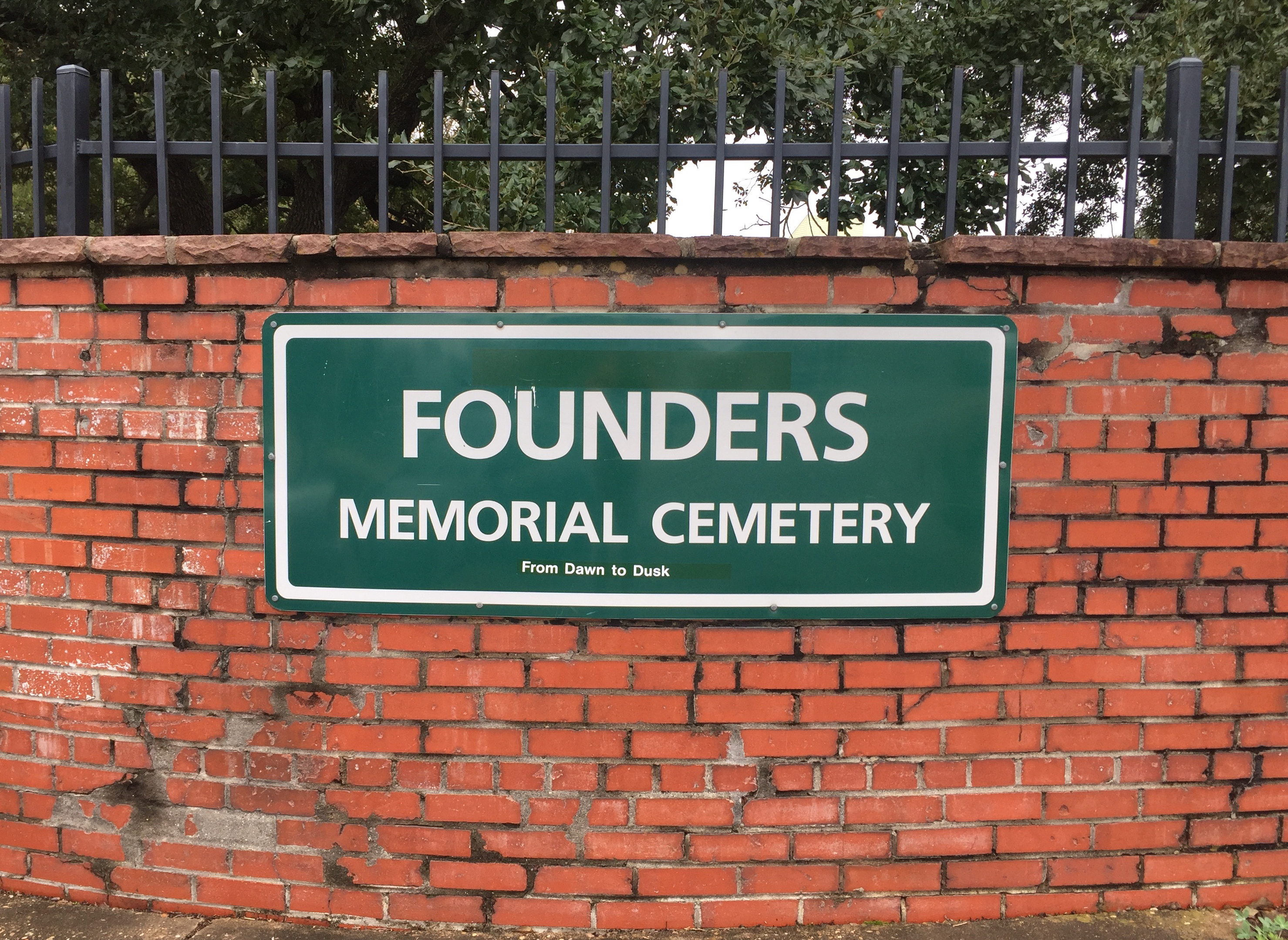 The Founders Memorial Cemetery is the oldest burial ground in Houston and certainly one of the most interesting. Dedicated by the city as a memorial park in 1836, this tranquil two-acre cemetery is the final resting place of several figures important to the history of Houston and the Lone Star State. A marker at the cemetery notes: “This park is dedicated to the men and women — many of whom sleep here — who founded and defended the Republic of Texas. May they rest in peace”
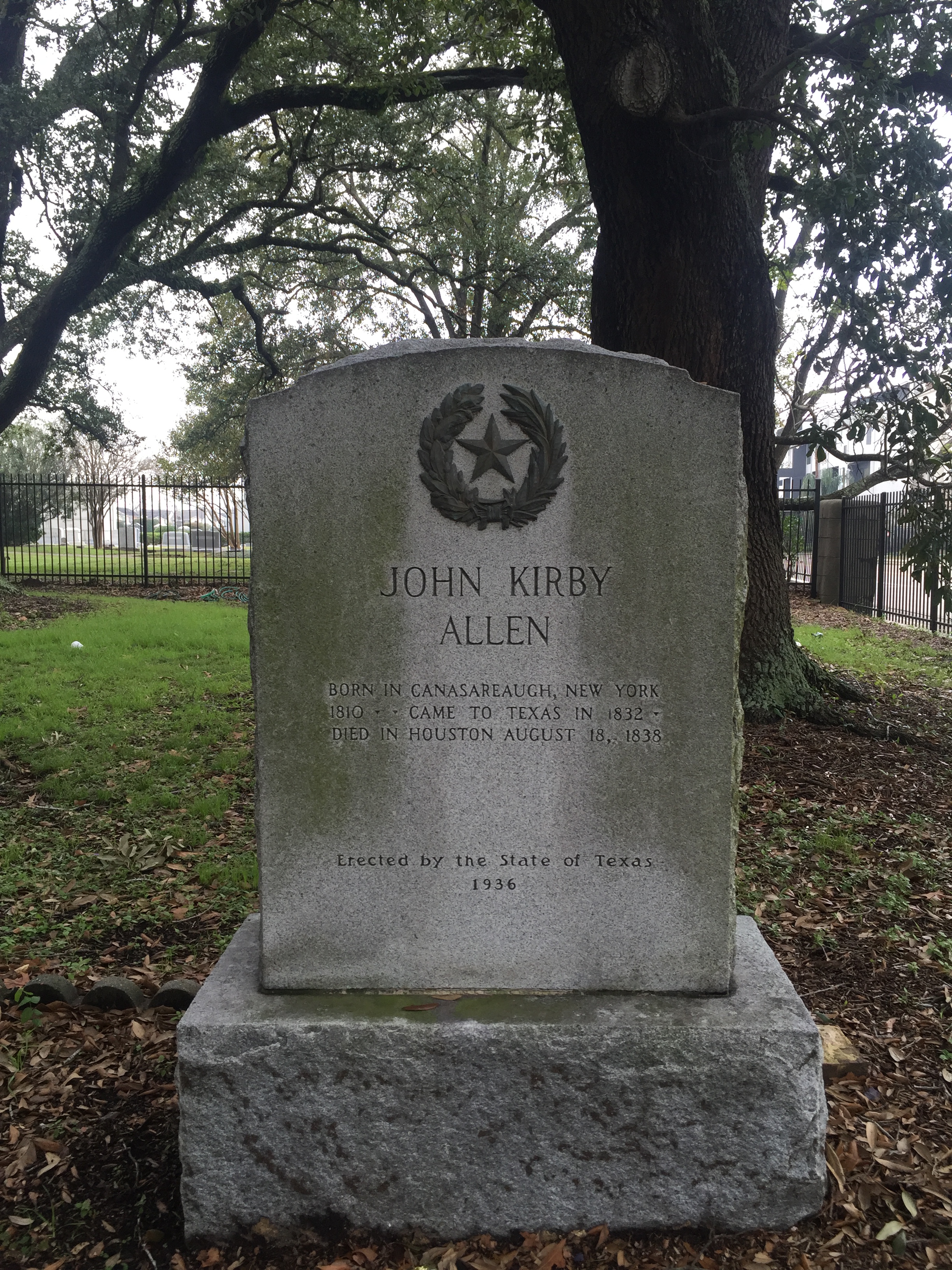 The land for the cemetery was donated by the Allen Brothers in 1836, the same year these brothers founded the city of Houston. In those years the cemetery was located at the outskirts of town. Today, it is surrounded by skyscrapers and adjacent to Rose of Sharon Missionary Baptist Church in Houston’s Fourth Ward — once known as Freedman’s Town, a community originally settled by freed slaves.
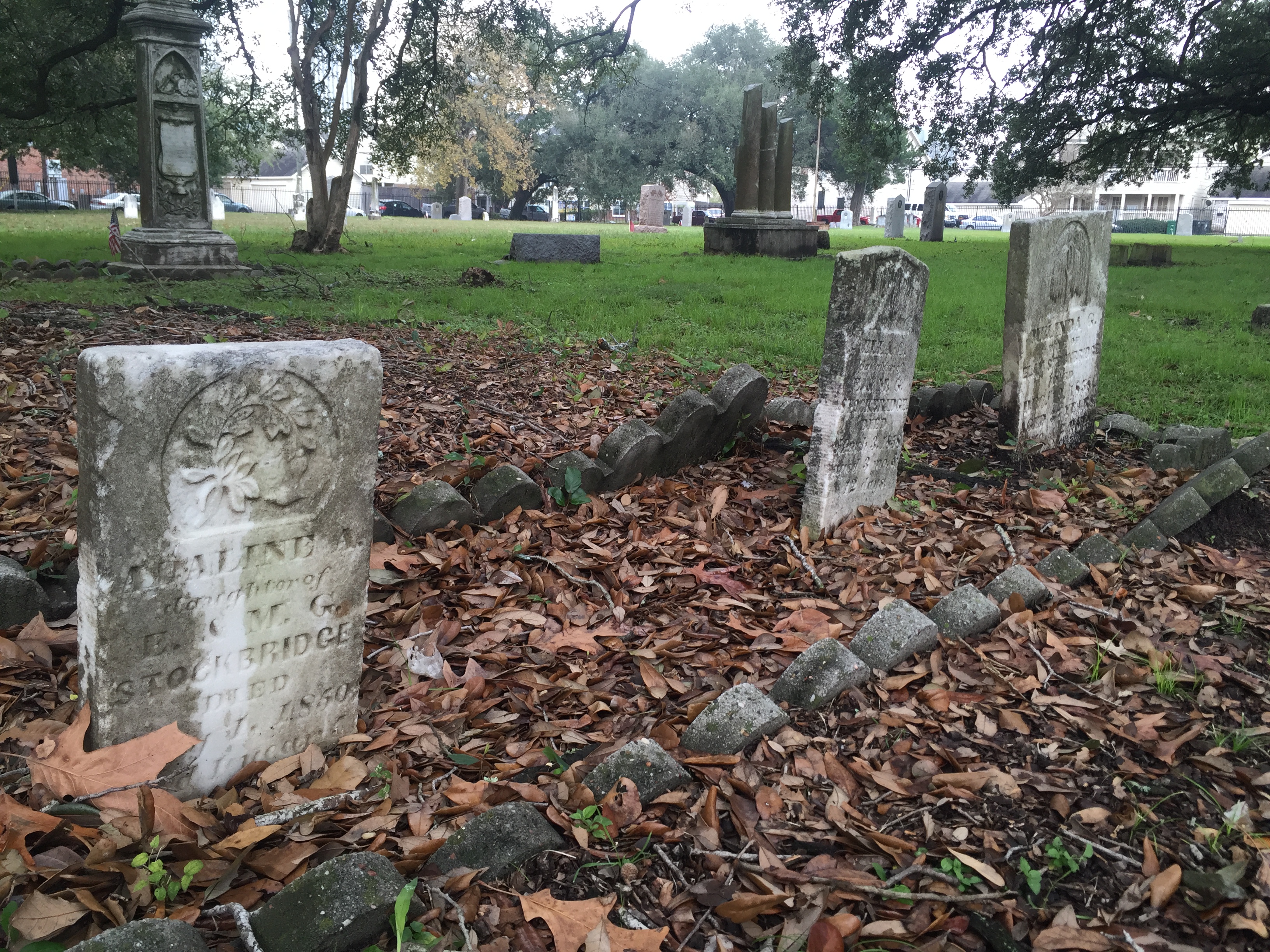
 No one knows for sure how many people are buried in this old cemetery. The city did not maintain the best of burial records in its very early days. According to a conservative estimate, there may be as many as 850 graves at the site. During the yellow fever and cholera epidemics of the 1850s, many people died and were quickly interred, some in mass graves. What we do know is that there are approximately eighty headstones at the cemetery, many so weather-beaten that their epitaphs are indecipherable.
 There are 28 Texas Centennial Monuments at the cemetery, more than in any other cemetery in Texas except the State Cemetery in Austin. These mark the graves of veterans of the Battle of San Jacinto, dignitaries who served the Republic of Texas, prominent pioneer families and Houston citizens, John Kirby Allen who co-founded Houston, the mother of Republic of Texas President Mirabeau B. Lamar, and a signer a signer of the Texas Declaration of Independence.
 Founders Memorial Cemetery is located just west of downtown Houston at 1217 West Dallas. The entrance is located at the intersection of West Dallas and Valentine Street. The memorial park is maintained by the Houston Parks and Recreation Department and is open from dawn to dusk. If you are planning to visit the San Jacinto Monument or other historical sites in the greater Houston area, then add this cemetery to your list. Walk slowly and respectfully among the graves of those who helped shape the history of the Lone Star State.
Author: Omar C. Garcia
Halfmoon Reef Lighthouse
I love the old tall tale about the lighthouse and the naval ship. As the story goes, a naval ship navigating its way through the fog saw a light in the distance. Fearing that they were on a direct collision course with the approaching vessel, the naval ship radioed and requested that the other vessel change course. The other vessel replied that the naval ship should do the same. The naval ship reiterated their request, boasting that it was the largest ship in the fleet. The other “vessel” promptly replied, “I’m a lighthouse. Your call.”
 Of the sixteen lighthouses originally constructed along the Texas coast, seven lighthouses remain. These guiding beacons are situated along the Gulf Coast from the southernmost tip of Texas to the mouth of the Sabine River along the Texas-Louisiana border. Some have been decommissioned and stand as silent sentinels along the Texas coast. Others still send their piercing light into the Gulf night.
 The Halfmoon Reef Lighthouse is the Lone Star State’s oldest surviving wooden lighthouse. Built in 1858, the hexagonal-shaped lighthouse played a key role in guiding ships into Matagorda Bay. For years, the Matagorda Island Lighthouse, built in 1852, guided ships safely into the bay. However, many large ships often ran aground on Halfmoon Reef, a shoal on the eastern side of the bay. So, the Halfmoon Reef Lighthouse was constructed and strategically situated on the southern tip of Halfmoon Reef to warn ships to avoid the jagged rocks hiding beneath the surface of the water.
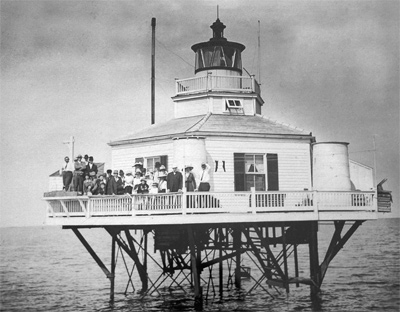 Surrounded by water, the Halfmoon Reef Lighthouse was an island unto itself. Twice in its history, a husband and wife shared the responsibility of manning the lighthouse. Stephen Hill, one of the lighthouse keepers, had a daughter named Sadie who was prone to sleepwalking. After her parents found her sleepwalking dangerously close to the edge of the lighthouse platform, they decided to take action to protect their daughter. The solution? They tied one end of a string to Sadie’s big toe at bedtime and other end to her sister’s big toe. Problem solved!
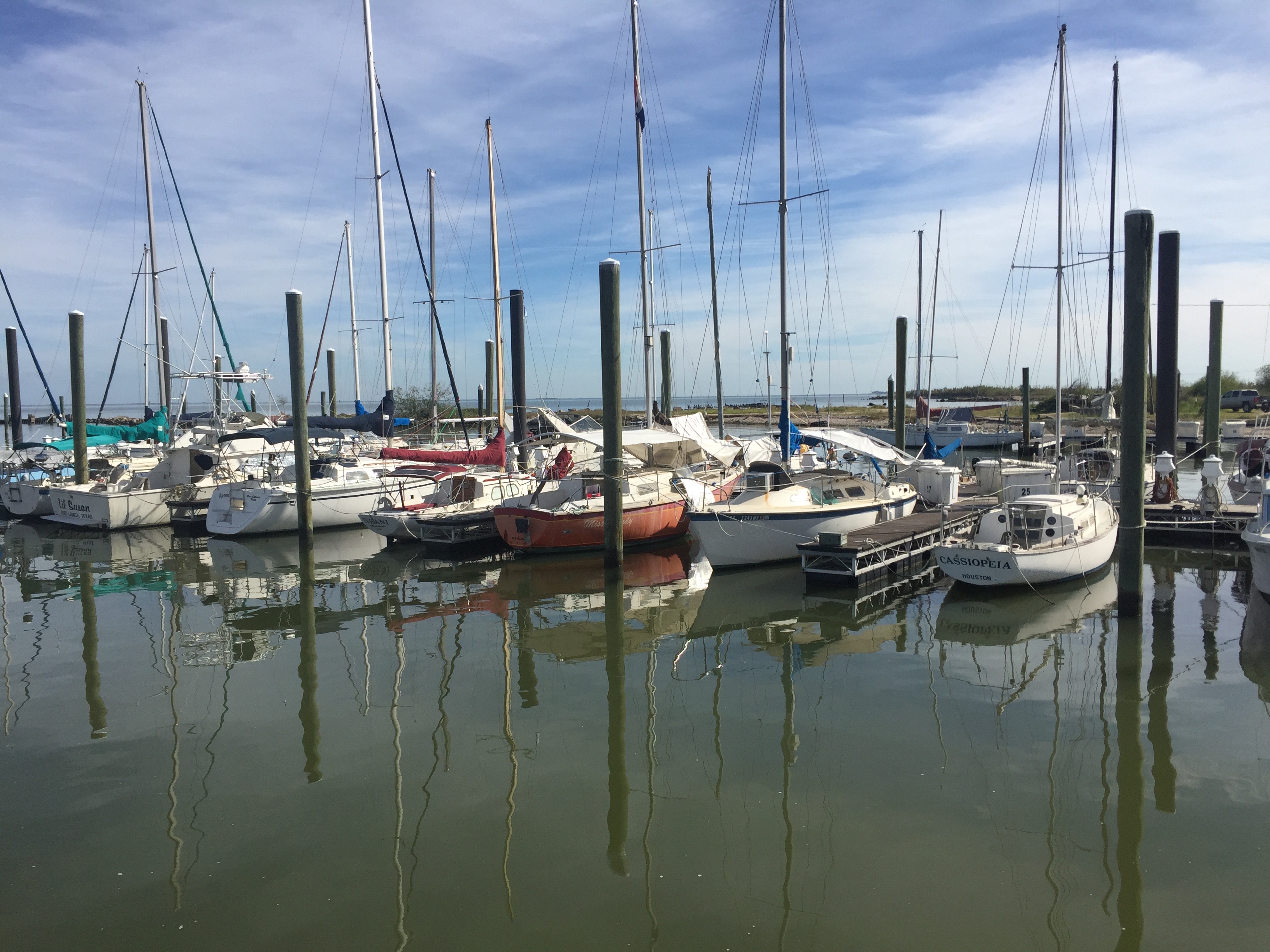 The Halfmoon Reef Lighthouse survived the hurricanes of 1854, 1875, and 1886. However, the lighthouse was damaged by the hurricane of 1942 and was consequently decommissioned. The structure was moved from its watery perch to land owned by the late W.H. Bauer in Point Comfort. In 1978, Bauer donated the lighthouse to Calhoun County Historical Commission.
 In the mid-1980s, the lighthouse was moved to its present location in Port Lavaca. Today, the Halfmoon Reef Lighthouse is regarded as the city’s most important landmark, welcoming travelers entering the city from the East on Highway 35. If you find yourself traveling down Highway 35, slow down and take a few minutes to visit the lighthouse and enjoy this little slice of Texas history.
Woman Hollering Creek
The Lone Star State has no shortage of places with interesting names. Perhaps one of the most curious is Woman Hollering Creek. This creek with the odd name runs under Interstate 10 between San Antonio and Sequin near Exit 591.
 There are a number of tales about how the creek got its name but none of them are definitive. Nevertheless, each of these tales share a chilling common denominator — a hollering or crying woman. The various stories about this distressed woman have endured for generations.
Writer Sandra Cisneros offers one explanation in her book “Woman Hollering Creek and Other Stories.” Cisneros links the name of the creek to the legend of La Llorona. The term “llorona” (yo ro na) is the Spanish word for a weeping or wailing woman.
The woman in Cisneros’ story allegedly drowned her own children in a creek. According to this legend, this woman is often heard weeping at night for the children she lost. La Llorona evolved into a Hispanic version of the boogeyman. Hispanic mothers have long told their kids to stay clear of rivers and streams at night or La Llorona might get them.
Other explanations for the name of the creek are a variation on this theme. One story suggests that a distraught mother drowned her children after her husband was brutally killed by Indians. Fearing her children might suffer a similar fate, she drowned them instead. Some believe that her spirit wanders along the creek, sobbing and crying for her lost children.
While the various stories about how the creek got its name are interesting, the real story is forever lost. We’ll never know for sure why this particular creek was named Woman Hollering. We can only speculate and err on the side of heeding the advice of those Hispanic moms who warned their kids to steer clear of La Llorona’s riparian domain.
 When I visited the creek, in broad daylight, I parked along the road and then walked down to the water. I bushwhacked my way a short distance along the banks of the creek. Perhaps it’s because of the name of the murky-water creek or because of my overactive imagination, but I found the place to be kind of creepy. The dark water only added to the discomforting feeling.
While I didn’t hear any distant wailing, I do understand how the name of a place can mess with your mind. That’s why I prefer Texas creeks with less creepy names — like Catfish, Big Pine, Beaver, Mulberry, or Sweetwater. So, as for me, you won’t find me anywhere near Woman Hollering Creek at night or any other time. I have no desire to meet La Llorona!
First Day Hikes
The First Day Hikes program is a cooperative initiative among the nation’s state parks to get more people outside. Last year, an estimated 41,000 people across the United States logged more than 72,000 miles on park trails. Today, more than 75 state parks are offering guided hikes and other outdoor events.
 This past year was a wet one in the Lone Star State, making it a challenge to hike and bike the trails at many of our state parks. Even so, I managed to get plenty of use out of my Texas State Parks annual pass. When it comes to hiking, I tend to agree with the philosophy of renowned explorer Sir Rannulph Fiennes: “There is no such thing as bad weather, only inappropriate clothing.”
 This morning, my wife Cheryl and I laced up our hiking boots and headed to Brazos Bend State Park for our First Day Hike. The cold weather and light drizzle did not dampen our spirits. We just donned our Frogg Toggs rain gear and took a leisurely stroll down one of my favorite trails at the park. Meanwhile, park rangers led other groups of hikers at Brazos Bend on their First Day Hike.
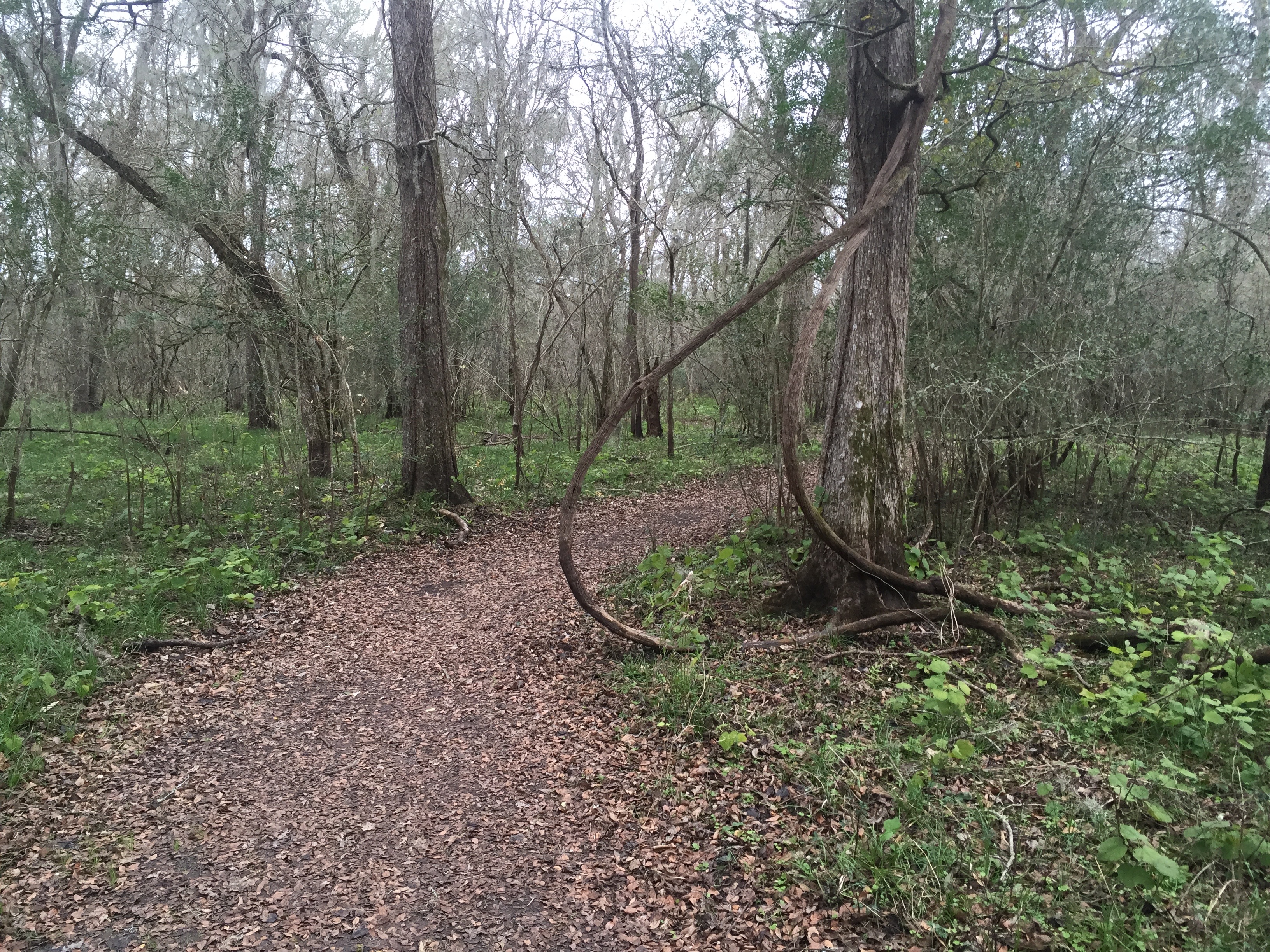 Today marks the fifth year that the Texas Parks and Wildlife Department has offered First Day Hikes. After the untold numbers of holiday calories consumed by the average Texan, the First Day Hikes initiative is the perfect way to get folks to burn off some of those calories by moving in the direction of a healthier and more active lifestyle. Hopefully, many who participate in First Day Hikes will be inspired to savor the beauty of our outdoor spaces throughout the coming year.
 Cheryl and I certainly enjoyed our slow walk through the woods on this first day of the new year. Hiking with Cheryl made the hike far more interesting for me. As a Texas Master Naturalist, she pointed out a lot of interesting stuff about flora and fauna along the trail. Our walk reminded me of something David Henry Thoreau said: “An early-morning walk is a blessing for the whole day” — and indeed it was.
 If you did not hike today, that’s ok. But, don’t wait until next year for your First Day Hike. Make any day of the new year the day of your first day hike. Hopefully your hike will inspire you to spend more time outdoors this year. Our Texas State Parks offer access to some of the most beautiful scenery in the world. So, find a park near you, lace up your boots, and hit the trail. In the words of Thoreau, you will find the experience to be a blessing.
J.P. Bombers Burgers
J.P. Bombers Burgers opened its doors three years ago on a you-gotta-be-going-there stretch of McArdle Road in Corpus Christi. Set back a good distance from the road, this little burger joint is housed on the north end of a modest little strip center. If you are not careful, you can drive right past the place like I did.
 Since opening its doors, J.P. Bombers has managed to earn a reputation as one of the best places in the Sparkling City by the Sea to find a great burger. After reading some online reviews I knew I had to go there. And I made sure to go with a big appetite. I arrived hungry and with all of the anticipation of a kid waiting to unwrap a birthday gift.
The moment my wife, my daughter, and I walked through the door, we were greeted with a “Welcome to Bombers. Sit anyplace you like.” We sat next to a table of city utility workers and near a table of older ladies enjoying a game of cards. We instantly loved the laid back feel of the place.
 The menu listed some pretty cool combinations of burgers, in fact, lots of interesting choices. A young lady named Jessica waited on us and recommended the Atomic Burger since this was my first time. This burger features a large patty slathered in melted American cheese and garnished with a healthy helping of grilled onions, jalapeños, and bacon — all of this on a delicious toasted bun.
 My wife and daughter opted to share the sliders with a side order of tater tots. For an appetizer, we ordered hand-breaded fried pickle chips. The fried pickles arrived with some Ranch dipping sauce. Delicious.
 I asked Jessica about the name of the place. She told us that J.P. stands for Jalapeño Poppers, one of their specialties. She also told us that the business is entirely family owned and operated. Her in-laws, in fact, are the owners. Her family, she told us, cares deeply about serving the best and offering good service.
 As for my burger — Wow! Everything about the Atomic Burger was delicious. The meat was perfectly cooked. The bun was amazing. The grilled onions, jalapeños, and bacon were diced and evenly spread on top of the cheese and meat, making the flavor in every bite consistently good. Thoroughly enjoyed this burger and would definitely order it again.
For the more adventurous eaters, Bombers has their version of a big burger challenge — a burger with a whopping 48 ounces of meat served with four trimmings, a side of fries, 3 stuffed Jalapeño Bombers, and a 32 ounce drink. If you can eat this behemoth burger in 40 minutes or less you earn bragging rights and get your pic added to the wall. The burger is free if you meet the challenge, otherwise be ready to fork over some dough!
Bottom line — Bombers is fantastic. I not only recommend it, I can hardly wait to go back. If you are headed to Corpus Christi anytime soon, swing by 6109 McArdle Road and try one of their amazing burgers.
Don Pedrito Jaramillo
Known as the Healer of Los Olmos and the Saint of Falfurrias, Don Pedrito Jaramillo remains highly regarded by folks in South Texas. He was born to Indian parents sometime around 1829 in Guadalajara, Mexico. After the death of his mother in 1881, Jaramillo moved to the Los Olmos Ranch near present-day Falfurrias.
 According to legend, this poor Mexican laborer fell off his horse and broke his nose while working as a cowboy on the Los Olmos Ranch. The pain of his injury kept him awake for several days. When he was finally able to sleep, he was told by God in a dream that he had been given the gift to heal people.
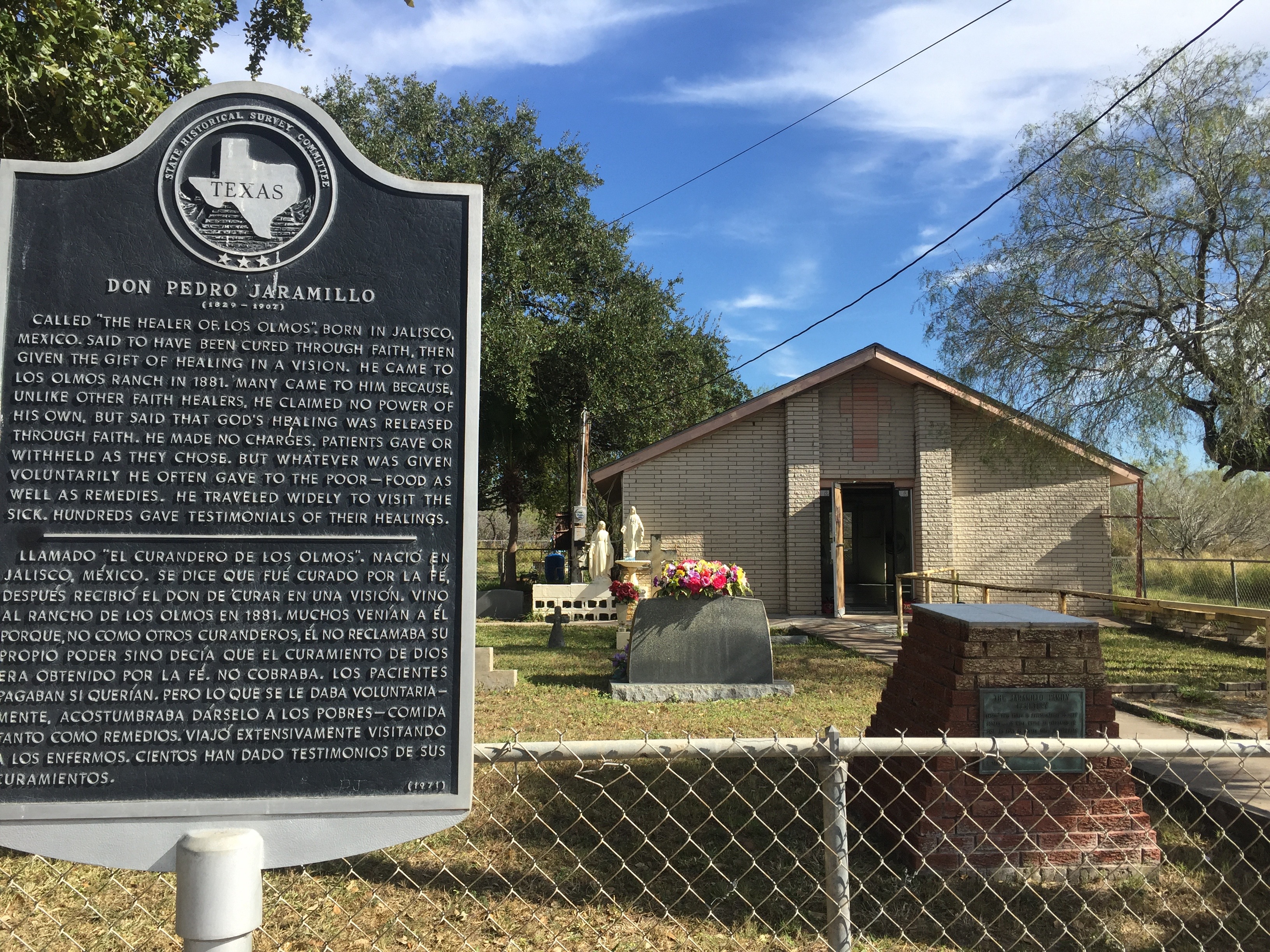 Don Pedrito, as he affectionately came to be known, started treating the sick and injured who lived on the surrounding ranches. He quickly earned a reputation as a curandero, the Spanish word for healer. Curanderos are a part of the rich texture of Hispanic culture in Texas. In days when doctors were few and far between and folks had little money to pay a physician, curanderos offered palliative solutions and cures to the poor.
 Don Pedrito’s cures included mud packs (what he had used when he broke his nose), various poultices, herbal plants, and drinking large quantities of water. The compassionate healer often provided what he prescribed to his impoverished patients. His cures were so effective that people from throughout the region and, reportedly, from as far away as New York sought him out. In the years before easy access to medical care, Don Pedrito was to the folks of his day what dialing 9-1-1 and emergency rooms are to us today.
Although Don Pedrito never charged for his services, he regularly received unsolicited donations. He gave much of this money to local churches and kept some on hand to fund a large food pantry to help people in need. By some reports, Don Pedrito would spend hundreds of dollars at a time to buy food to give away. When he died in 1907, he still had more than $5,000 in 50-cent pieces set aside for his philanthropic work.
 Today, more than a hundred years after his death, the faithful and the curious continue to visit the shrine of this South Texas folk saint — his final resting place. The whitewashed interior walls of the modest building are adorned with handwritten notes and photos of those either seeking help or who claim to have been helped or healed as a result of their visit to the shrine of Don Pedrito. Don, by the way, was not Pedro Jaramillo’s first name. Don is a title of esteem and respect in the Hispanic community.
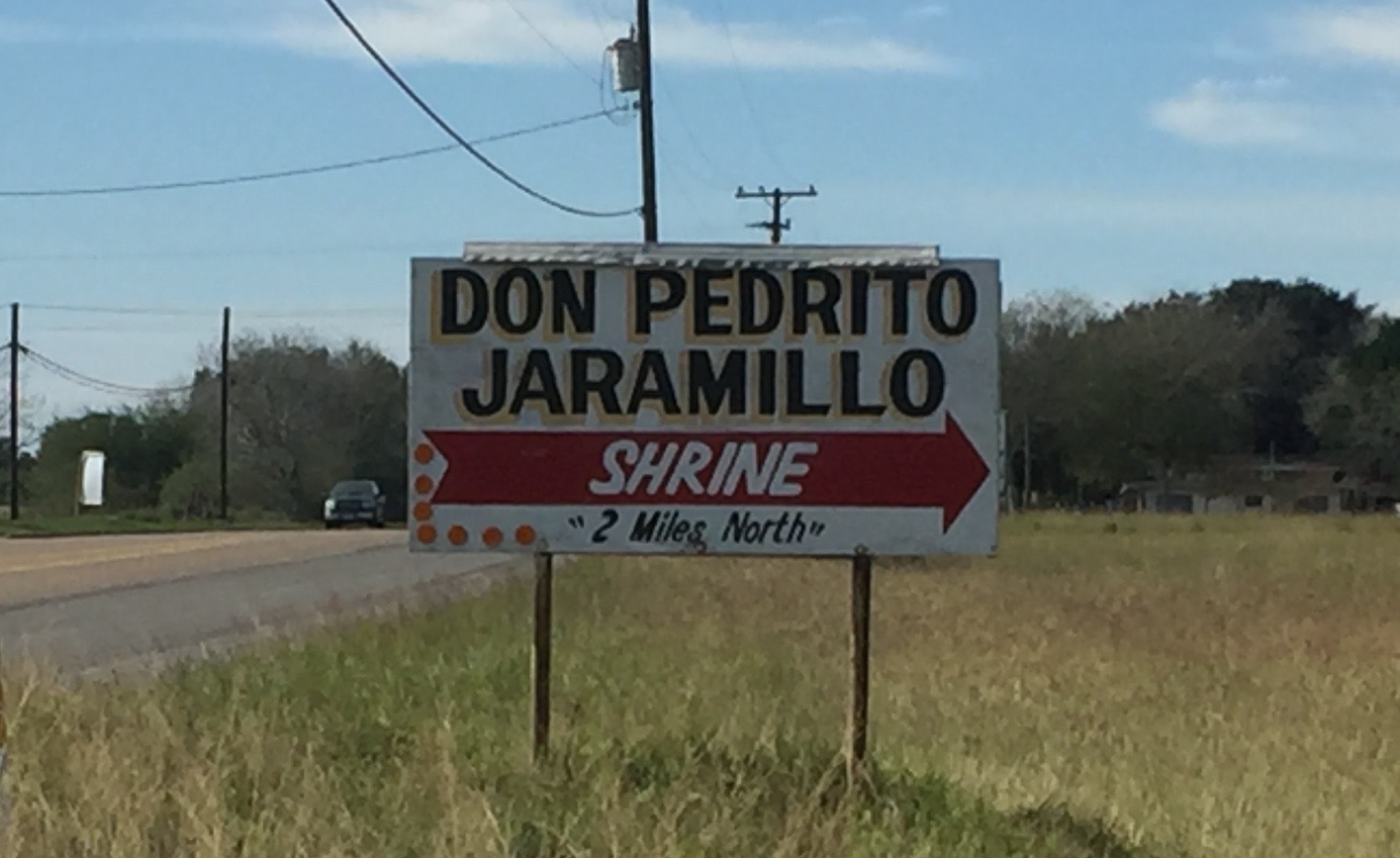 The shrine is open daily from sunup to sunset. To get to the shrine, take Highway 285 east out of Falfurrias and look for the sign pointing the way just before you get to FM 1418. The shrine is located two miles north of Highway 285 on your right. Everyone is welcome. The curio shop next door sells candles, herbs, incense, and snacks.
Regardless of your own spiritual beliefs, take a quick detour to visit the shrine if you happen to be in the area to see the place where a poor Mexican laborer earned a widespread reputation as a beloved curandero. The story of this South Texas folk saint is, after all, a part of our rich Texas history.
Merry Christmas 2015

John Henry Faulk’s Christmas Story
Everybody loves a good story — a real or imaginary account that captures our imagination and transports us to another place or time. That’s what would happen every time my grandfather would tell me a story. The sound of his voice, the subtle inflection of a word, a phrase told in a rising crescendo or trailing off into a whisper. He used these tools of the storyteller to mesmerize me — to unlock the door to my soul where his stories ultimately took up residence.
A few years ago I became acquainted with another storyteller whose masterful delivery also captured my imagination. John Henry Faulk, the fourth of five children, was born in Austin in 1913 and would become one of the Lone Star State’s most beloved storytellers. He was deeply influenced by his freethinking Methodist parents who taught him to detest racism. His post-graduate thesis at the University of Texas was about the civil rights abuses faced by African-Americans.
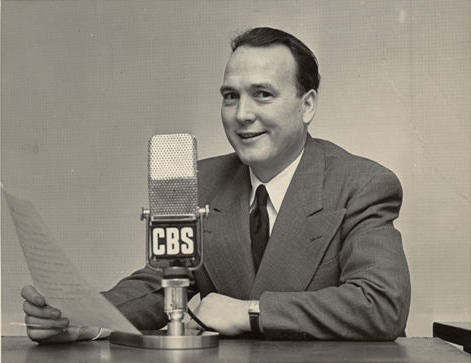 Faulk honed his storytelling abilities while teaching English at the University of Texas and later as a Merchant Marine during the Second World War. His friend Alan Lomax, who worked at the CBS network in New York, hosted several parties during Christmas 1945 to introduce his radio broadcasting friends to Faulk’s yarn-spinning abilities. A few months later, CBS gave Faulk his own weekly radio program, providing him with the thing every storyteller craves — an audience.
Sadly, Faulk’s radio career was derailed in 1957 when he became a victim of Wisconsin Senator Joseph McCarthy’s witch hunt for Communist sympathizers. The blacklisted storyteller, however, fought back. With support from famed broadcast journalist Edward R. Murrow, Faulk won a libel suit against those who had tarnished his reputation. The jury, in fact, awarded him the largest libel judgement in history to that date. In 1963, Faulk chronicled his experience in his book Fear on Trial. CBS television broadcast its movie version of Faulk’s story in 1974.
In his latter years, Faulk made numerous appearances as a homespun character on the popular Hee-Haw television program. He also wrote two one-man plays — Deep in the Heart and Pear Orchard, Texas. Throughout the 1980s he was a popular speaker on college campuses, speaking often on the freedoms guaranteed by the First Amendment. On April 9, 1990, Faulk died of cancer in his hometown of Austin. The city of Austin later named the downtown branch of the public library in his honor.
A few years ago on a dark December night, while traveling to my hometown for Christmas, I tuned in to National Public Radio and heard a story that touched me deeply. The story was one that John Henry Faulk had recorded in 1974 for the program Voices in the Wind. NPR later rebroadcast Faulk’s story in 1994. Every year since then, NPR has rebroadcast Faulk’s heartwarming Christmas Story. This story has earned a place among my favorite Christmas stories and movies. I listen to it every year at Christmas.
 I encourage you to take a few minutes to listen to John Henry Faulk’s Christmas Story. Gather your family around and invite them to listen as well. But, be warned. Faulk’s homespun story will mesmerize you. The sound of his voice will transport you back to simpler days before Christmas came under fire. I think you will agree that the Lone Star State produced a great storyteller in John Henry Faulk and that his Christmas story should be heard by a new generation. Best wishes for the most wonderful Christmas ever.
The Pink Church of Ammannsville
Ammannsville is a tiny community located about nine miles southeast of La Grange. German and Czech immigrant farmers first settled in this region in the 1870s. The town is named after Andrew Ammann who just happened to be the first settler to arrive on March 12, 1870.
Ammannsville is also home to St. John the Baptist Catholic Church, also known as the Pink Church — one of the Lone Star State’s historic painted churches. This church opened its doors in 1890 and served the people of the area until it was destroyed by the Velasco Hurricane of 1909.
The second church to occupy the site was built by Leo Dielmann, the young German architect who designed and built the beautiful St. Mary’s Catholic Church in High Hill. Architectural plans and photographs on file at the Dielmann archives in San Antonio reveal that this second structure had a beautifully ornate interior, much like St. Mary’s church.
 Sadly, the second church building was destroyed by fire eight years after it was built. One woman, who was just a child at the time of the fire, recalled that the fire was so intense that it melted the church bells. When folks saw the smoke, she said, they raced to the church to try to save it. Only a few of church’s statues escaped the flames.
 The people of Ammannsville, determined to have their place of worship, immediately made plans to rebuild their beloved church on the same site. This third church was completed in 1909. Although the interior is beautiful, it is less ornate than that of the previous structure. The interior, sans columns, is open and bathed by the natural light that pours in through the large windows.
 While the exterior of the church is white, the interior is painted in a rosy pink color — thus the name, The Pink Church. According to a legend, an unknown artist painted and embellished the interior of the church and then vanished, never to be seen again. Although the legend adds an aura of mystery to the church’s interesting history, the community actually hired a painter named Fred Donecker. Little is known about this decorative painter who is believed to have also painted the Catholic Church in Moravia, Texas.
 Like the other painted churches in the area, St. John the Baptist Catholic Church has a beautiful and worshipful interior. The altar is a masterpiece of carpentry. The walls on either side are adorned with the familiar stations of the cross that portray the events of the Passion of Christ. The welcoming angel statues at the entrance of the church hold sea shell shaped containers of holy water for those who come to pray and worship.
 St. John the Baptist Catholic Church was added to the National Register of Historic Places in 1983. The church is open daily to visitors who venture off busy Interstate 10 or who meander down the surrounding farm to market roads. Set your GPS to Ammannsville — that’s all the address you need. You can’t miss the church. It’s the tallest structure in the area, and the most beautiful.
The Hanging Tree Restaurant
My continuing quest to find the best burgers in the Lone Star State recently me took to Goliad, one of the oldest Spanish colonial municipalities in the state. Goliad was established in 1749 and was originally named La Bahia. The name of the town was changed to Goliad in 1829 in honor of Father Miguel Hidalgo, the patriot priest of the Mexican Revolution. The name Goliad is an anagram of the letters of the name Hidalgo (minus the silent H).
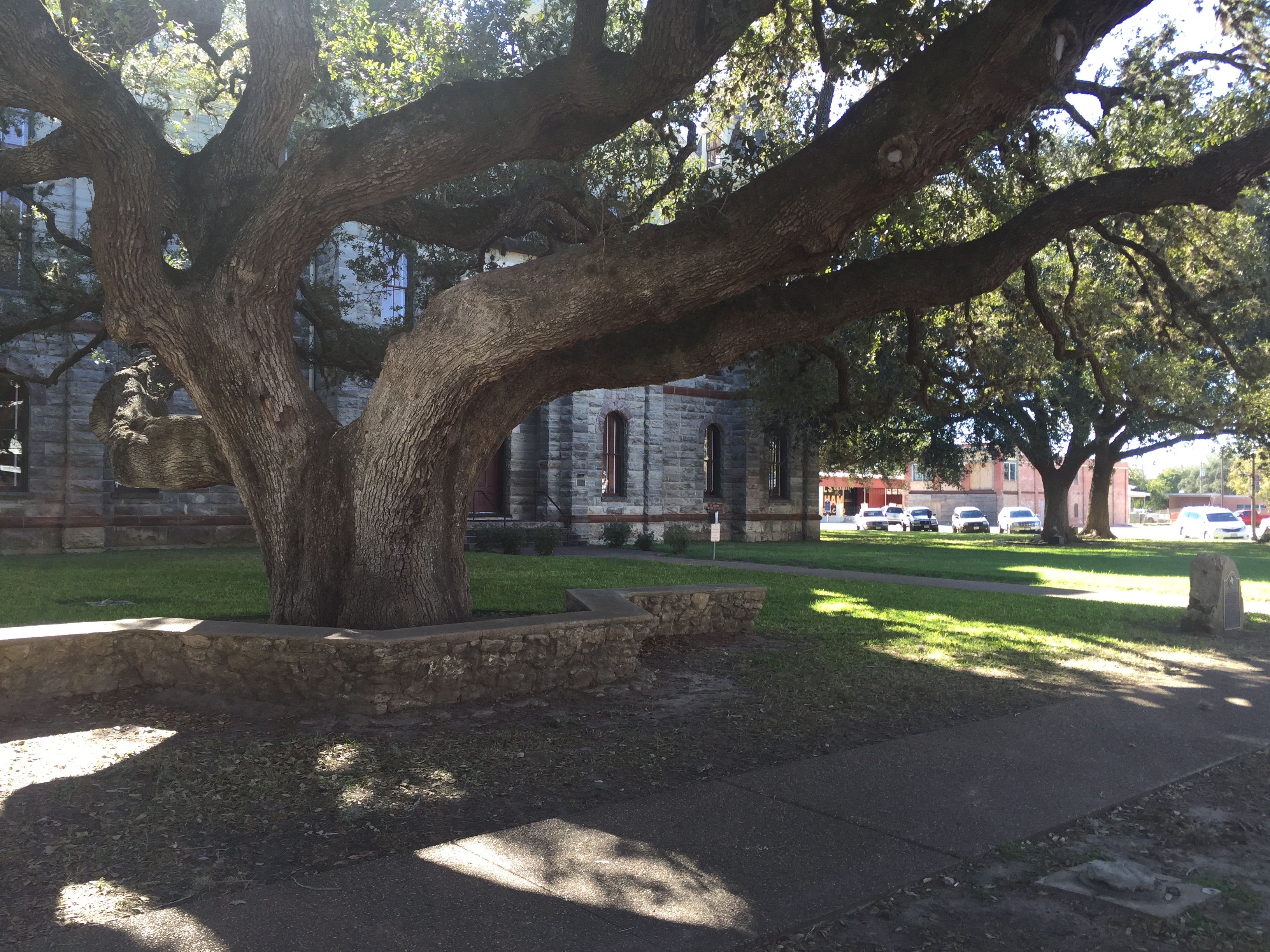
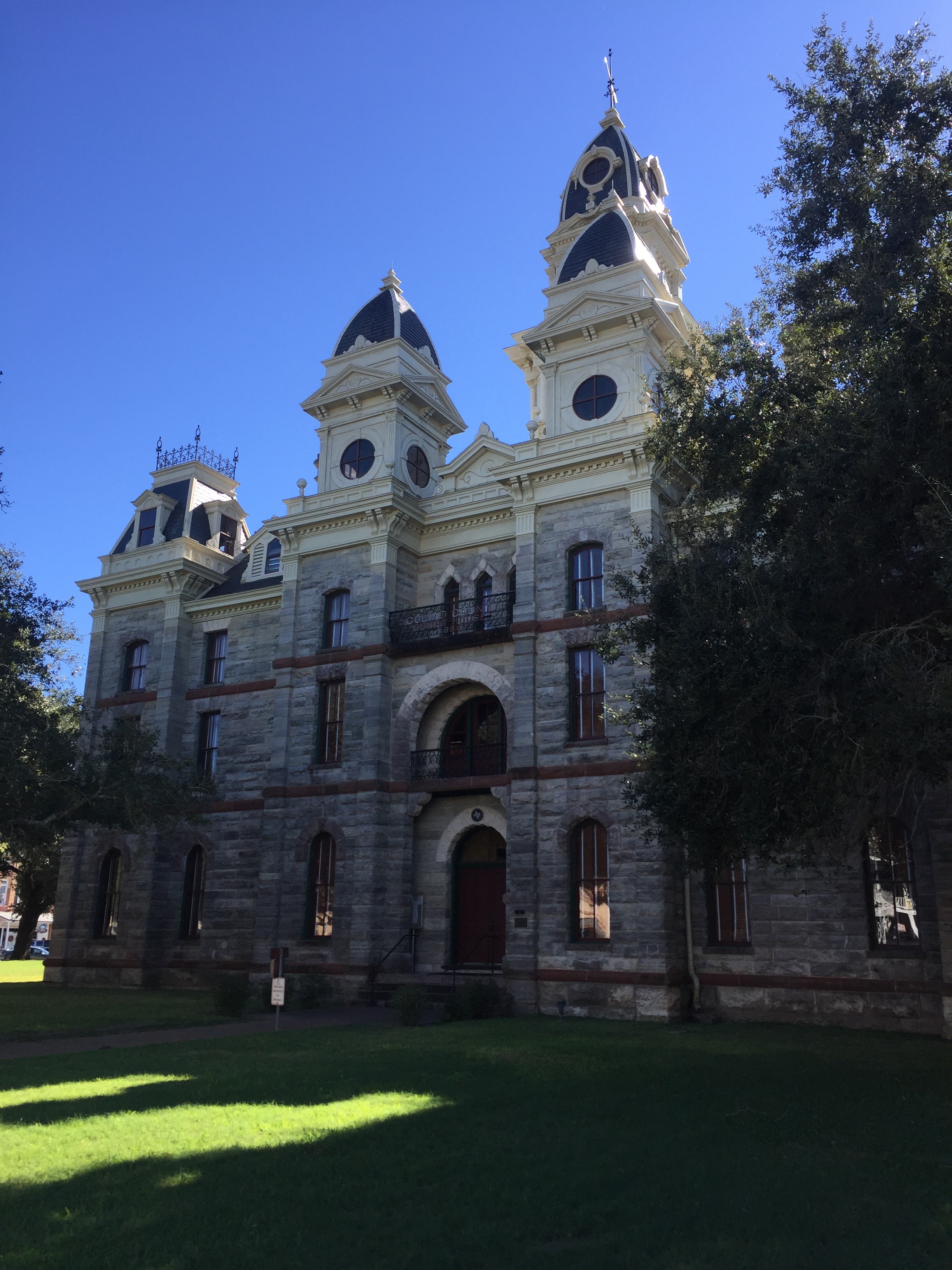 Goliad is the county seat of Goliad County. Like other county seats in Texas, Goliad boasts a beautiful courthouse situated in the town square. The current courthouse was built in 1894 and was recorded as a Texas Historic Landmark in 1964. The famous Goliad Hanging Tree on the courthouse lawn survives as a symbol of justice. This tree was used for both court-approved hangings as well as a number of impromptu lynchings during the infamous 1857 Cart War between Texans and Mexican Texans.
 Across the street from the courthouse and the actual hanging tree is the Hanging Tree Restaurant. This eating establishment specializes in good down-home cooking. The restaurant is very clean. Mounted animals adorn the walls and silently look down on diners. The glass top tables frame old historic photos of Goliad and the surrounding area. I love these old and grainy black and white photos of the area’s early buildings and residents.
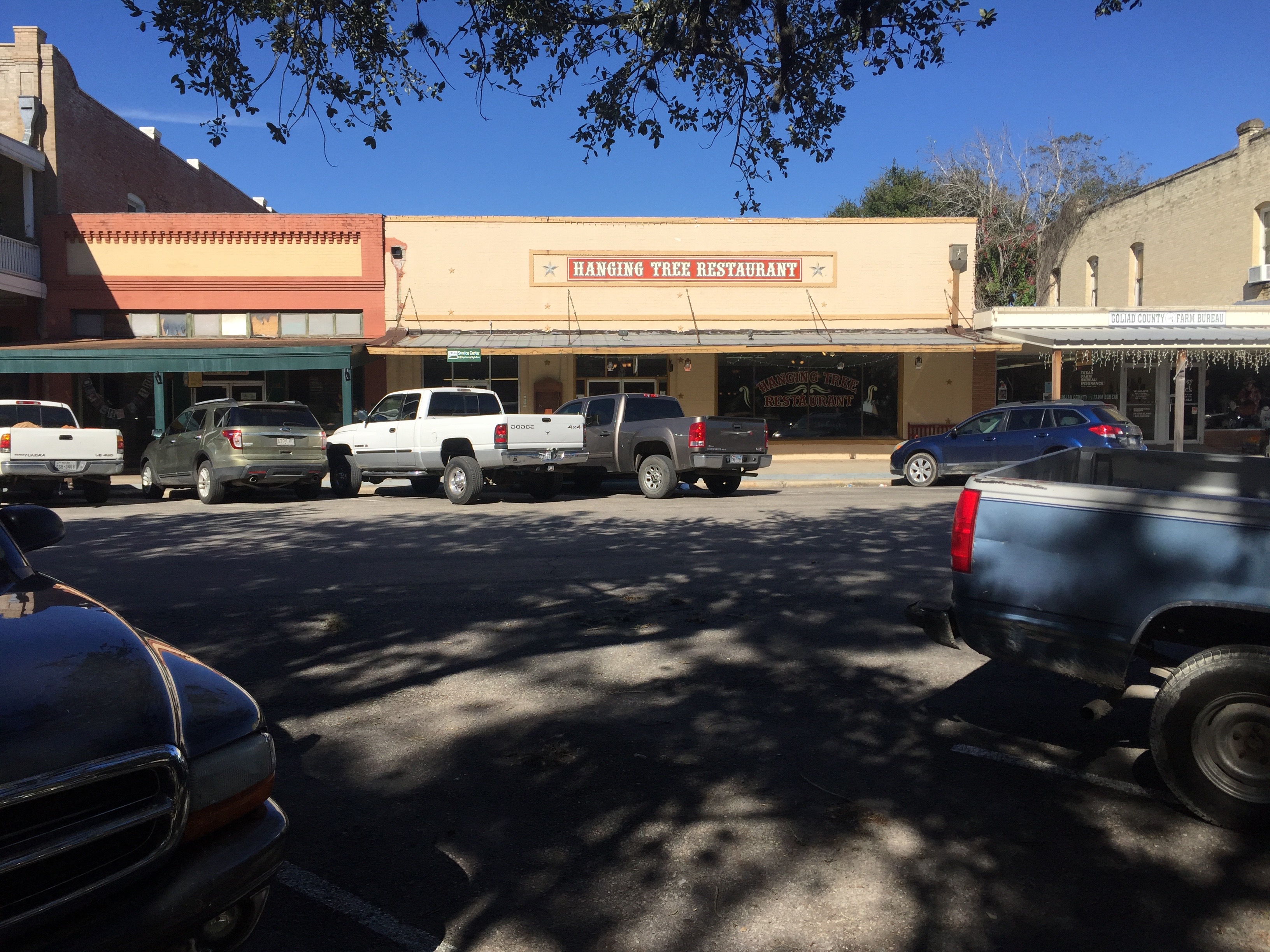 Of course, I was at the Hanging Tree to eat a hamburger. I ordered a cheeseburger with an order of onion rings along with a cold glass of tea. Looks like the hamburger was a popular choice. I noticed that several other diners had also ordered burgers and onion rings. I could hardly wait.
 A good hamburger bun is just as important to me as the flavor of the meat. A bun is supposed to serve as more than just parentheses around the meat. A bun should enhance the overall flavor of a burger. The first thing I noticed about my cheeseburger was the square bun. This was no ordinary out-of-the-bag bun. This bun was infused with bits of jalapeño and cheese. And it was mighty delicious.
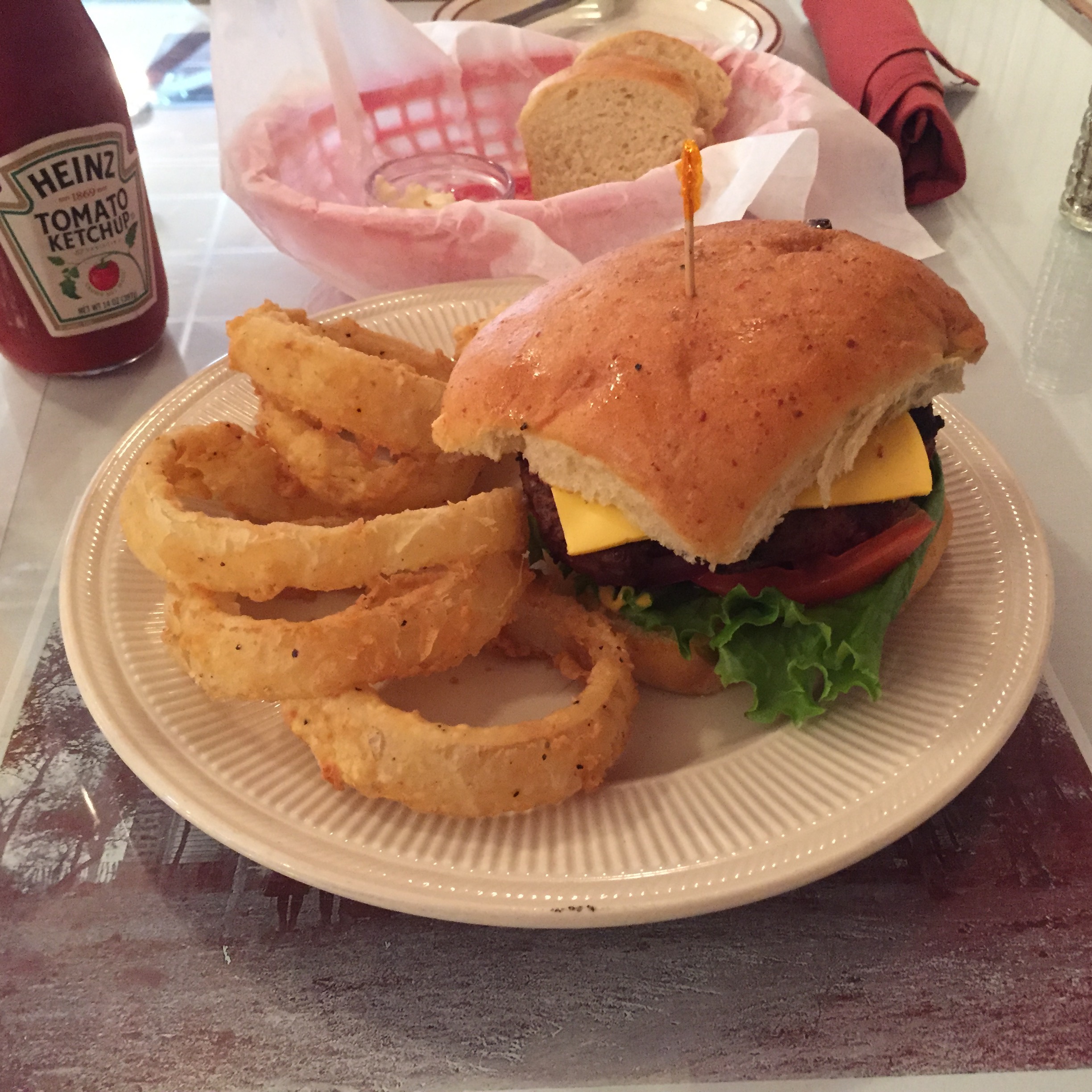 Bottom line — I’m glad I stopped to eat at the Hanging Tree. Absolutely enjoyed my cheeseburger and onion rings. Also enjoyed the ambiance of the place and the big picture window that frames the hanging tree on the courthouse lawn across the street. I am happy to add the Hanging Tree to my list of interesting places in Texas to eat a delicious hamburger.
 Explore Texas