Back to the Ranch

My grandfather was sixty-six when I was born at Mission City Hospital in 1956. The hospital was small, but it was just right for our little town of Mission, Texas. I wasn’t his first grandchild, but I was the only one who lived nearby.
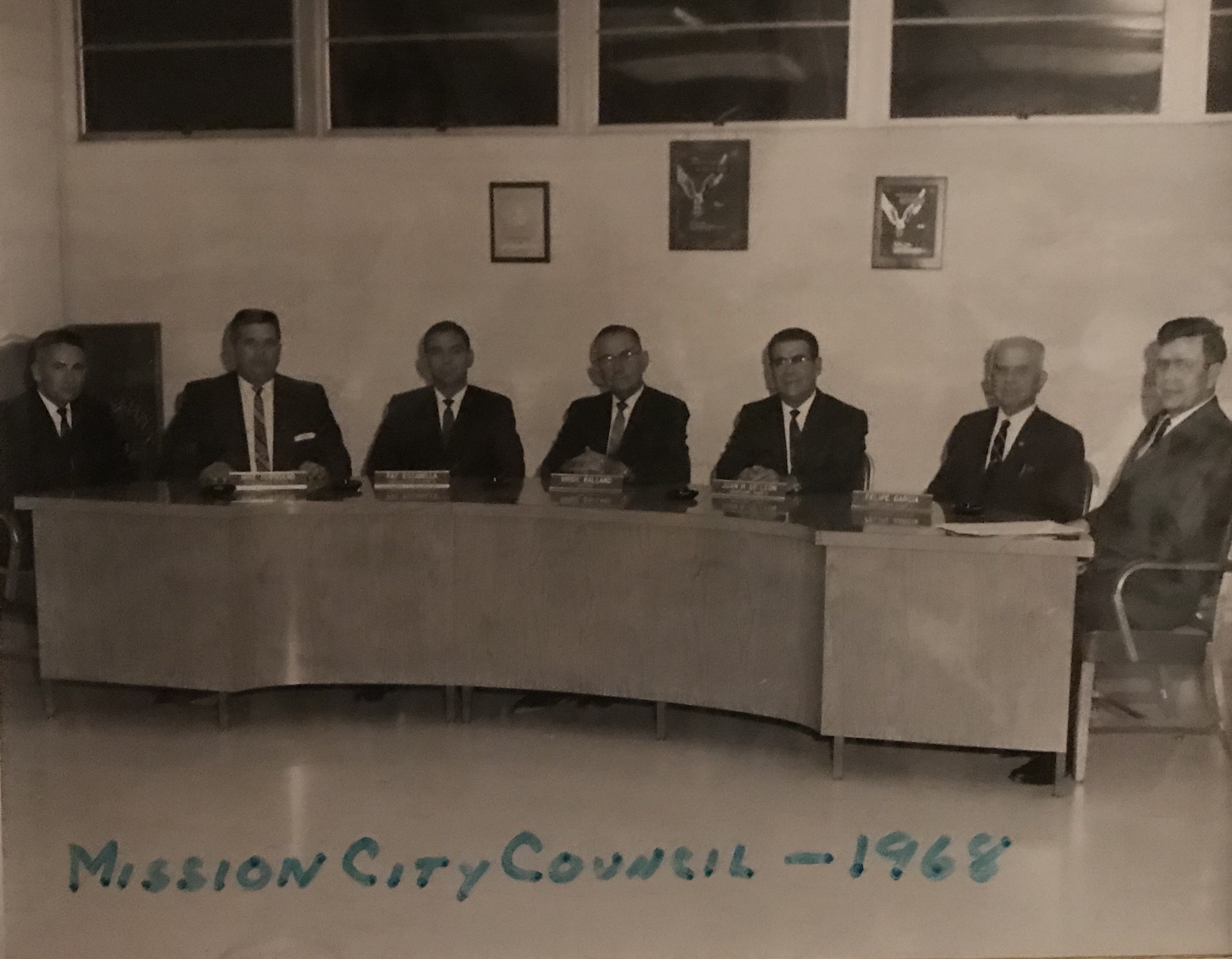

By the time I was born, my grandfather had already lived in Mission for over forty-five years. He worked as a real estate developer, served on the Mission City Council, led Boy Scouts Troop 20, and as a Notary Public helped many people in the community.
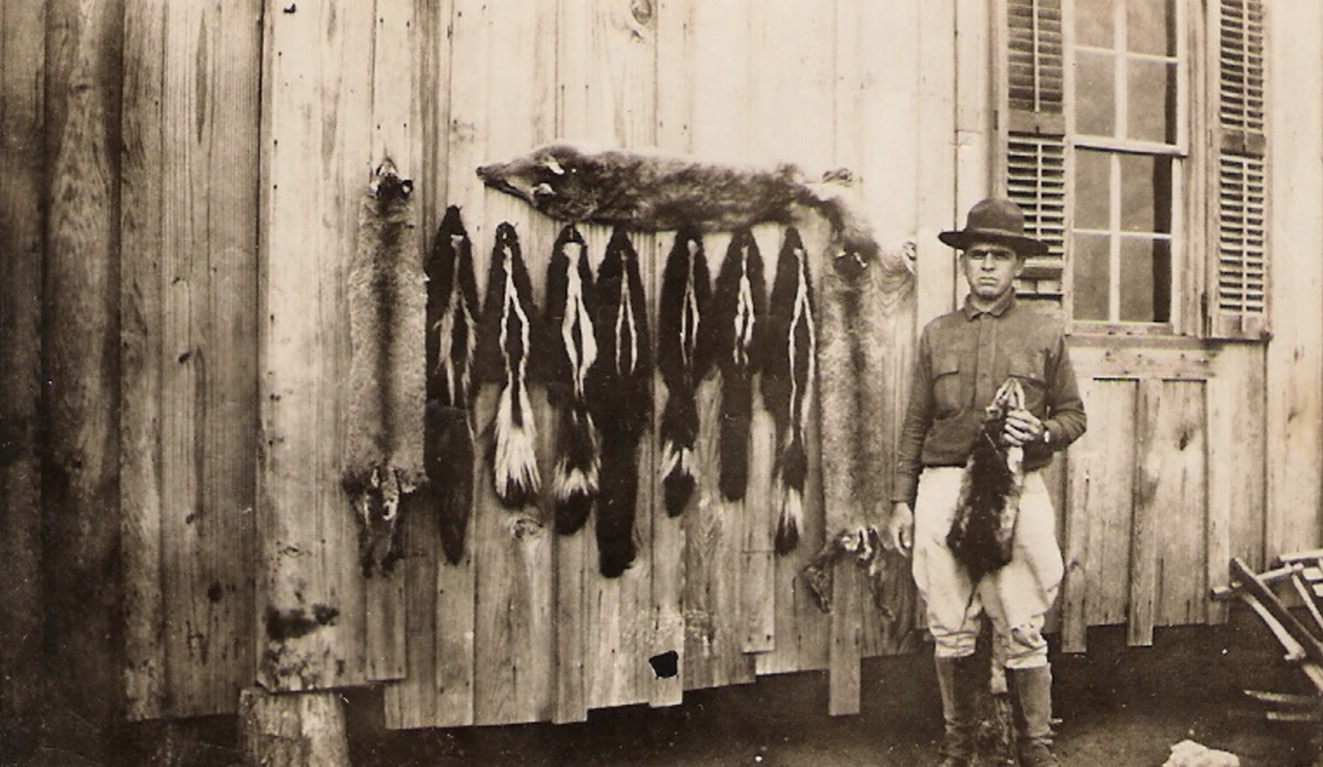

Yet, throughout all his years in Mission, he never forgot his roots on the family ranch in Duval County. He maintained a lifelong love for the outdoors and returned to the ranch every year to hunt or ride his horse. Although he had left the ranch many years earlier, the ranch had never left him. It remained a part of his heart.

He wrote in his journal about how much he loved ranch life. Here’s part of what he wrote:

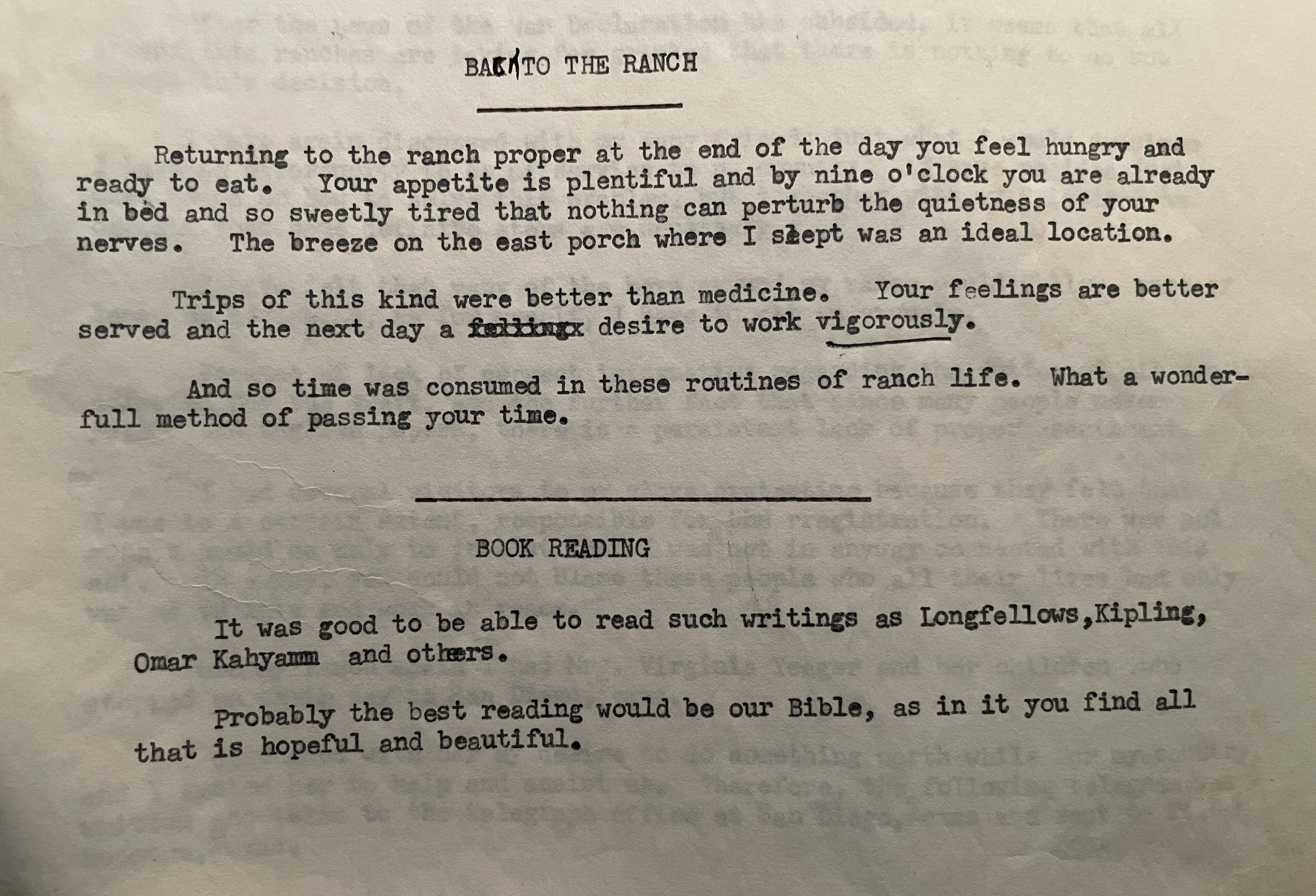
Returning to the ranch proper at the end of the day, you feel hungry and ready to eat. Your appetite is plentiful, and by nine o’clock you are already in bed and so sweetly tired that nothing can perturb the quietness of your nerves. The breeze on the east porch where I slept was an ideal location.

Trips of this kind were better than medicine. Your feelings are better served and the next day you have a desire to work vigorously.

And so time was consumed in these routines of ranch life. What a wonderful method of passing your time.

My grandfather shared many stories about life on the ranch. Reflecting on those stories helped me understand how the ranch shaped him. Ranch life helped him develop a strong work ethic and become someone who never complained and always tried to help others.
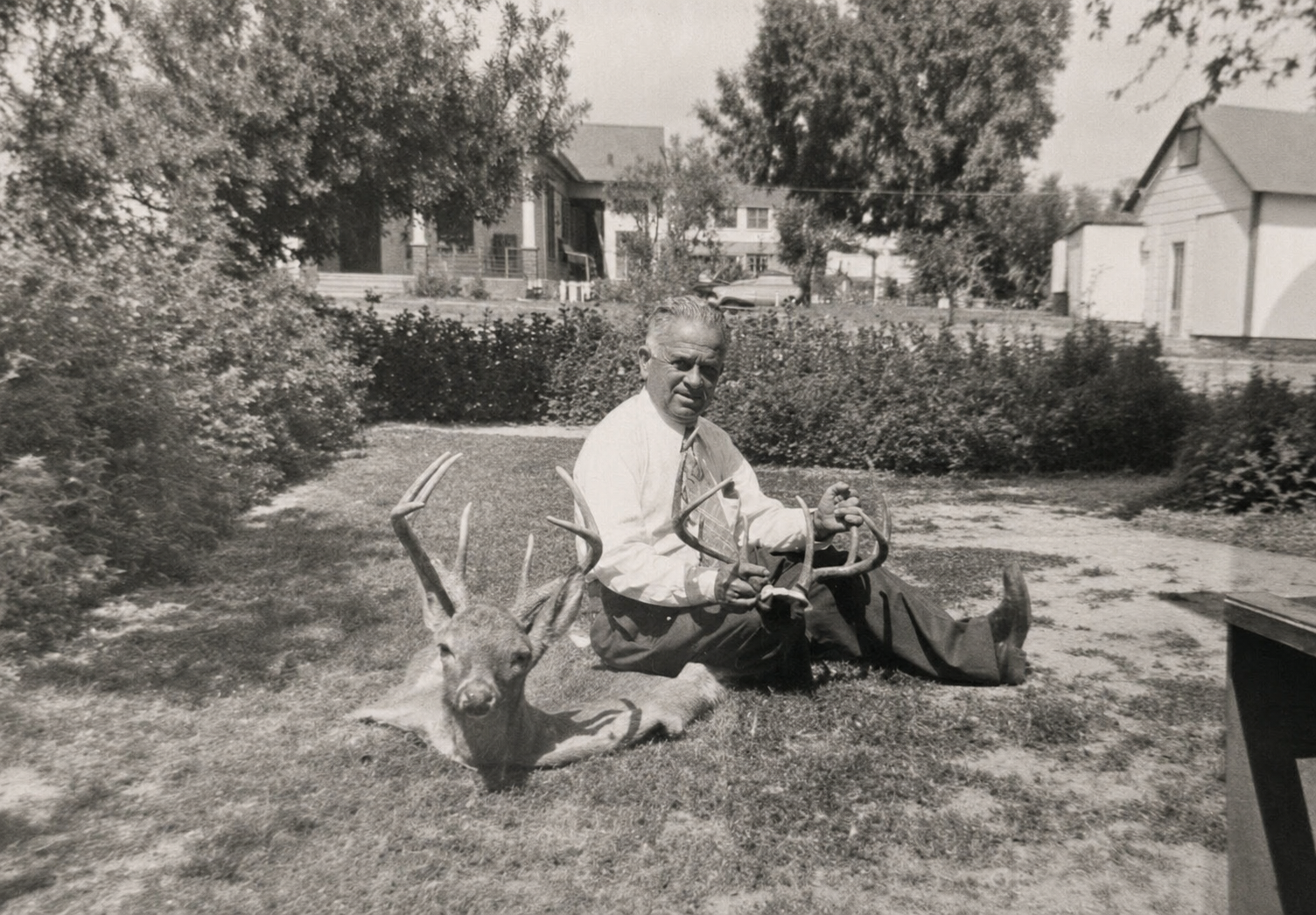

I also admired how he kept his love for the outdoors and adventure all his life. From his childhood to his later years, the ranch was like good medicine for him. He often talked about riding horses, hunting, and even stretching barbed-wire fences. I was always fascinated.
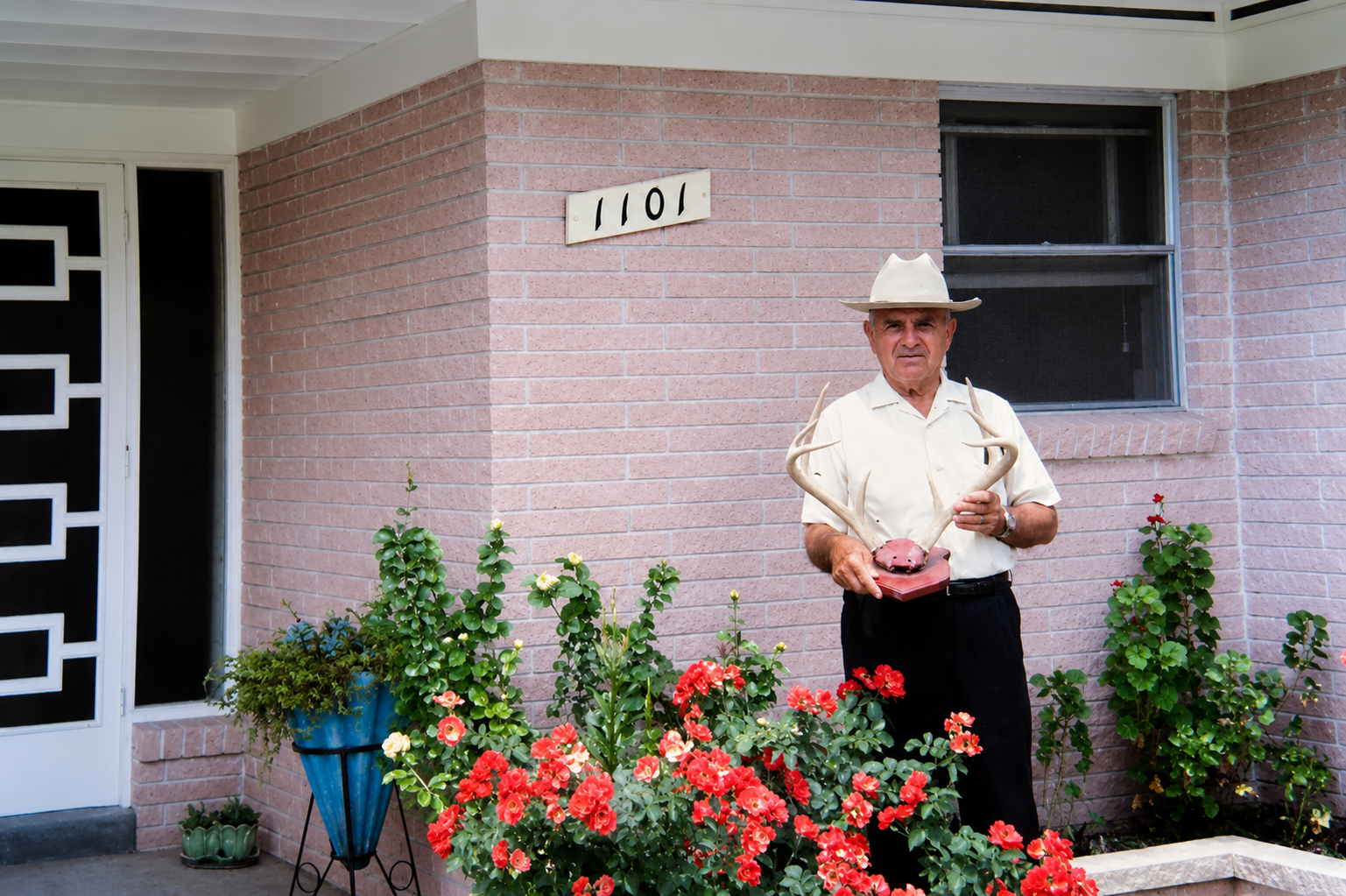

After my first visit to the ranch, I tried to go back as often as possible. I found that the ranch had the same effect on me as it did on my grandfather. Most importantly, each visit made me feel closer to him. Since the ranch was special to him, it became special to me too.

I feel the same way whenever I visit our off-grid place in Big Bend. When I’m there, my mind feels calmer, my heart feels stronger, and the desert air refreshes me. Time seems to slow down. The hard work is satisfying, sleep comes easily, and life’s routines feel simpler and more meaningful.

Now I understand what my grandfather meant. Places like these truly are better than medicine. Whenever I go back to our little spot in the Chihuahuan Desert, it feels like I’m returning to the ranch and to him.

Visiting El Frijolillo

My grandfather was a storyteller. From as early as I can remember, he shared wonderful stories with me—stories that made my imagination sit up and pay attention. I loved listening as he told Aesop’s fables, the story of Androcles and the Lion, and other fascinating tales. This was during an age when television was still in its infancy and storytelling remained a treasured form of entertainment.

But the stories I loved most were those he told about his childhood growing up on a ranch in Duval County. To this day, Duval County remains rugged scrub country, populated by mesquite, cactus, and other stubborn vegetation seemingly determined to stick, cut, and wound the unsuspecting traveler.

As a boy, I was captivated by his stories of riding horseback across the ranch. During his teenage years, he worked as a cowhand on the George West Ranch, located not far from his family’s ranch. His stories made me want to be a cowboy, just as he had been before leaving ranch life behind to attend business college in San Antonio.

One day, he told me about being thrown from his horse at a place he called El Frijolillo (pronounced free-ho-lee-oh). He described it as a thick, tangled cowlick of mountain laurel and chaparral at one end of a pasture. The fall was apparently memorable enough to remain vivid in his mind decades later. As a boy, I often dreamed about that mysterious place called El Frijolillo.


When I was barely a teenager, my grandfather arranged for me to visit my country cousins at the ranch. He bought me a bus ticket from Mission to San Diego and sent me off on a great adventure—all by myself, with only a small suitcase in hand.

The only thing I remember about the bus ride was sitting next to an older woman who had doused herself in an overpowering amount of perfume. I could hardly breathe and pressed my face against the window, hoping for even the slightest whiff of fresh air. Toxic fumes aside, I made it to my destination, where my Uncle Florentino, my grandfather’s half-brother, was waiting to pick me up.

Florentino was a towering man. When I stepped off the bus, there he stood—wearing khaki pants, a long-sleeved shirt, black boots, and a straw cowboy hat. He looked down at me with welcoming eyes, shook my hand, took my bag, and led me to his pickup truck for the nearly twenty-mile drive to the ranch. That day marked the beginning of a lifelong friendship with Florentino.

I told Florentino that while I was at the ranch, I wanted to see El Frijolillo. He laughed and remarked that this was the very place where a horse had violently bucked my grandfather to the ground. Then he assured me that I would indeed get to see El Frijolillo—on horseback. I grinned from ear to ear and could hardly wait.

My cousins made sure that I experienced plenty of great adventures. They took me rabbit hunting, led me on hikes through the brush, climbed with me into deer blinds to survey the land, and introduced me to horseback riding. I killed my first rabbit, and my aunt cooked it for supper that very evening. Unbelievable! This adventure was already more than I had expected.


But the greatest adventure of all was riding a pony out to El Frijolillo, the place that had etched itself into my grandfather’s memory decades earlier. For whatever reason, he never forgot that fall—perhaps because being thrown from a horse was a rare occurrence, or because the impact had bruised itself so deeply into his memory.

I was there. Finally. As I surveyed the place, I could hear my grandfather’s story echoing in my mind. Standing on that very ground made me feel even more connected to him and to the ranch land that had nurtured him. This was part of my history—and now I had become part of the story of El Frijolillo.

Decades have passed since my great adventure on the ranch. When my grandfather told me stories about life on the ranch, he unwittingly gave me a wonderful gift. He gave me a connection to the land and to my family. Best of all, he gave me a connection to the boy he once was. Now, whenever I think about El Frijolillo, I can hear my grandfather’s voice and feel inspired to keep the storytelling tradition he shared with me alive.