The Horse Crippler Cactus

The Big Bend region of Texas is home to more than 60 species of cacti, giving Big Bend National Park the distinction of having more kinds of cacti than any other U.S. national park. Among them all, none has a more intimidating name than the Horse Crippler.
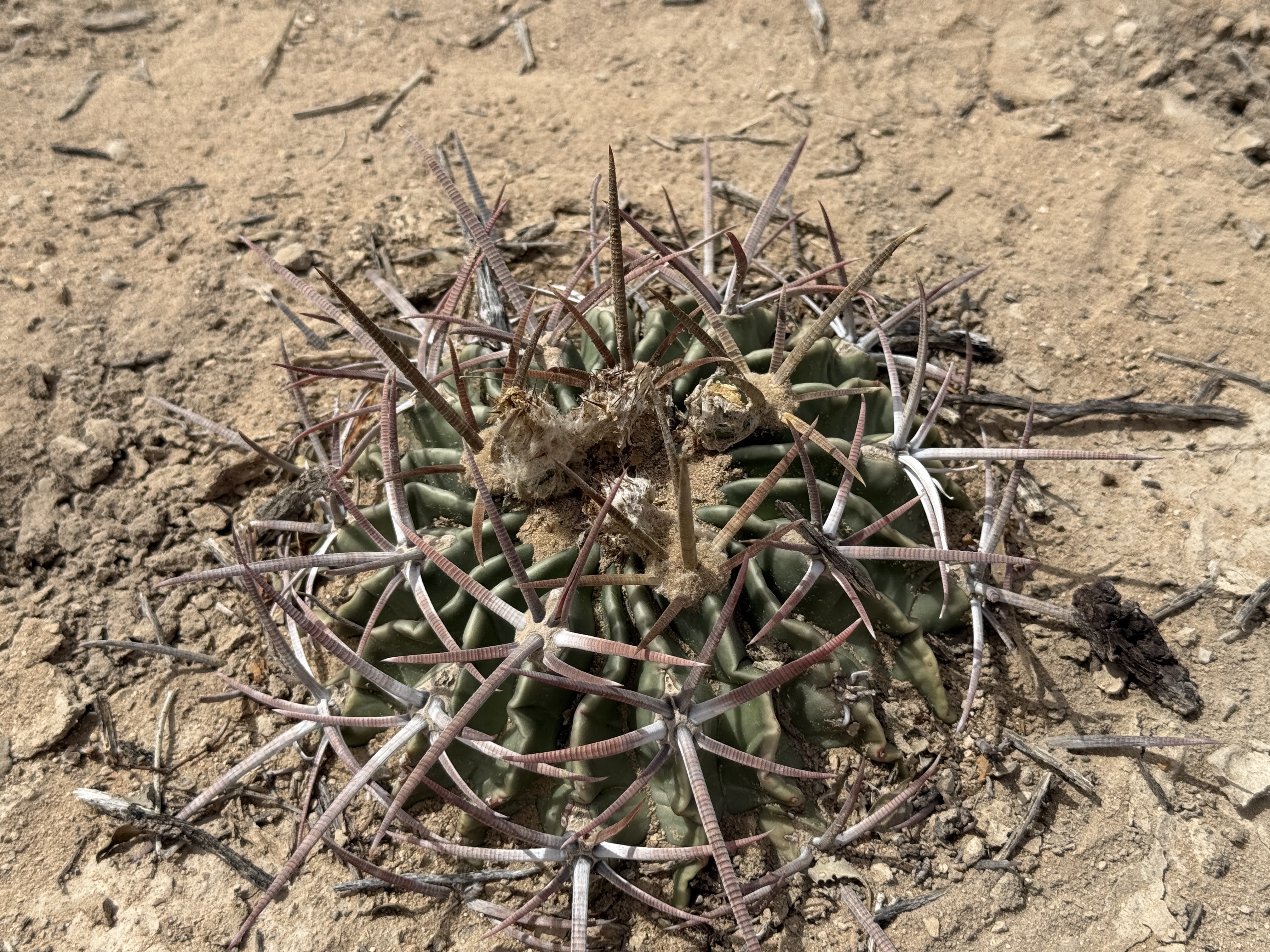

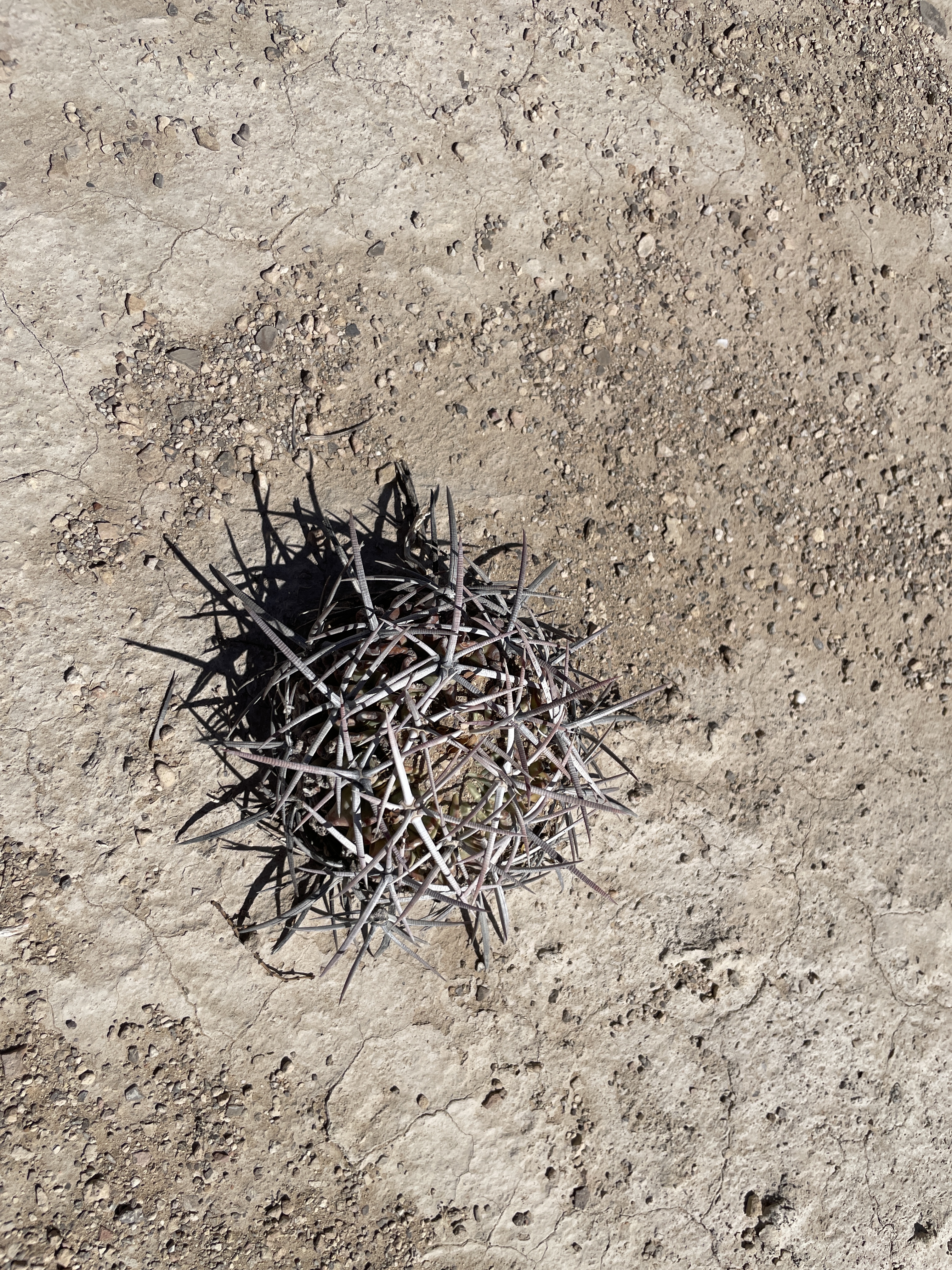
One look at this small but formidable succulent—with its broad, flattened shape and fierce spines—and it’s easy to understand how it earned its name. Hidden low against the desert floor, it was notorious for injuring the hooves of horses that accidentally stepped on it.

I have found several Horse Cripplers on our off-grid property just outside Big Bend National Park. They are surprisingly easy to miss because they hug the desert floor, blending almost perfectly into the sandy landscape. But the fact that this remarkable succulent thrives in the Chihuahuan Desert tells you everything you need to know—it is built for survival.
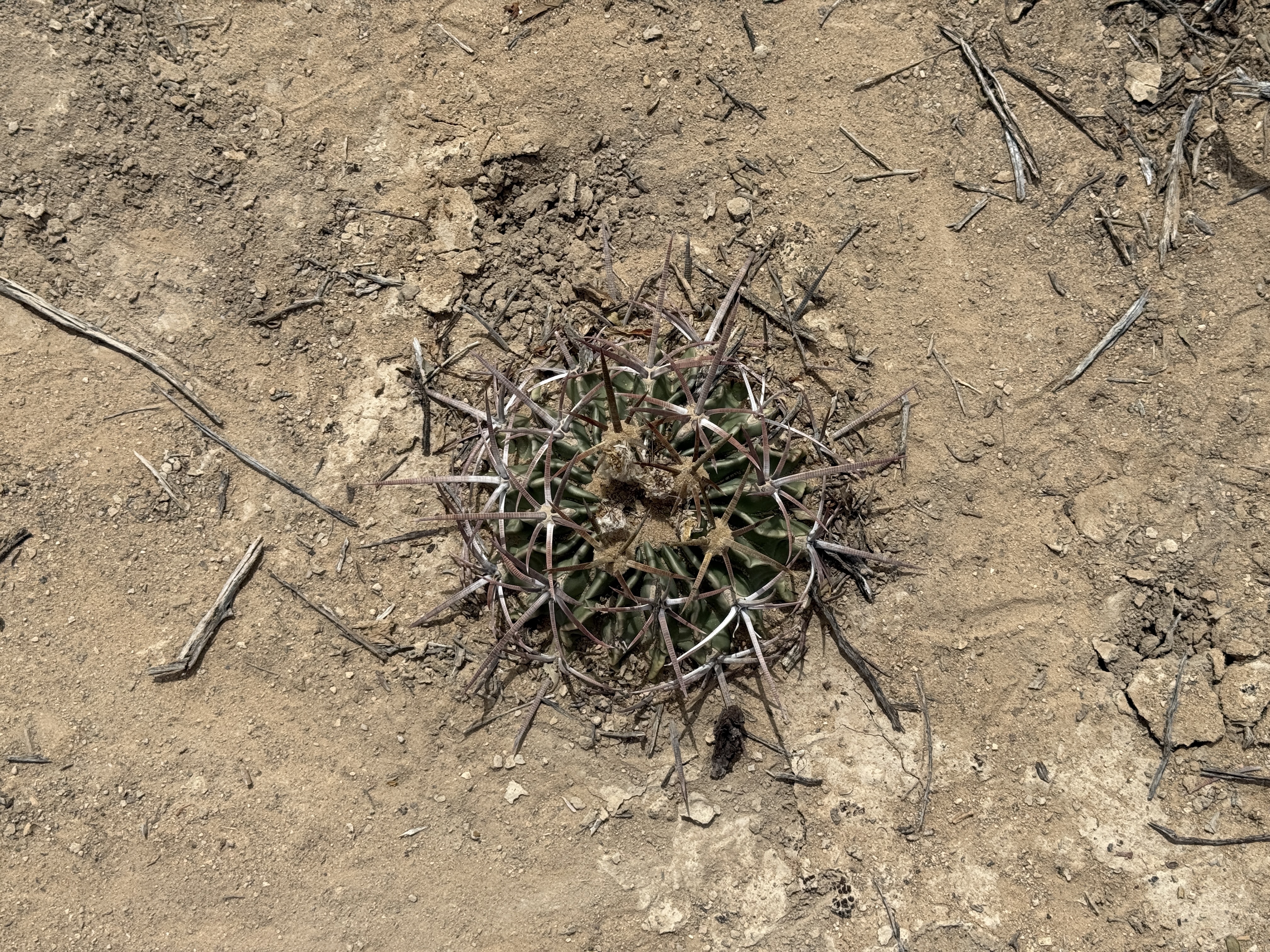

Unlike many other cacti, the Horse Crippler stays low to the ground. This helps protect it from the harsh desert sun and drying winds. When drought lasts a long time, it saves water by shrinking and sinking deeper into the soil. After a good rain, it fills up with water and rises a few inches, showing off its crown of spines again.

Like many of the cacti of the Trans-Pecos region of Texas, the Horse Crippler produces beautiful blossoms - in particular pink to lavender blossoms with striking reddish centers. These showy flowers appear in the spring and attract a variety of native pollinators. I have not yet been fortunate enough to find one in bloom, but I hope to one day.

Even more remarkable than its beautiful blossoms, the Horse Crippler produces scarlet-red fruit. After the flowers fade, these fruits develop and often remain on the cactus for weeks. The fruit provides an important food source for birds and small mammals who help disperse the cactus’s seeds across the desert.

The Horse Crippler shows that even in the tough conditions of the Chihuahuan Desert, survival goes to those built to last, no matter their size. Its resilience is a sign of the wisdom of its Creator.

For those fortunate enough to see a Horse Crippler in bloom, it offers another lesson: remarkable beauty can emerge from a life built to withstand difficult environments. Perhaps that is true of people as well.

In the meantime, I’ll continue watching where I step while keeping an eye out for this remarkable little cactus. One day, I hope to find one wearing its crown of pink and lavender blossoms.

The J & P Bar and Grill

Founded in 1883, Comstock is barely a wide spot on the lonely road from Del Rio toward the ragged and rugged Trans-Pecos region of Texas. It is located near the confluence of the Rio Grande and Pecos Rivers and close to Langtry where the legendary Judge Roy Bean was “the law west of the Pecos.”

Originally known as Sotol City, the tiny town was later named after John Comstock, a railroad dispatcher for the Galveston, Harrisburg and San Antonio Railway. Today, Comstock has less than ten named streets and not many more residents. However, the nearby canyons hide a treasure worth seeing.

Nearby Seminole Canyon State Historical Park is home to some of the oldest rock art in North America — pictographs as old as, by some estimates, 4,000 years. It’s hard to wrap your head around the fact that ancient inhabitants of this region left a cryptic record of their existence on the walls and ceilings of caves along Seminole Canyon.


Comstock is also home to the J & P Bar and Grill, a place that is located at the spot along Highway 90 where you both enter and leave Comstock. Blink and you are likely to miss it.

On occasion when we travel to our off-grid cabin out in Big Bend, we will opt to take Highway 90 instead of Interstate 10. We enjoy this desolate route and the magnificent scenery that is the very definition of iconic cowboy country. When we do take this route, we try to time our travel so that we can stop for a bite to eat at the J & P Bar and Grill — the only place to eat in Comstock and a favorite of local ranchers and roughnecks.

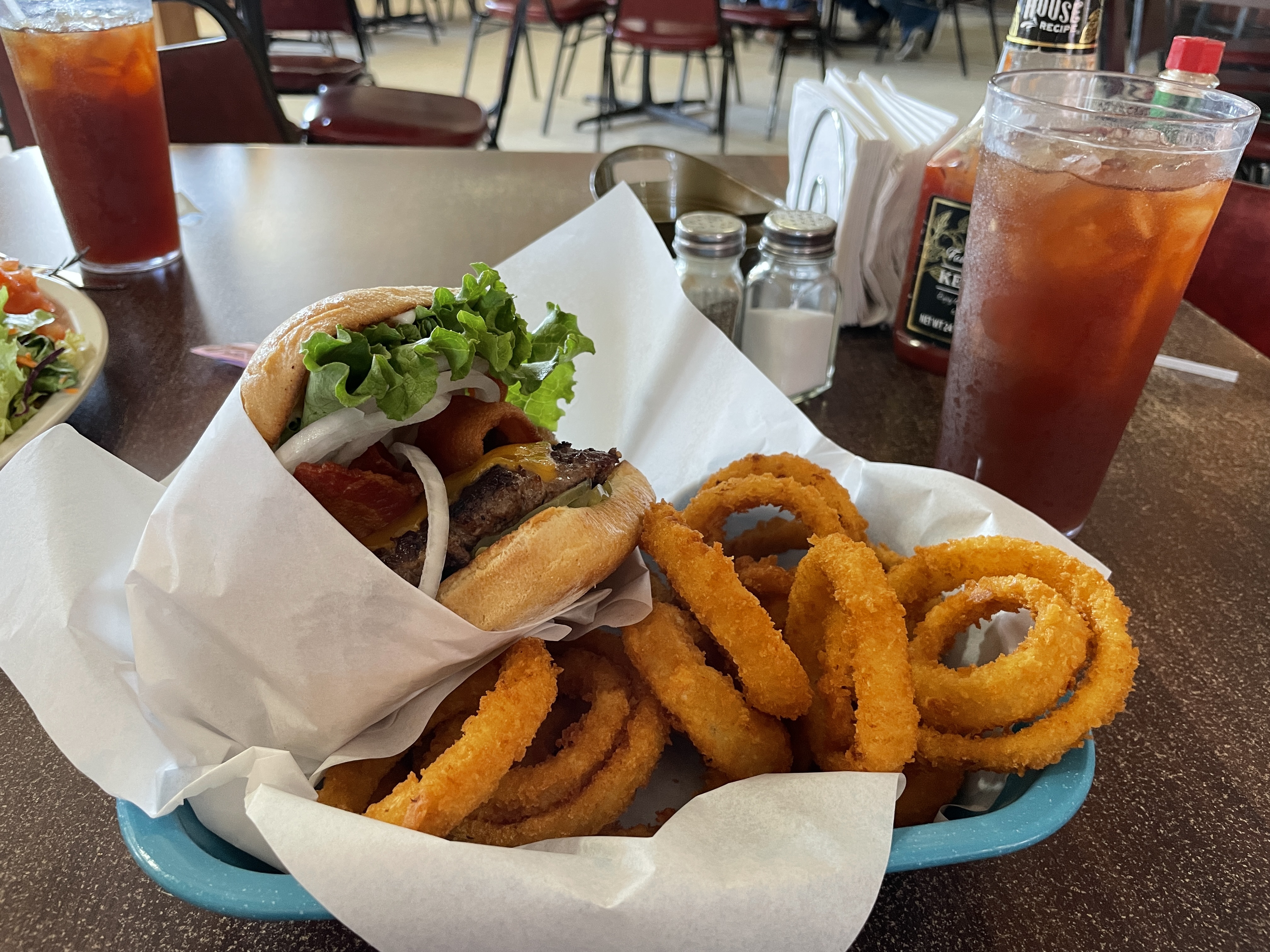
Wherever I travel in Texas, I am always on the lookout for a great bacon cheeseburger. So, when I first traveled through Comstock I decided to stop at the J & P Bar and Grill — housed in a nondescript metal building just west of the intersection of Highway 90 and Highway 163.


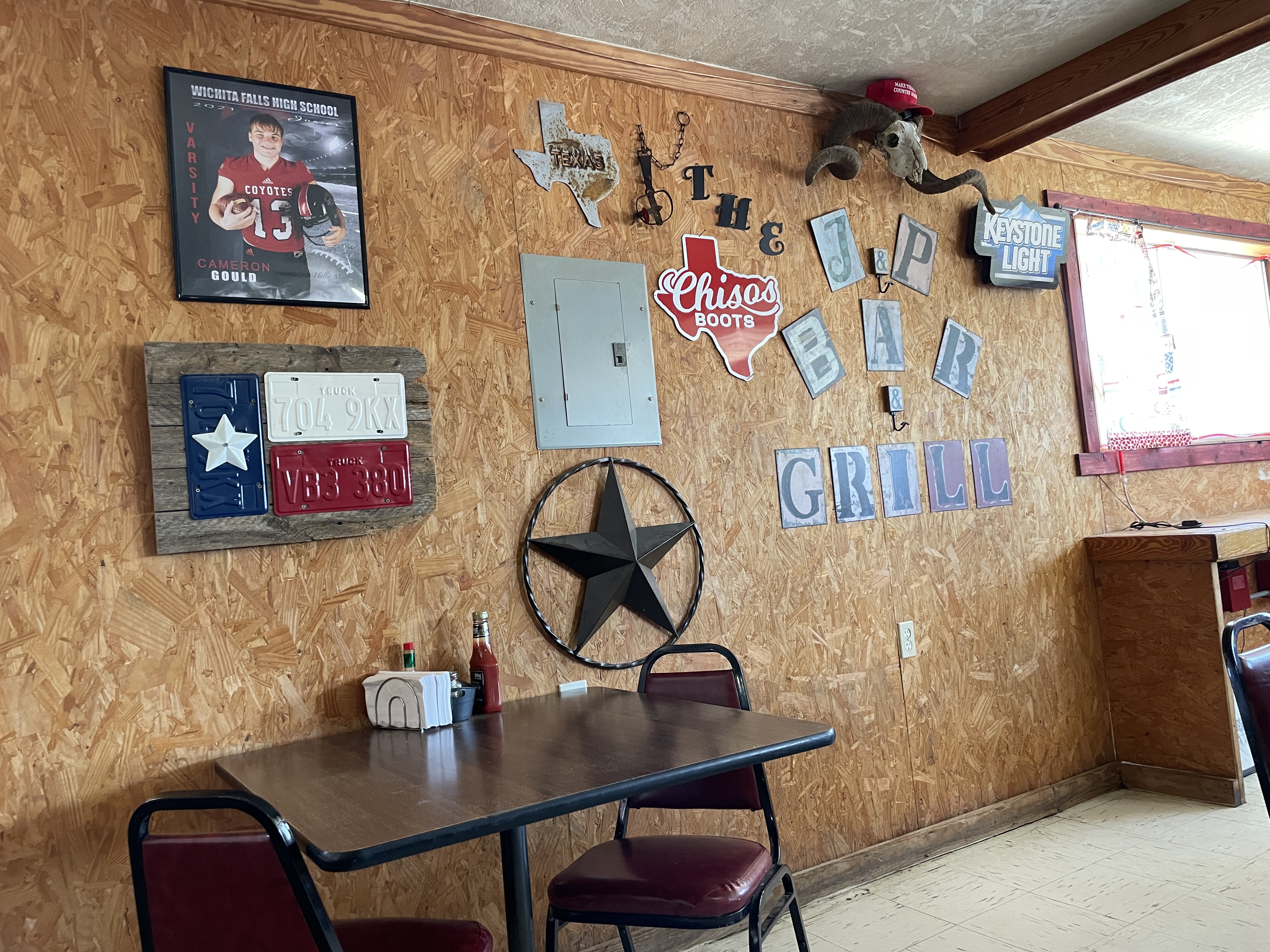
The inside is one big dining area with a bar, clean restrooms, and Texas decor hanging on particle board walls. The staff is Texas-friendly for sure and the menu offers a lot of comfort food options, including a variety of burgers.


As usual, I ordered a simple bacon cheeseburger with mustard and mayo and veggies and a side of onion rings and a tall glass of iced tea. Of course, I always make sure I ask for crispy bacon because I think it is a crime in Texas and not a very nice thing to do to offer a paying customer limp bacon on a cheeseburger.


Well, my expectations were exceeded. The ciabatta buns held a half-pound of meat cooked to perfection and the onion rings were golden and crispy and oh so good. The taste of this burger is amazing and made me wish I had an extra stomach to eat a second or third helping. Honestly — one of the best burgers I have had in all of my travels around the Lone Star State.

Comstock and the J & P Bar and Grill are a long way from anywhere and, for most folks, on the other side of nowhere. But, that is why if you are ever within driving distance you should make it a point to make the pilgrimage to this eatery. The J & P is now one of the reasons I often alter my route from Katy to our cabin. It is just worth the stop and will make you feel good about Texas.