Saint Mary’s Help of Christians Catholic Church

Among the more interesting place names in Texas is the small historic community of Twin Sisters. Located in Blanco County, about seven miles south of Blanco along Ranch to Market Road 473, the community takes its unusual name from two prominent nearby hills—the “Twin Sisters.” The hills became familiar landmarks for early settlers traveling through the Texas Hill Country.

The settlement began in the 1850s when German and other European immigrants established farms and ranches in the area. A small community gradually developed with schools, churches, businesses, and a post office serving ranch families in the area.

Twin Sisters never developed into a large town. As nearby Blanco became the area’s commercial center, many of the small businesses disappeared or relocated there. The post office eventually closed, and Twin Sisters settled into life as a quiet rural ranching community.

Today, little remains of the original settlement. Time is slowly erasing the evidence that a community once flourished here. Even so, the Twin Sisters hills, a tiny chapel, and an old cemetery remain as reminders of this early Texas Hill Country community.
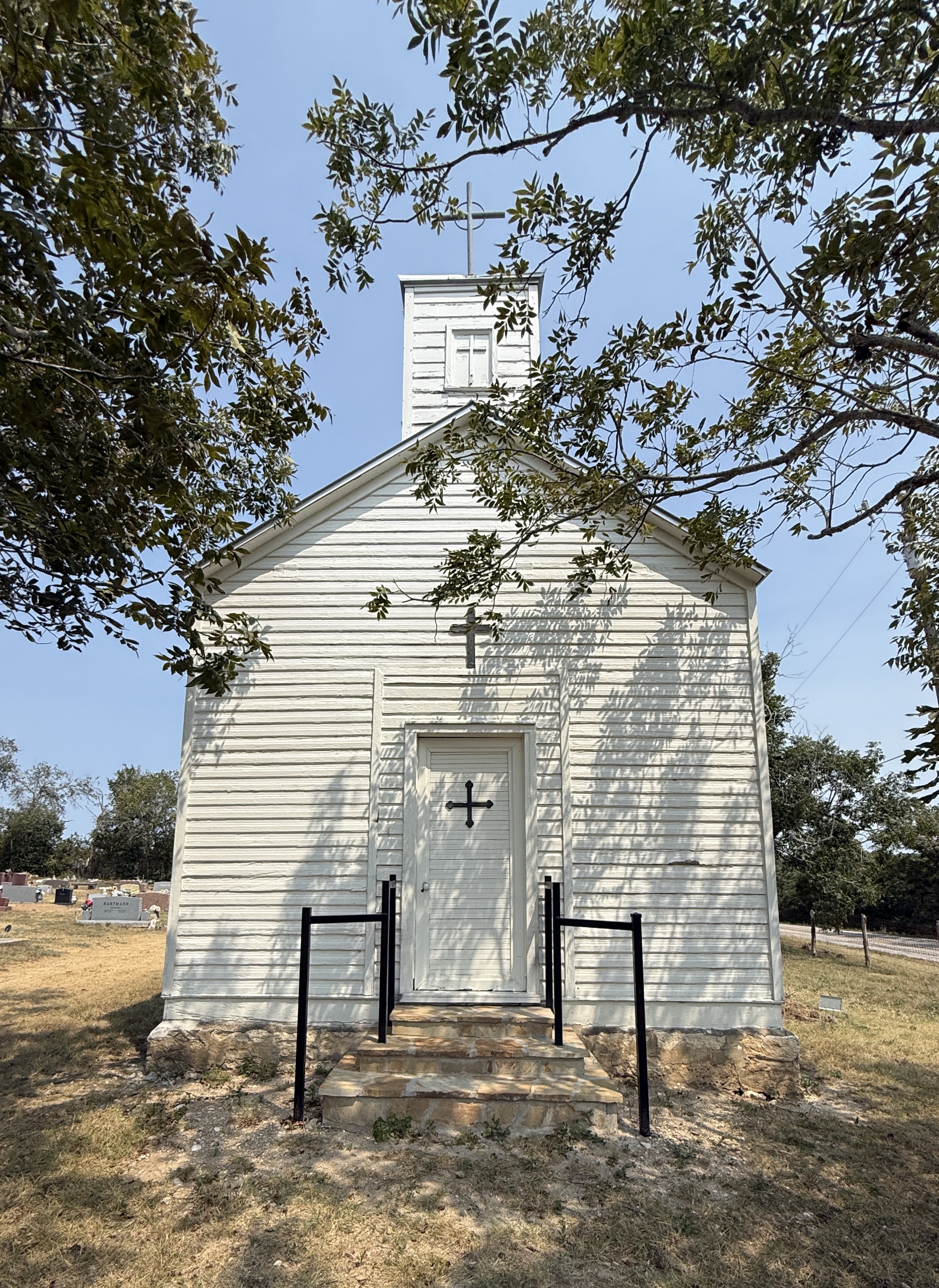

Saint Mary’s Help of Christians Catholic Church is perhaps the most important surviving landmark in this rural area.

Built in 1889, Saint Mary’s was the first Catholic church established in Blanco County. Catholic families had been gathering for worship in homes and other locations in the area since their arrival in the 1850s.

After residents acquired land for a church in 1887, construction began under the leadership of Father Virgilius Draessel. The small chapel rests on a foundation of locally quarried stone, while other building materials were reportedly hauled by wagon from farther away. According to the Texas historical marker at the site, the chapel was dedicated in 1889.
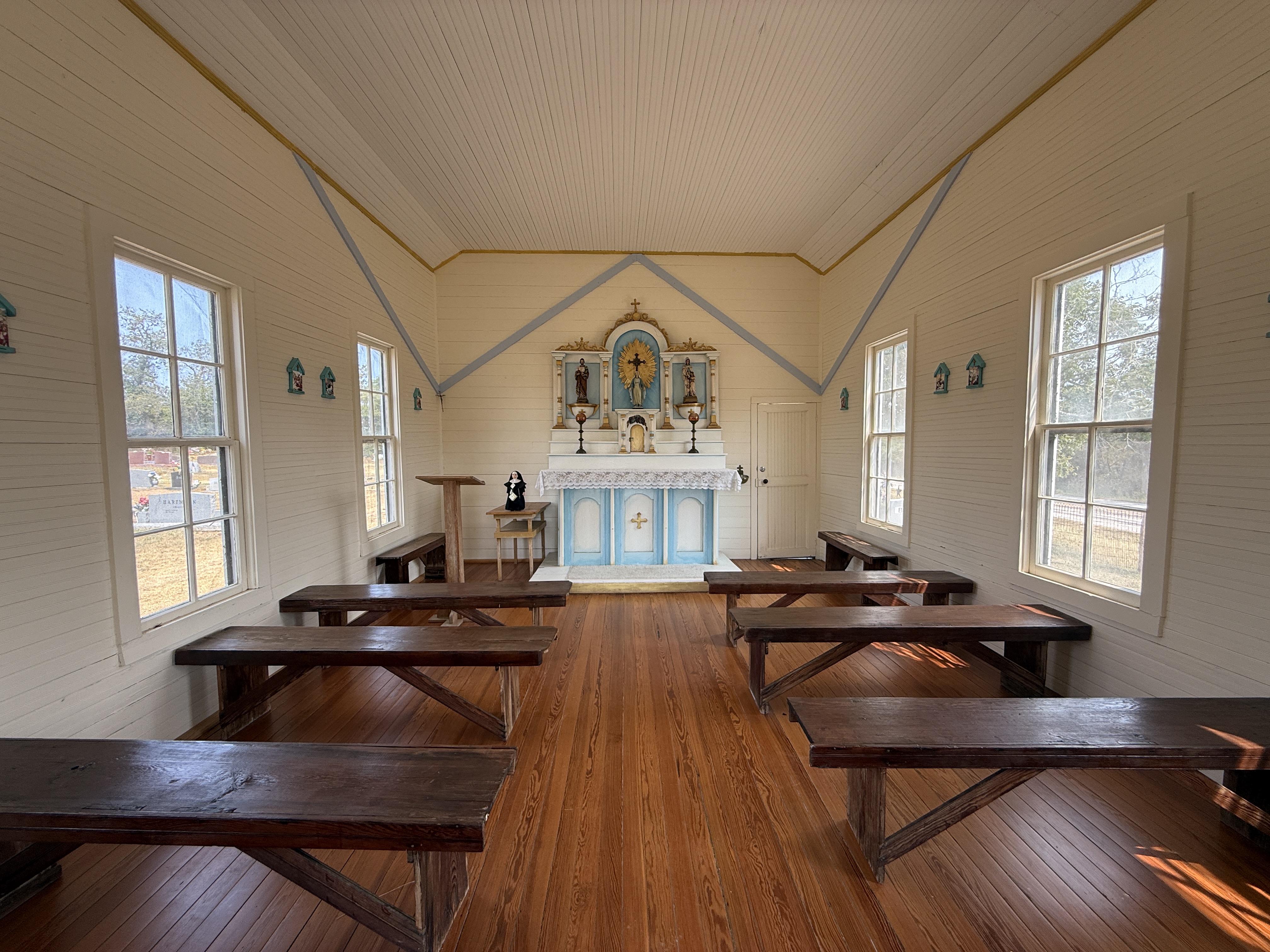

For the next half century, Saint Mary’s served as an important center of worship and community life for Catholic families in the surrounding countryside.

That changed in 1940 when St. Ferdinand Catholic Church was established in Blanco. Regular parish worship shifted from the little country chapel to the new church in town. Even the bell from Saint Mary’s was moved to St. Ferdinand.

Saint Mary’s subsequently took on a new role as a cemetery chapel and historic site. It remains connected with St. Ferdinand and is still used on special occasions, particularly for the annual All Souls’ Day Mass in November, as well as funerals and other services.

When Cheryl and I stopped here, two new graves in the cemetery caught my attention—one belonging to a man born in 1956 and another to a woman born in 1978. Their graves seemed especially noticeable among the older markers surrounding the chapel.
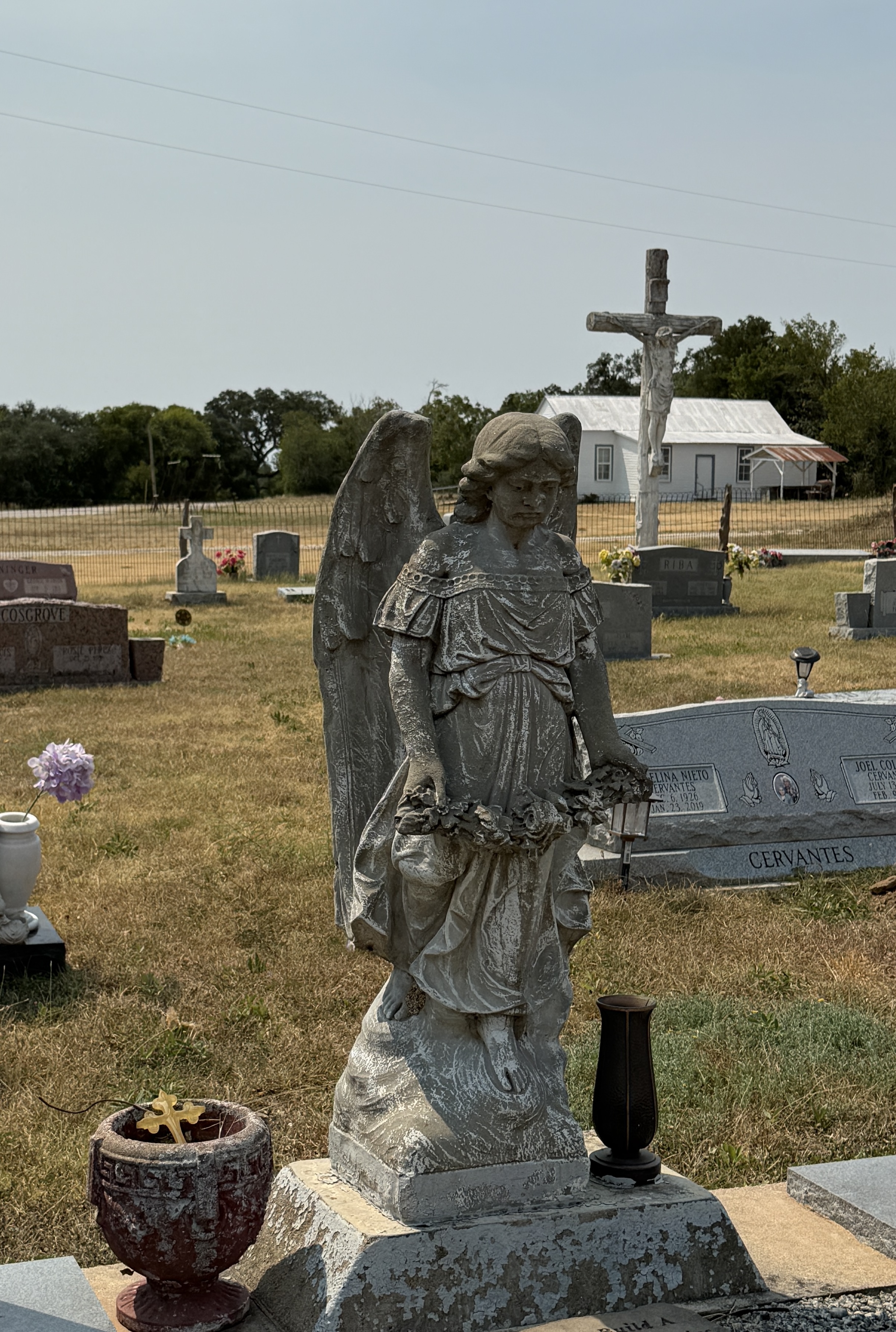

Cemeteries have a way of reminding us of something we spend much of our lives trying not to think about: we are all headed in this direction. Someday each of us will either choose where we are buried or leave that decision to someone else. Standing among the graves at Saint Mary’s is a quiet reminder that every life has a beginning, a story, and an end.

For generations, Saint Mary’s Help of Christians Catholic Church played an important role in the lives of those who settled this part of the Hill Country. Through good times and bad, through the celebration of births and marriages and the grief of deaths, and through the long years of families working hard to build new lives in Texas, Father Draessel, the priests who followed him, and this little church were there.
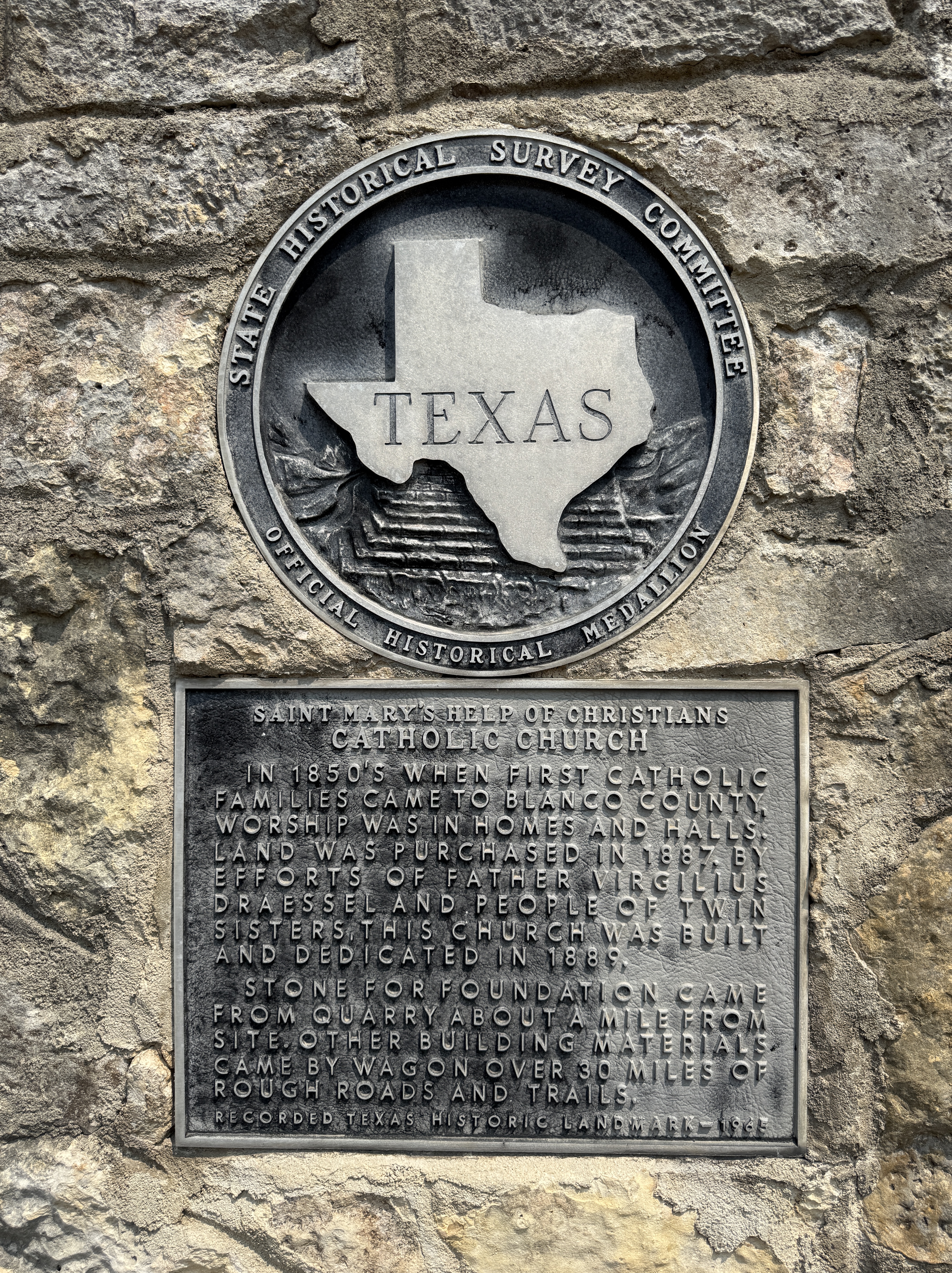

Today, Saint Mary’s is a reminder of the faith of the Hill Country’s early settlers. Its historical importance was officially recognized in 1965 when it became a Recorded Texas Historic Landmark.

For backroad explorers like Cheryl and me, the attraction here is about the setting—an old country church, weathered gravestones, rolling Hill Country ranchland, and the kind of silence that invites you to slow down and reflect.
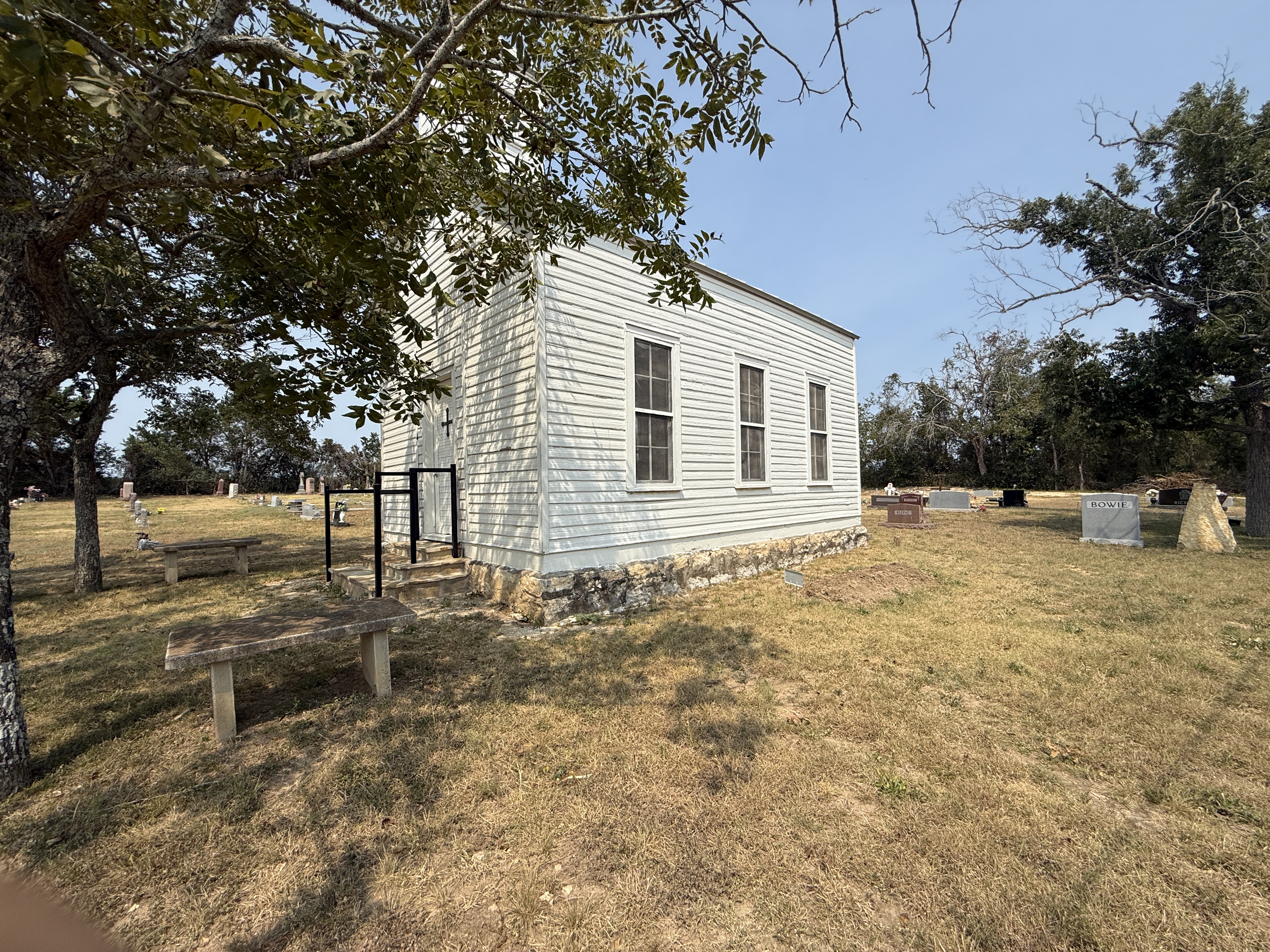

Places like Saint Mary’s are easy to drive past. There are no crowds, gift shops, or flashy attractions competing for your attention. Instead, there is a small chapel standing quietly among the graves of people who came before us.

And that is what makes it worth stopping.

If you enjoy historic churches, cemeteries, Texas history, or forgotten places along the back roads, Saint Mary’s Help of Christians Catholic Church is definitely worth a visit.
Record Your Own Texas History

I have always enjoyed going home — back to the places where my childhood memories were made. On a recent trip to visit my Dad, I listened to a 2-hour taped interview between my uncle and my grandfather. This recording was made on January 15, 1975. The cassette had been tucked away for years for safe keeping. As soon as my grandfather started speaking, memories flooded the room and engulfed me in waves of pensive emotions.

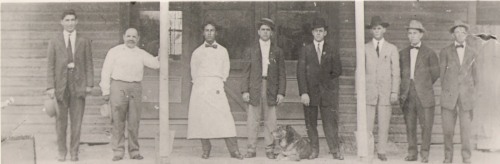
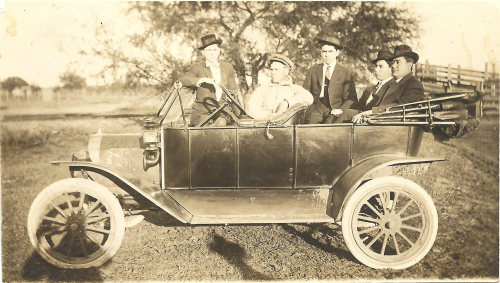
My grandfather (center) and friends. | San Diego, Texas | circa 1911

My grandfather (center) and friends. | San Diego, Texas | circa 1911

The interview was fascinating. My grandfather talked a lot about his family. He told the story of returning to his mother’s home to visit his grandfather. While there, his grandfather died. So, he negotiated with the local blacksmith, who also had carpentry skills, to have a coffin made and then arranged for his grandfather’s burial. He also spoke about his first school teacher and classmates and what life was like growing up on a ranch.

My Grandfather and Friends | San Diego, Texas | circa 1912

My Grandfather and Friends | San Diego, Texas | circa 1912

I especially liked his story about traveling from the family ranch near San Diego, Texas all the way to California in 1917. My grandfather talked about the route and how difficult it was to drive on the poor and sometimes impassable roads in those days before any highways or the interstate highway system. And when he arrived in Hollywood he learned that they were filming a western and applied to be an extra since he was a skilled cowboy.

My grandfather’s business school classmates.

My grandfather’s business school classmates.

One of the most riveting parts of the interview was the time he served as an election judge in Duval Country, known for its political intrigue. When a particular election did not go as some in power had hoped, two police officers were sent to arrest him and take the ballot boxes from him before he could get them to the county courthouse. My grandfather did not give up the ballot boxes, asked to see the warrant for his arrest (none was offered), and succeeded in getting the voting results to the courthouse. He was never arrested.

My grandparents, Felipe and Lucy Garcia.

My grandparents, Felipe and Lucy Garcia.

I loved every story he told, including the account of marrying my grandmother, starting the first Boy Scout troop for Hispanics in Duval Country and later in the Rio Grande Valley, enlisting in the First World War, and so many other great stories. Had my uncle not interviewed my grandfather, all of these wonderful memories would have been buried with him. And although I had heard some of these stories when I was a kid, it was good to hear them again as an adult. I appreciate them so much more. They are treasures. They are a part of the history of my family.

1955 reunion of Boy Scout Troop 20, started by my grandfather (front right).

1955 reunion of Boy Scout Troop 20, started by my grandfather (front right).

I believe in the importance of recording family history lest it fade from memory, never to be seen or heard again. In this day of digital devices, there are no good excuses for failing to be a family historian. Here are a few practical suggestions for recording your family’s Texas history.

Interviews | Interview your grandparents and parents. Ask them to share stories about their childhood and your family that you can share with your children. If possible, interview them at a place that will awaken dormant memories.

Photographs | Sit with your family’s elders and ask them to tell you the stories associated with old photographs. Record the stories and names of the people in the photographs. Use a photo service to create photo books that can be easily reproduced and shared with family members.

Technology | Record interviews on video and audio devices. Ask family members specific questions about your family’s history. Be sure to ask them about how they responded to key events like the Kennedy assassination or the lunar landing.

Holidays | Use holidays, reunions, and other times when your family gathers together as a time to talk with older family members and to record some of your family’s history. Talk about traditions, vacations, celebrations, and getting through hard times together.

Journal | Don’t neglect to record your own history in a journal or even on a blog. By doing so you will ensure that your own kids will have access to your story.