Gruene General Store

I first visited Gruene in the late 1970s while living in Corpus Christi. I wanted to take a group of singles from our church on a rafting trip, so—long before the days of the internet—I did a little research and discovered the Gruene River Company. They were wonderful to work with, and our group had a great experience on the Guadalupe River. That trip became my introduction to Gruene and the beginning of my appreciation for this historic Texas community.


Gruene is located along the Guadalupe River within the city limits of New Braunfels, about 35 miles northeast of San Antonio. German immigrant Ernst Gruene and his family settled in the area in the 1840s. His son Henry later developed Gruene into a prosperous cotton-farming community, building homes, a general store, a cotton gin, and the now-famous Gruene Hall.
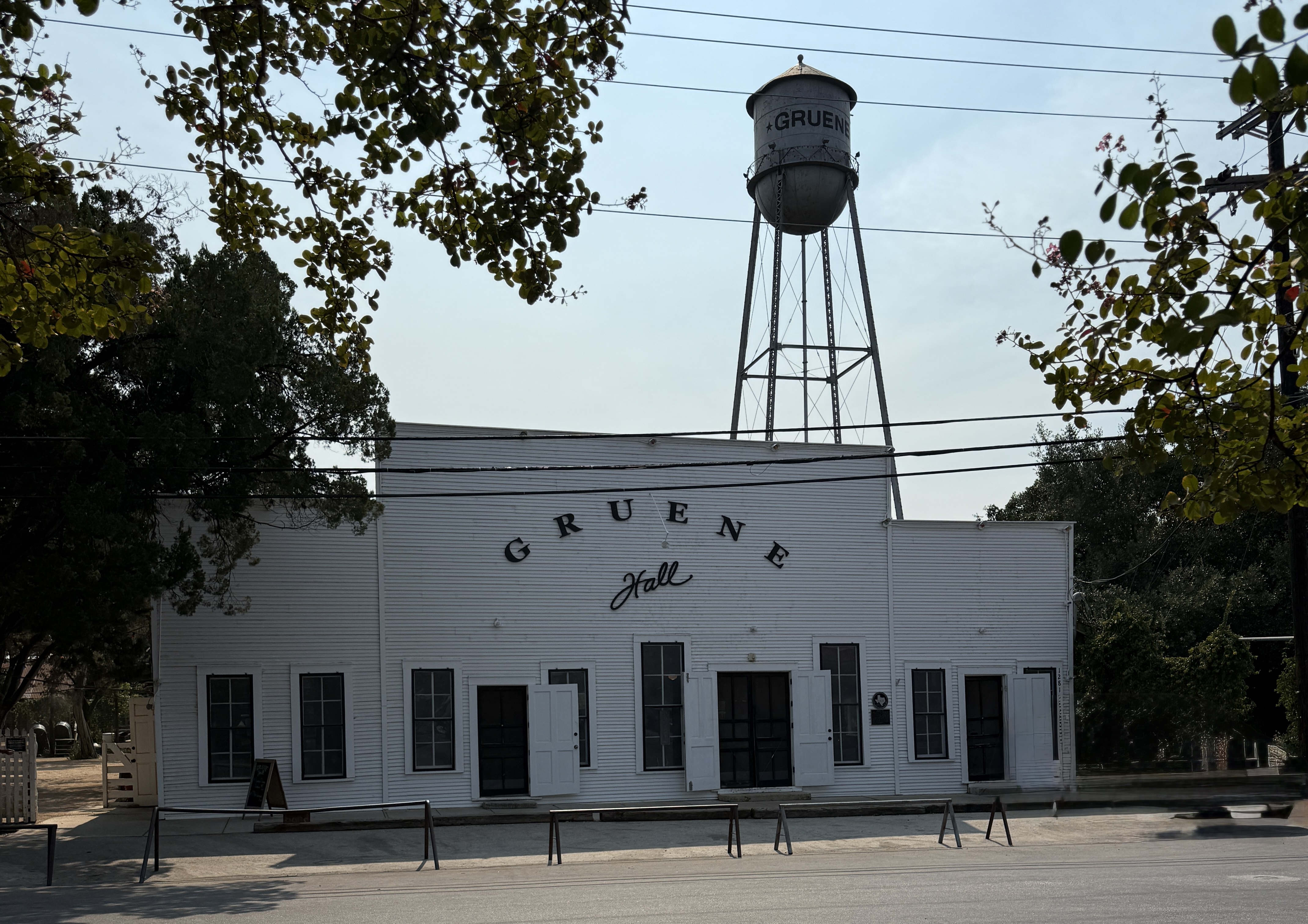

When the boll weevil devastated the local cotton industry in 1925, most of Gruene’s businesses closed. The dance hall—now known as Gruene Hall—was the town’s only business to remain open. Gruene lay largely dormant until restoration efforts began in 1974 and the community was recognized as a historic district.
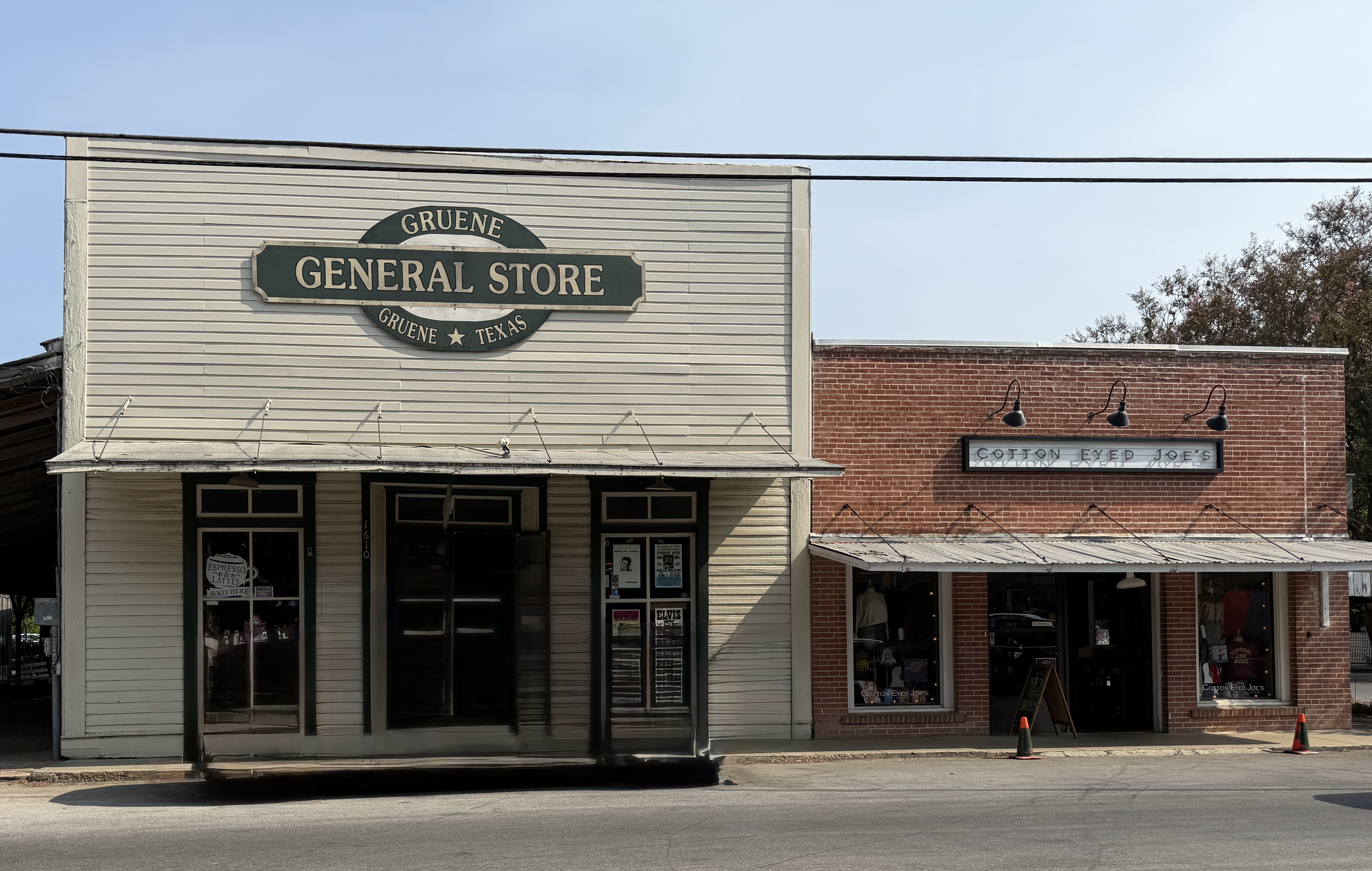

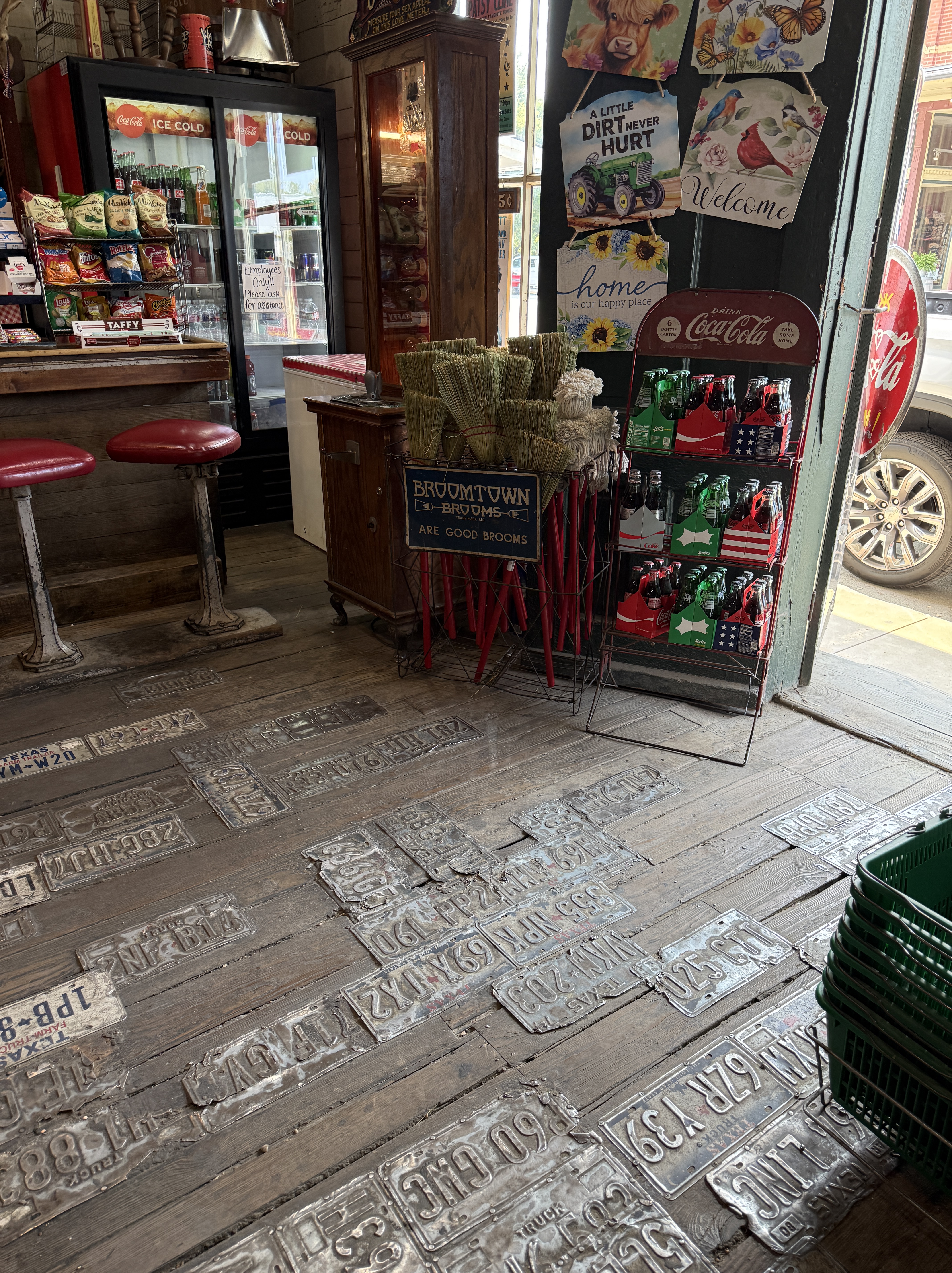
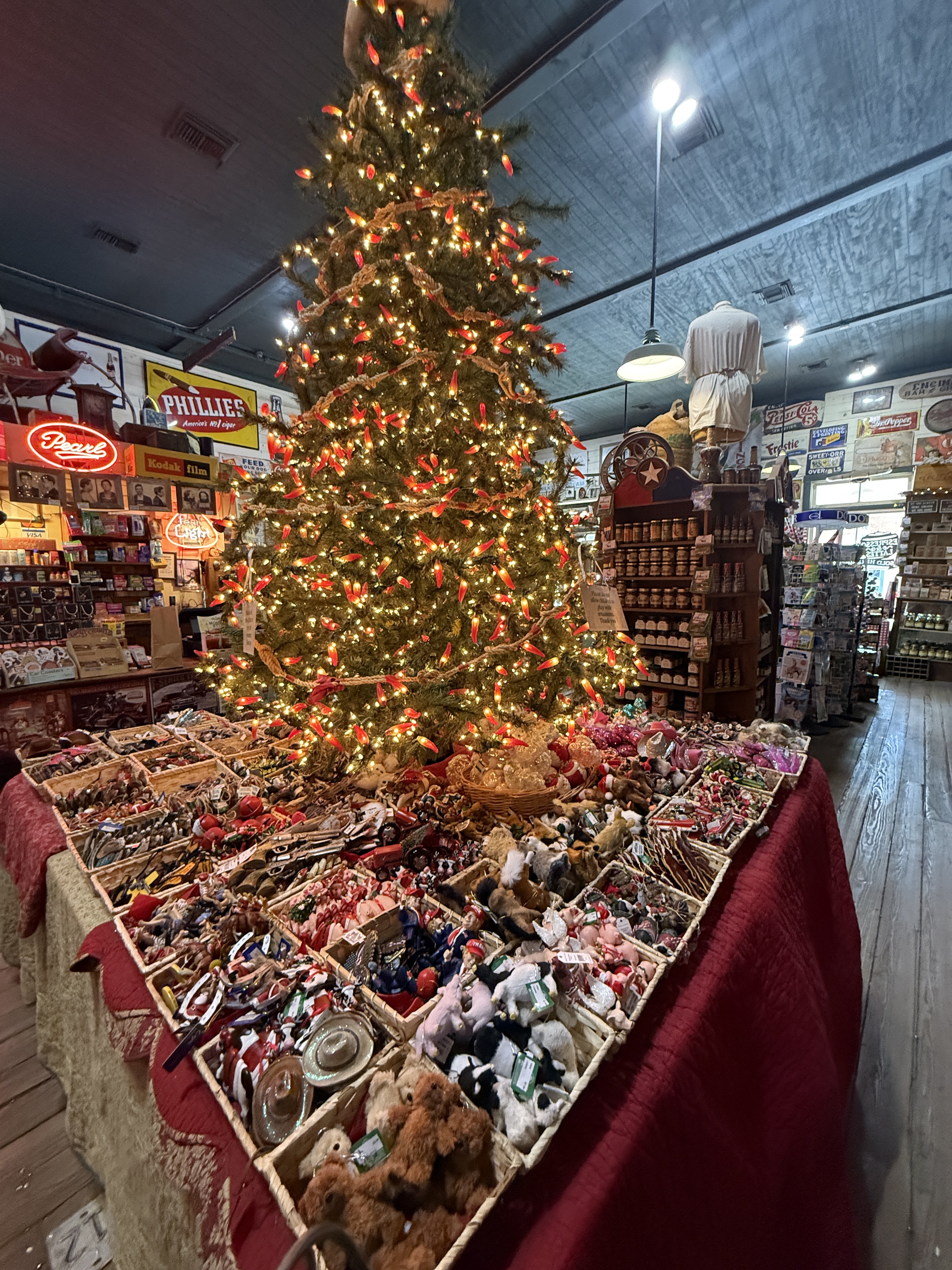
The Gruene General Store reopened in its original building in 1989, giving visitors a look at an old-fashioned Texas emporium. The wooden floors are worn and creak as you walk, with some damaged spots patched up with old license plates. Like many historic general stores in Texas, you can still feel the past in the air.
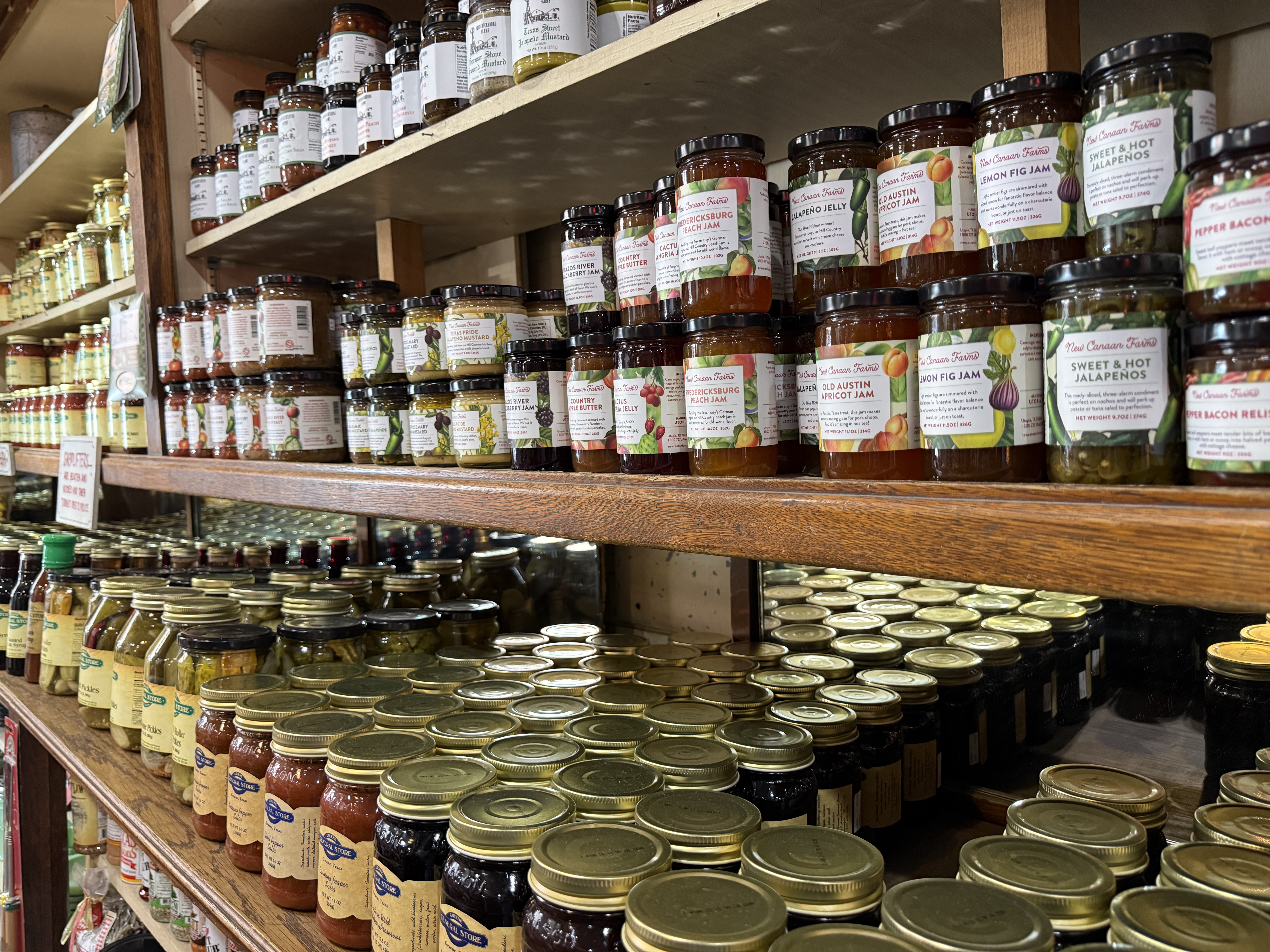

Cheryl and I took our time exploring the entire store. There was so much to see—vintage advertising signs, antique fixtures, old-fashioned candy, homemade fudge, Texas-made foods, Christmas ornaments, and an assortment of fun Texas-themed souvenirs. The store even has a soda fountain, completing the nostalgic experience and making a visit feel like a step back in time.

There is, of course, much more to see and experience in Gruene. The day we visited, the historic district was packed with visitors—and I loved seeing so many people enjoying this special place. Gruene is definitely a Texas treasure.

Cheryl and I can’t wait to introduce our granddaughters to the Gruene experience. And, of course, when we take them to the General Store, we will probably buy them whatever they want. That’s what grandparents do!
Saint Mary’s Help of Christians Catholic Church

Among the more interesting place names in Texas is the small historic community of Twin Sisters. Located in Blanco County, about seven miles south of Blanco along Ranch to Market Road 473, the community takes its unusual name from two prominent nearby hills—the “Twin Sisters.” The hills became familiar landmarks for early settlers traveling through the Texas Hill Country.

The settlement began in the 1850s when German and other European immigrants established farms and ranches in the area. A small community gradually developed with schools, churches, businesses, and a post office serving ranch families in the area.

Twin Sisters never developed into a large town. As nearby Blanco became the area’s commercial center, many of the small businesses disappeared or relocated there. The post office eventually closed, and Twin Sisters settled into life as a quiet rural ranching community.

Today, little remains of the original settlement. Time is slowly erasing the evidence that a community once flourished here. Even so, the Twin Sisters hills, a tiny chapel, and an old cemetery remain as reminders of this early Texas Hill Country community.


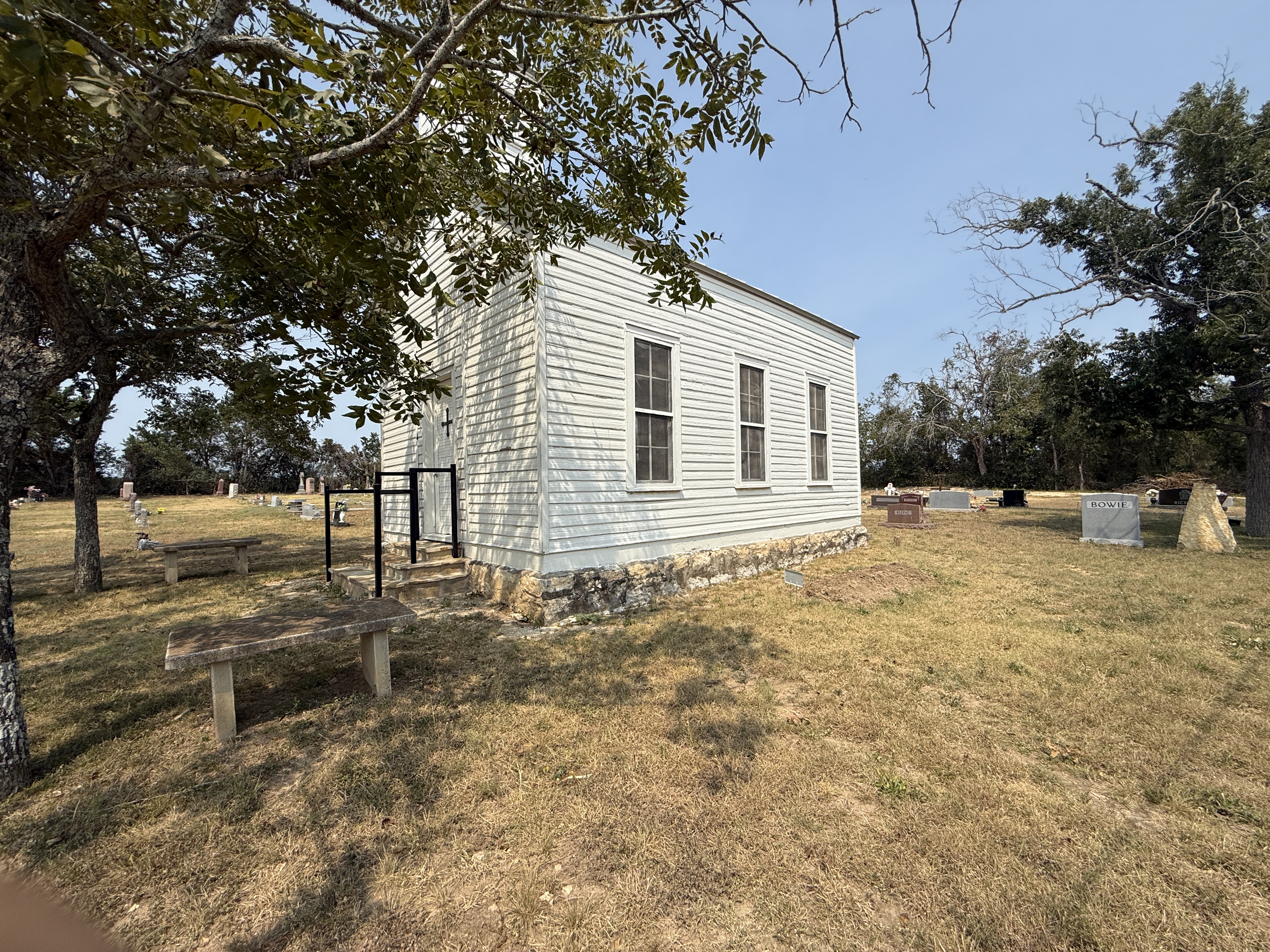
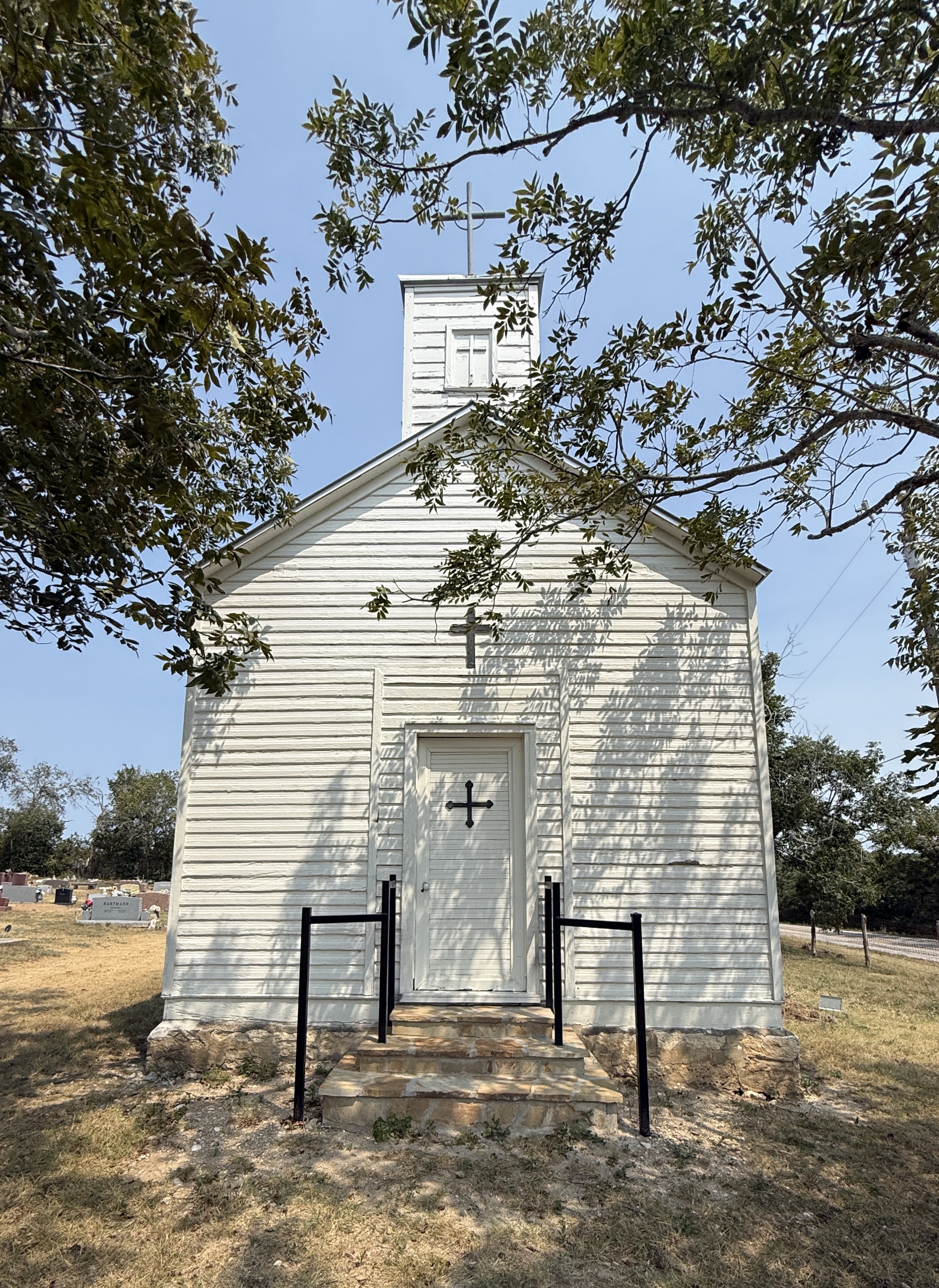
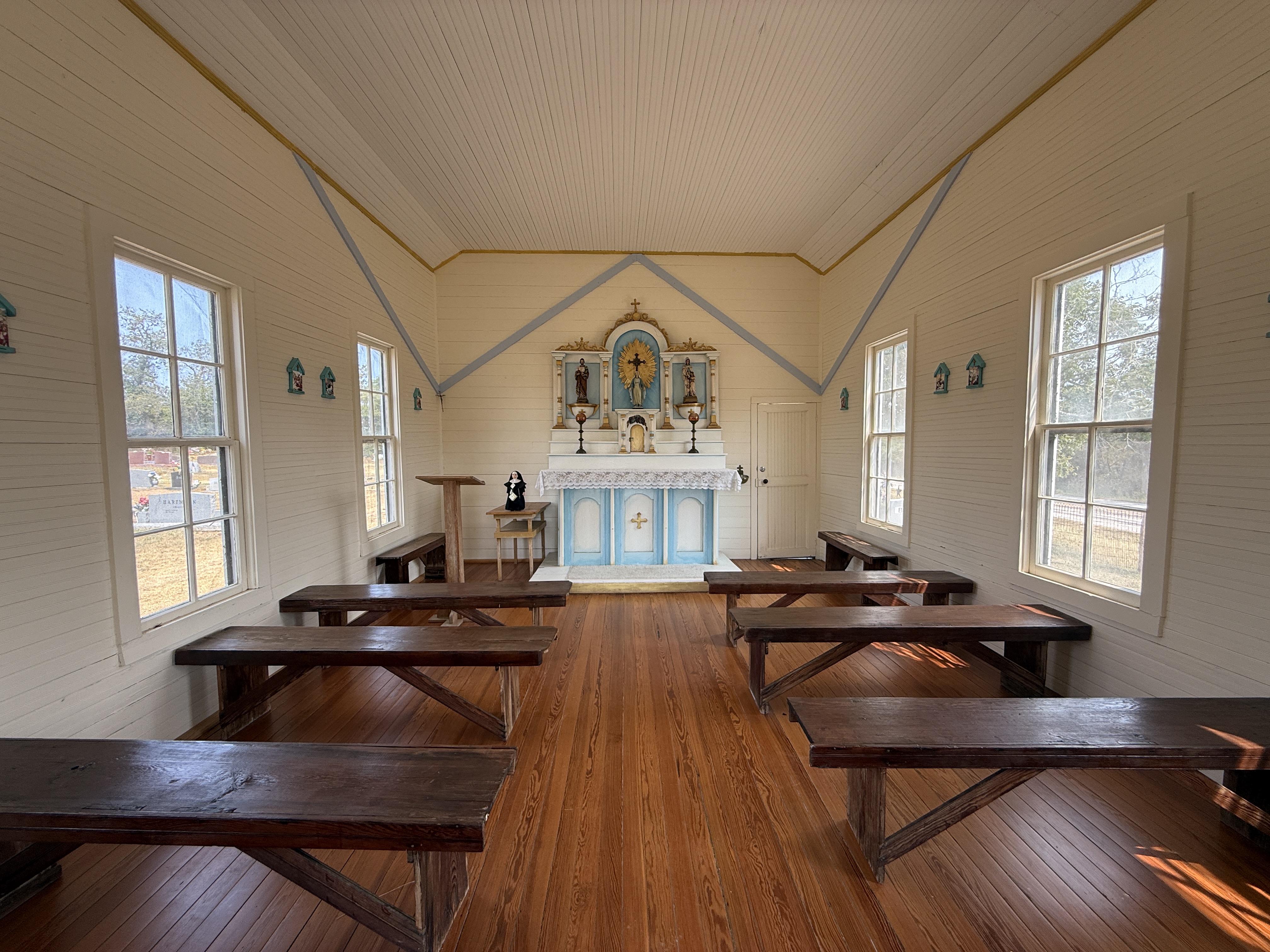
Saint Mary’s Help of Christians Catholic Church is perhaps the most important surviving landmark in this rural area.

Built in 1889, Saint Mary’s was the first Catholic church established in Blanco County. Catholic families had been gathering for worship in homes and other locations in the area since their arrival in the 1850s.

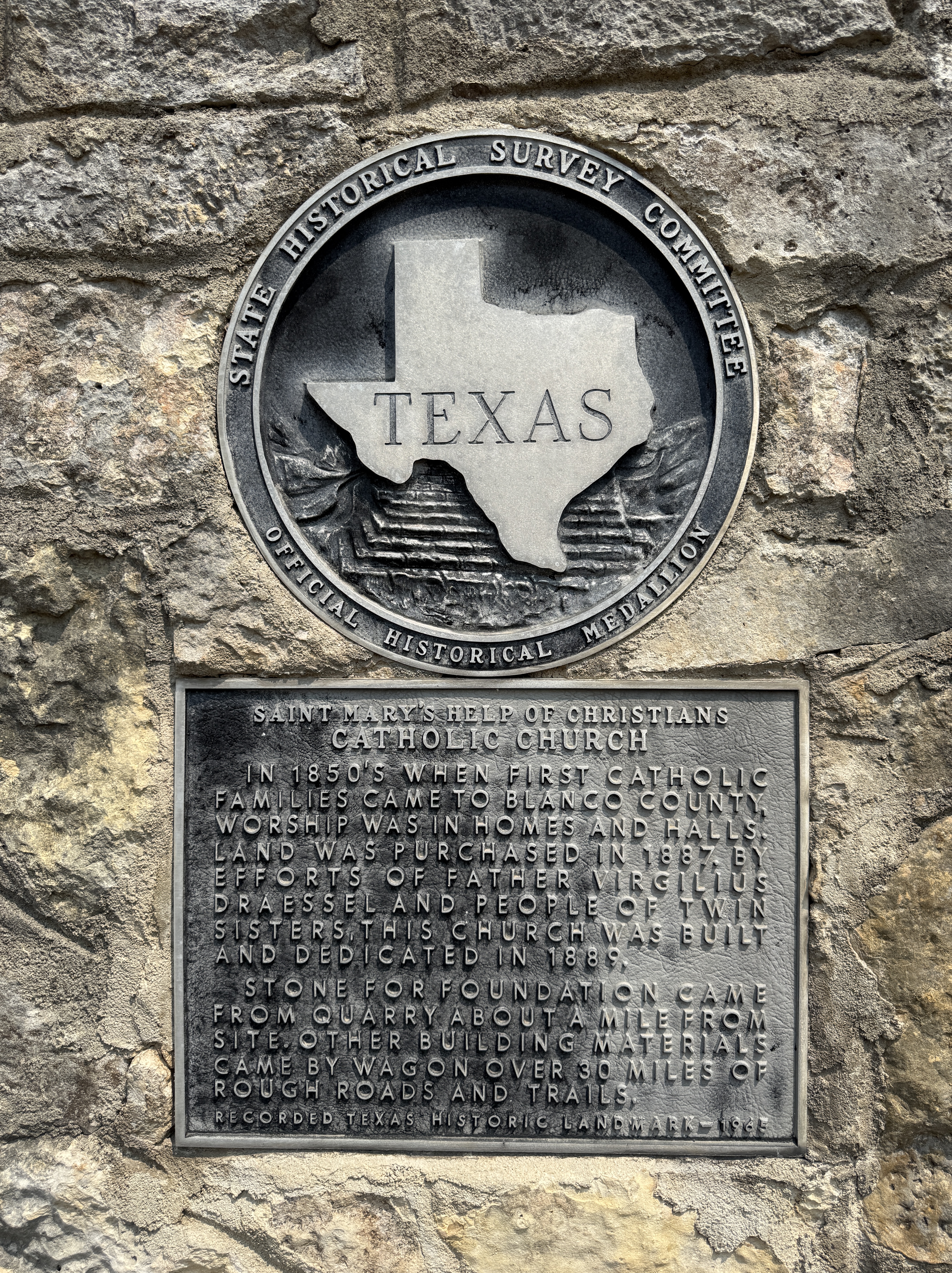
After residents acquired land for a church in 1887, construction began under the leadership of Father Virgilius Draessel. The small chapel rests on a foundation of locally quarried stone, while other building materials were reportedly hauled by wagon from farther away. According to the Texas historical marker at the site, the chapel was dedicated in 1889.


For the next half century, Saint Mary’s served as an important center of worship and community life for Catholic families in the surrounding countryside.

That changed in 1940 when St. Ferdinand Catholic Church was established in Blanco. Regular parish worship shifted from the little country chapel to the new church in town. Even the bell from Saint Mary’s was moved to St. Ferdinand.

Saint Mary’s subsequently took on a new role as a cemetery chapel and historic site. It remains connected with St. Ferdinand and is still used on special occasions, particularly for the annual All Souls’ Day Mass in November, as well as funerals and other services.

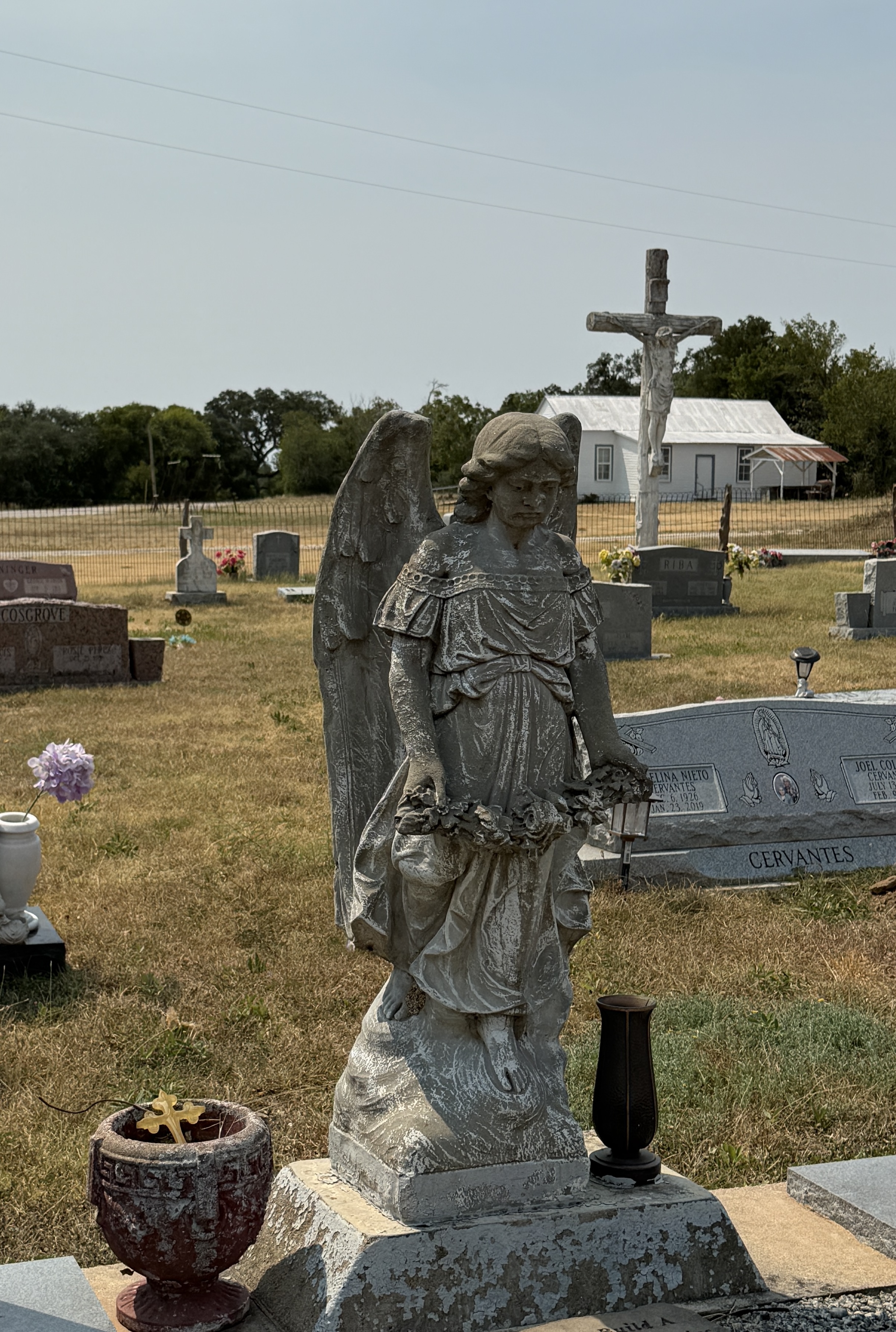
When Cheryl and I stopped here, two new graves in the cemetery caught my attention—one belonging to a man born in 1956 and another to a woman born in 1978. Their graves seemed especially noticeable among the older markers surrounding the chapel.


Cemeteries have a way of reminding us of something we spend much of our lives trying not to think about: we are all headed in this direction. Someday each of us will either choose where we are buried or leave that decision to someone else. Standing among the graves at Saint Mary’s is a quiet reminder that every life has a beginning, a story, and an end.

For generations, Saint Mary’s Help of Christians Catholic Church played an important role in the lives of those who settled this part of the Hill Country. Through good times and bad, through the celebration of births and marriages and the grief of deaths, and through the long years of families working hard to build new lives in Texas, Father Draessel, the priests who followed him, and this little church were there.


Today, Saint Mary’s is a reminder of the faith of the Hill Country’s early settlers. Its historical importance was officially recognized in 1965 when it became a Recorded Texas Historic Landmark.

For backroad explorers like Cheryl and me, the attraction here is about the setting—an old country church, weathered gravestones, rolling Hill Country ranchland, and the kind of silence that invites you to slow down and reflect.


Places like Saint Mary’s are easy to drive past. There are no crowds, gift shops, or flashy attractions competing for your attention. Instead, there is a small chapel standing quietly among the graves of people who came before us.

And that is what makes it worth stopping.

If you enjoy historic churches, cemeteries, Texas history, or forgotten places along the back roads, Saint Mary’s Help of Christians Catholic Church is definitely worth a visit.